Author: Alan Shimel

  • CI and CD Across the Enterprise with Jenkins November 19th

    CI and CD Across the Enterprise with Jenkins November 19th

    We recently held another webinar in our continuing series at staging-devopsy.kinsta.cloud. We partnered with the good people at CloudBees on CI and CD across the enterprise with Jenkins. The webinar featured:

    Cyrille Le Clerc  is Director of Product Management at CloudBees with more than 15 years experience in Java.  Prior to CloudBees, Cyrille was Chief Technology Officer at Xebia.  As an early adopter of  the “you build it you run it” model, he put it in place for a number of high volume web sites.  He naturally embraced DevOps culture.  He is also very active in the Java community, creator of the open source project “embedded jmxtrans” and a speaker at various conferences.


    It proved to be the most popular webinar we have held yet with almost 1500 people registered! Many were not able to log in live for the event. We are making a recording available for those who could not attend and anyone else who would like to listen:

    Hope you enjoy it and stay tuned for more webinars.

  • Enterprise DevOps: same medicine, different dose

    Enterprise DevOps: same medicine, different dose

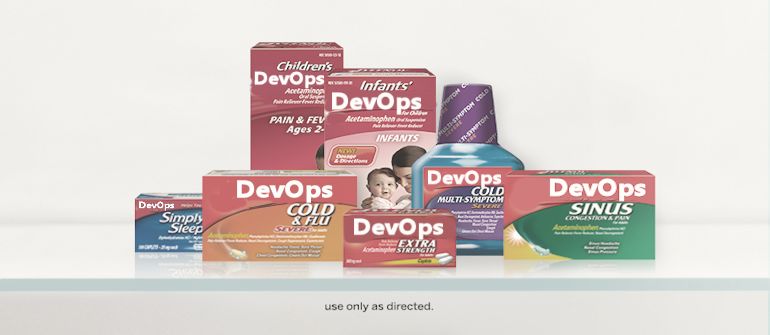
    I am presenting at the DevOps Summit in Santa Clara early next month.  The title of my presentation is “Enterprise DevOps: Same medicine, different dose.”  I will be attempting to tackle the sometimes sticky subject of whether Enterprise DevOps is a unique species or is there just DevOps for organizations big and small.

    My personal feeling is DevOps is DevOps. That being said though, I don’t think anyone would argue that large enterprises are a different animal than smaller companies. The inertia in these organizations make culture change on a large scale harder, if not slower.  Just as you would give a different dose of medicine to a child then you would to an adult, I think you have to inject DevOps differently into a larger organization than you would a smaller one.

    That doesn’t necessarily mean that anyone selling enterprise DevOps services or tools is a snake oil salesmen though. I think understanding the differences between a large organization and smaller ones creates opportunities for vendors. I think that some in the community think that large vendors are just using the term enterprise DevOps to protect their existing turf from usurpers.

    Anyway, I will be diving deeper into this subject at my presentation. I will post the abstract link shortly and will post me slides after the show.

    In the meantime you can help me. I am interested in your thoughts on this subject and what you think is important for me to cover.  I respect all opinions so if you don’t agree with me, feel free to say so, but if you do, say why.


    Thanks!


  • Webinar: DevOps in the Modern Enterprise

    Webinar: DevOps in the Modern Enterprise

    We are happy to announce the next staging-devopsy.kinsta.cloud webinar. In partnership with AppDynamics and Citrix :

    DevOps in the Modern Enterprise

    DevOps has been embraced by companies ranging from small e-commerce providers to large fortune 100 institutions. As the rate of adoption continues to grow there is still much confusion about how to successfully transition from “DevOps curious” to full fledged “DevOps practice”. Jim Hirschauer, Technology Evangelist with AppDynamics, will discuss the role of software tools in fostering a successful DevOps practice. Spencer Schwab, Staff DevOps Engineer with Citrix, will share his experience in transitioning his organization into a DevOps centric practice. Spencer will expose the challenges associated with shifting towards DevOps as well as the solutions he discovered while leading and participating in this experience with all of it’s ups and downs. You’ll learn how to initiate change within your organization as well as the associated pitfalls and benefits of the DevOps journey, all based upon the real word experience that Spencer brings from Citrix.  One attendee will win a $100 Amazon gift card.  You must be present to win

    Date: October 30th

    Time: 1pm eastern, 10am pacific

    REGISTRATION LINK: (Limited registration, so don't wait!) 

    About the Speakers:

    spencerSpencer Schwab – Currently, as an Operations Application Owner at Citrix, Spencer leads a Dev/Ops team that is responsible for the availability, run state, capacity, and configuration of the GoToMeeting, GoToWebinar, and GoToTraining products in production. Prior to Citrix, he spent eight and a half years working for Fedex where he designed and implemented many high-availability solutions to support the company of over 300,000 employees. He also has served as the Director of Systems Management for Message Factors Inc. and has worked for several small technology firms. Spencer always enjoys a troubleshooting challenge and thrives under pressure. When not working hard, Spencer enjoys spending time with family, cooking, gardening, and riding the waves on his boogie board.

    jimhJim Hirschauer – Technology evangelist for AppDynamics, Jim Hirschauer has an extensive background in highly available, business critical, large enterprise IT operations environments. Jim has been interested in application performance testing and monitoring since his days as a systems administrator in a retail bank. His passion for performance analysis led him down a path to design, implement, and manage the cloud computing monitoring architecture for a top-ten investment bank. During his tenure at the bank, Jim created new processes and procedures that reduced the time spent in the test and QA cycle while simultaneously increasing overall code release quality and dramatically improving end user experience.


    AppDy_Logo_Gray_RGB

    citrix

  • DevOps front and center at Interop NY

    DevOps front and center at Interop NY

    Reporting from Interop NY where DevOps has made it presence felt. There are a number of DevOps related sessions over the course of the conference this week. I wanted to highlight 4 that I am looking forward to:

    Dustin Whittle_428215_1403108362The DevOps Pay Raise: Quantifying Your Value to Move Up the Ladder by Dustin Whittle, AppDynamics

    Location:  Room E08, Level 1

    Date:  Thursday, October 2

    Time:  2:45pm-3:45pm

    The official blurb for this session is: DevOps, when done right, usually goes unnoticed. It’s only when something breaks that all eyes turn to IT. If your boss only sees you when the app is down, however, that’s not really doing your career any favors. In this session we’ll talk about how to prove your value to the organization by looking at the positive side: that is, how much money you’ve saved your company. We’ll take a look at how you can use tools like Chef, Puppet, Sensu and Logstash to quantify your value to your company. After this session, you’ll be able to walk into a meeting with your boss ready to talk about your value to the company (and to ask for a raise).

    I spoke to Dustin who occasionally writes for staging-devopsy.kinsta.cloud about this session. Beyond getting a raise for your hard work, the session is about how you show the value of DevOps to your organization. Of course if you try to implement some DevOps type of processes and behavior and something goes wrong, it is easy to blame, but how do you show the benefit.  No one notices when things are running right. How do you build on success to expand the rollout of DevOps to the rest of your organization?  I have seen Dustin speak on this topic before and I am sure it will be an interesting session.

    Dave Roberts_428551_1406316930DevOps Gold: What the Olympics Teaches Us About Agile Development and Release by Dave Roberts, Sr. Director Solutions Marketing, Cloud, DevOps, and Data Center Automation, BMC Software

    Location:  Room E15, Level 1

    Date:  Thursday, October 2

    Time:  4:30pm-4:50pm

    The official blurb for this session is: At the recent winter Olympics in Sochi, Russia, we saw athletes from all over the world striving for excellence. Some turned in the best performance of their lives and came home with a gold medal. Others, some favorites, struggled and saw their dreams slip away. In this session, we’ll see how DevOps done right is a lot like the Olympics. If you set reasonable goals, train hard, and execute well, you’ll reach DevOps Gold, too. But if you take your releases for granted, you may end up with failure. This session is for developers and operations personnel working toward implementing a DevOps process. You’ll learn best practices for achieving DevOps success and how to best implement them in your own company.

    I spoke with Dave on this one as well. I love the idea of comparing DevOps to athletes training for the gold.  Dave will talk about that there is no magic with DevOps success. It takes careful planning, reasonable goals and lots of preparation. You don’t just walk strap on skis and think you are a downhill Olympic champion. There is more to competing and winning than just showing up.

    Dave is an accomplished speaker and this is a great topic. It should be a very interesting session. Note that this is part of the Cloud Connect Day 2 sessions and there are some other great sessions throughout the day there.

    The next two already took place by the time you read this (thanks to my laptop crashing and this not being published earlier). They are both by Lori Macvittie, another staging-devopsy.kinsta.cloud contributor.

    lori macvittie_427169_1400194987Achieving Operational Excellence Through DevOps by Lori Macvittie, Principal Technical Evangelist, F5 Networks

    Location:  Room E16, Level 1

    Date:  Tuesday, September 30

    Time:  9:00am-12:00pm

    This is actually a day long workshop by a number of people with Lori kicking things off early and then chairing a panel at 10:45:

    Panel: What Does DevOps do for the Network?
    DevOps is to application deployment as SDN is to networking. They’re both ultimately about achieving operational excellence to improve time to market, reduce risks and costs associated with operational overhead. DevOps tends to focus on scripting and APIs as a means to achieve operational excellence, so how does that fit with the move to bring automation and orchestration to the network? We’ll explore questions that are on everyone’s minds such as: Do you have to have a soft network to take advantage of DevOps? Will network engineers need to become developers?

    Interop Debate: Learn SDN vs. Traditional Certifications: What’s Better for Your Career? by Lori Macvittie, Principal Technical Evangelist, F5 Networks

    Location:  Room E13, Level 1

    Date:  Wednesday, October 1

    Time:  2:45pm-3:45pm

    This is another panel discussing: The networking industry views the CCIE certification as one of the most difficult and desirable titles to obtain. Many CCIEs enjoy extraordinary career opportunities as well as financial gain as a direct benefit of passing the notorious lab exam. Recently, the relevance of the CCIE certification has come into question by those who see a different future for networking. The big idea is this: if networking is headed in an automated, software-defined direction, is the CCIE still relevant? Or should networkers who want to be at the top of the industry differentiate themselves by learning the emerging tools and techniques of the SDN revolution? Our all-CCIE panel (including a former CCIE program manager) & CCIE moderator will discuss.

    This panel will discuss what it the future of the CCIE certification in an age of SDN. With software eating the world and networks, is hardware relevant even anymore?  Should be great discussion and promises some fireworks!

  • IBM Interconnect 2015 Call for Papers

    IBM Interconnect 2015 Call for Papers

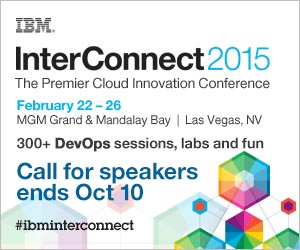
    interconnect2015-300x250-092514 IBM Interconnect is IBM’s premier event covering DevOps, mobile, cloud, security and more.  With 300 sessions focused exclusively on DevOps, IBM Interconnect delivers a full 360 degree view of all aspects of DevOps, including best practices, technical implementations and management strategies.

    IBM Interconnect offers breakout sessions, labs and hands on experimentation and learning at the dev@ experience.  The dev@ experience is a zone built by developers for developers, to learn from developers.  Tech Talk.  Hands on.  Straight forward.

    The IBM InterConnect 2015 Call for Speakers is now open, and we want to hear from you on a variety of topics. Submit your paper today, deadline is October 10th.   Speaking at InterConnect will help raise your profile and expand your network with more than 20,000 peers, experts and influencers.   All speakers are eligible for a complimentary conference pass, enabling them to experience this incredible value for free!

  • CloudBees nurtures the Jenkins community to new highs

    CloudBees nurtures the Jenkins community to new highs

    One of the linchpins in the DevOps tools box is Jenkins.  Just about everyone knows Jenkins. For those few not familiar with Jenkins, here is an excerpt from the “What is Jenkins” page:

    What is Jenkins?

    Jenkins is an award-winning application that monitors executions of repeated jobs, such as building a software project or jobs run by cron. Among those things, current Jenkins focuses on the following two jobs:

    • Building/testing software projects continuously, just like CruiseControl or DamageControl. In a nutshell, Jenkins provides an easy-to-use so-called continuous integration system, making it easier for developers to integrate changes to the project, and making it easier for users to obtain a fresh build. The automated, continuous build increases the productivity.
    • Monitoring executions of externally-run jobs, such as cron jobs and procmail jobs, even those that are run on a remote machine. For example, with cron, all you receive is regular e-mails that capture the output, and it is up to you to look at them diligently and notice when it broke. Jenkins keeps those outputs and makes it easy for you to notice when something is wrong.

    Jenkins offers the following features:

    1. Easy installation: Just java -jar jenkins.war, or deploy it in a servlet container. No additional install, no database.
    2. Easy configuration: Jenkins can be configured entirely from its friendly web GUI with extensive on-the-fly error checks and inline help. There’s no need to tweak XML manually anymore, although if you’d like to do so, you can do that, too.
    3. Change set support: Jenkins can generate a list of changes made into the build from Subversion/CVS. This is also done in a fairly efficient fashion, to reduce the load on the repository.
    4. Permanent links: Jenkins gives you clean readable URLs for most of its pages, including some permalinks like “latest build”/”latest successful build”, so that they can be easily linked from elsewhere.
    5. RSS/E-mail/IM Integration: Monitor build results by RSS or e-mail to get real-time notifications on failures.
    6. After-the-fact tagging: Builds can be tagged long after builds are completed.
    7. JUnit/TestNG test reporting: JUnit test reports can be tabulated, summarized, and displayed with history information, such as when it started breaking, etc. History trend is plotted into a graph.
    8. Distributed builds: Jenkins can distribute build/test loads to multiple computers. This lets you get the most out of those idle workstations sitting beneath developers’ desks.
    9. File fingerprinting: Jenkins can keep track of which build produced which jars, and which build is using which version of jars, and so on. This works even for jars that are produced outside Jenkins, and is ideal for projects to track dependency.
    10. Plugin Support: Jenkins can be extended via 3rd party plugins. You can write plugins to make Jenkins support tools/processes that your team uses.

    But beyond the wiki how did Jenkins become one of the most successful open source projects of all time? The answer to that has a lot to do with CloudBees, a little to do with Oracle and even more to do with an architecture that supports an ecosystem that has allowed almost a thousand plugins to be developed to the core project.

    First let’s get the little do with Oracle out of the way.  Jenkins was originally known as Hudson. Hudson was started by Sun Microsystems. When Oracle bought Sun it inherited a lot of open source projects (OpenOffice and Java among them). Many in the open source community questioned Oracle’s intentions regarding open source. It didn’t take long for a dispute to arise between many of the Hudson developers and Oracle. Oracle claimed they owned the term Hudson and that had an easy answer. There was a vote taken and Hudson became Jenkins. When Oracle objected, Jenkins became a fork of Hudson (or Hudson became a fork of Jenkins). Oracle still maintains Hudson, which is a shell compared to Jenkins.

    In the meantime Sacha Labourey former CTO at JBoss, started CloudBees in 2010. This was after JBoss was acquired by Red Hat. CloudBees created a PaaS that was one of the first PaaS to support the entire application lifecycle from development to deployment. A key part of CloudBees offering was the Jenkins Continuous Integration (CI) engine. Labourey brought in Kohsuke Kawaguchi, a founder and key contributor to Jenkins. Along with Kawaguchi, several other key Jenkins contributors also came to CloudBees.

    CloudBees and their employees contributed more than 80% of the code to Jenkins. Jenkins and the community that supports it is thriving. I had a chance to speak with Kawaguchi about this. He is very proud that there are over 1000 plugins now for Jenkins. I was blown away by a number of something like 500k downloads a month from the Jenkins website.

    Of course a thriving open source community does not necessarily translate into a thriving commercial business. There have been many companies that never cracked the formula to monetize there open source success.

    This is where CloudBees appears to be winning. I spoke to Kwaguchi about CloudBees commercial success. With offices around the world CloudBees has been able to translate an iconic open source project into a thriving business.  They have a set of enterprise (ready pay for) plugins that enhance Jenkins in a number of ways. Additionally, the offer hosted versions of Jenkins, CI-a-a-S if you will. They call in Jenkins Operations Center. They also offer Dev@cloud, which is an umbrella for other services and software that enhance and make Jenkins easier to use across different platforms, with different languages and other options. Of course they offer support for your Jenkins installs as well.

    All in all, Labourey and Kawaguchi have built a thriving commercial entity on top of Jenkins, while at the same time keeping Jenkins as a healthy, growing open source project. Kudos to them for a job well done.

    That is not to say that there aren’t competitors to Jenkins. There are some open source projects and some commercial projects that claim to do CI better and faster. Of course many of them benefit from having Jenkins already there as a template and just improving incrementally on this already there. You can see a full list of Jenkins competitors at: https://www.g2crowd.com/products/jenkins/competitors/alternatives

    While some of these competitors offer an improvement here or there, by and large Jenkins is still the standard against which they are measured. With CloudBees guiding and managing Jenkins, it will probably stay that way for the foreseeable future.

  • IBM and Rackspace join as premier sponsors of Camp DevOps Houston, tickets now only $5

    IBM and Rackspace join as premier sponsors of Camp DevOps Houston, tickets now only $5

    We are very happy to report that IBM and Rackspace have signed on as a premier sponsors of Camp DevOps Houston on October 28, 2014. They join CA Technologies ITInvolve and JumpCloud as premier sponsors of this event. Additional sponsors of Camp DevOps Houston include BlueMeric, CloudBees, PagerDuty, VictorOps, Automic, Qwinix and Incapsula. We are very grateful for the support.

    With all of this great support from our sponsors, staging-devopsy.kinsta.cloud is dropping the cost of admission to Camp DevOps Houston to just $5.00!

    The reason for this is that Camp DevOps are set up to educate and bring DevOps to areas that may not have been exposed to on site DevOps education and conferences. We believe Houston is a great market to bring DevOps too. As long as the costs of the conference are covered (including breakfast, lunch and refreshments) our mission is accomplished in that regard. The only reason for the $5 dollar admission is to stop people from registering and then not attending, taking away a seat from someone else who would like to attend.

    The speaker lineup for Camp DevOps is just about full.  Sanjeev Sharma, author of DevOps for Dummies headlines a great lineup of speakers on a wide variety of DevOps topics. There are multiple tracks aimed at both the technical and business tracks. You can get much more information at Campstaging-devopsy.kinsta.cloud. You can register for just $5 at: http://www.eventbrite.com/e/camp-devops-houston-tickets-12489234637

    If you are in the Houston area or know tech people who are, be sure to come join us. We think this is going to be a great event in just about a month away.

    ibmpos_blurgb

    rackspace-No1-managed-cloud-logo

  • JumpCloud Introduces Directory-as-a-Service

    First Cloud-based Directory Service Builds upon the Company’s Strong User Management, Orchestration, and Security Foundation

    BOULDER, Colo.–(BUSINESS WIRE)–JumpCloud today announced the availability of the industry’s first Directory-as-a-Service (DaaS) solution. Through a SaaS-based offering, organizations can move the last vestiges of their legacy, on-premise IT systems to a fully-managed cloud service, providing an alternative to solutions such as Microsoft Active Directory® (AD) or Lightweight Directory Access Protocol (LDAP).

    “As we have seen with the transitions from Siebel to SalesForce, Exchange to Gmail, and file servers to DropBox, JumpCloud is enabling the transition of one of the last on-premise technologies to a fully managed service: the user directory”

    JumpCloud’s DaaS is the first cloud-based directory with the ability to authenticate, authorize, and manage users, devices, and applications. The service acts as a single-user store for an organization or can extend existing AD/LDAP user stores to the cloud. Further, it integrates with single sign-on (SSO) providers without forcing IT admins to manage multiple directories.

    “Jumpcloud understands the need for directory services in the cloud,” said Salvatore D’Agostino, CEO of IDmachines. “Building on their secure shell configuration management tools, this offer puts in place cloud-to-machine, user authentication and other directory services. At IDmachines, we see this as a big need in current XaaS.”

    “As we have seen with the transitions from Siebel to SalesForce, Exchange to Gmail, and file servers to DropBox, JumpCloud is enabling the transition of one of the last on-premise technologies to a fully managed service: the user directory,” says Rajat Bhargava, JumpCloud’s President and CEO. “Directory-as-a-Service brings IT teams the simplicity, ubiquity, and security of user and device management, all from the cloud.”

    A single, secure user directory is a foundational element of any company. By moving the directory to the cloud, organizations are more agile, efficient, and secure. Further, DaaS enables IT admins to take advantage of major IT innovations, including cloud services such as IaaS and Gmail, and additional device/operating system combinations, such as Linux and OSX, among others.

    JumpCloud has reimagined the directory for the cloud era. The company’s new Directory-as-a-Service meets three critical enterprise needs:

    • Organizations who need a user directory – With the combination of a hosted LDAP offering as well as an agent-based authentication mechanism, this offering takes the heavy lifting off of IT and places it on JumpCloud while enabling the customer to authenticate and authorize cloud infrastructure, servers, IT applications, and internal devices.
    • Organizations extending their AD or LDAP to the cloud – With the adoption of Infrastructure-as-a-Service (IaaS), managing server users is largely a manual process and can create reliability and security issues due to the complexity introduced around networking and security configurations. JumpCloud easily, reliably, and securely extends an existing user directory to cloud-based servers and infrastructure.
    • Organizations replacing AD – Many organizations have migrated to Gmail from Microsoft Exchange, but are still forced to leverage AD for continued management of devices (functionality not available with the Google Apps Directory). JumpCloud’s DaaS gives IT admins a fully cloud-based solution that connects and manages users, their devices and IT applications.Pricing and availability
      JumpCloud’s Directory-as-a-Service is available immediately. Pricing plans start at $10 per user per month, and the first ten users are free forever. JumpCloud supports the LDAP protocol and works with Windows, Mac, and Linux devices.About JumpCloud
      JumpCloud, the first Directory-as-a-Service (DaaS), is Active Directory® and LDAP reimagined. JumpCloud securely connects and manages employees, their devices and IT applications. Try JumpCloud’s cloud-based directory free at jumpcloud.com.
  • PagerDuty goes beyond alerting to advanced analytics of incident resolution

    PagerDuty goes beyond alerting to advanced analytics of incident resolution

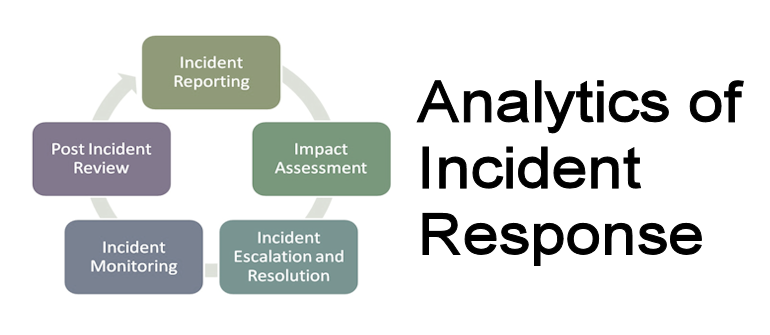
    PagerDuty has made a major move from simply alerting team members to potential issues via pager or web to actually becoming an advanced analytics platform to measure team and system performance regarding incident response. They announced their new functionality today (release below). This is really a big step up for PagerDuty which also recently announced closing on another round of venture caiptial.

    I spoke with Alex Solomon, CEO and Co-founder, David Shackelford, Product Manager and Nisha Ahluwalia, VP of Marketing recently about these new features. I had spoken with Alex some time back. He moved from Canada to Silicon Valley to found Pager Duty at the successful Y-combinator accelerator.  Since then they have made steady progress on executing on their plan.  However, this represents really a whole new market for PagerDuty. Proving insight into both team performance as well as system performance in regard to incident response is a big opportunity and Solomon, Shackelford and Ahluwalia are confident that PagerDuty is ready to capitalize on it.

    I am personally very excited by this new functionality. A mantra of business that I learned from my friend and serial entrepreneur, Rajat Bhargava is that you need that you need to measure everything and everything can be measured. This gives organizations the ability to measure incident response across teams and systems.

    Here is a sample of the system report:

    pager system report


    While there are vendors who do system analysis reporting, the combination of this with team analytics data should prove very powerful.

    PagerDuty’s Advanced Analytics Delivers Comprehensive View of Incident Resolution Across the Organization

    New Resolution-Time Metrics and Drill-Down Capabilities Enable Companies to Make Proactive Improvements to Increase System Reliability

    San Francisco – September 16, 2014 —PagerDuty, the leader in operations performance managementtoday announced the public release of its Advanced Analytics tools, which provide insights IT teams can use to improve team and system performance. Leveraging PagerDuty’s robust data on key operational metrics like incident frequency and time to respond and resolve, companies can now drive even faster incident resolution. The new capabilities further expand PagerDuty’s operations performance platform by giving managers the ability to analyze and improve key drivers of uptime.

    “Throughout the lifecycle of an incident, responders make real-time decisions, but little of that institutional knowledge is saved to make systematic improvements. Advanced Analytics gives responders and managers the tools they need to identify, analyze and share trends about their resolution times and incident load,” said PagerDuty Product Manager David Shackelford. “We’re excited to help our customers make smarter, data-backed decisions about their operations.”

    PagerDuty brings together data from all monitoring systems into a unified view, giving teams a single place to compare data about incidents with people and process metrics. With Advanced Analytics, managers gain better insight into how teams are responding to and resolving incidents, and determine whether teams are spending time on the right problems or spinning their wheels on unnecessary alerts. The reports provide a holistic view of team and system performance, enabling everyone from individual operations engineers to CTOs and CIOs to have richer discussions about these metrics.

    “PagerDuty’s Advanced Reporting saves us time since we’ve been calculating this data ourselves,” said Matthew Green, Senior Engineer at Rackspace. “We’re using the new reports to better understand the incidents we see in our environment on a daily basis. Also, seeing the resolution time data for our distributed teams will help us improve our response time.”

    Advanced Reporting is immediately available as part of PagerDuty’s enterprise plan.

    About PagerDuty

    PagerDuty’s operations performance platform helps companies increase reliability. By connecting people, systems and data in a single view, PagerDuty delivers visibility and actionable intelligence across global operations for effective incident resolution management. PagerDuty has over 80 platform partners, and is trusted by Fortune 500 companies and startups alike, including Microsoft, National Instruments, Electronic Arts, Adobe, Rackspace, Etsy, Square and Github. The company is headquartered in San Francisco and backed by leading venture capital firms Andreessen Horowitz, Bessemer Venture Partners, Baseline Ventures, Ignition Partners and others. Try PagerDuty for free, or to get more information, visit www.pagerduty.com

  • Docker closes C round for $40m

    Docker closes C round for $40m

    An old adage of business is if someone offers you money, take it. Another is strike when the iron is hot. Few things in tech are hotter than Docker and they have taken in another round of investment. This one is their biggest to date, $40m led by Sequoia.

    The release is below. Some additional quotes:

    “At Gilt, we are moving all of our software to run on Docker’s platform. Gilt runs on a very modern micro services architecture,” said Michael Bryzek, Gilt Groupe, CTO and founder. “Docker helps us keep services isolated and simplifies our continuous delivery pipeline that in turn encourages innovation and experimentation across all of our teams.”

    “Docker’s platform has become an important part of how we build and deploy new services at New Relic,” said Nic Benders, director of site engineering, New Relic. “For example, when we launched the New Relic Insights product, Docker gave our development team more independence and let them focus on bringing a great piece of software live on an aggressive schedule. Docker has helped us deliver new services faster than ever before.”

    Customer successes like Gilt and New Relic that were showcased at DockerCon in June­­ – coupled with the release of Docker 1.0 and the Docker Hub collection of management tools – have triggered exponential usage growth. There have now been 21 million downloads of the Docker platform, up from 3 million at DockerCon. Over 35,000 “Dockerized” applications are now available on the Docker Hub Registry, and more than 13,000 Docker-related projects have launched on GitHub. Docker has also seen rapid growth in the technology partner ecosystem with over 100 companies – including industry heavyweights Amazon, Google, IBM,Microsoft, Red Hat and VMware – having announced Docker–supporting platform initiatives.

    Industry veteran Bill Coughran, who joined Sequoia after eight years as a senior vice president of engineering at Google, will represent Sequoia on the Docker board.  In addition to his vast industry experience, Coughran brings a deep understanding of the technical underpinnings of Docker and containers, which are emerging as critical components of web-scale infrastructure systems.

    “Big businesses are being built by making accessible to all the transformative technologies championed by web-scale companies, and Docker is one of the most promising leaders of this movement,” said Coughran. “The velocity at which the Docker team has innovated on product and grown its community is staggering – in 18 months they’ve accomplished what many leading companies take years to build.”

    Docker Secures $40M in Series C Funding to Drive the Future of Distributed Applications

    Sequoia Capital-led round to support rapid expansion into the enterprise and continued growth of the Docker platform

    San Francisco, Calif. – September 16, 2014 – Docker, Inc., the company behind the Docker open source platform, today announced that it has partnered with Sequoia and raised $40 million in series C funding. Coming on the heels of a successful series B in January, this round represents a nearly 3X increase in round size and an even greater increase in valuation; reflecting the explosive growth of the Docker platform and ecosystem, and the broad interest in Docker as a solution for delivering distributed applications. Existing investors Benchmark, Greylock Partners, Insight Ventures, Trinity Ventures, and Jerry Yang also participated. Docker will use the funds to drive adoption of its platform in the enterprise and to broaden its rapidly growing ecosystem of application developers, system administrators, platform providers, and technology partners.


    Launched in March 2013, Docker is an open platform for building, shipping and running distributed applications. Docker provides a platform that enables any application to be created and run as a collection of consistent, low-overhead Docker containers that work across virtually any infrastructure. This new model liberates developers from application and infrastructure dependencies, significantly accelerates the software development lifecycle, and enables substantial improvements in infrastructure cost and efficiency.


    Dockerized applications empower continuous business innovation shaped by software and that potential has fueled rapid adoption by web-scale companies such as Baidu, Cambridge Healthcare, eBay, Gilt, Groupon, Spotify and Yandex. These companies are reporting acceleration in development/build/test cycles from weeks to minutes, and increases in data center efficiency by 10X or more. This has spurred interest from more traditional enterprises such as financial institutions and government agencies, which are looking for similar tangible benefits delivered with enterprise-grade solutions and support from Docker.