Author: Mike Vizard

  • Report Finds Software Engineering Productivity Gains

    Report Finds Software Engineering Productivity Gains

    An analysis of the time 23,000 software engineers spent working in 2021 that was published this week by Jellyfish, a provider of an engineering management platform (EMP), finds cycle times on average were down to 12.6 days, representing a 12.3% decline over 2020. The report, however, also finds commits were down 4% year-over-year, while the number of issues resolved was up 5% year over year.

    Jellyfish CEO Andrew Lau said the data suggests that software engineers are opting to commit less code in favor of resolving issues faster. Overall, coding days per engineer were down 8% to less than 1.6 days per week in 2021, the report found.

    Engineering teams on average in 2021 allocated 35% of their time to growth and innovation, while 19% was allocated to infrastructure work, up nearly 6% from 2020. Time spent on support work (24%), meanwhile, was down nearly 5% year over year. On average, unplanned work accounted for 22% of the time software engineers spent working in 2021, a 3% increase over the prior year. In general, Lau said the report suggests that engineering teams need to factor more time into schedules for unplanned work as application environments become more complex.

    The report also finds engineering organizations using EMPs tend to allocate similar time to “keeping the lights on” and customer support activities as other organizations but spend 29% more time on innovation work and 48% less time on unplanned work. In addition, the report notes teams that devote 50% or more resources to growth and innovation work deliver software at least three times faster than those who commit 25% or less.

    Virtual collaboration in the last year has also increased more than 20% as teams continue to embrace remote and hybrid work models, according to the report. Overall, organizations that allow software engineers to work from home remain productive but it’s not quite clear if managers have completely adjusted to the realities of hybrid work, noted Lau. The report also noted that pull request reviews per engineer are up 30% on average to 1.7 reviews per week. Pull review comments per engineer were up 23% year over year.

    In addition to the report, Jellyfish conducted a survey of 128 engineering leaders that finds more than 79% expect to grow their teams in 2022, with 57% expecting more than 10% headcount growth. Improving operations, tooling and processes (36%) is their highest priority in 2022, followed by hiring and retaining talent (18%), improving infrastructure (17%) and managing technical debt (10%). The biggest overall challenge is making sure everyone is focused on the highest priority work (45%), the survey finds.

    However, only 27% of the leaders currently track productivity metrics, despite more than two-thirds (67%) describing them as being very important or critical to track. Among teams that do track metrics, more than half (53%) do so manually, the survey finds.

    While the productivity of software engineers will naturally vary by organization, it’s apparent the weight of application environments is starting to impact how much time can be devoted to building and deploying new applications. The challenge, of course, is demand for new applications in the age of digital transformation has never been higher, which in part explains why so many organizations are struggling to find and retain software engineers.


  • Checkmarx Finds Malicious Open Source PyPi Repository

    Checkmarx Finds Malicious Open Source PyPi Repository

    Checkmarx, a provider of a platform for testing application security, this week disclosed it has discovered a malicious instance of a PyPi repository for Python code that has been downloaded more than 70,000 times.

    Tzachi Zorenshtain, head of supply chain security, said this discovery represents another instance where cybercriminals have made available a malicious copy of a popular open source software package that contains malware that is destined to find its way into downstream applications. Cybercriminals, via a tactic known as starjacking, create a web page that includes bogus statistics, such as GitHub stars, to make it appear a software package that a developer might download is from a legitimate open source project, he noted.

    Cybercriminals are combining starjacking with typosquatting to set up web pages to mimic a legitimate open source project, noted Zorenshtain.

    Starjacking represents yet another effort to compromise the integrity of software supply chains that rely on a wide range of open source software components to build applications. The only way to thwart starjacking is for either developers or DevOps teams to validate components before incorporating them within applications, noted Zorenshtain. Otherwise, it’s possible malware will only be discovered after it has already found its way into downstream applications deployed in a production environment.

    The challenge, of course, is remembering to take the time to validate the source of any software component. Developers that are typically trying to build applications as fast as possible don’t always stop to make sure that all the components they are employing are from a legitimate source.

    It’s not clear how pervasive fake sites through which developers are encouraged to download malicious software have come to be. However, as cybercriminals expand their efforts to compromise software supply chains, it’s clear their tactics are evolving in ways that exploit the trust developers have in open source software. It’s not likely these attacks will disrupt the open source ecosystem, but they do add additional urgency to make open source software more secure.

    The Open Source Security Foundation (OpenSSF), an arm of the Linux Foundation, has raised more than $10 million to build tools and define best practices for securing open source software projects. Google has pledged to ultimately spend $10 billion to improve open source security. The Biden administration has also made improving the security of open source software that is widely employed both inside and out of government agencies a priority by expanding compliance mandates. The White House is also clearly trying to pressure IT vendors and larger enterprises to contribute more to the effort to secure open source software.

    The trouble is many open source projects are maintained by a small number of programmers that contribute their time and effort to building components that others are free to use. Many of them argue the onus for making sure that software is secure is on the organizations that decide to deploy that software. Nor is their responsibility to track down cybercrimimals that employ Typosquatting techniques to distribute malicious versions of their software.

    Many of the IT vendors and large enterprise IT organizations that rely on that code are, unfortunately, not contributing anything meaningful back to the project, either in terms of financing or just helping open source maintainers find and remediate vulnerabilities. Many of those same organizations, however, are now also assessing whether the open source software they employ is, from a security perspective, actually sustainable in the absence of those contributions. As a result, it may now be only a matter of time before a long-simmering open source software security issue erupts into a major crisis of confidence.

  • Encore Platform for Running Distributed Apps in the Cloud Arrives

    Encore Platform for Running Distributed Apps in the Cloud Arrives

    Encore has made generally available a namesake backend development engine for rapidly building scalable distributed IT environments across multiple cloud platforms.

    Fresh off raising $3 million in seed funding, Encore CEO André Eriksson said the Encore platform analyzes source code to eliminate the need to manually configure, connect and set up portable cloud computing environments.

    In addition to being able to automatically setup and manage cloud infrastructure based on the metadata surfaced by static analysis tools, Encore provides access to a built-in continuous integration/continuous delivery (CI/CD) platform, previews of environments, live reloads of cloud environments, authentication, secrets management and automatic distributed tracing capabilities.

    Eriksson said the development of the Encore environment was, in part, inspired by how developers of games today routinely use an engine to build application environments rather than presenting developers with a set of text-based editing tools to build those environments using low-level boilerplate code that has to be written by developers for each application instance.

    Written in the Go programming language, Eriksson said Encore platform is based on an open source Encore Go Framework that prevents IT organizations from becoming locked into an Encore platform that today can be deployed on Amazon Web Services, Google Cloud Platform and Microsoft Azure cloud services.

    The building and deploying of distributed applications has always been a major challenge. Encore is designed to automate most of the routine tasks that DevOps teams today need to manually perform for each distributed application they support. As the number of applications being deployed across various cloud computing platforms increases, the challenges associated with managing those environments increase. Encore is designed to enable developers to easily build and deploy application code in a way that can be centrally managed by a DevOps team, noted Eriksson.

    It also takes advantage of the concurrency capabilities that the Go language enables to make it simpler to build and deploy distributed applications in a cloud-agnostic manner, said Eriksson. DevOps teams can also employ Go to extend the Encore environment within the boundary of certain limitations, he added.

    Essentially, Encore is making a case for an opinionated distributed computing environment that, in return for less flexibility, promises to make it simpler to deploy complex applications. Eriksson said Encore doesn’t see many DevOps teams looking to deploy distributed applications that span multiple cloud services, but they are being required to deploy more applications on different cloud platforms. Each cloud platform a DevOps team needs to support only serves to make the overall IT environment that much more complex to manage, he noted.

    It’s not clear to what degree IT organizations are ready to embrace a more opinionated approach to managing cloud computing environments. However, the concept of relying on one is hardly new. Platform-as-a-service (PaaS) environments have been employed for years. However, with the rise of microservices-based applications that are inherently distributed, the issue may soon be forced as IT organizations find simply no other way to keep pace with the rate at which applications are being developed and then continuously extended after they are deployed.

  • Blast Radius of GitHub Breach Major Security Concern

    Blast Radius of GitHub Breach Major Security Concern

    The extent to which software supply chains may be compromised in the wake of a security breach disclosed by GitHub may include thousands of organizations.

    GitHub has revealed that unauthorized parties compromised OAuth user tokens maintained by Heroku, an arm of Salesforce that provides a platform-as-a-service (PaaS) environment, and Travis CI, a provider of a continuous integration/continuous delivery (CI/CD) platform. GitHub has since disconnected the third-party applications that were employing those tokens to access repositories but how much any code might have been exfiltrated or, worse yet, modified may not be known for weeks.

    “There’s a lot of directions this could take,” said Mitch Ashley, principal researcher for Techstrong Research, an arm of Techstrong Group, which owns staging-devopsy.kinsta.cloud. “This is an attack against an authentication mechanism.”

    In fact, the full extent of the blast radius of the breach may never be known unless every organization employing Heroku or Travis CI platforms discloses whether their software supply chains were breached. GitHub has also yet to provide any timeline for the extent of the breach, so no one affected yet knows how far-reaching an investigation should be launched or how long it could take to discover malicious code that may have been injected into applications, noted Brian Soby, CTO at AppOmni, a provider of a platform that provides visibility into platform configurations.

    “We don’t know yet when this occurred,” he said. “This could have a big blast radius.”

    In the meantime, the GitHub disclosure will only intensify security reviews of software supply chains, which have begun in earnest in the wake of a series of high-profile breaches that started with an incident involving an IT service management platform provided by SolarWinds.

    In the case of the latest GitHub breach, security professionals are surmising that developers hard-coded tokens into applications accessing GitHub to make it easier to access repositories. “Developers are lazy,” said Demi Ben-Ari, CTO for Panorays, a provider of a platform for evaluating third-party security risks. “They like to take shortcuts.”

    Some organizations in the wake of the attack may move to distribute source code across repositories from multiple vendors as part of any effort to better secure their intellectual property, noted Ben-Ari.

    Organizations also may decide to rely on code repositories that are not accessed via the cloud. However, given the need to integrate disparate services across a software supply chain, there is no guarantee that an organization with a repository running in an on-premises IT environment wouldn’t be affected by a similar attack.

    On the plus side, as more organizations become aware of the threat vector employed to compromise the GitHub repositories, the level of awareness for implementing best DevSecOps practices should increase. The challenge, of course, remains bridging the technical and cultural divides that often result in developers not following best security practices when building and deploying applications. However, as the number of incidents continues to mount, more organizations are beginning to appreciate just how easy it is for the code they are relying on to engage customers and suppliers to be tampered with or outright stolen.

  • Quali Adds Control Plane to Platform to Manage IaC

    Quali Adds Control Plane to Platform to Manage IaC

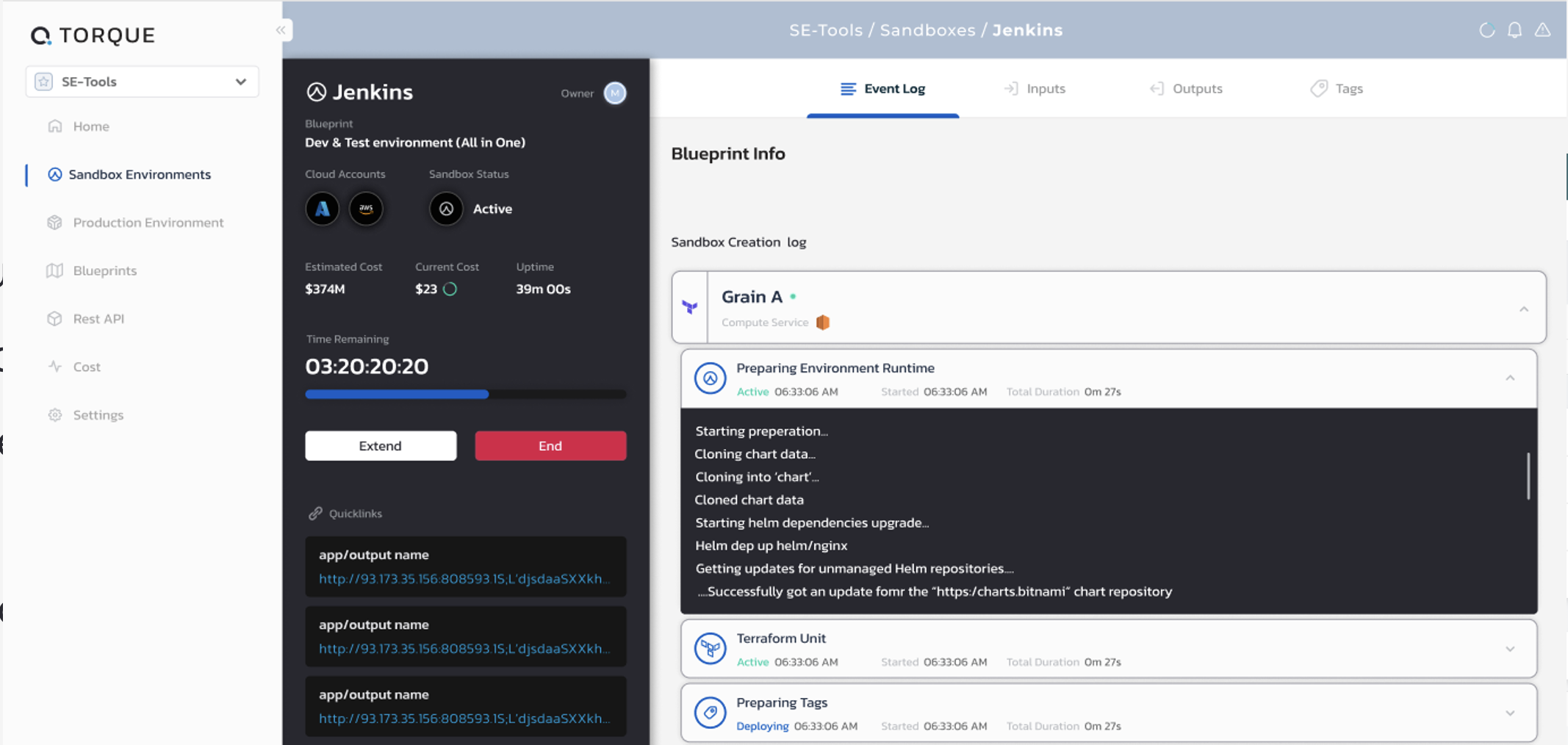
    Quali has added a control plane to its Torque platform to give DevOps teams the ability to consistently provision and orchestrate infrastructure across a heterogeneous distributed computing environment.

    Amir Rosenberg, vice president of product for Quali, said the control plane allows DevOps team to centrally manage the provisioning of infrastructure via reusable blueprints accessed via a self-service portal, which individual developers can access. That approach eliminates a bottleneck that occurs when DevOps teams manually provision infrastructure on behalf of development teams, he said.

    The latest release of Torque also adds enhanced visibility and cost control capabilities such as the ability to set limits for maximum duration and number of concurrent environments and limits for the total cost of an environment. Also included are cost reporting tools for Kubernetes clusters and improved forecasting and resource consumption policies that can be applied to blueprints, sandboxes and spaces.

    Security enhancements include new customizable role-based access to blueprints, API Token Controls and integrations with secrets management platforms.

    Through its software-as-a-service (SaaS) platform, Quali makes it possible to access Torque via either a cloud account or a user interface that connects to a GitHub account where blueprints are stored. The goal is to enable DevOps teams to maintain some control over how infrastructure is provisioned without impeding developer productivity, said Rosenberg, noting at a time when more organizations than ever are launching multiple application development projects, there is more sensitivity concerning developer velocity than ever.

    It’s a fact that infrastructure misconfigurations happen because developers make mistakes. It’s not uncommon for a port to be left open, for example, which cybercriminals later exploit to exfiltrate data. Quali is offering a DevOps platform that makes it possible to centrally apply policies that act as guardrails to prevent developers from making provisioning mistakes. An alternative to scripts created using tools such as Terraform, the blueprints can deploy complete application environments automatically. That approach also provides more visibility into how resources are being consumed.

    Every minute a developer spends managing infrastructure theoretically is one less minute they could be spending writing code. As application environments become more complex, Rosenberg noted it’s becoming that much more challenging for developers to cope with managing infrastructure as code. The issue is that DevOps teams who could provision infrastructure for developers are being overwhelmed by the number of projects they need to manage. As a result, DevOps teams are becoming bottlenecks. Naturally, that only encourages more developers to provision infrastructure on their own, which, Rosenberg noted, leads to more mistakes being made.

    It’s not clear when or even whether IT organizations will look for an alternative to provision infrastructure in a way that doesn’t rely on developers as much, but most seem to agree that developers have far better things to do with their time.

  • ForAllSecure Adds Free Testing Tools for OSS

    ForAllSecure Adds Free Testing Tools for OSS

    ForAllSecure is investing to make open source software (OSS) more secure and is making available free, personal-use versions of its Mayhem application security testing tools infused with artificial intelligence (AI) capabilities to anyone using GitHub repositories.

    Company CEO David Brumley said anyone who integrates Mayhem into a qualified GitHub repository being used to build open source software will receive $1,000 as part of the company’s Mayhem Heroes program.

    There are now two free, personal-use editions of Mayhem that can be used to analyze code or application programming interfaces (APIs). Those tools are based on fuzz testing technology, which randomly injects data into applications to detect vulnerabilities as part of an effort to automate DevSecOps processes.

    In the wake of the discovery of zero-day vulnerabilities in open source software that have impacted enterprise IT organizations, more attention is being paid to how open source software is created, maintained and secured. Many of the developers who build and maintain open source software don’t typically have a lot of cybersecurity expertise, and don’t have the time and resources required to continually remediate vulnerabilities as they are discovered. The Mayhem application security testing tools are designed to make it faster to discover vulnerabilities using AI technologies to reduce the number of false-positive alerts.

    It’s too early to say how quickly open source software might be made more secure, but tons of resources are being made available. The Open Source Security Foundation (OpenSSF), an arm of the Linux Foundation, has raised more than $10 million to build tools and define best practices for securing open source software projects. Google has pledged to spend $10 billion to improve open source security. The Biden administration has also made improving the security of open source software used inside (and outside) government agencies by expanding compliance mandates. The White House is also trying to encourage IT vendors and larger enterprises to contribute more to the effort to secure open source software.

    The pressure is rising on both developers and consumers of open source software to make sure open source software is secure. However, many open source projects are maintained by a small number of programmers who contribute their time and effort to build components that others are free to use. Many of them argue it is the responsibility of the organizations that deploy that software to ensure the software is secure  Many IT vendors and large enterprise IT organizations that rely on that code aren’t contributing anything meaningful back to the project, in terms of either financing or just helping open source maintainers find and remediate vulnerabilities. The irony is many of those same organizations are now assessing whether the open source software they employ is, from a security perspective, actually sustainable in the absence of those contributions.

  • Microsoft Taps vFunction to Refactor Java Apps for Azure

    Microsoft Taps vFunction to Refactor Java Apps for Azure

    Microsoft has teamed up with vFunction to make it easier to convert monolithic Java applications into a set of microservices that can be deployed on the Microsoft Azure cloud.

    The Microsoft Services Industry Solutions group is making available the Java Refactoring Service, through which IT teams will be able to both lift and shift Java applications to the cloud and then convert them into a set of microservices using agent software and the vFunction Application Transformation Engine, which is infused with artificial intelligence (AI), to analyze Java code.

    vFunction CEO Moti Rafalin said the goal is to eliminate the heavy lifting currently required to shift Java applications into the cloud. The vFunction Application Transformation Engine is required because most of the Java applications that were easy to move to the cloud have been, Rafalin noted. The remaining Java applications, he said, have levels of dependencies that make them too complex to move to the cloud without the aid of a static byte code analysis platform capable of parsing more than 10 million lines of code and thousands of Java class libraries.

    Once those applications are converted into a set of microservices, it then becomes possible to achieve a level of scale that would otherwise be beyond the reach of any on-premises IT environment, he added, noting the same vFunction platform can be used also to help organizations continuously optimize microservices applications as they continue to evolve in a cloud computing environment.

    Longer-term, vFunction is also looking to add support for Microsoft.Net applications that need to be migrated to the cloud, said Rafalin. Many complex Java and Microsoft.Net applications are still running in an on-premises IT environment because organizations are encountering inertia that arises from paralysis of analysis, he noted.

    In general, Microsoft continues to gain momentum in its battle for cloud supremacy against Amazon Web Services (AWS). It’s not clear at what rate Java applications are being shifted to the cloud. However, most monolithic applications have components that would be easier to maintain and support as a distinct microservice. In general, organizations are embracing microservices to build applications that are more resilient. In the event a microservice becomes unavailable, requests for services are rerouted to another microservice to make sure the application degrades gracefully, rather than simply crashing altogether. The challenge, of course, is that over time the dependencies that can exist between hundreds of microservices can be more challenging to manage than those of the monolithic application being replaced.

    It’s not likely that microservices-based applications with entire replace monolithic applications anytime soon, but the bulk of new applications are being built on top of a microservices-based framework. As such, many DevOps teams are now managing a broad mix of monolithic and microservices-based applications across an increasingly complex IT environment. Less clear is to what degree teams will be able to leverage existing DevOps tools and platforms to build and deploy both types of applications at the scale enterprise IT organizations require.

  • Survey Sees Little Progress on Securing Software Supply Chains

    Survey Sees Little Progress on Securing Software Supply Chains

    A survey of 1,750 IT security decision-makers published today found that, despite a series of high-profile cybersecurity breaches, nearly two-thirds (62%) of respondents have done nothing to secure their software supply chain. A full 64% conceded that an attack against their software development environment could not be stopped. And nearly three-fourths (71%) of respondents admitted their organization suffered a successful software supply chain-related attack that resulted in data loss or compromise of an asset, while 85% acknowledged a software bill of materials would also reduce the risk of compromise to a software supply chain.

    The survey, conducted by the market research firm Vanson Bourne on behalf of CyberArk, a provider of a privileged access management (PAM) platform, also found that 87% of respondents stored secrets in multiple places across DevOps environments, while 80% conceded developers typically have more privileges than necessary for their roles. Only 3% of respondents said their organization has a centralized secrets management platform to manage credentials used by applications.

    Organizations are also struggling to keep pace with the number of digital identities that have access to IT services. The average staff member has access to more than 30 applications and accounts, the survey found. However, 68% also reported non-humans or bots have access to sensitive data and assets, with machine identities now outnumbering human identities by a factor of 45, on average, the survey found. Less than half (48%) of respondents have any type of identity security controls in place for their business-critical applications.

    Even the threat of ransomware doesn’t seem to be having much of an impact. More than 70% of respondents said their organization has experienced, on average, two ransomware attacks in the past year.

    Brandon Traffanstedt, senior director for the global technology office at CyberArk, said it’s apparent organizations are accruing a significant amount of security debt that is not being proactively addressed. In fact, more than two-thirds of respondents (69%) said their organization has prioritized maintaining business operations over ensuring robust cybersecurity in the last 12 months. A full 99% of respondents said their organization had fast-tracked the adoption of at least one business/IT initiative over the last 12 months.

    In general, hybrid working (86%), the introduction of new digital services for customers or citizens (84%) and increased outsourcing (84%) are identified as the activities that are introducing the greatest risks. Specifically, the survey found credential access (40%) was the number one area of risk, followed by defense evasion (31%), execution (31%), initial access (29%) and privilege escalation (27%).

    Real-time monitoring and analysis to audit all privileged session activity; least privilege security/zero-trust principles on infrastructure that run business-critical applications and processes to isolate business-critical applications from internet-connected devices to restrict lateral movement are tied at 54% for the top three security initiatives organizations are planning to implement. The top three strategic zero-trust initiatives are workload security (52%), identity security (50%) and data security (45%), the survey found.

    Ultimately, the only way to address the current level of security debt organizations are incurring is by embedding functionality into DevOps workflows that automatically apply security policies and teaching developers to build more secure applications, said Traffanstedt. The former approach, however, may have a bigger impact more quickly, given the current level of cybersecurity expertise that currently exists in the developer community.

  • Survey Shows Shift to SRE Principles to Automate IT Management

    Survey Shows Shift to SRE Principles to Automate IT Management

    A global survey of 1,500 IT decision-makers conducted by F5 found that, on average, organizations are managing more than 200 applications deployed across an extended enterprise as well as more than 20 different security and delivery technologies.

    Lori MacVittie, principal technical evangelist in the Office of the CTO for F5, said that level of complexity makes it apparent that IT teams will need to embrace higher levels of automation to manage the IT environments that are now at the core of a wide range of digital business transformation initiatives. The survey revealed that more than three-quarters of respondents (77%) were embracing site reliability engineering (SRE) principles to automate the management of IT.

    A full 95% of respondents also planned to mine operational data for insights they could use to improve the customer experience and drive business growth. However, 98% of respondents also said they are currently unable to extract those needed insights from their existing systems. A total of 90% said they planned to implement some form of artificial intelligence (AI) to achieve that goal. More than two-thirds of respondents said their organizations realized that creating superior digital interactions for customers will require modernizing business processes and back-office functions.

    As part of those efforts, the survey suggested that application workloads are being shifted across highly distributed computing environments. In addition to the 84% of respondents that are planning to move workloads to the edge, the survey found two-thirds of organizations (67%) are currently or planning to repatriate applications from the cloud to a data center environment in the next 12 months. A total of 93% of respondents reported using some type of as-a-service offering delivered via the cloud today.

    Naturally, securing that many platforms also represents a major challenge. However, despite inherent risks, more than three-quarters (76%) of respondents said, given the choice, they’d turn off security measures to improve performance. That lack of willingness to sacrifice performance suggests that attitudes to security may not have changed much despite all the breaches that now regularly occur, said MacVittie.

    It’s not clear to what degree managing enterprise IT environments has become untenable; however, it’s clear that legacy manual processes will need to become automated. Organizations can’t afford to keep hiring IT staff to manage IT platforms that span everything from the network edge to public clouds. In fact, the survey makes clear that DevOps practices—in the form of the SRE principles first defined by Google—are gaining traction. That doesn’t necessarily mean everyone managing IT is becoming an SRE or an engineer, but it does suggest that automation frameworks are being more widely used.

    It may be a while before those automation frameworks are ubiquitous. However, one way or another, many of the tasks that have historically conspired to make working in IT tedious are going to disappear. The issue, of course, is to not wind up with islands of disconnected automation that introduce more complexity.

  • Atlassian Expands DevOps Tools Portfolio to Improve Collaboration

    Atlassian Expands DevOps Tools Portfolio to Improve Collaboration

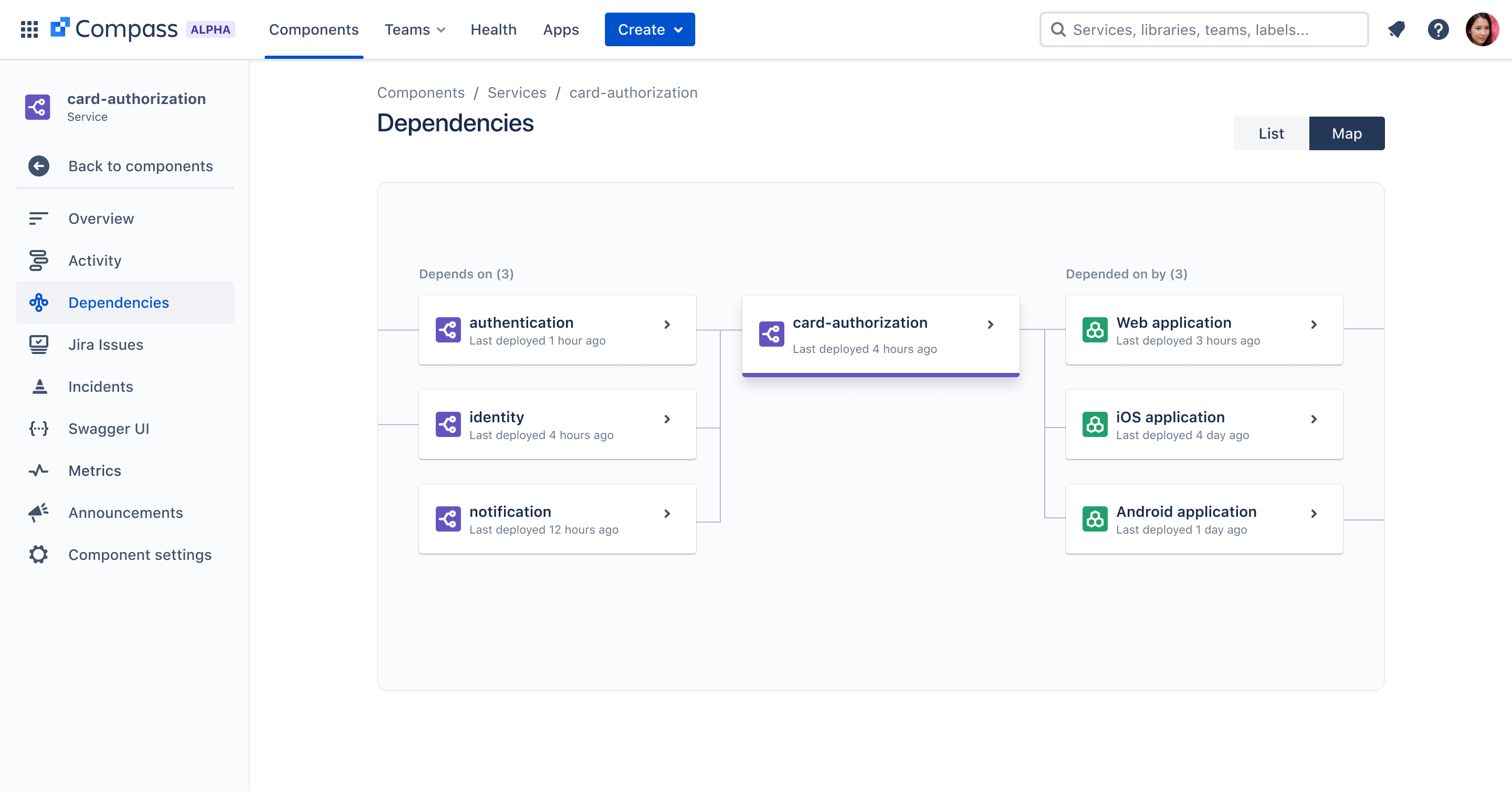
    Atlassian has added an extensible catalog for tracking software components, dubbed Compass, to its portfolio of DevOps tools along with an Atlassian Data Lake and Atlassian Analytics cloud service that makes it simpler to aggregate and query data collected from the company’s portfolio of tools.

    In addition, Atlassian is making its Atlas collaboration framework—formerly known as Team Central—formally available in beta. That framework, in effect, provides an overlay through which different collaboration tools adopted by various DevOps teams can be more easily integrated.

    Compass provides DevOps teams with the ability to map all the components they use to assemble their software as well as the teams that own them. DevOps teams can access shared components and documentation along with scorecards to allow them to measure and evaluate their architecture based on the baselines, security or compliance requirements they might be required to meet. It can be extended to other applications via an integrated Apps engine using Forge, the existing Atlassian cloud development environment.

    Tiffany To, head of product for Agile and DevOps at Atlassian, said Compass is designed for DevOps teams that are typically trying to manage 50 or more microservices. It is designed to be deployed alongside the Jira project management software that is widely used by software development teams to manage multiple projects.

    Atlassian Analytics, meanwhile, is based on a visualization and analytics platform the company gained last year with the acquisition of Chartio. Initially, the Atlassian Data Lake will include data from Jira Software and Jira Service Management tools with support for additional Atlassian platforms planned.

    Collectively, these tools are part of an ongoing Atlassian effort to make it simpler to integrate multiple DevOps teams, said To. Many of those teams prefer to maintain autonomy over the tools they select. The challenge that creates is organizations need some type of overlay through which they can collaborate and share best practices, she said.

    A survey of 2,000 developers conducted by Atlassian found half of the respondents exercise strong autonomy over the tools they use, with more control over tool selection gained as developers become more experienced. The same survey also found that 65% of developers felt they should be responsible for more of the software product life cycle than they currently are.

    It’s apparent that most organizations building software are trying to strike a balance between developer autonomy and centralized control. Developers are expensive to hire and retain, so there is a natural tendency to make available the tools they prefer. That, however, can lead to a level of tool sprawl that makes it difficult to determine the overall state of application development and deployment within an organization.

    Regardless of the approach, the need to remove as much friction as possible from DevOps workflows is clear, especially as the number of simultaneous application development projects continues to multiply. The challenge and the opportunity, of course, is achieving that goal while keeping developers happy.