Author: Mike Vizard

  • Oracle Extends Capabilities of Enterprise Manager Platform

    Oracle Extends Capabilities of Enterprise Manager Platform

    Oracle today announced it has updated its core management platform to provide capabilities that make it easier to manage a hybrid cloud computing environment spanning millions of endpoints.

    The latest release of Oracle Enterprise Manager (EM) 13c, in addition to greater scalability, also provides support for dynamic groups, dynamic runbooks, automated workload analysis, monitoring templates, event compression and other capabilities that make it easier to manage IT operations at scale.

    Oracle Enterprise Manager (EM) 13c Release 5 also extends the reach of the management platform further into the realm of packaged Oracle applications and integrated hardware and software platforms such as Oracle Exadata, Oracle Database Appliance (ODA), Zero Data Loss Recovery Appliance (ZDLRA) and Private Cloud Appliance (PCA).

    Oracle has also updated the compliance framework it includes with Oracle Enterprise EM to support additional regulatory requirements and refreshed the user interface for the fleet management tool provided.

    Finally, the company is adding a tool that makes it easier to copy data stored within Oracle EM 13c to the Oracle Cloud Infrastructure (OCI) service. Dubbed OCI bridge, this tool copies data to an OCI object store where it is accessed by OCI services such as logging analytics and operations insights.

    Mughees Minhas, vice president of product management for enterprise and cloud manageability at Oracle, said as hybrid cloud computing continues to evolve, the need for a single management platform that spans infrastructure, databases and applications is becoming more apparent.

    Minhas said Oracle EM 13c is part of larger observability initiative that Oracle has embraced to provide more context across disparate services in a way that reduces the total number of tools an IT team needs to deploy and master. That effort complements a series of autonomous computing initiatives Oracle has previously launched that eliminates the need for database administrators (DBAs) to manage lower level systems administration tasks such as performance tuning. In general, Oracle is making a case for an IT world where platforms are co-managed by Oracle and internal IT teams that are focused on higher-level tasks.

    As IT environments become more distributed it’s clear IT is becoming more complex to manage. The issue that IT teams need to come to terms with is to what degree can they automate management tasks that today conspire to limit the size of the IT environment any given IT team can effectively manage. DevOps teams, of course, have been ruthlessly automating application development and deployment tasks for years. That philosophy is now being extended to include a broader range of IT operations tasks being automated by vendors themselves.

    Each IT team will ultimately need to decide just how many automation platforms it requires. In many cases, IT teams are now struggling to unite various islands of automation that have now emerged within their organization. Regardless of approach, however, rote tasks that once consumed hours, sometimes days to complete, are now no longer required which, theoretically at least, should leave more time to focus on more complex challenges that are getting thornier by the day.

  • Red Hat Extends Reach and Scope of Insights Analytics Service

    Red Hat Extends Reach and Scope of Insights Analytics Service

    During its online Red Hat Summit event, Red Hat today announced it has extended the Red Hat Insights predictive analytics cloud platform for managing IT to now include support for editions of Red Hat OpenShift based on Kubernetes and the Red Hat Ansible Automation Platform.

    In addition, Red Hat has extended Red Hat Insights for Red Hat Enterprise Linux (RHEL) to include the ability to prioritize security alerts, streamline notifications and track Red Hat subscription consumption.

    In total, since launching Red Hat Insights in 2019, Red Hat claims there are now more than 600,000 RHEL hosts analyzed per day.

    Joe Fitzgerald, vice president and general manager for the management business unit at Red Hat, said Red Hat Insights provides IT teams with the equivalent of a co-pilot for managing IT environments. In general, advances in automation and artificial intelligence (AI) are making it easier to manage complex IT environments at scale, noted Fitzgerald. However, it’s not likely IT environments will be automated to the point where lights-out management without human intervention is likely to be achieved any time soon, added Fitzgerald.

    However, it’s also becoming apparent that it’s not possible for IT teams to manage complex IT environments without help in the form of advanced analytics tools. In fact, while many IT professionals are leery of automation tools because of the perceived threat to their jobs, it’s also becoming apparent that IT teams will not be able to manage modern IT environments without these tools. Organizations can’t afford to hire small armies of IT personnel. In addition, finding and retaining IT professionals that have, for example, Red Hat OpenShift skills remains a significant challenge.

    Red Hat Insights provides IT teams with additional levels of context required to manage these environments that goes beyond simple monitoring, noted Fitzgerald. That’s critical, as the IT environment becomes more extended in the age of hybrid cloud and the rate at which platforms are updated steadily increases, added Fitzgerald. Platforms such as Red Hat OpenShift, for example, are now typically updated every three to four months.

    DevOps, of course, has always been about ruthlessly applying automation whenever possible. As analytics applications become more robust, IT teams gain the visibility required to automate a wider range of complex tasks, noted Fitzgerald. In fact, in the absence of that visibility, automation can be a dangerous thing when mistakes caused by a lack of visibility and insight are made, added Fitzgerald.

    In the longer term, Red Hat expects to see continued convergence of job functions and roles as IT teams become more cross-functional, said Fitzgerald. Platforms such as Red Hat Insights will provide a single console around which these teams can collaborate, added Fitzgerald.

    Going forward, there won’t be a handful of administrators with augmented capabilities. Rather, IT specialists that have a particular set of skills will be able to collaborate more easily in a way that both creates a better outcome and ultimately keeps a lid on the total cost of IT.

  • WhiteSource Acquires Diffend to Secure Open Source Supply Chains

    WhiteSource Acquires Diffend to Secure Open Source Supply Chains

    WhiteSource this week announced it has acquired Diffend as part of an expended effort to discover malware that has been deliberately injected into open source software by a contributor acting in bad faith.

    Company CEO Rami Sass said cybercriminals are increasingly trying to compromise software supply chains that today depend heavily on open source projects. The Diffend platform surfaces anomalous contributor behavior that would be indicative of someone trying to compromise the integrity of a project, said Sass.

    Previously, WhiteSource provided a tool that would discover malware that had been inadvertently included in open source software. WhiteSource now plans to add the Diffend tools, now known as WhiteSource Diffend, for free to a portfolio of security tools that many organizations have already incorporated into DevSecOps workflows. Earlier this month, the company raised an additional $75 million in financing that, in part, was used to fund this acquisition.

    As cybercriminals begin to target software supply chains, many of them are taking aim at open source software that is likely to be adopted by a broad spectrum of organizations, noted Sass. The challenge is that bad actors have become adept at embedding malware in software components in ways that are difficult to detect, he said. However, spikes in activity from, for example, a new contributor to the project might warrant additional investigation, Saas added.

    These type of attacks, unfortunately, will require the maintainers of open source software to vet more closely who is allowed to contribute to the project, added SaaS. New contributors that might have once been greeted with open arms need to now be initially met with a modicum of paranoia, Saas said.

    That level of suspicion will be considerably higher if that contributor is located in a country that has a reputation for trying to compromise the security of both adversaries and companies that have intellectual property they might want to surreptitiously acquire.

    In the wake of some recent high-profile breaches involving software supply chain compromises, organizations are revisiting their application development processes. Cybersecurity teams are now asking developers to vet any external code that is incorporated within an application. Most applications regularly incorporate both open source and commercial components that developers assume have been vetted for malware when, in most cases, they have not. The Diffend platform, for example, aided in the detecting of 60 suspicious packages found in Rubygems, an open source platform that makes it easier to package software built using Ruby programming tools.

    It’s unclear how increased inspection of software components may impact application developer productivity. However, given how dependent organizations are on software today, the discovery of malware downstream that compromises the security of the application is potentially catastrophic.

    Sass said it’s doubtful these security concerns will lead to decreased reliance on open source software in general. There is no real alternative for efficiently driving software innovation, he said. The challenge now is finding a way to make sure all that innovation continues to occur as securely as possible.

  • ServiceNow Shifts to Single Unified Agent

    ServiceNow Shifts to Single Unified Agent

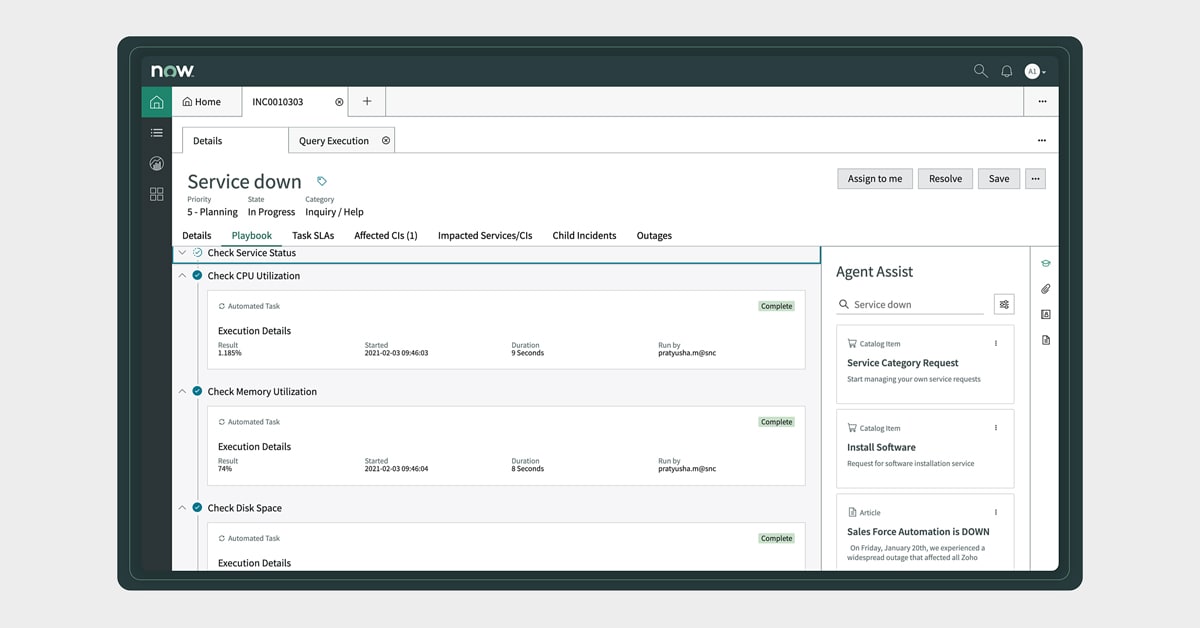
    ServiceNow today unveiled an Agent Client Collector (ACC) that makes it possible for IT teams to capture data from software, hardware and cloud infrastructure.

    Jeff Hausman, vice president and general manager for IT operations management at ServiceNow, said this unified agent will enable IT teams to reduce the number of agents they would otherwise have to deploy to collect the data required to monitor IT environments.

    IT teams will also be able to employ incident management tools that can view that data in a way that eliminates the need to install any remote desktop software, Hausman noted. At a time when many employees will be splitting their time between working from home and the office, that approach reduces the level of IT service management (ITSM) friction that many IT teams today regularly encounter, added Hausman.

    ACC surfaces both configuration and performance data in real-time to provide IT teams with greater visibility. That data can then be used to drive a variety of workflows and playbooks that trigger automated incident responses.

    ServiceNow will employ ACC both within its ITSM platforms and IT operations management (ITOM), hardware asset management (HAM), software asset management (SAM), and security operations (SecOps) tools.

    Hausman said ServiceNow will employ ACC alongside agentless tools for managing IT environments as part of an effort to strike a balance between the amount of software that needs to be deployed and the capabilities that agent software enables. Ultimately, ServiceNow will also open up ACC to third-party tools that offer complementary capabilities, he added.

    More than a few IT organizations are suffering today from a phenomenon known as agent fatigue. Each new tool added to the IT arsenal often requires agent software to be installed within a device, application, server or cloud service. The need to reduce the amount of agent software has given rise to agentless approaches to managing IT resources, but the tradeoff is that, in the absence of an agent, the types of data and capabilities that can be enabled tend to be more limited.

    The market research firm International Data Corp. (IDC) is predicting that 75% of Global 2000 IT organizations will adopt automated operations practices by 2023. A major driver of that increased reliance on automation has been, of course, the COVID-19 pandemic. Not only are organizations making greater use of cloud infrastructure, but application users are not often conveniently located behind a firewall in a corporate office. For the last year, IT teams have been tasked with supporting a largely remote workforce. As more of those employees are vaccinated in the weeks ahead, a lot more of them will be returning to the office. However, it’s unlikely most employees will be working in an office full-time even after the COVID-19 pandemic subsides.

    Regardless of how IT is managed, the overall IT environment will continue to become more complex. As such, it’s now more a question of when rather than if organizations will need to revisit how IT gets managed across what has become a highly distributed environment.

  • Survey Shows Acceleration of Centralized IT Management

    Survey Shows Acceleration of Centralized IT Management

    An OpsRamp survey published this week suggests large enterprises are looking to finally unify IT management at at time when it is becoming increasingly complex.

    OpsRamp, a provider of an IT management platform based on machine learning algorithms, polled 132 IT operations directors working for organizations in the U.S. with more than 500 employees that spend more than $5 million a year on IT.

    According to the results, the survey found nearly 73% of respondents plan to roll out a digital operations management platform in 2021. That platform will, hopefully, enable IT teams to unify hybrid cloud computing environments made up of monolithic and microservices-based applications via a single console. Another 21%of respondents expressed interest in such a platform, if budgetary constraints allowed.

    More than half (51%) also noted they expect to employ automation and AIOps (51%) in the form of machine learning algorithms and process automation to reliably cut down on the number of alerts being generated, identify the root cause of issues and eliminate repetitive manual tasks.

    The two main goals identified in the survey are to enable greater agility and resolve issues faster (46%) and reduce costs by consolidating tools (41%).

    While the rise of cloud computing has made IT more agile, each cloud service that is added to the IT firmament tends to increase the total cost of IT. Each IT platform in use today requires a dedicated team to operate, which conspires to increase both the number of tools required and the overall size of the IT staff required to master them.

    In the wake of the economic downturn during the COVID-19 pandemic, the amount of pressure being applied to reduce those costs has increased significantly. Security and compliance concerns are also starting to push organizations toward centralizing the management of IT as much as possible. The OpsRamp survey notes that platform security (59%) is the most critical attribute of a next-generation IT platform, followed by hybrid infrastructure management capabilities (52%) and flexible pricing (37%).

    Deepak Jannu, senior director for product marketing at OpsRamp, said achieving those goals across what has become an extended enterprise requires a platform that has the ability to first capture telemetry data in real-time and then aggregate that data in way that enables artificial intelligence (AI) models to learn how the IT environment actually operates.

    Armed with that data, it then becomes possible to employ AI to both troubleshoot IT issues more easily and surface recommendations that address capacity utilization, noted Jannu.

    It may be a while before AI-enabled IT management platforms are commonplace in the enterprise. However, it’s also apparent a number of factors are driving IT leaders to reevaluate their existing platforms as IT environments become increasingly more complex.

    Regardless of what platform an organization eventually opts to standardize on, the rate at which IT management tasks are being automated is only going to increase as machine learning algorithms become more familiar with the IT environment in which they are deployed. That doesn’t necessarily mean those algorithms will remove the need for IT administrators and DevOps teams, however. It does mean that the tasks the individuals on IT teams are focused on will, hopefully, provide a lot more value to the business.

  • Applause Delivers Testing Integration Tool

    Applause Delivers Testing Integration Tool

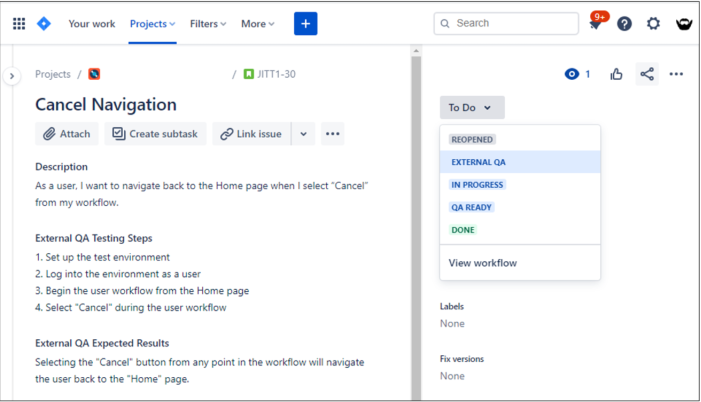
    Applause today made a bi-directional integration capability that simplifies requesting application code tests of, dubbed Applause In-Sprint Testing, generally available.

    Kristin Simonini, vice president of product for Applause, said application owners will be able to, for example, use a Jira project management application to create a ticket that requests a specific piece of code be tested either by a member of dedicated testing team or by a developer that has assumed greater responsibility for application testing within the context of a DevOps workflow.
    Alternatively, that request could be sent to a tester that is a member of uTest, an online community of professional testers that Applause oversees.

    The company also published the results of a global survey of 1,800 quality assurance (QA), product, engineering and DevOps professionals that found 44% of development teams that have shifted application testing left are spending a full workday every week on application testing. More than half the respondents (52%) noted that amount of time spent on testing is impacting developer productivity.

    On the plus side, a full 88% of respondents that release code multiple times per month said their organizations now test features as they are developed versus waiting until the end of application development process, the survey also found.

    The major benefits of shifting testing left cited by respondents are reducing the number of bugs released into production environments (57%), reducing the cost of late-stage bug fixes (48%), and reducing the need for hot-fixes (39%).

    The top two barriers to shifting responsibility for testing left toward developers is they are too busy coding (45%) and that development and quality assurance (QA) efforts remain siloed (37%). Nearly half of developers (44%) said they have issues with context switching as they shift between coding and testing tasks.

    Simonini said Applause In-Sprint Testing will make it easier for application owners to decide when they want to make use of a professional tester versus having a developer run a test. The Applause Product Excellence Platform then enables IT organizations to leverage a software-as-a-service (SaaS) platform to record a series of test case scenarios that can be automatically converted into an automation script without anyone having to write code.

    The overall goal is to simplify testing at a time when the number of applications being built has accelerated in part because of the increased focus on digital business transformation that occurred in the wake of the economic downturn brought on by the COVID-19 pandemic. As organizations realize how dependent they have become on those applications to differentiate themselves, the focus on quality assurance naturally intensifies, noted Simonini.

    There’s no doubt more organizations are testing with greater frequency. The efforts of developers that previously tended to address large numbers of bugs as part of a series of application updates after deployment in production are now being frowned upon. Organizations realize their applications only get one chance to make a first impression with end customers. As a result, the level of attention to detail being applied to application testing has, for better or worse, never been greater.

  • Redis Labs Extends Reach of In-Memory Database

    Redis Labs Extends Reach of In-Memory Database

    At its online RedisConf 2021 event, Redis Labs today detailed how the company’s in-memory database will be employed to drive real-time applications that are at the core of most digital business transformation initiatives.

    Yiftach Shoolman, Redis Labs CTO and co-founder, said there are four initiatives at the core of the Redis Labs effort to replace legacy databases that organizations have historically employed to drive batch-oriented application processes.

    RedisRaft, which will become available with release 7.0 of the Redis database in the third quarter, provides a module based on the Raft consensus algorithm that enable multiple Redis servers to be consumed by an application as if they were one single, fault-tolerant, logical cluster. That capability will provide IT teams with the ability to distribute Redis servers closer to the point where data is being consumed by a distributed application without incurring any conflicts between databases, said Shoolman.

    At the same time, Redis is extending its Active-Active technology to enable integrated data models to be deployed in a way that allows distributed applications to run as close as possible to the point where data is being created and consumed.

    Finally, RediSearch is being updated to include support for indexing capabilities in JSON applications using a nested document model, while a RedisAI capability will add an inference engine for artificial intelligence (AI) applications that can be employed as a feature store through which the deployment of AI models within applications can be managed. That approach also promises to significantly increase the overall performance of AI applications, noted Shoolman.

    Historically, the Redis in-memory database has been best known for the caching capabilities it provides developers. However, Shoolman noted 66% of organizations that employ the Redis database are using it for additional use cases. As microservices that are often configured with their own database become more prevalent, the adoption of an in-memory database platform should only increase, added Shoolman.

    Many of those microservices are being employed within the context of a digital business transformation project. The issue that organizations are coming to terms with is most of those processes need to run in near real-time. That requirement will eventually push more organizations toward deploying a database based on a distributed database running in-memory that appears as one logical entity to an application, said Shoolman.

    At its core, Redis a data store that supports structures such as strings, hashes, lists, sets, sorted sets with range queries, bitmaps, hyperloglogs, geospatial indexes, and streams. Among other capabilities, it includes support for built-in replication, Lua scripting, transactions and varying levels of persistence. The company claims the core Redis datastore has been downloaded 1.5 million times in the last nine years.

    On top of that installed base, Redis Labs then makes available tools for deploying and managing Redis within large-scale application environments. Most recently, Redis Labs raised an additional $100 million round of financing to bring its valuation to above $2 billion. The company now claims to have more than 8,000 paying customers, with a 54% compound annual growth rate in sales for the past three years.

    It’s hard to say to what degree Redis data stores might supplant legacy database platforms. However, the one thing that is certain is there are lot more databases running in memory that, in many cases, obviate the need for a traditional relational database.

  • Pulumi Moves to Automate Cloud Infrastructure Provisioning

    Pulumi Moves to Automate Cloud Infrastructure Provisioning

    Pulumi announced today it is expanding the scope of its automation ambitions to make it easier to securely provision cloud infrastructure-as-code.

    Joe Duffy, Pulumi CEO, said the Cloud Engineering Platform enables DevOps teams to use Pulumi Packages to create reusable components for automating IT infrastructure provisioning in a way that can be embedded within workflows and applications using an application programming interface (API) that Pulumi has exposed. IT teams can define a Pulumi Package in the programing language of their choice, Duffy noted.

    The Cloud Engineering Platform is now generally available on the Microsoft Azure cloud, while a preview edition of the offering is available on Google Cloud Platform. Support for Amazon Web Services (AWS) is planned for later this year.

    The platform itself is based on version 3.0 of Pulumi, an open source tool that developers have previously employed to manage infrastructure-as-code. Pulumi is also making generally available a tool for integrating its tools with more than a dozen continuous integration/continuously delivery (CI/ CD) platforms.

    That capability, coupled with existing support for integrated testing capabilities and the tools for managing compliance-as-code based on identities, provides IT teams with a more comprehensive approach to managing infrastructure-as-code, said Duffy.

    Most cloud resources today are directly provisioned by developers using open source tools such as Terraform. The issue that organizations have encountered is that developers are prone to making configuration mistakes that cybercriminals then exploit. Pulumi is making a case for an alternative approach to provisioning infrastructure-as-code that makes it easier to validate configurations using testing tools, while at the same time limiting who can access infrastructure resources by including support for the secure access markup language (SAML) and single sign-on (SSO) capabilities.

    It’s not clear at what rate enterprise IT organizations will be shifting toward platforms that enable infrastructure to be managed as code in a more robust fashion. Developers that don’t always have the greatest appreciation for cloud security issues routinely employ tools such as Terraform to provision infrastructure-as-code with little to no supervision. Cloud resource misconfigurations often result in ports left wide open, and cybercriminals now make use of tools to scan for those types of misconfigurations.

    Pulumi Packages provides a means for IT teams to exercise more control over the provisioning process, using vetted reusable components in a way that doesn’t compromise the rate at which developers can spin up cloud resources, noted Duffy.

    As organizations focus more on software supply chains in the wake of some recent high-profile breaches, it’s only a matter of time before more questions arise about how cloud infrastructure is being provisioned. Much of the concerns organizations already have about cloud security doesn’t stem from the platforms themselves. Rather, it’s the processes employed to provision infrastructure under a shared cloud security responsibility model that results in so many vulnerabilities. Many developers assume the cloud service provider is securing configurations, only to discover later that it was their responsibility to validate those configurations. Security teams, meanwhile, can’t keep pace with the rate at which cloud infrastructure resources are being provisioned.

    Hopefully, there will come a day when DevSecOps best practices leverage automation to resolve this issue once and for all. The challenge is finding the best way to achieve that goal in a way the average developer will accept and embrace.

  • Perforce Adds Synchronization Tool for Cross-Functional Teams

    Perforce Adds Synchronization Tool for Cross-Functional Teams

    Perforce Software has added a graphical tool, dubbed Helix Sync, that enables individuals, such as artists, to take advantage of the version control capabilities provided by its software development life cycle (SDLC) platform.

    Gerhard Krüger, cloud architect and product manager at Perforce, said that as DevOps workflows continue to evolve in the gaming and automotive industries, the need to manage artifacts such as drawings, for example, alongside software artifacts is becoming more pronounced among cross-functional teams.

    Helix Sync gives those end users access to a desktop client that enables any individual to upload artifacts into a system by dragging and dropping them into the Perforce Helix Core SDLC platform.

    Previously, end users that lacked coding skills would need to share files with developers via cloud services such as Dropbox. The Perforce approach removes the inherent friction development teams would otherwise encounter, while at the same time making sure the artifacts being shared are more secure, said Krüger. In addition, end users don’t have to be concerned about file size limitations imposed by file sharing services accessed via the cloud, noted Krüger.

    It’s not clear how many organizations are looking to centralize digital asset management within the context of an application development process, but the fewer places that artifacts reside, the more productive IT teams tend to be. At a time when the number of application development projects within many organizations has accelerated, there’s a lot more interest in reducing the number of steps any developer has to monitor and track.

    Diagrams and other types of artwork are not the only kinds of artifacts that are finding their way into software development processes. Data scientists are building massive artificial intelligence (AI) models that need to be incorporated into application development and deployment processes. The challenge organizations face is the individuals that create many of these types of artifacts lack the programming skills required to share them via version control platforms typically employed by developers.

    With the launch of Helix Sync, IT teams should assume that, going forward, Perforce will be expanding its overall content management capabilities, Krüger added.

    It’s not clear to what degree workflows will converge as application development continues to evolve. Organizations are starting to appreciate just how dependent they are on software. As that awareness increases, it’s only a matter of time before workflows start to converge around the software development process that are employed to drive multiple digital business transformation initiatives.

    With more of the creators of those artifacts working remotely, the security of those software supply chains has also become more critical. Cybercriminals are becoming more adept at compromising the credentials end users create to access a cloud file service. Software development teams are more likely to employ more rigorous forms of authentication.

    Arguably, there’s never been more artifacts to track during the history of application development than there are today. The thing that makes managing all those artifacts even more challenging is, just like every other piece of software, they are also being continuously updated in ways that aren’t easy to discern.

  • Survey Shows Mounting DevOps Frustration and Costs

    Survey Shows Mounting DevOps Frustration and Costs

    A survey of 400 developers and DevOps team members in the U.S. and Europe found, on average, 15 hours a week are being spent managing tasks such as debugging pipelines and waiting for tests and builds to complete.

    Conducted by the market research firm Vanson Bourne on behalf of Garden, a provider of a platform for automating application development and deployment tasks in Kubernetes environments, the survey finds more than three-quarters of respondents (76%) said the time spent on these and other manual DevOps tasks is generally being wasted.

    Garden CEO Jon Edvald said, all told, 39% of a 40-hour workweek is typically devoted to these tasks. When the number of developers and DevOps specialists that are employed today are factored into that equation along with their salaries, as much as $61 billion is being wasted on these tasks in the U.S. alone, he noted.

    The top sources of DevOps frustration cited by survey respondents are waiting for pipelines to run (76%), waiting for builds and tests (74%) and setting up, maintaining and debugging pipelines/automation (71%). In fact, only 11% of all respondents are completely happy with their development setups and workflows.

    Those hidden costs may even increase as organizations bring on additional DevOps expertise. A full 83% of respondents said their organizations are planning to hire more staff or increase their use of freelancers/outsourcing into DevOps roles in 2021. Three quarters (75%) said DevOps budgets have increased or will increase compared to 2020.

    In addition, the adoption of more complex platforms, such as Kubernetes, may also conspire to increase costs, noted Edvald. Respondents at organizations not yet using Kubernetes spend an average of 14.3 hours per week on low-level DevOps tasks, as compared to 16.5 hours a week for those who are already using Kubernetes. Nearly two-thirds of respondents (62%) said their organizations are already using Kubernetes, while 31% are currently evaluating it, to varying degrees. A full 95% of respondents using Kubernetes have faced challenges after rolling it out, including training and onboarding (37%) or complexity of setup/configuration (35%).

    Of course, not all the time that might be saved is going to be applied to tasks that increase overall productivity; nearly half of respondents (49%) said if they had it, they would spend more time developing new products and services.

    Specifically, 46% said they would improve speed and delivery of existing products and services, while 44% said they would focus on improving security for existing products and services.

    Edvald said the survey makes it clear there’s still plenty of opportunity to automate repetitive DevOps tasks. Organizations are spending too much time on the care and feeding of DevOps platforms that takes time away from building and deploying applications, noted Edvald.

    Less clear is when organizations will reach some type of DevOps breaking point. Garden is betting that the transition to cloud-native applications based on microservices will eventually force the DevOps automation issue. However, in organizations that only know the DevOps processes they have used for years, change may be a long time in coming.