Category: Features

  • Enthusiasm for DevOps Greater Than Actual Adoption, Survey Shows

    Enthusiasm for DevOps Greater Than Actual Adoption, Survey Shows

    When it comes to DevOps practices, adoption continues to lag intention by quite a bit.

    GitLab recently surveyed some 5,300 software developers and engineers from mostly small and medium businesses around the world. The survey examined overall attitudes and perceptions around the state of DevOps, with a particular focus on uncovering any disparities that might exist between developers and IT management.

    The responses showed that many organizations are sold on the idea of DevOps, especially those who have implemented it. Sixty-five percent of the developers polled felt that using a DevOps workflow would save development time. An even higher 81 percent of managers shared that same sentiment.

    Organizations with an integrated DevOps strategy reported a high correlation between DevOps practices and overall team productivity. Development teams that deploy code on demand and spent more than half their time on new projects, for instance, had twice the rate of DevOps adoption compared to lower-performing teams. Higher-performing teams also generally considered automation of the software development life cycle a top priority and had access to better tools.

    Yet, the number of organizations in the survey that have actually implemented DevOps practices was far smaller than the otherwise enthusiastic support for it would suggest. In fact, only 23 percent of the respondents in the survey identified their team’s methodology as following a pure DevOps model. Thirty-five percent described their DevOps culture as being somewhat established.

    The low adoption rates are somewhat at odds with Forrester Research’s prediction about 2018 being the “Year of Enterprise DevOps” and may reflect the global nature of the survey base and the fact that many respondents were SMBs. Forrester found DevOps adoption to be around 50 percent when it conducted a survey of its own of 237 DevOps pros last year.

    GitLab’s survey found that while developers view DevOps as critical to software development life cycle, many have not implemented a DevOps workflow. Similarly, while over 95 percent of the survey respondents placed a high value on collaboration and 81 percent felt that such collaboration was easy to achieve, 25 percent said they did not have enough visibility into operations, security and production. And 42 percent reported unclear directions as one of their biggest challenges to getting work done.

    Culture continues to be a big roadblock. “It’s hard to get Dev and Ops to work together in a cross-functional way,” said Mark Pundsack, head of product at GitLab. “That challenge can be exacerbated by tooling. Disjointed toolchains lead to disconnected processes and barriers to communication that get in the way of working together.” Many developers in the survey reported using at least five tools to get their job done.

    Nearly 6 in 10 of the survey respondents (58 percent) pointed to ingrained practices as their biggest roadblock to adopting new tools and practices, while 50 percent blamed an inherent resistance to change.

    Interestingly, remote employees tended to have a more favorable outlook on how things were going with DevOps, with 67 percent saying they had good visibility into what others in the organization were doing compared to 57 percent of on-premises teams.

    “DevOps culture is clearly important to achieving high performance,” Pundsack said. “For managers … the survey identified the top challenge in getting work done was unclear direction and managers should be able to play a role in fixing that.”

    The apparent gap that exists between intent and adoption was not the only surprise in the survey, Pundsack said. Also unexpected was the extent of the discrepancy between how executives think their teams are operating, and what developers are actually saying. When asked how often they deployed code, 47 percent of managers were under the impression their organizations were deploying multiple times a day in contrast to the substantially smaller 39 percent of developers who said the same thing.

    That one area aside, though, developers and IT manager seemed better aligned on other issues in the Gitab survey. For example, more than three-quarters of both developers and managers feel they are set up to succeed and about one-third of them felt that they deadlines they have to deal with are fair.

    GitLab’s survey showed that most organizations expect to invest in continuous integration and continuous deployment tools in 2018, with nearly half strongly agreeing that CI can help speed up the development process.

    “CI can help alleviate blockers in the development cycle such as removing the manual process to verify code before deploying,” thereby allowing development teams to have a faster and more effective feedback cycle, Pundsack said.

    — Jai Vijayan

  • The Origins of DevOps: What’s in a Name?

    The Origins of DevOps: What’s in a Name?

    Depending on your frame of reference, DevOps will celebrate it’s ninth or 10th anniversary this year. In 2016, RightScale’s “State of the Cloud Report” estimated that 70 percent of SMBs were adopting DevOps methods. Every indication is that percentage has increased since then. As DevOps prepares for its second decade of existence, it might be worth a stroll down memory lane to revisit the origins of DevOps methods—and even the term itself.

    Pre-2007: A Perfect Storm of Events

    Prior to 2007, a series of circumstances came together that would eventually give birth to what we know today as DevOps.

    “Lean manufacturing” was already well-established as a set of best practices for manufacturing. Often branded as the “Toyota Manufacturing Method,” lean manufacturing strives for process optimization across the manufacturing floor. (Sidebar: Toyota leaders were originally inspired by the ingenious assembly line methods introduced by Ford Motor Company.) “Continuous improvement” is the mantra for lean manufacturing and practitioners continually evaluate ways to:

    • Keep inventory at a minimum. Lean manufacturing means minimal inventory on hand: raw materials (materials used to produce goods) and finished inventory (completed products waiting to be assigned to an order and/or shipped).
    • Minimize the queue of orders. Ideally, orders received should move immediately into fulfillment mode. A key metric of lean manufacturing will always be “order to ship” time.
    • Maximize efficiency in the manufacturing process. Process re-engineering and improved automation will marry into a goal to produce goods as quickly as possible. Each station of operation along the way (cut, weld, assemble, test, etc.) is evaluated for inefficiencies.

    In IT, traditional waterfall methods of application development were already giving way to rapid, iterative methods such as agile. “Speed” was the battle cry, even if quality output was occasionally compromised in the pursuit of rapid development and deployment. Similarly, on the operations and infrastructure side of IT, Cloud Computing and, in particular, infrastructure as a service (IaaS) and platform as a service (PaaS) were coming into their own as mature service offerings.

    Finally, a fledgling set of tools classified as “continuous integration (CI)” tools began to emerge. The notion of CI tools was birthed and branded by Grady Brooch back in 1991 in his Brooch Method.


    Related Content:

    DevOps: The Innovation Power Couple

    A Definition of DevOps for the Masses


    2007-2008: A Frustrated Belgian

    Belgian consultant, project manager and agile practitioner Patrick Debois took on an assignment with a Belgian government ministry to help with data center migrations. In particular, his role was in certification/readiness testing. His duties required him to straddle activities and relationships between the application development teams and the operations teams (server, database network). His experiences—and frustrations over the walls of separation and lack of cohesion between application methods and infrastructure methods—planted seeds of discontent for Debois. His desire for a better way would soon lead him to action.

    In 2008, at the Agile Conference in Toronto, Andrew Schafer posted an offer to moderate an ad hoc “Birds of a Feather” meeting to discuss the topic of “Agile Infrastructure.” Only one person showed up to discuss the topic: Patrick Debois. Their discussions and sharing of ideas with others advanced the concept of “agile systems administration.” In that same year, Debois and Shafer formed an Agile Systems Administrator group on Google, with limited success.

    2009: The Case for Dev and Ops Cooperation

    At the O’Reilly Velocity Conference, two Flickr employees—John Allspaw, senior vice president of technical operations, and Paul Hammond, director of engineering—gave a now-famous presentation titled, “10+ Deploys per Day: Dev and Ops Cooperation at Flickr.” The presentation had a dramatic flair to it, as Allspaw and Hammond would role-play the contentious interplay between representatives of  Development and Operations during a typical software deployment, along with all the finger-pointing/blame that goes on, such as, “It’s not my code, it’s your machines!” Their presentation made the case that the only rational way forward is for application development and operations activities to be seamless, transparent and fully integrated. Over time, this presentation has reached legendary status, and is historically viewed as the seminal moment in time for that called out to the IT industry for methods that we now know as DevOps.

    Unable to attend in person, Debois watched the Allspaw/Hammond presentation by video stream. He was inspired, and—at the prompting of others through social media—formed his own conference called Devopsdays in Ghent, Belgium. By this point in time, the term “DevOps” had officially landed in the history books.

    2010: DevOps in the United States

    With a growing constituency, a Devopsdays conference is held for the first time in the United States in Mountain View, California, on the heels of the Velocity annual conference. Fast forward to 2018: There are more than 30 Devopsdays conferences already scheduled for 2018, including dozens across the United States.

    2013: ‘The Phoenix Project’

    For many of us, another noteworthy moment in the history of DevOps was the publishing of the book, “The Phoenix Project,” written by Gene Kim, Kevin Behr and George Spafford. This fictional novel tells the story of an IT manager thrust into a seemingly hopeless situation, as he’s charged with salvaging a mission-critical ecommerce development project that’s gone off the rails. His mysterious mentor, a board member steeped in the disciplines of lean manufacturing, guides the main character into new ways of thinking about IT and application development, introducing the concept of DevOps along the way.

    (Sidebar: The Phoenix Project helped inspire us to write “Outsource or Else!” a similar business fable in which a VP of Software uses DevOps when outsourcing development of a major new product.)

    DevOps for the Future

    It’s reasonable to describe DevOps as a journey, or perhaps an aspiration, rather than defined destination. DevOps, like lean manufacturing, seeks continuous improvement, seeking higher output, greater efficiencies and even continuous deployment. Automated tools that support DevOps continue to evolve.

    Much has been accomplished since the inception of DevOps in the last decade and we expect to see even more in 2018 and beyond.

    — Steve Mezak

  • Third Annual DevOps Dozen Winners Announced

    Third Annual DevOps Dozen Winners Announced

    We are very pleased to announce the winners of the third annual DevOps Dozen Awards. In many ways this year was a watershed year for the DevOps Dozen, as the process of selecting, voting and choosing the winners was much more refined and mature. In each of the 12 (it is a dozen, after all) categories the winners were absolutely deserving of the award and recognition.

    Many thanks to our all-star panel of judges: Jayne Groll, Robert Stroud, Helen Beal, George Hulme and Ericka Chickowski. I was the tie-breaker judge and had to cast a vote in just one category. I should also say that almost all of the categories were very tight. Every one of the finalists was deserving of the recognition!

    These awards are a reflection of some of the great work being done in the DevOps community. They are not exhaustive; there are many, many worthy companies, people, projects and products out there. But here is our take on the best of the best in DevOps.

    So, without further ado, here are the 2017 DevOps Dozen winners:

    Best DevOps Open Source Project

    best open source solution Jenkins is the winner of the Best DevOps Open Source Project for 2017. Originally created in 2004 as a fork of “Hudson,”  Jenkins is one of jenkinsthe leading open source automation servers available. Jenkins has an extensible, plugin-based architecture, enabling developers to create 1,400+ plugins to adapt it to a multitude of build, test and deployment technology integrations. In 2017, Jenkins surpassed 155,000 active installations (these are active installations that report usage back to the Jenkins project—only a fraction of total installations), and approximately 1.5 million users, making it the most widely deployed continuous delivery automation server in the world. Learn more: https://jenkins.io/

    Best DevOps Commercial Solution

    devops dozen commercial solution ElectricFlow from ElectricCloud is the winner of the Best DevOps Commercial Solution for 2017. ElectricFlow is an enterprise-grade DevOpselectric cloud release automation platform that simplifies provisioning, build and release of multi-tiered applications. A shared, model-driven approach to managing environments and applications allows teams to coordinate multiple pipelines and releases across hybrid infrastructure in an efficient, predictable and auditable way using the tools and stacks teams already know and love. Learn more: http://electric-cloud.com/products/electricflow/

    Best DevOps Solution Provider Executive


    devopsdozen SP exec
    The winner in this category was actually a 1/1a entry of the CloudBees team of CEO Sacha Labourey and CTO Kohsuke Kawaguchi. Sacha’s Sacha and KK Cloudbeesbackground prior to CloudBees was as CTO and key person at JBoss. KK was a Sun engineer when he first became involved with Hudson and later founded Jenkins. Together, they have built CloudBees into a powerhouse in the DevOps and CI/CD space. While working closely with the Jenkins community, they also have been instrumental in the continued growth and popularity of the Jenkins project. Together, they are a formidable team worthy of this award!

    Best DevOps Solution Provider


    DD best devops solutions provider
    CA Technologies, which now includes Automic, BlazeMeter, Runscope and Veracode, is the winner of the Best DevOps Solution Provider for 2017. From a toolchain perspective, CA Technologies provides the widest array of highly automated solutions necessary to build and optimize integrated workflows across application development, delivery and operations. Spanning the entire application life cycle—including planning, development, testing, release and operations—only CA Technologies offers the full range of capabilities needed to deliver secure, quality applications quickly with an unparalleled customer experience.

    Most Innovative DevOps Solution of the Year

    most innovative devops solutionThe Most Innovative DevOps Solution of the Year 2017 goes to Habitat from Chef, the leader in Continuous Automation. Habitathabitat is a SaaS-based service that provides the fastest way to package apps simply and consistently for deployment and management across flexible cloud-native architectures such as those comprising Docker Swarm, Kubernetes and Cloud Foundry, both on-premises and in-cloud. Habitat gives developers and operations teams complete control over the containerized application life cycle. Learn more: https://www.habitat.sh/

    Best DevOps Evangelist


    devops evangelist
    Derek Weeks VP and DevOps Advocate at Sonatype (co-founder of All Day DevOps) is the Top DevOps Evangelist for 2017. This year All Day DevOps offered 100 free onlinederek weeks sessions led by DevOps practitioners to 33,000 professionals around the world. Since its founding, the community has attracted, educated and supported more than 40,000 DevOps professionals. The conference also brought attention to more than 250 DevOps-related communities, meetup groups and organizations that are helping to educate practitioners around the world. In 2017, Derek delivered 18 DevSecOps-related keynote addresses, conference speeches and meetup presentations in the United States and Europe. He also produced more than 75 DevOps-related blogs over the year, covering topics from continuous delivery to DevSecOps, modern infrastructure and cultural transformations. The blogs not only delivered first-hand experiences, but also highlighted the work of more than 40 DevOps practitioners from different companies around the world.  The blogs can be seen at Sonatype, All Day DevOps, staging-devopsy.kinsta.cloud and Dzone. In addition, Derek championed a number of DevOps reports and surveys in 2017, including the “State of the Software Supply Chain Report” and “2017 DevSecOps Community Survey,” to shed light on industry best practices and areas in need of attention or evolution.

    Best DevOps Transformation


    devops transformation
    CapitalOne was the judges choice for Best DevOps Transformation for 2017. Over the past few years, the 20-year-old financial services giant capital onehas been transforming itself, tapping DevOps to establish a continuous software delivery cycle. Topo Pal, a senior director and senior engineering fellow, told a packed room at the recent DevOps Enterprise Summit in San Francisco the company’s journey suits its entrepreneurial spirit. “We consider ourselves a startup, and like any startup, we have different DNA,” said Pal. “For instance, we build our own software.” All the better for adopting DevOps. The company does just about everything (including back-end processing) in the public cloud now, with a focus on building microservices using open source technologies. Having spent the previous three years building out automation steps, scaling DevOps, adopting open source and cloud and starting to measure its success, Capital One is now turning its attention to continuous delivery. Learn more:

    Best DevOps Transformation Leader


    devops transformation leader
    Paula Thrasher is the winner of the Best DevOps Transformation Leader for 2017. Paula is Director of Digital Services at CSRA Inc. Paula paula thrasher Thrasher has 20+ years experience in IT and has spent the last 15 years trying to implement Agile culture in the federal government. Her first Agile project was in 2001; since then, she has led more than 15 programs and projects as an Agile developer, technical lead, Scrum master or Agile coach. Her teams have helped two federal agencies migrate applications to Amazon AWS GovCloud and done some other amazing DevOps ninja work along the way. Paula is also the executive lead for CSRA’s corporate giving group’s search for a STEM charity and joined forces with Girls Who Code to bring summer programs and after-school clubs focused on closing the gender gap in IT. She also participated in the DevOps Forum 2017, co-authored a paper on DevOps learning in organizations,”Continual Learning: Building a DevOps inspired Career Track,” and peer reviewed other paper topics produced by the forum this year. Paula has spoken publicly at multiple industry conferences including AllDayDevOps  2017, Red Hat Government Symposium and DevOps Enterprise Summit 2017.

    Best New DevOps Solution Company

    nClouds is a provider of DevOps and cloud services, products, and solutions, specializing in modern infrastructures on AWS — and winner of Best New DevOps Solutions Company for 2017. They work as an extension of their customers’ teams to build and manage modern infrastructure solutions that deliver innovation faster. nClouds is a certified AWS Advanced Consulting Partner with 250+ DevOps AWS implementations, 500+ deployed pipelines, and 10,000+ managed servers. They call their new SaaS offering, nOps, modern change management at the speed of DevOps. nClouds was named to CIOReview “20 Most Promising DevOps Solution Providers – 2017” and “20 Most Promising IT Service Management Providers – 2017”.

    Best DevOps Book/eBook

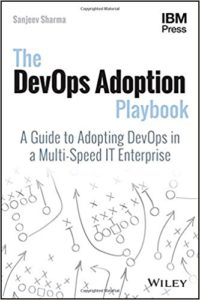
    best DevOps“The DevOps Adoption Playbook” by Sanjeev Sharma of IBM won the Best DevOps Book Award for 2017. The book lays out a clear “how-to” devops adoption playbookfor DevOps, including topics such as value stream mapping, how to lead the transformation of culture and scaling DevOps to the enterprise. As Sanjeev himself says, the book started from a Powerpoint deck of best practices he created to take in everything he had learned.

    This book represents the culmination of years of learning by not only Sanjeev, but by IBM in general, and includes some of the leading names in DevOps that he learned from during this time. Sanjeev also stays true to the “playbook” paradigm, making references to cricket, soccer and other sports throughout. It is a good read and well-organized. To learn more, listen to this DevOps Chat: ‘The DevOps Adoption Playbook’ by Sanjeev Sharma.

    Best DevOps Presentation of the Year

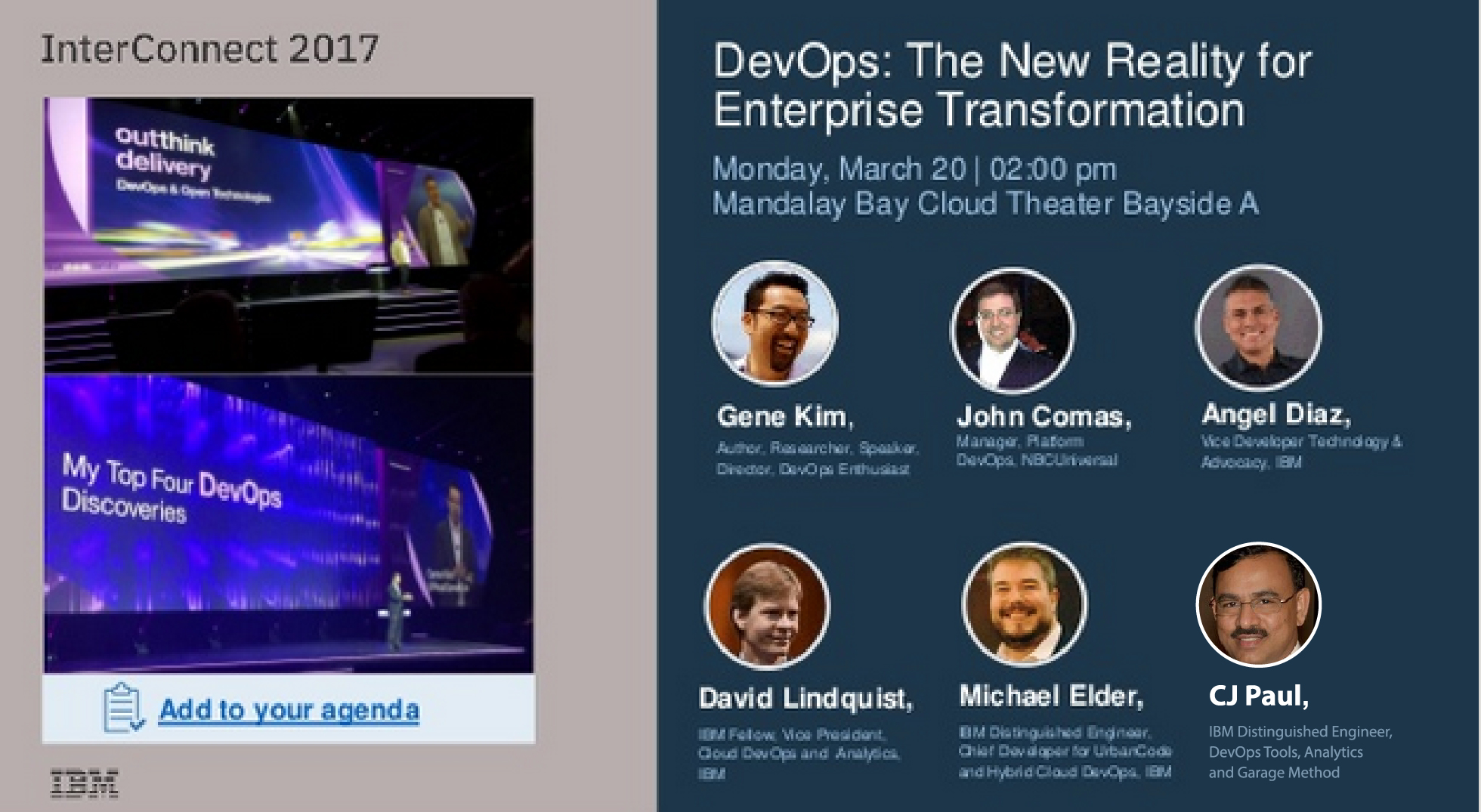
    devops presentation“DevOps: The New Reality for Enterprise Transformation,” a 45-minute keynote presentation at IBM InterConnect 2017, is the winner of the Best DevOps Presentation for 2017. It features Gene Kim, John Comas, NBCUniversal and IBM execs and  distinguished engineers including David Lindquist, Angel Diaz, CJ Paul and Michael Elder. Are you dabbling in DevOps? Maybe you’ve run a great pilot project or have a terrific two-pizza team that’s innovating new apps. How do you scale their success to your whole organization? The answer lies with a combination of cultural, personal and technical transformations that blend methodologies and cloud-native approaches with proven automation patterns and existing on-prem development. The presentation includes client stories and demonstrations of the latest IBM solutions to help companies transform their teams and build, deploy and manage their apps for large-scale enterprise IT environments.

    Best staging-devopsy.kinsta.cloud Article of the Year

    “Continuous Integration vs. Delivery vs. Deployment: What’s the Difference?” by Chris Tozzi won the Best staging-devopsy.kinsta.cloud Article of the Year staging-devopsy.kinsta.cloud articleAward for 2017. Christopher Tozzi has covered technology and business news for nearly a decade, specializing in open source, containers, big data, networking and security. He is currently Senior Editor and DevOps Analyst with Fixate.io and Sweetcode.io.

    Again congratulations to the winners—well-deserved recognition for all of your efforts.

    For those interested in next year’s DevOps Dozen, information will be out in July or August of this year.

    — Alan Shimel

  • The 5th Industrial Revolution: When It Will Happen and How

    The 5th Industrial Revolution: When It Will Happen and How

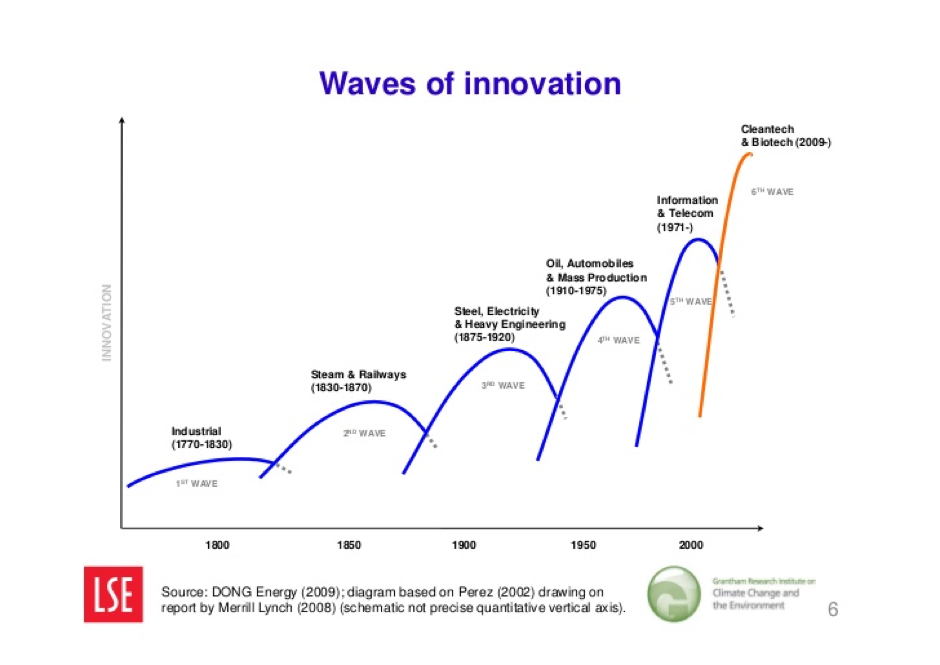
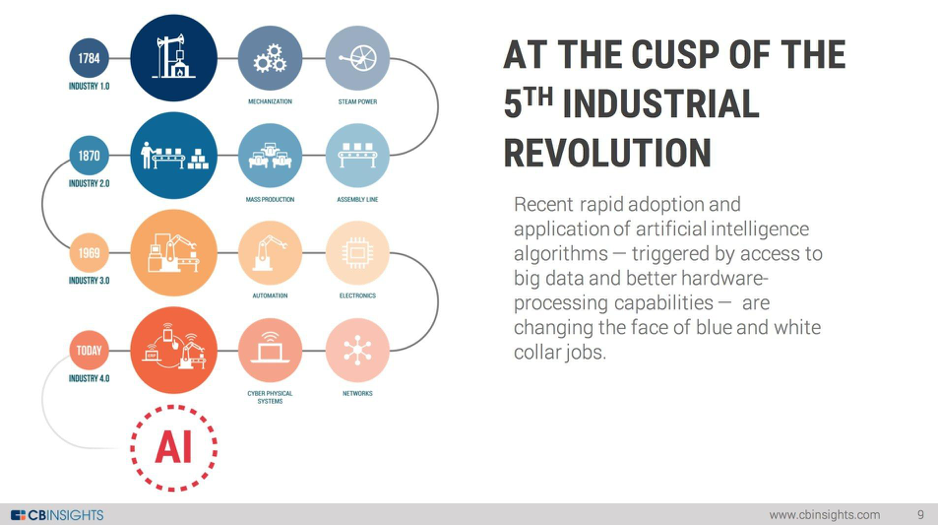
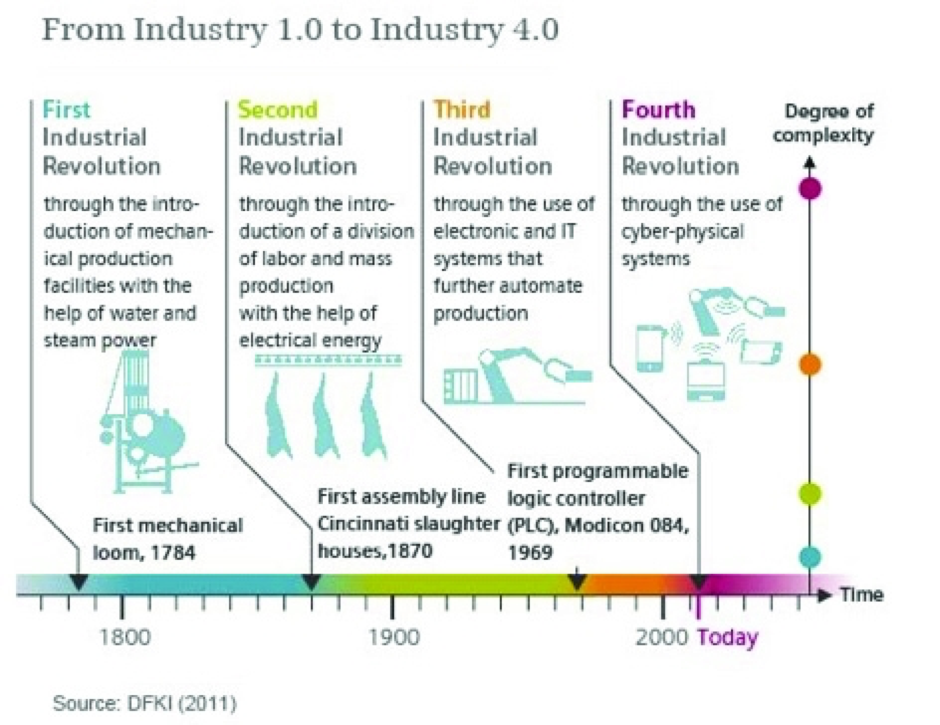
    Industrial revolutions have always dominated and changed the world in a big way. The first one happened way back in 18th century, and the second industrial revolution occurred almost two centuries later, in the 20th century. The third one happened only a half-century later, while the fourth one was observed within three decades. By the speed these transformations are occurring, a fifth industrial revolution is already around the corner.

    The next technology revolution will be faster and more scalable, and will be adopted by a lot more people as compared to the previous ones. Everyone on the planet will undergo a “personal” revolution by the kind of technology at their disposal. 3D-printing, wearable technology, robots. driverless cars … everything will be readily available and will make lives simpler and faster. With every industrial revolution brought a substantial increase in the GDP, and lifestyles improved manifold. The next revolutionary technology, however, does not aim to simply improve the lifestyle or help people make more money; rather, it focuses on the higher form of intelligence. Now humankind is ready to take the big plunge and step into space. With ideas such as SpaceX and affordable space travel, a future that we cannot imagine today might be possible tomorrow.

    The definition of industrial revolution includes the use of sophisticated machinery to make the work of humans easier and faster. Today, that includes robotics, machine learning, artificial intelligence and a lot more things that nobody could think would become a part of industrial revolution someday.

    In future, we can only expect technology to become more superior and sophisticated in every sense: augmented reality, big data, virtual reality, artificial intelligence and the most disruptive one—cryptocurrency—are a few to name. Cryptocurrency is something so revolutionary that it is making news every day. Bitcoin’s price is touching the sky and investors of cryptocurrency believe that the prices are sure to touch the moon in coming years. With the number of people investing in cryptocurrency and people holding on to their alt-coins, one thing is sure: A fifth industrial revolution has “already” arrived.

    Industry not only runs on machinery or ideas, but also on money. Today, people are spending their hard cash and fiat currency to buy cryptocoins, including Bitcoin, Ethereum, Litecoin, Ripple, Monero, Dash, Golem IOTA and even tokens (ICOs). A popular crypto-exchange claims it adds more than 30,000 new user accounts every day—a number not to be ignored!

    It is true, cryptocurrency currently is not regulated or controlled by any government, but it’s possible governments could impose taxes on the income generated from it in future. There is still much to be worked out in making cryptocurrency a validated form of currency. But even high-end investors such as Warren Buffet claim cryptocurrency is here to stay, and it is indeed something that will bring a bigger revolution than expected.

    The Fifth Industrial Revolution is poised at the cusp of a future in which things considered unimaginable today become the norm, and concepts such as universal basic income (UBI) help ease the sting of automation and mass unemployment. Mankind is ready to take a step forward.

    The world currently is in a disruptive stage, as the fifth industrial revolution unfolds to impact our lives—for better or for worse. Now we wait and observe what the future has in store for us.

    About the Author / Emma Rundle

    Emma is a professional content writer currently providing her freelance services to Edubirdie. Emma’s favorite topics to cover include business, software, high tech, and web development. She has a Master’s degree in Economics from The University of Texas at Austin. Follow Emma on Twitter.

  • DevOps Chat: Chef Habitat Project Continues to Mature

    DevOps Chat: Chef Habitat Project Continues to Mature

    When Chef Habitat was released a little more than two years ago (good staging-devopsy.kinsta.cloud story on Habitat here and a good DevOps Chat on it here), many people in the DevOps community wondered where Chef was going with Habitat. It was a really ambitious vision, but could it meet its lofty goals?

    Habitat is now made up of many different packages that provide different functionalities. There is, of course, much more to Chef Habitat. This DevOps Chat will tell you all about it.

    Joining us on this DevOps Chat are Jaime Winsor, a co-author of Habitat, and Tasha Drew, senior product manager of Habitat, and Blake Irvin of SmartB, a Habitat user. Between the three of them, there is a ton of great information here. If you are interested in Chef Habitat or would like to find out more, this is a great place to start!

    As usual, the streaming audio of our conversation is below, followed by the transcript of our conversation. Enjoy!

    Audio: Chef Habitat

    Transcript: Chef Habitat

    [su_pullquote][su_custom_gallery source=”media: 118811″ target=”blank” width=”250″ height=”250″]Blake Irvin
    Blake has spent over a decade working in systems and software engineering automation, on platforms ranging from on-premise metal to containers-as-a-service, BSD and Solaris systems to embedded Linux sensor platforms. He lives and works in Berlin, Germany, where he’s Senior Operations Engineer at smartB, GmbH, an energy-efficiency and sustainability startup.[/su_pullquote]

    Alan Shimel: Hey, everyone, this is Alan Shimel from staging-devopsy.kinsta.cloud here for DevOps Chat, and we’ve got a really great chat lined up for this episode. It is all about Chef Habitat, and we’ve got some really-we actually have three guests on the show today, so we’re gonna move it along to keep it moving.

    Let me first of all introduce my two Chef guests or from Chef. One is Tasha Drew, who’s a Product Manager for Chef Habitat, and one is Jamie Winsor, an engineer with Chef and one of the co-authors of Habitat. Jamie, Tasha-welcome to DevOps Chat.

    Tasha Drew: Thanks so much. Happy to be here.

    Shimel: Thank you.

    Jamie Winsor: Yeah, thanks for having us, man.

    Shimel: Hey, it’s my pleasure. And then, joining Jamie, Tasha, and myself today, all the way from Berlin, is Blake—and I hope I’m not gonna mess this up—Irvin. Blake, are you there?

    Blake Irvin: Yep.

    Shimel: Okay. Thanks. Hey, Blake, I appreciate you taking the time to join us. Blake, you’re with, is it BusyBee, is that what’s the name of the company?

    Irvin: It’s called smartB.

    Shimel: smartB.

    Irvin: Yeah, and the B essentially stands for business, because we are building, because we focus on providing energy efficiency analysis for businesses—small to very large businesses and the buildings that they operate.

    [su_pullquote align=”right”][su_custom_gallery source=”media: 118812,118813″ target=”blank” width=”200″ height=”200″]Tasha Drew
    Tasha Drew is the Product Manager for Habitat. She previously launched Chef Automate’s analytics capabilities, was Head of Product at Rentlytics, was responsible for product for Engine Yard Cloud, and spent several years in various data center endeavors on behalf of Lockheed Martin. Tasha holds an M.S. in Management from RPI and a B.S. in Computer Science from USC. When not in front of a computer, Tasha prefers to be cruising around Napa or at the beach with her dogs—all while having intensely deep thoughts about how to save application developers from tedious rework via the wonders of application automation with Habitat.
    Jamie Winsor
    Jamie Winsor is a lead engineer at Chef Software and the coauthor of Habitat, an open source project built upon distributed system protocol Butterfly to provide a self-healing, self-configuring, stack-agnostic, frictionless abstraction for running applications—regardless of their complexity—to software developers. Jamie has been a software engineer in the video game industry for 10 years, focusing on networked application servers on such titles as League of Legends, Lord of the Rings Online, and Dungeons and Dragons Online. One of Jamie’s responsibilities in his game development tenure was to bring what we today know as DevOps into the daily lives of the other developers on his team, which Jamie accomplished by building, evangelizing, and teaching methods to his peers. He draws on that experience today in building Habitat, as he helps enable all software developers, regardless of their experience, bring their ideas to life without investing in the details of operationalizing an application.[/su_pullquote]

    Shimel: Wow, that’s really good stuff. Jamie and Tasha, you both work for Chef, no need to introduce who Chef is to our DevOps audience, but Blake-welcome. And we have you on today because we’re gonna talk a little bit about Habitat, and Blake, if you don’t mind, I wanted to start with Tasha and Jamie and talk a little bit-just a little background. Maybe we have some folks on here who are not familiar with Habitat.

    So, Jamie, you’re a co-author. Why don’t you take that one, right? What’s Habitat, for people who may not be familiar?

    Winsor: Yeah, sure. So, the Habitat project is a number of pieces of software, and the overall goal is to, I hope, redefine what application automation means by focusing on the application instead of the infrastructure. In the past, we have been building computers in service to host our applications, and what Habitat does instead is it says, “Let’s focus on what the applications are that we need to run our application, what software we need down to a bare minimum, and then provision the machine around it,” and Habitat runs exactly the stuff that you need.

    It does so with a packaging system and a build system and then a process supervisor. The process supervisor runs the packages, the process supervisor communicates to other supervisors using a gossip protocol to share and spread information about what software they’re running, which allows us to enable things for free, just by packaging your software with Habitat, such as service discovery, leader—follower failover, rolling configuration updates, rolling software updates—and it’s all coordinated using the gossip ring.

    Finally, the piece that we built, the last piece of Habitat is simply called Builder, which we can also chat about today, which we just launched about a month ago. And Builder is a hosted Software as a Service build service that’s currently in preview mode. It’s free, and it builds your software that’s packaged with Habitat and hosts it as well in release channels, which allows you to have supervisors subscribe and then receive automatic updates using a complete CI/CD process of promotion between an unstable branch to a stable branch and so on. That’s basically it.

    Shimel: Yeah, no, more than basically-that was a great description and great stuff there, Jamie.

    Tasha, now, Habitat was released as an open source project by Chef, and it’s probably about two years ago now, right?

    Drew: Yeah, yeah.

    Shimel: And so, Tasha, tell us kinda what’s been the latest with Habitat.

    Drew: Sure. So, basically, we have been working nonstop since the initial reveal of Habitat about two years ago, just adding functionality and capability across both that Builder system and that process supervision system that Jamie’s been talking about.

    We’ve also been working on the deployment piece of the overall integration between those two which, in Habitat’s world, is highly agnostic. So, the idea is, use whatever tools you need to deploy those artifacts and supervisors that you’re using with Habitat. And so, we’ve been working with partners to have a really great cloud foundry ecosystem story, Kubernetes ecosystem story, AWS and Azure story, and then Terraform as well.

    So, the idea is, we have been making it easier and easier for people to come get started using Builder, and that’s why we’ve released Builder in free preview mode, it’s because we just want to have this very low friction way for people to get started with Habitat and start rebuilding all of their workloads, and then deploy using your favorite technologies and then start seeing the benefit of the supervisor in Builder, communicating between the two.

    Shimel: Absolutely. And as you mentioned, Builder is in free preview right now. You know, some people look at things like Habitat and some of the other great open source projects Chef is kind of shepherding, and they say, “This is all great, great, great, but how—you know, where does, how do they stay in business? Where do they make money?”

    So, Tasha, can you talk a little bit about sort of where Chef sees commercial opportunity with Habitat?

    Drew: Yeah, absolutely. So, for our enterprise customers, having on prem solutions that integrate with all of our open source products in order to have that really strong control plane management layer is super important. And so that’s, with Chef Automate, something that we continue to invest and see incredible success with.

    And then, with Habitat, Habitat becomes the technology that continues to support enterprises while they want to move fast to deliver applications to production at scale. And so, having this part of the technology suite be adopted by our core set of enterprise customers will continue to be part of our strategy, but then we also have Builder to enable smaller shops to just get started—really low friction point, really easy to use. And how we monetize Builder itself over time will be something that we investigate as we see how people adopt and use the technology.

    Shimel: Excellent answer. Great, Tasha. So, Blake, I didn’t wanna leave you too long in the cold. Let’s bring you into this now. First of all, Blake, I don’t think I asked you, and I don’t know if our audience is savvy to it, but what exactly is your role at smartB?

    Irvin: So, I—we have a team of sort of multidisciplinary, polyglot engineers at smartB. We do all kinds of things because we’re a small shop and a small company, still. But the focus that I have—and this has been my focus and my interest, sort of, for the last, it’s actually been a little bit over 10 years is on all manner of operations engineering.

    So, what I used to do would be something more like traditional systems administration, and now I would say I’m more of a software engineering operations specialist. In other words, I’m focusing on improving and streamlining the process of software engineering and less focused on things like racking servers.

    Shimel: Sounds like you’re doing DevOps to me, man. [Laughter] But Blake-

    Irvin: Yeah, you could say that.

    Shimel: Yep. So, Blake, smartB is using Habitat?

    Irvin: Yeah, that’s true.

    Shimel: Let’s talk about why.

    Irvin: I would say, for the moment, about-sorry?

    Shimel: I was gonna say—why? What are you using it for?

    Irvin: Well, we’re using it for almost everything. We have one—yeah, we have one production service that is not yet what I called Habitized or wrapped up in the Habitat package, and we’re just waiting for some work in the community to be finished before we can do that. But yeah, like, 85, 90 percent of our services are running under Habitat, using the Habitat supervisor, and we’re using as much of that workflow that Jamie and Tasha were describing as we can at the moment.

    And that’s actually been a pretty good process for us, I think, because the way that Habitat’s designed, the adoption process can be incremental. So, when Tasha was referring to giving Habitat users the freedom to pick and choose how they want to deploy or how they want to go about adopting, that’s definitely something we’ve leveraged a lot to make our story good for ourselves.

    Shimel: Got it. And so, Blake, I mean, when did you guys adopt, start with Habitat?

    Irvin: So, when I saw the launch video, which was, I think, Adam speaking in Seattle-Adam Jacob, the Chef CTO. I was sort of, I was watching it originally just out of curiosity and then, as the talk went on, my mouth started hanging open further and further, I think. Not because I thought it was the most groundbreaking thing that I’d ever seen, but more because I couldn’t-I was surprised to see how many of the check boxes that I had in my mind from 10 years ago around this kinda stuff, all this kind of operations work, how many of those check boxes were getting checked off by the project as the architecture and the behavior of the tools was described.

    So, we really started looking at the feasibility of adoption within weeks, I think, of that launch video.

    Shimel: Wow.

    Irvin: And started doing the rollout probably a few months afterwards. So, we’ve been doing it like a very slow, incremental rollout to, you know, ensure that we don’t disrupt any of our current software development process or our current production environments. That’s what’s been going on. It’s been a continual process for, I’d say, like eight months now, but just done very slowly.

    Shimel: Very cool. So, Blake, you know, I have a long history of working in open source-related projects and stuff, and I’m always curious, you know, as a consumer, if you will, or a user of this open source project, have you guys—what have you contributed back? Have you contributed any code, bug findings, suggestions for new features? How are you giving back to the community, here?

    Irvin: Yeah, sure. I think the thing, since we’re a really small team, what we’ve really focused on is trying to use the tool in the way that it’s been designed to be used and then giving feedback to the community and/or to the core maintainers whenever we find bugs or places we want to see improvements, and just keeping that conversation really open and fluid, which has been great. It’s one of the reasons that I’ve continued to use Chef software stuff for—not quite my whole career, but a sizable majority of my career. It’s just that, I think, as an organization, Chef believes that community is very important, and in fact, perhaps, one of the most important things about building a company. And compared to other experiences I’ve had with other open source groups, I think that’s been a real win for everybody involved.

    So, in terms of code contributions, I think mostly what we’ve done is put out a lot of plans, which are the sort of blueprints for packages that Habitat uses when you set up like a set of dependencies for your application. So, we’ve definitely published a lot of those back into the community. I think you can find them if you look on the Builder site under the smartB origin, you’ll see all the packages we’ve published. And we’ve also published some stuff back into the core plan side, just the ones that the Habitat team maintains.

    Shimel: Got it, got it. So, Jamie and Tasha, does Blake and smartB sort of represent the kind of prototypical Habitat user?

    Winsor: I’d say so. You know, with Habitat, you can pick and choose what pieces you want, and it’s been great to watch Blake and smartB grow from—back to the packaging manager and the supervisor and gradually moving toward adopting Builder. They’ve been great to work with in the community. They gave us a lot of great feedback. You know, they’re users, so one of the things that is really important is, you build a feature or you build—you know, you fix a bug, and then you immediately get the feedback from the community, and they’ve been unbelievable to work with.

    I’d say that Habitat would work for any team that ships software, though. So, they’re absolutely a typical user, because they ship software, right?

    Shimel: Mm-hmm. Cool beans. Guys, we’re almost at the end of time, unfortunately, leading up here over 15 minutes. But Tasha, for people who may want to, you know, go explore Habitat themselves, where can they go to get information?

    Drew: Yeah, we would love them to visit our website, Habitat.sh. There, you can see, we have a quick, you know, just kick the tires, 10-minute kinda step-through demo. We have more in-depth tutorials if you want to start just playing around with both the run and build time features of Habitat, and our community is very active on our Slack channel, which you can find a link there to join, but it’s just at Slack.Habitat.sh. So, as you get started, if you wanna just jump in that Slack channel, the entire core team is there, our community is there, and we seek to be super welcoming to new people. New questions are very welcome in the general channel. So, you can just hop in and get support and ask whatever questions you have.

    Shimel: So, it’s Habitat.sh?

    Drew: Yeah, yeah.

    Shimel: Excellent, excellent. Guys, listen. Thank you very—all three of you, Blake Irvin, Jamie Winsor, Tasha Drew—thank you so much for being our guests in this episode of DevOps Chat. Continued success, Blake, with you guys in your bigger business as well as using Habitat, and Jamie and Tasha, with you guys continuing to develop and make Habitat, you know, an indispensable tool for companies around the world. Alright?

    Drew: Thanks so much.

    Winsor: Thank you.

    Shimel: Alright, everyone, have a great day. This is Alan Shimel for DevOps Chat. We’ll hopefully see you soon on the next chat. Until then, take care, everyone.

    — Alan Shimel

  • Node.js Becoming More DevOps-Friendly

    Node.js Becoming More DevOps-Friendly

    Over the last several years use of Node.js has exploded across the enterprise, as developers moved to embrace a variant of Javascript that made it easier to build both client and server-side applications. However, every time it is upgraded, all the dependencies between it and application modules written in C or C++ breaks.

    To solve that problem, the Node.js Foundation is making available on an experimental basis a Node.js API (N-API), developed collaboratively by Google, IBM, Intel, Microsoft, nearFrom, NodeSource and other contributors. The API will be in Node.js 8, and promises to eliminate the need to update all those dependencies. Pending additional testing, it is expected to be given Long Term Support (LTS) status later this year.

    At the same time, The Linux Foundation is adding new features to experimental tracing and async tracking features. A diagnostics API will make it easier to monitor the operation of the Node.js event loop across the complete life cycle of a service request. Finally, an inspector core module, which allows developers to leverage the debug protocol used by the Google Chrome inspector to inspect currently running JavaScript code, is also being added.

    Each of these new capabilities are nice to have on their own. But collectively, they signal the beginning of a maturation process in the Node.js community. Increased use of Javascript in general—and Node.js especially—have arguably caused many enterprise IT organizations re-evaluate their DevOps processes. Developers using Node.js have been able to increase the number of applications they could develop considerably. Since then, the number of languages being employed within the enterprise has exploded.

    Mark Hinkle, executive director of the Node.js Foundation, says moving forward there will be more focus on reducing the friction surrounding upgrades of Node.js applications as part of an effort to further expand the ecosystem. Many organizations commonly end up supporting multiple versions running across a variety of applications. Hinkle says N-API is a step in helping to reduce the maintenance costs associated with supporting those applications. In an ideal world, the foundation would be gathering additional input from DevOps experts pursuant to achieving that goal. In most IT organizations, the care and feeding of Node.js applications is still left in the hands of IT operations teams after the apps are deployed in production.

    In the meantime, Hinkle says its performance continues to improve. Naturally, there’s a corresponding relationship between better performance and the number of use cases for which it will be considered. Of course, that doesn’t mean Java and other legacy programming languages won’t be used to develop new applications. But it does means that in terms of the number of programming languages employed across the enterprise, it’s now a polyglot universe.

    — Mike Vizard

  • DevOps Chat: State of DevOps Report 2017, Nigel Kersten, Puppet

    DevOps Chat: State of DevOps Report 2017, Nigel Kersten, Puppet

    The results and analysis of the State of DevOps Report 2017 report are due out in early June. just in time for the DevOps Enterprise Summit London June 5-6. In this DevOps Chat we speak with Puppet exec and one of our favorite interviews, Nigel Kersten.

    Of course, Nigel and the folks over at Puppet have been co-producing the State of DevOps report and survey for six years now. For this year, Nigel along with Dr. Nicole Forsgren and Jez Humble of DORA, will be co-presenting at the DOES London, where they will announce the results of this year’s survey. It should be quite interesting.

    Nigel gave us some sneak peeks and early trends for this years report, as well as discussed the DevOps Enterprise Summit and, as usual, some good info on what is happening at Puppet and the DevOps world in general.

    You know the drill by now: The streaming audio of our conversation is immediately below and the transcript of our conversation is below that. Enjoy!

    Streaming Audio

    Chat Transcript

    Alan Shimel: Hey, this Alan Shimel, staging-devopsy.kinsta.cloud, and we’re here for another DevOps Chat. And we’re happy to be joined again by a repeat guest on DevOps Chat, none other than Nigel Kersten of Puppet. Nigel, welcome.

    Nigel Kersten: Hey, Alan. Nice to talk to you again.

    Shimel: Good to speak with you. So, Nigel, we’re not talking about the latest and greatest from Puppet today. Well, maybe if you wanna just mention it quickly, feel free, but I wanted to really talk a little bit about the upcoming DOES London event, Gene Kim’s DevOps Enterprise Summit, which is June 5th and 6th in London at the QEII Center, and you will be presenting there. Correct?

    Kersten: I will be. Yep, with Dr. Nicole Forsgren, who’s one of the other authors of the DevOps report, and DevOps Enterprise Summit London last year, I think, was honestly one of the best events I’ve been to in this space for a long time and I adore London for lots of reasons, and so it’s always great to be back there.

    Shimel: Yeah. And, Nigel, correct me if I’m wrong – is Jez Humble also presenting with you and Dr. Nicole?

    Kersten: I think Jez probably will be, but I’m not sure if it’s quite confirmed yet. We’re sort of trying to work out how we’re covering all of the different events, for the various roadshows and webinars we’re doing around the DevOps Enterprise Summits and the DevOps enterprise report.

    Shimel: Yep. Okay, so I guess we’ll stand by for final confirmation on that, but, certainly, you and Dr. Nicole will be on, and, of course, Nicole has appeared on our show before and we’ve talked a little bit about not only this year’s DevOps survey but past years’ as well. But, Nigel, for some of our listeners who maybe weren’t lucky enough to hear previous talks about it, this is what? The sixth or seventh year of the State of DevOps survey?

    Kersten: This is the sixth year, which is kind of amazing ’cause, you know, I think, when we first started with the fantastic Alanna Brown, who also works here at Puppet, everyone was a bit skeptical about it. I think this was even before you’d started staging-devopsy.kinsta.cloud and people were like, “Is this really a thing? Do we really need a survey about all of this?” but I think it’s just gone from strength to strength over the years. So, yes, I guess, for the people who are sort of new and may not have come across the report before, what we essentially do is we survey a whole bunch of practitioners—we’ve done tens of thousands of ’em around the world over the last six years—and what we do is we ask about the practices and the tools that they use, but also some metrics about “What’s your mean time before failures? How quickly can you deploy your software? What sort of practices do you use?” as well as what sort of outcomes you have. And then we do a statistical analysis on all of that so that we can—and we actually end up showing that there’s a huge gap between what we call “high-performing” IT organizations and everyone else.

    And, in fact, interestingly enough, over the last few years, we’ve shown that the gap is increasing over time, so the people who’ve adopted DevOps practices—because, essentially, what we’re showing is we’ve been able to show statistically that what we tend to call “DevOps practices,” around using CI, using CD, using infrastructure-as-code software, doing continuous deployment, using testing, storing things in version control, all of these practices, when you cluster them, are the people—the people who employ these practices are the people who have high-performing organizations. And they’re really huge statistics—they tend to be thousands of times better, being able to deploy just ridiculously faster—and, essentially, what this ends up showing is you really don’t have to sacrifice quality for speed or vice versa, so we’re seeing that these people are both producing high-quality infrastructure and applications and they’re doing it far more quickly than everyone else.

    I think one of the things I’m really proud of with the DevOps report is that it’s useful to sell DevOps practices within your organization, so I talk to an awful lot of customers and practitioners out there who are really thankful for the report because it tends to be focused on business outcomes. So, even though we’re surveying practitioners, it’s something that’s really applicable to C-levels and VPs and directors. They can look at this with them and go, “Ah, this is where the industry’s moving and these are the sort of benefits we’ll actually get.”

    Shimel: Excellent. And, Nigel, in typical humble Nigel self, you’re—I mean, let’s give a little bit more flavor, if we can. Over the five previous years, I think there’s over 25,000 responses to these surveys.

    Kersten: Yeah, no, that’s right. 25,000 over five, six years. It’s pretty crazy.

    Shimel: So that does represent a—in a field like DevOps, which is fairly new, right, it represents a sizable amount of people and organizations who have taken the time and contributed to the data that you guys have analyzed over the years. And another important thing, I think, to note for our audience is not only the analysis of the data but even the questions themselves are, from a statistics point of view, a statistician’s point of view, rigorous—rigorously designed and rigorously analyzed. And, look, having a Ph.D. statistician helping you with it doesn’t hurt, but so these are not just some –

    Kersten: No, it’s not your average –

    Shimel: – go up and doing surveys.

    Kersten: – sort of marketing survey at all, and I think this is why it’s always really important for us that—you know, we’re a software vendor and we’re in this space and there’s a lot of people in our space who do pretty fluffy kind of surveys that only take two or three minutes and then some sort of ridiculous claim gets made, so this is why we’ve always been really keen on working with the external parties of Gene Kim, Jez Humble, Dr. Nicole Forsgren. Particularly Nicole. She’s a trained statistician who’s literally got a Ph.D. and has spent her career working on studying organizational performance, which overlaps with DevOps in really interesting ways, but I think having that external rigor, and I think it helps keep us honest as a software vendor. So this is something we really loved, having a partnership with them, ’cause this is their specialty.

    They actually—to give them a little bit of a plug, they have their own organization, DORA, DevOps Research and Assessment, where they’ll come in and do benchmarking of your organization and actually measure how you’re actually doing, so I think it’s just really great. We’re clearly really plugged in as Puppet into this whole community, but they plugged in at a different level, and working together, I think, means that we both get to expand reach and bring a bunch of statistical rigor to something that could easily devolve into a self-serving survey, which ultimately doesn’t –

    Shimel: Hey, Nigel?

    Kersten: Yep?

    Shimel: I thought I lost you there for a second. I apologize. Agreed, I mean, on all of the above. And that’s really—I want people to understand that, that this isn’t a marketing survey they up and have done now for six years running. I wanted to make another point, Nigel, and that is, certainly, over the last two years at least, and I would imagine for this year as well, one of the real nuggets of wisdom that have come out of this analysis is really just how high-performing or what high-performing IT organizations mean to the bottom line of these companies that are doing it. I think, at some level, we all at a gut level say, “Well, if you’re performing better, you’re releasing faster, it should translate into a better company,” but, certainly, the State of DevOps report—survey and report is one of the few that are out there that really connects the dotted lines here.

    Kersten: Absolutely. So you look into the sort of things that people are actually sort of seeing. What we’re seeing, so to sort of hit some of the boon stats from last year, is that we’re seeing the high-performing IT orgs, three times lower change-failure rate, 200 times more frequent deployments, and 24 times faster recovery from failures. And those are really amazing stats because I think they really resonate, both with practitioners who’re the people who are getting woke up in the middle of the night or having to deal with the pain of a deployment that didn’t work properly, but they’re also the sort of stats that your average, been-away-from-the-technology-keyboard for a few years, high-level executive, can look at it and they go, “No, that’s actually what we want. We want to be able to deploy more frequently,” because, I think, one of the lessons that SAS has taught us is the reason a lot of SAS companies outstrip on-premise competitors is because, every time they deploy, it’s a chance for learning, it’s a change for feedback.

    And Agile has taught us, from traditional software development, the more frequently you can deploy, the smaller the deltas are in those deployments and you can do more frequent cost correction, so you can actually produce a much better outcome over time by deploying more frequently and being able to correct course more frequently.

    And, to, I think, bring it back to enterprise folks, not everyone always thinks about deployments in this way, but, every time you get a patch from your vendor, that’s another deployment. Every time you respond to a security incident internally, every time you have to follow through a recommendation of your audit and compliance committee—all of those things are deployments and the more pain-free and friction-free you can make the ability to deploy within an organization, the more responsive you’re gonna be to all the different stakeholders.

    Shimel: Yeah. Let me give you my favorite stat that you omitted or you just didn’t get a chance to, and that is these high-performing IT organizations have 50 percent less vulnerabilities post-deployment.

    Kersten: Yep.

    Shimel: That’s huge.

    Kersten: It’s a major. And you’re spending less time on that. And I think the other related one that’s really amazing is that the high-performers spend 22 percent less time on unplanned work and rework. And, for anyone’s who’s been neck-deep in infrastructure, it’s the unplanned work that kills you. It’s the context switching. You’re not making progress on your defined road map every time you’re having to spend time on unplanned work.

    Shimel: Yeah. So, Nigel, these are all fantastic insights and metrics, so now, of course, though, we’ll turn the table on you and say, “Hey, what have you got for us this year?” I know it’s early; I know you haven’t released the report yet. You’ll probably be announcing a lot of the results, I think, come out just at the time of DOES London, which, again, is June 5th and 6th, but is there anything you can share with our audience as maybe a preview?

    Kersten: So I think one of the things that I could share is we’re still going through doing the analysis, but we’re seeing that, again, the high-performing orgs are achieving just as well compared to everyone else, as they have in previous years. It doesn’t look like there’s only sort of peak, as far as implementing these practices. I think the whole industry, even people who have been doing this for a while, have still a fair way to improve.

    I think one of the really interesting things—well, there’s two big ones I wanna call out. One is that, this year, we spend a bit of time working on non-profit performance ’cause, in previous years, we’ve shown that commercial companies who are high-performing IT orgs tend to outperform their financial metrics, outperform in the stock market, their internal company goals, but, this year, we decided to focus on non-profit performance, and so we’re looking at things like, “What’s their operating efficiency like? Customer satisfaction? Quality of the products that have been shipped?” So we’re actually, I think, showing that DevOps practices in high-performing IT orgs impact in a positive way all sorts of industries, so I think that’s gonna be one of the really interesting sections.

    The other section, I think, that’s gonna be really fascinating is that we’re actually looking at what’s the—there’s a myth out there, to sort of back up a little bit, that DevOps practices tend to work if you’re building all of the software yourself, if you’ve got a web app, if you’re building a whole bunch of stuff in Node.js or something like that, and deploying it to the cloud, sure, you can do DevOps—you can do continuous integration; you can do continuous delivery—but, for those of us who are sitting there running commercial, off-the-shelf software, we can’t actually do that and we can’t actually obtain the benefits that are available by employing DevOps practices. So I think what we’re gonna be showing is that this isn’t true, that there’s a couple of things you can do as an organization, in the way you consume commercial, off-the-shelf software, to actually let you employ continuous integration, continuous delivery.

    Now the reality is you’re not gonna be able to test all the same kinds of things because, unfortunately, you know, lots of vendors that release software don’t necessarily have an API-first policy, so you’re not always gonna be able to test everything inside the application, like you can’t run unit tests, necessarily, ’cause it’s not your code, but there are a whole bunch of things you can do. And one of the big bits of guidance that we’re gonna be pushing is that, when it comes to commercial, off-the-shelf software, really try to make the installation as vanilla as possible. Don’t spend forever customizing it. And, if you’re having to customize it because that’s what your business processes say, in many ways, the lower-cost and better-outcome approach is to not customize the software and adjust your business processes because there’s something within your control, generally. And if you adjust those, then it becomes simpler to deploy that software into a CI system, to have Jenkins or Bamboo or whatever do deployments of it, do external black-box testing, make sure that it actually works, and then roll it out to production.

    So we’ve got a pretty strong belief that, when it comes to utility computing, to sort of use Martin Fowler’s distinction between utility and strategic computing.

    Shimel: Yep.

    Kersten: There are huge efficiency gains to be made there, but there’s a few things you can do to avoid those problems. The analogy I kind of come back to is that there was a period, I think, in the late ’90s and early 2000s, when lots of people would customize their Apache installs. They would sit there and come up with this fine-grained list of modules, configured in specific ways, and, every time they deployed a new version of Apache, they’d eke out another one or two percent performance by having this really customized installation. It turns out the actual cost to the business is really great because those tend to be manual processes—you’re turning yourself into a snowflake when you didn’t actually need to be—and I think the more you can commoditize the software you’re buying and that you’re building and that you’re deploying, the faster and more friction-free a lot of these processes are gonna be.

    Shimel: Got it. You know, Nigel, that—so I’m old. That’s firing up some old synapses in my brain back from the dot-com days, when I helped start a company called “Interliant.” We were an early ASP. And, mind you, this is before we have a modern cloud and virtualization and ubiquitous connectivity, but we were offering hosted Lotus Notes, PeopleSoft, Oracle applications, Lawson ERP—I don’t know if you remember Onyx was an early CRM tool back then.

    Kersten: Oh, yeah. Yep.

    Shimel: That’s a blast from the past, huh?

    Kersten: Totally.

    Shimel: Anyway, so our thought was to offer hosted versions of these applications. This is early, right? We called them “application service providers.” And what we quickly learned in—you know, when you go to market, and we did the whole IPO thing, all of that, but what we learned from our enterprise customers was that, as much as we wanted them to run a vanilla PeopleSoft or a vanilla Lawson or Onyx or even Lotus Notes, for that matter, the best we could hope for was about 80 to 85 percent of out-of-the-box, just plug-and-go. They always needed—and so what happened was we had to change our whole business model and we wound up acquiring a bunch of service bodyshops, for lack of a better word, who would come in and do that last-mile customization, if you will, that last 15 percent. And, as a result of that, I will tell you, the business model failed, ultimately bankrupt. And, if you look at all those early ASPs, none of them really succeeded—USinternetworking and Corio, some others—because we weren’t able to get people to use the vanilla configs that would have been easy for us to host, spin up, and put down.

    I think you see the same thing a lot today, with kind of bare-metal hosting. Right?

    Kersten: Yep.

    Shimel: Versus a traditional cloud virtual, you know, kind of hypervisor thing. How many people are using just vanilla bare-metal kind of config versus how many have—and you guys are Puppet, right? You’re dealing with this more than most, right? How many people are highly, highly customizing their bare-metals?

    Kersten: I think we’re seeing people shift away from customization. I think there’s probably a few things. One is I think people are realizing that a lot of this industry is sort of commoditizing, and so you may as well use off-the-shelf stuff. And so, if you’re just consuming stuff the way it was sort of shipped from the vendor, whether it be hardware or software, there’s sort of a general expectation that, I think, both software quality has improved—as much as we like to bitch and complain about software, I generally think software has gotten better than it used to be. There was no sort of Golden Age of incredibly rigorous enterprise software, as far as I’m concerned. I think stuff’s getting better. So I think there’s a couple of different pressures there, is that software’s gotten better, people have gotten more used to the idea that various things are being commoditized, and so they’re more willing to entertain the notion that the next layer up is getting commoditized.

    Shimel: Yep.

    Kersten: I think we’re also seeing things like—so here’s a good example, I think. If you consume Atlassian’s JIRA, the hosted version, versus the on-premise version, you can’t customize it as much. And, if you’re consuming GitHub the public service, versus GitHub enterprise, you can’t customize it as much. And so there’s a general understanding from people that, you know, an uncustomized version, or as much as is sort of possible, is actually pretty good and we don’t need to make everything completely different for everyone else because it means that documentation just works out of the box and people who’ve used the software somewhere else can join the company and have much faster on-ramp.

    And I think we’re seeing that—and this is a somewhat optimistic approach—that there’s a general desire for people to adopt software engineering principles and sort of DevOps cultural changes to get to that higher-performing IT organization state. And I genuinely think, if we keep pushing this sort of attitude out to people that, “If you don’t customize your software, adjust business processes to fit instead, that’s cheaper and you’ll get a better outcome,” I think all of those things combined sort of give me hope that we’re actually heading towards a world where people are giving up unnecessary customization.

    Shimel: I hope so. But, Nigel, we’re so far off our course here. You know, we were supposed to be talking about DOES London, and let me try to bring you back. So, I mean, obviously, all of this is background and the—this is why this survey is so important, so that we see these trends and we see it manifest itself in how companies are doing things and so forth. Let me ask a little bit—so, Nigel, you’ve presented at DOES before and I did an earlier interview today—I was talking to one of the program committee’s members for London, Jonathan from Hiscox—and –

    Kersten: Ah, yes.

    Shimel: Yep. And, forgive me, his last name—Jonathan Fletcher from Hiscox.

    Kersten: Yeah.

    Shimel: You know, and I’ve known Jonathan for some time—great guy. What we—you know, we forget—all rolled into one place in the space of two days, we’re gonna be jam-packed with all of this great information around DevOps and what we’re seeing and not only what we’re seeing but people are gonna talk about what they’re doing right now and what they did last year versus this year versus next year, what the findings are in our surveys, and I think that’s what really makes for a great event. Right? I think –

    Kersten: Yeah, I think there’s a couple of things that are really unique about it. I think one is that it’s not a vendor event, and I’m in the business of working the software company and we make and sell software, but it’s also really refreshing to go to an event where everyone who’s on stage is really there just telling case studies, their real-world stories. They’re not product-pitching to you. We’re not getting up and pitching Puppet Enterprise to you at all. We’re getting up and talking about the DevOps report, and everyone who’s there is—I think this is Gene’s big focus, is that everyone’s telling a real-world case study about what they’re actually doing, where the challenges were. It’s war. It’s honest. So I think that’s one section of it, that it’s real stories from out in the field.

    But, perhaps more importantly, it’s not just practitioners. And I think those of us who sort of have had a technical background can sometimes get too in the weeds about going and watching someone’s talk about this incredibly interesting deployment they’ve done and what they achieved, but we’re seeing business leaders talking about the actual impact on the business, how they ran large departments, large transformation projects. You know, the term “digital transformation”’s been kicking around for quite a long time, but we tend to see very sanitized case studies, driven either by a software vendor or a large consulting firm or the PR department of some multinational corporation talking about what they’re doing, and these tend to be really warts-and-all stories, going, “This is what we did and this is how it worked or this is how this didn’t work.”

    And I think some of those are some of the more fascinating stories, where people are getting up and talking about “Here were our lofty ambitions and we only got 60 percent of the way there and these were the problems we ran into.” And that, I think, is just really, really powerful, so I think the fact that you’ve got senior business leaders and executives there, as well as the fact that they’re all real-world case studies, is just a really, really powerful combination.

    Shimel: Yep. I agree with you. As a matter of fact, one of the things I’d love to see is more people get up and talk about failures, right, where maybe DevOps, they didn’t do it right, or what they could have done differently or what have you, where it didn’t work out right and this is what we did as a result, ’cause I think too many people come out of these events, out of Gene’s things, sometimes, and it’s like it’s all rainbows and unicorns and horses and such, and that’s great, but we—you know, as a dad, I try to teach this to my kids—you don’t always win. And that’s why you gotta learn to deal with failure and how to recover from that as well. And I think those are some of the best lessons for people to learn, is we learn more from our failures than from our successes sometimes, so.

    Kersten: Absolutely. And I think it’s hard because we haven’t always had a culture in the IT industry of actually performing postmortems and retrospectives on large projects that we’ve done, so it’s people don’t always have great answers for how they would have done things differently, but I think that’s something that’s actually also starting to shift quite considerably. We’re seeing DevOps has been a big part of that, of “Let’s do blameless postmortems,” and, hopefully, that continues so that we see more people being open about their failures.

    ‘Cause I think one of the things I find really frustrating—this has happened to me more than once and I don’t think this is gonna identify me, one customer or user, because they do so many of them—seeing your executives at Amazon summits get up and talk about how fantastic their whole cloud migration journey has been and that they’re all in the cloud and everything’s done and it’s absolutely wonderful. And then you go talk to the VPs or directors who are actually running those deployments and they’d be like, “Oh, God, no. We’ve only moved five percent of things and it’s been a miserable failure and we’ve now added three years to the project because we’ve fallen over organizational boundaries.” So I think that gap between the sort of PR-style business leader talk and the reality—that’s not a gap that actually exists at the DevOps Enterprise Summits, which I think’s been really fantastic.

    Shimel: Yep. Agreed. Agreed. Well, Nigel, our little 15-minute chat has turned into a solid half-hour, and I think we’re gonna need to call a break here. We are looking forward to the release of this year’s analysis of the survey, looking forward to your presentation along with Dr. Nicole at Gene Kim’s DevOps Enterprise Summit in London, June 5th and 6th, and just always looking forward to what you’re up to and what the folks in Puppet are up to. Many people, you know, when they think DevOps, they think of companies like Puppet, right? A leader in—I don’t know if they’re ever gonna do a DevOps Magic Quadrant, but—or some sort of stuff like that, right? But, I mean, seriously, Puppet’s one of the cornerstones here and you’re one of the cornerstones in Puppet, so it’s always great to hear what’s happening from you and getting caught up. It’s a pleasure.

    Kersten: Aw, thanks, Alan. So I will get one little pitch in, which is, because of DevOps Enterprise Summit being in London that week, we’re going to be announcing pretty soon that we’ve got a Puppet Camp happening pretty soon afterwards, so there’ll be a Puppet Camp in London, and this will be a slightly different tweak on the Puppet Camp format. We’ve run hundreds and hundreds of these events over the last few years, but we’re doing a slightly different thing, where we’re having a sort of more executive-manager-focused morning and a more practitioner-focused afternoon. So, if you’re someone who’s an IT architect, you might find mornings and afternoons both applicable, but we’re really looking to try and join together the conversation for sort of senior executive leaders as well as practitioners on the ground. So we’re already collecting a whole bunch of really great talks, both for the morning and for the afternoon, but, for those of you who are into Puppet, look out for a Puppet Camp London coming soon after DevOps Enterprise Summit.

    Shimel: All right. We’ll try to get info on that up on staging-devopsy.kinsta.cloud for anyone interested. Nigel, fantastic, man. Thank you so much for the time today. We appreciate it. Nigel Kersten of Puppet here on DevOps Chat. This is Alan Shimel for DevOps Chat. Hopefully, we’ll see you soon at the next—on the next DevOps Chat. Until then, have a great day.

    — Alan Shimel

  • What Is DORA and Why Should You Care?

    What Is DORA and Why Should You Care?

    Many of you may already know that Gene Kim, Jez Humble and Dr. Nicole Forsgren launched a new company called DORA. DORA stands for DevOps Research and Assessment.

    Some of you probably also know that DORA and the individuals behind it have been providing a lot of the science and analysis behind the State of DevOps survey and report for a number of years now. But beyond the 3 rock star founders, what is DORA really about? What is the business model to generate revenue? I had a chance to sit down with DORA CEO Dr. Nicole Forsgren and find out for myself.

    nicole forsgren DORAI actually caught up with Nicole when she made a pilgrimage to the DevOps Mecca of Miami. Well OK, Miami may not be a DevOps Mecca, but we do have good Cuban food. It was the Cuban food that got her. Over a delicious lunch on Calle Ocho in Little Havana, Nicole explained to me what DORA is all about.

    Dr. Forsgren is CEO of the company and currently wearing multiple hats (you have to love the smell of startup in the morning). Jez Humble is now also full-time with DORA and is working away building out the backend here. Gene is also very involved, but as you can imagine, his time is pretty tight these days.

    DevOps Assessments

    While developing the annual State of DevOps Survey and then analyzing the data is a job in and of itself, that is really just the jumping off point for DORA. By taking the data from something like 25,000 responses over the past years, DORA has been able to create baselines and models from which they can compare how your organization compares to others who have taken the survey. They can pinpoint where you are lacking or not performing up to par, as well as where you are over performing. The entire process is built on rock solid statistical modeling and has already proven itself with several large enterprises.

    DORA’s business is in providing assessments and surveys of organizations to see if you are a high performing IT organization or where you might need help and attention to become even better. When should you consider a DORA assessment?

    Consider a DORA Assessment if you have problems:

    • Improving technology and organizational performance

    • Prioritizing improvement efforts

    • Attracting and retaining talent

    • Establishing your brand as a high-performing organization

    How it works:

    Running a DORA Assessment follows four stages:

    1. Decompose an Organization
      • Identify the Lines of Business and teams to be assessed
    2. Prepare for Assessment
      • Socialize the survey and prepare email distribution lists
    3. Take the Assessment
      • Everyone takes a 15- to 20-min survey
    4. Generate and Deliver Reports
      • Team capabilities and outcomes benchmarked against the organization
      • Team capabilities and outcomes benchmarked against the industry

      • Prioritization analysis, with capabilities arranged by impact to Technology Performance

    As I mentioned earlier, the results have been pretty impressive to date. For good reason too. DORA is sitting on a treasure trove of data and Dr. Forsgren has the chops to perform the analysis that makes it invaluable. With Gene Kim and Jez Humble, this analysis can be and will be turned to helping others improve their business performance by utilizing the insights gleaned from all of that data.

    It is only a matter of time until their benchmarks and modeling become the industry standard.

    But wait. there’s more. Dr. Nicole also told me about some white paper and book projects on the boards at DORA. Again, analyzing the data of all of the State of DevOps reports they are going to shine a light on the ROI of DevOps (I can’t wait for that one), as well as a book by all three DORA co-founders due out this summer further explaining the science and findings behind their research.

    Best of all, because Dr. Forsgren is a PHD professor, most of their work has been collaborated and peer reviewed by some of the leading people in our DevOps community.

    Right now DORA maybe the best kept secret in DevOps, but I suspect before long it will be a household name for those who are striving to be part of high performing IT teams.

    — Alan Shimel

  • DevOps Chat: Why Real Transformation Starts with Culture, Bryson Koehler and Shelbee Smith-Eigenbrode, IBM

    DevOps Chat: Why Real Transformation Starts with Culture, Bryson Koehler and Shelbee Smith-Eigenbrode, IBM

    While culture is of the utmost importance to enable digital transformation, there are many other milestones in a successful DevOps journey. In this DevOps Chat, join Alan Shimel, Editor-in-Chief, staging-devopsy.kinsta.cloud, as he hosts Bryson Koehler, GM, Distinguished Engineer and CTO of IBM Watson and Cloud Platform, and Shelbee Smith-Eigenbrode, Senior Software Engineer/IT Architect at IBM.

    Learn about challenges that The Weather Company (TWC) faced during the transition from TWC, to being TWC: an IBM company. Koehler is CTO of IBM’s newly formed Watson and Cloud Platform, as well as GM and distinguished engineer for IBM. Prior to this role, he served as executive vice president, distinguished engineer and CIO/CTO of TWC. He has an extraordinary record of leading significant business transformations and underlying cultural shifts. To do so successfully, Koehler maintains cultural change must first be incited in tech companies at the developer level. While at TWC, Koehler built a DevOps culture and practice that encourages transparency, accountability and collaboration. It is his mission to replicate this model in the transformation of IBM’s culture from a legacy IT enterprise to a true cloud platform company.

    As usual the streaming audio of our conversation is below with the written transcript below that:

    Alan Shimel:                Hi, everyone. This is Alan Shimel, Editor-in-Chief of staging-devopsy.kinsta.cloud, here for another DevOps Chat. We have a special edition of DevOps Chat this time and we’re joined by two special guests. First of all, we have Bryson Koehler, GM and Distinguished Engineer and CTO of IBM Watson and Cloud Platform. Bryson, welcome.

    Bryson Koehler:          Thanks so much, great to be here.

    Alan Shimel:                Thank you. And we are lucky to be joined by a DevOps Dozen winner, Shelbee Smith-Eigenbrode of IBM, and also a staging-devopsy.kinsta.cloud columnist. Shelbee, thank you for joining us along with Bryson.

    1. Smith-Eigenbrode: Thank you for having us.

    Alan Shimel:                Of course when Shelbee is not writing for staging-devopsy.kinsta.cloud, Shelbee is a Senior Software Engineer/IT Architect at IBM.

    Bryson, let’s turn to you first, if it’s okay. First of all, you’re involved with IBM Watson, and I think everyone kind of feels a little bit about Watson like I did about the space program when I was young, which is that’s cool. Everybody wants to be an astronaut and I think everyone can’t wait to see how Watson changes our lives. How did you come to be involved in the Watson program?

    Bryson Koehler:          Well, I was the CTO of the Weather Company prior to the acquisition by IBM. If you think about the Weather Company, the Weather Company really at its core was a decision company. We helped people in businesses make smarter decisions, and we used a lot of machine learning techniques in our weather forecasting and how we looked at creating those inputs into our decision applications, whether those were businesses or consumers. So we’ve been doing that kind of work for quite some time, and if you look at Watson, Watson is a very revolutionary way to look at cognitive learning, machine learning, and augmented intelligence capabilities. So they’re very similar and they go hand-in-hand.

    So when you look at how do we take Watson forward, Watson becomes smarter every day as it ingests more data and it learns more. So the more we can teach Watson and the more we can help Watson learn and become educated, the smarter it will become. So it becomes a data scaling problem, and that was a problem that we had been solving at the Weather Company.

    So I think there was just a very natural marriage between the work that the Weather Company team had been doing, the work that we wanted to do with Watson as we continued to evolve it and its capabilities. So I’ve been honored to have a role with helping Watson move forward now in kind of its next stage of evolution.

    Alan Shimel:                Sure. If you don’t mind, let’s just stay on that one for a while, Bryson, and Shelbee, if you want to add in. This is a fairly new kind of not department, but a fairly new grouping of IBM Watson and Cloud platform. What exactly – I mean it kind of says it for itself, but, Bryson, is there anything special about it that our audience should know about?

    Bryson Koehler:          Yeah. I think it is amazing and really only someone like IBM has the breadth of capabilities to do what we are doing. Bringing together all of the groups around IBM that have been working on cloud native capability, whether it’s in our video team and our storage team, the infrastructure group, Watson, our analytics team, the Weather Company itself, all of these groups were working in and around cloud native capabilities.

    What we have set forth to do is to bring all of those groups together and make sure that as we journey forward that we are building a single unified platform. The view of the Watson and Cloud group together is around a unified platform that’s very developer-friendly, focused on cloud native capabilities, that really enables us to bring to life not just a bunch of piece parts. Right?

    You can go to our competition and you can find ways to get individual services. We offer those, too. But how do we do it in a much richer way? How do we make data less of a conversation around, “Hey, I have some data. I need to store it somewhere,” and how do we bring data to life? How do we take that data and actually treat it as a living, breathing part of the organization, where as we ingest it and as we enrich, and as we use that to create better and smarter signals and capabilities for our applications to learn from, we need to treat all of this as a unified platform, not a set of bespoke capabilities or service offerings.

    So it’s really exciting when you think about bringing together video, for example, as well as then the image and video recognition capabilities that Watson has. So plumbing in the ability to ingest a stream of video or content from images, having Watson natively there to be able to recognize and manipulate and do things, do metadata tagging or additional enrichment of that content as part of literally a pipeline versus it being, “Oh, I’ve got to now reach out over – I’ve ingested the data. Now I’ve got to store the data. Now I need to reach out over here and make another service call. I’ve got to create another application that manages that service call.”

    We’re trying to make the life of the developer easier, and by providing a native platform that is pre-built, pre-plumbed and really focused at incredible data analytics and data management capabilities, I think we have a real differentiator on our hands, and we’re really excited about bringing these teams together to do that.

    Alan Shimel:                Very cool. Shelbee, let me turn a little bit away from the Watson stuff and talk about you recently did a DevOps blog on culture transformation. Interestingly enough, you interviewed Bryson about it. We haven’t really spoken about DevOps and cultural transformation here. I’m interested in why. What made you think Bryson was a cultural transformation kind of dude, for lack of a better word?

    1. Smith-Eigenbrode: First off, let me just say that at the time I reached out to Bryson he was not in my management chain. So it wasn’t a brown-nosing activity at all. I had the opportunity to work within the Weather Company and work with some of the Weather Company employees who are now of course IMB’ers, while working on a project to move an application to the Sun platform and utilize some of the Sun services.

    During my time that I was there and able to work with some of the employees there, I was so impressed with the culture that they had. They had a great balance between agility and time to market, but also having that quality of operational readiness. Of course for me operational readiness has always been key, because I’ve always felt the pain of not having that included upfront.

    Then this was a terrific collaboration with passionate people that were extremely skilled, one, but you could also tell that they actually enjoyed their jobs. They loved what they did. They were extremely willing to help others. It was always very quick to find who was the expert in this area, a very high degree of empowerment as well.

    So being able to see that firsthand, I really wanted to reach out to Bryson, because I know he had led cultural change at the Weather Company, to get his views on how that transformation went, what he did to enable it, and then also how he’s planning to bring that forward into the broader IBM Watson today. He was very willing to help me and provide input. So that was why I reached out.

    Alan Shimel:                Excellent. So now, Bryson, Shelbee has put you on the spot. What are some of your secrets? What’s the secret sauce here? Because that’s probably the single biggest question we get from our audience, which is: how do you do this culture thing? How do you lead the transformation from a cultural perspective? What do you want to tell our audience?

    Bryson Koehler:          I would say, first of all, everybody that recognizes the cultural challenge, they’re definitely on the right track. All of the transformation that a company that I have had the privilege of leading over the years, they are not technical challenges. They’re all people challenges. They’re all cultural challenges. And fundamentally, at the end of the day, the technical success of your strategy, whilst you need a good architecture and you need a good plan, you more than anything need great people and great culture.

    So first, you’ve got to focus on that and you’ve got to spend the time on it. It doesn’t just happen. Everybody spends a lot of time in front of a whiteboard working on their architecture. But how much time do the leaders really spend doing the same thing, but focusing on their people and culture?

    So to me it starts with a very simple premise. I want people to love what they do. I want you to get out of your bed every morning and I want you to love what you do. I want you to be excited about coming into the office. And if you don’t love what you do, then I want to help you go find a different job. Life is too short for any of us not to love what we do.

    We haven’t all won the lottery. We all have to get up and earn a living, so we might as well enjoy it. I think that it sounds simple, but you’ve got to create an environment where people are free to actually love what they do.

    I think understanding the mission is important. Why are we building this? Why is this feature important? Why is this product important? You can find a great mission in just about any industry or any application or any part of the business as to why it’s critically important that the team excel at what they’re doing.

    Then I think you have to allow decision making to be pushed down to people. You need to learn to make very fast decisions. I always tell my team, “If you walk into a meeting and you don’t know who’s making the decisions or what decisions need to be made, you should disband the meeting and just leave.” People get frustrated if there’s just too much time being spent discussing things and not enough action being taken.

    So I look to create an environment where we have high velocity decision making, where we’re willing to take some risks together as a team, where we are passionate and love what we do. It starts with me, it starts with my leadership team, and it starts with the employees. Everybody has a piece and a role to play in bringing all of this together, and you have to work on it every day.

    This is not a, “Hey, we had an offsite and we talked about culture. We had three PowerPoint slides and now we all feel loved.” This is something that every single day we have to lead by example. We have to reinforce the energy and the passion for what we’re doing. We have to enable our leaders to be able to make quick decisions. We have to have the courage to change, and the courage and the guts to admit mistakes and move on from that, and enable the team to feel like they’re in a safe place as long as they’re working hard and loving what they’re doing and passionate about their outcome, that they’re in a safe place.

    I think it takes time to create that environment. It doesn’t happen overnight. I have to reinforce it every day. So you have to have the patience that you’re going through a technical transformation, have the patience to do the cultural transformation, too, realize you’re going to have to repeat the same message a thousand times, over and over again. Over time it begins to stick and over time, as the winds happen, it builds momentum and pretty soon you have a self-fulfilling prophecy, because the team kind of takes care of itself and now you’ve actually created a native culture, that as a new person joins the organization they’re converted to your way of working and they’re converted to a way that you’re proud of.

    Startups have it easy because they start with employee one and then employee two, and the culture is kind of created organically over time. But when you start with large teams of people in a preexisting culture or workplace, or if you’ve brought two companies or teams together that each have their own cultures, you don’t have that luxury to start with a clean sheet of paper. So, honestly, there’s just no substitute to realizing that that is a key part of a leader’s job is to work at that every day.

    Alan Shimel:                Got it. Bryson, you described a situation and I guess your real-life situation is that to the umpteenth degree. Coming from a company like the Weather Company, I think that had under 1,000 employees, right?

    Bryson Koehler:          The Weather Company was just around 1,000 employees, yes.

    Alan Shimel:                And now working even just within a division of IBM, but nevertheless it’s IBM. I forgot – I think it’s 400,000 or some crazy number. How do you take that? How do you scale that? How do you take that philosophy, that cultural mantra and bring that to an organization the size of IBM?

    Bryson Koehler:          Ha. It takes time. There’s no substitute to that. I’m spending my time going around, meeting with as many teams as possible, and still hold to the town halls and still bring people together. Town halls are bigger now than they would have been at the Weather Company, but the Weather Company had offices in Atlanta and Boston and New York and San Francisco.

    The town halls now, we still have them in different parts of the country and different parts of the world. They’re just bigger, but my style and my approach doesn’t change. It is continue to reinforce the journey we’re on, the vision that we have, the reason why our mission is so critically important, the role that each person plays, why we have to do this together as one team to create one platform, not an individual kind of bespoke set of capabilities that everybody has done independently, but how we have to do this together as one IBM Cloud approach.

    I think it resonates with people, but I also don’t think for a second that just because I – last week I was in Germany, and I was in Ireland meeting with teams there. I can’t just check that off my list and say, “Okay, Ireland is good. Germany is good.” I have to continue to reinforce that, help and encourage the teams, get back out there, share the wins, showcase the challenges, and just be very visible and never disappear from those teams.

    I look at is as kind of like a rollercoaster. As those cars are clickety-clacking up the track to get up to the top of the hill, if that chain that was pulling it up to the top broke before the car or the set of cars got enough over the top, it would just roll back down to the station. So if you’re thinking about the organizational change, you’ve got to get enough momentum over the top of the hill, so that if the chain broke the weight would actually carry it down the other side.

    So my job is to continue to push and encourage that change every day, to ensure that, yeah, at the end I do want the momentum of the team to carry it forward on its own, but it doesn’t just happen because you went and had one meeting. This is an ongoing, every day, live this, breathe this and own this. It’s just going to be a constant reinforcement and encouragement to the team that we are serious. We are going to do what we said we were going to do. We are going to have fun and enjoy and love what we do.

    People want to believe that, but I think a lot of times, “I’ve heard that. I’m not really sure if I believe it. Is he serious? Are we really actually going to do what we say we’re going to do? Are we going to follow through or will this too pass?” You have to stick with it, because you don’t want anybody ever doubting or believing that you’re not serious in the mission that you’re one.

    Alan Shimel:                Absolutely. You know, Bryson, you brought up another point earlier on in your last comment, which is I think fostering cultural change and change in general isn’t a hit and run exercise. You can’t stop in, in Ireland or Russia or wherever and say, “Okay. I talked to them and they’re good now. Let me move on. Maybe I’ll stop here next year or whenever.” It’s a constant tendering. It’s like a shepherd and their flock or a farmer and his crops. I think to do it right, these groups and so forth, they do need – not constant attention, but steady attention.

    Bryson Koehler:          I don’t view this as my employees. This is my family. It needs love and encouragement and coaching and guidance and feedback, positive or negative, every day.

    Alan Shimel:                Agreed.

    Bryson Koehler:          That’s why I was saying, to me, we spend so much time as technical leaders working on either architecture or budgets or contracts and all of these kind of gross behind closed doors things, although doing architecture is my fun. But do we spend the same amount of time being leaders to our people and encouraging and growing them? If we spent as much time doing that as we did all of the other things, I think more of our problems would take care of themselves.

    Alan Shimel:                Agreed. Guys, we went way over our 12 to 15 minute time allotment, so we’re going to need to wrap up. But before we do, Bryson, I wanted to ask you my famous closing question. That is: if you had to recommend one book for our audience to read that might help them in their careers or in their life in general, what book would that be?

    Bryson Koehler:          My answer to that might be a little bit old. The back out I think in 2003.

    Alan Shimel:                That’s not old.

    Bryson Koehler:          I’m just not the latest business book of the day. Bob Lutz, who was an executive at many of the auto companies over the years, wrote a book called Guts. It was around the guts and courage of leadership in transformational times in challenging business environments. I still to this day find that to be one of the best books around the type of culture I try to drive in the team. So I would recommend reading Guts by Bob Lutz.

    Alan Shimel:                Got it, excellent book. Well, Bryson Koehler, thank you so much for being this episode’s guest on DevOps Chat. Shelbee, always a pleasure to have you on here as well. We hope to have you both on again in the future.

    You know, we didn’t even mention – Bryson, will you be at InterConnect, IBM InterConnect?

    Bryson Koehler:          I will absolutely be there and I hope that all of your podcast listeners sign up. It’s going to be a really great conference this year, a little bit different than we’ve done it in the past. You’re going to hear, I think, a lot of new messages from IBM and some really exciting positioning of where we’re headed, and how a lot of what we’ve been talking about here at the platform come to life. So you don’t want your audience to miss out on being there. Come to InterConnect in March; it’ll be great.

    Alan Shimel:                Absolutely. And I am doing a panel there on “DevOps: It Takes a Village,” which is very much in line with some of the concepts you’ve been talking about, Bryson.

    Bryson Koehler:          I will come and be in the room with you, and I’ll meet your fans and your audience there. It’ll be great.

    Alan Shimel:                All right. We may drag you onto the panel. Bryson, thanks very much for being with us here today on DevOps Chat. Shelbee, as I said, keep up the great work, and we look for more columns on staging-devopsy.kinsta.cloud from you as well.

    But until next time, this is Alan Shimel of staging-devopsy.kinsta.cloud. Thanks for listening, everyone, and we’ll speak to you or listen to you all soon.

    — Alan Shimel

  • Gain a Competitive Edge with DevOps

    Gain a Competitive Edge with DevOps

    DevOps has attained mainstream status. It is no longer a cutting-edge concept that only startups and progressive companies embrace—it’s a business imperative that delivers a significant competitive edge. If you want evidence of the impact of DevOps, take a look at the 2016 State of DevOps report.

    But what is it about DevOps that gives companies a strategic advantage over competitors?

    “A DevOps approach enables companies to respond much more quickly to customer needs, competitive pressures and realize faster time to innovation,” says Sacha Labourey, CEO of Cloudbees. “Because DevOps is all about a culture of shared goals, and processes that accelerate software delivery through smaller, incremental releases, issued more frequently.”

    However, Labourey cautions that DevOps doesn’t work to its full ability if the entire company is not on board. There needs to be strong communication and internal education within an organization to successfully implement a DevOps culture. You have to educate staff at all levels in the enterprise of the cultural and structural shift. Essentially, you have to break down barriers and get teams working together that haven’t typically worked together before. In fact, you need teams that may have been at war before, to now work together.

    Struggles between teams often are driven by opposing goals and measures of success. DevOps empowers teams and individuals to work together and collaborate toward common goals more effectively. It’s a synergy that fosters cooperation rather than conflict.

    Labourey says any company has the potential to transform to a DevOps culture. But there are some crucial questions organizations must answer before planning a DevOps transformation:

    • Can the enterprise commit to putting the time and hard work in that is required to effect internal change and behaviors?
    • Does the company environment support a DevOps culture and the values it brings with it?
    • Is the executive team fully supportive, and maybe have even mandated, the change to DevOps?

    “In order for DevOps to truly work, there must be a commitment to enable the change. This only happens with a lot of hard work, diligence and support from the top,” Labourey says. “Any company that needs to deliver quality software—and deliver it quickly—should care about DevOps and the supporting practice of CD.”

    DevOps, and the culture of teamwork it instills in organizations, delivers significant benefits:

    • A decrease in time to market—innovation is delivered rapidly. Additionally, experiments can occur, with a “fail fast” mindset.
    • Internally, satisfaction with the overall software delivery process attracts and retains better IT talent.
    • Employees can innovate quickly and just as quickly see the results of their innovation.
    • Software is of higher quality, since releases are smaller, incrementally produced and have less impact on the overall application and infrastructure.

    I know that this isn’t news to many companies and individuals, and that, to some extent, I am preaching to the proverbial choir. For those just climbing onto the DevOps bandwagon, though, or those who may have lost their way and have become frustrated with their DevOps experience, I think it’s important to remind everyone what the benefits of DevOps are supposed to be if you get it right.

    — Tony Bradley