
Tag: ADC

  • A10 Networks Allies with Dell for ADC Infrastructure

    A10 Networks Allies with Dell for ADC Infrastructure

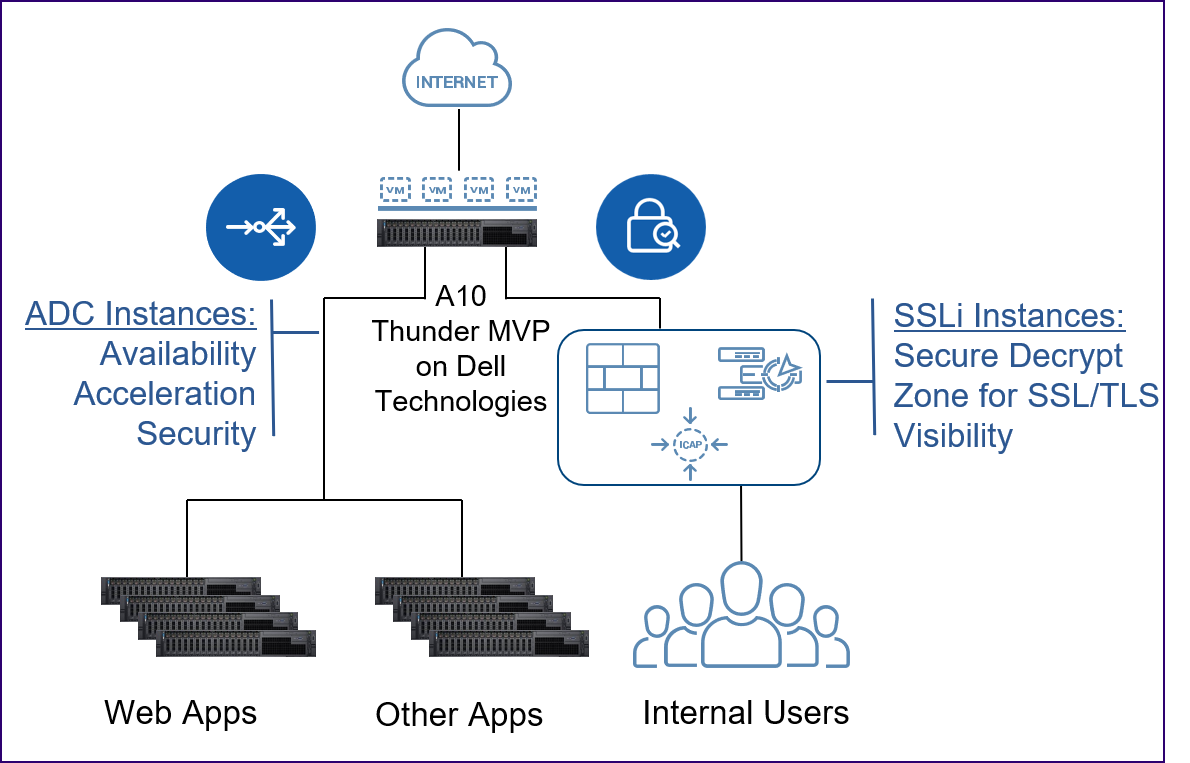
    A10 Networks announced today it has partnered with Dell Technologies to make its application delivery controller (ADC) and A10 Thunder Multi-tenant Virtual Platform (MVP) available on Dell servers.

    Gunter Reiss, vice president of worldwide marketing for A10 Networks, said this alliance reduces the cost of deploying ADCs in on-premises IT environments by taking advantage of industry-standard hardware platforms based on x86 processors beginning in the third quarter. Those servers, however, will only be available in the Americas market.

    Specifically, the A10 Thunder ADCs are designed to run on Dell EMC PowerEdge R640XL and R740XL servers, as well as Dell EMC Virtual Edge Platform 4600. The A10 Thunder MVP is designed to run on Dell EMC PowerEdge R640XL and R740XL servers. IT teams can move A10 ADC licenses across these platforms as they best see fit, said Reiss.
    In the wake of the economic downturn brought on by the COVID-19 pandemic, A10 Networks expects more IT organizations will look to rationalize their server portfolio, he said, noting as a major supplier of those servers, partnering with Dell affords A10 Networks an opportunity to expand the base of potential customers.

    Standardizing on a single server platform also affords some organizations the opportunity to reduce their carbon footprint in the data center, he added.

    It’s too early to say how aggressively IT organizations will be consolidating IT infrastructure. However, the total cost of IT increases whenever an organization adds a new platform or vendor. Many IT organizations have already standardized on a single server vendor as part of an effort to reduce management costs. In fact, Reiss said A10 is betting rival ADC vendors will be shut out of IT environments if they require IT organizations to acquire dedicated hardware.

    In the meantime, the number of ADCs required by IT organizations is increasing as the application environment becomes more complex. The rise of microservices-based applications is requiring IT teams to focus more on application latency issues that occur when more modules of code are sharing access to the same IT infrastructure.

    A10 Networks helps address that issue by embedding analytics into that A10 Harmony Controller that is employed to centrally manage all A10 ADCs deployed in a distributed computing environment. That capability makes it simpler for IT organizations to embrace best DevOps practices, Reiss noted.

    ADCs are also playing a larger role in security by first offloading encrypted SSL/TLS traffic and then providing visibility into that traffic to prevent data leakage.

    In general, Reiss said DevOps teams are exercising more ownership of ADC platforms. Network and security operating teams still play a major role; however, it’s clear IT functions are starting to converge, he said.

    It remains to be seen to what degree those roles will ultimately converge. Each IT organization is likely to pursue a slightly different path toward converging network operations and DevOps. The challenge and the opportunity will be overcoming the inherent cultural challenges associated with bringing together IT teams that historically have not had much cause to interact with one another.

  • Kemp Adds Predictive Analytics to ADC to Advance DevOps

    Kemp Adds Predictive Analytics to ADC to Advance DevOps

    Kemp this week enhanced the automation and predictive analytics capabilities it makes available within its application developer controller (ADC) as part of an effort to ease deployment of applications across multi-cloud computing environments.

    Company CEO Ray Downes said the goal is to make it easier for DevOps teams to avoid overprovisioning IT infrastructure, at a time when applications are more distributed than ever.

    The Kemp ADC offerings are comprised of a mix of physical and virtual appliances that have now been deployed more than 60,000 times. The volume of data generated by those deployments now makes it possible for Kemp to apply predictive analytics via a 360 Central monitoring tool that, for example, can now make suggestions concerning where to deploy a workload based on current utilization rates, Downes said.

    Kemp also now can provide comparative analytics, he noted. For example, the company revealed that its analytics show 61 percent of application experience issues are related to events caused by capacity issues such as failing or degrading application servers. Kemp also revealed that 48 percent of organizations see as many as nine application incidents per week.

    Now that Kemp has begun to apply predictive analytics to its ADC platforms, Downes said the next logical step will be to apply machine learning algorithms to help further automate application deployments.

    While ADCs provide critical load balancing capabilities, they are often overlooked as a source of actionable intelligence for DevOps teams. That data is more critical than ever because as IT organizations modernize their application portfolios by embracing more complex microservices, many of them are discovering every application will soon require its own load balancing capability. Previously, the primary role of an ADC had been to enable as many applications as possible to share the same IT infrastructure efficiently. Now the goal is becoming to orchestrate and optimize the allocation of IT infrastructure resources across a range of loosely coupled microservices. The Kemp ADC is designed to enable DevOps teams to define a desired state of all the load balancers in the distributed IT environment, including F5 Big-IP, AWS Elastic Load Balancer, Nginx, and HAproxy load balancers. That capability then makes it easier to roll out distributed application services.

    Over time, Downes said Kemp will extend that capability to open source load balancers such as Envoy, which are starting to be deployed on top of Kubernetes clusters. Both Kubernetes and Envoy are being developed under the auspices of the Cloud Native Computing Foundation (CNCF). As critical as load balancing will be within a Kubernetes cluster, however, Downes noted distributed applications will span cloud-native and legacy IT infrastructure environments as well as multiple Kubernetes clusters.

    It may take a while for DevOps teams to fully sort out what form of ADC platform and load balancing capability to employ when and where. But as IT becomes more distributed, there’s rising interest in making sure IT infrastructure utilization rates for those applications remain as high as possible regardless of how they have been developed.

    — Mike Vizard