Tag: API

  • Trend Micro Partners With Snyk to Advance DevSecOps

    Trend Micro Partners With Snyk to Advance DevSecOps

    Trend Micro today announced an alliance with Snyk through which alerts about vulnerabilities in open source code will be passed on to the tools Trend Micro makes available to apply virtual patches to both monolithic and microservices-based applications.

    Snyk provides a tool that identifies and fixes vulnerabilities and license violations in open source dependencies and container images. Trend Micro COO Kevin Simzer said his company leverages the alerts generated by Snyk to inform developers and cybersecurity professionals where virtual patches need to be applied.

    Virtual patches are a capability Trend Micro developed to enable IT organizations to address a vulnerability by applying a security policy that limits access to a specific piece of code until a developer can update a monolithic application or replace the containers housing vulnerable code within a set of microservices.

    By working more closely with Snyk, Trend Micro is trying to increase the appeal of its approach to virtual patching among DevSecOps teams, said Simzer. It’s not possible for most developers to address every vulnerability that manifests itself in a timely manner. Virtual patching allows DevSecOps teams to establish which vulnerabilities need to be addressed immediately while making use of virtual patches to protect applications from less severe vulnerabilities until they can be addressed during a DevOps cycle. To advance those capabilities, Simzer noted Trend Micro has already integrated its security offerings with continuous integration/continuous deployment (CI/CD) platforms such as Jenkins.

    Simzer said it will take a while for most cybersecurity professionals to trust developers to address cybersecurity issues during the application development process. However, virtual patches provide a mechanism through which both cultures can collaborate more closely without compromising the rate applications are being built and deployed. The primary reason developers tend not to pay as much attention to cybersecurity issues as everyone would like is because of the deadline pressure most of them are operating under. However, as responsibility for application cybersecurity continues to shift left, more developers are trying to address these issues earlier in the application development process.

    More than 16,000 enterprise IT organizations are already using Trend Micro security offerings to secure both monolithic applications and cloud-native applications based on containers, said Simzer, adding that footprint puts Trend Micro in a position to help organizations embrace best DevSecOps practices.

    Of course, Trend Micro is not the only cybersecurity vendor with similar ambitions. The challenge many organizations will face is defining what processes are best handled by developers invoking application programming interfaces (APIs) versus cybersecurity professionals who are more comfortable employing graphical user interfaces (GUI). There may come a day when more cybersecurity professionals are able to write code, but for now the two camps could not be further apart in terms of the tools they prefer to use. For IT security vendors such as Trend Micro, that means for the foreseeable future, they will continue to need to build GUIs alongside APIs.

    — Mike Vizard

  • Netifi Rises to Microservices Integration Challenge

    Netifi Rises to Microservices Integration Challenge

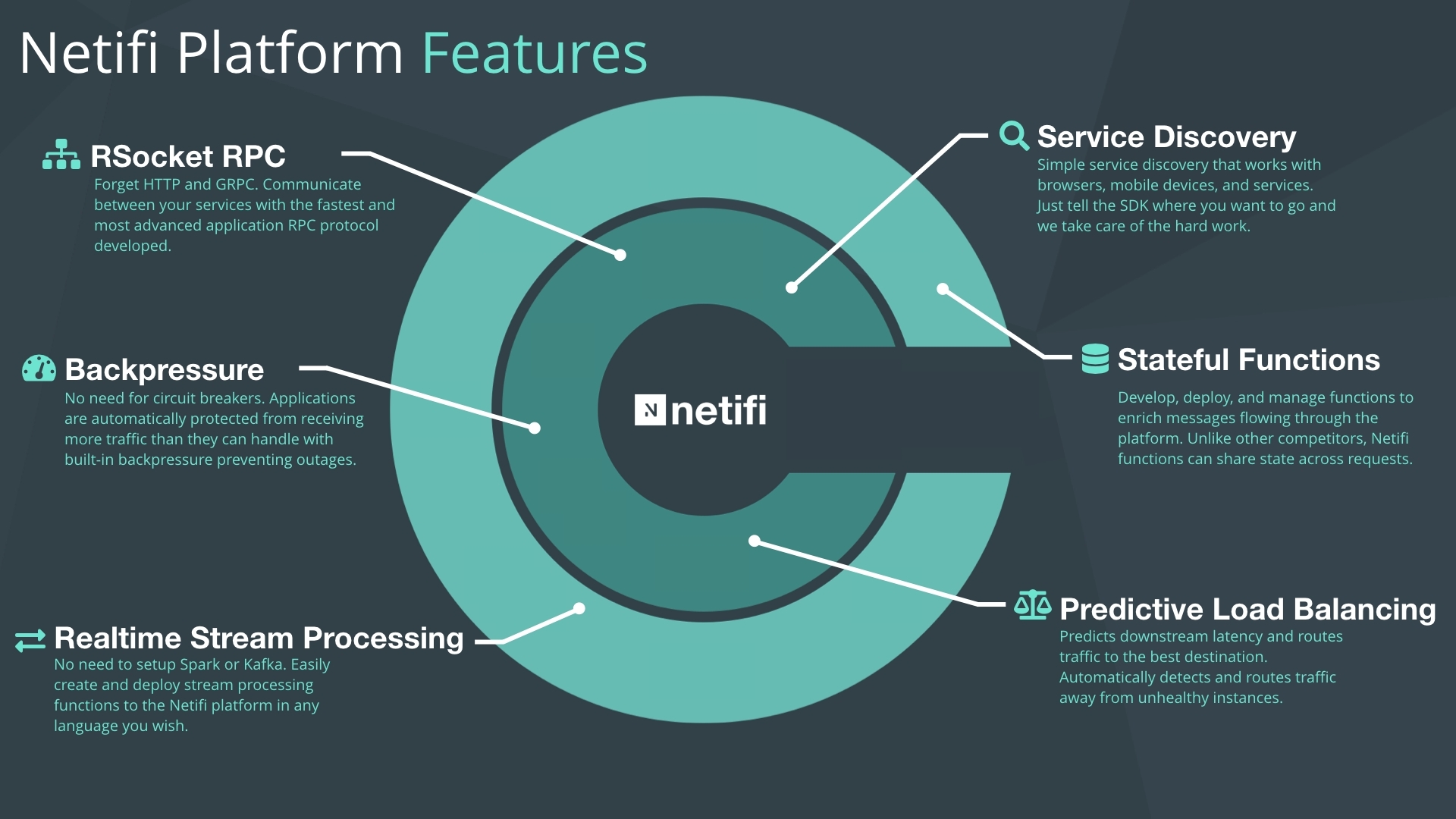
    Netifi this week launched an integration platform based on the open source RSocket communications protocol to replace HTTP ad REST application programming interfaces (APIs) as the mechanism for connecting microservices. RSocket was originally created by Netflix and is now being strengthened via contributions from Netifi, Facebook and Pivotal Software for use within enterprise IT organizations.

    Fresh off raising $2 million in seed funding, Netifi is also committing to support a community edition of RSocket later this year.

    Company CEO Robert Roeser said the Netifi platform is designed to make it easier to build microservices and interconnect them. Most of those microservices are being built using Docker containers, but Roeser said that, as part of a polyglot approach to integration, Netifi is leveraging RSocket to connect microservices built using a variety of runtimes as well as provide access to legacy monolithic applications. The Netifi platform can be deployed on-premises, in a public cloud or in a hybrid fashion.

    Roeser said RSocket was born of necessity at Netflix because the number of microservices that needed to be interconnected at scale was simply too complex a task using HTTP and REST APIs. Soon after, Facebook also started employing RSocket and now Netifi and Pivotal are making contributions designed to make Rocket more accessible for traditional enterprise developers. In the case of Netifi, that means providing mechanisms to both discover and advertise microservices and provide a layer of abstraction that shields developers from the underlying complexity of the network underlay, he said.

    As applications based on microservices become more widely distributed, enterprise organizations tend to become more intimidated by the challenges associated with managing them at scale. Traditional enterprise IT organizations don’t have access to a small army of software engineers to solve the problem. As a result, many of them retreat to building monolithic applications in which all the services that need to be accessed are baked into the application itself. They typically sacrifice scale and flexibility in favor of a construct that is both familiar and easier for them to navigate, Roeser said.

    The challenge Netifi and other supporters of RSocket will face is the considerable amount of inertia surrounding REST APIs and HTTP. Several generations of developers now consider REST APIs to be the default mechanism for connecting various applications together. The issue many of them will need to wrestle with is the extent to which the rise of microservices breaks that integration construct. A shift away from REST APIs also could have significant implications regarding how services are exposed externally, how pipelines are constructed within DevOps environments and other factors.

    It remains to be seen whether integration platforms based on RSocket or some other approach ultimately makes microservices more accessible to enterprise IT organizations. But significant resources now are being poured in to solve the problem, many of which leverage contributions of companies, such as Netflix and Facebook, that already rely on thousands of microservices to deliver a broad range of cloud-native applications.

    — Mike Vizard

  • 7 Principles for Using Microservices to Build an API That Lasts

    7 Principles for Using Microservices to Build an API That Lasts


    SparkPost launched the first beta version of our cloud-based email delivery service three years ago. At its introduction, a handful of customers sent a few million emails a month. Now, our API is used by tens of thousands of customers—including Pinterest, Zillow, and Intercom—to send more than 15 billion emails a month. That dramatic growth demonstrates how rapidly our business pivoted from providing on-premises email infrastructure to operating as a fully cloud-based email delivery service.

    It’s a great business story. But how did we manage change at that scale with regard to technology and development management? In this article, I’ll review several of the choices and best practices that have helped us to not simply manage this pace of change, but actually to thrive from it.

    REST Is Best: Be Practical, Not Pedantic

    From the start, we took an “API first” approach. Our email API is our core application, not an afterthought.

    The first, and most important, step we took was deciding to use REST for our API. Our philosophy was to choose the following three elements as our API’s foundation:

    1. HTTP: This covers response codes as well as operators. The operators include POST, GET, PUT and DELETE, and they can be mapped to the basic CRUD (create, read, update, delete) operations.
    2. Resources: These are the entities that the HTTP operators act on.
    3. JSON (JavaScript Object Notation): This is a data-interchange format.

    Those three elements provide everything needed for a practical REST API, including simplicity, portability, interoperability and modifiability. After the API is built, users can easily integrate against it regardless of their programming language, including C#, PHP, Node.js, Java or even cURL in a shell. They can do so without worrying about the underlying technology, including its use of multiple microservices.

    When we created the SparkPost API, we tried not to be too pedantic about following a pure REST model, opting for ease of use instead. Here are two examples that may not follow RESTful best practices:

    1. GET /api/v1/account?include=usage
    2. POST/api/v1/sending-domains/example.domain.com/verify

    The first example uses a query string parameters for GET to filter what comes back in an entity. In the second example, we use the action word “verify” in the endpoint name, which may not be RESTful. We discuss each new use case and do our best to ensure it’s consistent and easy to use.


    Related Content:

    APIs: Automation is Great. So is Usability

    Tips to Optimize the Cloud for Scaling


    Evolving and Managing Change

    We have many developers and teams working on our API’s microservices, with changes delivered on a continuous basis. We automate deployment of a change to production when an engineer (and a second) concludes it has passed our tests. It’s “released” when the product team decides we’re ready to tell customers about the change.

    We decided early on to keep our API consistent in its use of conventions and how changes are managed. We established a governance group that includes engineers representing each team, a member of the product management group, and our CTO. This group establishes and enforces our API conventions, which are thoroughly documented.

    Documenting our conventions reduces inconsistencies and makes it easier to define each new endpoint. Here are a few conventions we’ve established:

    • URL paths are lowercase with hyphens when separating words, and are case sensitive.
    • URL query parameters and JSON fields are also lowercase with underscores, and are case sensitive.
    • Unexpected query parameters and JSON fields in the request body should be ignored.

    Our governance group also sets the ground rules for how changes can be made and what types of changes are allowed. There are a number of good API changes that are beneficial to users and don’t break their integrations, including:

    • A new API resource, endpoint, or operation on an existing resource
    • A new optional parameter or JSON key
    • A new key returned in the JSON response body

    Conversely, a breaking change includes anything that could break a user’s integration, such as:

    • Changing a field’s data type
    • A new required parameter or JSON Key
    • Removal of an existing endpoint or request method
    • A materially different behavior of an existing resource method, such as changing the default for an option from “false” to “true”

    Those kinds of changes will either break users’ integrations or require the addition of a new version, which introduces more overhead.

    Don’t Break Bad When Making Changes – Nearly All the Time

    Breaking changes should be avoided, even if they’re the result of fixing bugs or inconsistencies. It’s usually better to work around such idiosyncrasies rather than risk breaking customers’ integrations. If a change is of the breaking variety, we proceed with extreme caution and seek out alternative ways to achieve our goal. Sometimes that can be accomplished by simply allowing the user to change their behavior through an account setting or an API parameter.

    However, there are times when the benefits to our users outweigh any potential negatives that would be introduced by a change. In those cases, though, we followed these best practices:

    • We received buy-in from our product, support and developer relations teams.
    • We analyzed API logs to see how many users the change might affect.
    • We gave users at least 30 to 60 days of advance warning about the change.
    • We sent an email or published a blog post containing explicit details of the change and why we were making it.
    • We provided guidance in the API documentation.

    One Version to Rule Them All

    After making thousands of changes to our API during the past three years, we’re still on the first version. We decided early on not to version our API beyond the first one because doing so adds a level of unnecessary complexity that can slow down user adoption of our latest and greatest functionality. Versioning an API can also slow down development and testing, complicate monitoring and confuse user documentation.

    In addition, not versioning our API means we can avoid the controversy that tends to swirl around the subject. There are three ways to version an API, and all of them come with potential pitfalls:

    • Put the version in the URL: Easy to do but a bad choice from a semantic perspective because the entity doesn’t change between v1 and v2.
    • Add a custom header: Also easy to do but not semantically correct.
    • Put the version in the accept header: More semantically correct but the most complicated approach.

    Use Client Libraries to Help Non-JavaScript Users

    Some of our users prefer Python, C#, Java or PHP over JavaScript. We make it quick and easy for them to integrate our API into their applications by maintaining client libraries that offer an easy-to-use set of functions for their code.

    Our client libraries have changed over time, and we do version them. We’ve learned that abstraction is hard when wrapping a living, growing API, so we focus on providing a thin layer of abstraction with some syntactic shortcuts that simplify the more complex areas of our API. Doing so lets our users quickly hit any of our API endpoints quickly and with a lot of flexibility—it also lets us “future proof” our API to some extent.

    A ‘Documentation First’ Strategy, Too

    We treat our documentation as code and use it to document our API changes before we write or change a single line of API code. Doing so helps us enforce our conventions, keeps everything consistent and maintains a good customer experience. It also cuts down on support costs.

    We maintain our documentation in GitHub, which makes it easy for technical and non-technical users to contribute changes. We’ve also found that it’s easier to review changes that way. We use API Blueprint Markdown format and Jekyll to generate the HTML docs, along with a nice search service called Algolia. Doing so lets us have full control over the customer experience, including mobile.

    For those who don’t want to “roll their own” documentation, we recommend OpenAPI (previously known as Swagger), Apiary and API Blueprint. It’s important to avoid a tool that isn’t well-suited for REST API documentation. We suggest including a bright orange “Run in Postman” button in the documentation so it’s easy to try an API, along with good examples of success and failure scenarios.

    Listen to Users

    Finally, we recommend that all developers pay attention to what their users have to say. SparkPost has a community Slack channel where thousands of users can easily access members of our product, support, engineering and executive management teams. We also have a dedicated Developer Relations team that’s squarely focused on engaging with the developer community. All of that allows us to listen to our users and incorporate their feedback into our API.

    — Chris McFadden

  • Node.js Becoming More DevOps-Friendly

    Node.js Becoming More DevOps-Friendly

    Over the last several years use of Node.js has exploded across the enterprise, as developers moved to embrace a variant of Javascript that made it easier to build both client and server-side applications. However, every time it is upgraded, all the dependencies between it and application modules written in C or C++ breaks.

    To solve that problem, the Node.js Foundation is making available on an experimental basis a Node.js API (N-API), developed collaboratively by Google, IBM, Intel, Microsoft, nearFrom, NodeSource and other contributors. The API will be in Node.js 8, and promises to eliminate the need to update all those dependencies. Pending additional testing, it is expected to be given Long Term Support (LTS) status later this year.

    At the same time, The Linux Foundation is adding new features to experimental tracing and async tracking features. A diagnostics API will make it easier to monitor the operation of the Node.js event loop across the complete life cycle of a service request. Finally, an inspector core module, which allows developers to leverage the debug protocol used by the Google Chrome inspector to inspect currently running JavaScript code, is also being added.

    Each of these new capabilities are nice to have on their own. But collectively, they signal the beginning of a maturation process in the Node.js community. Increased use of Javascript in general—and Node.js especially—have arguably caused many enterprise IT organizations re-evaluate their DevOps processes. Developers using Node.js have been able to increase the number of applications they could develop considerably. Since then, the number of languages being employed within the enterprise has exploded.

    Mark Hinkle, executive director of the Node.js Foundation, says moving forward there will be more focus on reducing the friction surrounding upgrades of Node.js applications as part of an effort to further expand the ecosystem. Many organizations commonly end up supporting multiple versions running across a variety of applications. Hinkle says N-API is a step in helping to reduce the maintenance costs associated with supporting those applications. In an ideal world, the foundation would be gathering additional input from DevOps experts pursuant to achieving that goal. In most IT organizations, the care and feeding of Node.js applications is still left in the hands of IT operations teams after the apps are deployed in production.

    In the meantime, Hinkle says its performance continues to improve. Naturally, there’s a corresponding relationship between better performance and the number of use cases for which it will be considered. Of course, that doesn’t mean Java and other legacy programming languages won’t be used to develop new applications. But it does means that in terms of the number of programming languages employed across the enterprise, it’s now a polyglot universe.

    — Mike Vizard

  • Continuous Testing: What exactly is it?

    Continuous Testing: What exactly is it?

    ***This post is based on themes and ideas from the great e-book, “Continuous Testing,” by our friends at Parasoft.

    The aptly named DevOps practice of Continuous Testing synchronizes Testing/QA with Dev and Ops processes optimized to achieve business and development goals.

    A few years ago when Agile was all the rage, lightning-fast Dev sprints left the Ops and QA personnel playing catch-up due to inadequate and sluggish testing practices with minimal coverage across frequent builds.

    The widespread culture of Agile development has accelerated development while software testing still lags behind, forcing organizations to cut corners in QA or slow down Dev processes entirely.

    Instead of speeding up the conveyor belt beyond control or slowing down development to kill efficiencies, Continuous Testing in DevOps encourages a systematic approach toward process improvement.

    Continuous Testing goes beyond automation and encompasses all practices — including tooling and cultural change — that help mitigate risks before progressing to subsequent Software Development Lifecycle stages.

    Continuous testing and Automation

    The approach to Continuous Testing can vary and follow diverse pathways to ensure the best user experience is delivered, free of defects.

    It’s barely viable to repeat all tests every time a new feature is added, so the Continuous Testing strategy fosters a company-wide cultural change to achieve four capabilities: Test early, test faster, test often and automate.

    End-to-end test automation practices are intended to integrate QA into existing fast-paced Dev and Ops processes as a means to create continuity while maintaining faster development cycles.

    It’s important to understand the role of automation in Continuous Testing. Automation alone does not enable continuity in testing, but it helps provide a qualitative assessment of risk and practice actionable tasks to mitigate these risks throughout the SDLC.

    In essence, automated testing constitutes the detection process for software issues and defect prevention, whereas Continuous Testing addresses the wider challenge of improving the effectiveness of these detection sensors.

    What does Continuous Testing Look Like

    This example demonstrates how collaboration, automation and tooling enable end-to-end testing that’s performed faster, more often and better aligned with Agile Dev and Ops practices.

    Continuous Testing starts within development processes as Devs use open source tools such as Selenium to test the functionality of their code.

    Tools such as GitHub or other internal repositories can then be used to store tests and version together with the software code. DevOps teams can use the same tests to integrate frequent builds of the software with the Load Impact API.

    Once the code reaches preproduction, dedicated QA teams can use these tests by modifying dynamic test parameters as appropriate. In the production environment, Ops can reuse these tests for acceptance testing and ongoing post production monitoring.

    Once the application goes live, integration with existing APM tools help keep tabs on server-side app metrics.

    Continuous Testing in this example is broken up into at least four environments: Development environment, Continuous Integration environment, QA Pre-production and Performance testing environment, and the Staging environment. Additional post-live monitoring further enable end-to-end continuous testing.

    Key Elements of Continuous Testing

    Parasoft, a global software solutions company, is one of the great thought leaders in DevOps and Continuous Testing. The company has laid out some key elements of the process in a fantastic e-book, and they’re definitely worth sharing here:

    Risk Assessment: Covers risk mitigation tasks, technical debt, quality assessment and test coverage optimization to ensure the build is ready to progress toward next SDLC stage.

    Policy Analysis: Ensure all processes align with the organization’s evolving business and compliance demands. Primary objectives include:

    • Identifying trends associated with injection of dangerous patterns within the code
    • Augmenting defect prevention practices for high risk areas
    • Isolating risk in target areas

    Requirements Traceability: Ensure true requirements are met and rework is not required. An object assessment to identify which requirements are at risk, working as expected or require further validation.

    Advanced Analysis: Using automation in areas such as static code analysis, change impact analysis and scope assessment/prioritization to prevent defects in the first place and accomplishing more within each iteration.

    Test Optimization: Ensure tests yield accurate outcomes and provide actionable findings. Aspects include Test Data Management, Test Optimization Management and Test Maintenance.

    Service Virtualization: Early, frequent and everywhere testing requires access to real-world testing environments. Service visualization enables access to the virtual form of the required testing stages, cutting the waste time to test environment setup and availability.

    An effective Continuous Testing strategy incorporates all of these elements and forces an organization-wide cultural change to synchronize Dev, Ops and QA/Testing as part of the true DevOps philosophy.