Tag: application networking

  • ngrok Previews API Gateway Service to Streamline App Networking

    ngrok Previews API Gateway Service to Streamline App Networking

    Under an early access program, ngrok today made available an application programming interface (API) gateway that can be consumed as a service.

    Rather than having to deploy, maintain, and secure API gateways themselves, application development teams, via a single command or function call, can now invoke a service through which they can route API traffic, authenticate and authorize access, and apply rate-limiting policies using an ngrok policy engine.

    ngrok CEO Alan Shreve said this approach also makes it simpler for IT teams to unify ingress management at a time when application networking is becoming more challenging to manage. That approach also reduces friction because instead of being dependent on an IT operations team, it gives developers more direct control over APIs, he added. Today, most access to APIs is granted after developer first create a ticket request in an IT services management (ITSM) platform, noted Shreve.

    In addition, the ngrok gateway also streamlines access to APIs spanning multiple clouds and on-premises IT environments in a way that enables organizations to implement a multi-cloud computing strategy, he added. Today, many organizations are locked into a single platform because they are dependent on the API gateway services provided by their cloud service provider, noted Shreve.

    Finally, organizations will only need to pay for the API gateway service based on actual usage versus incurring the cost of acquiring a gateway upfront, said Shreve.

    Previously, ngrok has been making available software development kits (SDKs) to provide programmable access to its API gateway. The as-a-service option being offered now is the next logical extension of that effort, noted Shreve.

    In general, more infrastructure than ever is being consumed as a service, so making available an API gateway service is only the latest example of that larger trend, he added.

    Each organization, based on total cost, will naturally need to decide when it makes the most economic sense to consume IT infrastructure as a service; however, as application networking continues to become more challenging to manage at a time when the number of IT professionals with that expertise remains limited. Relying on a service provides a viable alternative for managing what are often hundreds of APIs spanning a distributed computing environment.

    It’s not clear yet precisely which teams within an IT organization are assuming responsibility for application networking, but as layer 4 through layer 7 of the networking stack become more programmable, more responsibility for networking can be assumed by DevOps and platform engineering teams. Existing networking teams, meanwhile, continue to manage the physical networking underlays used to route network traffic. Regardless of how application networking evolves, the rigidity that has characterized the delivery of network services is starting to fade away in a way that makes it possible to dynamically invoke networking services as needed.

    IT teams must decide how best to approach application networking across legacy monolithic applications, microservices and event-driven applications. The goal, however, should be to eliminate as much friction as possible at a time when applications have become more dependent on networking services than ever.

  • F5 Looks to Streamline Application Networking

    F5 Looks to Streamline Application Networking

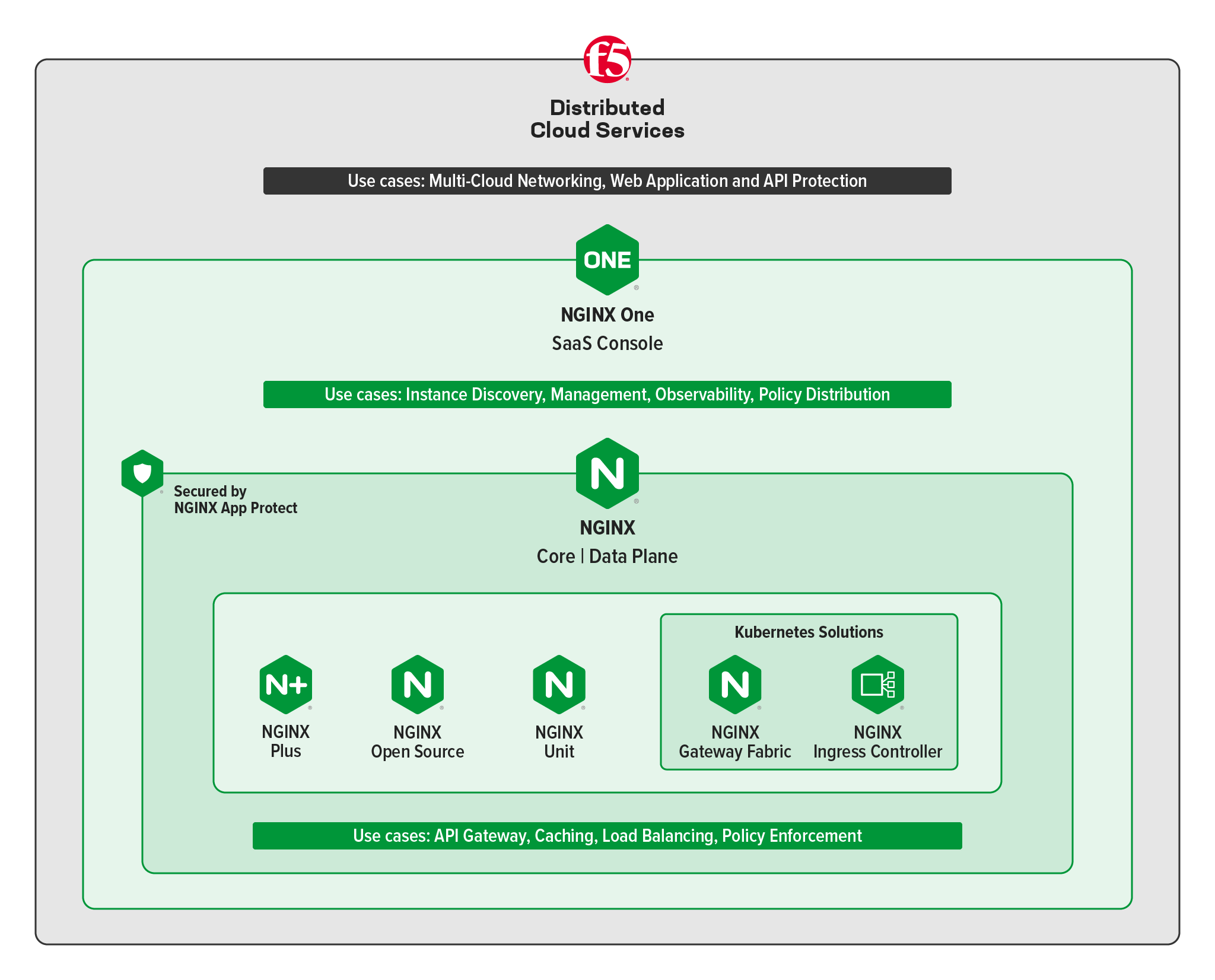
    At its AppWorld 2024 conference this week, F5 announced a software-as-a-service (SaaS) edition of its NGINX application networking portfolio, which are now all available under a single enterprise license.

    Shawn Wormke, general manager for NGINX, said NGINX One will eliminate much of the friction enterprise IT teams currently encounter when implementing NGINX Plus, NGINX Open Source, NGINX Unit, NGINX Gateway Fabric and the Kubernetes Ingress Controller the company provides.

    As part of that effort, F5 is also now making available a unified console across its application networking portfolio that promises to streamline the management of the F5 application networking portfolio.

    Currently available under an early access program, NGINX One creates an as-a-service platform through which enterprise IT organizations can invoke and pay for these capabilities on an as-needed basis, said Wormke. The overall goal is to reduce the total cost of application networking by eliminating the need for IT teams to integrate the various elements of NGINX One on their own, he added.

    In general, application networking has become more complex with the rise of cloud-native applications based on microservices. By reducing the cognitive load required to network those applications, it becomes simpler to make network operations a more natural extension of DevOps workflows, noted Wormke.

    Most organizations have some level of experience with application networking using proxy servers, but as application environments have become more complex, the need for gateways and ingress controllers to provide these capabilities at scale has become more apparent. As a result, more IT organizations are starting to revisit how they are structured. There may always be a need for dedicated networking specialists to manage the physical network underlay, but as other networking services become more integrated with DevOps workflows, responsibility for some networking services is starting to shift further left toward DevOps teams that will either deploy these capabilities themselves or take advantage of a SaaS platform such as NGINX One. The overall goal is to be able to dynamically provision application networking services without having to wait for a network administrator to provision them.

    There are, of course, a lot of approaches to application networking that are now emerging. Regardless of how application networking evolves, however, the rigidity that has characterized the delivery of network services for decades should finally start to fade away. Today, outside of a cloud computing environment, it’s still common for IT teams to provision virtual machines or Kubernetes pods in hours only to wait days or even weeks for network connectivity to be provisioned. As IT environments become more hybrid and more workloads are pushed to the edge, there is a clear need for a more agile approach.

    Each organization will need to decide how best to approach application networking across legacy monolithic applications, microservices and event-driven applications at a time when IT environments have become much more complex to manage. The challenge, as always, is reducing as much friction as possible without unduly raising the total cost of IT to a point where it becomes unsustainable.