The last few years have seen some major slip-ups in the security space among all major cloud providers, resulting in uncertainty and speculation. That’s understanding; cloud security is an extremely complicated subject as enterprises build and deploy applications faster than ever before to keep up with business requirements. Most of the security issues that occur in the cloud today are around compromised accounts, identity theft, malware apps and, of course, data breaches, which are business-critical and showstoppers, in many cases.
Given the dynamic environment of DevOps and the nature of the cloud, it’s a complex problem to address and fix. The most effective way is to embed security, or what is usually talked about as the shift-left of security, in the IT pipeline. If DevOps is the culture of collaboration to reduce risk by the size of change, DevSecOps is the automated security control built into each point to build a sort of self-defense mechanism.
DevOps is not about tools; it’s about philosophy and process. One of the most important processes to include to succeed at DevOps is a feedback loop that reinforces constant collaboration.
This is certainly true when it comes to security-related information. In a healthy DevOps organization, security problems that are detected at any point in the delivery pipeline are communicated quickly to all stakeholders, who can, in turn, respond accordingly.
In this post, we will look at the steps involved in building a security process that will ensure the right information reaches the right people quickly and that teams collaborate without duplicating efforts.
Automate Your Way to Better Feedback
Automation is the first step, and a no-brainer when it comes to DevOps. Without automated security tools for code analysis, configuration management, access control, vulnerability management and secrets management, it is very difficult to scale security in a dynamic DevOps environment. Manual efforts in the cloud are doomed to fail in many cases, as environments change rapidly. Hence, automate. The recommendation is to automate every security control and the entire feedback process as much as possible.
Manage Roles Right and Control Their Accesses
Identity and access management has become the linchpin in cloud security. Since it’s very easy to give people the wrong access, it becomes important to figure out who can access what resources. Access to information and resources must be secure, yet easy to obtain. All access should be given to a group rather than an individual. Mapping security access to the organization’s hierarchy is an effective way of establishing a communication loop. The right information reaches the right group of people. It is important to be able to answer questions such as the following to ensure the communication loop is efficient:
- Who can delete this VM?
- What are the resources a certain user has access to?
- Who has service accounts access?
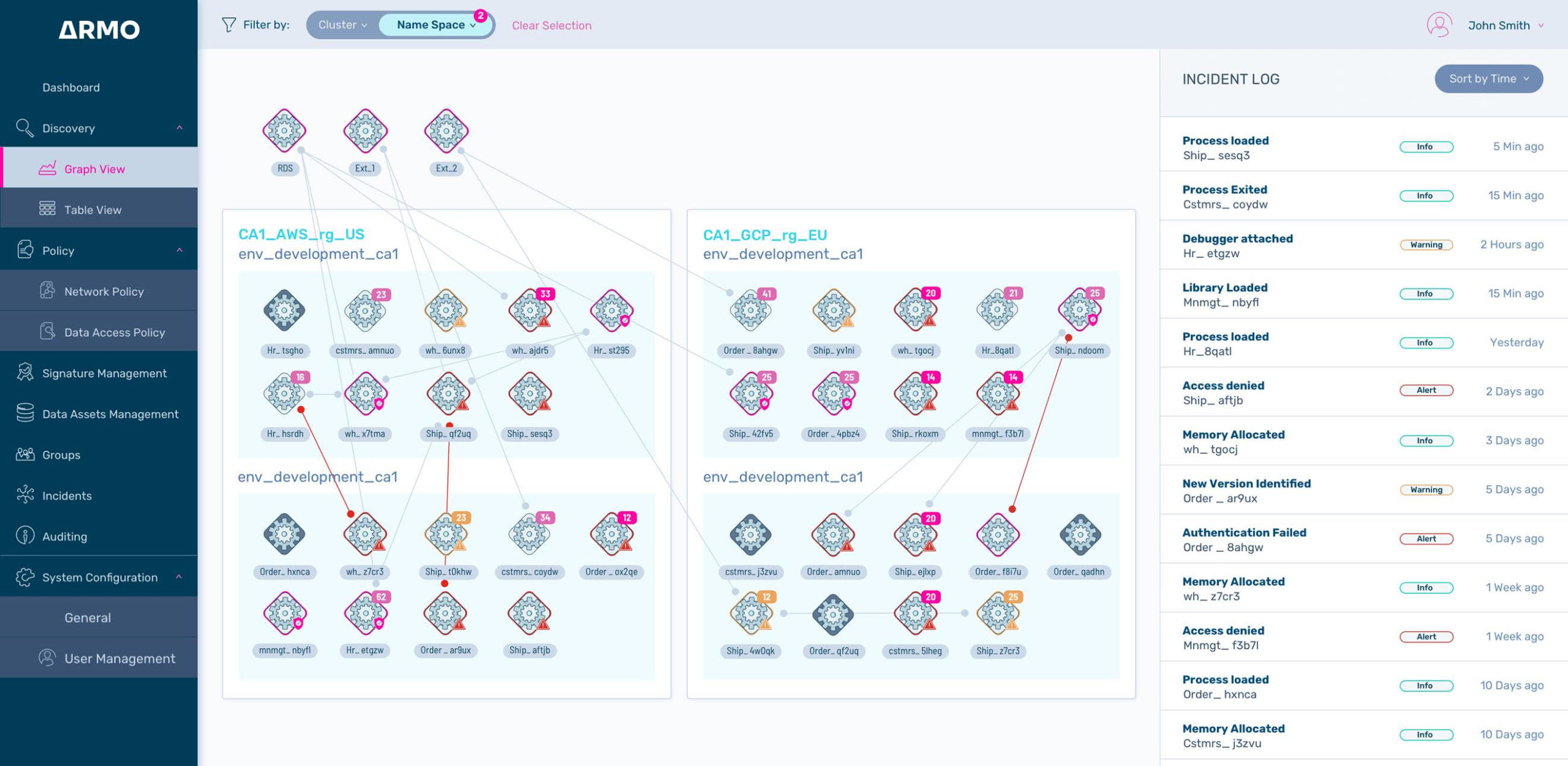
Tools that show a relationship between users, groups, roles, permissions and resources help answer these questions.
Encrypt Secrets, Manage Their Keys
Another important step to building an effective communication cycle is controlling access to application-level secrets. Security can be improved by tightening information flow between relevant groups, which can be accomplished through creating and controlling access to secrets using principles of least privilege. Access keys to those secrets can be kept in a centralized secrets management tool or a key management tool. The rotation of these keys can be automated as often as required.
Designing for Failure and Proactively Managing Vulnerabilities
Though security personnel may cringe at the mention of the word “failure,” designing for failure means thinking ahead and having a plan B. The cloud is dynamic by design and things happen at an incredible pace, often resulting in issues of elasticity, configuration and cloud power.
Context becomes an important parameter for managing vulnerabilities because there are multiple vulnerabilities at any given time. Automated vulnerability management and configuration management solutions are available to take the complexity out of protecting cloud environments. Automation capabilities and continuous monitoring provide deep insight, intelligent recommendations and continuous protection of the cloud, thus ensuring effective management of information in the feedback cycle.
Log Everything — Everything
Just embedding security to shift left is not enough to ensure security. It is important for all relevant collaborating groups to know the status when some code is deployed. The primary source of visibility and feedback comes from logs. Effective logging strategy is the paramount attribute of security design. Logging should be enabled everywhere possible: data access logs, identity logs, admin activity logs, logs within the cloud environment, OS, network platforms, etc. Logs, though cumbersome and volume-heavy, are non-intrusive and a critical visibility tool. You need to know what’s going on before deciding to do something with the event itself, which brings us to the next step: monitoring.
Monitor Those Events
Testing departments often seem paralyzed with too many flags, which prevent them from prioritizing critical issues. Having log and event data is an important first step, but the absolutely necessary next step is to relay them into an automation strategy that will separate the unimportant, voluminous issues from business-critical priorities. Automated monitoring for events triggered makes the feedback cycle more effective. Otherwise, logs can become noise—a copious amount of noise.
Alerts and Notifications
We embed security in the code. We manage access and roles. We turn on the logs and monitor them. An event occurs. Now, who do we alert? An effective alert notification policy will ensure that notifications are sent to the right group of individuals, depending on the notification filters—the level of criticality and relevance of the issue type. Notification policies specify the conditions that trigger a notification that will be sent to the recipient. Notifications can be sent by email, SMS, voice, push messages, etc. A recipient can then acknowledge the alert, which indicates to other users that someone is working on the issue, thus avoiding duplication of efforts.
Conclusion
To conclude, automating security controls and feedback cycles enables a productive DevOps ecosystem by exposing vulnerabilities early in the product life cycle. Automation, streamlined communication and appropriate response to priorities ensure availability, network connectivity and resilience. At the same time, they reduce the possibility of a data breach and duplication of efforts. At the heart of everything is the ability to deliver code in a secure and reliable way to meet ever-evolving business needs with agility.
To see how Symantec can help maximize security in a DevOps environment, check out a free trial of Symantec Cloud Workload Assurance.
This sponsored article was written on behalf of Symantec.
— Twain Taylor