Tag: cloud services

  • Advancing Sustainable Practices in Data Centers: Insights from Platform.sh

    Advancing Sustainable Practices in Data Centers: Insights from Platform.sh

    The environmental impact of data centers is becoming increasingly critical. These facilities, essential to our digital infrastructure, consume vast amounts of energy and contribute significantly to carbon emissions. Clearly, recognizing the urgency of this issue, Platform.sh is pioneering sustainable solutions to mitigate their environmental footprint. By incorporating renewable energy, cutting-edge cooling systems, and robust carbon offset programs, they are leading the way in creating greener data centers.

    Insights from Leah Goldfarb


    In a recent interview with Techstrong TV, Leah Goldfarb, Environmental Impact Officer at Platform.sh, shared valuable insights into the company’s sustainability efforts. Goldfarb discussed the integration of renewable energy sources, advanced cooling systems, and carbon offset programs, highlighting how Platform.sh is leading the way in green data center practices.

    Green Data Centers Explained

    Green data centers focus on energy efficiency and the use of renewable energy to reduce their environmental footprint. These centers aim to lower carbon emissions and optimize energy use, promoting long-term sustainability. Notably, according to industry reports, the global green data center market is projected to grow significantly. Check out this impressive projection: USD 198.3 billion by 2032 from USD 61.4 billion in 2023. This surge is driven by increasing demand for sustainable solutions and stringent environmental regulations​

    Innovative Sustainability Strategies at Platform.sh

    Adopting Renewable Energy:
    Platform.sh integrates renewable energy sources such as wind and solar power into their data centers. This move reduces reliance on fossil fuels and decreases carbon emissions, contributing to a cleaner energy future. For example, some of their data centers are powered entirely by renewable energy, significantly cutting their environmental impact​.

    Designing Efficient Infrastructure:
    The data centers at Platform.sh are designed with energy efficiency as a core principle. By investing in advanced technologies and optimizing their infrastructure, Platform.sh achieves lower power usage effectiveness (PUE). Markedly, this focus on innovation helps manage energy consumption more sustainably​.

    Utilizing Advanced Cooling Technologies:
    Implementing state-of-the-art cooling systems and optimizing server utilization are critical for minimizing energy consumption. Indeed, intelligent workload management and automation ensure resources are used efficiently, reducing unnecessary energy use. Key point: these technologies are crucial for reducing the overall environmental impact of data centers​.

    Certifications and Compliance:
    Notably, Platform.sh holds certifications like ISO 14001 for environmental management, demonstrating a commitment to maintaining high sustainability standards. Compliance with European Union regulations further ensures rigorous environmental practices. In essence, these certifications show that Platform.sh is dedicated to adhering to the best environmental standards in the industry​.

    Participating in Carbon Offset Programs:
    To address residual emissions, Platform.sh uses carbon offset programs. These initiatives support global environmental efforts such as reforestation and renewable energy projects. By participating in these outlets, Platform.sh helps mitigate the environmental impact of their operations​.

    Benefits of Renewable Energy in Data Centers

    Using renewable energy sources provides significant environmental and economic benefits. It helps reduce greenhouse gas emissions and conserves natural resources. Economically, it can lead to long-term cost savings by decreasing dependency on non-renewable energy sources and stabilizing energy costs. This dual benefit makes renewable energy a compelling choice for sustainable data center operations​.

    Emerging Trends in Sustainable Cloud Hosting for 2024

    Sustainable cloud hosting’s latest trends span from automation to AI. However, green initiatives in digital transformation face challenges.

    Automation and AI:
    Automation and artificial intelligence enhance energy efficiency by enabling precise management of workloads and resources, thereby reducing energy waste. These technologies are becoming increasingly important in optimizing data center operations.

    Decentralized Energy Grids:
    Utilizing decentralized energy grids allows data centers to effectively use local renewable energy sources, minimizing transmission losses and improving efficiency. This trend is helping data centers become more self-sufficient and environmentally friendly​.

    Circular  Economy Principles:

    Embracing circular economy principles involves reusing and recycling hardware components, reducing electronic waste, thus extending the lifespan of data center equipment. Consequently, this approach not only conserves resources but also reduces the environmental footprint of data centers.

    Challenges in Implementing Green Initiatives

    Implementing green initiatives in data centers can be challenging. Common obstacles include high initial costs, technological limitations, and the need for specialized expertise. However, prioritizing sustainability and leveraging innovative solutions can help overcome these challenges. For instance, despite the initial investments, the long-term benefits of green technologies often justify the costs​​.

    🎤Tell Your Sustainable Solution Story

    We invite industry Thought Leaders in tech and sustainability to share their innovative solutions and strategies. Boost your company’s profile and amplify your brand by contributing to our discussions on sustainable practices.

    Contact Bonnie Schneider at bonnie@techstronggroup.com to participate.

  • GitLab Unfurls Dedicated SaaS Edition in the Cloud

    GitLab Unfurls Dedicated SaaS Edition in the Cloud

    GitLab today made available to a limited number of customers a single-tenant version of the software-as-a-service (SaaS) edition of its continuous integration/continuous delivery (CI/CD) platform.

    David DeSanto, vice president of product at GitLab, said the GitLab Dedicated option provides all the benefits of a cloud platform without running afoul of any potential compliance issues.

    Designed to be deployed on a cloud platform selected by the customer, DeSanto said the single-tenant edition of the platform makes sure that all the data stored in the cloud is isolated. In addition, the access to GitLab Dedicated is provided via a private network connection, he added.

    Initially, GitLab Dedicated is being made available on the Amazon Web Services (AWS) cloud with support for other cloud platforms planned for 2023 once it becomes generally available.

    GitLab is, in effect, trying to strike a balance between a lower-cost multitenant edition of the platform or, alternatively, requiring organizations to deploy an on-premises edition of the platform themselves, DeSanto said.

    In general, GitLab expects this latest version of the platform to appeal most to organizations that operate in highly regulated industries. However, the number of organizations looking to isolate their data in a private cloud to better protect their software supply chains is expanding, he noted.

    In the wake of a series of high-profile breaches and vulnerability disclosures, the number of organizations that are reviewing their software supply chains has increased. Less clear is the degree to which organizations will look to lock down their existing CI/CD platform versus replacing it with a more secure modern alternative that can be more easily accessed via the cloud.

    The challenge, of course, is replacing a CI/CD environment is not trivial, so organizations will need to consider the time and effort made over the years to customize their CI/CD environment. In some instances, that customization provides a meaningful competitive advantage. In other cases, however, the weight of maintaining all those customizations has become more troublesome than it’s worth.

    Each individual organization will need to decide to what degree they will want to manage the DevOps platforms used to construct applications. More organizations are deciding they prefer to devote as much of their resources as possible to writing code instead of managing the underlying CI/CD platform used to create their applications, said DeSanto.

    Regardless of approach, the number of organizations adopting DevOps best practices to build and deploy applications faster continues to increase. A CI/CD platform accessed via the cloud lowers the barrier to entry for smaller organizations that typically don’t have the skills and resources required to manage DevOps platforms.

    In the meantime, SaaS-based approaches should significantly increase the number of applications being constructed using DevOps workflows. The level of DevOps adoption will naturally vary by organization. However, the total number of custom applications being used to drive, for example, digital business transformation initiatives should considerably expand in the months and years ahead as more applications are built and deployed at incredible speed.

  • VMware Extends Equinix Alliance to Drive Managed Hosting Service

    VMware Extends Equinix Alliance to Drive Managed Hosting Service

    VMware today announced it has extended its alliance with Equinix to launch a managed distributed cloud service that runs instances of its cloud computing platform in hosted IT environments.

    Announced at the VMware Explore 2022 Europe conference, the VMware Cloud on Equinix Metal service takes advantage of more than 240 Equinix data centers in 71 major metro areas around the world to deploy instances of the VMware Cloud platform running atop the company’s virtual machine software.

    Narayan Bharadwaj, vice president of cloud solutions at VMware, said this VMware service extends the scope and reach of the company’s multi-cloud computing strategy beyond the scope of the major hyperscalers and traditional on-premises IT environments.

    The goal is to provide a managed IT environment that provides an alternative for deploying latency-sensitive applications closer to the network edge where data can be processed and analyzed in near-real-time, he noted. In addition, Equinix’s hosted IT environment also makes it possible for IT teams to more easily comply with requirements in highly regulated industries.

    It’s not clear what percentage of applications today are running in managed hosted environments versus a public cloud or local data center. But as more organizations decide not to operate data centers themselves, many of them are discovering managed hosting services are preferable to the cloud for reasons spanning everything from application performance and cost and security to compliance.

    In some cases, organizations are determining that certain classes of longer-running applications initially deployed in the cloud are actually less expensive to run in an on-premises IT environment, noted Bharadwaj. A managed hosting option often provides the flexibility benefits of the cloud at a lower cost for those applications, he added.

    As cloud computing evolves, it’s become apparent that IT is becoming more distributed than ever. Many organizations are finding they now have a mix of applications running on public clouds, in co-location facilities and traditional on-premises IT environments. The challenge is that with each new platform employed to run applications, the total cost of managing IT increases. Regardless of any potential infrastructure cost savings, each platform typically requires a set of dedicated specialists to master the frameworks need to manage it. In fact, the single biggest IT expense remains the cost of labor. VMware is making a case for a familiar IT framework that can be deployed anywhere to rein in those costs.

    DevOps, of course, was created to provide a new approach to automating the management of IT at scale. However, DevOps continues to be employed unevenly, largely because there are not enough IT professionals with the programming skills required to successfully manage IT-as-code. Managed services are gaining traction because, in most cases, they shift the responsibility for managing DevOps workflows onto a vendor such as VMware.

    It remains to be seen just how automated the management of IT will become in the months and years ahead. However, it’s apparent that, in the era of the cloud, more organizations are opting to rely on third parties to manage infrastructure so they can devote more resources to building and deploying applications.

  • Civo Report Surfaces Growing Cloud Lock-in Concerns

    Civo Report Surfaces Growing Cloud Lock-in Concerns

    A survey of 100 IT professionals conducted by Civo, a provider of cloud services based on Kubernetes, finds a total of 82% currently rely on either Amazon Web Services (AWS) or Microsoft for public cloud infrastructure. However, more than a third (34%) of respondents also report they now feel locked into the public cloud service provider.

    The primary reason survey respondents cited for feeling that way is data transfer costs are too expensive to move off their current cloud (65%).

    Simply inertia also seems to be a factor. A third of the total respondents (33%) said they had always used the same cloud service provider. Nearly two-thirds (62%) also noted they were concerned that alternative cloud providers would suffer more outages. At the same time, however, 45% of respondents conceded they are under growing pressure to reduce cloud costs.

    Civo CEO Mark Boost said it’s already apparent that cloud outages are not just limited to alternative cloud providers. In fact, most application workloads are relatively simple in the sense they can run equally well with the same level of resiliency on any number of cloud services at a lower cost than the major hyperscalers currently charge, he noted.

    In effect, cloud computing, except for some more complex workloads, should largely be viewed as a commodity, added Boost.

    Cloud service providers, of course, discourage migrations using exorbitant data egress charges that often make moving data off their platforms cost prohibitive. In fact, most applications are deployed on a single cloud versus in a truly hybrid cloud model because data management can become exceedingly complex. Ideally, IT organizations would like to be able to play one cloud service provider off another to reduce costs. In practice, however, once an application is deployed, it rarely moves to another platform.

    On the plus side, however, microservices-based applications deployed on Kubernetes clusters are easier to move because each instance of a Kubernetes cluster exposes a consistent set of APIs. However, stateful applications deployed in Kubernetes environments can like any other application become dependent on, for example, a proprietary database.

    The tradeoff, of course, is that each cloud platform added to an enterprise IT environment tends to increase total costs. IT staffs typically need to hire additional specialists that require tools to manage each cloud. There are, naturally, platforms that span multiple clouds but the cost of acquiring, provisioning and maintaining those platforms can be considerable. In the meantime, more organizations find themselves separately managing and attempting to secure multiple clouds simply because individual departments prefer one cloud service versus another.

    It’s not clear to what degree organizations may soon decide to consolidate cloud workloads as part of an effort to reduce costs. However, a lot of workloads in the immediate aftermath of the COVID-19 pandemic were shifted to the cloud with little regard for cost. Now that organizations are adjusting to the so-called new normal, many of those decisions are, at the very least, being re-evaluated to see what might make the most financial sense as the general economy seems to become less predictable with each passing day.

  • Survey Sees Alternative Cloud Service Providers Gaining Ground

    Survey Sees Alternative Cloud Service Providers Gaining Ground

    A survey of 458 development professionals, managers and senior leaders conducted by Techstrong Research, a sister entity of staging-devopsy.kinsta.cloud, found 43% are considering adding additional cloud service providers in the next 12 months. In total, nearly two-thirds said they are at least considering, evaluating or are ready to buy from a trusted alternative cloud vendor, with 20% reporting they have already contracted one.

    The survey, conducted on behalf of Linode, an arm of Akamai Technologies that provides cloud services, found a full 93% of survey respondents are already using either Amazon Web Services (AWS), Microsoft Azure or Google Cloud Compute Platform (GCP). Nearly two-thirds (65%) reported they already used more than one cloud service provider. More than a quarter (28%) said they are using alternative providers to augment services they consume from either AWS, Microsoft, Google, Oracle, IBM Rackspace or Alibaba. And 19% said they are using a hyperscaler and an alternative cloud service provider.

    The biggest drivers respondents cited for using alternative providers are reducing reliance on a single provider (55%), improved price/performance (38%) and recent cloud outages (31%).

    Respondents also said they are concerned that large providers might one day compete with them as they expand their reach into other industry segments (24%) or may engage in business practices that would create a moral conflict (19%). A quarter (25%) said they already viewed their cloud service provider as a competitor.

    Dan Kirsch, principal analyst for Techstrong Research, said as cloud computing continues to mature, it is becoming apparent that more organizations are considering their options when it comes to consuming commodity compute, storage and networking services. Many organizations simply don’t need to access complex cloud services, he noted. A total of 42% of respondents said a cloud service provider offering core infrastructure primatives could handle 90% of their typical workloads. In many cases, alternative cloud service providers are being used to augment rather than replace a hyperscale cloud service provider, noted Kirsch.

    Overall, nearly three-quarters of respondents (74%) said they expect their infrastructure will be cloud-based by the end of this year. Nearly three-quarters of respondents buy cloud services directly from an infrastructure provider, with the rest employing a managed services provider or some other type of third-party cloud services reseller.

    More than one-third of respondents also reported using a payment mechanism other than a contract or request for proposal (RFP), according to the study. Among customers of alternative cloud providers, more than two-thirds (67%) are using some other payment mechanism, with one-quarter using cryptocurrencies to pay. That option is becoming increasingly important because more organizations are looking for ways to reduce costs by employing alternative payments, said Kirsch.

    In other cases, IT professionals are looking for an end-run around cumbersome purchasing processes or simply opt to use alternative payment methods as a matter of personal preference, he added. Alternative providers, as a general rule, are more open to processing these types of payments, noted Kirsch.

    The shift to the cloud has clearly been accelerating since the start of the COVID-19 pandemic. But as the landscape continues to evolve, there are now more options than ever for IT organizations to consider as the cloud becomes the preferred platform on which to deploy applications.

  • Database Migration from Microsoft Azure to Snowflake on AWS: Part 1

    Database Migration from Microsoft Azure to Snowflake on AWS: Part 1

    Technological advancements have increased the demand for enhanced infrastructure with quick deployments. Public cloud providers are constantly upgrading their policies and infrastructure to match ever-growing business requirements. This competition gives businesses the ability to choose the cloud provider(s) that best fit specific governance and cost-effectiveness needs.

    In this blog, we discuss migrating databases from SQL Server on Azure VM to Snowflake on AWS. 

    Understanding the Problem

    Microsoft Azure is a cloud computing offering for Microsoft-managed data centers, whereas Snowflake is a cloud-based data warehousing solution that provides software-as-a-service (SaaS) based on various public cloud providers.

    In this scenario, we need to migrate the SQL Server databases to Snowflake. There is also a need for the migrated data to be put in Snowflake with multiple schemas for database names with the data in the precise and correct form. 

    While Azure supports ingestion from various sources and clouds, it did not support direct egress to other cloud providers. Finding a workable solution for moving egress to AWS-based Snowflake was the first challenge. 

    Our Approach to Migration

    According to the Snowflake documentation, Snowflake has a stage feature that could address the above issue. It is, essentially, a path in which the data files that need to be ingested are stored, similar to the concept of SMB Samba mount. Using Snowflake Stage allowed it to load Azure Blob storage, after which Snowflake could read and ingest the data in flat files. The next step was to move data from SQL Server to Azure Blob storage.

    The Migration Process

    The migration process consisted of the following steps: 

    • Replicate the database schema in Snowflake as per Azure SQL database
    • Set up Azure Data Factory pipeline to create parquet snappy format flat files on Blob storage.
      • Use parquet files for data compression and quick data load in Snowflake
    • Create file format in Snowflake
      • Create or replace file format <file_format_name> type = ‘parquet’;
    • Create Stage in Snowflake
      • create or replace stage <Stage_Name>
      • url='<Azure Blob file/folder path>’
      • credentials=(azure_sas_token= <token>)
      • file_format = <file_format_name>;
    • To verify if files are staged
      • list @ <Stage_Name> ;
    • Finally, load data to Snowflake table from Stage 

    (Note that all parquet data is stored in a single column ($1))

    copy into TEST1

    from (select

    $1:CustomerID::varchar,

    $1:NameStyle:name::varchar,

    $1:Title:city.bag::variant,

    $1:FirstName::varchar,

    $1:MiddleName::varchar,

    $1:LastName::varchar,

    $1:Suffix::varchar,

    $1:CompanyName::varchar,

    $1:SalesPerson::varchar,

    $1:EmailAddress::varchar,

    $1:Phone:name::varchar,

    $1:PasswordHash::varchar,

    $1:PasswordSalt::varchar,

    $1:rowguid:name::varchar,

    $1:ModifiedDate::datetime

    from @ <Stage_Name>);

    Let’s break down the details of each step in the process.

    1. Leveraging Azure Data Factory

    Azure’s Data Factory is a GUI-based tool that facilitates an end-to-end ETL solution and provides a step-by-step guide for building the pipeline. It has Source (SQL server), Target (Blob storage) and the necessary settings for tuning the performance of the pipeline. These offerings made it a perfect solution for the customized needs of this migration project—which was to wrangle the data before exporting to Blob storage. This was addressed seamlessly by Data Factory which is covered in detail in the later section of this blog.

    2. Tuning the Performance of Data Factory Pipeline

    The tricky part of this migration was that while the pipeline was easy to build, utilizing its full potential and deriving optimum performance was a challenge.

    There were terabytes of data that needed to be exported to Blob from SQL, which would have taken weeks to transfer without tuning. After adequate POC, it was found that Data Factory could support dynamic range in reading data from the source.

    Let’s say there is a table XYZ that is 800 GB. As per the approach mentioned above, Data Factory is required to move the huge amount of data into Blobs. With the traditional method, the GUI, by default, writes the data to Blob serially which would be slower.

    Now, if we look at the table XYZ with a column “date”, the 800 GB of data can be partitioned into small sets depending on month or year. This would mean that each partition is not directly dependent on other date partitions and can be written in parallel. This will be quicker and more resource-efficient.

    This can be achieved by using the dynamic range filter which can be only applied by writing the select statement rather than selecting the checkbox of the existing tables.

    3. Using Parquet File

    The exported data needed to be stored in a flat file while maintaining integrity and compression. CSV was the first choice but during POC many challenges were faced while writing the file, maintaining the spaces and new line characters which corrupted data. The Data Factory offered the Parquet format of a file that had a great compression rate (75%) and also maintained the integrity of the data. Parquet was optimized to work with complex data in bulk and thus was suitable for this project. With respect to the above figure, it can be seen that  40GB of data was compressed to 11GB.

    4. Integration Runtime

    For the Data Factory to work, it required more compute power which was facilitated in the following ways: 

    • Auto-Resolve Integration Runtime

    As the name suggests, the compute resources were managed and assembled by the Microsoft data centers and the cost was incurred on a per-unit basis. The region of these resources was automatically decided based on availability. This is selected by default when running a Data Factory pipeline.

    • Self-Hosted Integration Runtime

    This runtime uses the resources that already exist. For example, the self-hosted IR allowed downloading a client program on the machine for the resources required and creating a service and coupling it with the Data Factory.    

    4. Setting up the Self-Hosted Integration Runtime

    This was the best available option as the SQL server was already hosted on a standalone Azure VM, which provided the freedom to use the full capacity of resources attached to it. It included the following steps: 

    1. Setting-up Self Hosted IR

    • For Azure Data Factory to work with Azure VM it needed to set up the Azure Data Factory Integration Runtime
      • In Azure Data Factory, select “Manage” and then “Integration Runtimes”
      • Select “+ New”, then “Azure, Self Hosted”, 
      • Next, select “Network Environment -> Self hosted”
      • Next, give a suitable name to the self-hosted IR
      • Once the IR is created, Auth keys will be presented. Copy these keys
    • Now as per the last screen, a link was provided to download Microsoft Integration Runtime
        • Download and install the integration runtime from the Microsoft link
        • Once installed, enter the Auth Key1 value and register “Launch Configuration Manager”
        • When registered, the self-hosted IR will bind with the data factory
        • Now, install the Java Runtime 64 bit as it is required for the self-hosted IR to work. Refer to this manual.

      2. Create Linked Service in Data Factory

    • Proceed to Data Factory 
      • Select “Manage” and then “Linked Services”
      • Select SQL server as type of service and give it a suitable name
      • Now under “Connect via Integration Runtime” select the created self-hosted IR
      • Put in the server name. It is important to note that the server name should be the same name used to connect the SQL server successfully
      • Put in the credentials and test connection

    In the next blog, we shall look at some of the challenges encountered during the migration, cost-saving actions and our approach to data validation.

  • SAP Extends Developer Tool Portfolio

    SAP Extends Developer Tool Portfolio

    At an online SAP TechEd conference this week, SAP announced it has added additional low-code/no-code tools to the SAP Business Technology Platform (BTP) to enable both professional and citizen developers to build applications that invoke application services provided via the company’s cloud platform.

    The effort to increase the number of custom applications invoking those services revolves around a no-code development and automation platform dubbed SAP AppGyver, launched this week, and an existing set of low-code tools dubbed SAP Business Application Studio that the company also enhanced. SAP Process Automation, a robotic process automation (RPA) platform for automating workflows, is also being previewed.

    JG Chirapurath, chief marketing and solutions officer for SAP BTP, said the goal is to make it easier for organizations to build applications faster using tools that provide higher layers of abstraction through which they can invoke, for example, backend RPA and AI services via an application programming interface (API). SAP makes it possible to achieve that goal via an SAP BTP platform it provides to IT teams. The BTP platform allows teams to build applications that can be integrated with SAP application services running on a public cloud or managed by SAP on behalf of the customer. In either case, the goal is to make it possible for developers to spend more time building business logic versus building and maintaining integrations, he said.

    As part of the effort, new capabilities were also added to the SAP Conversational AI service and the company has promised to launch a personalized recommendation service based on a neural network.

    At the same time, the company also revealed it has updated the SAP Integration Suite for SAP BTP to provide access to additional prepacked integrations that are available on the SAP API Business Hub.

    In addition, the company said by the end of this year it plans to make the SAP Integration Suite available on the Google Cloud Platform alongside support it provides for other public clouds.

    Finally, a revamped training site, dubbed SAP Learning, will make it simpler for developers to advance their skills.

    The challenge SAP application developers are trying to navigate is determining which business processes are best served using packaged cloud applications versus ones that require actual customer code. The number of processes packaged in a suite of enterprise resource planning (ERP) applications has greatly expanded over time. With each successive update, ERP platform providers such as SAP identify new processes that could be beneficial to the bulk of their customers. For example, the processes that organizations use to track invoices and issue payments are all pretty much the same. It doesn’t make a lot of sense to write a custom application to manage a set of tasks that are already well-defined within a packaged application.

    Custom application development is typically where organizations have an opportunity to differentiate themselves. After all, if every organization is relying on the same core processes provided by a packaged application vendor, there is no real difference from one organization to the next. Custom applications, on the other hand, built using no-code or low-code tools or procedural code written by developers, should either be used to extend a workflow in some way an application doesn’t or should be used to create an application that provides a sustainable competitive advantage. That challenge—and the opportunity—is first identifying those processes and then finding the simplest way to build and maintain the applications that drive them.

  • Newly Independent VMware to Focus on Multi-Cloud

    Newly Independent VMware to Focus on Multi-Cloud

    As an independent company once again, VMware will focus its efforts on providing management planes that span multiple cloud computing environments after officially spinning out of Dell Technologies.

    Ray O’Farrell, executive vice president for the cloud-native apps business unit at VMware, said the company now has a unique opportunity to work closely with providers of cloud services, builders of on-premises IT infrastructure and providers of telecommunications services.

    The terms of the spin-off included an $11.5 billion special cash dividend that resulted in a $27.40 per share dividend payment to all VMware stockholders. VMware claims the simplified financial structure that arises from the deal will provide it with additional operational and financial flexibility.

    Going forward, much of the development work will focus on providing management planes that not only span multiple clouds but also address specific cross-platform requirements such as security. It’s not likely there will ever be one single uber control plane for all of IT, noted O’Farrell. Rather, IT teams should expect VMware to deliver a series of well-integrated control planes to automate specific tasks in a way that breaks down IT silos, he said.

    VMware, however, under terms of its existing alliance, will also continue to work closely with Dell to create server environments that are optimized for VMware hypervisor platforms, O’Farrell said.

    Key to the strategy is a portfolio of observability tools that VMware plans to continue to expand, noted O’Farrell. VMware will also address the requirements of both traditional monolithic applications running on virtual machines as well as cloud-native applications running on distributions of Kubernetes, such as VMware Tanzu, that may be deployed on top of a hypervisor or on a bare-metal server, he added.

    Given the complex state of IT environments today, it’s all but inevitable something will go wrong, said O’Farrell. The challenge and the opportunity for VMware is to provide IT teams with the observability tools required to discover as many issues as possible before they adversely impact the business, he added. Once those issues are discovered, IT teams should be able to automate the remediation process using the rest of the portfolio of VMware management frameworks, he noted.

    Those management frameworks will also provide the foundation for unifying traditional approaches to IT service management (ITSM) with DevOps best practices that are now being used more widely, especially to manage cloud-native applications, said O’Farrell.

    When it comes to on-premises IT environments, VMware continues to dominate. Its hypervisor is, by far, the most widely used on servers in local data centers. VMware has spent much of the last two years expanding its reach into multiple clouds to enable IT organizations to standardize on a series of management frameworks. The goal is to reduce the total cost of IT by reducing reliance on what would otherwise be a hodgepodge of isolated management frameworks. The challenge VMware regularly encounters is the IT teams that manage cloud computing environments are not always the same ones that are managing on-premises IT environments. As such, many IT teams that have deployed cloud applications tend to embrace the management frameworks provided by their cloud services provider.

    VMware, however, is betting that as more organizations look to reduce the total cost of IT, the economic pressure to converge IT management using its frameworks will be simply too great to ignore.

  • Esri Unveils PaaS Environment for Calling Geospatial Data via APIs

    Esri Unveils PaaS Environment for Calling Geospatial Data via APIs

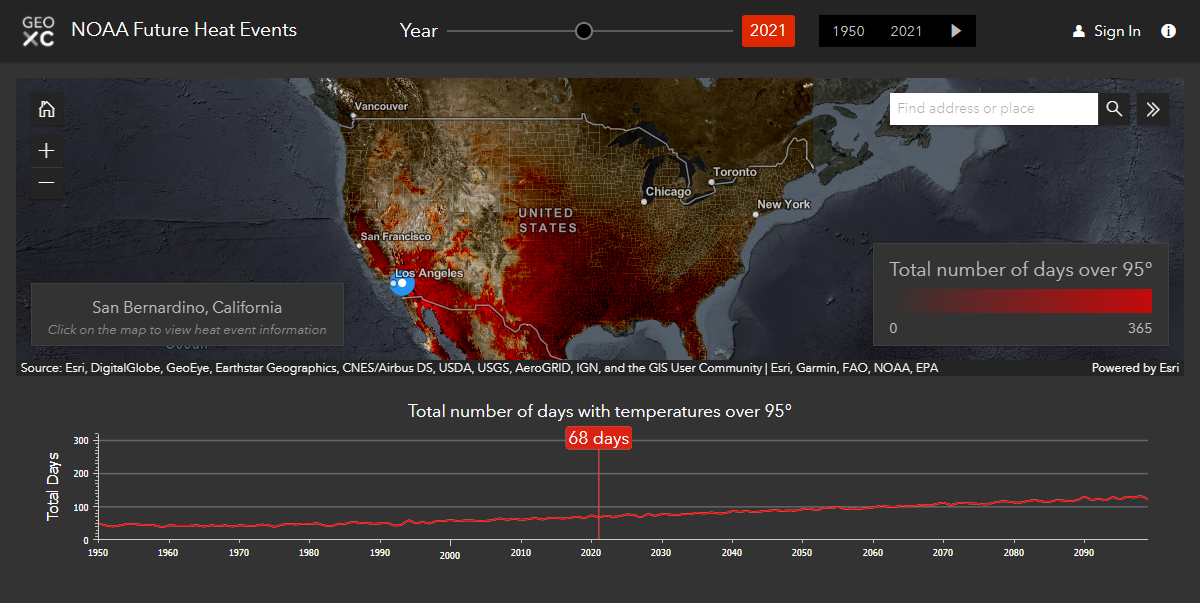
    Esri today unveiled a platform-as-a-service (PaaS) environment through which developers can embed geospatial capabilities into their applications by making an application programming interface (API) call to a cloud service.

    Euan Cameron, CTO for developer technology at Esri, said the ArcGIS Platform will make it simpler for developers to incorporate mapping capabilities enabled by a geographic information system (GIS) system with, for example, a mobile application. The entire ArcGIS software stack can be accessed by those applications by making an API call. Previously, IT teams would have to stand up the entire Esri platform on their own to provide development teams with access to the Esri geospatial platform.

    The PaaS environment also makes it possible for developers to access professional-grade geospatial content that can be plugged directly into their applications, Cameron said.

    Geospatial platforms gained prominence with the popularity of mobile applications that require mapping capabilities. With the expansion of 5G wireless networks, the number of applications that require similar capabilities will continue to grow, Cameron said. A PaaS environment that abstracts the complexity of managing a geospatial platform behind a set of APIs will make it easier to build those applications at scale, Cameron said.

    There are, of course, other approaches to making geospatial databases available as a service. However, Cameron said Esri has long history of providing these capabilities alongside content it curates across a wide range of consumer and business applications. Those capabilities are now an API call away from any application, Cameron said.

    Of course, DevOps teams will need to integrate a PaaS environment that can be invoked as a cloud service within their overall workflow. Esri is committing to making its PaaS offering available on a global network of data centers to minimize latency for applications making API calls to its platform.

    These days, it’s hard to imagine an application that doesn’t require at least some degree of geospatial capabilities. Time and place have become critical elements of any application experience. The total cost of providing those capabilities drops considerably when the geospatial platform required to enable them is managed by its provider. In fact, as application development continues to evolve, DevOps teams often find themselves orchestrating a broad range of API calls to external services. Each one of those calls is simple enough, but over time, the sheer number becomes challenging to manage. Nor is the quality of the APIs surfaced by each service always of the same quality.

    Regardless of how geospatial capabilities are integrated into an application, the days when dedicated teams managed complex GIS platforms may finally be coming to an end.