Tag: community

  • Creating a Growth Loop for Your Open Source Project

    Creating a Growth Loop for Your Open Source Project

    Every open source project hopes to achieve escape velocity, attracting enough users and contributors to become a successful, sustainable project that expands over time. But how do you attract developers and create the cycle of adoption that can lead to a thriving ecosystem?

    It obviously starts with building a great product that developers love to use, and there’s an element of luck in finding this sweet spot and breaking through. But there’s also a lot that you can control. I was fortunate to have helped create an open source project, Streamlit, that expanded quickly and our company was acquired last year. I wanted to share what worked for me in the hope that it also can be helpful for you.

    My guiding principle is to meet developers where they are and make it as simple as possible, at every step in the journey, to discover your project, learn how to use it and build great products. Depending on the type of open source project you’re creating, providing a simple way to share artifacts and use cases built from your code—in our case, this was applications—can also be a powerful way to raise awareness.

    I think about this in terms of a “growth loop” with multiple points of entry where developers can get interested and get started. These entry points include developer forums, source repositories, your documentation page, learning assets, your website and more. The point is to eliminate friction at every point in this loop and make it as easy and fun as possible to start building and sharing with your code.

    For organizations trying to get their open source project off the ground, here are some key learnings about what worked for my company in building this growth loop and some tips for driving continued adoption and innovation.

    Be Visible in the Open Source Community

    We made it a point to go where developers are already at, including forums like Reddit and Stack Overflow and conferences like ODSC and FOSDEM. Engaging with developers to understand what they really need from your project and how to reduce points of friction is key. We were always grateful when people gave us feedback and we reached out to any developer who engaged with our product, whether they had 10 followers or 10,000. I’ve found that developers really appreciate it when you “show up,” and you learn an incredible amount that can help your project succeed.

    Give Developers What They Need

    Don’t hold back features or functionality that developers will find useful. Developers should have access to everything they need and feel confident that they won’t run into a significant paywall that prevents them from scaling. Building a successful open source project is a bottom-up process, and that means eliminating barriers to entry and making your code as easy to use as possible.

    Where developers go, enterprises typically follow. If you can build a tool that developers love so much they’re coding with it in their free time, they’re likely to take it into the workplace. If your goal is monetization, this is where you’re most likely to have an opportunity to recoup your investment.

    Enterprises require particular features around security, access management, IT support, scaling, service level objectives (SLOs) and other areas—capabilities they are often willing to pay for. So, consider a model where you give developers everything they need to become super users and look for adjacent areas where you can charge for enterprise-type features or enterprise implementations that businesses need.

    Make Sharing Incredibly Easy

    If developers build great things with your code, it’s helpful if they can share those things with the community to show what’s possible and drive interest. You can think of this as a type of advertising. Most developers aren’t won over by traditional ads, but discovering cool things that other developers have done with your code can be a great way to attract new users and fuel the cycle of discovery and adoption.

    So think about the natural output from your project that developers could share with the community. Can they put code on GitHub? Share an app or visualization they built? Post a speed comparison? What can they put on Twitter if they love your project and want to show what they’ve achieved with it?

    Our project is for building data apps, so early on, we added a feature that allowed people to take a screen recording and share their work on Twitter so others could see it in action. Later on, we added a free cloud offering so they could directly share apps with the community. Think about what works for your project and how you could make sharing easy.

    Create Amazing How-Tos and Tutorials.

    These can be important entry points on your growth loop, and it’s best to provide them through developers’ preferred channels. YouTube is a go-to for tutorials of all types, and you can also leverage Coursera, Educative and other e-learning platforms. Someone on my team created a Coursera course for our project that has more than 20,000 enrollees, and one of our Code Camp videos has been viewed over a million times.

    Get creative. If your project is starting to see traction among students, think about providing educational materials that professors can use in the classroom. Online interactive courses are not only a great way to learn programming, they make it easier for educators to manage coursework and see who’s keeping up. This is an excellent way to promote your project and capture new developers.

    Documentation is another important entry point. Our documentation page is starting to look like an e-learning course itself, with guides for getting started, sample code and sample apps. Documentation pages can be listed by search engines, and we found it was worth the engineering time to make this happen.

    Contribute to Other Open Source Projects

    Giving back to the community is a good practice for anyone who cares about software, but it can also benefit your project: Contributing to open source projects helps ensure that your software will be compatible with the tools your target developers use. As well as ensuring interoperability, this can help raise awareness of your project in relevant developer communities.

    Reaching critical mass with an open source project is about understanding what your target developers need, being smart with your resources and removing friction wherever you can. This concept of a growth loop worked for our project, and I hope it helps you to achieve success with yours.

  • How to Cultivate a Loyal Developer Community

    How to Cultivate a Loyal Developer Community

    With the number of developer focused companies and products growing, building communities among engineers has become a key strategy to stay competitive. Augmenting and often surpassing traditional marketing techniques, this approach—although challenging—can be an incredibly effective way to engage users and get engineers excited about a product.

    Since our inception over six years ago, DigitalOcean has worked to establish a robust developer community around our product through a variety of channels. This includes our public open-source focused Community, which attracts more than 3 million monthly visitors.

    It Takes a Village to Make a Community

    Beyond creating a product developers love (that always comes first), here are some best practices and lessons we’ve learned for cultivating a great developer community.

    Develop Personal Relationships

    A community implies connection, so first, look for ways to form connections directly and show people you care. In its early days, Twilio did a great job at getting out of the office and doing meetups to speak to devs directly, and I would argue this was essential to it becoming as successful as it is today.

    This also involves finding ways to shine light on individuals in your community. When we found out one of our community members recently had a baby, we sent them a onesie for their newborn. Chances are, you also have community members who are doing amazing things, and would love the recognition for it—either on social media or your blog.

    Taking the time to meet users where they are and working to establish closer relationships with them creates a virtuous cycle: these users help the community grow with their contributions, suggestions and feedback, and therefore feel more empowered to continue to invest in the community. Everyone benefits in this scenario and, equally important, your communication out to the community is genuine because you gain a deeper understanding of exactly who you are talking to and building for.

    To that end, it’s important to have someone or a team (for example: developer advocates or community managers) ready to engage directly with your community and bring the lessons back to the company. You’ll want individuals who are capable of responding, both offline and online, in an authentic way.

    Create Avenues for Them to do Meaningful Work

    While many developers enjoy their work, they often have far-reaching interests beyond code. Companies that find ways to help their communities meld code with what’s important to them personally will see much more stickiness and retention.

    For example, developer analyst firm RedMonk has done a good job of creating conferences (MonkiGras and Monktoberfest) that go beyond technical presentations and instead create discussions around issues such as the intersection of society, culture and technology. This provides a forum for the developer community to connect over shared interests and experiences—not just code or languages.

    We created a program called Write for DOnations that not only pays contributors for  writing technical articles, but also matches this payout with a contribution from us to the author’s choice of tech-focused nonprofits. This not only incentivizes our community to remain active, but makes them feel they’re making a difference. Because we take time to build a relationship with each of our authors, they know that they can help make a regular investment in those organizations.

    Make Product Development Decisions a Two-Way Street

    If you’re creating products for developers, their needs should be top of mind. Using a product feedback forum allows developers to ask questions and make product requests while giving them a faster feedback loop for their product development. We launched our object storage solution “Spaces” last fall in large part because of the flood of requests we received via our User Voice voting system. We’re not alone by any means in creating two-way streets: GitHub has an extensive forum forum for users to talk about different elements on GitHub and get advice. Stripe allows its community to chat directly with its own devs on Freenode as a way of further fostering their own community.

    Providing visibility into your own product road map is also critical — by sharing in advance what you’re planning with your users, you can help them make much smarter long-term decisions.

    Meet Them Where They’re At

    Connecting with developers in person is incredibly powerful, and meetups are a great avenue for this. However, if geographic barriers arise, broadcasting these meetups live is a nice way to engage people dispersed across multiple locations and ensure they too get value from your meetup programming.

    On the more tactical side, sharing swag helps keep your product visible even after the meetup or event has completed. A nice shirt or cute sticker allows your community to feel connected and effectively act as brand ambassadors. We’ve seen this to great effect with our Hacktoberfest effort: After sending t-shirts to individuals helping out with open source projects, we often meet people later at conferences still sporting their well-earned tee.

    Building a community takes effort. When beginning to forge one, it is invaluable to consider how your specific audience enjoys connecting and how the company can serve them best. There is no one formula for creating a vibrant, engaged community, but with some experimentation and a lot of listening, you can create something truly special around your product.

    — Etel Sverdlov

  • Welcome to the New DevOps Institute Neighborhood

    Welcome to the New DevOps Institute Neighborhood

    The DevOps Institute (DOI) was founded in March 2015 as a global learning community for emerging DevOps practices. DOI’s goal is to establish the standard for DevOps training and certification at the enterprise scale based on the most current guidance from the most respected resources. We are guided by a Board of Regents comprised of thought leaders from the DevOps, Agile and ITSM spaces. We are establishing strong alliances with global leaders such as PEOPLECERT and staging-devopsy.kinsta.cloud.

    DOI is not a training organization; all education and certification is delivered through our worldwide network of Registered Education Partners (REPs) and PEOPLECERT as our examination institute. Since our launch, hundreds of candidates have sat the DevOps Foundation and Certified Agile Service Manager courses and exams with positive feedback and results.

    Why do we need a DevOps Institute?

    DevOps does not have a single body of knowledge. It literally touches almost every aspect of IT, from culture to automation to metrics and beyond. While the lack of a single body of knowledge may be frustrating to some, the evolution of an inclusive and collective body of knowledge allows DevOps to continue to grow and adapt organically.

    On a higher plane, that’s great. However, enterprises wanting to transform their environments to be faster, more collaborative and more automated are seeking a more formal approach to training and certification to ensure their teams are fully equipped with holistic knowledge, skills and competencies. That’s where DOI comes in.

    DOI strives to capture emerging DevOps guidance into meaningful and sustainable training and certification. We do this by relentlessly studying the wide DevOps’ collective body of knowledge, engaging subject matter experts, attending conferences, interviewing case studies and just plain paying attention to the evolution of DevOps at scale.  We track and trend innovations that are delivering real value in real organizations. Our working groups and subject matter experts then encapsulate all of the knowledge on a topic into practical and tangible training. Where appropriate, a certification exam will accompany the training to demonstrate an individual’s skill and qualification in a specific topic area. Successful candidates will become members of the DevOps Institute.

    What are the benefits of formal training and certification courses?

    • Creates a common mindset and vocabulary
    • Encourages dialogue, sharing and collaboration
    • Sparks ideas and innovation
    • Provides sustainable and actionable steps
    • Teaches something that can help teams, organizations and individuals to improve
    • Creates holistic expertise
    • Gives individuals a sense of pride and accomplishment when achieving certification

    Did you notice that DOI is focusing more on “emerging practices” over “best practices”? We believe that DevOps is an emerging space where new practices are being discovered, proven and promoted frequently. We also believe in the DevOps spirit of sharing and collaboration, and will never designate candidates as “masters” or “experts.”   DOI’s training and qualifications instead will support a more modern role approach that embraces DevOps’ cultural focus on adaptability, transparency and organizational agility.

    In the DevOps Institute neighborhood, we hope to provide:

    • Just-in-time knowledge articles from our REPs and others that focus on an emerging DevOps practice or related framework
    • Information about current and upcoming training courses and qualifications
    • Access to a calendar of available classes from worldwide Registered Education Partners
    • Video interviews, templates and other assets to help along your DevOps journey

    So, welcome to our neighborhood.   We hope you find value in our sharing and come back often.

  • I signed up for an ass kicking

    I signed up for an ass kicking

    I imagine most people are like me and have a lot of things they’d like to do if they could find the time and energy for them. Lately writing has been one of those things for me. I suppose we all have our priorities. Traveling for tech events and coaching the kids’ soccer team can make it seem like there’s no time to write, and then something legitimately disruptive happens like one of your kids landing in the hospital.

    I recently read Designing Delivery with a group of folks as the inaugural title for our devOps book club. In the book Jeff Sussna discusses delivering quality experiences to your customers as early and often as possible. Most people have been exhausted from traveling at some point in their lives. Many examples from the book talk about this shared experience. This allows us to empathize with a specific type of pain many airline and hotel customers are trying to manage while going about their business.

    Early engagement that sets expectations can make a huge difference. By providing realistic travel times that account for things like seasonal roadwork airlines are more likely to have their customers arrive on time and in a good mood. A hotel that knows they’re dealing with jet lagged, travel worn customers would be well served to have fresh coffee, water, and fruit for them when they arrive if not a drink at the bar.

    You can probably empathize with being travel worn if not jet lagged, but I doubt you understand the level of exhaustion and confusion that comes with having one of your children hospitalized in an emergency situation unless you’ve been there. Hospitals and hotels have a lot in common. One luxury a hospital doesn’t always have is setting expectations for the patients and families. In an emergency you could have less than an hour’s notice before the hospital makes its first impression. How do you make someone comfortable and help them relax when they’re quite reasonably stressed out and concerned?

    My twins were diagnosed with Twin to Twin Transfusion Syndrome (TTTS) before they were born. The illness required an emergency trip to Women and Infants Hospital in Rhode Island on short notice. Providence is a sixteen hour drive from Atlanta. Given I was still in college we stayed at the Ronald McDonald house which are around for families that have a sick child in a hospital away from home.

    A trip to an emergency room for a broken arm is one thing. Not knowing if or when your child is coming home is something else entirely. There were kids getting picked up by buses for school and parents that left for work while other members of their family where in the hospital or back home in another city. I’m thankful our stay was short and relatively uneventful. Women and Infants is an amazing hospital and the Ronald McDonald house really made us feel at home.

    My twins have had their lives saved at Children’s Health Care of Atlanta a total of three times since then. One was hospitalized with cardiac issues immediately after she was born and had a balloon catheter procedure done at Egleston. Both have been in intensive care at Scottish Rite for respiratory issues which includes a visit within the past sixty days.

    CookieOps was something I started with them over a year ago to try to raise money for these organizations. My girls sold me on the idea by telling me, “There are sick kids that still can’t go home and play with their brothers and sisters and we need to help them”. What started out as a bake sale turned into a model for approaching problems with a devOps perspective. For us that means embracing the Three Ways and following the CALMS model (Which is CAMS with an ‘L’ for Lean/Learning). We believe that every process has an artifact and there’s room to optimize both of them. It’s this type of thinking that leads to putting a mint on a pillow and understanding the cost involved far outweighs the related expenses. It’s often the little things we find delightful that make us loyal customers for life.

    parking1

    Like leaving cards near the elevators to help you remember where you parked coming in from the deck to find your child. I’ve wander around in a daze looking for my car in a hospital parking lot before. They’re big buildings that often have multiple decks. It’s easy to forget where you parked when you’re in a hurry to check on much more important things.

    nursesCard

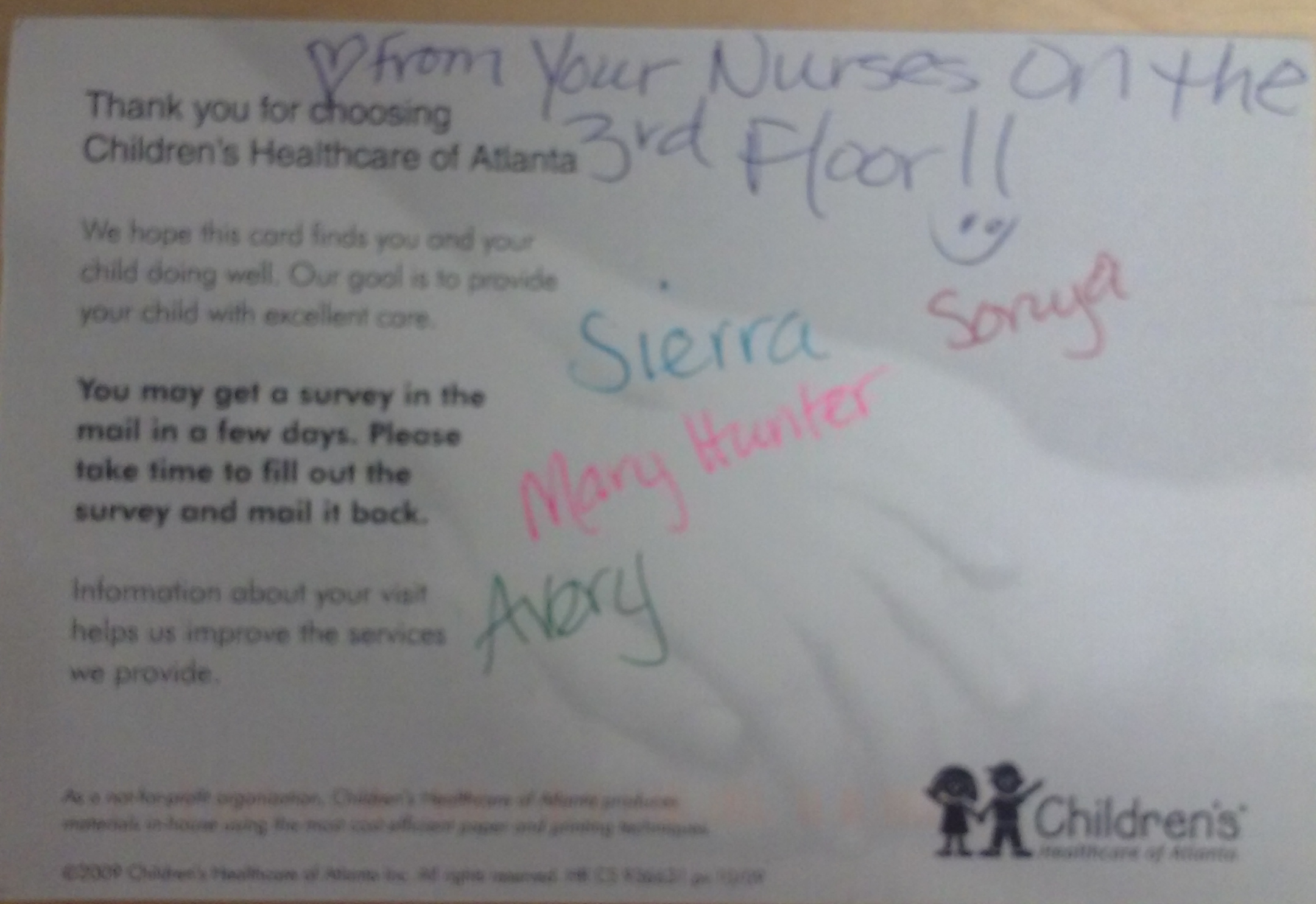
    My daughter was really excited to get a postcard in the mail from her nurses after she was feeling better. I’m not sure how much time is spent writing these cards but I’m thankful for it. Extending the hospital’s experience out to when you’re home and things are back to normal is something that should be celebrated and is well worth the cost involved.

    I’ve investigated a few ways for my kids to raise money with cookieOps but so far we’ve been giving out cookies for survey responses. Publishing the data from those surveys is another thing I’d like to make a priority but haven’t had the time to complete. As raising money for the hospital was always our primary goal when we first started putting surveys out I had little choice but to do so as efficiently as possible when the opportunity presented itself.

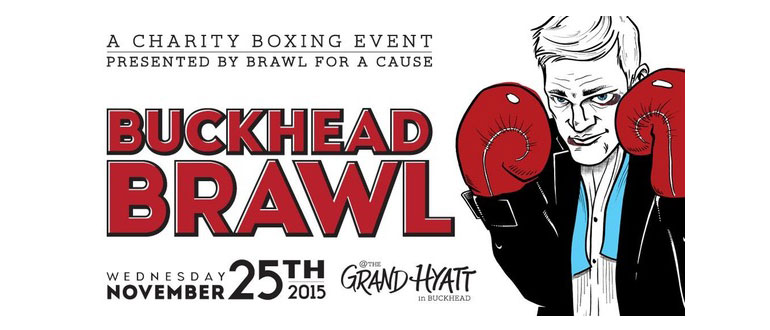
    Brawl for a Cause allows regular people to raise money for causes they believe in by stepping into a boxing ring for their first amateur boxing match. A big difference between a road weary traveler and a family with a child in the hospital is the traveler usually signed up for the ass kicking. The hospitals are dealing with families that would have been fine without ever visiting, and the kids definitely didn’t sign up to fight with their illnesses.

    So I’m glad to step in the ring on November 25th, fight for the sick kids that can’t go home yet, and make good on the promise I made to my daughters. My opponent is boxing to raise money for his daughter’s college education. While I believe everyone deserves the right to an education I also believe they need to live long enough to make it through school. There are opportunities to take your education into your own hands through programs like Kahn Academy. The kids in the hospitals lives are in the hands of the doctors and nurses watching over them. Those kids didn’t sign up for the ass kicking they’re taking, but I’m willing to risk a beating if it can help Children’s successfully ease a family through such a difficult time.

    If you’re in Atlanta we’re boxing at the Hyatt Regency in Buckhead on the 25th. tickets are on sale now. You can donate to support these causes no matter where you live. I’ll take the punches but I need You to make a donation today.

    buckheadBrawl

  • Expanding DevOps requires a supportive IT community

    Expanding DevOps requires a supportive IT community

    How do we bring newbies into the DevOps community? Until they know the melody, they can’t appreciate the song.

    echo-chamberWhile leading a DevOps event, the speaker polled the audience about their knowledge of DevOps.  All of the attendees were well acquainted and actively engaged.  It was obvious there were no newbies in the room.  It made me wonder if we were yelling into an echo chamber filled with people who were already on board.  Where were the newbies?

    My concerns that day reminded me of a 1990 Stanford University study led by graduate student Elizabeth Newton.  She assigned groups of two people to play a communications game. The first person picked a simple song that everyone would know (like Happy Birthday), and tapped the rhythm of the song on the table. The second person was the listener and tried to guess the song.  On average, the tappers anticipated a 50 percent success rate. In reality, the listeners only guessed the song correctly 3 out of 120 attempts (2.5%). [Source: Health & Health, 2007 pp. 19-20]

    That happened because the tappers already had the multidimensional melody playing in their heads.  Conversely the listener was unaware of the melody in the tappers’ head and was limited to the one-dimensional tapping patterns.  When tapping was the only means of communicating the song, the listeners almost always failed to guess the song title.

    What’s the Point?

    As DevOps enthusiasts we have experience and expertise — we know the melody.  We have pre-existing knowledge and confidence that this new model works.  Many of us have years of experience, experimentation and a network of insightful supporters to advance our learning. We know the DevOps founding stories and have read a myriad of blogs, articles and books.  We have listened to the webinars and podcast cafes.

    ideasAs the DevOps message tappers, we hear the melody of innovation and progress. And, in our minds, we assume we are communicating our DevOps stories with clarity. We point to effective projects, tools and teams, and create new models and terminology, expecting everyone in the IT community, or those still working in more traditional silo-ed organizations, to comprehend our activities. The listeners, however, may not have the same experience, confidence or base of knowledge. This is especially true of IT teams in enterprise organizations. Many of them have never read the books or heard the compelling stories. They have achieved success and grown their careers with Waterfall, in silos, with hand-off challenges and with technologies from past generations. Maybe they have never even played with Open Source technologies, worked with an open community, or explored the benefits of Agile methodologies. Thus, when many DevOps enthusiasts speak, their message is not understood by traditional IT professionals or those still working in silo-ed organizations.

    Break through the IT barriers and silo-ed structures!

    Breaking through to traditional IT professionals and silo-ed enterprise contributors begins with making the assumption that some may not have sufficient knowledge or experience in this area. This does not mean enthusiasm in DevOps presentations and conversations have to be toned down. Rather, it means they need to begin at the shallow end with stories and then move listeners to the deep end with more technical and detailed information (e.g.,  new ways to systematically reintroduce lean, agile, continuous integration, continuous delivery, continuous improvement models, etc.). The best way to accomplish this goal is to think specifically about traditional IT professionals and their specialty niches. When making presentations or engaging with them, consider their view, context, roles, work silos, and lack of opportunity to see their contributions make a difference. Then endeavor to inspire them to increase their knowledge base and expand their network by exploring collaboration opportunities internally with co-workers and externally with other groups.

    PolarizedSome presenters and team leaders find it effective to begin their group sessions and new conversations with stories from their initial exploration or foray into DevOps. Others employ familiar IT language, ideals, expectations and activities before transitioning into a DevOps melody. This will serve to expand the community to those who are well entrenched in older models (e.g., traditional Waterfall-based organizations, etc.).

    Through greater understanding and deliberate behavior, much can be accomplished when legacy and DevOps groups collaborate: common goals are often more rapidly reached; polarization between old and new models avoided; and DevOps practices expanded across a wider IT community. Externally, this would ensure a wider community of support for DevOps and an ongoing flow of cross discipline collaboration and insights: and internally this can lead to faster innovations, improved corporate unity and accelerated success in the marketplace.  Leaving new invitees outside of the DevOps conversation (intentionally or unintentionally) could hurt our DevOps efforts more than we might ever know. Without building in correlation or transition concepts between old and new, in everything we do,  speakers and leaders could spend endless amounts of time and effort tapping “Happy Birthday,” but very few “newbies” would ever have a chance to recognize, support or see the value in our DevOps melody.

  • staging-devopsy.kinsta.cloud Pitches a Big Tent

    staging-devopsy.kinsta.cloud Pitches a Big Tent

    If you are reading this you have already discovered one way or another, that the new staging-devopsy.kinsta.cloud website has launched. I am proud to say that I have been one of a team of folks who have been working hard on staging-devopsy.kinsta.cloud for many months and weeks now.  I will serve as editor-in-chief and as a co-founder. Anyone who has started a business knows that I am also chief cook and bottle washer. That is OK though. This is not my first start up. Staying up until 2:30 or 3:00 am working on the site reminded me of how alive you feel when you are building a business. If only you could bottle that. We know we have much more to do to realize our vision. But we think we have enough to introduce you, the DevOps community to staging-devopsy.kinsta.cloud

    So what is staging-devopsy.kinsta.cloud? Frankly, it is a big tent.  What we have tried to do is create a destination for the burgeoning DevOps community to gather.  Our goal is to have something for everyone with an interest in DevOps. We realize that many DevOps devotees are highly technical.  All of the culture and business discussions are nice, but how can you do more, faster and better? Our aim is to give you lots of information, education and resources to help in your everyday work. We want bloggers and writers who are living the DevOps life and are sharing their own experiences with you.  In fact, we also welcome you to participate fully by sharing your own experiences and thoughts as well. We are always looking for people who have something to add to the conversation.  That last phrase says it all. We want to add to the conversation.  But that conversation can’t be just for those who are technical. We want a bigger tent than that.

    I have met and there are many people who know little about DevOps. They have heard the name and are curious though. What they do know is that somehow this could help them transform their organizations into what my friend Gene Kim calls a high powered IT organization.  They are faced with a world where the rules have changed. Iterations take place daily if not hourly, automation is not nice to have, it is mandatory, software has replaced hardware for many. How can they succeed in this environment? DevOps is a key. We want staging-devopsy.kinsta.cloud to have a place under our big tent for these people.  Whether they are C-level executives looking to leverage DevOps in their business, VCs looking for insights into their next investment or even job seekers, exploring what talents and skills they will need to succeed, staging-devopsy.kinsta.cloud has a place for them under our big tent.

    Another goal of staging-devopsy.kinsta.cloud is to be more than just a place with great articles, stories and DevOps related content.  We want to be a linchpin of the community.  Though not ready in time for our launch, you will shortly be seeing several other parts of staging-devopsy.kinsta.cloud.  We will have a community forum Q&A section shortly.  If you have a question you can ask. Either someone from our staff or maybe someone in the community will answer. Maybe more than one person will answer even.  Maintaining these Q&As will over time build up a great knowledge base which will always be available to the community.

    Additionally, we want to facilitate and help all of the great meetup and user groups that are out there dedicated to DevOps.  I have spent a lot of time these past months going to meetings, observing, listening and understanding.  We know that these groups need speakers for monthly meetings, sponsors to supply food, drink and often a place to meet. Help with local community outreach and connecting with other groups to share ideas, experience and learning are also somethings these groups need.  The good news is there are plenty of people and organizations out there who want to help you.  Our mission will be to help match these groups together to strengthen these grass root groups. We have lots of room under the big tent to help in this mission.

    Holding a local DevOps Days or workshop?  Need sponsors, speakers, logistic support? staging-devopsy.kinsta.cloud can help you too.  Local groups do more to further the DevOps cause than anyone. We want to help and encourage more of it.

    In the not too distant future staging-devopsy.kinsta.cloud will also be more involved with conferences that play on bigger stages. Whether it be as a media sponsor, covering and reporting on the goings on or providing speakers and content ourselves, we will be on the scene. We plan on holding our own conferences with multi-track sessions, keynotes, exhibits and of course social activities.  Stay tuned for details in the coming months.

    Is this an ambitious agenda? You bet it is.  But if you aren’t going to go big, you might as well stay home.  We are being helped by some people who know how to succeed.  We will be announcing shortly some of the people who are behind staging-devopsy.kinsta.cloud and who will be helping out.  I am proud to call these people my friends and am honored that they are lending a hand. One person I want to mention now though is my staging-devopsy.kinsta.cloud  co-founder, Martin Logan.  When I first started talking about the idea of a DevOps community site I registered a bunch of domains, but knew that staging-devopsy.kinsta.cloud would be the best domain name.  I found Martin as owning the domain and reached out to see if he would perhaps sell it for a reasonable sum.  A few hours later we were partners!  Martin is a real, live DevOps dude.  He understands what DevOps is about. None of this is possible without him.

    For now take a look around our site. Be sure to sign up for our newsletter in the top right column.  The site look and feel will be changing daily as we continue to iterate in the DevOps way.  Most of all there will always be fresh content.  We should be averaging about 100+ new content articles a month.  There will be something for everyone!

    You can reach out to me anytime with comments, suggestions, complaints or questions at ashimmy@devops.com.

    Thanks for stopping by and enjoy!