Tag: DevOps Enterprise

  • Best of 2022: 6 Top Technology Trends to Watch

    Best of 2022: 6 Top Technology Trends to Watch

    As we close out 2022, we at staging-devopsy.kinsta.cloud wanted to highlight the most popular articles of the year. Following is the latest in our series of the Best of 2022.

    Technology trends simply cannot be ignored in today’s dynamic environment. As the world enters a post-digital era, organizations are exploring disruptive technology trends. Artificial intelligence, machine learning, intelligent process automation, advanced analytics, and robotic process automation (RPA) are among the top DevOps technology trends to watch. According to a survey by Accenture, 94% of IT and business experts reported that emerging technologies have accelerated firms’ innovation pace in the last three years. 

    Winning This Decade in the Context of the Next Normal

    This decade continues to witness further development in technology, as innovation transforms industries such as insurance, banking, and healthcare. It is crucial to look beyond seeking operational efficiency and decreasing cost — particularly as customer expectations, regulatory requirements and business landscapes are rapidly evolving. 

    Take a look at six vital technology trends that have gained momentum in today’s hyper-digital world: 

    Trend 1: Artificial Intelligence (AI), Machine Learning (ML) – Integrating Intelligence 

    Technologies like AI and ML have existed for some time, but only now have they started maturing from their perception of “interesting” to “organizationally effective.” Artificial intelligence and machine learning are digital transformation catalysts, and some of the capabilities that fall under this technology include pattern recognition, natural language processing and sentiment analysis. Artificial intelligence has become increasingly important because it provides companies with a competitive edge, is cost-effective and allows them to future-proof themselves. 

    Trend 2: Predictive Analytics – Harnessing New Opportunities 

    In this digital-savvy environment, it has become crucial for organizations to employ tools like predictive analytics.  An advanced form of data analytics, it’s used to extract information and predict trends, behavior and activities with precision. It is increasingly being introduced across industries as it optimizes productivity, helps understand customers better, identifies revenue opportunities and areas of attrition. Financial institutions have already begun to deploy predictive analytics, helping them customize the product offerings, detect fraud and identify new opportunities for cross-selling.

    Trend 3: Low code – Accelerating Innovation 

    Gartner forecasts that low code application platforms will be responsible for 65% of application development activity by 2024. Organizations are rapidly leveraging low code to cater to the growing needs of the digital-first customers, deliver mission-critical and enterprise-grade applications quickly and respond rapidly to unforeseen scenarios. 

    Trend 4: Intelligent Process Automation (IPA): Unifying Processes

    Another technology trend that has paved its path in the digital world is intelligent process automation (IPA). IPA is a group of technologies that work together to organize and digitize the end-to-end business processes and the customer journey. The key drivers of IPA are the need for continuous improvement, retaining data consistency and bridging existing silos.  The technology offers several benefits to an organization, such as reducing error rates, unifying operations, and accelerating processes, but more importantly, assisting in streamlining employee and customer-facing journeys.  

    Trend 5: Contextual Content Services – ECM: Leveraging Context in Content

    Contextual content services, an evolution of traditional enterprise content management (ECM), play a key role in powering automation initiatives. The right tools in ECM like intelligent taxonomy and cognition can bring context to business processes. Empowering users to make smart decisions with relevant information ensures accurate data extraction, and mitigates risks by managing the overall content lifecycle. 

    Trend 6: Robotic Process Automation (RPA): Improving Productivity 

    Robotic process automation is rapidly becoming an integral cog in the wheel of the end-to-end digital journey of organizations. RPA can be the last mile of process automation — or in between — but is key to streamlining and optimizing customer-facing and back-office tasks. The use of bots helps automate repetitive tasks and liberate knowledge workers to focus on other value-added tasks.  The capabilities of RPA offer several benefits, including faster turnaround times, process optimization, sustaining consistency and increasing employee productivity.  

    Future-proofing the Enterprise

    A close eye on the different technology trends can help enterprises leverage the right tools to optimize their business processes and adapt to the changing market needs. Technologies like low code platforms, advanced analytics, AI, and ECM are already being implemented by some organizations to stay ahead of the competition. Ensure your enterprise is tapping into these technology trends to thrive in the next normal.

  • Google Focuses on Enterprise Cloud With Mandiant Acquisition

    Google Focuses on Enterprise Cloud With Mandiant Acquisition

    Thomas Kurian became the CEO of Google Cloud Platform (GCP) with a modest mandate: Turn Google Cloud into an enterprise cloud platform behemoth. Easy, right? By 2019 “Google” was already a verb because of its search engine dominance and the company’s revenue was north of $136.8 billion. So, why have I been closely tracking Google Cloud’s progress on winning enterprise cloud business? Let’s back up.

    When Kurian left Oracle and joined Google, the company was an extremely successful advertising company. At the time, over 85% of Google’s revenue came from advertising. The search engine, email service and lightweight office productivity apps all served the ultimate goal of keeping eyeballs on Google sites so that users could be served more advertisements and increasingly more personalized ads based on a user’s Google interactions.

    If You Build it, Will They Come?

    Enterprises Require More Than Just Technology From Their Cloud Providers

    Google clearly has the scale, tools and technical expertise to provide businesses with what they need from a cloud vendor. When Kurian left Oracle, he was one of the highest-paid technology executives in the world (according to Oracle, his 2017 compensation package was around $36 million). So why would Google hire Thomas Kurian? Because enterprises require their technology and services partners to have more than just great tech. When advising enterprise clients, the following are the top three topics that come up when discussing the selection of a cloud vendor:

    • Industry Expertise: For the enterprise, understanding industry nuances is critical. I recently talked to an executive at a large airline company that fired their large, publicly-traded technology services company because the partners and the services company didn’t truly understand the airline industry. They weren’t using the right terminology and didn’t understand the business pain points.
    • Predictability: Why have large enterprises been hesitant to go all-in on the cloud? They need predictable technology. That doesn’t just mean “stable;” it means that costs, security, usability and service levels must all be predictable. Why, for example, is the mainframe still critically important for many enterprises? Because it is predictable and secure.
    • Ecosystem: Clouds can’t live in isolation. Cloud vendors must have an ecosystem to support enterprise client needs. My number two cloud prediction for 2022 is that we will see an increase in industry-specific ecosystems. Amazon Web Services (AWS), Microsoft Azure and IBM Cloud all have cloud ecosystem strategies focused on financial services.

    Thomas Kurian is well aware of the need to play well with other cloud providers and enterprise cloud providers. In fact, the widely held belief is that Kurian left Oracle because he and Oracle CEO, Larry Ellison disagreed on Oracle’s multi-cloud strategy—Kurian wanted Oracle’s packaged applications to be available on other vendors’ cloud platforms.

    What Does the Mandiant Acquisition Mean for Google?

    It’s clear that Google Cloud is focused on the enterprise. Google has no shortage of DevOps, data, machine learning and artificial intelligence tools to satisfy developers and data scientists. However, what Google needs are more features that enterprises expect from a cloud partner.

    Google Cloud isn’t new to cybersecurity—the company has been securing its own cloud since its foundation. In addition, the company has been gaining enterprise traction with Google Workspace and Gmail and the security around these SaaS offerings is paramount.

    By acquiring Mandiant, Google Cloud can more closely partner with cloud customers throughout the entire life cycle: From code creation (through a combination of Google’s existing Google Chronicle tools) through testing, threat detection and advisory work around incident response.

    My Analyst View

    The debate around security and the cloud isn’t even close to being resolved. Many will tell you that cloud vendors invest millions upon millions of dollars more than any other company in the cloud. It’s imperative that cloud vendors don’t experience infrastructure or SaaS security breaches. However, security continues to be a roadblock for cloud adoption—and, most importantly, enterprise cloud adoption. While every enterprise is doing some work in the cloud, many are still reluctant to move critical workloads (especially their sensitive data) to the cloud.

    Google Cloud should use Mandiant as the bedrock on which its enterprise cloud security business is built. Rather than having piecemeal parts and partners, businesses want their cloud providers to have opinionated frameworks and best practices. Mandiant has some of the best security minds in the industry and can help Google Cloud customers create secure instances. I expect Google Cloud to provide ready-to-provision cloud environments tailored for specific regulated industries by leveraging Mandiant’s expertise. Of course, customers aren’t going to want to necessarily adopt everything that Google Cloud suggests, and customers should be able to swap out components. However, many businesses are already overwhelmed with the number of cloud partners they have to engage with to create a secure cloud environment.

    What Will Microsoft and AWS Do?

    I expect AWS and Microsoft Azure will focus their attention on building out enterprise-focused security offerings. I recently wrote about why it made sense for Microsoft to purchase Mandiant. My general feeling was that Microsoft had many security offerings—ranging from simple consumer-grade virus scanning to enterprise offerings—but that the company lacked a cohesive enterprise security strategy. I still believe Microsoft needs to clearly define its enterprise security assets (and more coherently group them together) either through a reorganization and/or an acquisition. Like Microsoft, AWS has hundreds if not thousands of security offerings and partners. Although AWS is the cloud leader, the company is well behind Microsoft and Google in defining its cloud security strategy. The company needs to outline its enterprise cloud strategy, and cybersecurity needs to be one of the linchpins of that enterprise strategy.

  • Without a Universal Language, Business Systems are Doomed

    Without a Universal Language, Business Systems are Doomed

    Imagine a world without DevOps. Everything that could be automated isn’t. Any job you dream up isn’t possible and, instead, you have to dig 10 to 15 clicks deep into a friendly but oppressive software interface to make every single change. Oh, and there’s no way to run searches.

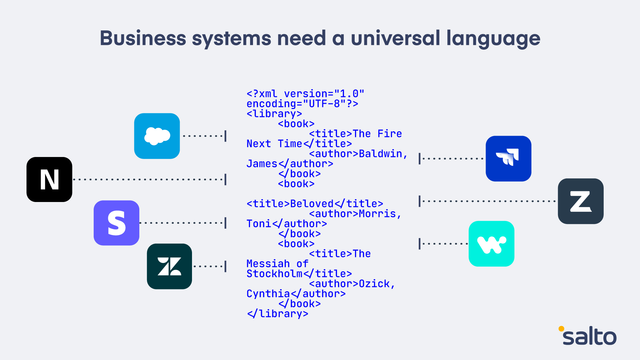
    Picture that and you have a good sense for what managing most business systems (CRM, ERP, HCM, MAP and other three-letter acronyms) are like today. They’ve been designed to make things easy on users, not efficient for administrators and it forces admins to work out of a schematic island—the interface—where no-code conventions rule.

    Yes, there are developer modes, but they aren’t the cure-all you’d imagine. Your business likely has 800+ business applications and whatever you build in one you have to rebuild in all. Not all have dev modes, and no two dev modes use the same language.

    This is all to say that, unless business systems get a universal language that works across all of them, businesses will be in deep trouble. I talk to lots of companies about this and many already are.

    The Cost of Chaos

    If you think about all your business systems together, they constitute a sort of “product” upon which the entire business runs. When that product is built out of 800+ services that can only be governed individually, you have a lot of problems.

    As examples, companies I talk to have experienced the following horrors: A minor change caused sales leads to go unrouted for six months. Those leads grew stale, and the company wasted both the money spent acquiring them and lost millions in potential business. Another found that changes in their CRM created an error in the ERP and invoices didn’t go out until after the quarter’s end. (You should have seen the investors’ reactions). Another had a minor error trigger a dormant email campaign that blanketed their database with out-of-date offers. 

    This list could go on and on, and the effects are real. From managers who lost out on rockstar candidates because the HR system was undergoing maintenance and they couldn’t send an offer to arcane DOS-based internal systems that have become so enmeshed they are irreplaceable—business systems are vital, and most of them are a mess.

    In fact, business applications teams face all the same challenges that software developers do, but benefit from none of their tools. They can’t search through one formal representation of all their applications’ code. (To say nothing of searching across applications.) They can’t easily back up, save versions, collaborate or evaluate PRs except within each system’s frustratingly isolated dev mode.

    As a result, they often can’t: 

    • Simply see a blueprint of how things are set up today (especially across applications)
    • Analyze impact across systems (there are tools, but they’re always app-specific)
    • Save versions and revert to a prior state
    • Run “find and replace” searches for settings buried 10 to 15 clicks deep
    • Figure out who did what, where and why (a real problem for SOX compliance)

    This would be all well and good if business systems were due for a sudden and rapid consolidation, but they’re not. They’re so not. The SaaS market is still growing at 19% year-over-year and some sub-markets are growing faster, like MarTech, at 25% year-over-year. It’s given rise to tragicomic diagrams like this one by Chiefmartec’s Scott Brinker. Companies are buying and relying on epic levels of SaaS. 

    Moreover, today’s business systems accumulate in vertical stacks. The financial applications team owns the ERP and other financial applications like Stripe and Zuora. The Salesforce team owns Salesforce. But business happens horizontally. Leads go from marketing to sales to finance to customer success. All those siloed applications aren’t really built to allow administrators to create a reliably error-free “product” out of all that. Unless, of course, we get a universal language.

    A Plea: It’s Time for Standards

    I find it pretty unlikely that any one SaaS vendor is going to lead the charge for universal conventions for managing and configuring business applications. Each SaaS company views itself as the center of its own universe, with all other apps revolving around it. Their app stores reinforce that viewpoint. 

    It’s going to take an open source third party to build such a system, but here’s what having a universal language for managing your business systems can mean: You get DevOps across all your business applications. 

    To the Salesforce developer who couldn’t care less about NetSuite, that’s fair. But what if I told you that with this standardized language, everything you know about managing Salesforce could be applied to NetSuite if you were pulled into that project? Or vice versa? It’s a lot like suddenly being able to speak an entirely new language. 

    For the heads of departments whose purview spans applications and those who are already rearranging their teams to figure out how to be more agile and support the business, this is (potentially) for you. It doesn’t connect your applications (you’ll still need a Workato or a Boomi, for example), but it’ll give you and your team one view into how multiple applications are configured, and the ability to make changes and push them into production without going 10 to 15 clicks deep into the interface. 

    It allows you, in essence, to apply all of those DevOps practices you’ve been growing accustomed to in each dev mode across multiple systems. You can run searches, use a Git versioning tool, practice CI/CD, automate documentation, conduct impact analysis and scale your efforts. 

    Imagine a business systems world with DevOps. That’s possible, and I’d love for you to check it out and give us feedback.

  • Kong Enterprise 2.7 Simplifies API Management

    Kong Enterprise 2.7 Simplifies API Management

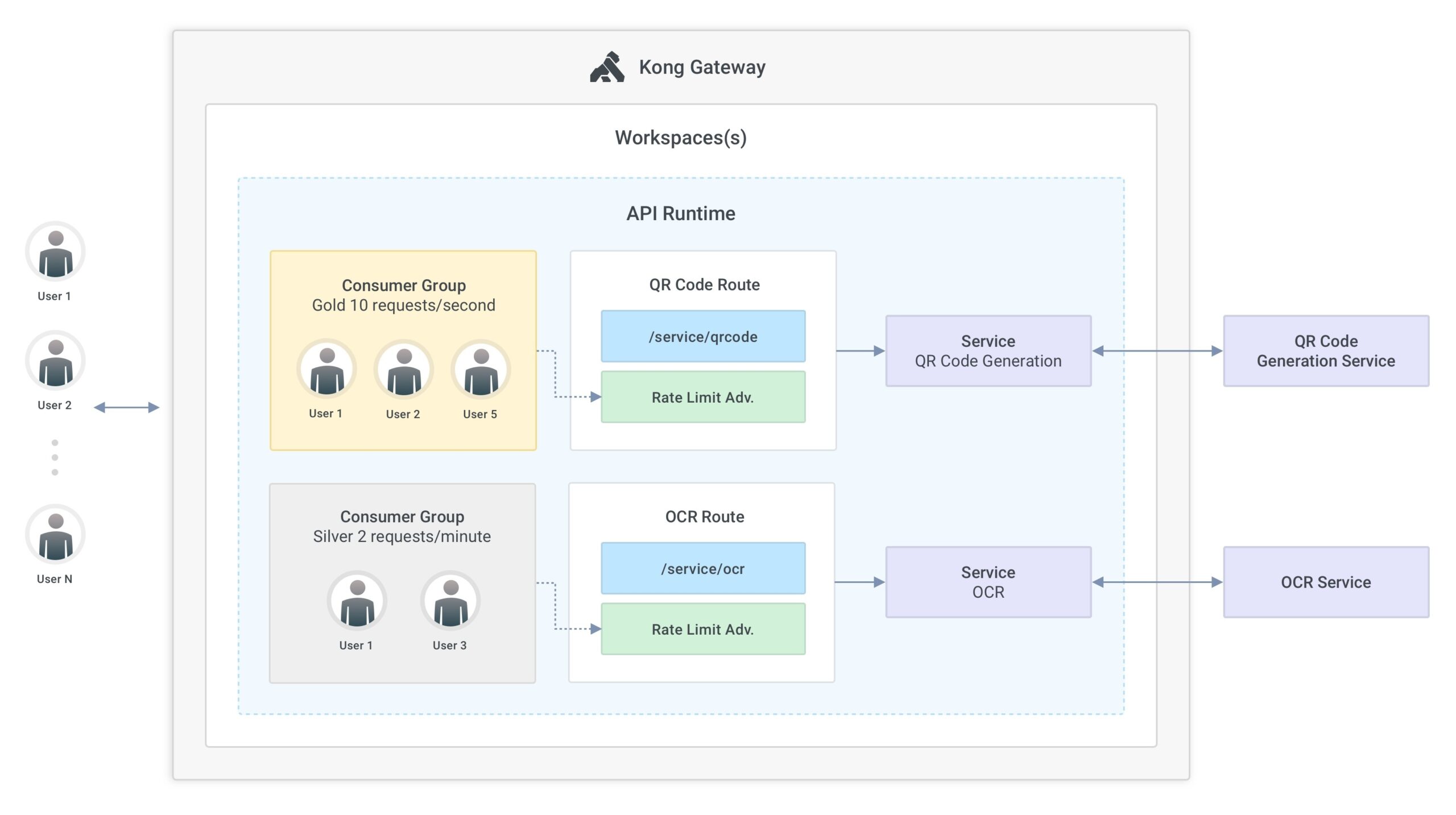
    Kong Inc. this week advanced its service connectivity platform strategy with an update to Kong Enterprise that makes it simpler to collectively manage groups of application programming interfaces (APIs).

    Michael Heap, director of developer experience for Kong, Inc., said that capability will make it simpler to, for example, assign rate limits to different tiers of APIs.

    In addition, Kong Enterprise version 2.7 adds support for real-time and event-based use cases involving the open source Kafka streaming platform and webhooks. Usage of event-driven architectures is rising as more organizations embrace digital business transformation initiatives that require near-real-time processing versus relying on traditional batch-oriented applications, noted Heap.

    Finally, IT teams can now also securely store secrets such as user names/passwords, API tokens, database credentials and private keys that might be used to access Kong Gateway. An improved user interface for Kong Manager UI makes it simpler to configure the Kong OpenID Connect (OIDC) Plugin for the Kong Gateway.

    Overall, Heap said, the latest update also provides 25% increased throughput and improved latency. In tests run by GigaOM, a third-party research firm, Kong Enterprise 2.7 achieved 52,250 transactions per second (TPS) maximum throughput with a 100% success rate.

    Kong is making a case for a service connectivity platform that enables an IT team to manage APIs at a higher level of abstraction by integrating all Layer 4 through Layer 7 services for both monolithic and microservices-based applications. Rather than having to manage an array of networking services and associated services in isolated silos, that layer of abstraction makes it simpler to manage distributed applications that have dependencies on a wide range of APIs.

    In general, the number of APIs that organizations are using both internally and externally has expanded tremendously over the last several years. The challenge now is finding a way to not only manage and secure all those APIs but also retire them as new services come online. Many APIs are created and simply forgotten about because their developer neglected to inform IT operations of their existence. Those so-called “zombie APIs” then become a cybersecurity liability when cybercriminals discover they can surreptitiously exfiltrate data via those APIs.

    APIs are, of course, an integral element of any software supply chain. But as high-profile security breaches put software supply chain security in the spotlight, it’s only a matter of time before IT teams look for more efficient ways to manage and secure APIs at scale.

    Inevitably, that also means organizations will need to decide how much they want to rely on proxy software, API gateways and service meshes to achieve that goal within the context of a larger service connectivity platform.

    In the meantime, the days when APIs were managed in isolation from the rest of the IT organization are coming to an end. The only thing left to determine is how involved API developers need to be in their ongoing life cycle management.

  • The Lego Approach to Overcoming the Developer Divide

    The Lego Approach to Overcoming the Developer Divide

    As end-user demand for new services continues to rise and businesses adapt to changing times, digitalization has never been more important. Pressure is increasing on organizations to deliver digital transformation initiatives more quickly as 55% of CIOs in 2021 said they were increasing staff to accelerate their digital programs. The cloud is essential for this. Because it can enable new opportunities for revenue and quicker delivery to market, the cloud is the way forward for companies that want digital success. That’s why 95% of those surveyed by Accenture say they’ve adopted advanced cloud services. 

    However, this is not without its challenges. For one, teams need the skills to match—individuals who know how cloud works and the expertise to unlock its potential. But this is proving difficult as talent remains hard to recruit (a recent Gartner report found that IT executives view the talent shortage as the most significant barrier to deploying cloud, edge computing, automation and other emerging technologies). In addition, as 92% of companies believe DevOps is crucial for revolutionizing their digital strategies, it’s worrying to see a new report from Boston Consulting Group that revealed up to three-quarters of developers are looking to change their jobs within two to three years. 

    This is something enterprises need to address if they wish to accelerate digital transformation programs and take advantage of the emerging cloud technologies that support the growing need for a distributed cloud architecture. Without the required developer expertise, organizations will fail to address end user expectations and fall behind their rivals. 

    A Concrete Problem

    While the shortage of developers was an issue even before the pandemic, the problem is only getting worse due to the increasing need for digital transformation. It is putting more pressure than ever on existing developers and making it difficult for organizations as they struggle to recruit more talent. In fact, research found that pressure on digital architects has more than doubled during the pandemic, with almost 50% saying they are currently under high or extremely high pressure to deliver digital projects.

    This skills shortage is an important issue for companies to consider. It is well-known that the expertise needed to deploy and maintain cloud services differs considerably from what’s needed for on-premises environments. Without those skills, it becomes difficult for IT teams to oversee and understand what is happening with regard to their cloud deployments, and it ultimately hinders organizations from generating new revenue opportunities through increased innovation. Cloud is a whole new world where control and insight are limited, there are new inflexible cost structures to get used to and other departments can easily procure new applications without the IT team’s involvement. However, we still see examples of organizations being tripped up by these differences. 

    Organizations take proactive steps to keep their developers engaged and happy to avoid digital transformation burnout and ensure they make the most out of their cloud deployments.

    One Brick at a Time

    One way enterprises can do this is by embracing a Lego approach to their digital transformation journey. By adopting a composable business strategy, organizations are in the best position possible to remove pressure from developers and drive increased innovation with less need for highly specific technical expertise. 

    When building things with Lego, even if you’re starting without instructions, you don’t need to completely start from scratch—and you can use the same bricks time and time again. Composability, or the notion of building and configuring infrastructure and applications from component parts with well-defined interfaces, means the same is true when developing new digital services. Instead of having to start from scratch each time or write specific code, developers and even business users can quickly innovate new experiences by composing and decomposing existing digital assets and reusing them—just like Lego bricks. In this way, the company is using its existing skillset to the fullest; maximizing the value of its resources and allowing it to concentrate on actually developing new experiences and services.  

    Perhaps most importantly—especially for developers—this means less pressure on development teams, not only because there’s less need to reskill but because composability means they no longer need to worry about managing underlying infrastructure or reconfiguring physical assets like servers, storage and connectivity. Instead, they can manage all assets through a single unified control plane that spans multiple clouds, right through to the edge. 

    Making use of Existing Resources

    As part of this composable approach, enterprises should also examine how they move away from legacy technology, making sure they invest in innovations that leverage their existing in-house developer expertise. For instance, using a database-as-a-service platform that has the same programming language and tools that developers are already used to will accelerate adoption and reduce training costs. 

    The move away from legacy technology won’t just increase value for the money at a time when developers are becoming harder to recruit and budgets are tight. It will, again, also make life easier for developers. Instead of having to struggle with the integration of older systems with newer innovations, next-generation technologies will make this process harmonious and easy, further reducing the pressure and speeding up digitalization.

    Creating a Solid Foundation

    The developer divide is an issue that organizations need to take seriously if they wish to drive forward their digital transformation initiatives. At a time when demand for improved end user experiences is high, the need for developers has never been greater.

    While recruitment and retention remain a challenge, the Lego approach of composability means enterprises do not need to lose out. Using the existing skills and resources of a company, composability propels faster innovation and greater agility. 

  • How Low-Code Enables the Composable Enterprise

    How Low-Code Enables the Composable Enterprise

    Enterprises know that their customers and partners expect a superior personalized experience. After all, customer experience has been a top priority for organizations over the last decade. However, despite all the technological advancements and transformation initiatives, the ability to deliver innovation with speed continues to elude. 

    Without this ability, enterprises constantly play catch-up with rapidly shifting business dynamics and customer expectations.

    Why is Strategic Agility so Elusive?

    Enterprises are unfortunately locked in a situation that Gartner Research identifies as “static application experience”. It is a paradigm of rigid and bloated application architecture, creating inertia that organizations find difficult to navigate around. This technological impedance is one of the primary reasons (besides organizational culture and structural challenges) at the root of organizational sluggishness.

    To adapt to the challenges of the modern world, enterprises need to move from a static application experience to a more dynamic one. This can be achieved through the approach — wrapped around a goal — of a composable enterprise.

    Composable Enterprise is the Future of Applications

    A composable enterprise aims to create an application architecture wherein enterprises can deliver various functions through composition (as against development), by leveraging packaged business capabilities (PBCs). Gartner estimates that by 2023, 30% of new applications will be delivered, priced, and consumed as libraries of packaged business capabilities, up from fewer than 5% in 2020.

    To be fair, this run-up to a composable enterprise is not a fresh-of-the-press revelation. Enterprises have been attempting to move from hardcore coding-based development to a more service-and-composition-oriented architecture over the last couple of decades, albeit only in pockets and not as fast as they would have wished.

    Composable enterprise has become the need of the hour. And this is being driven by the sense of urgency created by multi-faceted disruption across industries, coupled with technological advancements that make it possible for organizations to accomplish it at an enterprise scale. 

    One such advancement comes in the form of low code digital transformation platforms.

    How do Low-code Platforms drive Composable Enterprise?

    According to Forrester Research, low-code development platforms are emerging as a key strategy to accelerate app delivery to support digital business transformation. They have the potential to make software development as much as ten times faster than traditional methods. Low-code platforms use visual composition and a modeling-based approach to speed up application development. 

    A good low-code platform drives the creation of a composable enterprise in two ways, both of which are critical for long term sustainability:

    • By enabling rapid development of modern PBCs that deliver cutting-edge functionality without having to rebuild the organizational core, thereby protecting decades of investments in legacy and core applications 
    • By providing the core capability to create applications through composition and abstraction with a modeling-driven application environment, wherein the organization can create customer-centric business applications that deliver a dynamic omnichannel experience and drive the end-to-end customer journey

    Is There a Catch?

    Low code platforms come in various shapes and sizes, from those supporting the creation of relatively simpler stand-alone applications to those that enable the rapid development of mission-critical enterprise-scale applications with various functional components. Mostly, the latter category forms the core of a composable enterprise.

    To drive a composable enterprise, a low code platform needs to be equipped with a variety of capabilities. It should: 

    • Speed up pro-grade development through modular, modeling-driven, and abstraction-oriented development
    • Support a variety of business and technological needs, such as workflows, content management, straight-through transactions, mobile apps, collaboration, customer self-service, omnichannel customer engagement and automated business rules
    • Offer service-oriented integration that can extend beyond the organizational boundaries
    • Enable rationalization of application portfolio by helping avoid the introduction of multiple point-solutions in the mix with its own ability to develop a variety of applications quickly
    • Prevent shadow IT through central governance, visibility, and guardrails, without hindering innovation
    • Enable agile, continuous integration/continuous delivery (CI/CD) and adherence to quality standards and architectural requirements
    • Enable, even catalyze, change with traceability, thereby ensuring long term sustainability of business applications

    What Next?

    The ability of organizations to accomplish a composable enterprise of the future will depend on a multitude of factors. It is essentially a transformational journey.

    It is important to take the right steps and build in phases, starting from establishing a core low code platform and building peripheral capabilities with time. Picking the right set of applications and establishing early wins go a long way in building momentum towards the long-term goals.

    Identification of the right low code platform that can drive your transformation journey to a composable enterprise is critical for achieving a composable enterprise.

  • Step Aside, Monoliths: Meet the Composable Enterprise

    Step Aside, Monoliths: Meet the Composable Enterprise

    A composable enterprise, defined by Gartner as “an organization that delivers business outcomes and adapts to the pace of business change”, relies on the assembly of interchangeable application building blocks. This architectural overhaul has largely been driven by a demand for more configurable application experiences, and the need to evolve existing application portfolios that are often too risky and costly to replace.

    New business opportunities require agility from application portfolios; however, many enterprises are still limited in their ability to adapt. Why? They rely on monolithic ERP systems and cumbersome legacy applications with static processes and haphazard structures. A modular setup can enable a business to rearrange as required depending on external or internal factors, such as shifts in consumer attitudes or sudden supply chain disruptions. Organizations are experiencing these shifts now and require a new approach to enterprise applications to be able to adapt. 

    Bridge the CX Gap with Greater Composability

    A composability approach is the best way to capture all the advantages of modern enterprise software. According to a recent Boomi report, by 2023 organizations that have adopted a composable approach will outpace the competition by 80% in the speed of new feature implementation. This shift requires enterprises to rethink how they architect their operations, harness a combination of packaged functions and technologies and successfully deliver seamless moments of service to their customers.

    There are three key ways that businesses can make the composability shift:

    • Adopting a service mindset
    • Scaling the delivery of microservices
    • Packaging business capabilities using Application Programming Interfaces (APIs). 

    1. Designing for Service: Compete on Outcomes, not on Products 

    A composable enterprise whose portfolio is made up of heterogeneous applications from a palette of best-of-breed solutions allows organizations to address key inflection points throughout every customer, product or service lifecycle.

    As more consumers demand continuous value and reliability throughout an asset’s lifetime, businesses must shift to selling outcomes and experiences instead of products to meet these new expectations for quality service. This requires each part of an operation to align, not around immediate sales or revenue, but around delivering a quality Moment of Service™ — the inflection point where everything comes together to create better value and outcomes for customers. 

    Moving to a servitized model requires a composable stack to deliver services to order. At a systems level, this transformation requires organizations to adapt applications dynamically and deliver positive customer experiences with effective quality management, customer support, and access to complete information about the service offering. Unlike traditional enterprise software, this involves connecting data and applications that have often sat in separate silos. A composable enterprise can provide a service-orientated architecture, that enables businesses to become outcome-based and ready to quickly adapt to future disruptions. 

    2. Scale Component-based Architecture with Microservices

    If applications are built as loosely coupled services, then companies can employ a composable architecture to capitalize on independently deployable modules that are organized around business capabilities. This allows organizations to swap modules in and out, to suit emergent needs and build a well-structured best-fit solution for their unique business. 

    In contrast to a monolithic architecture, businesses can easily add resources to the most needed microservice rather than having to scale the entire application as demand for an application increases. In practice, this allows businesses to simplify customizable workflows and optimize business processes while leveraging and applying tools such as robotic process automation, artificial intelligence, or the plethora of hyper-automation capabilities available today.

    3. Embrace Open-ended APIs to Maximize Data-sharing Capabilities

    Packaged business capabilities (PBC) assembled using APIs are the foundation of every composable enterprise. They are used by businesses to secure data across cloud services, business systems and mobile applications. Historically, APIs have been used in monolithic applications to exchange data between the entire application and external applications and services. In composable software, APIs exchange data from individual modules to external applications and within the application — from module to module. This has significant implications for how systems are designed and built.

    APIs can provide a controlled and consumable method for connecting and sharing consumer and business data by creating experiences tailored to individual needs. For instance, an API-centric model can secure and manage data access to help businesses with faster decision-making and deliver relevant new services adaptable to market changes. In the future, there will be more automated continuous process improvements as machine learning models recommend, or even proactively make, process changes to improve outcomes for the business and end customer.

    Opt-in to the Composability Evolution

    To overcome the limitations of monolithic applications, businesses must rethink their approach to enterprise applications — starting with the business architecture and technology stack. A composable software architecture enables organizations to address the internal and external pressures that send shockwaves throughout the value chain. 

    As a composable enterprise, organizations can re-engineer their businesses to ensure customer touchpoints and stages come together for better moments of service, but companies must be certain that processes are optimized across each of these inflection points to mitigate issues and fuel growth. An IT architecture built on a foundation of composability will be essential to the successful delivery of a software-powered business development strategy that can provide continual value to customers and the business itself. 

  • Debunking 6 Stubborn Public Cloud Myths

    Debunking 6 Stubborn Public Cloud Myths

    A lot of enterprises migrate to the public cloud because they see everyone else doing it. And while you should stay up on the latest and greatest innovations—which often happen in the cloud—you need to be aware of the realities and understand different migration strategies. You need to know why you’re moving to the cloud. What’s your goal? And what outcomes are you seeking? Make sure you know what you’re getting your enterprise into before moving forward in your journey. Here are six stubborn myths that persist about the public cloud and the realities you’re facing.

    1. Cloud Technology is not a Project, it’s a Constant

    Be aware that while there is a starting point to becoming more cloud-native—the migration—there is no stopping point. The migration occurs, but the transformation, development, innovation and optimization is never over.

    There are endless applications and tools to consider; your organization will evolve over time, technology changes regularly and user preferences change even faster. Fueled by your new operating system, cloud computing puts you into continuous motion. While continuous motion is positive for outcomes, you need to be ready to ride the wave regardless of where it goes. Once you get on, success requires that you stay there.

    2. Flex-Agility is Necessary to Survival

    Flexibility + agility = flex-agility, and you need it in the cloud. Flex-agility enables enterprises to adapt to the risks and unknowns occurring in the world. The pandemic continues to highlight the need for flex-agility in business. Organizations further along in their cloud journeys were able to quickly establish remote workforces, adjust customer interactions, communicate completely and effectively and, ultimately, continue running. While the pandemic was unprecedented, more commonly, flex-agility is necessary in natural disasters like floods, hurricanes and tornadoes; after a ransomware or phishing attack; or when an employee’s device is lost, stolen or destroyed.

    3. You Still Have to Move Faster Than the Competition

    Gaining or maintaining your competitive edge in the cloud has a lot to do with speed. Whether it’s the dog-eat-dog nature of your industry, macroeconomics or a political environment, these are the things that speed up innovation. You might not have any control over these factors, but they’re shaping the way consumers interact with brands. Again, when you think about how digital transformation evolved during the pandemic, you saw winning businesses move the fastest. The cloud is an amazing opportunity to meet all the demands of your environment but if you’re not looking forward, forecasting trends and moving faster than the competition, you could fall behind.

    4. People are Riskier than Technology

    In many ways, technology is the easiest part of an enterprise cloud strategy. It’s people that introduce much of the risk involved. You may have a great strategy with clean processes and tactics, but if the execution is poor, the business can’t succeed. A recent survey revealed that 85% of organizations report deficits in cloud expertise, with the top three areas being cloud platforms, cloud-native engineering and security. While business owners acknowledge the importance of these skills, they’re still struggling to attract the caliber of talent necessary.

    In addition to partnering with cloud service experts to ensure a capable team, organizations are also reinventing their technical culture to work more like a startup. This can incentivize the cloud-capable with hybrid work environments, an emphasis on collaboration, use of the agile framework and fostering innovation.

    5. Cost-Savings is Not the Best Reason to Migrate

    Buy-in from executives is key for any enterprise transitioning to the cloud. Budget and resources are necessary to continue moving forward, but the business value of a cloud transformation isn’t entirely about cost savings. Really, it’s about repurposing dollars to achieve other things. At the end of the day, companies are focused on getting customers, keeping customers and growing customers, and that’s what the cloud helps to support.

    By innovating products and services in a cloud environment, an organization is able to give customers new experiences, sell them new things and delight them with helpful customer service and a solid user experience. The cloud isn’t a cost center, it’s a business enabler, and that’s what leadership needs to hear.

    6. Cloud Migration Isn’t Always the Right Answer

    Many enterprises believe that the process of moving to the cloud will solve all of their problems. Unfortunately, the cloud is just the most popular technology operating system platform available today. Sure, it can help you reach your goals with easy-to-use functionality, automated tools and modern business solutions, but it takes effort to use and apply those resources for success.

    For most organizations, moving to the cloud is the right answer, but it could be the wrong time. The organization might not know how it wants to use cloud functionality. Maybe outcomes haven’t been identified yet, the business strategy doesn’t have buy-in from leadership or technicians aren’t aware of the potential opportunities. Another issue stalling migration is internal expertise (or lack thereof). If your technicians aren’t cloud-savvy enough to handle all the moving parts, bring on a collaborative cloud advisor to ensure success.

  • Microsoft Expands Azure DevOps Portfolio

    Microsoft Expands Azure DevOps Portfolio

    Microsoft has made available a bevy of updates to its DevOps portfolio that, collectively, are intended to increase its share of a wave of applications that will be rolled out across the extended enterprise.

    Additions to the Microsoft DevOps portfolio were announced at the Microsoft Ignite 2021 conference and include DevOps Workflow Generator, a free tool designed to help DevOps teams visualize their toolchain, and updates to Azure Automanage, a framework for automating the management of virtual machines on Windows Server and, in preview, on Linux.

    At the same time, Microsoft has added support for open source OpenTelemetry agent software to Azure Monitor and made available a preview of Azure Chaos Studio, a service for testing application resiliency.

    Microsoft is also making available a preview of Windows Server 2022 that adds secure-code capabilities for workloads deployed on the platform. Microsoft also previewed updates to backed databases such as SQL Server 2022, Cosmos and its implementation of the Redis database created by Redis Labs.

    Finally, Microsoft has also made available a preview of integration between GitHub Actions for automating software development tasks and Azure Active Directory (Azure AD) using Open ID Connect, an authentication protocol advanced by the OpenID Consortium.

    Microsoft CEO Satya Nadella told conference attendees the next 10 years will witness more digitization than the previous four decades as IT shifts from an era defined by mobile and cloud computing to one defined by ubiquitous computing and ambient intelligence.

    Applications built in everything from procedural code to the Microsoft Power Fx, a low-code tool that Microsoft created using the programming language it originally built for users of the Microsoft Excel spreadsheet. Microsoft envisions those applications will primarily be built on its cloud and distributed everywhere. On the backend, a range of database and artificial intelligence (AI) services will be invoked primarily via application programming interfaces (APIs).

    Of course, every major cloud service provider has similar ambitions. Most organizations today are not standardizing on a single cloud. Rather, they are determining which class of workloads run best on which cloud computing platform regardless of whether that approach increases the total cost of IT. Each additional platform adopted typically requires IT teams to master separate tools. However, Microsoft is now also making a case for a cloud-native framework that can be deployed anywhere to build, deploy and manage applications.

    In the meantime, the number of workloads deployed on cloud services continues to grow. The market research firm Canalys reported worldwide spending on cloud infrastructure services reached $49.4 billion in the third quarter of 2021, a 35% increase. Microsoft currently trails Amazon Web Services (AWS) in overall market share but continues to steadily make gains. Microsoft and AWS collectively account for roughly half of all cloud infrastructure service consumption.

    DevOps best practices will need to evolve to meet the challenges of multi-cloud computing. In addition to cloud platforms and on-premises IT environments, applications are now starting to be deployed at the edge in greater numbers. DevOps teams need to be able to continuously deploy applications and their associated updates across a wide range of platforms. The challenge, of course, is that all those platforms have unique attributes that make truly automating the entire process on an end-to-end basis an elusive goal.

  • The Inevitability of Multi-Cloud-Native Apps

    The Inevitability of Multi-Cloud-Native Apps

    We all know the story: Enterprises moved to the cloud. They learned about data center virtualization and multi-tenancy and self-service developer provisioning. Along came Kubernetes, and they moved to cloud-native, where they learned about automation, DevOps and infrastructure-as-code (IaC). Now, even though most enterprises are still figuring out how to do cloud-native at scale, there’s a new imperative they must master: Multi-cloud-native applications. And for almost every enterprise with a global footprint, the move to multi-cloud-native applications is not optional—it’s inevitable. 

    But before we explore why this is the case, let’s first retrace our steps. For almost every enterprise out there, the journey to the cloud started with adopting a public or private self-service infrastructure provisioning and management model. These enterprises quickly realized that this new IT model required a new set of tools to solve challenges they’d never before faced—enabling their developers with self-service provisioning, managing and operating infrastructure. Enterprises figured it out, but as soon as they figured out the cloud, they quickly had to gear up for the second phase: Automating and operationalizing an enterprise-wide rollout of cloud operating models throughout their entire developer organization. 

    Of course, this phase has its own set of challenges, and a rich ecosystem of tools emerged to address them. Even so, we all can agree that the majority of mainstream enterprises are still in this second phase. They’ve adopted cloud, they’ve expanded its use, and they’re grappling with the challenges around multi-tenancy, security, DevSecOps and governance. Hand-in-hand with this goes a whole new set of challenges around cost management. Suddenly, enterprises are faced with managing the variable costs of public cloud infrastructure: Optimizing compute infrastructure, utilization and capacity to rein in cloud spend. It’s an issue Sarah Wang and Martin Cassado took head-on in their research on the Trillion-Dollar Paradox.

    So, enterprises moved to the cloud and are now, for the most part, successfully grappling with scaling it. But nothing stays the same for long, and businesses drive IT to innovate. This is where cloud-native entered the picture to help enterprise software development teams become more agile and help businesses transform to deliver new services and experiences faster. In fact, the consumer experience this model makes possible has rapidly become the norm.

    Consistently delivering rapid software iteration across a global footprint forces DevOps organizations to grapple with an entirely new set of technical challenges: Leveraging containerized applications and microservices architectures in production across multiple Kubernetes clusters running in multiple geographies. Customers want an on-demand experience. This third phase is what we call multi-cloud-native, and it was pioneered by hyperscale IaaS players like Google, AWS, Azure and Tencent.

    The reality is, of course, that hyperscalers aren’t the only ones who have figured out how to deliver multi-cloud-native apps. Webscale innovators like Doordash, Uber, Twitter and Netflix have done it, too. To get there, they had to make and share their multi-cloud-native apps across every geography where their customers live. And, in turn, to make that happen they had to tackle a new set of challenges: Develop new tools and techniques like geographically distributed, planet-scale databases and analytics engines, application architectures that run apps on the backend close to the consumer in a multi-cloud-native way. This enabled them to do arbitrage across fleets of infrastructure capacity across regions, all while giving their customers that instant experience they increasingly grew to expect.

    What enterprises must realize is that this experience consumers have grown to expect from webscalers is rapidly becoming the same experience they expect when accessing their bank account, their insurance apps and their tax records. For almost every planet-scale enterprise, this sets up a whole new set of challenges: To span multiple clouds and multiple geographies running multiple Kubernetes clusters, you now must worry about new ways to do autoscaling, self-healing, disaster recovery, operations management and cost optimization—all of which are things that you’re just now getting figured out for virtual machines (VMs) and clusters in single regions.

    Enterprises must face the reality that cloud-native application models are not the destination but rather a waypoint on a journey to becoming multi-cloud-native. Because the consumer experiences delivered by webscalers make this the inevitable destination.

    The Enterprise Journey: Cloud, Cloud-Native and Multi-Cloud-Native

    Don’t take my word for it.

    Uber and Twitter public disclosures describe how the multi-cloud-native model is an integral part of their strategic game plan. Hybrid and multi-cloud are part of this, too, leveraging Kubernetes as a cluster manager, but they still need tools to manage all those clusters across multiple environments in multiple regions at planet scale.

    The bottom line is that the architecture that webscale companies are using today is the same one enterprises will need to adopt tomorrow to remain competitive. Alternatively, these enterprises will cede market share and relevance to the next webscale innovator to disrupt an industry. In adopting this model of building multi-cloud-native apps, enterprises will have to deal with unified access management, controlling multiple clusters, resource management and more, all across multiple regions and clusters of capacity, aggregating versus disaggregating cluster resources, using logical services that span clouds versus namespaces that span a single cluster.

    The Enterprise Solution: Planet-Scale Cluster Manager

    They will need a planet-scale cluster manager to do this; something that can observe costs, operations, performance and SLAs across clusters, across public and private clouds, spanning VMs and Kubernetes through a single pane of glass so they can operate above the clouds in an automated, easy-to-use way. Band-aid solutions like running multiple spreadsheet models to figure out how to optimize are not scalable. What’s needed are tools like machine learning to automate and optimize at scale, bin packing technology to intelligently and automatically optimize across a planet-scale infrastructure fleet and high levels of automation either with humans in or out of the loop. That’s how hyperscalers and webscalers are already doing it.

    Every planet-scale enterprise is multi-cloud-native, running data-driven apps. It’s not a fiction: It’s already happening across webscale companies, not just hyperscalers. Multi-cloud-native is the path that every enterprise is going to need to follow if they want to transform themselves to compete with the next webscale upstart. The good news is, the pioneers have left us a map to follow.


    To hear more about cloud-native topics, join the Cloud Native Computing Foundation and the cloud-native community at KubeCon+CloudNativeCon North America 2021 – October 11-15, 2021