Tag: devops

  • State of DevOps Report Finds a Rise in Platform Engineering

    State of DevOps Report Finds a Rise in Platform Engineering

    The speed of software development velocity is increasing, and to enable this, platform engineering is emerging to evolve the DevOps practice. Interest in platform engineering is rising—so much so that Puppet emphasized platform engineering in its 2023 State of DevOps Report.

    A whopping 94% of respondents agreed that platform engineering is helping their organizations better realize the benefits of DevOps. The move toward platform engineering has increased over time, bringing benefits such as increased release velocity, reliability and efficiency.

    Below, we’ll highlight some of the key takeaways from the report. We’ll define what platform engineering is and highlight its benefits. We’ll also consider obstacles on the path to embracing a platform-based development culture.

    Platform Engineering Supplants DevOps

    DevOps has been in use for a decade or more at most institutions, maturing steadily with new automation and infrastructure abstraction. The latest evolution of DevOps is a practice known as platform engineering—51% of organizations have already adopted this practice within the last three years and 93% said it’s a step in the right direction.

    Platform engineering is the discipline of designing and building self-service capabilities to minimize cognitive load for developers and to enable fast-flow software delivery.

    In essence, platform engineering is the process of creating standardized, self-service infrastructure that helps developers get up and running quickly. These self-service platforms typically handle capabilities like deployment (43%), operation of infrastructure (43%), monitoring production applications (42%) and security and compliance (42%).

    These shared internal platforms are maintained by a central platform team that embraces a product mindset to iterate the technology based on user feedback.

    State of Platform Engineering

    Platform engineering is relatively new— 27% of platform teams have formed within the last two to three years. Notably, big tech companies hopped on the bandwagon years ago, and non-tech companies are now following. Regardless, 70% believed their timing was “just right.”

    The goals of a platform engineering team are numerous. According to the Puppet report, 54% said problem-solving is the top goal. This is followed by educating and empowering developer teams (47%), setting best practices (46%) and optimizing iteration (44%). A platform engineering team’s scope of work is primarily focused on automating workflows and building and managing infrastructure.

    The ‘correct’ number of internal platforms is a moving target. The majority of organizations (57%) have between two and four platforms, and 30% have five or more internal self-service platforms. This demonstrates that although platform engineering is somewhat centralized, it’s also flexible to the needs of an organization.

    Benefits and Hurdles

    So, what are some benefits as opposed to traditional DevOps? Well, the most common benefit is improved system reliability, at 60%. This tracks, as a standardized platform could reduce human error and missteps in the development workflow. Following this benefit is improving efficiency (59%), speeding up delivery time (58%) and improving workflow and process standards (57%).

    The most common driver of adoption is increasing the speed of delivery. Slight more than half of respondents (51%) said development speed has somewhat increased since the inception of the platform team, and 42% say it’s increased by “a great deal.” Other top drivers include the need to scale, free up engineering time, control infrastructure spending and avoid duplication across teams. Those with more mature adoption tend to be more satisfied with the result, indicating that results increased over time.

    Of course, no new technological introduction comes without its hurdles, and platform engineering is not immune from certain pain points. For example, 34% said that cycle time is slower than expected. This might be due to nascent industry adoption and a lack of best practices.

    Just under one-third (32%) also noticed resistance to platform team adoption, and 32% reported a lack of communication around changes. Organizations will likely have to increase transparency and reduce siloing to encourage productive platform adoption that satisfies the needs of various stakeholders.

    According to the report, product management skills can help realize these goals. Some of the most fundamental product management skills here include strong communication skills (61%), problem-solving expertise (60%) and the ability to foster collaboration (54%). Many companies will also have to convince senior management to invest in platform engineering—nearly half agreed that senior management doesn’t yet understand its value.

    Future Outlook

    Confidence around platform engineering is increasing, especially for teams with mature DevOps approaches. As a result, the practice will likely gain more traction in the coming year—71% of respondents reported their firm plans to hire people with platform engineering experience over the next 12 months.

    Over the next year, organizations that adopt the practice will want to increase awareness of platform capabilities and set expectations across the organization. This will also include setting governance policies and satisfying the needs of specific developers, departments and the organization as a whole.

    Above, we’ve scratched the surface of the current state of platform engineering, its benefits and its pain points. For plenty of other insights, you can pick up a copy of The State of DevOps Report 2023: Platform Engineering Edition from Puppet by Perforce here.


  • Predict 2023: Stand and Deliver

    Predict 2023: Stand and Deliver

    It’s that time of year again—the New Year’s ritual: Time to predict the big trends in your world for the new year. By now you have probably seen dozens of headlines, articles, videos and interviews telling you what big trends will shape the coming year. Here at Techstrong Group, our Predict virtual event is built around this New Year’s ritual. This year, Predict is January 12, 2023 and, not to blow our own horn, but I think it is our best Predict event yet.

    What sets this event apart? Well, we have a real Techstrong Research team now headed up by Mike Rothman and Mitchell Ashley who are leading this year’s Predict event. We will have four tracks: DevOps, cybersecurity, cloud-native and digital transformation. Each track will kick off with either Mitchell or Mike presenting a Techstrong Research trends report for that market.

    After the trends report, there will be a keynote panel featuring some of the top thought leaders in each of these fields. This will be followed by other sessions that explore what this upcoming year has in store. Many of these sessions will be streamed live on January 12, 2023 and allow for audience questions and input.

    But wait—there’s more! One session I am really looking forward to features John Willis and Damon Edwards live at Techstrong Group Studios giving us their personal predictions for 2023. John and Damon need no introduction to the DevOps community. This should be a great session, so don’t miss it. I am also moderating two great panels; one is with C-level executives from CloudBees, JFrog and GitLab and Kohsuke Kawaguchi (KK), the creator of Jenkins and co-CEO of Launchable. The other panel features my friend Emmet Keefe of Insight Ignite who has his finger on the pulse of the digital transformation market.

    The best part? We’ll have a live chat available so you can interact with the speakers and network with your fellow attendees. And you can register and attend Predict 2023 for free. That’s right—this analyst-led, daylong virtual interactive event is free. Don’t wait! Head over right now and register here.

    Another highlight will be the announcement of our DevOps Dozen winners at the event. This year, the DevOps Dozen broke all of our previous records for both nominations and community votes. It has been quite a tough job selecting the winners from such incredible submissions and nominations.

    I haven’t even mentioned the amazing cybersecurity sessions hosted by Mike Rothman or the sessions covering the cloud-native vision with Mitchell Ashley and digital transformation with Mike Vizard. There is just so much great insight you won’t want to miss.

    A big thank you to all of the sponsors, panelists and speakers who help us make this event a true standout. If you want to get a head start on learning about big trends for 2023 and how they’ll impact cloud-native, cybersecurity, DevOps and digital transformation, check out these articles and register for Predict 2023 on January 12, 2023. We hope to see you there! 


  • Why GraphQL Will Reign King

    Why GraphQL Will Reign King

    After years of development, GraphQL is set to reign as the go-to API for data fetching. But what is GraphQL? Simply put, it’s a query language that allows you to fetch data from any server, and it’s a noteworthy alternative to the likes of other web service development styles like representational state transfer (REST) and simple object access protocol (SOAP). There are a few reasons why GraphQL will dominate the DevOps world, including its overall efficiency, ability to work with any server and overall ease of use.

    Understanding GraphQL

    GraphQL is a query language for APIs and a runtime for fulfilling queries with existing data. GraphQL provides a complete and digestible description of the data in an API, gives clients the power to ask for exactly what they need, makes it easier to evolve APIs over time and enables powerful developer tools.

    Top Benefits of GraphQL

    GraphQL addresses many pain points that often slow down developers, who prioritize adaptability and working quickly and efficiently when building applications.

    For one, it is much more flexible than other data query languages, allowing users to specify exactly what data they want and in which format. Other data query languages require users to retrieve all data in a specific format, regardless of whether they actually need the data. That excess, unnecessary intake can cause delays and confusion.

    GraphQL’s ease of use is also invaluable, thanks to its simple and intuitive syntax. The language is strongly typed, which means developers can catch errors early on in the development process before code goes into production. This can save much-needed time and money in the long run.

    Another benefit is that it can be used to fetch data from multiple sources because it uses a schema that defines the different types of data available. This means if a developer has a field in a schema that could potentially return data from multiple sources, they can specify which source to fetch the data from. Developers don’t get this benefit from other data query languages, which often allow data fetching from only a single source.

    Advantages for DevOps Teams Over Other Data Query Languages

    As the world of software development continues maturing, so do the tools and technologies DevOps teams use to build and operate their applications.

    REST and SOAP are popular web service technologies, but they come with some major drawbacks. Notably, both REST and SOAP rely heavily on URL structures and verbose XML payloads, which makes it difficult to evolve the API without breaking existing clients. And because each endpoint is a unique URL, providing a consistent experience across different parts of the API can be challenging. REST and SOAP are also quite chatty and can make it hard to optimize performance.

    In contrast to REST, GraphQL provides a single endpoint for all data requests and is much faster than making many HTTP requests. GraphQL’s declarative query language specifies precisely the data needed – no more, no less – increasing bandwidth and improving performance. Applications can run faster and use fewer resources, which is especially important for mobile apps that need to be lightweight and fast.

    Understanding the data is crucial for DevOps teams, and GraphQL allows developers to visualize data in a graph. Teams can see the relationships between different points more easily, leading to better-informed decisions about the best ways to manipulate the data.

    The increased efficiency when conducting API calls is also a plus with GraphQL, which helps teams retrieve all information they need with a single API call. Traditional REST APIs often require multiple API calls, mainly because each resource in a REST API is represented by its own unique URL, along with its own set of permissions and data that needs to be retrieved. GraphQL can eliminate this bottleneck.

    Overall, dealing with complexity is significantly reduced when developers use GraphQL. When using traditional REST APIs, writing a lot of code to handle different edge cases and error conditions is the norm. But GraphQL streamlines this – much of the complexity can be handled by the server itself, making way for simpler and more maintainable codebases. DevOps teams are also able to decouple their front-end and back-end development efforts by using a schema-based approach. GraphQL enables frontend and backend components to be developed separately without worrying about breaking changes, which means faster development cycles and fewer errors.

    The amount of data that organizations need to understand, organize and query will only increase in the coming years. DevOps teams can get ahead of the ongoing data and information onslaught by taking advantage of GraphQL and its unmatched ability to provide an efficient, powerful and flexible API for data fetching and manipulation.

  • How DevOps Helps Banks Optimize Their Services

    How DevOps Helps Banks Optimize Their Services

    A world-renowned bank’s CEO was recently quoted as saying that while there are thousands of manual banks now, the future will see only a handful of digital banks. Along with the rest of the world’s critical business sectors, an overwhelming number of banks are also shifting to virtual platforms. This migration is being orchestrated by some of the best DevOps resources that the global FinTech sector has to offer.

    The convenience of personalized services that are always on-demand has incentivized the banking sector’s reliance on DevOps workflows. When the COVID-19 pandemic struck and limited physical banking services, the migration of enterprise banking systems onto the cloud had been in full swing. Most bank employees had to shift to a work-from-home setup, accelerating the use of virtual service delivery.

    As per an estimate by the IBM Institute for Business Value, about 59% of the companies surveyed are in various phases of their digital migration and the banking sector is naturally following suit. DevOps teams are tasked with writing software extensions for connecting digital banking services to the end customer in an agile manner.

    This article explores why DevOps is slowly becoming an essential foundation for any successful banking institution. We will also discuss how traditional institutions cope with these changes and what benefits they can look forward to once they make the leap to DevOps.

    Agile Processes Facilitate Digital Transformation

    Most banks these days have been adopting agile processes to stay ahead of the competitive curve. The main motive behind this is to keep up with frequent business requirements that come with efforts to improve clients’ banking experiences. Fine-tuning the project planning and execution processes that drive this improvement are what the DevOps teams would be mainly doing.

    Under the Agile methodology, banking applications would be created in small, controllable steps known as sprints. Each step is tested meticulously before it can be considered executable or complete. Before continuing to build on the delivered component, proper channels are followed for real-time feedback and course correction. The end goal is that the customer must get a product that is of value in a much shorter timeframe than is possible through any other development process.

    More than even the process and the rules governing it, the DevOps teams involved and their collaboration is a top priority as well as the eventual outcomes. Agile projects behind the most optimal banking services and products must involve continuous planning, testing and integration of finished components.

    Faster Success for DevOps Teams in Banking

    To successfully drive new digital banking services, large banks need billions in assets and need to gain millions of new customers along the way. It all boils down to shifting their processes to a more granular process and continuously improving upon it.

    In situations like these where DevOps practices need to be adopted proactively, the client’s line of business (LOB) teams move to Agile planning strategies fairly quickly. They use a variety of tools to implement Agile and DevOps practices to tackle growing customer demands for their improved digital banking services.

    But for this to work seamlessly, the developer experience for both the LOB and IT teams needs to be streamlined. The LOB and IT teams’ efforts can be integrated if the DevOps platform is automated with built-in Agile capabilities and bi-directional integration. This ensures seamless collaboration, faster DevOps implementation and the speedy delivery of banking services and products.

    Focused Insights and Better Predictability

    Large banks can standardize the internal IT development team on an engineering life cycle management platform, simultaneously providing support to the LOB team via the Agile issue tracking dashboard. Agile life cycle management tools extend an integrated solution for banks. Using these tools, the DevOps teams can be provided with full transparency and traceability of developer data.

    Developer-specific capabilities such as source code management, build automation, continuous integration and delivery and Agile planning are more accessible this way. The IT developer community considers Agile workflow management platforms as the benchmark for efficient and continuous business flow. Workflow management platforms and issue tracking portals are the places where most of the Agile planning takes place.

    Agile life cycle integration adaptors then link the LOB-defined Agile stories with specific developer tasks in easy-to-manage packets. The developer changes to the application code are tracked within the workforce management tool to draw useful and quantifiable insights from the data. The speed of application delivery is accelerated further because of the connections established between the projects, teams and tools.

    Minimizing Service Delivery Mishaps

    Using workflow management tools, the team can provide continuous build and integration functionalities. They can deploy automated integration builds on dedicated cloud or on-premises environments which minimizes errors in service delivery. A software bill of materials (SBOM) is generated for each build in the final audit trail which lets developers resolve errors retroactively as well.

    A broad picture is created of which new tasks and pieces of code went into the build and what software assets were created. DevOps implementation ensures continuous delivery of the banking application across test and production environments. Errors are reduced throughout the production life cycles of each banking service or product. This reduces the time taken from development to production. A fully automated and auditable delivery pipeline is created to make future deployments even faster.

    Reduce Banking Product Release Cycles

    DevOps provides a very robust and reiterable foundational environment for the bank’s business to thrive while reducing release cycle time with every iteration. This means every time a new banking service is delivered, the development life cycle is improved bit by bit. In some cases, the release cycle can be reduced by more than half the original time taken.

    While service delivery is improved, this also frees up release engineers for urgent tasks crucial to the deployment window. More deployments occur while still keeping the bank or financial institution in accordance with regulatory guidelines.

  • DevOps Must Embrace Automation in 2023

    DevOps Must Embrace Automation in 2023

    A survey of 500 engineering and software development professionals in the U.S. suggests more DevOps teams than ever need to resolve to embrace automation at a deeper level in the new year.

    The survey, sponsored by Chronosphere, a provider of an observability platform, found engineers spend, on average, more than 10 hours per week attempting to triage and understand incidents. That equates to a quarter of a 40-hour workweek.

    Overall, 96% of respondents said they spend most of their time resolving low-level issues, with 88% reporting that amount of time negatively impacts them and their careers because so much time is spent troubleshooting IT issues.

    Over a third (33%) said those issues disrupted their personal life with 39% of respondents admitting they are frequently stressed out. Just under a quarter (22%) said they want to quit.

    Chronosphere CEO Martin Mao said much of the stress DevOps teams encounter results from reliance on DevOps platforms that organizations built themselves. Platforms built and supported by a vendor today typically provide higher levels of automation that reduce overall stress levels, he added.

    The survey found that 40% of respondents frequently get alerts from their observability solution without enough context to triage the incident. A total of 59% said half of the incident alerts they receive from their current observability solution aren’t actually helpful or usable, with 49% reporting they struggled with inconsistent performance using their current approach to observability. Nearly half (45%) said their current observability solution requires a lot of manual time and labor.

    Overall, 42% of those using a vendor solution said they experienced high-severity incidents quarterly or more compared to 61% relying on a platform they built. Among organizations not using a vendor solution, the majority said they would consider doing so to enhance team productivity (61%) or improve reliability (54%).

    Stress levels are likely to increase as organizations deploy emerging cloud-native applications. A full 87% of respondents said cloud-native architectures had increased the complexity of discovering and troubleshooting incidents.

    During challenging economic times, it’s more critical for DevOps leaders to understand the total cost of building and maintaining platforms, said Mao. Many organizations decided to build their own platform at a time when there was no other viable option. The manual processes required to support those platforms result in a higher cost of labor that impedes the ability to scale workflows cost-effectively, he noted.

    It’s not clear how big an appetite for change any organization that has built their own DevOps platforms may have in 2023. The challenge is that the initial cost of swapping in a commercial platform may appear high given the fact that the legacy platform is already deployed. However, the cost of the acquisition of a new platform needs to be weighed against the total cost of ongoing operations. A lot of soft costs show up in, for example, higher turnover rates for DevOps professionals that are likely to find a more rewarding job elsewhere that is less tedious. One way or another, at the start of 2023, it’s apparent there are more hard DevOps questions than ever that need to be asked and answered.

  • Five Great DevOps Job Opportunities

    Five Great DevOps Job Opportunities

    staging-devopsy.kinsta.cloud is now providing a weekly DevOps jobs report through which opportunities for DevOps professionals will be highlighted as part of an effort to better serve our audience.

    Our goal in these challenging economic times is to make it easier for DevOps professionals to advance their careers. Of course, the pool of available DevOps talent is still relatively constrained, so when one DevOps professional takes on a new role it tends to create an opportunity for others.

    The five job postings shared this week are selected based on the company looking to hire, the vertical industry segment and, naturally, the pay scale being offered.

    We’re also committed to providing additional insights into the state of the DevOps job market. In the meantime, for your consideration:

    ZipRecruiter

    CapitalOne
    New York, New York
    Lead Software Engineer
    $190,950 to $225,278

    Monster.com

    UMD Energy Solutions
    Bonita Springs, Florida
    AWS Cloud Engineer
    $140,000 to $150,000

    Dice.com

    Cox Communications
    Atlanta, Georgia
    Lead DevOps Engineer
    $105,700 to $176,100

    Indeed.com

    Northrup Grumman
    Dulles, Virginia
    Senior/Principal DevOps Engineer
    $104,600 to $157,000

    SimplyHired

    Visa
    Miami, Florida
    DevOps Engineer
    $85,000 to $120,000

  • Best of 2022: The Great DevOps Burnout

    Best of 2022: The Great DevOps Burnout

    As we close out 2022, we at staging-devopsy.kinsta.cloud wanted to highlight the most popular articles of the year. Following is the latest in our series of the Best of 2022.

    DevOps needs a mindset shift to save the overworked engineering collective. There’s a considerable discussion right now about the Great Resignation. But if you work in software engineering, you’re probably even more familiar with the Great Burnout.

    Everything in the software development realm has sped up over the last few years. Engineers perform at a rapid-fire pace, with perfect accuracy, all day, every day. The demand for new, updated or better apps never slows down. But your DevOps team can only perform so fast.

    DevOps is Overworked and Burned Out. No, Really.

    A full 83% of software developers feel burnout from their work, while 81% reported an increase in burnout due to the pandemic. The most significant factors contributing to those feelings of burnout include high workload, inefficient processes and poorly-defined project goals and targets.

    Overworking, overloading and burning out developers is a recipe for disaster; that’s resulted in job hopping and low productivity. Organizations need to shift their mindset about how we develop apps and nurture developers to make the future of software development sustainable.

    The Burden of Uneven Engineering Demands on Your Bottom Line

    Software delivery is only as sustainable as the level of workforce happiness. Today, the supply and demand for engineers is entirely lopsided and the chasm between the two continues to widen.

    The highest number of SaaS companies worldwide exist in the United States. The vast majority (73%) of all U.S. businesses are planning to switch to SaaS in the near future; the demand to hire great engineers and find balance will continue to escalate for years.

    Additionally, software developer employment is projected to grow 21% by 2028, faster than the average 5% projected growth rate for all occupations.

    For engineers, this growth is excellent news. But for leadership, the uneven demand for engineers means it’s more important than ever to consider the pain points of your DevOps team and offer solutions to common issues, like overwork.

    Infrastructure Needs to Change to Dampen DevOps Burnout

    Throwing more money and more people at an already overworked engineering culture will not make the SDLC more sustainable nor help you hit business objectives.

    If we take a page out of the “five whys” and dive into the root cause of universal DevOps burnout, there is a common thread in all software engineering approaches. DevOps, Agile, Six Sigma, Lean, Scrum, you name it–these are tried-and-true methodologies that fail if only the symptoms of our infrastructure issues are addressed. We need to reconsider our current tooling choices if we are to appropriately leverage these frameworks for sustainable development.

    Organizations can deflect further engineering burnout and rebound by focusing on saving developers time and reducing toil: The labor engineers devote to repetitive, dull or manual tasks.

    It’s necessary to advance infrastructure with automation and embrace next-gen tools that focus on developer experience to halt further DevOps burnout.

    Let’s Try Something Different: Automate the API

    There needs to be a mindset shift to save DevOps from demise. You can do this by taking a bottom-up approach and introducing more intelligent automation into your software development infrastructure.

    Automation saves developers from mundane or low-value tasks and instead focuses their time and talents on planning, creating and delivering high-quality apps. By improving the quality of DevOps functions, engineers feel more valued and have more pride in their role in the company.

    Automating tasks doesn’t just help the current DevOps team. Embracing automation frees up your existing workforce, requiring lower hiring demand while retaining confidence that their DevOps team is operating at peak efficiency. This approach tackles the root of the problem—too much work, not enough developers—and allows organizations to retain developers long-term by making their work lives more, well, livable!

    Let technology do the mundane, so developers can apply their specialized expertise where it matters. Hire less but do more. Automate workflows so that developers can do their real work: Write code. Sidestep the employment demand issue and protect developers.

    Of course, this approach doesn’t come without drawbacks. Even a near-perfect product can introduce failures if it requires too much customization by highly specialized developers. Then, costs begin to skyrocket because of the manual labor required for API development for customization and database management.

    When done effectively, continuous development is a shining example of improving the infrastructure of DevOps and impacting burnout with automation. Continuous integration and continuous deployment (CI/CD) allow for faster feedback from your customer base, letting you turn around adjustments of features, add or remove things that actually fit and solve problems for your customers faster.

    3 Next-Gen Development Tools to Save Your Team From Continued Toil

    Tackle developer overload by incorporating the next-gen development tools designed to improve the developer experience. Make the workday more manageable, not more complex, with three emerging categories of development tools to fix DevOps burnout.

    1. Automated Code Suggestions
    Context-aware code completion tools suggest code to developers during the coding process. Automated code suggestions save developers precious time (and labor) thanks to fewer keystrokes and are designed to increase the speed of the entire coding process.
    2. Instant API
    With only a few lines of code, instant API connects your data to your app, helping to turn every developer into a backend dev. Whether you need to power a web app or a mobile app, hosting your API and databases in the cloud on one platform allows teams to configure, test and manage APIs without the all-too-familiar manual burden on developers.
    3. Neural Networks
    A branch of machine learning, artificial neural networks are computational models that extract meaning from complex or messy data to detect trends and patterns. Neural networks, while not perfect, can suggest improvements to coders as they write.

    We are doing our engineering workforce a grave disservice by ignoring the Great Burnout and not addressing the shift needed to course-correct DevOps from the ground up. Without the necessary infrastructure automation advancements and adoption of developer-focused tools, teams will continue to battle against velocity demands and churn. It’s time to embrace a new mindset and usher in a new era of DevOps productivity and developer satisfaction.

  • A Developer’s Guide to Building Healthy Teams

    A Developer’s Guide to Building Healthy Teams

    To build a great software product, teamwork must extend across developers, managers and executives. Everyone needs to understand each role’s value–you can’t have an effective team without a good coach and vice versa. It takes a culture built on empathy, trust and shared responsibility with the right amount of ambition and personal connection to make the dream work.

    It isn’t easy to achieve this balance, but here are some tips to help your team become healthier and more effective.

    Watch out for Knowledge Silos 

    When too much unique knowledge is stored in one person’s brain, your ability to get things done depends on their capacity, which can jeopardize the team and the entire organization. Some silos can be good, but only when everyone on the team knows what’s in each one and how to access the information. 

    Knowledge silos can take several forms: 

    • Technical skills, like being the only one on the team to know Go or Python.
    • Ancillary knowledge in some field, like a background in statistics.
    • Historical knowledge, like a developer who has been there from the beginning and knows the whole codebase. 
    • Institutional knowledge, like understanding larger business and project strategy and the history of the company. 

    There are some great hacks for overcoming knowledge silos. Simple awareness of who is good at what–or what background everyone has–is a great place to start. Leaders can then think creatively about team collaboration like pair programming or assigning pull requests based on each individual’s knowledge. Pushing each developer to assess their own silos can help set the team up for better knowledge sharing during impromptu sessions or scheduled meetings. Prioritizing documentation is a good way to ensure developers share what they know. Additionally, using brown bags and demos can help your developers hone their teaching skills. These strategies are a great way of investing in your team’s future velocity.

    Focus on the Individuals That Make up the Team

    Fast Company published a great article about the different personality types that make up a great team:

    • The brain pushes others to take action in pursuit of a goal.
    • The voice gets the big picture and motivates the team.
    • The sharp eye focuses on details to get things done the right way.
    • The heart promotes community, consensus and collaboration.

    Thinking about these four very different traits and identifying who plays each role on your team can help you build a harmonious group—while ensuring the strengths of each individual are emphasized and appreciated. 

    Foster Empathy and Build Trust

    Having empathy for your team often means finding a balance between the desire to win or hit certain goals and understanding the different needs of each teammate. As a manager, you should push yourself to ask thoughtful questions that put you in your developers’ shoes. 

    Empathy builds trust. So does:

    • Supporting developers at their unique levels.
    • Nurturing a culture of healthy sprints and personal well-being.
    • Using data–and not just a gut feeling–as a starting point for improvement
    • Clearing roadblocks to productivity so that teams don’t feel overloaded.
    • Granting autonomy to individual contributors.
    • Consistently accomplishing goals as a team.
    • Being transparent with challenges the team is facing.
    • Sharing data across the organization.

    Things that tend to erode trust include:

    • Stack-ranking developers based on lines of code.
    • Rallying around ambitious deadlines at the expense of burnout. 
    • Using data to demean your team members. 
    • Enforcing a productivity quota.
    • Managing with a top-down perspective.
    • Limiting data to leadership.

    These tips help teams avoid burnout, which is a surefire way to wreck a team. The World Health Organization (WHO) defines burnout as “a syndrome conceptualized as resulting from chronic workplace stress that has not been successfully managed.” So this isn’t just an individual’s personal problem–burnout is a sign that something is wrong within your organization. 

    Understanding knowledge silos, emphasizing individual strengths, cultivating empathy and building trust are the foundations of a strong developer team. Once you have those covered, you’ll be on your way to healthier, more effective teams.

  • DevOps 2022: The Year That Was and Wasn’t

    DevOps 2022: The Year That Was and Wasn’t

    We will be wrapping up our DevOps coverage for the year by the end of this week. It’s hard to believe that another year has gone by. The gravitational lensing of COVID-19 makes it hard to see the progression of the last nine years here at staging-devopsy.kinsta.cloud. Things seem to get a bit hazy looking back. However, 2022 was certainly one for the record books in ways both good and bad. 2022 saw DevOps, our community our countries and our world pushed and pulled in directions we would not have imagined just a few short years ago. To understand what happened in DevOps in 2022, we need to account for several macro factors that played outsized roles this year. They are:

    1. COVID-19: It’s still here; still killing hundreds of people every day. While some in the U.S. and Western Europe have “moved beyond” it, COVID-19 is still draining our resources, sucking the air out of the room and impacting not just the economy but how we interact with each other individually. In the next few months, I am afraid we will see the 1.4 billion people of China experience a backlash as they move away from zero-COVID policies. Not to mention the other viruses and diseases that are circulating.
    2. War: When I was a young boy, I remember a popular poster/sticker that said something like, “War is not healthy for children and other living things.” That’s still true; it’s not healthy for the economy, either (unless you sell ammunition). The human toll of the war in Ukraine is heartbreaking in the present moment, and the toll that this war will take on the once-healthy tech sectors in Ukraine, Russia and the rest of Eastern Europe also will be felt for a very long time.
    3. Inflation: Again, I am transported back to my youth as inflation rears its ugly head and puts its foot on the throat of our economy. Sometimes I wonder if the Fed and other central banks won’t stop raising interest rates until the economy is good and dead, but their fear of inflation is almost genetic. While recent signs point to a potential peak, we still have a long way to go and the possibility of more interest rate hikes ahead of us. These will continue to make it harder to raise money and put a crimp in companies’ budgets. That means layoffs and budget cuts; projects cut or pushed out. We haven’t seen disruption like this in tech for more than 10 years. But for those of my vintage, we have seen cycles like this before. This too shall pass.
    4. Hate: Is it me or has the whole world gone crazy with tribalism, nationalism, racism, antisemitism and a bunch of other “-isms”? We seem to be ripping ourselves apart from the inside out. I don’t have a clue how to combat this on a macro level, but I pray every day that things get better.

    With these four horsemen of the apocalypse riding among us, you may think that I am not very bullish on DevOps now and in the future. But you’d be wrong. Like the little boy in a room full of horse manure, I remain very excited because I know there must be a pony around here somewhere.

    DevOps has continued to evolve, continued to mature and has become an indispensable part of today’s modern software factories. Like their own version of Marvel’s Avengers or DC’s Justice League, DevOps, along with cloud-native, SRE, Agile, CI/CD, DevSecOps and dare I say it, platform engineering, are wielded by IT teams around the globe to continue to push forward as we digitally transform our businesses and the very fabric of our lives. That is what gets me up and out of bed every day and makes me excited to come to work.

    While some marketers are busy running around printing stickers and shirts proclaiming that DevOps is dead, nothing could be further from the truth. Look around—as far as the eye can see, DevOps is everywhere. As we explored in our DevOps Experience virtual event in October (the sessions are still there for you to watch on demand), DevOps is everywhere. It is at the edge; it is in the “connected things”; it is inherent in technologies like WebAssembly (Wasm) and DevOps is distributed.

    In 2023, I think DevOps at the edge, the DevOps of things and Wasm will be huge areas of growth. I realized that some of these folks claiming that DevOps is dead are trying to say platform engineers will replace DevOps engineers. But like Darth Vader trying to strike down Obi-Wan, all they are doing is making DevOps stronger than ever. You see, DevOps was never about DevOps engineers; it’s not about one role or one individual. In fact, some of my best friends helped kick off the DevOps movement and they’d react quite loudly when they heard the term DevOps engineers. DevOps is about building, maintaining and managing our software and applications. It’s a way of thinking about how we can go faster, be smarter and achieve better quality. It’s not about a particular tool you use or the role you play on the team, it’s about the fact that you have a team.

    So, what does 2023 have in store for DevOps? More of the same, I think. DevOps, along with all of the associated frameworks and technologies, will continue to allow us to do more and do it faster and better. As I think about the coming year, I am very excited about the potential for ML and AI and I think they are going to have an outsized role in allowing us to be more successful. I think the novelty of these technologies has worn off and we will get to the productivity phase. I remember interviewing Luke Kanies years ago; he told me that one day software would write software. I asked him when he thought this might happen, and he said maybe 2035 or so. I think we are on track. Much like ChatGPT and Jasper’s impact on copywriting, AI won’t take the place of developers. But it will free them of some of the mundane, repetitive chores they do now.

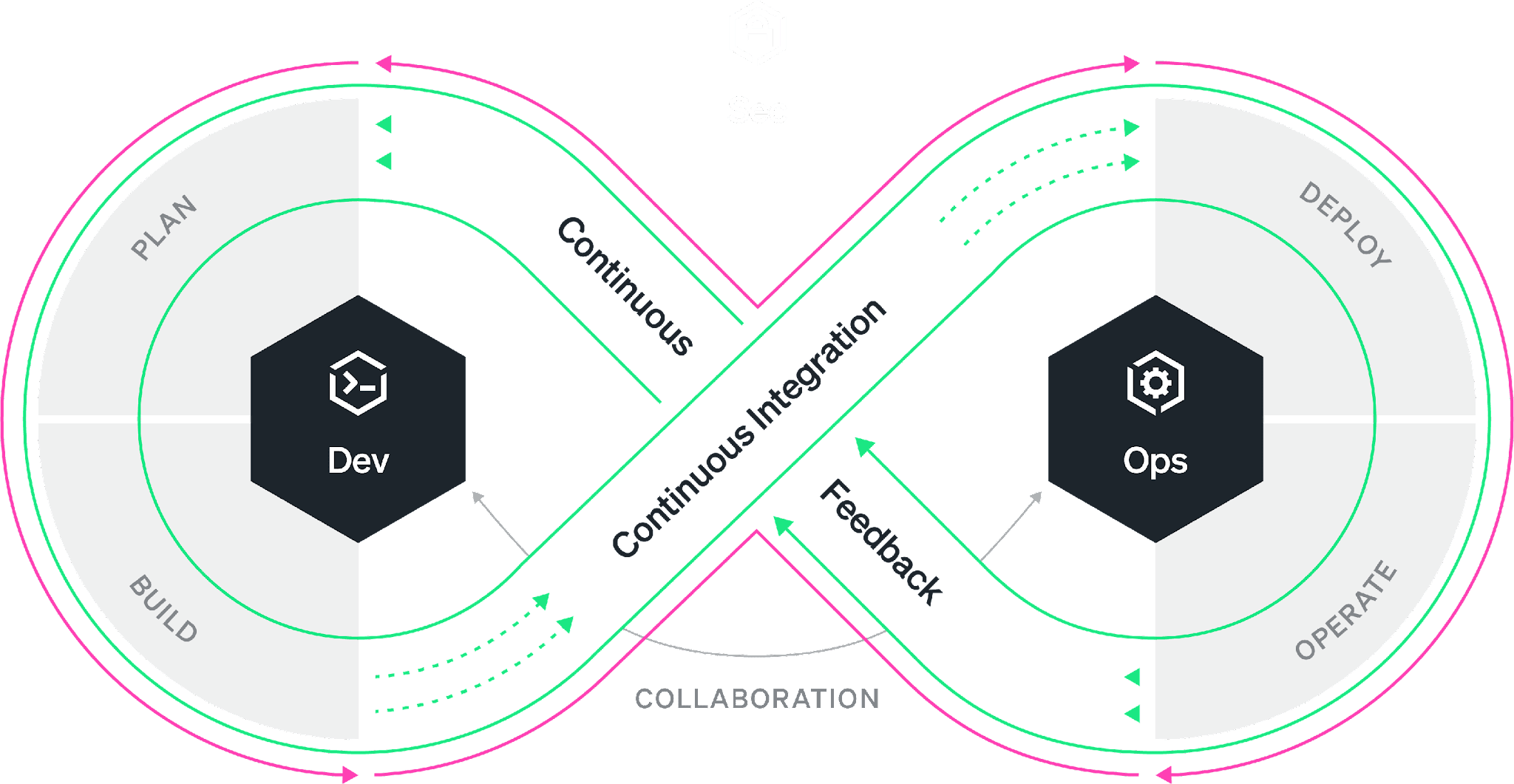
    I think we’ll also see an emphasis on feedback loops and iteration. I think automation, ML/AI will contribute to this in a big way. We have put so much of our DevOps emphasis on the development, integration and deployment of software. But observability allows us to see patterns and use cases as never before. We need to incorporate those findings into the next revision of our software. This is going to be a big story in 2023. That old infinity loop model for DevOps will rise to the top once again.

    Thank you for all of the support for staging-devopsy.kinsta.cloud this year and over the past few years. I hope this holiday season finds you and yours healthy and happy. Merry, merry. Happy, happy. See you in 2023.

  • The DevOps Workflow is Broken. Here’s How to Fix It

    The DevOps Workflow is Broken. Here’s How to Fix It

    While great progress has been made in bridging the gap between developers and operations engineers, fundamental differences in roles and responsibilities, alignment, and access to information hinder further progress. 

    Everyone is familiar with the DevOps infinity loop: This is an ideal workflow where every stage of the software development life cycle feeds into the next. While the philosophy is well understood, organizations have worked on bringing developers and SREs closer together under the DevOps banner. The reality is most of the time, the DevOps infinity loop is broken. Developers continue to focus on building features without the benefit of data-driven insights that production data can provide. Developers often “push and pray” without fully understanding how their changes will affect performance and the user experience. As a result, companies miss the opportunity to improve products faster and delight the customer sooner.

    According to Gartner, 90% of DevOps initiatives will fail to fully meet expectations. And yet, the global DevOps market, which accounted for $7.3 billion in 2021, is expected to reach $37 billion by 2030. So to summarize, we’re all spending billions of dollars on the implementation of initiatives that are expected to fail in some meaningful way 90% of the time. The question is: What is failing and what can be done about it? 

    As the DevOps toolchain continues to expand, collaboration across tools is difficult and success depends on your organization’s ability to simplify and automate while achieving alignment. Developers use a variety of tools from various vendors in their daily work. The most widely used are VS Code from Microsoft, Jira from Atlassian and Slack from Salesforce. The most popular code hosts/repositories include GitHub, GitLab and Bitbucket. Bridging the gap are CI/CD vendors such as Jenkins and CircleCI. Ops engineers typically rely on other vendors for their daily work, such as New Relic, Datadog and Dynatrace. So, how do we ensure that all stakeholders in the SDLC have access to all the relevant information simultaneously, understand the objectives and get an integrated perspective of the different inputs and workstreams independently of the tools used?

    There are three essential areas that DevOps initiatives must tackle to create alignment, collaborate successfully and streamline workflows. Let’s tackle each of these areas individually.

    1. Collaboration. The first step is good collaboration. Most organizations rely on Slack or Microsoft Teams for this purpose, but they are both suboptimal when it comes to collaborating on code and incidents that point to code. Having code and data at the center of DevOps collaboration ensures that everyone has access to the information needed to tackle issues, reducing and even eliminating differences of opinion in the process.
    2. Visibility. Second, ops engineers and developers must have visibility into the performance of applications across the entire tech stack. These three barriers can occur in different aspects of an organization’s operations and their impact can limit the team’s ability to deliver value to the customer just as much as workflow inefficiencies. Visibility helps the organization reach alignment on common objectives.
    3. Context Switching. Third, given the number of processes and tools involved in a successful DevOps implementation, it’s important to work toward reducing context switching and integrating tools within established workflows. Integrating collaboration, tracking, history and observability into a single pane of glass can greatly improve clarity and time to resolution.

    For DevOps teams, increased velocity and transparency are always worthwhile pursuits. However, it’s important to avoid myopic focus on workflows when other nagging problems could be hiding in plain sight.

    By committing production telemetry, developer teams can adopt an objective, data-driven approach to software engineering—saving time and avoiding potentially misguided approaches based on opinions rather than facts. Visibility, transparency and velocity can help engineering teams meet ever-increasing requirements and provide their organization with the best possible business outcomes.