Tag: devsecops

  • Squaring the Circle: How to Make Public APIs Private

    Squaring the Circle: How to Make Public APIs Private

    APIs have become an integral part of enabling seamless data exchange and functionality between systems and businesses. In fact, APIs are trebling every year. Public APIs are, by their nature, designed to be open and discoverable. By definition, this also means that APIs are open to attacks from the networks. This is why APIs have become the number one attack vector.

    APIs becoming the top attack vector makes sense. All our other business apps are hidden behind private networks–usually MPLS (AWS Direct Connect, Azure ExpressRoute, etc.), VPN or zero-trust network access (ZTNA). But APIs are exposed to the public Internet.

    Day 2 API Security Solutions and Snowflakes

    This network exposure is why there are so many ‘Day 2′ API security solutions – WAFs, API security platforms, IDS, etc. These solutions do a great job of blocking threats that have already been identified, yet there are successful API attacks each day. Why?

    Each API is unique and evolves rapidly–constant changes in business logic, authentication, authorization and configurations. APIs are snowflakes. The result is that many API attacks are effectively zero-day attacks–novel attacks that exploit recent and unique changes to specific APIs.

    A Difficult Race to Win

    Network exposure and snowflake characteristics are why API-related vulnerabilities multiply each day.

    The ‘snowflake’ issue means many attacks are unknown to the Day 2 solutions – they attack vulnerabilities that didn’t previously exist. So, after the novel attack, we race to apply a fix. Who are we racing against? Every attacker on the internet. The API is public–exposed to the networks–not like our other business apps, which are private behind an MPLS, VPN or zero-trust solution. Racing against attackers on the internet is difficult–and coming second may result in a service outage, data breach or customer compromise.

    Why Not Avoid the Race?

    So why not make the APIs private, avoid exposing them to the internet, put them behind MPLS, VPN or ZTNA, like we do for all our other business apps? API clients are too distributed and dynamic; there is no good way to manage agents or dedicated circuits across all those API clients. Those solutions were not made for APIs–it is like fitting a square peg in a round hole.

    Zero-Trust API Networking Needs to be Built for APIs

    To make our APIs private like the rest of our business apps, we must first meet the business need. API providers need to achieve the business velocity and agility they require. On the technical side, we need a secure networking solution which is built to manage the distribution of the API clients, and assume that there will always be snowflake-like vulnerabilities.

    Let’s look at an open source solution for zero trust APIs which is purpose-built for those business, technical and operational requirements:

    There are usually three reactions to the diagram above:

    1. OK, tell me how it works. See below.
    2. Looks complex. Nope. All software, spun up in minutes, centrally managed.
    3. Seems like a proprietary solution for users accessing their applications. Yes! It uses principles similar to the user-to-app zero-trust world but secures APIs.

    How Zero-Trust API Networking Works

    Here are the four pillars of zero-trust API networking:

    1. Eliminate public access. Your API clients will use private IPs or domains to reach your APIs. If your company name is Acme, then your clients might now use api7.acme.unreachable (you make up any domain you want). Envision an attacker trying to interrogate *.acme.unreachable to find snowflake vulnerabilities. Not possible because it is not a public domain—your API server is no longer reachable.
    2. Identity, authentication, authorization, mutual TLS. Authorized API clients do need to access your APIs from the internet. Your zero-trust API overlay network is accessed from the internet only with X.509-certificate cryptographically authenticated identities, continuous authentication and least privileged access authorization via mTLS links. You move the policy enforcement point (PEP) from your DMZ to your API clients. Your API clients add a few lines of zero-trust networking code to enable this model. This code replaces VPNs, MPLS, etc. (there are non-code options too). For example, some of your API clients likely use Resty, a popular open source REST client library for Golang. Their existing Resty code adds a few lines of zero-trust API networking code: 
    3. Outbound-only. You eliminated the inbound access. Your server will instead open identified, authenticated and authorized sockets to your zero-trust API overlay network (you’ll close all your inbound ports and only enable outbound ports to specific overlay network router IPs or to your x.acme.unreachable domain).
    4. Management. API networking security is not very valuable without simple management. The zero-trust API overlay cloud is software-only and cloud-native. You spin up your private API clouds in minutes, anywhere, without deploying hardware. If an API client is compromised, one click or automated action removes its access. Network usage for each client/API is in your web console or management dashboard.

    The above is based on the open source OpenZiti zero-trust networking platform, but any zero-trust API platform should provide similar functionality. Specifically, it should enable:

    • Speed. Securing APIs but slowing down business or complicating operations is not the trade-off most organizations want. Security and speed is the goal.
    • Minimize the threat surface. Close all inbound ports in front of your API servers. Use private, unreachable addresses or domains to minimize your attack surface and stop racing against network-based attackers.
    • Extensibility. Software-only, cloud-native architectures. Preferably open source based.
    • Operations excellence. Centralized visibility, controls, policies and identities. Rich telemetry data. Performance-optimized overlay networks.
    • Zero-trust security. Identity-based networking, continuous authentication, strong authorization, mutual TLS (mTLS), encrypted delivery, microsegmentation.
    • Flexibility. API clients add a few lines of code to get zero-trust API networking. Other API clients use API-specific agents or DNS to access the overlay, if desired, while your API server/gateway is still private.
    • Recovery. Assume breaches. Implement microsegmentation, prevent data exfiltration and provide simple controls to immediately remove threats.

    Zero-Trust API Networking

    While APIs will always be snowflakes, they no longer need to be our only business app that is exposed to the networks. By minimizing the attack surface, without compromising business velocity and API client experience, we can finally mitigate against our greatest API security risk. This also simplifies our day two API security, the solutions that inspect API queries after they enter our DMZ.

    Rather than trying to filter the internet, day two solutions can focus on detecting authorized API clients that may have been compromised. Similarly, our operations teams are freed to focus on sessions from authorized API clients rather than wading through oceans of data from port scanning, DDoS attacks, unauthorized API queries and attempts to interrogate public APIs to find new snowflake vulnerabilities.

  • Legit Security Adds Sensors to Detect Usage of Gen AI Tools to Write Code

    Legit Security Adds Sensors to Detect Usage of Gen AI Tools to Write Code

    Legit Security today announced it has added the ability to detect when developers use generative artificial intelligence (AI) tools to write code to its application security posture management (ASPM) platform.

    The ASPM platform developed by Legit Security already has discovery capabilities for application secrets, for example, enabled by sensors that are now being extended to include generative AI tools.

    Legit Security CTO Liav Caspi said the overall goal is to allow DevSecOps teams to identify who uses these tools to write which types of code. Each DevSecOps team can then decide how stringently to enforce policies to either ban or limit usage of those tools, he added.

    There is no doubt that generative AI tools are increasing developer productivity, but the large language models (LLMs) that provide the ability to generate code were trained using examples of code of varying quality collected from across the web. Much of that code either contains known vulnerabilities or is simply inefficient, which can manifest itself in the output surfaced by a generative AI platform.

    The Legit Security ASPM platform, in addition to identifying generative AI tools being used in real-time, can also be employed to scan the LLM itself to identify security risks such as prompt injection and insecure output handling. Unfortunately, most cybersecurity teams are unaware of the extent to which application code generated by a machine might be insecure, so it currently falls to leaders of DevSecOps teams to determine what is an acceptable use of these tools. It may be perfectly fine to rely on a generative AI tool to create a script that will be used for an internal-facing application. However, using the same tool to write business logic that will be exposed to the internet may not be especially prudent.

    It’s not clear how much of the code finding its way into software builds is being generated by a machine versus a human. In the longer term, the goal is to be able to identify that code by, for example, detecting substantial changes in the way code is normally written by a human developer, said Caspi.

    Of course, while an ASPM may detect usage of generative AI tools that are connected to a corporate environment, there are still plenty of opportunities for developers to use these tools offline to create code that can later be added to a build using a code check-in tool. After all, many developers have used various shadow IT tools to write code for decades. Regardless of who or what wrote that code, however, it should still be reviewed.

    In the meantime, the overall size of the codebase that DevSecOps teams will need to manage and secure will only exponentially increase as developers become more productive. Hopefully, more AI capabilities will soon be embedded into DevOps platforms to further automate the management of software builds at a time when many DevOps teams were already finding themselves overwhelmed even prior to the rise of generative AI.

  • Survey: Cyberattacks Aimed at Software Supply Chains are Pervasive

    Survey: Cyberattacks Aimed at Software Supply Chains are Pervasive

    A survey published today finds 91% of respondents work for organizations that have experienced a software supply chain incident in the past 12 months.

    The survey polled 368 IT, cybersecurity and application developer professionals responsible for application security in North America and was conducted by the research firm Enterprise Strategy Group (ESG) on behalf of Data Theorem, a provider of an application security platform. The survey found zero-day exploits of vulnerabilities within third-party code (41%) were the most common attack vector, followed closely by misconfigured cloud services (40%), vulnerabilities in open-source software and container images (40%), stolen secrets/token/passwords (37%) and breaches of application programming interfaces (APIs) (35%).

    The biggest areas of impact of those breaches are identified as cryptojacking (43%), inability to meet service level agreements (41%), malware infestation (39%), unauthorized access (39%), stolen developer credentials (37%), data loss (37%) and the levying of fines (37%).

    Despite these issues, however, nearly three-quarters (74%) of respondents claimed their organization has “robust” software supply chain security capabilities even though a similar percentage said they are making significant investments in software supply chain security, with an additional 25% making moderate investments. More than three-quarters (77%) said they have increased their effort to secure third-party software components and container images in the wake of an attack. The top two areas of focus are new detection rules/analytics (33%) and the adoption of multifactor authentication (MFA) (33%).

    Top investment priorities over the next 12 to 18 months include scanning open source code components and third-party libraries for vulnerabilities (44%), followed by discovering and inspecting APIs in source code (39%), using composition analysis tools to create software bill of materials (SBOMs) (38%) and applying runtime API security controls (33%).

    The most widely used tools today are automated open source package risk management (34%), static application security testing (SAST) tools (34%), vulnerability scanning of cloud services (32%), automated security as code policy enforcement (31%) and dynamic application security testing (DAST) tools (31%).

    Data Theorem COO Doug Dooley said while the survey makes it clear progress is being made, there is still a lack of urgency. It may require additional high-profile breaches to create a large enough public outcry to pass the legislation that is going to be required to address software supply chain security issues more vigorously. In fact, 83% of respondents noted industry regulations are a key driver to ensure they create accurate SBOMs.

    In general, the survey finds nearly two-thirds of respondents (65%) have more than 50 Git repositories, with 40% reporting that more than half of their code is composed of third-party software. Half of respondents (50%) said they expected that to rise to more than half in the next 12 months. Well over half (58%) noted more than 30% of their code would be of open source software.

    Only 43% report they are completely confident that their developers are only using secure open source software. On the plus side, 90% are prioritizing efforts to shift security left to developers.

    Overall, 86% said it’s critical or important to know the composition/inventory of application code in use, where code is stored, and who has access to code components connected to their code. A total of 88% also noted it’s critical or important to have accurate inventory of their third-party APIs and cloud services.

    The one thing that is certain in the months ahead is that cybercriminals will put software supply chain security to the test. The challenge and the opportunity now, regardless of what regulations are ultimately passed, is to thwart those attacks before the damage inflicted ultimately forces lawmakers to act in ways that make software development a lot more difficult than it already is.

  • OpenText Extends Tool for Auditing Source Code Using Machine Learning

    OpenText Extends Tool for Auditing Source Code Using Machine Learning

    OpenText this week updated a static analysis tool it provides to audit code using machine learning algorithms to provide deeper insights into on-premises IT environments.

    Announced at the OpenText Security Summit 2024 conference, the latest generation of Fortify Audit provides additional artificial intelligence (AI) models capable of learning the unique attributes of custom source code.

    The latest version of Fortify Audit Assistant also adds the ability to detect drift in a model and, if necessary, automatically refresh it. OpenText is now committing to refreshing those models every quarter.

    The discriminant AI model from OpenText enables machine learning algorithms to learn how humans conducted an application audit to then run similar tests on other applications. Previously, Fortify Audit relied on the same core model to audit both on-premises and software-as-a-service (SaaS) applications based on data collected by OpenText. Fortify Audit Assistant now provides support for more than 30 language-specific models to improve testing performance.

    Dylan Thomas, senior director for Fortify engineering and product for OpenText Cybersecurity, said this capability ensures that any sensitive data never leaves an on-premises IT environment.

    The overall goal is to streamline the number of alerts that would otherwise overwhelm a DevSecOps team trying to identify the root cause of an issue, he added. For example, Fortify Audit Assistant will identify test code that is not vulnerable because it was never deployed in an actual production environment. That approach makes it easier for DevOps teams to prioritize which vulnerabilities to fix first in their source code using a lightweight AI model that still enables them to deeply scan source code, noted Thomas.

    Historically, DevSecOps teams need to make a trade-off between lightweight approaches and deep scans of source code that is no longer required, he added.

    As regulations pertaining to software supply chain security become more stringent the number of development teams that will be subject to some type of audit is only going to increase. The cost of failing an audit will also inevitably increase as regulatory bodies look to make examples of organizations that are not properly securing their software supply chains.

    It’s not clear how aggressively organizations are embracing best DevSecOps practices to address myriad software supply chain security issues that were highlighted in an executive order issued by the Biden administration to Federal agencies. However, with the rise of AI and other forms of automation, it should become simpler to identify more vulnerabilities before they wind up being exploited in a production environment.

    There will always, of course, be a need to secure production environments because there’s always a probability mistakes will be made. However, given the lax practices many organizations have employed to build and deploy applications, it’s probable the number of vulnerabilities that exist in production environments today is beyond counting. In many cases, the better part of valor might be to replace many of those applications entirely with ones built using DevSecOps best practices.

    Regardless of the path to better application security chose the one thing that is certain is cybercriminals are only going to become even more adept at discovering those vulnerabilities.

  • Salesforce Adds Ability to Apply Custom Security Policies to APIs

    Salesforce Adds Ability to Apply Custom Security Policies to APIs

    Salesforce today added the ability to customize security policies for application programming interfaces (APIs) to the Mulesoft Anypoint API management platform.

    Gerry Egan, vice president of product management for Mulesoft at Salesforce, said this capability makes it possible for organizations to use an Anypoint Flex Gateway Policy Development Kit to streamline development of custom API security policies that can be implemented as code.

    In addition to providing integrations with integrated development environments (IDEs), the Anypoint Flex Gateway Policy Development Kit also provides test policies that can be employed to ensure API security.

    That approach makes it simpler to ensure APIs are secure as they are being built and deployed within the context of an automated DevOps workflow versus having to rely entirely on a separate API security platform, he noted.

    The Mulesoft Anypoint Gateway already comes with security policies that DevSecOps teams can readily implement. Salesforce is now adding the ability to apply custom policies that DevOps teams can apply as it becomes apparent cyberattacks against APIs are becoming more sophisticated, noted Egan. Those policies can, for example, be used to remove sensitive data or replace it with a token, he added.

    Responsibility for API security is often not well established in many organizations, but as more accountability for API security shifts left toward DevSecOps teams, there is growing interest in addressing the issue as code when APIs are developed and deployed. While cybersecurity teams are responsible for maintaining cybersecurity after APIs are deployed, few of them have any insight into how an API is crafted. That’s a significant issue because cybercriminals have become more adept at both exfiltrating data via external facing APIs in addition to manipulating the underlying business logic to compromise a digital process, noted Egan.

    The Mulesoft Anypoint Gateway automates the process of building and applying security policies to APIs as part of the software development life cycle (SDLC) in a way that minimizes any impact on developer productivity, he added. That approach provides the added benefit of reducing the level of cognitive load developers would otherwise experience if they had to manually create software policies, said Egan.

    In general, most APIs are internally facing, but it’s not uncommon for them to suddenly be exposed to the internet as application use cases evolve. The best way to ensure API security is at the point of creation. Providing developers with API security tools gives them an opportunity to address security issues at the beginning of the application development process.

    There have already been several cybersecurity breaches involving APIs in the past year. It may only be a matter of time before there are additional breaches that could prove catastrophic. Regardless of the size of the API breach, the application development team that created and deployed the API in the first place is ultimately going to be held accountable for fixing it. The challenge is to find the simplest way to eliminate the issue in the first place at a time when the number of APIs being built and deployed only continues to explode.

  • Graylog Makes Free API Security Tool Available to Developers

    Graylog Makes Free API Security Tool Available to Developers

    Graylog this week made available a free version of its platform for securing application programming interfaces (APIs), intended to encourage developers to adopt best practices to secure them.

    The free version of Graylog API Security has all the capabilities of the paid version but is limited to 16GB of local rolling storage on a single node with a one-year renewable license.

    Graylog CEO Andy Grolnick said the goal is to make it simple for developers to use this edition of the platform as they are building APIs. As applications are deployed in a production environment, the expectation is organizations will then need to access the version of the platform that is designed to scale, he added.

    Based on technology Graylog gained with the acquisition of an API security platform originally developed by Resurface.io, this free version of Graylog’s API security platform is trying to help bridge the divide between the application development teams that create APIs and the cybersecurity teams tasked with protecting them, said Grolnick.

    Capabilities of the platform include API classification, discovery, risk scoring, an ability to capture API request and response payloads and continuous monitoring of API and threat signatures in real-time. Collectively, these capabilities enable Graylog API Security to provide high-fidelity alerts using a data lake that is embedded in the platform, noted Grolnick.

    That approach enables Graylog API Security to capture all API requests and response details to distinguish valid API traffic from malicious activity involving, for example, data exfiltration hiding under valid response codes.

    In addition, Graylog API Security automatically surfaces remediation guidance for developers who typically lack cybersecurity expertise.

    API security has become a major DevSecOps issue because cybercriminals are increasingly targeting APIs to steal data. As more externally facing APIs are deployed, the overall size of the attack surface that needs to be defended increases exponentially.

    A recent survey conducted by Enterprise Strategy Group (ESG) on behalf of Graylog found more than three-quarters of respondents (76%) have an average of 26 APIs per application. Most respondents are using open APIs for public consumption (67%) or are connecting applications with partners (64%).

    In general, most of those APIs are internally facing, but it’s not uncommon for those APIs to suddenly be exposed to the internet as use cases for applications evolve. The challenge is that few cybersecurity teams have visibility into APIs that, when manipulated by malicious actors, can expose code or provide a mechanism through which business processes can be compromised. This issue often exists because, in many organizations, it’s still not clear who is actually responsible for API security.

    Arguably, the best way to ensure API security is at the point of creation. Providing developers with API security tools gives them a chance to do the right thing from the beginning of the application development process, said Grolnick.

    There have already been several cybersecurity breaches involving APIs in the past year. It may only be a matter of time before there are additional breaches that could prove catastrophic. Regardless of the size of the API breach, the application development team that created and deployed the API in the first place is ultimately going to be held accountable for fixing it.

  • OX Security Optimizes DevSecOps to Improve Application Security

    OX Security Optimizes DevSecOps to Improve Application Security

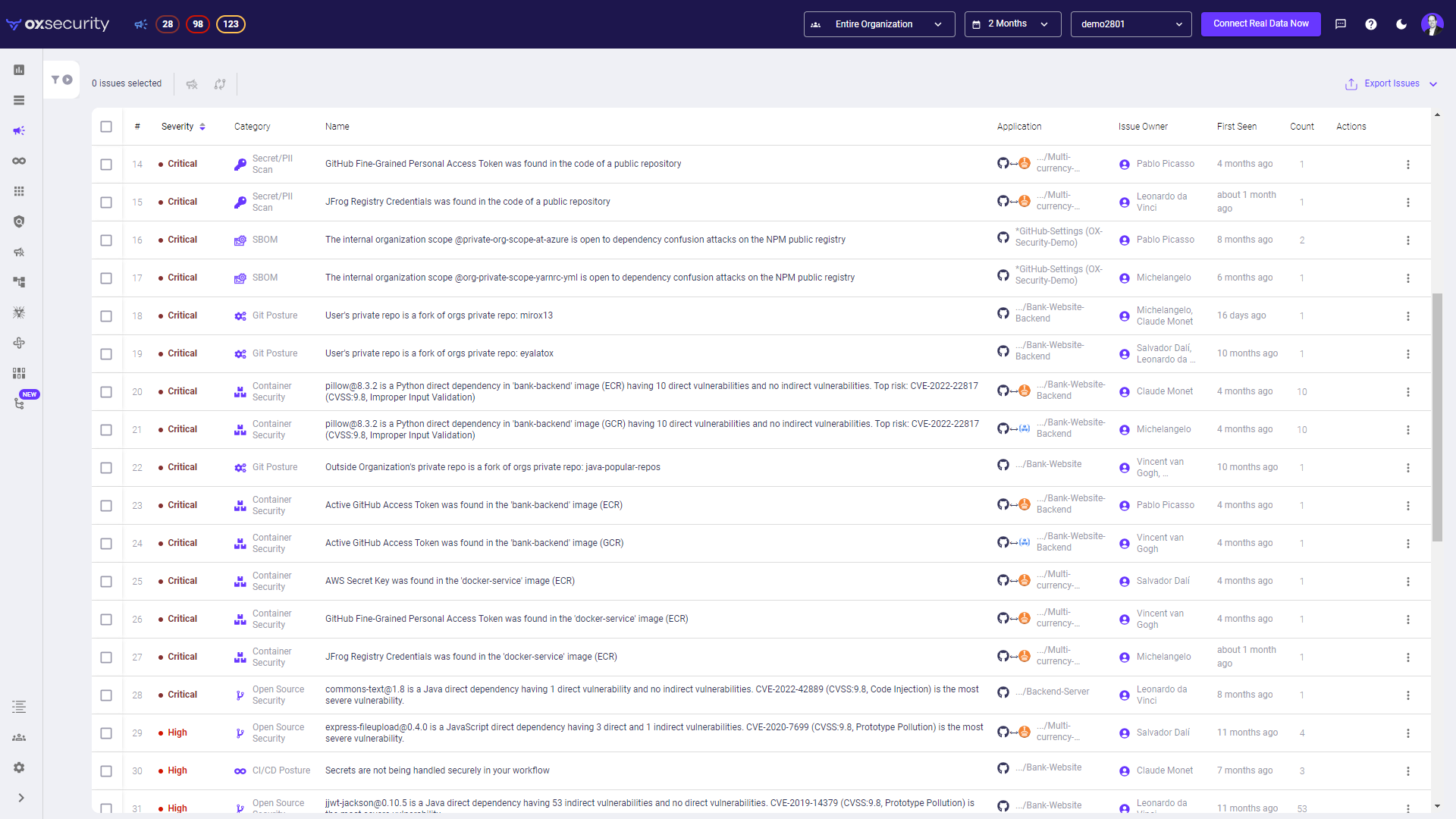
    OX Security this week updated its application security posture management (ASPM) platform to enable DevSecOps teams to instantly identify applications running in production environments that are running code that could be potentially exploited.

    The ASPM platform from OX Security leverages large language models (LLMs) to identify vulnerabilities. The latest version adds an ability to confine the number of alerts generated to instances of code that can actually be exploited.

    OX Security CEO Neatsun Ziv said that approach reduces the number of alerts that would otherwise be generated by 99% to enable DevSecOps teams to focus their limited resources on the 1% of alerts that represent an actual risk to the business. OX Security achieves that goal in part because its scanners are integrated with source control, continuous integration/continuous delivery (CI/CD) platforms, registries and cloud computing environments.

    The overall goal is to reduce the amount of manual effort currently required to consistently maintain DevSecOps best practices.
    The primary reason many vulnerabilities are never addressed is that DevSecOps teams are simply overwhelmed by alerts. Most of the alerts generated by a cybersecurity team are not immediately relevant because either the vulnerability is not present in the application running in a production environment or the application doesn’t connect to the internet.

    The OX Security platform makes it possible to identify application security issues that need to be prioritized because it has been confirmed a vulnerability exists that can be exploited, said Ziv.

    No matter how precise the alert process becomes, a DevSecOps team will still need to manage it, added Ziv. However, as the alerts generated become more relevant, it should become easier to bridge the historic divide between application developers and cybersecurity teams. Too many developers routinely ignore vulnerabilities identified by cybersecurity teams simply because previous efforts to identify the actual severity they represent have ultimately been a waste of their time.

    The challenge just about any organization encounters when trying to better secure their software supply chains is, not surprisingly, getting application developers to buy into the DevSecOps process. Most developers are going to actively resist any approach to remediating vulnerabilities that takes time away from building new applications. Most of them only allocate about 10% of their time or less to remediating vulnerabilities. As such, it’s incumbent on a DevSecOps team to find ways to address application security issues in ways that don’t adversely impact developer productivity.

    Organizations could mandate that vulnerabilities be remediated. In fact, there is a growing body of regulations that will require organizations to do just that unless they can prove the vulnerability in question cannot be exploited. The only way to effectively make that case will be to rely more on automation to document that the code running in a production environment is actually secure.

    In the meantime, developers should expect to see their code scrutinized more than ever. Of course, the better part of valor is to ensure that as many vulnerabilities as possible are never introduced.

  • Diffblue Integrates Generative AI-Based Testing Platform With GitLab

    Diffblue Integrates Generative AI-Based Testing Platform With GitLab

    Diffblue this week generally made available an integration between its automated unit testing platform for Java and the DevSecOps platform from GitLab.

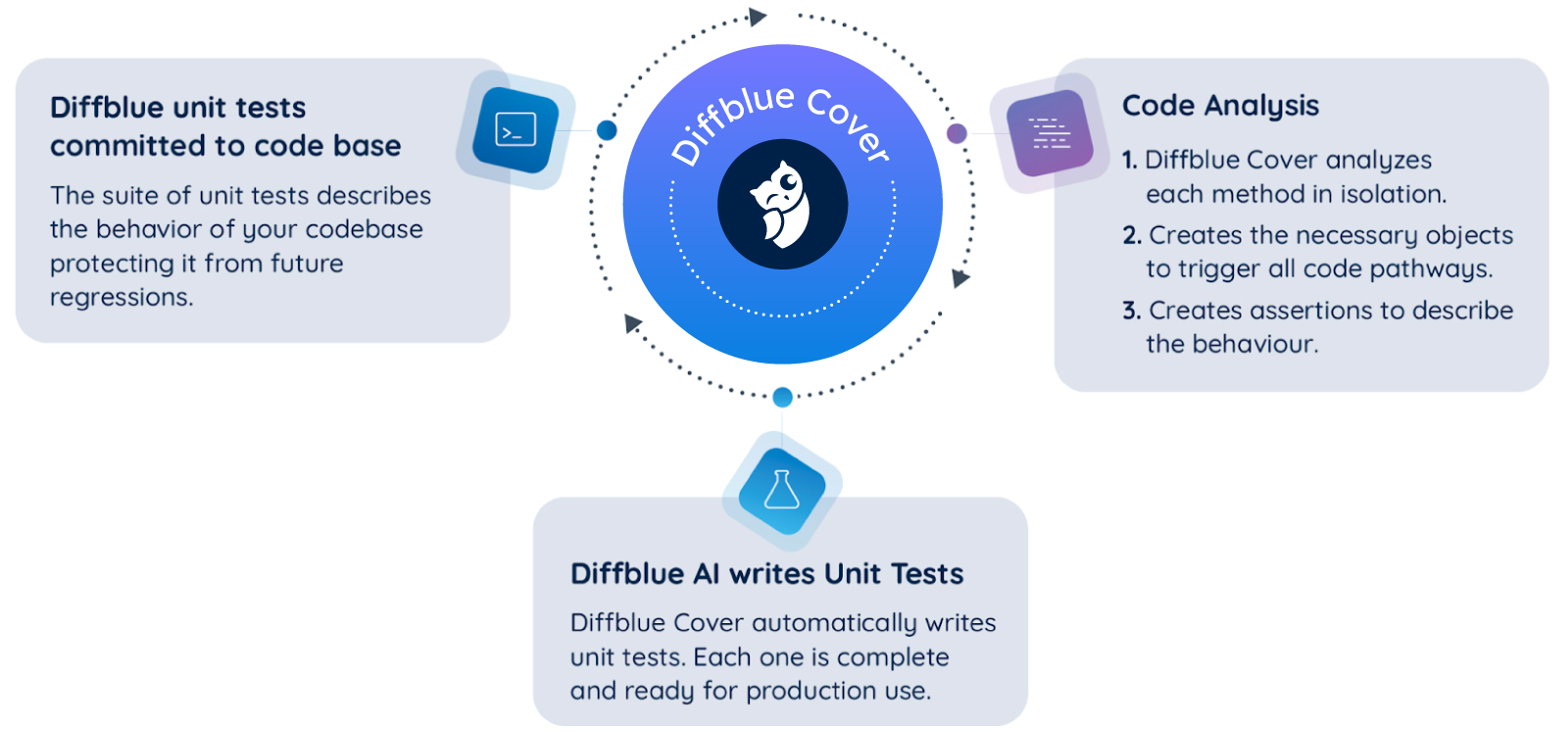
    The Diffblue Cover platform makes use of generative artificial intelligence (AI) to automatically create unit tests based on reinforcement learning technologies that don’t rely on LLMs—avoiding their drawbacks of sometimes introducing hallucinations and also requiring human review.

    Diffblue CEO Mathew Lodge said the integration with the continuous integration capabilities found in the premium and ultimate editions of the GitLab platform would, for example, streamline regression testing in a way that should ultimately improve both application quality and security. Diffblue Cover, for example, can update tests as much as 250 times faster than a human developer can write them manually without developer review.

    That approach also serves to reduce the level of friction many DevSecOps teams encounter when bottlenecks involving testing processes emerge, noted Lodge. The overall goal is to make it simpler for developers to test as much of their own code as possible before integrating it into a build, he added. Otherwise, developers will get fed up because testing is continuously breaking the build, noted Lodge.

    Ultimately, instead of having to write unit tests, developers become supervisors of a platform that automatically generates them on their behalf, said Lodge. The job of a developer doesn’t go away, but it does fundamentally change, he added.

    To achieve that goal, developers need to be able to access a platform that writes the tests and can then also execute them automatically. If it takes too long to create the test, chances are high that most developers won’t run it. On average, writing and evaluating a single unit test can take a developer 10 minutes. Over the course of any project, thousands of tests need to be written, so the amount of time testing takes away from coding is often much greater than most IT leaders fully appreciate.

    Automating those tests should improve developer productivity as more time is available to focus on writing code rather than testing. That doesn’t necessarily eliminate the need for a dedicated testing team, but it does mean that more tests will be run without slowing down the overall pace of application development.

    Developers naturally want to be able to test code at the very instant they create it. AI platforms can make that happen by, for example, employing reinforcement learning to write unit regression tests.

    Most developers are not going to resist assuming more responsibility for testing if the tools to automate that task are more accessible. Instead of merely shifting responsibility for testing left toward developers, DevOps teams need to find ways to streamline the process. Otherwise, testing just becomes one in a series of tasks that are being shifted to developers in ways that many of them are coming to resent.

    It may take some time before AI is fully integrated into software engineering but it’s clear with each passing day more previously manual tasks are being automated. Among the lowest hanging fruit for applying AI to software engineering are clearly testing processes that, if truth be told, few indeed enjoy conducting.

  • 5 Security Threats DevOps Teams Should Know

    5 Security Threats DevOps Teams Should Know

    DevOps security, also known as DevSecOps, is a philosophy in which security practices are integrated into the DevOps process. DevOps security involves creating a ‘security-as-code’ culture with ongoing, flexible collaboration between release engineers and security teams. The DevSecOps movement, much like DevOps itself, is focused on creating new solutions for complex software development processes within an agile framework.

    DevOps security is about breaking down silos and promoting open collaboration across teams. It’s about making everyone accountable for security with the ultimate aim of improving the quality and speed of code releases. The adoption of a DevOps security model necessitates a cultural shift across the organization. It requires the integration of security into every aspect of the development and operations processes.

    DevOps Security is not just about implementing tools and technologies; it’s about changing the way we look at security. Rather than being an afterthought, security should be a key part of the ongoing conversation from the start of the project to the end.

    5 Security Threats DevOps Teams Must Know About

    As a DevOps professional, it’s crucial to be aware of the potential threats that could compromise your systems, applications, and data. Let’s take a look at the top five security threats that DevOps teams must be aware of.

    Phishing Attacks

    Phishing attacks are a common security threat that can lead to data breaches. These attacks involve cybercriminals impersonating legitimate organizations to trick individuals into revealing sensitive information, such as passwords and credit card numbers.

    Phishing attacks can be particularly damaging for DevOps teams. They can lead to unauthorized access to development systems and data, which can lead to devastating supply chain attacks. For example, an attacker could trick a team member into revealing their login credentials for a critical system, allowing the attacker to gain access and inject malware into a CI/CD pipeline.

    Code Injection

    Code injection is another common security threat that DevOps teams must be aware of. This involves the exploitation of an application by injecting malicious code. The attacker can then execute the malicious code to compromise the system or steal sensitive data.

    For DevOps teams, code injection attacks can be particularly harmful. These attacks can lead to compromised systems and applications, resulting in data breaches and significant downtime.

    Man-in-the-Middle Attacks

    Man-in-the-middle attacks are a type of security threat where the attacker intercepts and potentially alters the communication between two parties without their knowledge. This can lead to a range of damaging outcomes, including data theft, session hijacking, and even identity theft.

    For DevOps teams, man-in-the-middle attacks can be particularly problematic. These attacks can lead to compromised systems and data, and even the unauthorized alteration of code.

    Container Vulnerabilities

    Container vulnerabilities are a significant security threat for DevOps teams. Containers are a key technology in the DevOps world, allowing for the rapid and reliable deployment of applications. However, like any technology, they come with their own set of security risks.

    These vulnerabilities can range from use of insecure images, to misconfigurations and software bugs, to more serious issues like kernel exploits. If an attacker is able to exploit a container vulnerability, they could potentially gain control over the entire system.

    DDoS Attacks

    Last but not least, distributed denial-of-service (DDoS) attacks are a significant security threat that DevOps teams must be aware of. These attacks involve overwhelming a production environment with traffic, causing it to become unavailable to users.

    For DevOps teams, DDoS attacks can be particularly damaging. Not only can they lead to significant downtime, but they can also result in lost revenue and damage to the organization’s reputation.

    How to Mitigate These DevOps Security Threats

    While these security threats are concerning, there are effective strategies and techniques that can be used to mitigate them.

    Implement Email Security Practices and Tools

    To combat phishing attacks, it’s crucial to implement email security tools that can detect and block phishing attempts. These tools can help to filter out phishing emails, reducing the likelihood that team members will fall victim to these attacks.

    In addition to implementing email security, it’s also important to provide security awareness training for team members. This training should cover the basics of cybersecurity, including how to recognize and respond to phishing attempts.

    Use Input Validation and Sanitization in Applications

    To protect against code injection attacks, it’s important to use input validation and sanitization in applications. Input validation involves checking that the data provided by a user meets certain criteria before it’s processed by the application.

    Input sanitization, on the other hand, involves cleaning up the data to remove any potentially harmful elements. This can help to prevent malicious code from being executed within the application.

    Employ HTTPS and SSL/TLS Encryption for Data in Transit

    To guard against man-in-the-middle attacks, it’s important to employ HTTPS and SSL/TLS encryption for data in transit. This ensures that any data being sent between the user and the application is encrypted, making it much more difficult for an attacker to intercept and read the data.

    Regularly Scan Containers for Vulnerabilities

    To protect against container vulnerabilities, it’s crucial to regularly scan containers for vulnerabilities. This involves using tools that can analyze the containers and identify any potential security risks.

    By regularly scanning containers, DevOps teams can identify and address vulnerabilities before they can be exploited by an attacker.

    Implement Rate Limiting and Network Filtering

    Finally, to mitigate the risk of DDoS attacks, it’s important to implement rate limiting and network filtering. Rate limiting involves restricting the number of requests that a user can make to the application within a certain period of time.

    Network filtering, on the other hand, involves blocking traffic from certain IP addresses or ranges that are known to be associated with DDoS attacks. This can help to reduce the impact of a DDoS attack and protect the availability of the application.

    In conclusion, DevOps security is a crucial aspect of the DevOps process. By being aware of potential security threats and taking steps to mitigate them, DevOps teams can significantly reduce the risk of a security breach and ensure the ongoing success of their projects.