Tag: InterConnect 2015
-

IBM InterConnects DevOps & Systems of Record/Systems of Engagement
There are many planes and points-of-view from which to examine how DevOps changes development. One way to look at it is to cut an application down the (more or less) middle, dividing it between its system of engagement and its system of record. Briefly, the system of engagement interfaces with the customer while the system of record engages with the backend systems that contain the data stores that the application leverages for the benefit of the customer. These two systems must interoperate smoothly and intuitively with each other internally, and with the systems and people they interact with external to the app.
DevOps affects the entire workflow as development, testing, and operations work together to better build their apps. “This is a big part of what IBM InterConnect is about,” says Mike Fulton, IBM DevOps for Enterprise Systems CTO, and blogger, https://makingdeveloperslivesbetter.wordpress.com/. DevOps really defines how enterprises pull systems of record and systems of engagement together more cohesively while enabling people from different components of the development-operations / CD process to communicate to and learn from each other more quickly and efficiently, speeding the arrival of deployable software. DevOps connects workflows into this learning process even as workflows enable efficiency improvements. IBM tools surrounding development workflows participate in that process.
IBM Tools
“IBM provides a series of tools to help you move through each unique state of the development lifecycle,” says Fulton. IBM’s Rational Team Concert (RTC, http://www-03.ibm.com/software/products/en/rtc) is an ALM targeted to DevOps team work for teams of several developers, testers, and operations professionals working with application building workflows. IBM’s UrbanCode Deploy (UCD, http://www-03.ibm.com/software/products/en/ucdep) helps teams deploy apps onto different systems and to a variety of test tools.
“You can build pieces in IBM Worklight Studio to use for building a system of engagement,” says Fulton. IBM tools make it easier for teams taking a DevOps approach to create code more efficiently and precisely, reaching a higher standard of quality, while getting it out to the customer for quicker feedback sooner so the teams can figure out how they need to further innovate the app for the better.
“Whether you’re using IBM’s tools or anyone’s, the notion of having well-defined processes for building apps is important,” says Fulton. IBM’s RTC can track workflow for the pieces going through the system to get developers to work on the code and to check the workflow so that the system hands code over to testers while making sure there are no regressions. This intertwines with the build process in UCD so builds start seamlessly with the most appropriate timing.
When DevOps teams have good, clear communications and processes for how to build an app, they can optimize for speed while making the process and the app better. This is a result of learning while using workflow tools. “If you don’t have these processes in place, you will struggle with how to build apps quickly and efficiently,” says Fulton.
Forward-Looking Questions
IBM InterConnect attendees looking forward to Mike Fulton’s talks should ask themselves the following questions in preparation to absorb and thoroughly benefit from these sessions. “One of the talks on enterprise devops focuses on the systems of record side. One of the questions you should ask yourself is, ‘how can I improve my process so that I can become more agile and be able to respond more quickly to customers’ demands?’” says Fulton. And that is potentially a multitude of questions since the answers will vary widely from customer to customer.
“Come into these sessions and IBM InterConnect as a whole ready to talk about specifics. Come with the thought of where and how you think you can improve the entire process you use to build your apps at your business,” says Fulton. Attendees can discuss their answers and more questions with Fulton and with each other, talk about their experiences as these relate to others experience with IBM UrbanCode and with other tools.
“One key is to have an understanding of what you have in your application development environment, where it is today, in order to know where you want to go with it,” says Fulton.
Get ready to enjoy a rewarding IBM InterConnect.
-
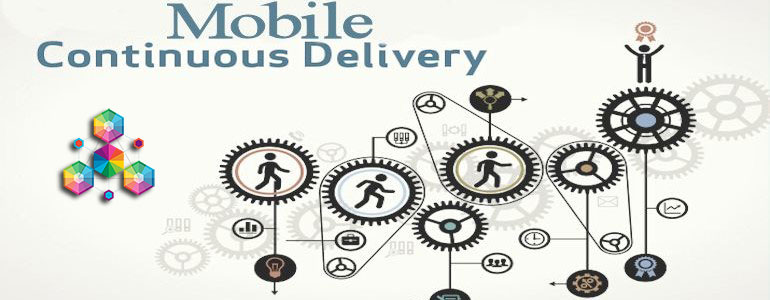
Enterprises using mobile dev to dive into DevOps
As increasingly more enterprises investigate how to begin their DevOps transformations, many of them are finding mobile development (mobile dev) a perfect test bed for instituting continuous delivery practices. While speed-of-delivery has become top-of-mind for most IT applications today, it is paramount for success in the world of mobile apps.
“The rapid pace of how quickly OSes are evolving, as are the number of different devices and form factors are all a driving force across a lot of different disciplines and businesses,” says Stephanie Trunzo, chief operating officer for mobile design and development firm Pointsource. “I would say that one of the driving forces to mobile is time-to-value and acceleration to market. It’s kind of an incubator for changing processes overall—we’ve seen that again and again.”
In her role, Trunzo has worked with companies to rapidly develop new mobile capabilities using DevOps and Agile principles. In many cases, it goes against the grain of their traditional development and operations modus operandi, but they’re willing to make exceptions for these mobile projects that require faster lifecycles due to the business drivers.
“When they see it’s working and we gain some credibility, then it’s like ‘Why aren’t we doing everything this way?'” says Trunzo, who next week at IBM InterConnect will present an example of how DevOps can help enterprises quickly scale their mobile development efforts.
Together with Pointsource client, Primerica, Trunzo and her team were able to help the insurance and financial planning giant to push a key business mobile app to a workforce of 95,000 insurance representatives in just five months from concept to delivery. Tom Swift, executive vice president of field technology for Primerica will join Trunzo in presenting the case study at the show.
“Traditionally, in-house development projects could see up to an 18-month release cycle, but Primerica knew they needed to accelerate to shift the business to include the mobile focus,” Trunzo explained. However, acceleration is exactly what the business needed in order to retain sales talent.
According to Trunzo, Primerica found that it needed a mobile app to help educate and engage with competitive representatives and was able to deliver one that gamified sales objectives. In addition, it offered very practical tools for representatives to present pertinent information to clients when visiting at their kitchen tables.
“It’s been a great experience,” she says. “Their numbers and results are fantastic and that’s a story we’re going to be telling on stage at InterConnect.”
-

Mapping out your DevOps journey
I am writing this on a flight from Washington, DC to Austin, TX. How long does it take me to get to Austin, you may ask? The flight is 3 hours and 3 minutes long. The time it takes me, however, is much longer as I do not live at the airport (although it surely feels like it). How long a journey takes depends on where you start.
A question I get asked often is how long will it take my organization to adopt DevOps? First of all, one does not just adopt DevOps. One starts a journey of adopting the capabilities that make up DevOps (more on that soon). Adopting DevOps is not a one-time thing – it is an ongoing thing. That said, even when it comes to adopting a single capability of DevOps, say Continuous Delivery, how long it takes you depends on where you start.
It’s a journey
Adopting DevOps is not a “one-and-done” project. It is adopting a mindset, a culture. It is a commitment to a journey of continuous improvement by adopting a set of capabilities and practices that are based on Lean principles. IBM has identified a set of six capabilities to adopt in this DevOps journey:
- Continuous Business Planning
- Collaborative Development
- Continuous Testing
- Continuous Release and Deploy
- Continuous Monitoring
- Continuous Feedback and Optimization
Adopting DevOps requires process improvement, automation of the processes using tools, and organizational change to enable a DevOps culture.
Where to Start?
The question then becomes – where does one start? This requires knowing ‘Point B’ where you want to go – what business goals do you want DevOps to help you achieve? And it requires knowing the ‘Point A’ of your journey – where you are today – and how mature you are when it comes to practicing these capabilities today. Once you know Points A and B, you can chart out an adoption road map. Starting from a level of immaturity where you don’t even have good source code management practices, and wanting to get to ‘no downtime’ deployment, is going to be a long journey.
The IBM DevOps pipeline Value Stream mapping workshop
At IBM, we help our customers get started by conducting a ‘DevOps pipeline Value Steam Mapping workshop’. This strategic workshop is a 1-day (usually 6 hour) executive workshop designed to enable IBM to understand your business and IT goals (Point B) and to help you identify gaps in your existing DevOps capabilities (Point A) that IBM can help you address. We identify ‘Point A’ by mapping out your end-to-end Application Delivery pipeline, and identifying areas of inefficiencies in the pipeline.
The result of the workshop is a prioritized list of DevOps Capabilities and an adoption ‘roadmap’ to start your DevOps adoption journey.
‘Get Mapped’ at IBM InterConnect
During IBM InterConnect, The Premier Cloud and Mobile Conference in Las Vegas, February 22-26, I am conducting condensed versions of these workshops, right there on-site. These are 2-hour sessions during which IBM DevOps SMEs will work with you to map out your application delivery pipeline and identify your key ‘bottlenecks’ or inefficiencies. We can then schedule a follow-up at your site to jointly develop a DevOps adoption roadmap so you can address these bottlenecks using the relevant DevOps capabilities – along with process improvement, tool adoption for automation, and organizational change.
Space is very limited for dedicated workshops (“DevOps Transformation Workshops”) – contact your IBM rep about nominating your company for one of the sessions. If none are available, sign-up for either the “Innovation Workshop” or “DevOps Technical Workshop,” which are similar, but will have multiple companies participating.
For more information about IBM InterConnect 2015 DevOps Workshops and how to sign-up please visit: https://ibm.biz/BdETbW
-

5 best things going on at InterConnect 2015
With IBM InterConnect 2015 less than a month away, here is a quick guide to the 5 Best Things Going on at InterConnect 2015
[seoslides embed_id=”70823b380482″ script_src=”https://staging-devopsy.kinsta.cloud/embed-script/5-best-things-going-interconnect-2015/3998/” overview_src=”https://staging-devopsy.kinsta.cloud/slides/5-best-things-going-interconnect-2015/” site_src=”https://staging-devopsy.kinsta.cloud” site_title=”staging-devopsy.kinsta.cloud” title=”5 Best things going on at Interconnect 2015″ /]
You can stay up to date with the latest InterConnect news by following #ibminterconnectstaging-devopsy.kinsta.cloud will be covering the event live February 23-26