Tag: JAMstack

  • Developers Continue to Prefer Remote Work

    Developers Continue to Prefer Remote Work

    A survey found 83% of developers are working remotely more than half of the time, with more than three-quarters (76%) reporting they have maintained or increased the frequency of remote work in the last year. In fact, three in five respondents (62%) work remotely at least 90% of the time.

    The survey, published by Netlify, a provider of a platform for building the front end of Web applications using the Jamstack framework, polled 6,544 developers in the Jamstack community and found more than half (55%) would quit their jobs if forced to return to an office.

    It’s not clear how much remote work has become a de facto requirement for organizations to attract and retain developer talent, but it’s clear that, in the wake of the COVID-19 pandemic, the dynamic between developers and the organizations that employ them has completely changed.

    Netlify CEO Mathias Biilmann said regardless of industry, it’s apparent that DevOps teams are going to continue to need to make adjustments to foster collaboration across distributed teams. Senior managers will find it increasingly challenging to manage workflows across a workforce that is also witnessing a lot of turnover, he noted. A third of survey respondents (33%) reported having changed jobs in the last year. It’s not clear how much a lack of interaction in the office might be impacting innovation, but at a time when demand for developer talent far exceeds the available supply, organizations will need to adjust to what appears to have become a permanent new reality.

    At the same time, the Netlify survey noted the pace at which emerging technologies are being embraced continues to rapidly evolve—perhaps because of rather than in spite of remote work. For example, the survey found 70% of developers reported using a serverless computing framework in the last year. Nearly half (47%) are also experimenting with edge dynamic sites, the survey found. It’s clear that company culture, at least in terms of technology adoption, plays a large role in attracting developer talent.

    Overall, 96% of survey respondents noted that JavaScript is their primary choice of programming language, with 21% of developers now specifically using TypeScript to build applications. The React framework for building applications, meanwhile, is being used by 71% of developers, with 47% reporting they employed the Next.js version of that framework. Other React frameworks gaining traction include Vite (32%), Sveltekit (15%), Astro (11%), Remix (10%) and SolidJS (6%).

    However, emerging Web3 technologies have yet to gain traction. While 7% to 10% of developers have tried out technologies such as cryptocurrencies and NFTs, only 3% reported using these technologies regularly. A total of 42% of developers either didn’t know what Web3 was or didn’t care about it, while 31% felt negatively about it, the survey found.

    Ultimately, the primary reason organizations invest in DevOps is to increase developer productivity. The challenge is that, as developers embrace more tools and platforms for building applications, the process of deploying those applications becomes more challenging to manage effectively. One way to achieve that goal is to separate frontend and backend software development processes to enable developers to focus more on writing code rather than managing the arcane processes required to deploy it.

  • Jamstack Will Revolutionize How Websites Are Built

    Jamstack Will Revolutionize How Websites Are Built

    Today, every organization wants a website that loads quickly and looks sharp. The reasons go much deeper than cosmetic motivations, though—even a slight delay in loading can cause users to exit a page prematurely and site performance plays an important role in search engine rankings. Meanwhile, threats like ransomware and phishing are everywhere and are constantly evolving, requiring organizations to look for more ways to improve site security and protect user data from bad actors. Then, of course, there’s the need to quickly and easily scale websites to meet sudden spikes in demand. The need to adapt quickly has become especially apparent over the last two years as we have come to rely on the internet in new and profound ways compared to pre-pandemic times. Fortunately, a relatively new but popular approach to web development—Jamstack—is taking websites to a nearly infinite level of scalability and performance, serving up only what you need, when you need it. To understand the value that Jamstack brings today, it’s helpful to take a look at how we got here. 

    Throughout the history of the internet, web and database servers were the primary infrastructure for site hosting. When websites got more complicated, another layer, called the application tier, would take on more complex aspects of the site (like an API, for example). As traffic increased, web servers were scaled out to add capacity with the help of load balancers. Scaling in this manner wasn’t always easy or cost-effective, given how unpredictable consumer demand and spikes in traffic often are. Later, content delivery networks (CDNs) came into the picture, taking a load off web servers by pushing static content to the edge. But, for most traffic, the origin servers would still have to be ready to serve site visitors. In this approach, website development and management were often costly and difficult to scale, and sites faced constant security risks. 

    Enter Jamstack. With Jamstack, all site content sits on a CDN, ready to be served. Web pages are pre-rendered instead of being rendered in real-time (as was the case in pre-Jamstack days). As such, content is closer to the end user, pages load faster and sites can easily scale up or down to handle unexpected shifts in traffic.

    Jamstack represents an exciting and fundamental shift in how we have traditionally approached web development—one that is inclusive of the needs for performance, security, availability and scalability and at a much lower cost to the developer. It’s no surprise that Jamstack has taken the web development world by storm over the last couple of years; in 2020, the number of sites developed with Jamstack jumped 85% from the year prior. Here, I’ll share some basic tips for getting the most out of Jamstack.

    Adding Dynamic Features to Static Sites

    Jamstack starts with the idea of a static site—pre-building as much of a site as is practical—and incorporates dynamic elements to achieve fast websites with fewer attack vectors. The term, which was coined in 2015 as JAMstack, derives from: 

    • J = JavaScript, the website’s programming language 
    • A = APIs, which enable dynamic content on an otherwise static page
    • M = Markup, which is the HTML and CSS code that provides formatting instructions to the browser 

    By combining these three elements, Jamstack allows developers to quickly create and maintain websites that can be served efficiently to users. A static site renders well for mobile, web and video while relying on APIs for dynamic features. High page speed is achievable by pre-building as much of a site as possible and then using a CDN to deliver the page to users around the world. When a user visits a website, they see a pre-rendered page delivered by the CDN with no dedicated servers needed.

    Notably, the page’s static nature does not require the content to be static. Leveraging third-party APIs can enable dynamic content such as search, payment processing and real-time data. This modular approach allows for flexibility and avoids vendor lock-in—swapping out different APIs as technology changes and new tools become available is easy. The ability to integrate with serverless functions also lends itself to Jamstack sites becoming more dynamic.

    Without the need for web application servers and database servers, Jamstack pages scale well as visitors increase, improving both the experience of the visitor and the organization’s bottom line.

    In essence, a Jamstack site has no backend that needs to be managed by a developer. The static nature of the page means there is no link between the website and a database, which reduces the security attack surface. Since all site elements are delivered from the CDN or an API, potential attackers aren’t able to hack web application servers or database servers.

    When an organization creates a website with this approach, there are no servers to maintain and no staging environments to create, so there is less of a need for complex DevOps resources. Jamstack’s simplicity means there are fewer moving parts than in a traditional site and less room for error. Because of this decoupling between the frontend and backend, Jamstack sites are faster to launch and more reliable.

    Another advantage of the static setup is that reverting to an earlier version of a page is simple. This is possible through the concept of atomic deploys, where the entire site is updated at once, creating a new version. With Jamstack, developers have more freedom to experiment and avoid the tiring trial and error of traditional sites—if something does not render as intended, switching the entire site back to a previous version is painless. 

    Assembling a Jamstack Toolkit

    Jamstack’s tools, processes, and best practices are evolving rapidly, and an important part of diving in is remaining open to experimentation and tracking emerging developments. Getting started is simple since Jamstack integrates with existing workflows and many organizations have established relationships with vendors already in place for key technologies, speeding up the decision-making process. These technologies include:

    • CDN: To deliver pages from locations close to users—a requirement for achieving fast performance. 
    • Static site generator (SSG): To generate the site using raw data and templates—automating the process of coding pages and ensuring they are pre-built and ready for users.
    • Content management system (CMS): To act as a content repository. A CMS for a Jamstack website is described as “headless,” which means that content is stored outside of the codebase and delivered via APIs for seamless display across different devices.

    Expanding the Value of Jamstack

    We are still in the early years of Jamstack’s maturation, and not all deployments are equally effective. For example, some Jamstack platforms are hosted out of centralized data centers coupled with a CDN, which slows performance relative to delivering sites directly from the edge. Some Jamstack hosts also charge more to add developer seats, which discourages collaboration among large teams and can result in unpredictable pricing. 

    Regardless, Jamstack is one of the best technological solutions to come to developers in recent years and one which will surely influence the future of web development. Not only does it make websites faster, more secure, and easier to scale, but it builds on many of the tools developers already know and love—empowering them to achieve their maximum productivity.

  • Netlify Acquires OneGraph to Integrate GraphQL APIs

    Netlify Acquires OneGraph to Integrate GraphQL APIs

    Netlify this week announced it has acquired OneGraph, a provider of a platform that simplifies the integration and management of application programming interfaces (APIs) based on the GraphQL query language.

    At the same time, the company is committing $1 million to sponsor open source projects and setting aside $10 million for a Netlify Jamstack Innovation Fund that will help drive the development of emerging technologies. Those technologies will be consumed via the platform the company created based on Javascript, APIs and a markup language (referred to as Jamstack) to accelerate web application and website development. Rather than becoming investors in those companies, Netlify intends to make those funds available to advance the development of technologies that benefit the overall community.

    Fresh from raising an additional $105 million in funding, Netlify CEO Matt Biilmann said Netlify is committed to an ecosystem through which developers will be able to consume a wider range of services via both REST and GraphQL-based APIs. OneGraph will provide the core foundation for adding support for GraphQL to the Netlify platform, he noted.

    Overall, Netlify is trying to reduce the friction that developers encounter building web applications and the sites they run on, added Biilmann. That’s becoming especially critical as developers increasingly build microservices-based applications that invoke APIs to consume backend services that are made available via the Netlify platform, he added.

    Earlier this year, the company made available Netlify Build Plugins that provide DevOps teams with a set of continuous integration/continuous delivery (CI/CD) workflows for building websites and web applications. Designed to be launched from within a Netlify platform, those plugin makes it possible to build a web application or website that can be launched directly from within a Git repository.

    The overall Jamstack philosophy enables DevOps teams to separate the development of frontends and backends of websites and applications. That approach is agnostic as far as any specific JavaScript framework is concerned, but it does define a way to automate the build process for a web application or website.

    A recent survey of more than 3,000 Jamstack developers published by Netlify finds one-third of survey respondents have worked on sites serving millions of users over the last year. Nearly two-thirds of survey respondents (62%) work outside the tech industry, including in advertising and marketing (21%), media and publishing (14%), education (14%), financial services (13%) and business support and logistics (13%). Well over a third (38%) work for a technology company. About a quarter (26%) have more than 10 years of experience. Top Jamstack benefits cited by all types of developers are performance, uptime, speed of development, security, compliance and avoiding vendor lock-in, the survey found.

    Jamstack is, of course, not the only framework for building web applications and the sites they run on. DevOps teams are increasingly being tasked with building a much wider range of external applications to drive digital transformation initiatives that are typically built using some type of JavaScript framework. The next big DevOps challenge, of course, is that as the number of applications being built continues to increase, so does the number of applications that need to be maintained and continuously updated.

  • Netlify Acquires FeaturePeek to Streamline App Feedback Process

    Netlify Acquires FeaturePeek to Streamline App Feedback Process

    Netlify announced today it has acquired FeaturePeek as part of an effort to make it simpler for DevOps teams to create a portal through which application stakeholders can both inspect a web application developed using JavaScript and leave comments for developers.

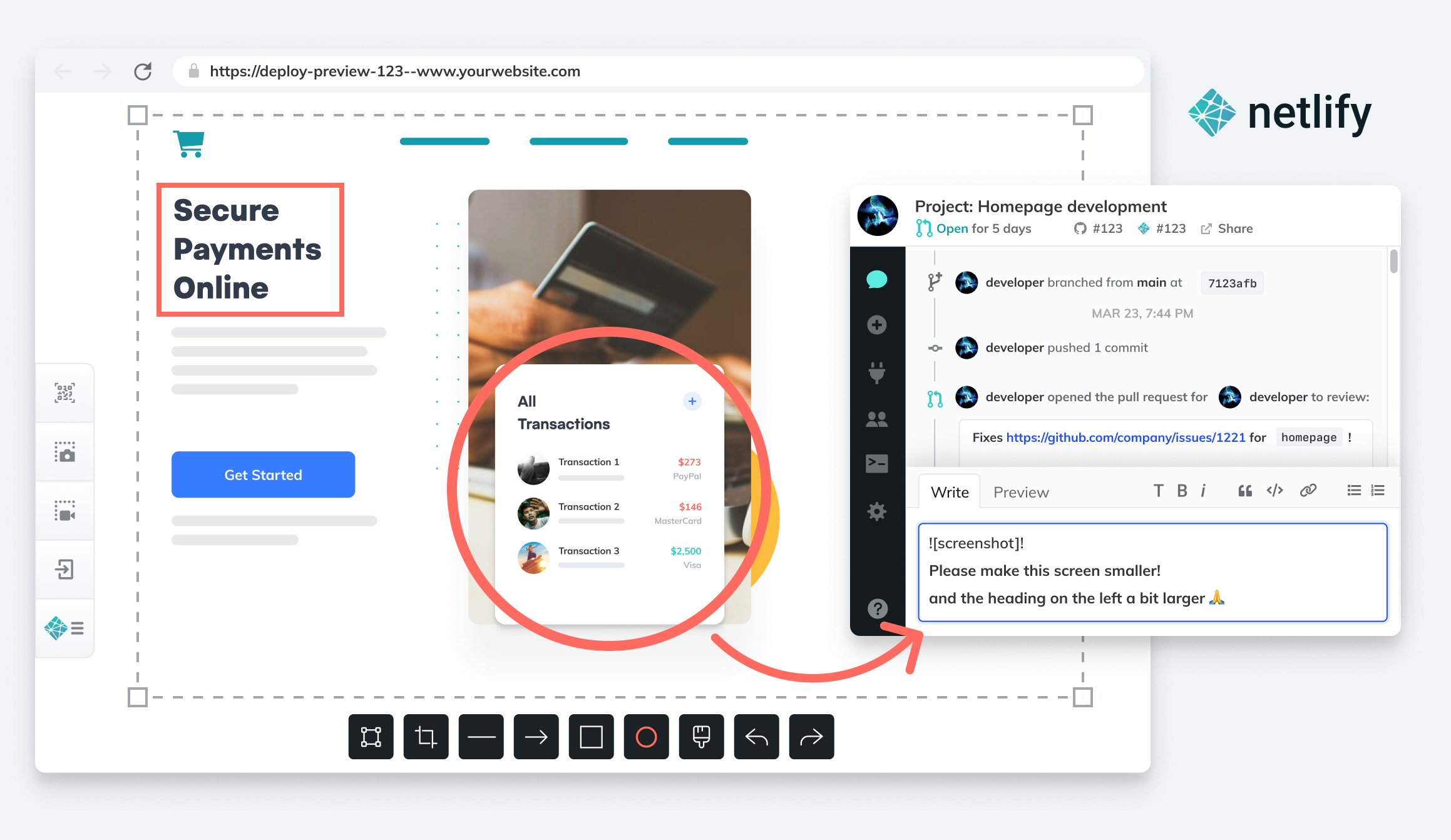
    Matt Biilmann, CEO of Netlify, said Netlify will embed that collaboration capability in the next iteration of its Netlify Deploy Previews. That tool makes it currently possible for a front end pull request from a Git repository to automatically generate a live preview of the site with a unique shareable URL.

    The current version simply shares URLs with application stakeholders, versus enabling DevOps teams to create a portal through which the review process can be centrally managed to make feedback more consistent, said Biilmann. Each piece of feedback from an application owner or stakeholder made via the portal will become a comment on the Git pull request, or can be shared via any collaboration tool a development team employs alongside a Netlify workflow, noted Biilmann.

    In the meantime, Netlify is also making available a free user role license for reviewers that want to make use of Netlify Deploy Previews to view recent updates to applications.

    Netlify has been driving adoption of a serverless computing framework based on a JAMstack architecture for building JavaScript applications faster. An application based on a JAMstack architecture isolates the front end and back end end of an application to make it possible to prebuild front ends that are highly optimized around static pages to make web applications faster. The name JAMstack is a mashup of JavaScript, application programming interface (API) and markup language.

    The need for more collaboration between developers and stakeholders has become more pronounced, in part, because organizations have significantly accelerated the rate at which they are investing in digital business transformation initiatives, noted Biilmann. With organization more dependent on software than ever, it’s critical for them to streamline the feedback cycle as the number of application stakeholders within organizations steadily increases, added Biilmann.

    As the relationship between DevOps teams and the rest of organization continues to evolve, the amount of feedback any team is likely to receive will continue to increase. Everyone from sales teams to the board of directors now realizes how dependent the business is on software. DevOps teams will need to way to organize and prioritize that feedback. They should also expect application owners and stakeholders to follow the progress of software development projects more closely than ever because, in many cases, financial projections are now based on assumptions being made about software delivery timetables.

    Many DevOps teams have been making the case to have a more central role in business planning for years. Now that many of them are getting a seat at the proverbial business planning table, however, they may soon realize they don’t really have the processes in place to absorb the overabundance of enthusiasm and anxiety that application stakeholders are likely to generate in equal measure.

  • Cloudflare Lays Out GitOps Ambitions for CDN Platform

    Cloudflare Lays Out GitOps Ambitions for CDN Platform

    Cloudflare’s acquisition of Linc is the latest move in the hosting provider’s move to better align its content delivery network (CDN) service with the tools and frameworks organizations rely on to build modern applications using GitOps processes, according to CEO Matthew Prince. Cloudflare also announced other updates and automation-related features, including a way to automatically deploy JavaScript applications using Linc’s technology.

    Prince said these latest moves are part of an ongoing effort to simplify integration of front-end applications with back-end services.

    Cloudflare Pages, for example, enables developers to select their preferred repository, identify what types of frameworks they are using, and then automatically deploy their applications on the Cloudflare CDN. The goal is to automate the continuous integration process in a way that enables developers to focus more of their time and effort on developing code, said Prince.

    Linc’s technology, meanwhile, will make back-end services more accessible to front-end applications using Front-end Application Bundles (FABs) that accelerate server-side rendering by combining front-end and back-end logic. The result is better performance across any type of application that relies on JavaScript, application programming interfaces (APIs) and markup languages, otherwise known as JAMstack, a framework for building complex applications.

    Prince said JAMstack adoption is accelerating because it allows developers to continuously modify the user experience (UX) without the need to modify back-end services. The CDN, meanwhile, has emerged as a platform for continuously deploying applications closer to the point where they are consumed by the end user, said Prince.

    That’s become especially critical at a time when digital business processes require data to be processed in near-time, and as closely as possible to the point where it is generated, said Prince. That’s not possible when application logic runs on a public cloud, Prince added.

    Cloudflare currently has points of presence in 200 cities worldwide, and is actively courting developers as part of an effort to usurp CDN rivals. Most recently, Cloudflare added a Durable Objects capability that makes it possible to run stateful applications across a distributed, serverless Cloudflare Workers service.

    Ultimately, Prince said the goal is to automate the majority of the DevOps process, as code moves from a Git repository to the network edge. A CDN will also provide the means to monitor and secure applications running at the network edge, Prince added.

    It’s not clear how much application logic will be pushed to the network edge via CDNs; however, it’s apparent CDNs are emerging as an important deployment platform that should be incorporated with DevOps processes. How providers achieve that goal is, in part, dictated by the framework used to build an application.

    Cloudflare’s moves are indicative of the larger trends of automating DevOps processes, a development that should make DevOps best practices more widely accessible to many more developers.

  • Netlify Extends JAMstack Reach to Edge Computing

    Netlify Extends JAMstack Reach to Edge Computing

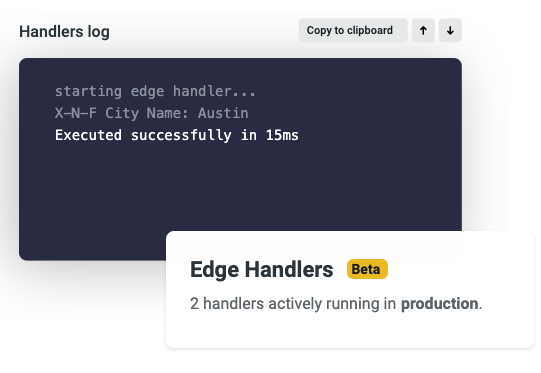
    Netlify, at its JAMSTACK CONF VIRTUAL event today, announced Netlify Edge Handlers, which make it possible to extend a Git-based workflow to edge computing applications.

    Company CEO Matt Biilmann said Netlify Edge Handlers, available in beta, puts the primitives in place for deploying serverless web applications based on a JAMstack software architecture that employs JavaScript, application programming interfaces (APIs) and markup languages, otherwise known as JAM, to isolate front- and back-end components of an application.

    A Git-based approach will also enable DevOps teams to extend workflows to edge computing applications that can be deployed on any number of platforms, he said. As an extension of a Netlify platform written in a modern Rust programming language, Netlify Edge Handlers makes it possible to build and launch web applications and websites based on a JAMstack architecture from within a continuous integration/continuous delivery (CI/CD) environment.

    Prior to the availability of Netlify Edge Handlers, building and deploying web applications on edge computing platforms required extensive coordination across teams, the creation of detailed edge logic with many dependencies and deviation from standard web development best practices, Biilmann said. Now, developers can write simple JavaScript that builds and deploys to the network edge in a way that enables simplified A/B testing, custom authentication and API aggregation, he noted.

    Developers also can build and manage edge logic from preview to production, including deploying those applications via the existing Netlify multi-cloud network.

    More application code is being pushed out to the edge because many organizations are now processing and analyzing data closer to where it is created and consumed, as part of their digital business transformation initiatives. Web applications that execute closest on a node to the user eliminate or reduce roundtrip request and response flows with the client.

    Biilmann also noted that because those applications are employing a platform developed using Rust, they are also inherently more secure.

    There may come a day when there are more application workloads collectively running at the edge than there are on cloud computing platforms. However, if that goal is ever to be achieved, it needs to become easier for developers to build those applications. Given the fact those applications are also likely to be targeted by cybercriminals, it’s critical to ensure those applications are as secure as possible.

    In the wake of the economic downturn brought on by the COVID-19 pandemic, many organizations have accelerated digital business transformation initiatives, many of which depend on edge computing platforms. The only way to achieve that goal, however, is to make it possible to build these applications using JavaScript tools that most developers of web applications have already mastered. Otherwise, organizations will need to invest in training developers to master another framework for deploying edge computing applications. That would require time they might not have.

    Regardless of the path forward, a massive wave of edge computing applications soon will stretch the boundaries and limitations of whatever DevOps processes organizations have in place today.

  • Netlify Makes Build Plugins Available for Jamstack Platform

    Netlify Makes Build Plugins Available for Jamstack Platform

    Netlify, at a Jamstack Conf Virtual event, announced the general availability of open source Netlify Build Plugins that provide IT teams with a set of continuous integration/continuous delivery (CI/CD) workflows for building websites and web applications using JavaScript, application programming interfaces (APIs) and static HTML files without employing web servers, otherwise known as a Jamstack.

    Designed to be launched from within a Netlify platform to enable IT teams to build a website and launch it from a Git repository to a content delivery network (CDN), the Netlify Build Plugins are intended to make it easier to employ DevOps processes using, for example, a plugin to run an end-to-end Cypress test.

    Netlify CEO Mathias Biilmann said DevOps teams also can make use of a Netlify API to create their own plugins. Ultimately, the goal is to foster the development of a wide range of open source Netlify plugins that would be built and vetted by the Jamstack community, he said.

    Other Netlify Build Plugins provide a means to enable Ghost, an open source headless content management system based on Node.js that can be deployed on any framework; launch a Sentry tool to automatically discover, triage and prioritize bugs; or enable a Gatsby tool to create incremental builds on Netlify.

    A survey of more than 3,000 Jamstack developers published today by Netlify finds one-third have worked on sites serving millions of users over the last year. Nearly two-thirds of survey respondents (62%) work outside the tech industry, including advertising and marketing (21%), media and publishing (14%), education (14%), financial services (13%) and business support and logistics (13%). Well over a third (38%) work for a technology company. About a quarter (26%) have more than 10 years of experience.

    Top Jamstack benefits cited by all types of developers are performance, uptime, speed of development, security, compliance and avoiding vendor lock-in, the survey finds.

    Biilmann said Jamstack as a philosophy enables IT teams to separate the development of front- and backend websites and applications in a way that allows organizations to embrace best DevOps processes. That approach is agnostic as far as any specific JavaScript framework is concerned, but it does define a way to automate the build process for a web application or website.

    In the wake of the economic downturn brought on by the COVID-19 pandemic, more organizations are investing time and resources in modernizing their websites and applications. With more employees and end users depending on those websites to drive digital business processes, the quality of the application experience has become a much bigger concern. At the same time, end users have now come to expect those application experiences to be updated regularly, which in many cases will necessitate the adoption of best DevOps processes.

    In fact, it’s arguable that organizations that don’t embrace best DevOps practices to build and deliver web applications at scale will soon discover they have bitten off more than they can chew.

  • Defining the Database Requirements of Dynamic JAMstack Applications

    Defining the Database Requirements of Dynamic JAMstack Applications

    Zero-configuration hosting solutions such as Zeit Now and Netlify are taking the frontend community by storm due to their ease of use. If we add static site generators such as Gatsby/Next.js/Nuxt.js/Hugo/Jekyll to the mix and deploy our statically generated pages to a content delivery network (CDN), we get something highly desired with minimal effort: distributed auto-scaling applications with zero configuration.

    The usage of static site generators and CDNs became quite popular, so much so that Netlify decided to give it a name: JAMstack. At first, this might not strike you as something very newsworthy. Haven’t we all deployed static sites such as blogs or documentation on CDNs? What is different about this approach?

    To answer that, let’s first look at the definition that is typically used to explain JAMstack: The JAMstack is a static HTML site, rebuilt automatically every time you update the content, and deployed directly to a CDN.

    Of course, that still does not explain why this approach is different. The first time I read this definition, I wondered how I could ever build something more dynamic than a blog with such a stack. However, note that nothing in the previous description says that every element of our site has to be statically generated. In fact, the JAM acronym stands for JavaScript, APIs and Markup, where the letter A is the answer to dynamic content.

    The idea is to pregenerate markup where you can and then enrich these statically generated pages with dynamic content fetched from APIs. The APIs of choice in a JAMstack application are typically APIs from third-party services (SaaS platforms) or custom-built with Functions as a Service (FaaS). Both Netlify and Zeit have great zero-configuration FaaS offerings to write APIs for your JAMstack.
    In essence, developers in the JAMstack community are often looking for a specific set of requirements:

    • Zero configuration—easy setup, easy deploy, no server management.
    • Scaling—your application can handle sudden spikes of increased traffic without extra effort. 
    • Speed—low latencies and fast page loads (thanks to the distributed nature of CDNs).
    • Pay as you go—only start paying when your page actually serves customers.

    By combining easy-to-use hosting solutions, static site generators, CDNs and scalable APIs in one stack, we can relatively easily get these requirements.

    What If My Application Requires Highly Dynamic Data?

    Imagine that you are building a social network for professionals on which professionals can create profiles. Professionals create profiles to promote their skills, and companies search the network to hire professionals for specific projects. For such an application, you need to store, search, filter and paginate data.
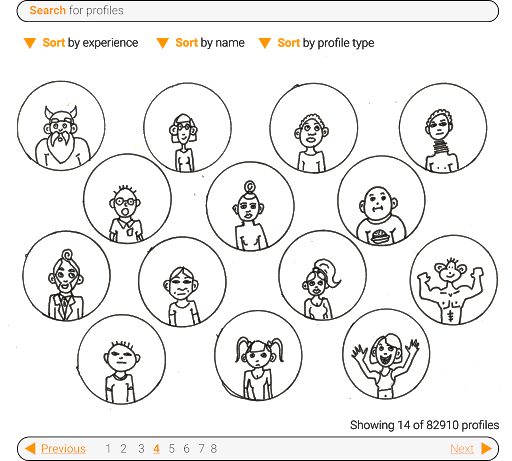
    To build such an application, you need a database, but not just any database. Ideally, you want to avoid losing the zero-configuration, pay-as-you-go, scaling and speed benefits that a JAMstack application typically delivers. There are several features a database can possess that make it a perfect fit for a JAMstack application.

    In this article, we will describe these features and explain how each of them makes a database a better candidate for a JAMstack application. Since such applications often rely on serverless functions, many of these properties also apply for applications built with FaaS.

    Database Properties that Work Well with JAMstack and FaaS Applications

    Multi-Region, Globally Replicated

    To understand why multi-region distribution is desirable, let’s revisit why static websites on CDNs are incredibly fast. A CDN is fast to deliver your content because it contains copies of your content at different locations. When content is requested from the CDN from a specific location, it will attempt to deliver that content from the closest location to the requestor. In order to get an idea of how much that matters, take a glance at the Zeit CDN status page which shows you the difference in latency between your current location and other locations. By deploying our applications to a CDN, our pages automatically load from the closest location to the user, which results in low loading latencies. And low latencies result in a great user experience.

    In order to keep this user experience, the dynamic data that will be loaded from our APIs has to exhibit low latencies as well, and the best way to achieve this is to use a distributed database. Databases that feature multi-region replicas such as FaunaDB, Google Spanner or Amazon Aurora not only provide the dynamic querying that you need, but also deliver your data from the closest location, just like a CDN.

    Connectionless

    Many traditional databases are not connectionless, which means that they require persistent connections with the process that queries the database. There is often a limit on the number of connections that a database can handle, and setting up a connection takes time and puts more strain on the database. A database that supports a JAMstack application will either be called from the frontend (if it’s possible to do securely) or from serverless functions. An increase in the number of users increases the number of running functions or frontend calls.

    Having a limit on connections and/or creating/destroying many connections then quickly becomes a problem. An ideal JAMstack database behaves like an API; it does not require connections. There is an excellent article on this topic that describes the connection problem from a FaaS perspective.

    Flexible Security

    Providing security out-of-the-box takes away tedious configuration from developers. If this security layer can also provide a means to securely access the database from the frontend, we can potentially write our application backendless, eliminating an extra hop and reducing the low latency we’ve gained from distribution even more. When a database is connectionless and can be accessed securely from the front-end, we consider it to be frontend-friendly. However, security requirements can be complex. If we completely rely on the database security layer, it has to be flexible enough to express custom rules. Firebase Cloud Firestore, FaunaDB and the upcoming Userbase offer direct access via clients, like browsers.

    Scaling and Pay-as-You-Go

    Before we add a database, our typical JAMstack application is completely auto-scaling and pay-as-you-g(r)o(w), which is considered an advantage for many startups. We only pay for the CDN bandwidth and function calls that our application actually uses. If our database is also pay-as-you-go and scales automatically, we do not lose this advantage.

    Strong Consistency

    Strong consistency is quite a technical matter, so we’ll explain it briefly, and for the technical details, this article is a great resource. Strong consistency is important in distributed databases when your application stores and updates data. In that case, there are two requirements to preserve a great developer experience:

    • You never lose data: When a write or update is acknowledged, it can no longer be dropped.
    • Data updates are predictable: When you save or update data, a consequent read will reflect these changes. 

    Strong consistency (or strict serializability) is the opposite of eventual consistency. By adopting a database that does what you expect it to do, you can focus entirely on your application. Only a few distributed databases provide strong consistency without limitations.

    Conclusion

    JAMstack applications are not limited to pages that are entirely static; they can be partly static and partly dynamic by retrieving data from APIs. A distributed database can be one of these APIs and is essential in case your application contains dynamic pages with filtered or paginated data. Ideally, such database fulfills the six described requirements so that we can build dynamic JAMstack applications without losing speed, scalability, pay as you go or the zero-configuration approach that we love.

    In case you wonder how a partly static, partly dynamic JAMstack can be created in an elegant way with modern frontend frameworks, take a look at hydration, which might be the topic of a forthcoming article.

    — Brecht De Rooms