Tag: NetApp

  • NetApp Survey Shows Hybrid Cloud is Maturing

    NetApp Survey Shows Hybrid Cloud is Maturing

    A small survey of 79 midsized to large enterprises conducted by NetApp suggests enterprise IT organizations might finally be embracing hybrid cloud computing beyond use cases involving backup and recovery.

    The survey finds 20% of respondents are currently employing both on-premises and cloud resources to support the same workload in a production environment, with another 17% planning to do so within 24 months.

    Darnell Fatigati, senior product marketing manager for hybrid cloud at NetApp, noted that a hybrid approach to cloud computing will dominate with more than three-quarters of respondents reporting their organization plans to operate a hybrid cloud environment for the foreseeable future. Only 17% expect their organization to eventually migrate all their IT environments to the cloud.

    A major factor in the decision to not migrate all workloads to the cloud is the amount of data gravity that legacy applications running in on-premises IT environments exert, noted Fatigati. The amount of effort required to successfully migrate terabytes and even petabytes of data into the cloud is simply too great, he added.

    The primary benefits of hybrid cloud computing cited by survey respondents are faster innovation (26%), increased responsiveness (25%) and increased collaboration (22%). Survey respondents also noted they are looking to improve infrastructure flexibility and scale (27%), optimize costs (21%) and improve data accessibility (13%). Data protection involving disaster recovery, backup and archiving remains the most widely employed use case for hybrid cloud, with 29% either employing it today or planning to do so in the next 24 months.

    Most hybrid cloud computing environments today consist of multiple clouds and on-premises IT environments that are managed in isolation from one another. The fact that more organizations are now starting to deploy the same workload across both a cloud service and an on-premises IT environment has significant implications for DevOps teams that will be required to manage those workloads. Most DevOps workflows today do not span multiple platforms. However, as more organizations become impacted by the occasional cloud outage, the level of resiliency enabled by hybrid cloud computing is becoming a higher priority.

    In many cases, the shift to hybrid cloud computing was accelerated by the COVID-19 pandemic that drove many organizations to increase the number of workloads deployed in the cloud. Now, heading into 2022, those same organizations are looking to reduce IT costs by centralizing IT management as much as possible, noted Fatigati. Each time an IT organization adds a new platform, the tooling and personnel required to manage that platform increase the total cost of IT for any organization. Much of the shift to hybrid cloud is being driven by C-level executives looking to reduce those costs.

    It may be a while before most enterprise IT organizations are able to deploy workloads across multiple platforms. However, as both cloud and on-premises IT environments continue to evolve and as more platforms deployed in local data centers are increasingly managed using a cloud operating model, the way those platforms are accessed on demand will continue to converge. In fact, there may come a day when the term cloud computing itself disappears from the IT lexicon as every IT platform, by default, leverages one type of cloud or another.

  • NetApp Brings the Simplicity and Flexibility of the Cloud to the Data Center with Updated Software Data Services

    Updates enable enterprises to accelerate their digital transformation by easily building and optimizing applications across cloud and on-premises environments

    SUNNYVALE, Calif.–(BUSINESS WIRE)–Global, cloud-led, data-centric software company NetApp (NASDAQ: NTAP) today announced enhancements to industry-leading cloud-connected NetApp® ONTAP® data management software. The company also announced a more flexible NetApp Keystone™ Flex Subscription service and a new NetApp SolidFire® Enterprise SDS solution. With these updates, NetApp helps organizations everywhere unlock the best of cloud. Organizations can now optimize performance and security, reduce costs, easily extend data management from on premises to any cloud, and consume hybrid cloud infrastructure as a service.

    “Digital transformation has accelerated to the point where projects that used to take years to accomplish now need to be completed in months or even weeks,” said NetApp President César Cernuda. “With its rich data-centric software innovation, NetApp is uniquely positioned to help organizations quickly adapt and sustainably transform in today’s hybrid cloud world. Now, we make it easier for them to develop applications in the cloud, move applications to the cloud, or create cloudlike experiences on premises.”

    The new features and capabilities that NetApp introduced today include:

    • Enhanced NetApp ONTAP software capabilities that offer greater consolidation, deeper cloud ​integration, and continuous data availability for improved simplicity, efficiency, and protection of business-critical enterprise applications.
    • Updates to NetApp Keystone Flex Subscription, providing a fast, flexible path to a cloud-enabled data center with “pay-as-you-grow” subscriptions for a cloudlike experience on premises. The Keystone Flex Subscription also offers public cloud integration available through the NetApp partner ecosystem.
    • The new NetApp SolidFire Enterprise SDS solution, providing a simple and automated foundation for private cloud with NetApp Element® software as standalone software-defined storage that can be deployed on any hardware.

    More information about these products and solutions can be found here.

    About NetApp

    NetApp is a global cloud-led, data-centric software company that empowers organizations to lead with data in the age of accelerated digital transformation. The company provides systems, software and cloud services that enable them to run their applications optimally from data center to cloud, whether they are developing in the cloud, moving to the cloud, or creating their own cloudlike experiences on premises. With solutions that perform across diverse environments, NetApp helps organizations build their own data fabric and securely deliver the right data, services and applications to the right people—anytime, anywhere. Learn more at www.netapp.com or follow us on Twitter, LinkedIn, Facebook, and Instagram.

    NETAPP, the NETAPP logo, and the marks listed at http://www.netapp.com/TM are trademarks of NetApp, Inc. Other company and product names may be trademarks of their respective owners.

  • Spot by NetApp Delivers Availability, Automation, and Cost Savings for Cloud Workloads With Microsoft Azure Spot Virtual Machines

    New capabilities for Elastigroup from Spot by NetApp allow customers to effortlessly apply Azure Spot Virtual Machines to a broader swath of production workloads with up to 90 percent cost savings

    SUNNYVALE, Calif.–(BUSINESS WIRE)–NetApp (NASDAQ: NTAP), a global cloud-led, data-centric software company, today announced the availability of Elastigroup for Microsoft Azure Spot Virtual Machines (VMs). NetApp recently acquired Spot, a leading cloud compute management and cost optimization company whose suite of tools includes Elastigroup.

    Elastigroup from Spot by NetApp simplifies and automates compute infrastructure provisioning and autoscaling while allowing cloud consumers to dramatically reduce their compute spending by up to 90 percent, along with providing high availability. Elastigroup offers these benefits by reliably harnessing cloud providers’ excess compute capacity. Until now, Elastigroup supported Azure’s low-priority VMs, but now is offering full support of Azure Spot VMs. This support helps Azure customers enjoy dramatic cost savings coupled with the enterprise-level SLA of Spot by NetApp.

    Elastigroup makes it easier to use multiple instance types and sizes within a single cluster for enhanced performance at scale. And built-in blue/green capabilities help customers perform easier upgrades of their clusters and continuous delivery pipelines.

    “Until now, Microsoft Azure customers who wanted to use Spot VMs needed to choose workloads that were noncontinuous and not bound to specific time frames,” noted Amiram Shachar, vice president and general manager of Spot by NetApp. “Supporting Azure Spot VMs broadens NetApp’s collaboration with Microsoft Azure, building upon previous successes such as Azure NetApp® Files, Cloud Volumes ONTAP for Azure, and Cloud Insights. We are looking forward to further strengthening our collaboration with Azure to the mutual benefit of all our customers.”

    As a company, NetApp is focused on building innovative solutions around Azure products and services, such as Elastigroup for Azure Spot VMs and Azure NetApp Files.

    “Elastigroup has been key to keeping our cloud infrastructure management at a minimum while significantly cutting our compute costs,” said Yoni Eini, CTO and co-founder, Upsolver. “As we increase our Azure footprint, Elastigroup will be our go-to solution for running a wide range of workloads on Azure Spot VMs.”

    Benefits of Elastigroup

    • Spot by NetApp offers an enterprise-level availability SLA for fault-sensitive workloads such as web applications, microservices running behind a load balancer or application gateway, high-performance computing (HPC) workloads, and Hadoop and Spark workloads.
    • Seamless blending of optimal pricing options within a single cluster.
    • Elastigroup offers automated fallback to Pay-As-You-Go and back to Spot VMs as appropriate.
    • Heterogenous VM scaling for any VM type and size with Elastigroup automatically scaling the desired VMs without the need for creating an Azure Virtual Machine Scale Set per instance type and size.
    • Load balancers and application gateways are automatically updated to drain HTTP connections, and to register and deregister nodes as needed.
    • For enhanced continuous delivery with hassle-free blue/green deployments, Elastigroup seamlessly replaces and upgrades application versions, ensuring an extra level of high availability for workloads.
    • With cron-based scheduling, pay only for the resources needed, so teams can schedule on/off hours for their cloud compute infrastructure.

    For more information about Elastigroup from Spot by NetApp, read our blog.

    About NetApp

    NetApp is a global cloud-led, data-centric software company that empowers organizations to lead with data in the age of accelerated digital transformation. The company provides systems, software and cloud services that enable them to run their applications optimally from data center to cloud, whether they are developing in the cloud, moving to the cloud, or creating their own cloud-like experiences on-premises. With solutions that perform across diverse environments, NetApp helps organizations build their own data fabric and securely deliver the right data, services and applications to the right people—anytime, anywhere. Learn more at www.netapp.com.

    NETAPP, the NetApp logo, and the marks listed at http://www.netapp.com/TM are trademarks of NetApp, Inc. Other company and product names may be trademarks of their respective owners.

  • NetApp Acquires Spot to Rein in Cloud Costs

    NetApp Acquires Spot to Rein in Cloud Costs

    NetApp this week announced it has acquired Spot, a provider of a service that enables IT teams to continuously optimize costs for cloud workloads.

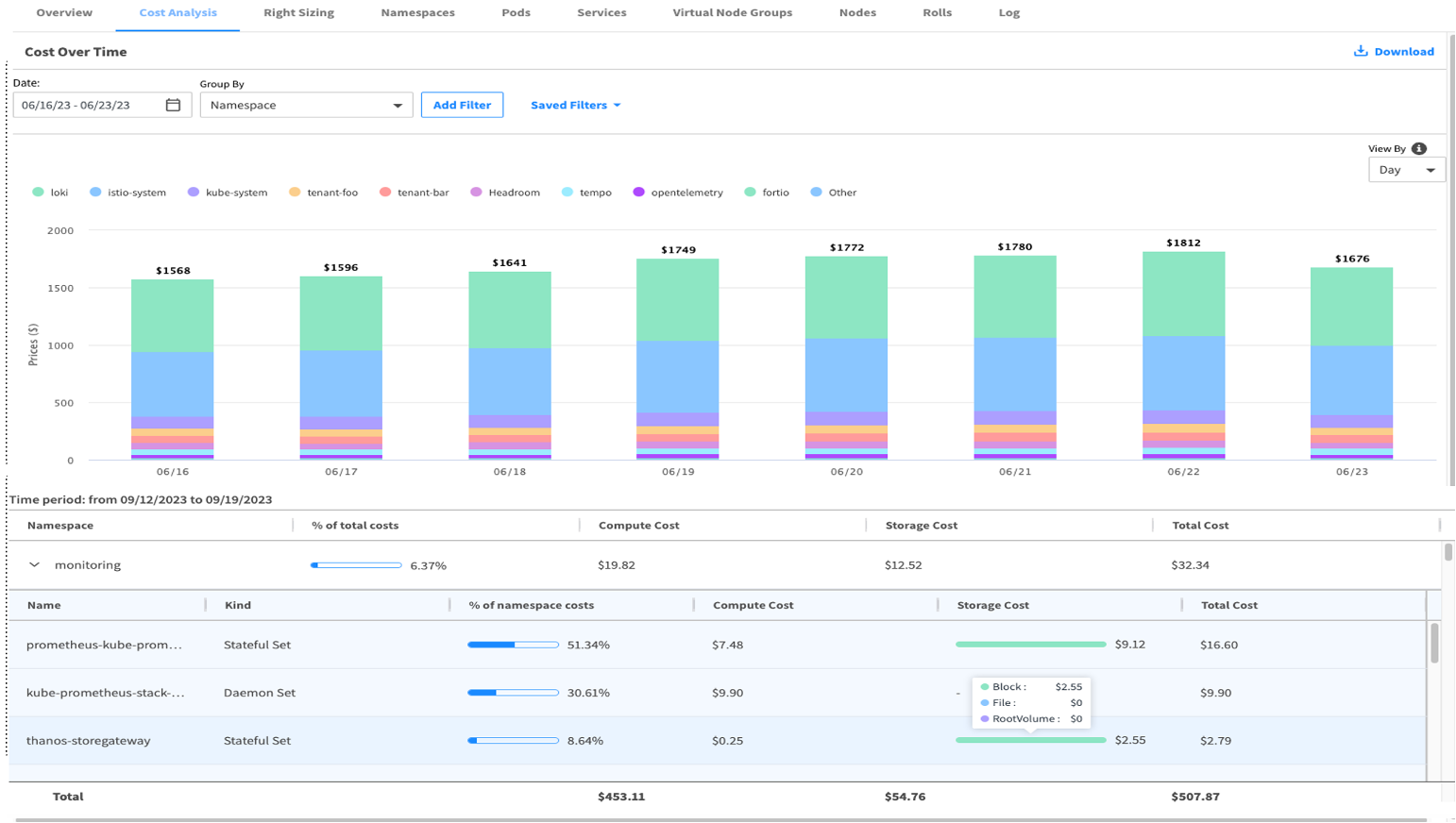
    Anthony Lye, senior vice president and general manager for public cloud services at NetApp, said the Spot service is based on an application programming interface (API) that IT teams add to each application workload. That API then makes regular calls to Spot, which leverages algorithms that determine when and on what types of instances a workload should run to reduce cloud costs.

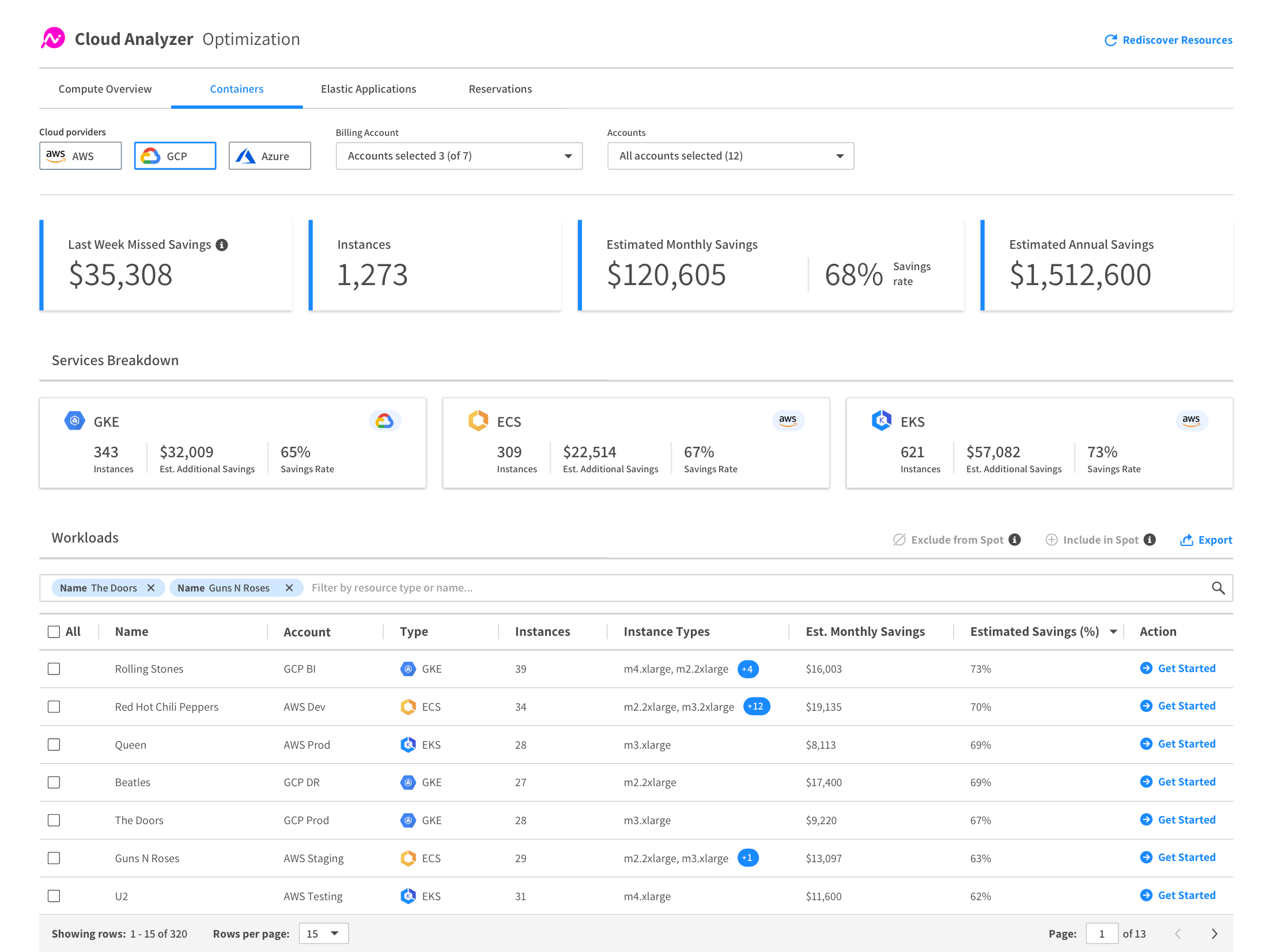
    The Spot service will then move workloads automatically between on-demand, reserve and spot instances on Amazon Web Services (AWS), Microsoft Azure or Google Cloud Platform (GCP). It is not designed to enable arbitrage across different cloud services; rather, it optimizes the allocation of compute resources on whatever cloud platform an IT team decides to deploy a workload on.

    Lye said cloud computing often winds up being more expensive than on-premises IT environments because IT teams don’t have the tools required to cost-optimize cloud platforms in real-time. Developers often programmatically deploy workloads in the cloud without understanding many of the implications of using one tier of service versus another. Even when they do appreciate the cost, most IT teams don’t provide them with the tools needed to do anything about it. In fact, it’s usually assumed the IT operations team will find some way to optimize costs as they monitor the cloud environment.

    Then, at the end of the month, the IT operations and finance teams receive a bill from a cloud service provider that is all but indecipherable in determining what workloads consumed what level of compute resources and when. In the absence of the Spot service, Lye said the best IT teams could hope for was an analytics report that offered suggestions about how to optimize cloud instances after the fact.

    NetApp views Spot as a complement to its approach to optimizing the consumption of cloud storage resources by deploying its software on a public cloud to manage those resources, said Lye. Collectively, those offerings enable IT teams to address what has now become the single largest cost in the enterprise.

    In addition, Lye noted that Spot can play a key role in enforcing service level agreements (SLAs) because, among other things, it automatically detects whenever a spot instance of a virtual machine is going away. It then automatically spins up additional instances to ensure a workload remains available.

    The debate over the real cost of cloud computing has been going on for years. Initially, most cloud service providers claimed cloud platforms were less expensive than on-premises IT environments because compute resources were paid for on a consumption basis. While that proved to be true for workloads that ran for a finite amount of time, longer-running workloads have proven to be in most cases more expensive to run in the cloud.

    As organizations look to the cloud to deploy cloud-native applications that are more flexible and resilient in the wake of the COVID-19 pandemic, which has made many on-premises IT environments less accessible, the debate over costs is flaring up again. While organizations need a more flexible approach to IT, they are simultaneously trying to reduce the total cost of IT in the wake of the economic downturn brought on by the pandemic.

    It’s too early to say to what degree IT organizations will embrace continuous optimization alongside continuous integration (CI) and continuous delivery (CD). However, given the current economic climate, it’s more now a question of when, not if, cloud cost optimization will become a major area of focus for IT teams large and small.

  • NetApp Grabs CloudJumper to Manage Windows Desktops in the Cloud

    NetApp Grabs CloudJumper to Manage Windows Desktops in the Cloud

    NetApp today announced it has acquired CloudJumper, a provider of management tools for virtual desktops at a time when the rate at which Windows desktops are moving into the cloud is accelerating.

    Anthony Lye, senior vice president and general manager of NetApp’s Cloud Data Services business unit, said NetApp will primarily employ CloudJumper as a software-as-a-service application that complements the Windows Virtual Desktop (WVD) service provided by Microsoft on the Azure cloud. However, CloudJumper is also available on Amazon Web Services (AWS) and Google Cloud Platform.

    CloudJumper has also been rebranded as NetApp Virtual Desktop Service (VDS) on NetApp Cloud Central, a control plane for managing NetApp cloud services, and integrated with Azure NetApp Files and Cloud Volumes.

    Lye said that as NetApp extended the reach of its data management platforms into the cloud it became apparent even before the COVID-19 pandemic that large numbers of desktops were moving into the cloud, thanks to the general availability of WVD and end of life for support for Windows 7. The COVID-19 pandemic is serving as a catalyst to further accelerate that shift as organizations look to make their IT environments both more flexible and resilient, said Lye.

    As more desktops shift to the cloud, it then only becomes a matter of time before those virtual desktops create the need for additional NetApp data management services that already reside natively on cloud platforms such as Azure, he added.

    While there is general agreement that more desktops will be moving into the cloud, the rate at which that transition will occur is debatable, since many organizations have limited resources to invest in IT projects. However, Lye said there are also many organizations that will take this moment to accelerate their transition to the cloud.

    The one thing that is for certain is the number of desktops deployed locally will decline steadily in on-premises IT environments. End users may still have a local device, but the amount of compute power required to access Windows desktops in the cloud should be substantially less. That’s critical as more organizations also are abandoning traditional desktops in favor of mobile computing devices that enable end users to work from anywhere. In fact, it’s not even clear to what degree the IT professionals supporting virtual desktops will need to be in an office when the management tools being employed all reside in the cloud.

    Clearly, in terms of Windows deployments, the next year may be the most transformational in recent memory. The impact on IT professionals will be especially profound as the need to physically service individual endpoints becomes less required. Of course, the transition to virtual desktops has been a long time coming. More than a few organizations have embraced virtual desktop infrastructure (VDI) with mixed success. However, now that virtual desktops have gone mainstream in the cloud, many IT organizations will soon be wondering why it took so long to actually make that happen.

  • Commvault Deepens Ties With NetApp to Automate Data Protection

    Commvault Deepens Ties With NetApp to Automate Data Protection

    Commvault has extended its alliance with NetApp to make it possible to recover files nearly instantaneously from an all-flash memory array.

    Ranga Rajagopalan, vice president of product management for Commvault, said NetApp Scale-out Data Protection (SDP) from Commvault builds on its backup and recovery software to make it possible to use to NetApp hyperconverged infrastructure in combination with all-flash arrays running StorageGRID object storage software to now recover data stored on-premises or in the cloud.

    The on-premises capability is critical because it eliminates potential downtime in the event of a ransomware attack, Rajagopalan said, noting data can be recovered from an all-flash array residing on-premises using a scale-out architecture in a matter of seconds.

    At the same time, IT organizations can take advantage of an object storage system from NetApp that is compatible with the S3 application programming interface (API) to store data in the cloud, he added.

    Most IT organizations are by now aware the only way to combat ransomware is to be able to access a pristine copy of their data. The challenge they face, however, is finding a way to make that data accessible as fast as possible. It not only takes a significant amount of time to extract data from a cloud service, but it is also expensive. By keeping an organization’s most recent data available in an all-flash array locally, the time to restore data is sharply reduced, said Rajagopalan.

    Of course, organizations have been keeping copies of data on magnetic storage systems for years. However, as the cost of all-flash arrays continues to decline it’s now more affordable for organizations to consider employing much faster all-flash arrays to back up and recover their most mission-critical data, he added.

    Commvault also makes available application programming interfaces (APIs) through which the whole data protection process can be automated, he said.

    In the wake of the COVID-19 pandemic, there are two issues that many organizations are now struggling to manage. The first is the need to automate more processes at a time when many organizations will have smaller IT staffs. The number of IT personnel that can be dedicated to manually managing data protection tasks will be fewer during the economic downturn.

    At the same time, however, the number of ransomware attacks being launched continues to increase. All it takes is one mistake for an organization to find all its data encrypted. As a result, the relationship between data management and cybersecurity has become much tighter as organizations strive to ensure they always have a pristine copy of their data available.

    In the months ahead there is no doubt there will be a lot more focus on the total cost of IT operations. The challenge is, finding a way to reduce those costs must be balanced against the existing commitment to service level agreements (SLAs). The only way to meet those often-conflicting goals is to rely more on IT automation frameworks to make data always available, in a way that requires much less human intervention.