Tag: Netlify

  • Developers Continue to Prefer Remote Work

    Developers Continue to Prefer Remote Work

    A survey found 83% of developers are working remotely more than half of the time, with more than three-quarters (76%) reporting they have maintained or increased the frequency of remote work in the last year. In fact, three in five respondents (62%) work remotely at least 90% of the time.

    The survey, published by Netlify, a provider of a platform for building the front end of Web applications using the Jamstack framework, polled 6,544 developers in the Jamstack community and found more than half (55%) would quit their jobs if forced to return to an office.

    It’s not clear how much remote work has become a de facto requirement for organizations to attract and retain developer talent, but it’s clear that, in the wake of the COVID-19 pandemic, the dynamic between developers and the organizations that employ them has completely changed.

    Netlify CEO Mathias Biilmann said regardless of industry, it’s apparent that DevOps teams are going to continue to need to make adjustments to foster collaboration across distributed teams. Senior managers will find it increasingly challenging to manage workflows across a workforce that is also witnessing a lot of turnover, he noted. A third of survey respondents (33%) reported having changed jobs in the last year. It’s not clear how much a lack of interaction in the office might be impacting innovation, but at a time when demand for developer talent far exceeds the available supply, organizations will need to adjust to what appears to have become a permanent new reality.

    At the same time, the Netlify survey noted the pace at which emerging technologies are being embraced continues to rapidly evolve—perhaps because of rather than in spite of remote work. For example, the survey found 70% of developers reported using a serverless computing framework in the last year. Nearly half (47%) are also experimenting with edge dynamic sites, the survey found. It’s clear that company culture, at least in terms of technology adoption, plays a large role in attracting developer talent.

    Overall, 96% of survey respondents noted that JavaScript is their primary choice of programming language, with 21% of developers now specifically using TypeScript to build applications. The React framework for building applications, meanwhile, is being used by 71% of developers, with 47% reporting they employed the Next.js version of that framework. Other React frameworks gaining traction include Vite (32%), Sveltekit (15%), Astro (11%), Remix (10%) and SolidJS (6%).

    However, emerging Web3 technologies have yet to gain traction. While 7% to 10% of developers have tried out technologies such as cryptocurrencies and NFTs, only 3% reported using these technologies regularly. A total of 42% of developers either didn’t know what Web3 was or didn’t care about it, while 31% felt negatively about it, the survey found.

    Ultimately, the primary reason organizations invest in DevOps is to increase developer productivity. The challenge is that, as developers embrace more tools and platforms for building applications, the process of deploying those applications becomes more challenging to manage effectively. One way to achieve that goal is to separate frontend and backend software development processes to enable developers to focus more on writing code rather than managing the arcane processes required to deploy it.

  • Netlify Leverages GraphQL to Simplify Access to Backend Services

    Netlify Leverages GraphQL to Simplify Access to Backend Services

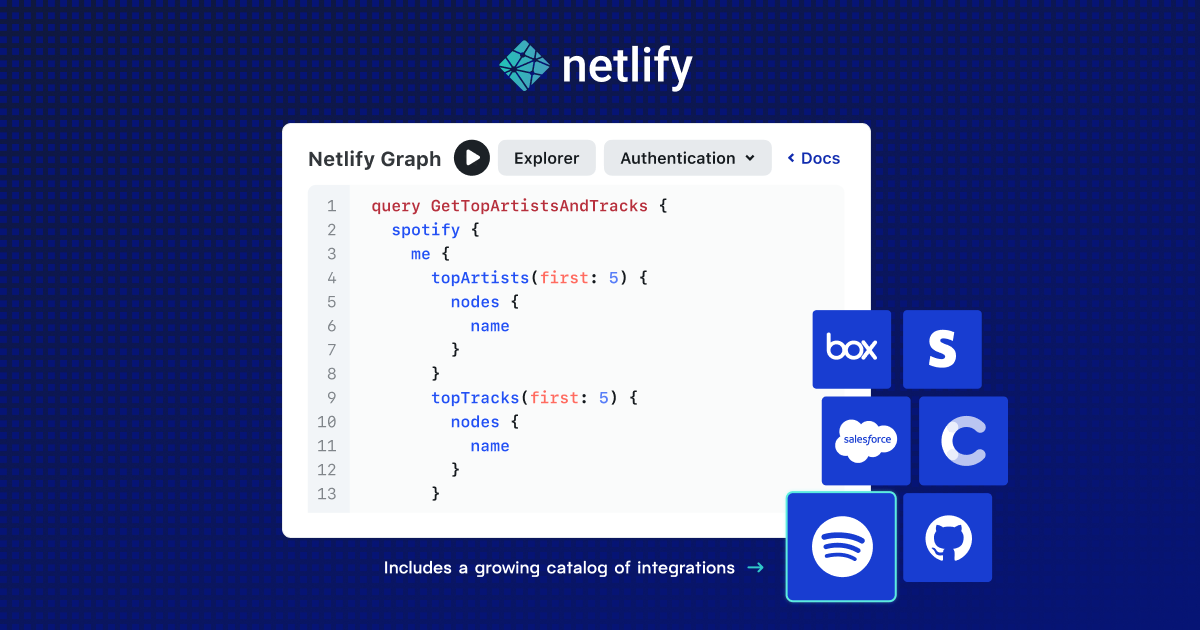
    Netlify this week added a Netlify Graph tool to its portfolio that makes backend services available to developers via a single click. The tool aims to simplify DevOps teams’ access to those services when building their applications.

    Netlify Graph is based on the GraphQL query language for application programming interfaces (APIs) and enables developers to integrate services such as GitHub, Salesforce and Stripe within frontend and web application development tools without any direct intervention required from a DevOps team.

    Netlify provides an application development framework based on JavaScript, application programming interfaces (APIs) and markup languages, otherwise known as a JAMstack, to isolate frontend and backend components of an application.

    Netlify CEO Matt Biilmann said Netlify Graph is based on the GraphQL technology the company gained when it acquired OneGraph. The overall goal is to make it simple for frontend developers to invoke backend services accessed via either GraphQL or REST APIs, he said. Services based on GraphQL can be especially complex for developers to invoke as they navigate the management of tokens and application secrets, Biilmann added.

    It’s not clear to what degree GraphQL APIs will supplant REST APIs. However, developers tend to prefer GraphQL APIs because they provide more granular control over what data is accessed. The challenge is the number of backend services that expose GraphQL APIs is still comparatively limited. As GraphQL becomes more widely adopted, the level of effort DevOps teams now need to expend to expose backend services should decline as tools such as Netlify Graph are employed by frontend developers.

    As a result, at least theoretically, the rate at which new applications are built and deployed to drive digital business transformation initiatives should increase. Most IT teams will not be replacing REST APIs with GraphQL-based APIs overnight, but the percentage of new applications that rely on GraphQL APIs will steadily increase. DevOps teams looking for easier ways to provide developers with simpler access to backend services now have an incentive to embrace GraphQL.

    Ultimately, Biilmann said, the goal is to enable developers to build applications without having to directly engage anyone on the IT team. Each backend service can be managed in isolation from the frontend of any application. It’s not clear how long it might take to achieve that goal, but as responsibility for the end-to-end management of the application experience continues to shift left toward developers, the need to surface backend systems-as-a-service becomes more pronounced. In fact, given the current focus on improving developer productivity, IT organizations might soon face a mandate to embrace GraphQL more broadly. After all, every minute that a developer spends on plumbing is time they’re not spending writing actual business logic.

    Naturally, it may take time for enterprise IT to be truly transformed into a set of services that developers can easily consume. But as progress continues to be made, that dream may finally be realized.

  • Netlify Acquires OneGraph to Integrate GraphQL APIs

    Netlify Acquires OneGraph to Integrate GraphQL APIs

    Netlify this week announced it has acquired OneGraph, a provider of a platform that simplifies the integration and management of application programming interfaces (APIs) based on the GraphQL query language.

    At the same time, the company is committing $1 million to sponsor open source projects and setting aside $10 million for a Netlify Jamstack Innovation Fund that will help drive the development of emerging technologies. Those technologies will be consumed via the platform the company created based on Javascript, APIs and a markup language (referred to as Jamstack) to accelerate web application and website development. Rather than becoming investors in those companies, Netlify intends to make those funds available to advance the development of technologies that benefit the overall community.

    Fresh from raising an additional $105 million in funding, Netlify CEO Matt Biilmann said Netlify is committed to an ecosystem through which developers will be able to consume a wider range of services via both REST and GraphQL-based APIs. OneGraph will provide the core foundation for adding support for GraphQL to the Netlify platform, he noted.

    Overall, Netlify is trying to reduce the friction that developers encounter building web applications and the sites they run on, added Biilmann. That’s becoming especially critical as developers increasingly build microservices-based applications that invoke APIs to consume backend services that are made available via the Netlify platform, he added.

    Earlier this year, the company made available Netlify Build Plugins that provide DevOps teams with a set of continuous integration/continuous delivery (CI/CD) workflows for building websites and web applications. Designed to be launched from within a Netlify platform, those plugin makes it possible to build a web application or website that can be launched directly from within a Git repository.

    The overall Jamstack philosophy enables DevOps teams to separate the development of frontends and backends of websites and applications. That approach is agnostic as far as any specific JavaScript framework is concerned, but it does define a way to automate the build process for a web application or website.

    A recent survey of more than 3,000 Jamstack developers published by Netlify finds one-third of survey respondents have worked on sites serving millions of users over the last year. Nearly two-thirds of survey respondents (62%) work outside the tech industry, including in advertising and marketing (21%), media and publishing (14%), education (14%), financial services (13%) and business support and logistics (13%). Well over a third (38%) work for a technology company. About a quarter (26%) have more than 10 years of experience. Top Jamstack benefits cited by all types of developers are performance, uptime, speed of development, security, compliance and avoiding vendor lock-in, the survey found.

    Jamstack is, of course, not the only framework for building web applications and the sites they run on. DevOps teams are increasingly being tasked with building a much wider range of external applications to drive digital transformation initiatives that are typically built using some type of JavaScript framework. The next big DevOps challenge, of course, is that as the number of applications being built continues to increase, so does the number of applications that need to be maintained and continuously updated.

  • Netlify Acquires FeaturePeek to Streamline App Feedback Process

    Netlify Acquires FeaturePeek to Streamline App Feedback Process

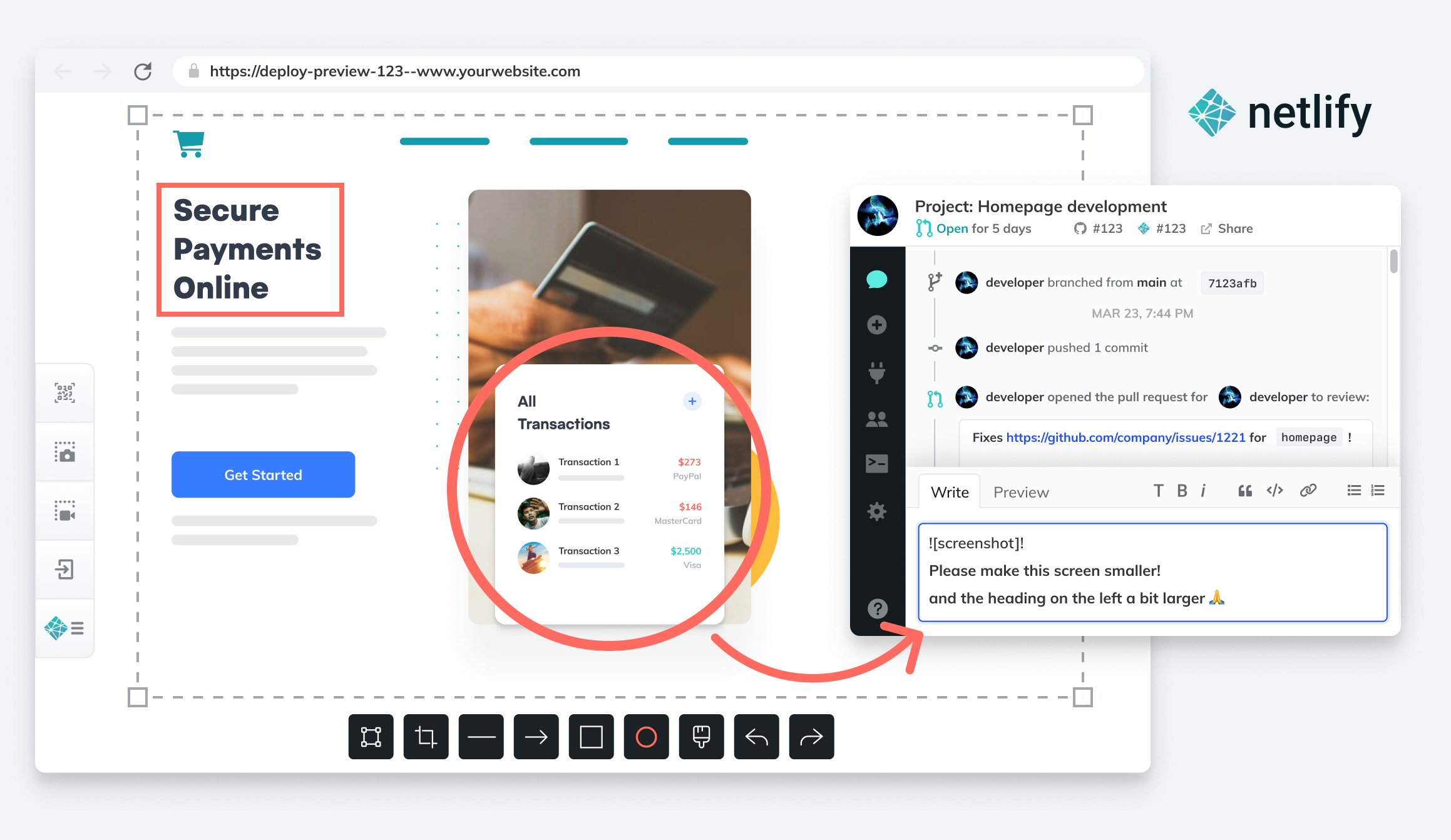
    Netlify announced today it has acquired FeaturePeek as part of an effort to make it simpler for DevOps teams to create a portal through which application stakeholders can both inspect a web application developed using JavaScript and leave comments for developers.

    Matt Biilmann, CEO of Netlify, said Netlify will embed that collaboration capability in the next iteration of its Netlify Deploy Previews. That tool makes it currently possible for a front end pull request from a Git repository to automatically generate a live preview of the site with a unique shareable URL.

    The current version simply shares URLs with application stakeholders, versus enabling DevOps teams to create a portal through which the review process can be centrally managed to make feedback more consistent, said Biilmann. Each piece of feedback from an application owner or stakeholder made via the portal will become a comment on the Git pull request, or can be shared via any collaboration tool a development team employs alongside a Netlify workflow, noted Biilmann.

    In the meantime, Netlify is also making available a free user role license for reviewers that want to make use of Netlify Deploy Previews to view recent updates to applications.

    Netlify has been driving adoption of a serverless computing framework based on a JAMstack architecture for building JavaScript applications faster. An application based on a JAMstack architecture isolates the front end and back end end of an application to make it possible to prebuild front ends that are highly optimized around static pages to make web applications faster. The name JAMstack is a mashup of JavaScript, application programming interface (API) and markup language.

    The need for more collaboration between developers and stakeholders has become more pronounced, in part, because organizations have significantly accelerated the rate at which they are investing in digital business transformation initiatives, noted Biilmann. With organization more dependent on software than ever, it’s critical for them to streamline the feedback cycle as the number of application stakeholders within organizations steadily increases, added Biilmann.

    As the relationship between DevOps teams and the rest of organization continues to evolve, the amount of feedback any team is likely to receive will continue to increase. Everyone from sales teams to the board of directors now realizes how dependent the business is on software. DevOps teams will need to way to organize and prioritize that feedback. They should also expect application owners and stakeholders to follow the progress of software development projects more closely than ever because, in many cases, financial projections are now based on assumptions being made about software delivery timetables.

    Many DevOps teams have been making the case to have a more central role in business planning for years. Now that many of them are getting a seat at the proverbial business planning table, however, they may soon realize they don’t really have the processes in place to absorb the overabundance of enthusiasm and anxiety that application stakeholders are likely to generate in equal measure.