Tag: Orbs

  • CircleCI Adds to Salesforce CI/CD Orbs Collection

    CircleCI Adds to Salesforce CI/CD Orbs Collection

    CircleCI today announced it has extended its CI/CD support for DevOps teams building applications that extend the software-as-a-service (SaaS) platform from Salesforce.

    Company CEO Jim Rose said interest in building applications that complement the Salesforce platform is rising sharply in the wake of the economic downturn brought on by the COVID-19 pandemic. Rather than build entire applications from scratch, IT teams are advancing digital business transformation initiatives by leveraging the core suite of applications Salesforce makes available as a cloud service, he noted.

    Many of those applications are built by professional developers that have embraced best DevOps practices, Rose said.

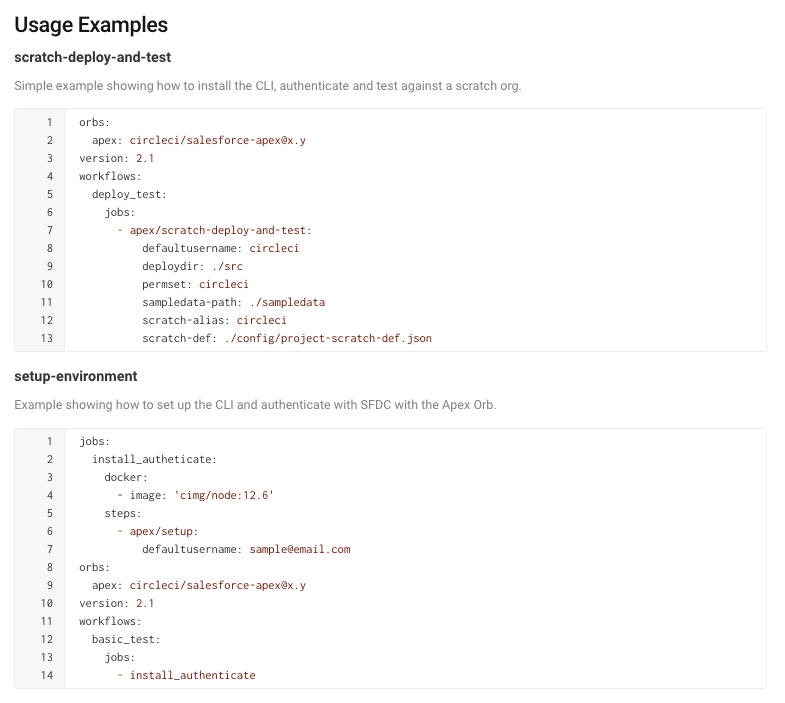
    To reduce friction for those DevOps teams, CircleCI is now adding support for a Salesforce Apex orb. An orb is a set of pre-configured connectors that CircleCI makes available for its continuous integration/continuous delivery (CI/CD) platform. The company has created more than 1,600 CircleCI orbs. Salesforce Apex is a proprietary object-oriented language that Salesforce makes available to developers.

    The Salesforce Apex orb automatically deploys changes to a production application, runs unit tests that are displayed using the Salesforce Platform user interface and tracks version control on commit.

    CircleCI has also updated its existing Salesforce command-line interface (CLI) orb to tighten integration.
    Rose said that as the pace of application development continues to accelerate, more IT teams are applying best DevOps practices to how they build and deploy applications as part of an effort to make the whole organization more resilient to change. Others are simply looking to modernize existing DevOps workflows that currently run on legacy CI/CD platforms.

    In either case, Rose said most end customers would prefer providers of CI/CD platforms to focus on making DevOps teams more efficient rather than moving into adjacent market segments to increase the size of their total addressable market. Those latter strategies are, in many cases, trying to drive consolidation of the overall DevOps market to woo potential investors rather than focusing on customer interests, he noted.

    It’s too early to say how the DevOps platform wars will play out. The size of the overall market continues to expand as the rate at which mergers and acquisitions are occurring accelerates. Regardless of the outcome, more IT organizations are under pressure to deliver more robust software faster, said Rose, noting the Salesforce application developer community represents only one segment of that expansion.

    Each organization will, of course, need to chart its own DevOps course. It’s not uncommon for different teams with the same organization to have standardized on multiple DevOps platforms. There may come a day when the need to reduce costs may force those organizations to rationalize DevOps platforms. However, as long as the rate at which high-quality software is delivered continues to improve, just as many organizations may conclude it’s just as well to leave something alone that doesn’t appear to be broken.


  • CircleCI Extends Orbs Ecosystem for CI/CD

    CircleCI Extends Orbs Ecosystem for CI/CD

    CircleCI announced today it has added integrations in collaboration with 20 partners to the family of connectors, known as Orbs, that it makes available for its continuous integration/continuous delivery (CI/CD) platform.

    Thomas Trahan, vice president of business development for CircleCI, said integrations are now available with Heroku, AWS, Cloud Foundry, Google Cloud, Red Hat, Helm, Kublr, Alcide, Azure, DeployHub, Fairwinds, VMware, Kubernetes, Rafay Systems, Pulumi, Convox, Spinnaker, realMethods, Quali, Pantheon, LaunchDarkly and Salesforce.

    Since launching Orbs a year ago, CircleCI claims there are now more than 13,000 organizations using Orbs across nearly 40,000 repositories and 9 million CI/CD pipelines. There are also more than 1,200 Orbs provided by more than 116 partners listed in the CircleCI registry. In the future, Trahan said the company plans to begin surfacing recommendations concerning which Orbs to employ based on the nature of the workflow being constructed.

    Trahan said Orbs are gaining traction because they reduce the amount of custom code that needs to be written to set up workflows across a CI/CD pipeline. Without the existence of Orbs, DevOps teams are forced to rely on application programming interfaces (APIs) that are more liable to break, he said.

    Competition between CI/CD platform providers is expected to become fiercer as adoption of CI/CD platforms continues to accelerate. A report published by Data Bridge Market Research this week forecasts demand for continuous integration (CI) tools alone will grow to $18.9 billion by 2025, representing a 19% compound annual growth rate. While the current CI/CD market is dominated by open source platforms managed by internal DevOps teams, CircleCI is betting interest in accessing a managed CI/CD service delivered via the cloud will rise as organizations opt to devote more resources to building applications versus managing the platforms they are built on.

    A recent CircleCI study of more than 30 million workflows spanning 1.6 million jobs runs per day on its platform found 80% of all workflows finish in less than 10 minutes. Those jobs spanned 150,000 projects launched by more than 40,000 organizations.

    The report noted 50% of those organizations start six workflows per day across their projects and that 50% of CircleCI projects never had a failure during pipeline changes made over the 90-day period when the study was conducted. When a failure did occur, 50% recovered in less than an hour, with 25% of organizations recovering in 15 minutes or less, according to the report.
    As organizations embrace best DevOps practices more broadly, CircleCI is betting these kinds of metrics will become more important as a platform differentiator.

    Naturally, it’s too early to say how the CI/CD platform wars will play out in the months and years ahead. But the amount of code organizations will need to deliver at increasingly faster rates is only increasing. The challenge organizations are facing now is finding a way to deliver all that code at an unprecedented level of scale.

    — Mike Vizard

  • CircleCI Adds Security Orbs to CI/CD Platform

    CircleCI Adds Security Orbs to CI/CD Platform

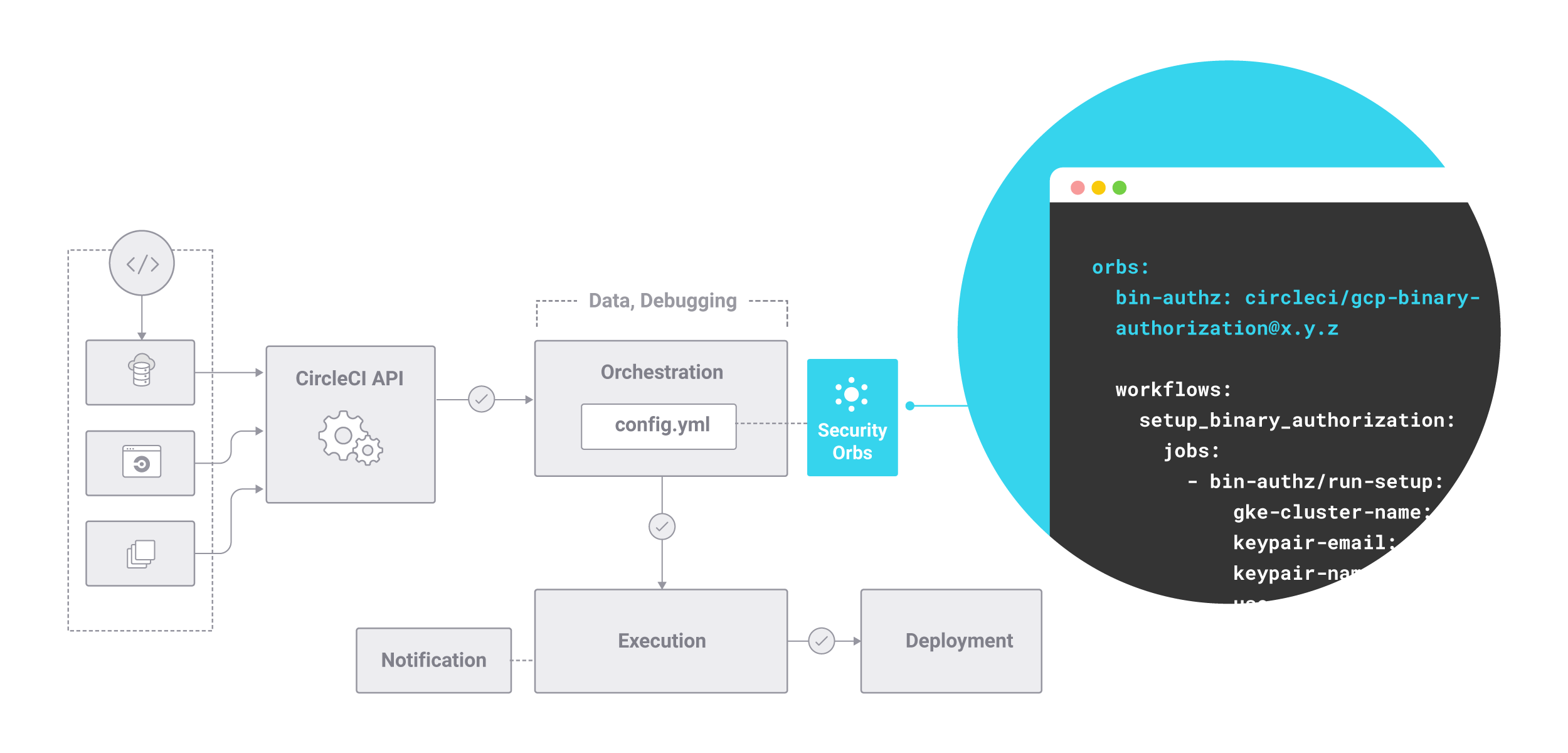
    CircleCI has extended the reach of its automated package manager, known as orbs, to cybersecurity software that can be integrated into a pipeline constructed within the company’s namesake continuous integration/continuous deployment (CI/CD) platform.

    Mike Stahnke, vice president of engineering for CircleCI, said extending orbs into the realm of cybersecurity will make it much easier for organizations to embrace best DevSecOps processes.

    Designed to run on Amazon Web Services (AWS) and Google Cloud, the first set of orbs are being created by seven third-party cybersecurity vendors, including Alcide.io, NeuVector, Snyk, WhiteSource, Aqua Security, Anchore, Contrast Security, Probely and Twistlock, which is now part of Palo Alto Networks.

    CircleCI has been making use of orb package managers to make it easier to integrate a wide variety of functions within a CI/CD pipeline. Thus far, approximately 900 orbs have been developed for the CircleCI platform. Stahnke said the goal is to give DevOps teams the option of employing orbs instead of having to manually implement tasks such as secrets management, vulnerability scanning or policy enforcement into DevOps workflows.

    Stahnke said CircleCI doesn’t envision every element of a pipeline will become an orb; there will be instances where DevOps teams will want to exercise more granular control over some aspect of the pipeline. There are, however, going to be many situations in which DevOps teams won’t want to integrate the same functions manually over and over again.

    CircleCI expects orbs will prove especially useful in advancing the adoption of best DevSecOps processes because many of the controls that need to be implemented are the same across multiple pipelines, said Stahnke. By making it easier to incorporate cybersecurity software within a pipeline, DevOps teams will not have to sacrifice speed and agility to ensure security.

    CircleCI orbs

    Most organizations today are just starting down the DevSecOps path. Adoption of DevOps processes in many cases has been uneven at best. Trying to incorporate cybersecurity teams within those processes to ensure higher levels of security is the next great challenge. However, given the chronic shortage of cybersecurity professionals, cybersecurity functions within a DevOps pipeline somehow must be included automatically. In most cases, cybersecurity teams will continue to define policies and controls that increasingly are implemented by developers. Cybersecurity teams, however, still will need to validate that those controls have been implemented and tested before an application gets deployed in a production environment. Cybersecurity teams will then make developers aware of any vulnerabilities they’ve discovered and teams can decide to address them at whatever next stage of the development process they deem appropriate.

    Of course, DevSecOps also means cybersecurity teams will have to learn to trust developers. Historically, that’s been problematic because many cybersecurity professionals have tended to view developers as the primary source of the cybersecurity problem. Nevertheless, the more vulnerabilities that get addressed before an application is deployed in a production environment, the better off everyone involved in building, deploying and securing that application will be.

    — Mike Vizard

  • CircleCI Automates Configurations Across CI/CD Platform

    CircleCI Automates Configurations Across CI/CD Platform

    CircleCI has unveiled what it describes as the first package manager designed specifically to address configuration tasks involving software delivery automation.

    Matt Wyman, vice president of product for CircleCI, said the Orbs package manager condenses commands, executors and jobs into single, reusable lines of code that automate tasks on the continuous integration/continuous delivery (CI/CD) platform the company provides as a cloud service. The initial set of Orbs being made available by CircleCI are focused on automating more than 25 different cloud deployment scenarios to enable organizations to employ DevOps processes at scale, he said, noting those Orbs can then be validated and shared via an Orbs registry that CircleCI is making available.

    CircleCI is also launching a technology alliance program through which Jfrog, Twistlock, Anchore, Aqua Security, Cypress, Postman, Coveralls, datree, Rollbar and Codacy have committed to building Orbs.

    Wyman said shareable Orbs that require only a few lines of code to develop makes it possible to share configurations across multiple CI/CD workflows. Those Orbs then can be integrated with any number of third-party tools.

    CircleCI is making a case for a CI/CD platform delivered as a managed cloud service that eliminates the need for DevOps teams to set up and manage on their own. Open source CI/CD platforms can be too complex for the average IT organization to set up. Alternatively, CircleCI makes available a version of its CI/CD platform that organizations can deploy behind their own firewall. The CircleCI approach is designed to enable DevOps teams to flexibly create workflows that can be executed sequentially or in parallel.

    There are 12 million builds a month being generated by more than 300,000 developers taking advantage of the CircleCI cloud service to build applications, Wyman said. One of the primary drivers of that success is a cloud service that allows organizations to apply more of their limited resources to developing applications versus managing CI/CD infrastructure, he noted.

    Most IT organizations have yet to standardize on a specific CI/CD platform. Competition between providers of CI/CD platforms has never been more fierce as more enterprise IT organizations embrace DevOps. As DevOps processes continue to mature, it’s also clear that DevOps processes will need to be extended across multiple clouds in addition to on-premises IT environments.

    In general, CI/CD platforms are initially set up by developers who have embraced DevOps processes to accelerate development and deployment of applications without sacrificing quality. The most widely used CI/CD platform is the open source instance of Jenkins. Developers often can adopt Jenkins on their own without requiring anyone to sign off on a purchase order. But as organizations move to scale up their DevOps processes, CircleCI is betting interest in a commercial service that can be easily accessed across an entire enterprise will increase as organizations move to standardize their CI/CD environments.

    In the meantime, pressure to increase the rate at which applications are built and deployed is only going to increase as organizations become more aggressive about digital business process transformation. The issue now isn’t so much whether they will have a CI/CD platform, but rather to what extent—and, in some cases, how many.

    — Mike Vizard