Tag: Platform

  • Survey Surfaces Substantial Platform Engineering Gains

    Survey Surfaces Substantial Platform Engineering Gains

    A global survey of 500 application development and deployment professionals finds that while 43% work for organizations that have had a platform team in place for three to five years, there doesn’t appear to be much consistency regarding where that team reports within an organization.

    The survey, conducted by Puppet by Perforce, a provider of an automation framework, found that among organizations that have platform teams, well over half (58%) operate within the context of a larger DevOps or infrastructure management organization, compared to 40% that have their own dedicated leadership.

    David Sandilands, a principal solutions architect for Puppet by Perforce, said the survey makes it clear that platform engineering, in general, is not a new concept, but it’s clear more organizations are trying to reduce the level of toil currently associated with building and deploying applications.

    Regardless of where platform teams reside in an organization, nearly two-thirds of respondents (65%) said they are important to their organizations and would receive continued funding. The primary purpose for forming these teams is to increase productivity (58%) and automate standardized processes (51%), the survey finds. Top goals for platform engineering teams are to solve problems (30%), enforce security processes (27%) and accelerate transitions to cloud-native computing environments (26%). A full 70% said security was built into their platforms from the start.

    That suggests that, in addition to assuming responsibility for traditional DevOps workflows, many platform teams are now also being asked to ensure DevSecOps best practices are followed at a time when application security requirements are becoming more stringent, noted Sandilands.

    More than three quarters (76%) also reported that they had deployed two or more self-service portals, with 27% having deployed five or more.

    Only 22%, however, said they have deployed applications on Kubernetes in a production environment, with just under half (46%) reporting they have no current plans to deploy a cloud-native computing platform, which are widely seen to be challenging to deploy and maintain.

    Overall, the survey makes it clear the primary focus is to ensure platforms continue to evolve as developer requirements continue to evolve, said Sandilands. Platform teams are not necessarily trying to dictate what tools should be used; instead, they are finding ways to automate processes that are increasing the level of friction developers encounter, he added.

    In the longer term, advances in artificial intelligence (AI) will make it simpler to achieve that goal using natural language interfaces that DevOps teams can more easily invoke, noted Sandilands.

    Each organization will need to decide for itself whether platform engineering makes sense as a methodology for managing DevOps at scale, but as application development and deployment continues to evolve, more nuanced approaches will be required. In general, organizations are trying to strike a balance between empowering developers and the need to streamline backend processes to increase productivity while also simplifying compliance and improving security.

    The challenge, of course, is enticing developers to buy into that concept rather than using their expertise to resist platform teams that might, from their perspective, limit their prerogatives in ways that ultimately stifle innovation.

  • Digibee Adds AI Tool to Accelerate Migration to Integration Platform

    Digibee Adds AI Tool to Accelerate Migration to Integration Platform

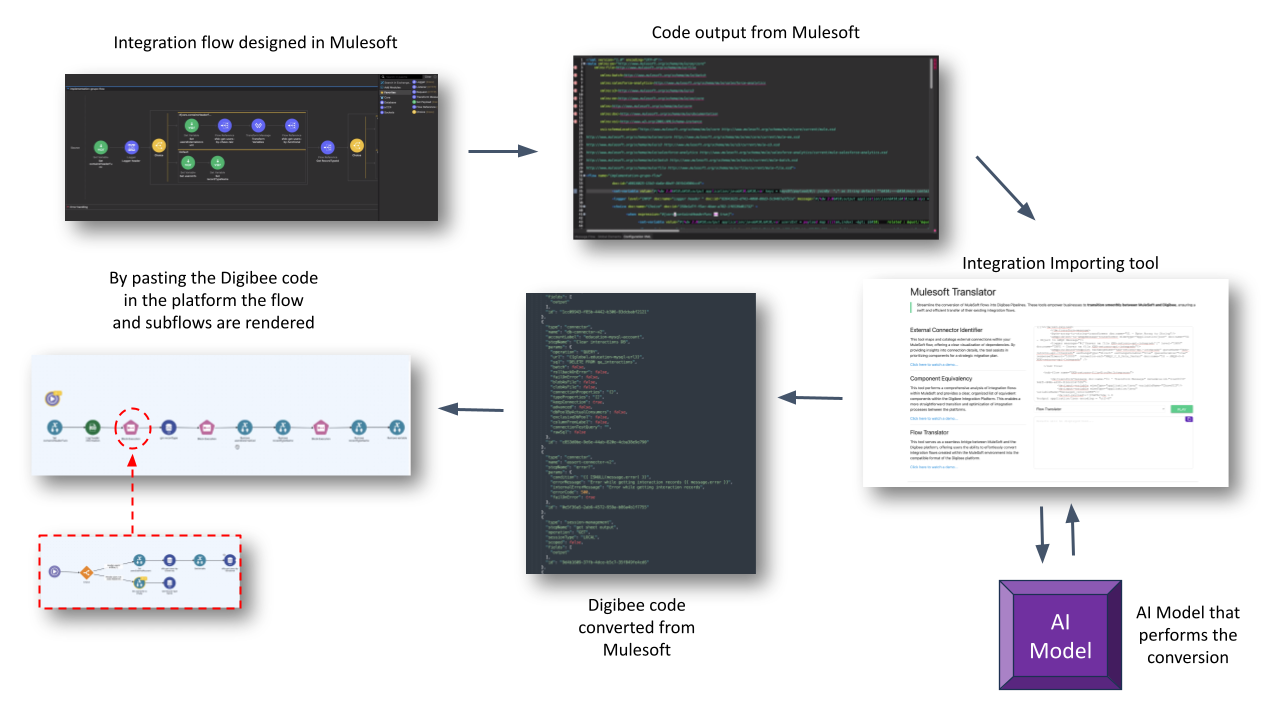
    Digibee is leveraging artificial intelligence (AI) to make it simpler to migrate to its integrated platform-as-a-service (iPaaS) environment by converting code into a JavaScript Object Notation (JSON) format.

    A translator tool created by Digibee invokes large language models (LLM) to convert that code into a JSON file that can then run on the Digibee Integration Platform.

    Initially, that capability is being made available to facilitate migrations from the Mulesoft integration platform made available by Salesforce, with support for other legacy integration platforms planned for 2024.

    Digibee CTO Peter Kreslins Junior said this approach reduced the level of time and effort required to switch platforms by using generative AI to map and refactor legacy integration code. That refactoring process doesn’t completely automate the reverse engineering of workflows, but it does substantially reduce the total cost of switching platforms by, for example, automating data migration and simplifying the transfer of configurations, he noted.

    Generative AI also eliminates the need to rely on documentation or maps that either may be limited or non-existent, added Kreslins. Instead, all the integration patterns used can now be automatically discovered by an LLM, he added.

    IT teams will still need to vet and test the code created by the translator tool, but overall, the speed at which any migration effort is made should be accelerated, thanks to the rise of generative AI, in 2024. Many organizations are locked into various platforms today simply because the effort required to rework the code that has been created to extend them has required either too much effort on their part or the contracting of expensive consultants. A migration project that might have taken a year or more can now be accomplished in a few days, said Kreslins. The overall goal is to reduce the current level of pain IT teams experience when migrating between platforms, he added.

    It’s not clear if the rise of generative AI platforms that make converting code into other formats and languages simpler will drive a wave of migrations, but there are many organizations relying on legacy platforms that are not nearly as easy to use as more modern alternatives. As the time and effort required to make those transitions is reduced, more IT teams will be, at the very least, more open to considering their platform options. The providers of those legacy platforms will naturally have to invest in new capabilities much faster to discourage customers from migrating to another platform.

    In the meantime, the amount of code that will need to be integrated is about to exponentially increase as developers rely more on LLMs to generate code. The downstream implications of that increased pace of application development for DevOps teams are profound. It’s not clear to what degree those teams can increase the level of scale at which they today manage application deployments.

    The one thing that is clear is there is no going back because, so far as application development and deployment are concerned, the proverbial AI genie is out of the bottle.

  • Opsera Leverages AI to Simplify DevOps Platform Migrations

    Opsera Leverages AI to Simplify DevOps Platform Migrations

    Opsera is leveraging a generative artificial intelligence (AI) model it built to enable DevOps teams to migrate from one platform to another.

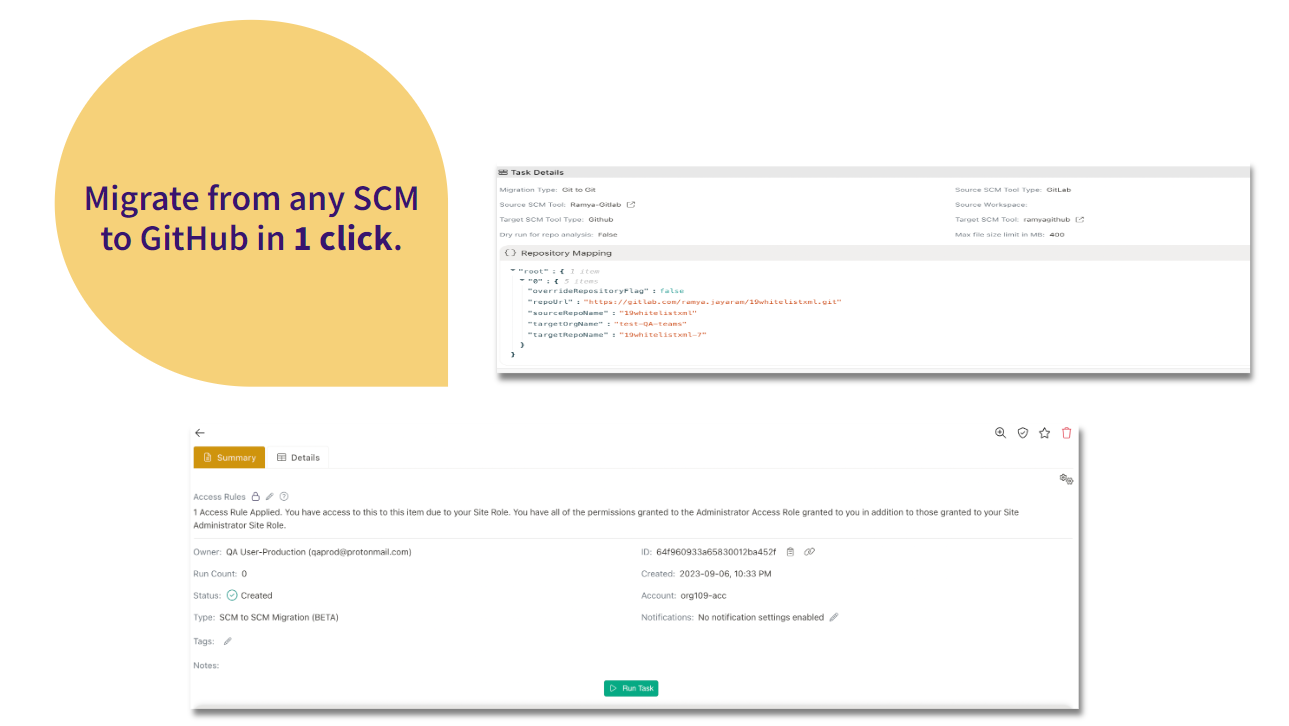
    Gregg Holtzrichter, chief marketing officer for Opsera, said the Hummingbird AI model makes it simpler to migrate source code from, for example, a Bitbucket on-premises continuous integration/continuous development (CI/CD) platform to GitHub.

    Opsera originally developed Hummingbird as an orchestration engine that integrates DevOps workflows spanning multiple tools and platforms. The primary goal is to make it possible for DevOps teams to unify their workflows, said Holtzrichter.

    At the same time, Opsera is now making it possible to leverage a generative AI model to reverse engineer the source code a DevOps team may have developed to extend the capabilities of a specific platform. That new code then makes it possible to significantly reduce the total cost of switching DevOps platforms, said Holtzrichter. As part of such an effort, Opsera is also now providing support for organizations looking to specifically migrate to GitHub Copilot and GitHub Actions.

    It’s not clear how many DevOps teams might be looking to switch platforms, but with the rise of generative AI capabilities for writing code, interest in platforms such as GitHub has increased, noted Holtzrichter. In addition, support for platforms such as the on-premises edition of Bitbucket is being sunsetted by Atlassian as part of an effort to drive more customers toward the cloud edition of the CI/CD platform.

    Regardless of the underlying platforms involved, generative AI promises to reduce the ability of any vendor to lock customers into a specific platform. As DevOps teams extended DevOps platforms over the past decade, many of them have discovered that the integrations they created and maintained made it all but impossible to switch platforms. With the ability to refactor much of that code based on the insights surfaced by the Opsera platform using generative AI, the time and effort required to switch platforms has been substantially reduced, noted Holtzrichter.

    At its core, Opsera makes it possible to apply analytics to DevOps workflows as they become more complex. The number of dependencies that exist between various application modules, for example, makes it exceedingly difficult for DevOps teams to manually identify the impact a delay in one project might have on any number of other downstream projects.

    The Opsera platform surfaces that intelligence by scanning all repositories and branches, including commit history and generating alerts and notifications whenever KPI thresholds or compliance requirements are exceeded. DevOps teams can also use the platform to assess their overall DevOps maturity using, for example, the DevOps Research and Assessment (DORA) metrics defined by Google. In addition, many organizations are keen to discover what best practices should be adopted by other application development teams.

    Now that AI is being applied to that analytics capability, it’s become possible to extend the reach of the Ospera platform beyond analytics to include source code migration. Each organization will still need to determine whether such an effort is worth the remaining time and effort still required, but at the very least, most DevOps teams can take comfort in the fact they can now keep their options a lot more open.

  • Five Great DevOps Job Opportunities

    Five Great DevOps Job Opportunities

    staging-devopsy.kinsta.cloud is now providing a weekly DevOps jobs report through which opportunities for DevOps professionals will be highlighted to better serve our audience.

    Our goal in these challenging economic times is to make it easier for DevOps professionals to advance their careers.

    Of course, the pool of available DevOps talent is still relatively constrained, so when one DevOps professional takes on a new role it tends to create an opportunity for others.

    The five job postings shared this week are selected based on the company looking to hire, the vertical industry segment and, naturally, the pay scale being offered.

    We’re also committed to providing additional insights into the state of the DevOps job market. In the meantime, for your consideration:

    SimplyHired.com

    Selby Jennings
    Chicago, Illinois
    AWS DevOps Architect
    $191,000 to $242,000

    Indeed.com

    Verizon
    Alpharetta, Georgia
    DevOps Architect
    $159,000 to $201,000

    LinkedIn

    JetBlue
    New York, New York
    Senior Principal DevOps Engineer
    $134,600 to $210,100

    Dice

    Northrop Grumman
    Dulles, Virginia
    Senior Principal DevOps Engineer
    $120,900 to $181,300

    CareerBuilder.com

    Octo
    Washington, D.C.
    Platform DevOps Cloud Engineer
    $110,000 to $170,000

  • How to Build a Data Platform for Self-Service, Ad-Hoc Analytics

    How to Build a Data Platform for Self-Service, Ad-Hoc Analytics

    In a digital world, data is often the differentiator between success and failure. Whether it’s defending against cybersecurity threats, improving application performance, or resolving full-blown outages, data is critical to the modern DevOps team.

    In fact, there are plenty of situations where DevOps engineers, SRE teams and other observability-focused departments need to explore reams of data rapidly and flexibly. An SRE trying to figure out the root cause of latency may need to dissect the movement of data across endpoints to find the malfunctioning one. Another engineer may need to compare historical and current performance to find anomalous behavior. Lastly, a DevOps engineer may have to dissect user performance metrics to understand the scope of a slowdown—whether it is global or regional.

    Every use case requires dashboards that can provide detailed data through a wide variety of visualizations, including choropleth maps, stack areas, pie charts and bar graphs. Ideally, a dashboard will enable teams to isolate dimensions, apply filters, and dive into data for deeper insights.

    Unfortunately, not all dashboards can support this type of fast, flexible analysis. Many still utilize outdated technologies, which lack the flexibility, agility and scalability required to seamlessly explore data. Many were also designed without the urgency that today’s data requires—after all, in previous years, most uses for dashboards (such as internal reporting) were not time-sensitive.

    Other dashboards are constrained by templates, which offer a finite array of widgets, tools and drill-down capabilities. These dashboards may feel unwieldy and sluggish, unsuited for a rapidly evolving situation like an application outage.

    Requirements

    To truly fulfill the promise of self-service, ad-hoc analytics across huge datasets, teams need to work in real-time—and so they need a database capable of timely responses.

    When an application goes down, an SRE may not know what to look for and, hence, needs to quickly comb through lots of data. While some dashboards rely on workarounds for faster queries, such as pre-aggregations, precomputing, or rollups, this is not possible in this instance because the SRE simply won’t know what to look for. After all, they can’t necessarily predict what will go wrong, and even if they work on assumptions from previous failures, this current issue could be much different.

    Therefore, dashboards must provide plenty of functionalities and visualizations. Users should be able to filter data by time, isolate variables like location, and zoom into specific time intervals with a few clicks. Dashboards should also accommodate diverse data types, including intricate parent-child relationships and nested columns.

    Further, dashboards must offer a depth of insight. An online streaming media platform may need to assess user metrics (such as latency or load times) across different devices, operating systems, and regions to fine-tune performance. A cloud provider has to monitor their physical hardware for high temperatures, slowed network switches or devices, and other anomalies.

    Because data is now so important to success, many more people across a company, including data scientists, product managers and external users, themselves require data-driven insights. In these situations, dashboards must handle the increased user traffic and query activity, maintaining fast responses even under load. This is especially important considering that a single-user operation (such as a zoom) will require multiple queries on the backend to execute.

    A database also must scale seamlessly. If an organization’s environment generates millions of events an hour, that equates to billions of events per day or week—challenging for any database to ingest, store, analyze and query. In fact, many databases cannot successfully provide fast response times while managing large datasets and high query volume. As an example, transactional databases (OLTP) can often query rapidly but cannot execute analytics at scale, while analytical databases (OLAP) can analyze massive volumes of data but not at speed.

    Apache Druid for Independent, Ad-hoc Data Exploration

    This is where open source Apache Druid comes in. Combining the scale and advanced analytics of an OLAP database with the speed of an OLTP database, Druid offers swift, real-time data exploration.

    Upon ingesting data, Druid makes it immediately available for querying and analysis, removing the need to first batch or aggregate the data in some way. In addition, Druid natively integrates with streaming technologies like Apache Kafka and Amazon Kinesis, removing the need for workarounds or connectors.

    Druid powers interactive visualizations, providing millisecond response times, enabling more versatile exploration, expanding the range of available dimensions and filters, and even maintaining subsecond speeds in the face of surging user and query volumes.

    Druid’s unique architecture also enables easy scaling. By separating key duties among separate node types—data nodes for storage, master nodes for data ingestion and availability, and query nodes for executing queries and returning results via the scatter/gather method—Druid ensures that nodes can be independently scaled based on need. Afterward, Druid also automatically rebalances traffic to ensure consistent performance.

    Salesforce: A Druid Success Story

    Salesforce pioneered the customer relationship management (CRM) space, serves 150,000 customers worldwide and earns billions in annual revenue. 

    The Edge Intelligence Team is the division of Salesforce that tackles the massive task of ingesting, processing, filtering, aggregating, and querying the entirety of their log data — anywhere from billions to trillions of lines daily. Each minute, Salesforce ingests 200 million metrics, while each day, Salesforce processes five billion daily events globally. In total, Salesforce accumulates dozens of petabytes of data in their transactional store, five petabytes of logs in their data centers, and almost 200 petabytes in their Hadoop storage.

    Salesforce teams use Druid to unlock real-time insights into product performance and user experiences, diving into large datasets instantly. Anyone from engineers to account executives can query a wide variety of dimensions, filters and aggregations to better understand trends, troubleshoot any issues that arise and set strategies for the future.

    By using Druid’s compaction abilities, Salesforce also decreased the number of Druid rows by 82%, leading to an overall reduction of their storage footprint by 47% and accelerating their query response times by 30%.