With the latest release of Java, it should become simpler for DevOps teams that build and deploy applications with the most widely used programming language in the enterprise to innovate faster.
Georges Saab, senior vice president, Oracle Java Platform, said Java 22 is unique in the history of Java in that it is specifically designed to enable developers to invoke capabilities that are available in beta and preview while still working with the other functions supported in the venerable programming language. The overall goal is to increase the pace of innovation in environments based on Java applications, he added.
The latest edition of the Java Development Kit (JDK), for example, provides access in preview to capabilities developed under a Project Amber initiative that makes it simpler to express strings that include values computed at runtime while also improving the security of programs that compose strings from user-provided values and pass them to other systems.
Meanwhile, a Project Loom initiative, also available in preview, streamlines error handling and cancellation in a way that improves observability using an application programming interface (API) that enables structured concurrency, while a Scoped Values capability provides a way to share immutable data within and across threads.
A Project Panama initiative adds a Vector API that promises to compile instructions at runtime when, for example, making use of retrieval-augmented generation (RAG) techniques to extend artificial intelligence (AI) models.
In terms of additional capabilities that are now generally supported, Java 22 adds an API to enable Java programs to safely interoperate with code and data running in memory outside of the Java runtime.
Most importantly, from an application performance perspective, the latest iteration of the language streamlines garbage collection processes in memory to reduce the number of times a Java application might otherwise need to be paused.
Despite the number of alternative programming languages that exist, the bulk of enterprise-class applications continue to be built in Java. While many developers are at least familiar with multiple programming languages, most tend to favor one primary programming language. Java developers, especially, have shown little inclination to abandon the language even as other programming languages, such as JavaScript, have emerged that are either simpler to use or, as in the case of Rust, may provide more robust security capabilities.
Less clear is at what rate developers are upgrading to the latest iteration. In some cases, developers are still making use of version 8, 11 or, more recently, 17. It may be a while before the bulk of Java developers are ready to make the jump to Java 22. In addition, DevOps teams will then need to decide when there is enough critical mass to warrant upgrading runtime environments to support another iteration of Java.
One way or another, either via an edition of Java provided by Oracle or another vendor, the programming language isn’t likely to be supplanted any time soon. The challenge now is providing support not just for the various versions of Java that might be running but, inevitably, all the other software artifacts written in various languages that are now also routinely moving through DevOps pipelines.
With the latest release of Java, it should become simpler for DevOps teams that build and deploy applications with the most widely used programming language in the enterprise to innovate faster.
Georges Saab, senior vice president, Oracle Java Platform, said Java 22 is unique in the history of Java in that it is specifically designed to enable developers to invoke capabilities that are available in beta and preview while still working with the other functions supported in the venerable programming language. The overall goal is to increase the pace of innovation in environments based on Java applications, he added.
The latest edition of the Java Development Kit (JDK), for example, provides access in preview to capabilities developed under a Project Amber initiative that makes it simpler to express strings that include values computed at runtime while also improving the security of programs that compose strings from user-provided values and pass them to other systems.
Meanwhile, a Project Loom initiative, also available in preview, streamlines error handling and cancellation in a way that improves observability using an application programming interface (API) that enables structured concurrency, while a Scoped Values capability provides a way to share immutable data within and across threads.
A Project Panama initiative adds a Vector API that promises to compile instructions at runtime when, for example, making use of retrieval-augmented generation (RAG) techniques to extend artificial intelligence (AI) models.
In terms of additional capabilities that are now generally supported, Java 22 adds an API to enable Java programs to safely interoperate with code and data running in memory outside of the Java runtime.
Most importantly, from an application performance perspective, the latest iteration of the language streamlines garbage collection processes in memory to reduce the number of times a Java application might otherwise need to be paused.
Despite the number of alternative programming languages that exist, the bulk of enterprise-class applications continue to be built in Java. While many developers are at least familiar with multiple programming languages, most tend to favor one primary programming language. Java developers, especially, have shown little inclination to abandon the language even as other programming languages, such as JavaScript, have emerged that are either simpler to use or, as in the case of Rust, may provide more robust security capabilities.
Less clear is at what rate developers are upgrading to the latest iteration. In some cases, developers are still making use of version 8, 11 or, more recently, 17. It may be a while before the bulk of Java developers are ready to make the jump to Java 22. In addition, DevOps teams will then need to decide when there is enough critical mass to warrant upgrading runtime environments to support another iteration of Java.
One way or another, either via an edition of Java provided by Oracle or another vendor, the programming language isn’t likely to be supplanted any time soon. The challenge now is providing support not just for the various versions of Java that might be running but, inevitably, all the other software artifacts written in various languages that are now also routinely moving through DevOps pipelines.
At an Oracle DevLive Level Up event, Oracle today announced the availability of a Java 20 update that makes a range of innovations more accessible to application development teams.
Georges Saab, senior vice president of development for the Java Platform and chair of the OpenJDK Governing Board for Oracle, said the latest version of the venerable programming language builds on previous extensions made to the Java development kit (JDK) that exemplify how the pace of Java innovation is now increasing.
Specifically, seven JDK Enhancement Proposals (JEPs) are now supported in Java 20, including OpenJDK project Amber for record patterns and pattern matching for switch expressions and statements; enhancements from OpenJDK Project Panama to interconnect Java Virtual Machines (JVMs), features related to Project Loom that streamline the process of writing, maintaining and observing high-throughput, concurrent applications and a Function & Memory application programming interface (API) and Vector API.
Oracle also revealed Java 20 is supported by Java Management Service, an Oracle Cloud Infrastructure (OCI) native service that provides a single pane of glass to help organizations manage Java runtimes and applications on-premises or on any cloud.
Finally, Oracle is making available an Oracle Java Universal SE Subscription that provides access to a pay-as-you-go offering that includes entitlement to GraalVM Enterprise, the Java SE Subscription Enterprise Performance Pack, access to the advanced features of the Java Management Service and the flexibility to upgrade at any pace an organization prefers.
Oracle Java Standard Edition (SE), GraalVM Enterprise and the Java SE Subscription Enterprise Performance Pack are also now available free of charge on OCI.
Despite the number of programming language alternatives that exist, many enterprise IT organizations remain committed to Java. Rather than opting to retrain developers, it’s simply been more cost-effective to enable developers to continue to build applications using a programming language they already know.
Java itself, meanwhile, has been experiencing a renaissance after more organizations began contributing to projects once the core platform became available under an open source OpenJDK license. In fact, the Java community is now adopting many concepts pioneered in other programming languages to enable organizations to, for example, drive digital business transformation initiatives that are dependent on legacy applications that are being modernized. As part of those efforts, the rate at which Java applications are being deployed in the cloud has substantially increased.
As part of those efforts, many organizations are currently in the process of shifting to Java 17. It’s not clear how many organizations will skip Java 17 and jump to Java 20 from previous versions of Java, but DevOps teams should expect to be supporting a wide range of versions of Java for years to come.
In fact, most organizations will deploy Java applications everywhere from the network edge to the cloud. The one thing all these applications will have in common is they will be written in a programming language that has persevered through two decades and appears to have enough staying power to stick around well into the next.
At its online PulumiUP conference, Pulumi announced it will make its Pulumi CrossCode translation technology available to third parties and DevOps teams. The technology was developed to integrate a wide range of programming languages with its infrastructure-as-code (IaC) platform.
The company also announced it has added support for YAML—widely used to configure Kubernetes environments—as well as any variant of Java. It already supports .NET, Node.js, Go and Python programming languages.
Finally, Pulumi also added packages for Oracle Cloud, Databricks and EventStore that simplify deployments on those platforms. The company already provides similar integrations for Amazon Web Services (AWS), Microsoft Azure, Google Cloud, Kubernetes, Auth0, CloudFlare, Confluent Cloud, Datadog, DigitalOcean, Docker, GitHub, Kong, MinIO, MongoDB Atlas, PagerDuty, Snowflake, Spot by NetApp and SumoLogic. There are also now components that provide support for container applications, Kubernetes clusters and serverless applications along with an AWS Cloud Development Kit (CDK).
Pulumi has been making a case for an IaC approach that enables developers to use programming languages they already know to provision infrastructure as an alternative to having to deploy and master tools such as Terraform.
The Pulumi CrossCode translation technology the company developed is now being made available to any organization that wants to add support for another programming language. It converts any infrastructure-as-code format, including Terraform, CloudFormation, Azure Resource Manager and Kubernetes configuration, to any programming languages supported by Pulumi.
Pulumi CEO Joe Duffy said the goal is to extend the overall reach of the translation technology the company created to simplify provisioning any type of infrastructure.
While many developers use tools such as Terraform, the need to limit misconfigurations is driving many larger enterprises to revisit their approach to IaC to improve software supply chain security, noted Duffy. Today, Pulumi claims more than 2,400 organizations have adopted platforms that enable developers to provision infrastructure and apply guardrail policies to reduce errors. That approach prevents developers from making configuration mistakes that can lead to exfiltration of data via, for example, a port that has been accidentally left open, he added.
Too many developers assume that their cloud service provider is securing both the underlying platform and how it is configured only to discover later that it was their responsibility to validate those configurations. Security teams, meanwhile, can’t keep pace with the rate at which cloud infrastructure resources are being provisioned without some ability to apply policies that enforce rules for provisioning that infrastructure within the context of a larger DevSecOps workflow.
Ultimately, the goal is to employ automation to resolve these issues once and for all as more organizations adopt DevSecOps best practices. In the meantime, the challenge is doing so in a way the average developer will accept and embrace. Otherwise, they will continue to find ways to work around security teams in the name of productivity, regardless of how insecure the underlying IT environment might become.
Cookiecutter is a templating library for creating project boilerplates in any programming language. When individuals, teams and organizations create projects, they must follow consistent standards so that those projects are easily readable and searchable. Templates accelerate the code writing process, too, since developers are able to spend less time on setup and can get straight to the actual implementation.
Cookiecutter is a Python package, easily installable with pip or other package managers. It enables you to create and use templates for microservices and other software projects. It is a command line tool that doesn’t require knowledge of Python to use. Cookiecutter is widely used among software engineers, researchers, data scientists and other technical roles.
Creating a template is simple and requires updating a cookiecutter.jsonfile. Using a template requires running the cookiecuttercommand with the appropriate directory to create a new project.
Here’s an example template for a Python package that the Cookiecutter team maintains. To use the template, install Cookiecutter first and then run the following command in your terminal:
Go through the series of prompts and voila! In just a few moments, you have the skeleton of a completely functional Python package. Swap out the template for something else and you could just as easily spin up a mobile app, a data science notebook, or any other project on your favorite cloud service. There’s an entire community with thousands of templates to choose from.
Creating custom templates to fit your and your organization’s needs is also simple and powerful. We’ll cover how to do that below.
Who is Cookiecutter For?
Cookiecutter is for individuals, teams and companies to standardize their project development process and accelerate new project creation.
Example use cases include:
Learning a new framework: Cookiecutter lowers the barriers to entry for developers unfamiliar with a particular framework. You can find an expert’s template for a framework you’re learning and quickly get started with a configuration that is known to work.
Onboarding: Standardization makes collaboration much more manageable. New team members can immediately follow best practices without the risks of copying, pasting and trying to edit just the correct variables.
Enforcing standards in an organization: Consistent foldering, file-naming conventions and other patterns enable large teams to maintain an organized codebase.
Cookiecutter Features
Templates
The heart of a template is the cookiecutter.json file, which might look something like this:
{
“full_name”: “Alice Cookie”,
“email”: “foobar@example.com”,
“project_name”: “Django Boilerplate”,
“version”: “0.1.0”
}
These key-value pairs determine the prompts a developer needs to answer when using a template. The command line interface iterates over the keys, prompting a developer to set the various parameters. If a developer does not specify something, Cookiecutter uses default values.
A template needs to have files and directories worth copying and reusing, such as the skeleton code for a particular framework. Cookiecutter uses these inputs to modify the template. To connect this boilerplate to the inputs, Cookiecutter uses the Jinja2 templating language. With Jinja2, Cookiecutter identifies all instances of the text {{cookiecutter.variable_name}}and replaces that boilerplate with the actual value of the variable. This works both within files as well as for file and directory names.
Loops and Conditional Logic
Jinja2 is very powerful and can do much more than just text substitution. It comes with control structures including for loops and if statements. It even has macros that are analogous to functions in programming languages. Since all of Cookiecutter’s templating uses Jinja2, it can leverage the same control flow features. This opens up enormous possibilities. For example, you could prompt a developer to specify which device types for which they are building an app and have unique behaviors depending on the response.
Hooks
Pre/post-generate hooks let you run Python or shell scripts before and/or after generating a project. Inputs from the template prompts are fair game within hooks and work similarly to the way they would elsewhere in the project with Jinja2 syntax. This means you can run a script to validate a developer’s responses to the prompts. Other applications of hooks include cleaning up unwanted files or otherwise using logic that would be complicated by just using Jinja2.
What Are the Limitations?
By design, templates are prescriptive with regard to a project’s setup, presenting all kinds of advantages as discussed above. On the other hand, a template might be opinionated in a way that does not align with either an individual developer’s or an organization’s preferences. In that case, it may be worth choosing another template or revising an existing one. Forcing a template in a situation that doesn’t make sense is less-than-ideal.
What Are Some Alternatives or Extensions?
Boilerplate for Specific Frameworks
While Cookiecutter is compatible with almost any framework, some frameworks do have custom boilerplate that is readily available. If you were to start a React app, for example, there is a great boilerplate available to use as a starting point, and other communities often maintain similar ways to get started. Boilerplate is not incompatible with Cookiecutter, and you’ll find templates from popular boilerplate that you can use, too.
As with any new process, there is some overhead involved to stay organized with Cookiecutter. When a team starts to manage dozens of templates or more, it’s especially important to keep templates up-to-date. Cruft works alongside Cookiecutter to not only make projects but to update existing ones as a template evolves. Cruft also has template validation capabilities to ensure projects match the latest version of a template.
Learn More About Cookiecutter
The Cookiecutter community has lots of resources to help you dig deeper.
As we close out 2020, we at staging-devopsy.kinsta.cloud wanted to highlight the five most popular articles of the year. Following is the second in our series of the Best of 2020.
As a novice developer, you may be thinking about learning a programming language and starting a fantastic career.
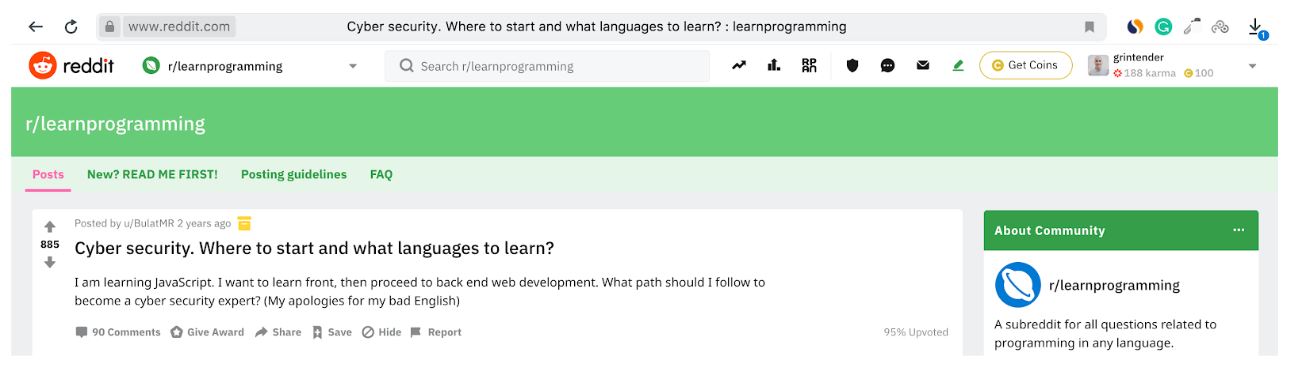
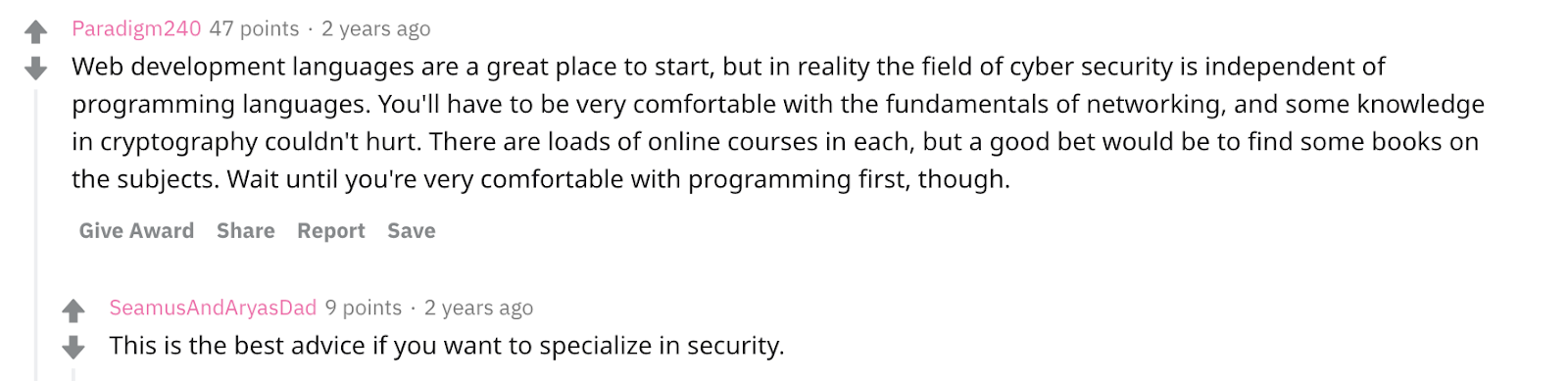
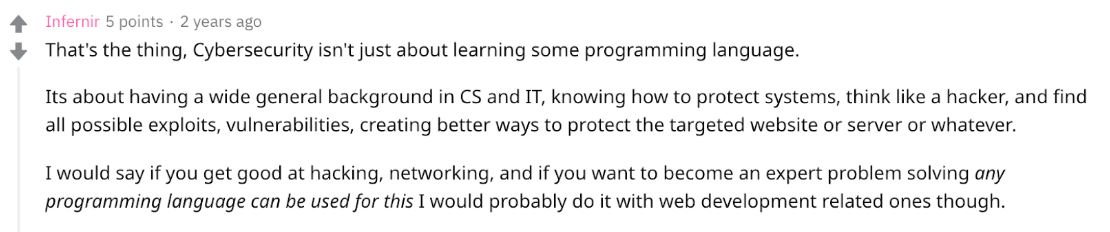
In fact, this question on Reddit inspired the whole article:
The thing is, programming languages represent certain philosophies of its authors and tailored to certain types of problems, i.e., there is no such thing as “the best programming language.”
In this article, I describe major programming languages according to its popularity, usage, demand and ease of learning.
There is market demand and a potential salary range for each language. These are linked to specific personal goals and prior programming experience.
What Questions Should You Ask Yourself Before Diving in?
What kind of projects do you want to work on? If career flexibility is a priority, then learning Python or C++ will allow you to work with different types of programming. If your passion is web development, learning JavaScript or PHP is a smart choice.
How much experience do you have? You won’t want to switch to an advanced programming language, such as Rust, if you don’t have previous programming experience. If you’re new to a language, you’ll want to start at a higher level and be intuitive.
What are your career goals? Do you want to become a freelancer, working for an existing company or work with a startup? Are you trying to be better in your current role?
If you plan to get a job in a large technology company, learn the programming languages they use, e.g., NASA, Google and Facebook use Python.
Many programming languages have similar syntax and qualities—so if you learn one of them, it will be easier for others. The more languages you know, the more flexibility you have in your career and development projects.
In the list below, we will look at the best and most popular programming languages for many of the most common uses, including web development, mobile development, game development and more.
Top Five Programming Languages to Start Your Career
Java
It is probably the best programming language if you are looking for a common language that will be useful in various situations. As for choosing a programming language to learn, there are many resources for people who are thinking about learning Java. Java was released in 1995, which makes it one of the oldest programming languages. It is used on a wide range of platforms and operating systems, including Microsoft Windows, macOS, Linux and Solaris.
That means there will always be jobs for Java developers, making it (perhaps) the best programming language to learn.
Research shows that Java developers can expect to earn between $80,000 and $130,000 per year. If you are thinking about learning your first programming language, think about taking an online course, for example, CodeGym. This course, which contains 40 levels of game-play classes, will teach you all the basics you need to know to start programming in Java. It’s easy to follow—even if you don’t have programming experience—and it is worth checking out.
It is also best used for back-end web development, mobile development and desktop applications.
JavaScript
This programming language works on several platforms. Therefore, it is ideal for websites that will be accessed through various devices and browsers. It is suitable for anyone who designs websites with effects, interactive features, animations and pop-ups—standard features on virtually any brand website these days. If you want to work in a creative environment and add more experience to the user, this is a coding language to learn.
JavaScript is the number one language on the web. The growth of frameworks such as jQuery, Angular and React JS has made JavaScript even more popular.
If you just can’t stay away from the internet, it’s better to learn JavaScript sooner than later. I consider this JavaScript Masterclass an excellent place to start. For cheaper alternatives see this list of free JavaScript courses.
It is also best used for front-end and back-end web development
Learning PHP
PHP—another old language, first appeared on the stage of programming around the same time as Java in 1995. It is a general-purpose language widely used for web development from the early days of the web.
Unlike other languages, which can be quite tricky to use with HTML, PHP can be built directly into the HTML code block. Start and finish instructions are used to enter and exit PHP, making it very easy to use. Although PHP is not as popular as Python or Java, it can be a suitable language to learn because of its simplicity. It is convenient for beginners and you can write your first scripts just a few hours after you start your PHP course.
Again, the popularity and wide use of PHP means that work opportunities are relatively easy to find. An average PHP developer can expect to earn around $80,000 per year. However, there is potential to make much more as a freelancer.
Take an advanced PHP course, which will teach you everything you need to know to find your first job as a programmer. It doesn’t matter if you’re studying your first language, or if you’re an experienced developer looking for the best programming language to add to your resume—PHP is a great choice!
Python is a useful step toward more advanced forms of programming languages. Python provides a high degree of website readability and is used by companies such as Reddit, Google and even NASA.
It is seen as entry-level programming that does not require too much prior knowledge. It may be ideal for relatively new professionals to help small businesses that want to expand their presence on the internet without having to resort to advanced professionals. Python is a relatively simple programming language that is very easy to pick up if you already have programming experience. That makes it one of the best to learn if you are already working as a developer and want to increase your resume quickly.
The code on Python is designed to be readable. It uses a lot of white spaces, which makes it a pretty easy language to learn while you’re studying it.
One of the most useful Python’s features is its compatibility with data analysis systems and scientific applications. It is a popular language in scientific communities and is often used by researchers to write their programs.
An average Python developer can expect to earn about $100,000 per year. However, there is little room for wage growth.
If you think Python is the best programming language to further your career, consider enrolling in a BitDegree course. The Python Basics Course includes everything you need to know to start writing programs on Python and contains less than four hours of lecture material.
It is best used for back-end web development, desktop applications, and data analysis.
C#
C# is another object-oriented, general-purpose language based on C. It is considered a suitable programming language for building applications native to Microsoft platforms. Microsoft initially developed it as part of its .NET framework for building Windows applications. C# uses a syntax similar to other languages such as C++. Therefore, it is easy to pick it up if you come from a different C family language.
C# is not only a suitable language for developing Microsoft applications, but also a language used by mobile device developers to build cross-platform applications on the Xamarin platform. Besides, anyone interested in VR development should think about learning C# as it is the recommended language for building 3D and 2D video games using the popular Unity game engine, which produces one-third of the best games on the market.
If mobile application development or virtual reality is your business, consider learning C#. Many mobile device developers use C# to create cross-platform applications on the Xamarin platform. Although it is not the most convenient programming language for beginners.
As was mentioned at the beginning, there is no best programming language to learn. The best language for you will depend on your experience, your current knowledge and reasons to learn a new language.
While there are many options, you should be able to narrow down your language choice by what you want to learn from it.
Remember to consider the following:
Programming experience, because some languages, such as Python and Java, are more suitable for beginners who have never programmed before.
What you want to do with the language. Different languages are used for different things.
How much time do you have? Some languages are much more demanding than others.
Make your choice based on your interests and the type of software development you want to get into. Here is a brief summary:
External web development: JavaScript.
Internal web development: JavaScript, Java, Python, PHP.
Mobile development: Java, C#.
Game development: C#.
Desktop applications: Java and Python.
To Sum Up
Programming and developer communities are evolving faster than ever.
Various new programming languages are emerging that are suitable for different categories of developers (beginners and experts) as well as for other applications (web applications, mobile applications, game development, distributed systems, etc.).
This list simply scratches the surface of existing programming languages. Still, the simple fact is that with the right coding skills, you will be perfectly prepared to offer valuable technical support and become an asset to any organization.
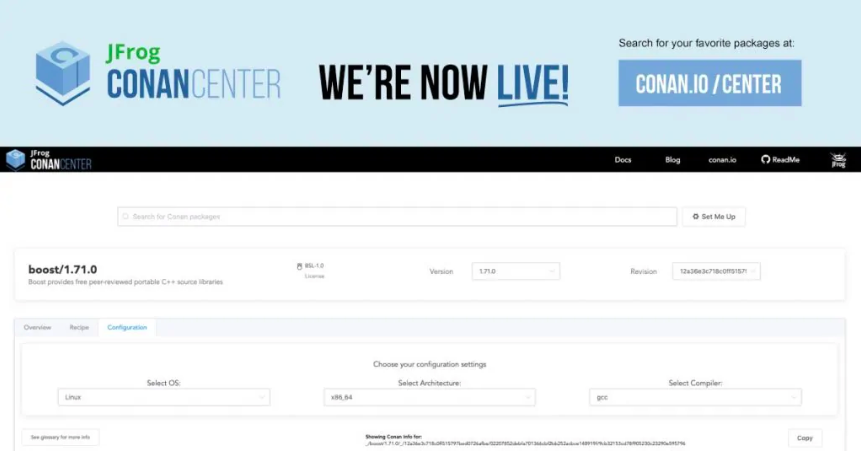
JFrog this week announced it has updated ConanCenter, a repository for storing and discovering software packages that can be downloaded for free, to include support for C++ artifacts.
Jagan Subramanian, vice president of community and partner engineering at JFrog, said ConanCenter provides a repository for the open source Conan package manager that JFrog includes as part of its continuous integration/continuous delivery (CI/CD) platform. By making ConanCenter available free of charge, JFrog is trying to encourage organizations that rely on C++ to build applications to embrace best DevOps practices, Subramanian said.
JFrog is also making available a free Community Edition of its Artifactory CI/CD platform for C / C++ available for download and later this quarter plans to integrate ConanCenter with other JFrog tools to make it even easier to securely access packages.
As a general-purpose programming language, C++ has been employed for decades to build applications in IT environments where resources are constrained, such as embedded systems. Subramanian said many organizations that rely on C++ to build those types of applications are experiencing the same pressures to accelerate application development as the rest of their software development colleagues.
To make it possible to achieve that goal, he said, JFrog is now extending its DevOps portfolio to include support for applications developed using C++ tools. ConanCenter not only provides a means to discover artifacts based on the metadata they generate, but it also provides a list of configuration options and a free binary building service that can be applied across multiple operating systems, platforms and compilers.
Despite its longevity and the rise of alternative programming languages, C++ continues to fulfill a unique role across a range of vertical industries. There are still plenty of C++ developers are that building some of the most challenging applications to develop. In fact, given the rise of robotics and internet of things (IoT) applications involving autonomous vehicles, interest in using C++ to build new classes of applications is on the rise. The ConanCenter repository promises to make it easier for C++ developers to share artifacts across those diverse projects.
In terms of adoption of best DevOps practices among organizations that rely on C++, Subramanian said it’s still very early, as most are still at the proof-of-concept stage. However, he said most regularly experience all the pain points that best DevOps practices address, which should drive more organizations to embrace DevOps in the months and years ahead.
It’s too early to hazard a guess as to how long it might take organizations that rely on C++ to embrace DevOps. Many of them have been relying on waterfall-based processes to build and deploy applications for decades. Nevertheless, just like in other programming environments, the need to build and deploy applications faster requires development teams to embrace change. As always, however, the biggest challenge when it comes to DevOps has little to do with the core technology platforms. Rather, the existing culture of the IT organization always proves to be the biggest hurdle.