
Tag: resiliency testing

  • CNCF Takes LitmusChaos Platform to the Incubation Level

    CNCF Takes LitmusChaos Platform to the Incubation Level

    The technical oversight committee (TOC) for the Cloud Native Computing Foundation (CNCF) announced today it is elevating the open source LitmusChaos application testing platform to the incubation level.

    LitmusChaos is a chaos engineering platform donated to the CNCF by ChaosNative in 2020. Since then, it has seen adoption within production environments by more than 25 organizations, including Intuit, Lenskart, Orange, Red Hat and VMware.

    ChaosNative CEO Uma Mukkara says LitmusChaos was developed to provide DevOps teams with a chaos engineering platform built using containers that makes it easier to scale up and down than existing monolithic alternatives. The platform itself, however, can be used to test both monolithic and microservices-based applications.

    The platform consists of a Chaos Operator based on a software development kit (SDK); a ChaosHub for hosting and sharing experiments; Litmus Workflows that declaratively chains experiments (either in sequence or parallel) to build a chaos scenario; a centralized control plane, dubbed ChaosCenter, to design, schedule and monitor Litmus Workflows; Litmus Probes for creating chaos scenarios that automate steady-state validation and remediation actions and a Chaos Observability tool to export Prometheus metrics.
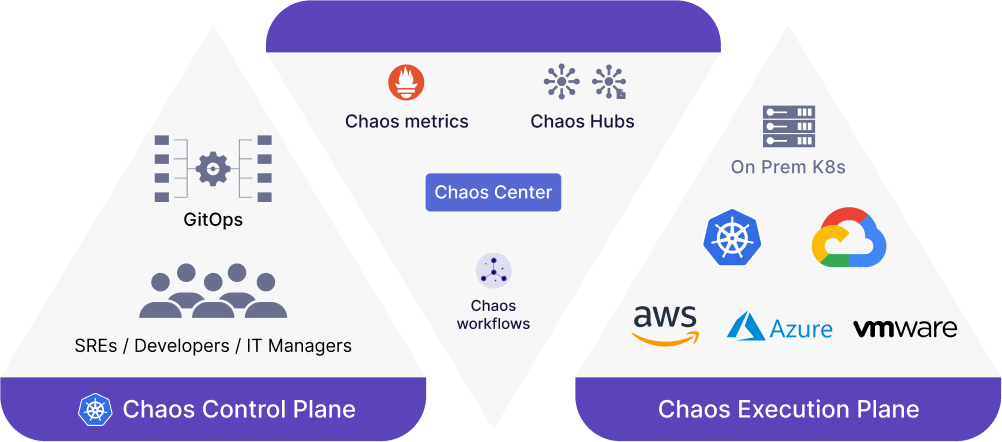
    In total, there are now more than 400 contributors to the LitmusChaos project and more than 4,000 pull requests have been made. Mukkara said since the beginning of this year, Litmus operator installations have grown to more than 2,000 per day. Going forward, the goal for 2022 is to significantly increase the number of LitmusChaos integrations there are for a wider range of DevOps platforms, added Mukkara. Additional sets of experiments for Kubernetes and non-Kubernetes targets, improved observability and integration with other platforms—via the open source OpenTelemetry agent software also being advanced by the CNCF—is also planned.

    In general, it’s still early days as far as the adoption of chaos engineering with DevOps workflows is concerned. However, Mukkara said that as more organizations embrace observability to better understand IT processes, the number of organizations that also use chaos engineering to test IT resiliency should also increase. In fact, as IT environments become more complex—thanks mainly to the rise of microservices-based applications—chaos engineering approaches to testing may someday be required, noted Mukkara.

    In the meantime, there are still a lot of IT professionals that are uncomfortable with chaos engineering approaches to testing that deliberately break underlying services to test the resiliency of an application. The core idea, however, is that no application should have a single point of failure that could lead to it becoming unavailable. In theory, a microservices-based application won’t fail because when a service becomes unavailable calls are automatically rerouted to another service. The performance of that application will degrade, but it won’t go offline. The challenge is that building an application that achieves that level of resiliency using microservices requires a significant amount of DevOps expertise.

    Regardless of how an application is constructed, the one thing that is clear is how dependent organizations are on applications to drive revenue. As such, the tolerance for application failures—or performance degradation—has never been lower.

  • Gremlin Brings Chaos Monkey Testing to Spinnaker CD Platform

    Gremlin Brings Chaos Monkey Testing to Spinnaker CD Platform

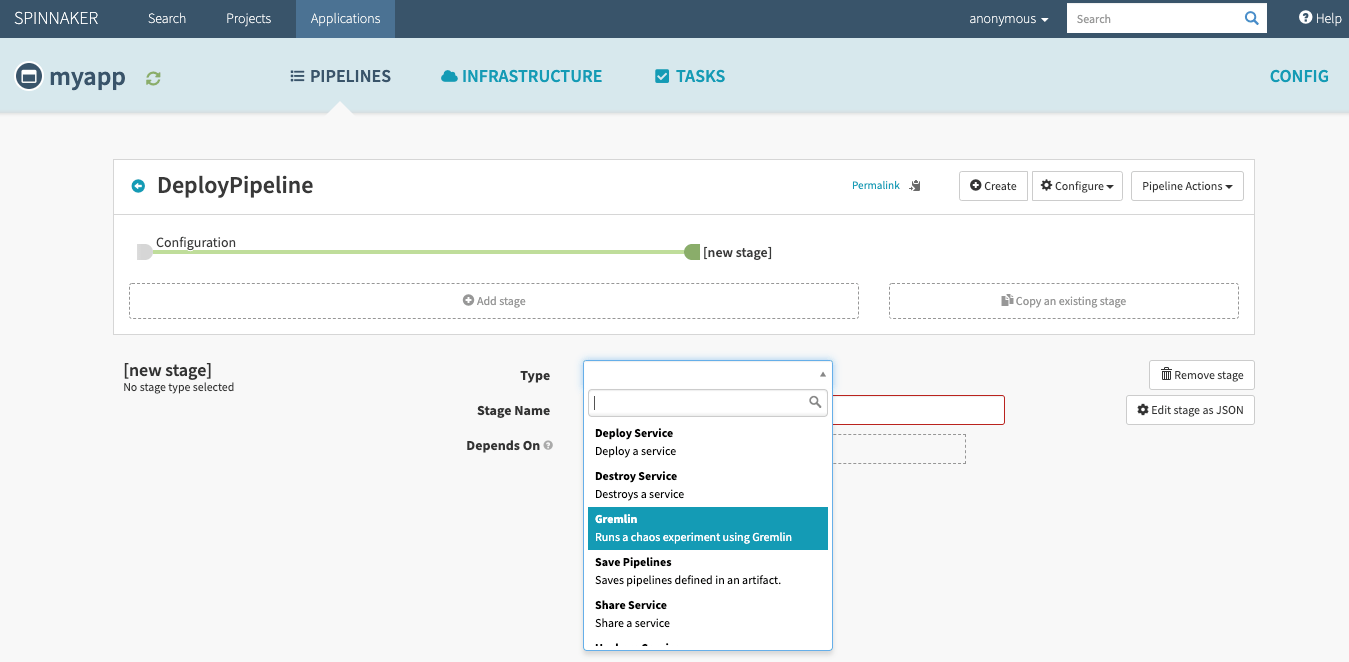
    Gremlin this week announced it will integrate its hosted chaos engineering service with continuous delivery platforms starting with the open source Spinnaker project developed by Netflix.

    Chaos engineering traces its roots to a resiliency testing philosophy that posits applications should be able to keep functioning regardless of any service or infrastructure failure. Most IT organizations, however, don’t have the expertise required to build the tools required to testing resiliency based on those “chaos monkey” principles that randomly turn services off to see if an application fails.

    Matt Jacobs, principal software engineer for Gremlin, said the decision to integrate with Spinnaker is being driven by the need to infuse chaos monkey resiliency testing directly into the application development and deployment pipeline at a more granular level. That capability is now a bigger requirement than ever because as organizations embrace microservices to build the next generation of cloud-native applications, it’s simply not possible for DevOps teams to manually track every dependency, he said, adding resiliency testing based on chaos monkey principles is just another type of testing that should be automated as part of a larger continuous integration/continuous delivery (CI/CD) platform to ensure an application doesn’t fail completely.

    Integrating with a Spinnaker project that has drawn support from Google, Microsoft and Oracle provides the easiest path to achieving that goal. Spinnaker is also now a core element of a Continuous Delivery Foundation led by Alibaba, Anchore, Armory, Autodesk, Capital One, CircleCI, CloudBees, DeployHub, GitLab, Google, Huawei, JFrog, Netflix, Puppet, Red Hat, SAP and Snyk.

    The Gremlin service is accessed via a user interface and comes in two forms: a free edition and an enterprise edition, which comes with support from Gremlin. While the concept of chaos monkey testing has been around for some time among the most advanced DevOps practitioners, enterprise IT organizations, which tend to be more conservative when it comes to introducing anything that might deliberately break their applications, will need a considerable amount of hand-holding. Gremlin is designed to learn the application environment in a way that introduces chaos in a controlled fashion before an application is deployed in a production environment.

    On the positive side, resiliency testing based on chaos monkey principles tend to accelerate the rate at which IT staff learn how an application has been architected, said Jacobs. That can prove especially invaluable when training new members of a DevOps team, he noted.

    Ultimately, the decision to embrace resiliency testing comes down to how proactive an organization wants to be when it comes to preventing downtime. When mission-critical applications are offline, there is a direct impact on the amount of revenue an organization generates. There are plenty of functional and performance testing tools, but the real difference between having an issue and a catastrophic event that requires DevOps teams to get out of bed in the middle of the night often comes down to how truly resilient any given mission-critical application really is.

    — Mike Vizard