Tag: Sentry

  • Sentry Acquires Specto to Add Analytics Tool for Observability

    Sentry Acquires Specto to Add Analytics Tool for Observability

    Sentry this week announced it has acquired Specto, a provider of a set of tools for analyzing the performance of mobile applications.

    As the number of mobile applications being deployed continues to expand, developers are being asked to manage them as part of a general shift left that requires them to take on more accountability for how well their applications run in a production environment.

    Sentry CEO Milin Desai said today the Specto tools are focused on making it easier for developers to determine how mobile applications are running, but that the plan is to expand that analytics capability to a wider range of applications.

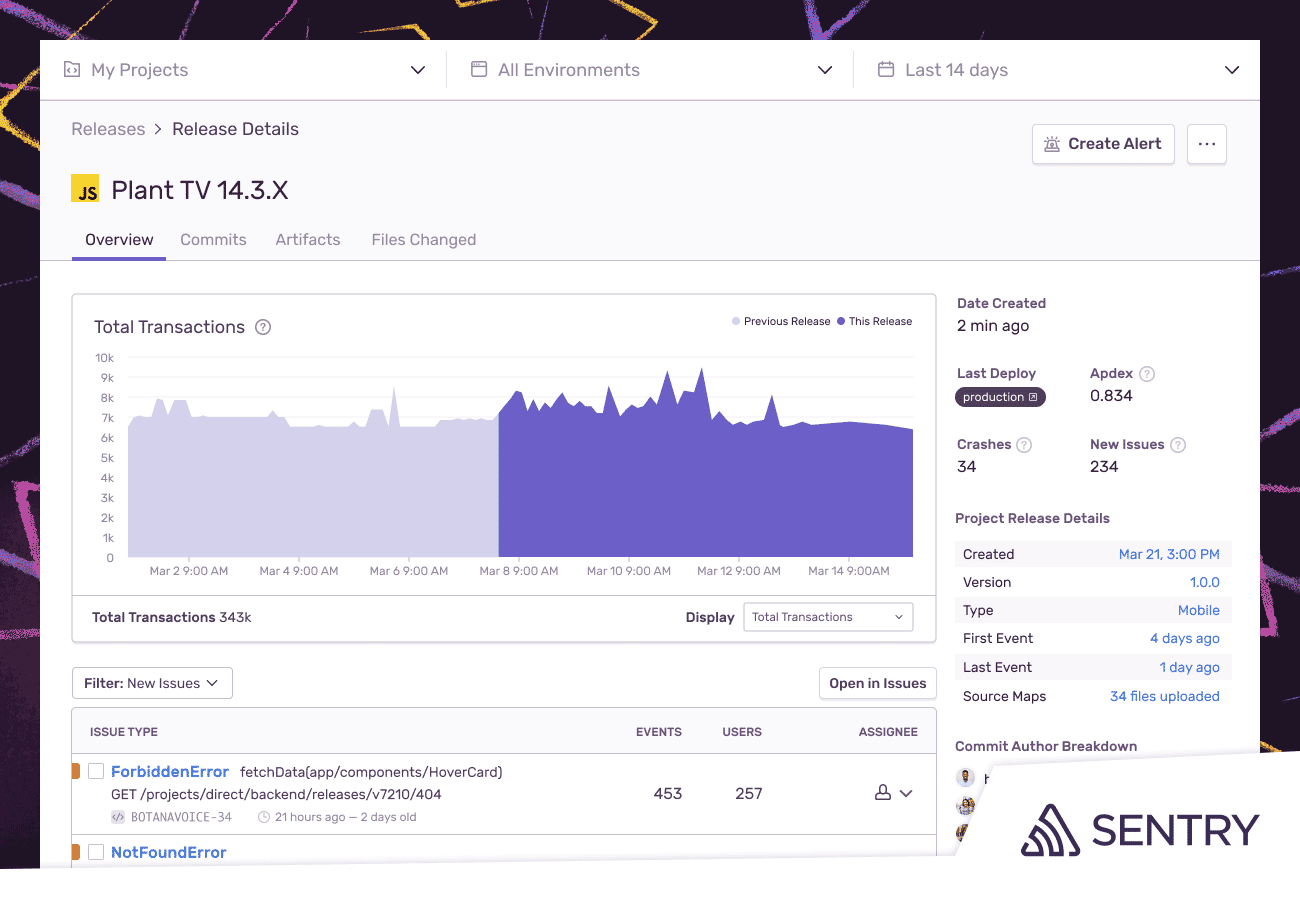
    As the responsibility for applications continues to shift left toward developers, the need for observability and monitoring tools that developers can easily use is becoming more acute. Sentry already provides a JavaScript software development kit that enables developers to insert a small amount of code in their application to track, for example, how many times an application failed. The Specto tools will take those observability capabilities to a deeper level by enabling developers to analyze a wider range of metrics collected, said Desai.

    Of course, DevOps teams are already collecting metrics, as well. Sentry has worked with partners such as GitLab and GitHub to provide a plug-in that makes it possible for DevOps teams to see the same metrics that developers are now using to manage applications. The goal is to make it easier for developers and IT operations teams to collaborate around a common set of metrics, said Desai.

    The rate at which responsibility for the management of applications is being shifted left, of course, varies widely. Some organizations continue to prefer to have developers mainly focus on writing code. However, Desai said Sentry is encountering more instances where site reliability engineers (SREs) are providing Sentry tools to developers as part of an effort to provide them with more insight into how their applications are running in a production environment.

    Historically, IT operations teams have relied on application performance management (APM) platforms to manage IT operations. Those platforms are now evolving into observability platforms that promise to provide more context by correlating events as they occur across both applications and IT infrastructure platforms. That approach, however, typically requires developers to insert agent software into their applications. Once inserted, that agent software needs to be maintained and updated within the context of a larger DevOps workflow.

    The Sentry approach provides developers with a tool for collecting data from an application that, after being embedded in the application, consumes just tens of kilobytes of memory. That approach eliminates the need to rely on much larger agent software to achieve observability.

    Regardless of how developers go about instrumenting their applications, the overall state of observability clearly needs to improve as application environments become more complex. The issue now is determining how best to achieve that goal in a way that benefits both developers and DevOps teams alike.

  • Sentry Integrates Code Observability Tool with GitHub, GitLab

    Sentry Integrates Code Observability Tool with GitHub, GitLab

    Sentry this week extended its namesake observability platform for code to provide tighter integration with the DevOps platforms provided by GitHub and GitLab.

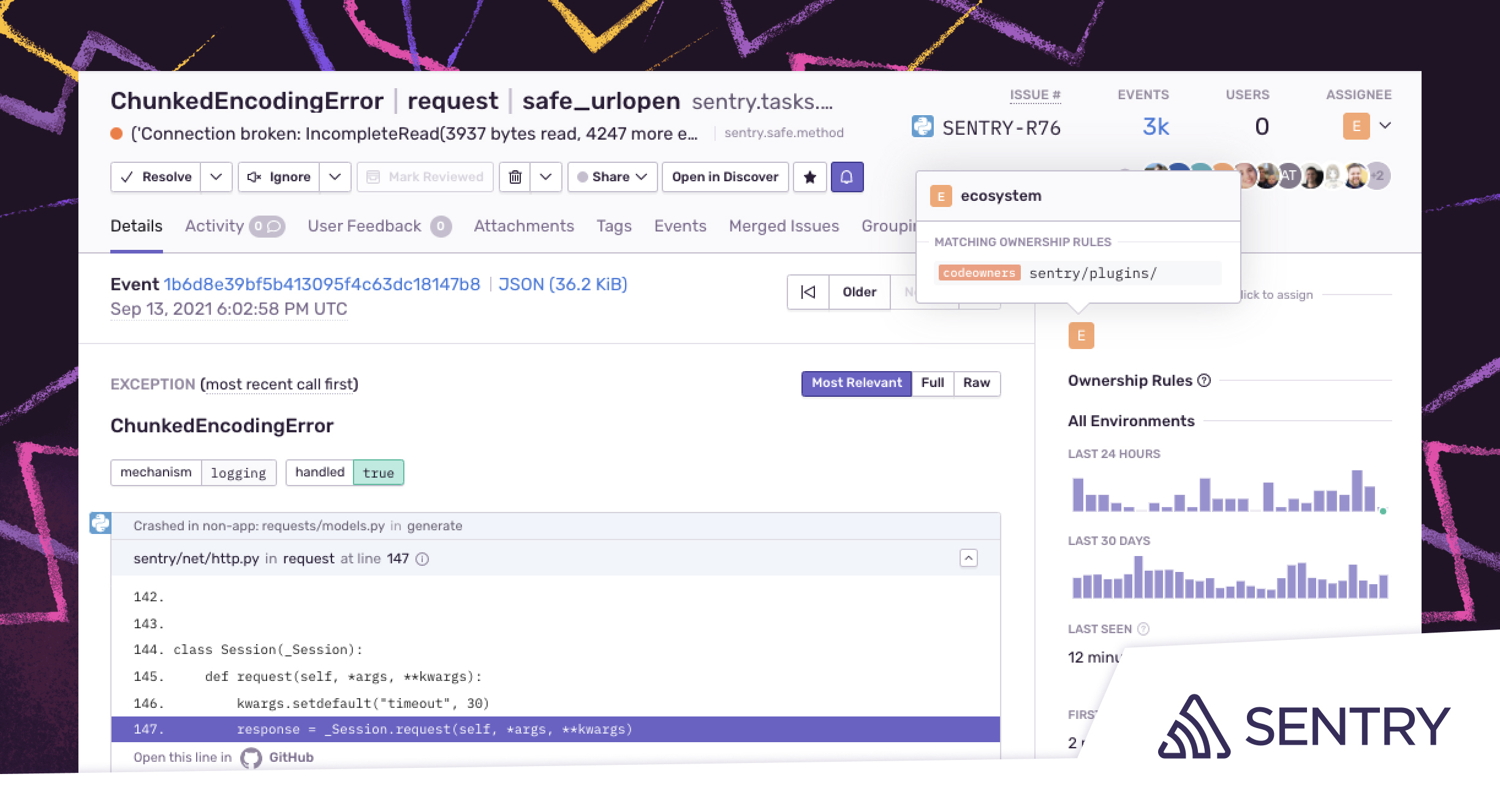
    Application development project managers can now assign issues to DevOps teams by integrating directly with the CODEOWNERS file in GitHub or GitLab. Error messages, for example, can now be automatically routed to individuals or teams that own the code via notifications in Slack.

    IT teams can now also identify and prioritize issues based on user impact by setting alerts based on when an issue exceeds a certain percentage of user sessions within a specific amount of time.

    Sentry CEO Milin Desai said that the percentage-based approach to alerts reduces the overall noise being generated in a way that enables DevOps teams to better prioritize their remediation efforts.

    Finally, Sentry has added an integration with the Okta identity management platform to make it possible to automatically provision and de-provision users and teams using the system for cross-domain identity management.

    As more responsibility for managing the application environment shifts left toward developers, there needs to be a way to streamline communications between developers and the rest of the IT operations team, noted Desai. Most developers today already spend less than one-third of their time writing code.

    The Sentry platform is already used by more than 75,000 organizations to enable developers to better observe and analyze code behavior. The company is now moving to bridge the divide between developers and site reliability engineers (SREs) by streamlining communications and workflows, noted Desai.

    As the responsibility for managing applications shifts left, developers don’t necessarily want to use the same tools that IT operations teams have relied on for years. Most developers want to be able to troubleshoot their applications with minimal interaction with IT operations teams.

    Historically, IT operations teams have relied on application performance management (APM) platforms to manage IT operations. Those platforms are now evolving into observability platforms that promise to provide more context by correlating events as they occur across both applications and IT infrastructure platforms. That approach, however, typically requires developers to insert agent software into their applications. Once inserted, that agent software needs to be maintained and updated, added Desai.

    The Sentry approach provides developers with a tool for collecting data from an application in a way that consumes just tens of kilobytes of memory after being embedded directly within an application. That approach eliminates the need to rely on much larger agent software to achieve observability of application code. Developers can then diagnose and possibly remediate issues in code without ever having to create a ticket asking a DevOps team to investigate an issue.

    Regardless of how developers go about instrumenting their applications, most everyone in IT agrees that the current state of observability needs to improve. The issue now is determining how best to achieve that goal in a way the benefits both the DevOps team and the developers that are now being asked to not just write code but also manage the entire application life cycle.

  • Sentry Updates Tool for Monitoring JavaScript Apps

    Sentry Updates Tool for Monitoring JavaScript Apps

    Sentry today announced it has updated its JavaScript SDK tool for monitoring applications to provide a more comprehensive view of application health.

    Previously, Sentry’s JavaScript SDK enabled JavaScript developers to insert lines of code that would tell them, for example, how many times an application failed. A new release health capability now also identifies what percentage those fail instances represent of the total number of times that application was successfully launched.

    Developers can, in effect, better gauge adoption of a JavaScript application by tracking the percentage of crash-free sessions and crash-free users over the application’s life cycle.

    Ben Vinegar, vice president of engineering for Sentry, said the JavaScript SDK is designed to provide developers with a monitoring capability that doesn’t require an IT operations teams to stand up and manage an entire application performance management (APM) platform. That approach also eliminates the need to instrument JavaScript applications with agent software, Vinegar said.

    The JavaScript SDK consumes tens of kilobytes of memory after it is embedded directly within a JavaScript application, said Vinegar.

    In general, JavaScript is increasingly being used to build complex applications, using frameworks such as React, as an alternative to Java. Over the years, IT organizations have developed a certain amount of bias around how Java applications should be monitored and managed using APM platforms. However, as JavaScript developers assume more responsibility for their applications after deployment, they need real-time monitoring tools that can consume JavaScript application metrics and are built in to existing APM platforms, .

    Of course, APM platforms are managing more than just JavaScript applications, so they’ll remain useful for the forseeable future. However, ease of observation and monitoring is a significant factor when application developers choose a language in which to build an application, and it’s up to individuals to remediate issues that might arise in production. Developers, therefore, have a vested interest in discovering potential issues before that application is deployed.

    Historically, developers have not had access to JavaScript application monitoring tools that they could easily implement on their own. Sentry’s tools makes it possible for developers to identify performance issues, including calls to application programming interfaces (APIs) and other common errors, and address those before an application crashes.

    It’s possible, as performance and security issues shift left and developers become more accountable for user experience, that developers might one day instrument and monitor applications on their own – if for no other reason than self-preservation. Every minute a developer spends remediating a production issue in an existing application is one less minute they will have to write new code.