Now that the year-end prediction season is over, it’s time to focus squarely on the actual here and now—where the DevOps movement actually stands at the start of 2017.
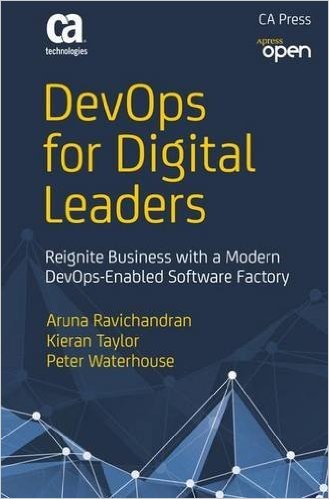
As we’ll need to wait another six months or so for the annual State of DevOps Report to emerge from the good folks over at DORA and IT Revolution, which forces us to take stock of the situation using other resources. In this case, I’ll point to the recently released book, “DevOps for Digital Leaders,” authored by my colleague Aruna Ravichandran along with co-authors Kieran Taylor and Peter Waterhouse.
Register today for the upcoming webcast, “Chart a Winning Course: DevOps for Digital Leaders,” and enter the chance to win a free signed copy of the book [U.S. only].
Why should you value this book over any of the other DevOps-related titles inundating the technology literature scene, in particular those issued by (gasp!) technology vendors? I’d cite two very specific reasons: real-world metrics and use cases.
I often preview any comments I make in cross-functional meetings with the phrase “shameless marketing.” That is because I work in marketing. For 12-plus years prior and sometimes in between marketing gigs I’ve served as a journalist, wherein my job was to attempt to be as objective as possible. Today, I work for a vendor that would really like to sell you stuff.
That said, this current career path does not preclude me from being able to see beyond my own not-so-secret agenda. While many onlookers understandably groan and roll their eyes at the manner in which DevOps has been co-opted by marketers as a means to advance products, this doesn’t mean we’re all full of it.
Like myself, working at CA—in particular, leading marketing efforts that span a huge array of strategic technologies actively being leveraged by global enterprises to attack various elements of DevOps—has given Aruna and her partners tremendous insight into where many people stand in terms of maturity.
To that end, this book is written around some fantastic stories about how some of these organizations are refining best practices and measuring real success in domains including continuous testing, release automation and shift-left monitoring. IMHO, these are some of the hottest areas of DevOps being advanced as we speak.
In addition to these use cases and related practices, the book takes an up-close look at critical aspects of the DevOps build, test, deploy and manage stages, along with key processes related to tuning and continuous improvement. And it even goes so far as to talk about essential DevOps tooling. I hope people are ready to acknowledge that beyond culture and leadership, automation absolutely plays a significant role in all of this.
Specific to metrics, one of the areas where the State of DevOps peeps attempted to break new ground in the 2016 report, there’s a lot to appreciate. The book takes a close look at how these same organizations are attempting to tie DevOps-driven change directly to ROI, including the all-important customer experience.
Worth noting, in the coming days we’ll also see the release of a new report from Coleman Parkes that charts numerous KPIs being used to this same end, so stay tuned.
So there you have it, the marketer has officially hijacked this blog space to do little more than market a book about DevOps written by marketers. But, the truth is that’s not all.
If you really want to hear the best parts of this story, sign up for the upcoming staging-devopsy.kinsta.cloud webcast, “Chart a Winning Course: DevOps for Digital Leaders,” in which Aruna and Alan Shimel will discuss the high points, with an emphasis on fielding questions from the audience live Q&A style.
If you don’t have time to read the book—or, better yet, you want a preview to ensure that what I’ve written here is true—post up and ask your own questions. We’ll also be conducting live polls about DevOps maturity, audience use cases and the leading types of DevOps metrics.
It’s worth noting that all proceeds from the print edition will go to Foundation for Excellence, which provides STEM scholarships to children in India. Order your own copy today (or download it for free).