Author: Mike Vizard

  • Cycloid Tool Can Reverse Engineer Provisioned IaC

    Cycloid Tool Can Reverse Engineer Provisioned IaC

    Cycloid this week unveiled a tool that makes it possible to reverse engineer code used to manually provision cloud infrastructure. The Infra Import tool is part of an effort to create a more consistent and reliable version of that code using open source Terraform software.

    Benjamin Brial, Cycloid CEO, said Infra Import is based on Cycloid’s open source TerraCognita software, which enables IT teams to reverse engineer infrastructure-as-code (IaC) created using open source Terraform tools.

    Infra Import extends that capability to cloud platforms such as Amazon Web Services (AWS), Microsoft Azure, Google Cloud Platform or an IT environment employing the open source OpenStack cloud platform that may have been manually provisioned. IT teams can then create a configuration based on that Terraform code that could be employed across multiple clouds.
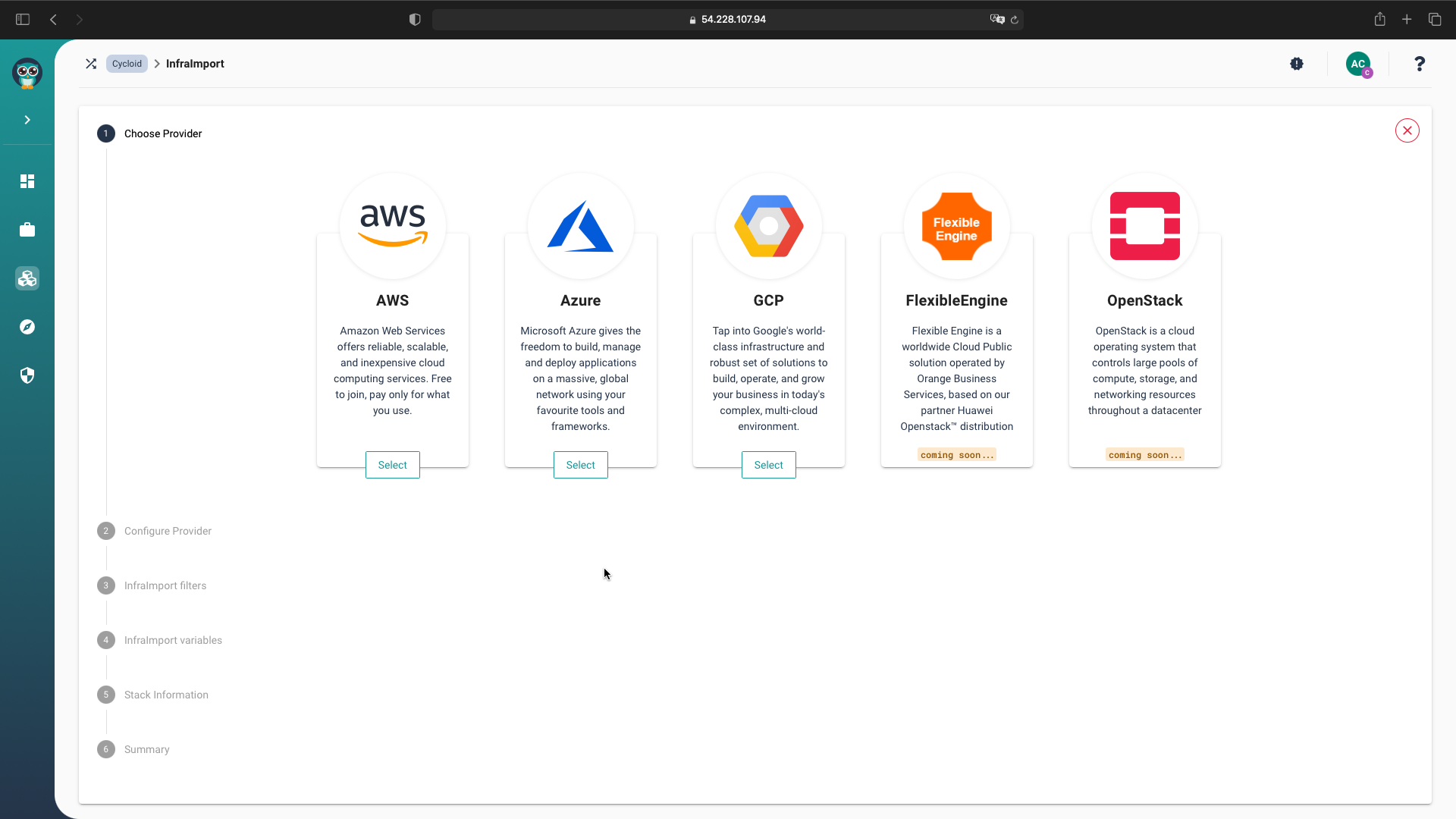
    Infra Import is designed to connect to a cloud provider and then automatically reverse engineer Terraform files and IaC stacks based on the existing deployment. It also ensures that the latest edition of Terraform is being used to create that configuration code, noted Brial. That capability eliminates the need for DevOps teams to keep track of what version of Terraform might need to be updated as new versions of the IaC tool become available.

    Just as significantly, Infra Import also makes it a lot easier to onboard new members to a DevOps teams because the tools uses valid secure configurations they know can be relied on. Misconfiguration of cloud services is one of the biggest security issues that IT teams today are wrestling with, simply because most developers lack the security expertise required to configure cloud services properly.

    Cycloid is in the process of rolling out a comprehensive suite of management tools that complement a lightweight framework it created to make DevOps best practices more accessible. The challenge is many IT organizations have already manually provisioned cloud infrastructure in a way that is, at the very least, often suboptimal if not downright insecure.

    Misconfigurations are rife across cloud computing environments, but most organizations are not prepared to manually address the issue. Automating the reverse engineering of those configurations is the first step toward enabling IT teams to address the problem at scale.

    It’s not clear to what degree configuration concerns have impacted the number of applications that would otherwise have been deployed in the cloud. Security is always listed as the top concern IT leaders have when employing cloud platforms. The issue, however, is not the security of the platforms themselves but rather the processes employed to deploy applications on the platforms. Cloud service providers have promoted a shared responsibility model for security under which developers are accountable for both securely configuring services and ensuring the overall security of the software environment. The trouble is, not every developer understands the implications of that shared responsibility model much less how to actually secure an application workload.

    It’s not likely security concerns will slow down the rate at which applications are deployed in the cloud. However, as more cloud security issues are encountered, more scrutiny will be applied.


  • Logz.io Allies with Microsoft on Open Source Observability

    Logz.io Allies with Microsoft on Open Source Observability

    Logz.io this week announced an alliance with Microsoft that enables DevOps teams to deploy its observability platform—based on open source platforms such as ElasticSearch, Logstash, Kibana (ELK), Prometheus and Jaeger—on the Azure public cloud.

    Jonah Kowall, Logz.io’s CTO, said the multi-year effort enables those teams to deploy the Logz.io platform via the Azure Console with the click of a button. The Azure platform has a data collection capability that aggregates operating system events in a way that makes it simpler for the Prometheus monitoring solution to consume, he added.

    DevOps teams, however, will still have to collect data from the applications they instrument on the Azure platform, he added.

    Logz.io integrates multiple open source monitoring tools based on metrics, logs and traces within a single observability platform that otherwise would require considerable time and effort from internal IT teams on their own.

    Interest in observability is rising as organizations attempt to provide internal IT teams with more context when troubleshooting issues. Whenever there is an IT issue, most teams convene a “war room” where they attempt to discover the root cause of an issue by comparing analytics generated by a wide range of monitoring tools. Observability platforms promise to enable a DevOps team to replace many of those tools in a way that provides more context by integrating log data, metrics and distributed traces within a single platform.

    In many instances, existing application performance management (APM) platforms are being transformed into observability platforms by adding tools to monitor IT infrastructure. Conversely, platforms for managing IT infrastructure are adding support for tools to monitor applications. Elsewhere, a range of startups have emerged to offer observability platforms they have developed from the ground up.

    Regardless of the platform employed, the rise of microservices-based applications within many organizations is forcing the observability issue. The dependencies that exist within microservices-based applications are too complex to manage without a platform that provides some level of increased observability. Of course, most existing monolithic applications are not being retired any time soon, so the need for an observability framework for both legacy and modern cloud-native applications has only become more pressing.

    The Logz.io platform can, of course, be deployed on other cloud platforms as well as within on-premises IT environments. As hybrid cloud computing continues to evolve, it is apparent that observability platforms will need to extend their reach from the cloud to the network edge. Over time, artificial intelligence (AI) capabilities will be added to make it easier to, for example, streamline the number of alerts that are generated across complex IT environments.

    In the meantime, the most important thing with regard to observability may be simply getting started. Most IT teams start to analyze logs before moving on to metrics and then traces using the open source Jaeger agent software. After all, the only thing more difficult to instrument than an application before it is deployed is, arguably, one that is already running in a production environment.

  • WhiteSource Tool Automatically Fixes Code Vulnerabilities

    WhiteSource Tool Automatically Fixes Code Vulnerabilities

    WhiteSource today announced that it has developed the first-ever tool that automatically remediates vulnerabilities discovered in custom code.

    Rami Sass, WhiteSource CEO, said WhiteSource Cure surfaces recommendations for fixing security vulnerabilities in code that developers can then apply with a click of a button. WhiteSource has a long history of providing tools that discover vulnerabilities in open source software that it tracks via a database it manages, but Sass said customers are making it clear they need a way to automatically remediate those issues in a way that doesn’t adversely impact developer productivity.

    The average developer spends, on average, half a day fixing a single vulnerability, so the impact security issues are having on the rate applications are being developed is significant, added Sass. WhiteSource Cure gives each developer the equivalent of their own personal security expert, noted Sass.

    Developers can either apply the remediation suggested by WhiteSource Cure—that manifests itself as a pull request in a DevOps pipeline—or they can fine-tune it as they see fit, said Sass.

    WhiteSource

    WhiteSource Cure arrived as friction and tensions between developers and cybersecurity teams rise in the wake of a series of high-profile attacks against software supply chains. As a result, organizations are instituting more thorough security reviews of application development projects. The concern is those reviews will dramatically reduce the rate at which applications are being delivered.

    Of course, many organizations are looking to shift responsibility for application security further left toward developers to minimize the number of vulnerabilities that might need to be remediated either just before an application is deployed in an on-premises IT environment or, worse yet, after it is deployed. Trying to achieve that goal within the context of DevSecOps best practices, however, is challenging. Organizations first have to acquire vulnerability scanning tools that developers will actually use, and then provide developers with the training required to identify various classes of vulnerabilities.

    The other big challenge is the time it takes to train developers to recognize vulnerabilities. WhiteSource Cure eliminates the need for developers to become security experts, said Sass. In addition to a commercial offering, WhiteSource is also making available a Community Edition of WhiteSource Cure for open source projects that will forever be available for free to developers working on those projects.

    Sass said that rather than relying on machine learning algorithms and other forms of artificial intelligence (AI) to build WhiteSource Cure, the team that developed the tool found that more traditional approaches to software composition analysis (SCA) provided more reliable results.

    It’s unclear whether the ability to automatically remediate known vulnerabilities in code will render much of the DevSecOps debate moot. However, it’s clear that the simplest path forward toward achieving DevSecOps is, as always, to automate as much of the remediation process as possible. The challenge will be waiting to see how much confidence developers and cybersecurity teams will have in the recommendations generated.

  • CircleCI Survey Shows the Need to Prioritize DevOps

    CircleCI Survey Shows the Need to Prioritize DevOps

    A CircleCI survey of 2,013 business leaders in the U.S. and UK published today finds nearly all respondents (97%) recognize that the success of their business within the next year depends on their software development teams. Despite those findings, well over one-third of respondents (39%) admit their organization is challenged when it comes to innovation and acquiring and maintaining developer skills.

    A full 89% of respondents said they also have a good understanding of how to measure the performance of their engineering teams. However, 40% of companies are still using antiquated metrics such as the number of lines of code written, while another 37% measure story points.

    More troubling still, less than one-third of respondents (30%) said they plan to make adoption of DevOps best practices a priority. On the plus side, only 15% of respondents said they are implementing a continuous integration/continuous delivery (CI/CD) platform for the first time.

    The CircleCI survey suggests that improvements in how software is delivered could be worth, on average, up to $126 million per year. Nearly two-thirds of respondents (65%) said their business is involved in digital business transformation initiatives of one kind or another. Another 20% said they have completed one.

    Jim Rose, CircleCI CEO, said it appears that while more organizations now realize how dependent they are on software, many of them have yet to address issues that fundamentally impact developer productivity. For example, more than half (52%) of respondents don’t allow their software developers to choose their own tools, noted Rose. While there is a clear need for a consistent approach to building and deploying applications, Rose noted that DevOps best practices should not require developers to employ a specific set of tools. Developers are only able to truly innovate when they are able to experiment with different tools, said Rose.

    In general, Rose said DevOps adoption tends to go through various cycles. Many organizations today are looking to reduce the number of tools that make up a toolchain. However, those efforts shouldn’t curtail the ability of developers to innovate. A CI/CD platform that provides the foundation for DevOps workflows needs to be easily extensible, noted Rose.

    It’s not clear to what degree adoption of DevOps best practices have stagnated, but the number of organizations that have implemented DevOps across their entire enterprise remains limited. Most organizations have individual teams that might have adopted DevOps to one degree or another. In many cases, those teams are using disparate tools and platforms.

    Most organizations clearly want to be able to build and deploy applications faster. The challenge isn’t so much mastering DevOps platforms as overcoming many of the cultural issues that conspire to limit DevOps adoption. In time, however, the need to rely more on digital processes will force the DevOps issue. As one organization makes advances—thanks in part to their ability to effectively employ DevOps processes—the more keen rival organizations will be to make sure they don’t lose ground. It may be a while before business executives connect the dots between their ability to compete and the degree to which organizations have mastered DevOps, but it’s increasingly apparent that day is not too far off.

  • Shoreline Platform Automates Repetitive IT Tasks

    Shoreline Platform Automates Repetitive IT Tasks

    Shoreline emerged from stealth today to make available a namesake incident automation platform that eliminates the need to manually perform the same repetitive tasks.

    Anurag Gupta, Shoreline CEO, said the platform is based on domain-specific language, dubbed Op, that provides a simple pipe delimited syntax to integrate real-time resources and metrics in a way that allows DevOps teams to invoke an orchestration engine to automate the execution of a task from the Linux command prompt. Op employs a syntax that is familiar to any IT professionals that currently use shell commands and scripting tools to resolve IT issues, said Gupta.

    That same Shoreline tool, however, can also be employed to create remediation loops that check for issues, collect diagnostics and apply repairs automatically in the background, he added.

    Shoreline

    Shoreline achieves that goal by first collecting metrics on a per-second basis via data collected from open source Prometheus monitoring software. Armed with that data, it then becomes possible to distribute queries to both collect data in real-time and run local loops in parallel to automate repairs, Gupta said.

    The platform employs the JAX and XLA frameworks for machine learning algorithms to reduce the amount of CPU resources required to compute metrics and create alarms. Wavelets are also employed to compress the input metric stream. Finally, queries are portioned across historical data stored in the S3 cloud storage service from Amazon Web Services (AWS) and real-time data collected from each node.

    All Shoreline components are designed to be fault-tolerant, added Gupta. Automation can still run locally to Shoreline backends, even when connectivity is lost. All processes have supervisors to restart when failing and reestablish connectivity.

    Finally, Shoreline provides controls to limit the scope of a manual operator action and automate executions in a given time period to help prevent any errors from cascading through an entire IT environment. That approach makes it possible to safely automate tasks in a way that makes it less likely outages will occur because, for example, a misconfiguration winds up being propagated across every system, noted Gupta.

    While IT environments are arguably more complex than ever, Gupta said it’s the repetitive tasks that take up so much of developers’ time. In the absence of any way to automate those tasks, an IT team will, over time, become increasingly burned out, which Gupta noted inevitably leads to mistakes being made.

    At the same time, Gupta noted the Shoreline platform makes it simpler to onboard new members of an IT team because much of the tribal knowledge that once had to be learned on the job has been captured within an automation platform.

    The arguments for automating IT have, of course, been growing louder and more frequent for nearly two decades. Most platforms that promise to automate IT have required a fair amount of expertise to implement and maintain. The Shoreline approach, in contrast, starts with a Linux prompt that many IT teams already routinely use to execute a range of tasks. The difference now is simply the level of scale at which those tasks can be performed with a minimum of programming skills.

  • CloudTruth Acquires Tuono to Advance Configuration Management

    CloudTruth Acquires Tuono to Advance Configuration Management

    CloudTruth, a provider of a unified configuration management platform, today revealed it has acquired Tuono, a provider of a cloud secrets management platform, as part of an effort to make it simpler to secure infrastructure provisioned using code. Terms of the deal were not disclosed.

    Greg Arnette, CloudTruth CEO, said misconfigurations are rife across cloud computing environments. IT organizations now need a self-documenting approach to managing configurations as the number of cloud services that organizations can employ continue to multiply. The CloudTruth platform will automatically keep track of all configuration changes made to an IT environment, Arnette said.

    The rise of Kubernetes and microservices is making things even more challenging, introducing a range of additional opportunities to misconfigure cloud platforms and applications.

    Fresh from raising $5.25 million in seed funding, Arnette said one of the least-appreciated aspects of the configuration challenge is how dependent organizations are on tribal knowledge that gets shared unevenly across DevOps teams. The lack of a centralized repository for managing configurations makes it challenging to onboard new members to those DevOps teams, he added, resulting in more opportunities for mistakes to be made.

    Tuono adds a cloud-native secrets management platform that can be deployed across multiple cloud services. The goal is to provide a configuration management platform that functions as a metadata wrapper compatible with configuration tools such as Terraform or CloudFormation from Amazon Web Services (AWS). That approach reduces the cognitive load on DevOps teams that would otherwise have to remember how and why each service is configured the way it is, said Arnette.

    Arnette added that an additional goal is to enable DevOps teams to put guardrails in place that reduce the opportunities for misconfiguration errors to be made while continuing to enable developers to build and deploy applications quickly. Each organization will need to decide where to strike a balance between those competing agendas, noted Arnette.

    The challenge organizations are wrestling with today is just how vulnerable software supply chains are—as a series of cybersecurity attacks have made all too apparent. Organizations are adopting DevSecOps best practices to better secure those supply chains. However, the rate at which DevOps teams can come up to speed on security isn’t fast enough to secure applications that are about to be deployed. At the same time, there are potentially hundreds of applications deployed in cloud platforms with varying degrees of misconfigurations. Cybersecurity teams are now being asked to review how well those applications are configured as part of an effort to address the security of the entire software supply chain.

    It’s not clear if a backlash against DevOps, in general, is in the making as cybersecurity teams review application development and deployment practices. There undoubtedly will have to be adjustments made to those processes, even as most organizations realize just how dependent they are on software. The issue is that deploying more insecure applications faster is, at the end of the day, counterproductive.

  • Puppet Survey Suggests DevOps Adoption is Stagnant

    Puppet Survey Suggests DevOps Adoption is Stagnant

    Puppet today published an annual State of DevOps report that suggests overall adoption of DevOps practices has stagnated.

    The survey of 2,650 IT, development and information security professionals finds 83% are implementing DevOps practices, to a degree. However, only 18% of respondents are working for organizations that have highly evolved, automated DevOps processes in place. More than three-quarters of respondents (78%) are somewhere along the path toward achieving that goal.

    A full 90% of highly evolved DevOps teams have automated most repetitive tasks compared to only 67% of mid-level organizations, the survey found. In addition, 91% of highly evolved teams report a clear understanding of their responsibilities.

    Not surprisingly, the biggest hurdles identified are more cultural than technical. The most common culture blockers at mid-level organizations include a culture that discourages risk (21%), unclear responsibilities (20%), deprioritizing fast flow optimization (18%) and insufficient feedback loops (17%). In contrast, less than 2% of highly evolved organizations report resistance to DevOps from the executive level, the Puppet report found.

    Nigel Kersten, a field CTO at Puppet, said during an online panel that, after more than a decade of DevOps advocacy, people continue to be the biggest limiting factor when it comes to adoption. Specifically, from a compensation perspective, many IT operations personnel tend to feel undervalued compared to developers, noted Kersten.

    Another challenge enterprises encounter is trying to balance the need to create a standardized IT environment that can be managed and secured consistently and the desire of DevOps teams to embrace new tools as they see fit. Senior IT executives often tend to make platform decisions based on cost criteria that don’t always account for the need to enable agile development methodologies. Most of those platforms are designed to be managed by an IT administrator using a graphical tool rather than via a command line interface (CLI) and application programming interfaces (APIs) that appeal to DevOps teams.

    As a result, individual pockets of DevOps teams that select and maintain a platform of their choosing are emerging within enterprise IT organizations. Those teams often view their chosen platform as a better alternative for advancing developer productivity. Finding and retaining site reliability engineers (SREs), for example, to manage those DevOps platforms is a major challenge for most enterprise IT organizations. Most IT administrators lack the programming skills needed to become an SRE, and it’s not clear how many IT administers are inclined to acquire those skills.

    Conversely, it’s not clear how many programmers want to programmatically manage IT infrastructure at the expense of time they would otherwise devote to writing code. Organizations that can only hire a limited number of developers may not want to shift responsibility for managing IT operations to the proverbial left simply because they need more code to be written faster. Finding and retaining developers, in many cases, is just as much a challenge as hiring and retaining SREs.

    Advances in automation and artificial intelligence (AI) should make it easier for organizations to embrace DevOps best practices in the months and years ahead. However, it should be apparent to all that adoption of those best practices across an entire enterprise still requires a significant amount of time and effort, and will for many years to come.

  • Cycloid Brings Open DevOps Framework to the US and UK

    Cycloid Brings Open DevOps Framework to the US and UK

    Cycloid, a Paris, France-based provider of an open framework for implementing DevOps best practices, today announced it is expanding its operations into the U.S. and United Kingdom.

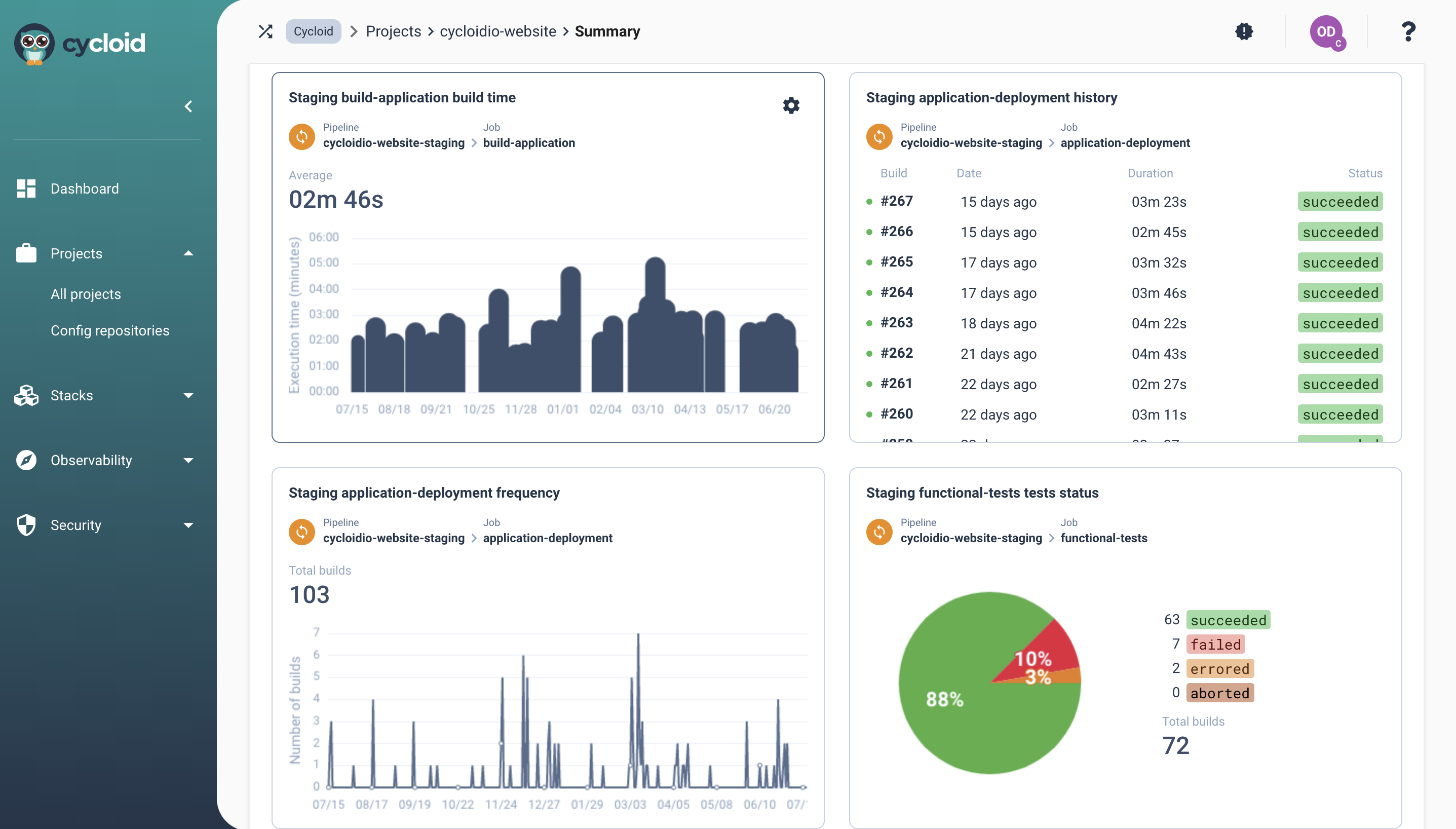
    Benjamin Brial, founder of Cycloid, said the Cycloid framework provides a lightweight approach to striking a balance between enabling developers to employ the tools they prefer and the need for centralized governance. The framework allows roles and policies to be pre-defined to ensure governance while service catalogs are used to deploy software using a set of drag-and-drop visual interfaces. There are also a set of management tools and features that provide additional visibility, automation, monitoring and financial controls to DevOps workflows.

    In effect, the portal that Cycloid provides to manage those workflows also serves to make DevOps more accessible to a wider range of IT professionals, added Brial.

    Cycloid

    Many organizations that embrace DevOps wind up building their own custom portal to achieve that same functionality. Rather than devoting resources to building and maintaining such a portal, Brial said Cycloid maintains and updates a portal platform that can be employed across any combination of tools that developers prefer. Other DevOps frameworks are often rejected because they require developers to adopt a specific set of tools, noted Brial. Without support from developers, it becomes nearly impossible to adopt DevOps best practices at scale, he added.

    After more than a decade of advocacy, adoption of DevOps within most organizations remains spotty. A significant factor in the lack of adoption is cultural issues involving skillsets. Many IT administrators lack the programming skills required to programmatically manage DevOps workflows. Cycloid is trying to establish a middle ground that enables IT operations teams to manage and govern DevOps workflows without having to acquire programming skills. The goal is to make it simpler for developers and IT operations teams to collaborate, said Brial.

    It’s not clear to what degree such an approach might increase adoption of DevOps best practices within enterprise IT organizations. However, it’s already apparent that the cost of hiring and retaining, for example, a small army of site reliability engineers (SREs) to manage IT environments at scale is often cost-prohibitive for many organizations.

    There’s no shortage of DevOps frameworks, but most organizations generally wind up crafting their own as part of an effort to tailor a DevOps workflow to meet their specific requirements. However, if there is a readily available framework that is highly customizable, Cycloid is betting more organizations would rather buy than build and maintain the entire framework themselves. Otherwise, DevOps teams would spend half their time performing the same repetitive manual tasks over and over, said Brial.

    One way or another, DevOps as a methodology for building and deploying applications needs to become more accessible. Proponents of DevOps have made a case for the methodology for the better part of a decade, with mixed success. The challenge continues to be finding a way to scale DevOps processes across the entire enterprise versus allowing each individual development team to define application development and deployment processes that, today, vary widely in terms of efficiency.

  • Aqua Security Acquires tfsec to Advance DevSecOps

    Aqua Security Acquires tfsec to Advance DevSecOps

    Aqua Security today announced it has acquired tfsec, an open source project that provides a static analysis scanner for infrastructure-as-code (IaC) that is designed to be integrated within a DevOps workflow.

    Amer Jerbi, Aqua Security CTO, said tfsec extends the security platform the company already provides in a way that advances adoption of DevSecOps best practices. In addition, to prevent developers from misconfiguring cloud infrastructure using tools such as Terraform, the scanner surfaces examples of code that provide developers with insights into how to properly configure infrastructure.

    Jerbi noted that tfsec is already integrated with Aqua Trivy, an open source tool that scans container images for vulnerabilities. Integrations with the rest of the Aqua Security portfolio will follow, added Jerbi.

    Tfsec co-founders Liam Galvin and Owen Rumney will join Aqua Security as cloud engineers. The challenge Aqua Security is trying to address is the need to enable organizations to proactively prevent cybersecurity issues from arising in production environments rather than only identifying vulnerabilities that need to be fixed, said Jerbi.

    Aqua Security tfsec

    The decision to acquire tfsec comes in the wake of a series of high-profile breaches when many organizations are scrambling to make sure software supply chains are secure. Cloud platforms are rife with misconfigurations mainly because developers often lack the expertise needed to ensure infrastructure is secure after they have provisioned it. Organizations are embracing DevSecOps best practices in the hopes of educating developers to assume more responsibility for application security. However, developers are not going to acquire that expertise overnight. The tfsec scanner provides a way to enforce security policies today while at the same time affording the time to teach developers how to avoid misconfigurations.

    It’s unclear how many cybersecurity events arise because of cloud misconfiguration issues. The cloud service providers have adopted a shared responsibility model that makes the organization employing the cloud responsible for both the applications deployed on those clouds and for how that infrastructure is provisioned. Many developers that provision cloud infrastructure themselves within the context of a DevOps workflow often assume the cloud service provider is doing more than it is to prevent misconfigurations. Cybercriminals, meanwhile, have become very adept at scanning for those misconfigurations.

    There are, of course, a lot of layers and nuances when it comes to DevSecOps. Arguably, Jerbi said, the most critical thing for most organizations is to simply get started. Tools that can be quickly and easily integrated within an existing DevOps workflow with minimal disruption are critical, Jerbi added.

    In the meantime, DevOps teams should expect cybersecurity teams to become more involved in their workflows, especially as government mandates aimed at securing software supply chains become stricter. Eventually, as organizations gain confidence in the ability of their DevOps teams to secure their application environments, those cybersecurity teams will refocus their efforts on hunting for threats. In the meantime, DevOps teams would be well-advised to make those cybersecurity professionals feel as welcome as possible, given the application security mandate most of them have been given.

  • Copado Acquires Qentinel to Gain AI Testing Tools

    Copado Acquires Qentinel to Gain AI Testing Tools

    Copado has acquired Qentinel as part of an effort to incorporate AI-infused application testing within a DevOps platform and build applications using low-code tools across multiple software-as-a-service (SaaS) platforms.

    The Copado continuous integration/continuous delivery (CI/CD) platform was originally created to accelerate the development of low-code applications on top of the Salesforce platform. Now, however, Copado is expanding the scope of its DevOps reach to include other SaaS platforms.

    Andrew Leigh, chief marketing officer for Copado, said as organizations increase the number of SaaS platforms they employ in the wake of the COVID-19 pandemic, it quickly became apparent there would soon be a need to build applications that enable organizations to unify business processes spanning multiple SaaS applications.

    As part of that effort, Copado’s acquisition of Qentinel aims to advance that goal by making it simpler for both developers and end users to participate in the application testing process, Leigh said.

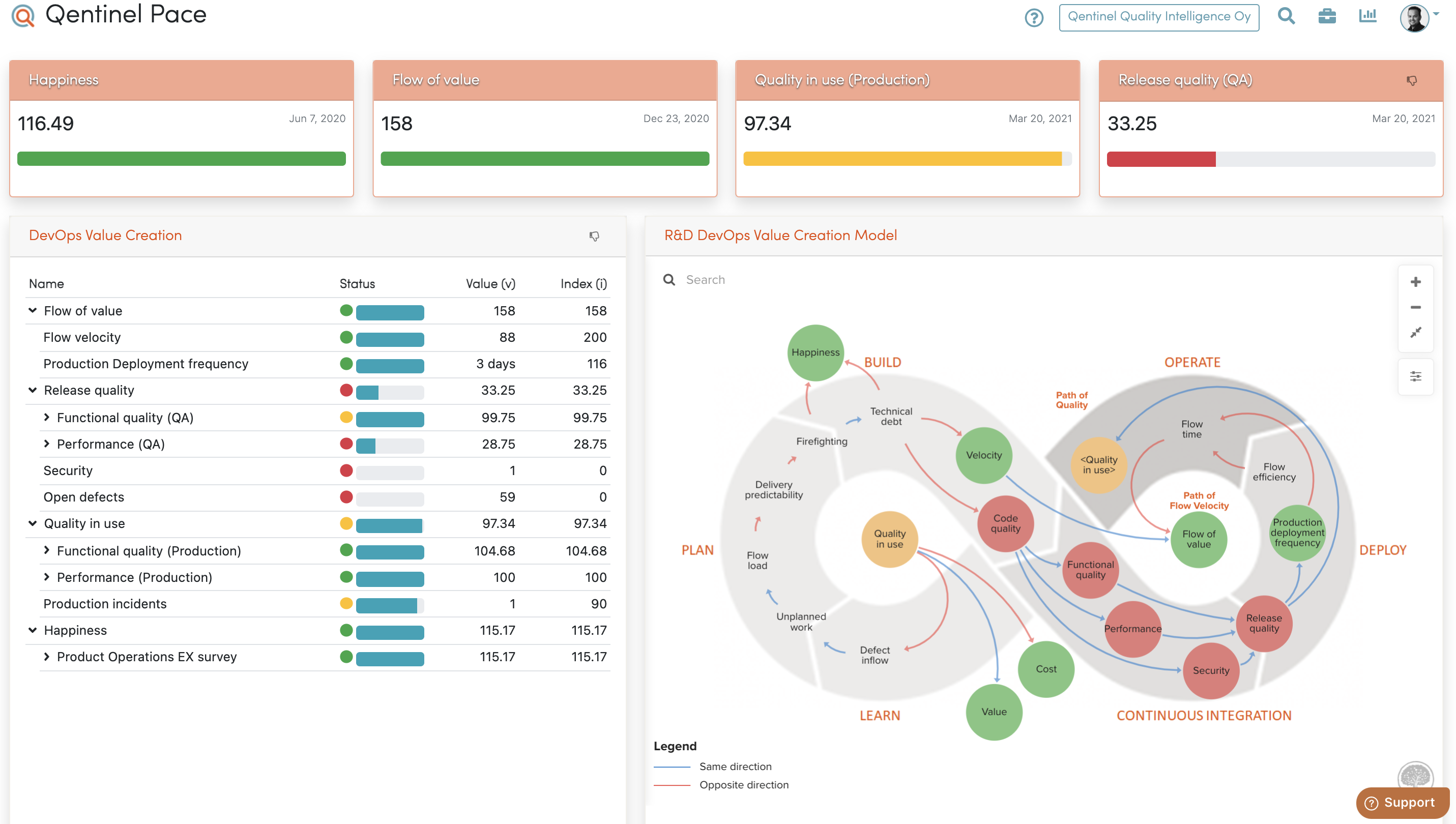
    Qentinel is accessed mainly via the cloud to automate the creation of application tests. Rechristened Copado Robotic Testing, the core of the Qentinel platform is based on the open source Robot Framework that understands scripts, executes them and generates logs and reports. A set of built-in libraries comes packaged with Robot Framework and addresses a wide range of testing scenarios. Qentinel customers include Brunswick, Elisa and Konecranes.

    Copado AI testing

    Gartner is forecasting that, by 2024, 75% of large enterprises will be using AI-enabled test automation tools to advance continuous testing across different stages of the DevOps life cycle. Much of the interest in AI-infused application testing tools is being driven by necessity as the pace of low-code application development exceeds the pace at which manual testing processes can work. As application testing becomes a bottleneck, organizations will naturally look toward automation platforms that employ machine learning algorithms capable of testing applications at scale.

    It’s not clear to what degree those platforms might eliminate the need for humans to test applications. The expectation is humans will be able to test application functionality at a deeper level versus, for example, merely checking to see if compliance mandates have been met. Many smaller organizations building low-code applications don’t have any meaningful application testing capabilities at all. Testing platforms infused with AI will prove to be especially crucial for citizen developers that require guidance to build a secure application that can actually scale, noted Leigh. The more SaaS application environments those applications span, the more critical testing becomes, added Leigh.

    One way or another AI is coming to application testing. After all, machine learning algorithms don’t ever need to take a day off or suddenly leave to take a better offer elsewhere. In fact, soon, most organizations soon won’t even consider a test automation platform that doesn’t have AI capabilities as they attempt to reduce the level of manual, monotonous and repetitive testing tasks. It may take a while for everyone to gain confidence in the algorithms, but it’s now more a question of the degree to which AI will be employed rather than if.