Author: Mike Vizard

  • Cosmonic Contributes WebAssembly Runtime to CNCF

    Cosmonic Contributes WebAssembly Runtime to CNCF

    Cosmonic today revealed it has donated its universal application runtime for building cloud-native applications using the WebAssembly (Wasm) development framework to the Cloud Native Computing Foundation (CNCF).

    The Cosmonic wasmCloud runtime makes it possible to run applications built using WebAssembly on any platform. In comparison, applications built using containers are not as portable because IT teams can’t take a container application developed for Linux and run it on Windows. The container technologies for each operating system are implemented differently.

    The CNCF will make wasmCloud available as a sandbox project and will invite other organizations to start making contributions as part of an effort to eventually put wasmCloud on par with other projects such as Kubernetes. There are already nearly 80 contributors to a wasmCloud runtime that was launched last November.

    Cosmonic

    The CNCF is trying to advance other WebAssembly technologies including Krustlet, a tool for Kubernetes environments that listens for event streams from new pods so that the scheduler can then assign workloads.

    However, the CNCF is now not the only organization looking to promote adoption of WebAssembly technologies. The Bytecode Alliance has launched WebAssembly (Wasm) and WebAssembly System Interface (WASI) initiatives as part of an effort to promote standards that would make it easier to run Wasm applications anywhere. Originally founded by Fastly, Intel, Mozilla and Microsoft, the Bytecode Alliance now also includes Arm, DFINITY Foundation, Embark Studios, Google, Shopify and University of California at San Diego.

    At its core, Wasm is a portable binary instruction format for building software that describes a memory-safe, sandboxed execution environment. That approach might one day replace the current predominant method for building software that relies on the aggregation of software components that tend to lack distinct security boundaries between them. As a result, it becomes relatively simple for malware to infect all the components of an application.

    Liam Randall, CEO of Cosmonic, said even though Wasm, in effect, provides another type of virtualization for applications, IT teams should not view it as a set of technologies that will one day obviate the need for containers. Applications developed using Wasm will be layered on top of various container platforms, he said.

    There is, for example, already a Wasm project that creates a server-side Wasm runtime that enables applications to be deployed on a secure container architecture that is more efficient than Docker containers.

    The World Wide Web Consortium (W3C) drove the development of Wasm as part of an effort to create a common format for browsers executing JavaScript code. Wasm is now being extended beyond browsers and JavaScript to enable developers to ultimately create a set of universal binaries that could work on any platform without modification.

    It may be a while before the fruits of those labors are realized. However, it’s apparent the walls that have separated one IT platform from another are starting to crumble. Once applications become much more portable, the reasons why one organization may choose one platform over another will have a lot less to do with what developers prefer.

  • F5 Networks Planning Open Source Projects Beyond NGINX

    F5 Networks Planning Open Source Projects Beyond NGINX

    F5 Networks today revealed plans to launch multiple projects in the months ahead that will extend its commitment to open source beyond the NGINX proxy software the company acquired in 2019.

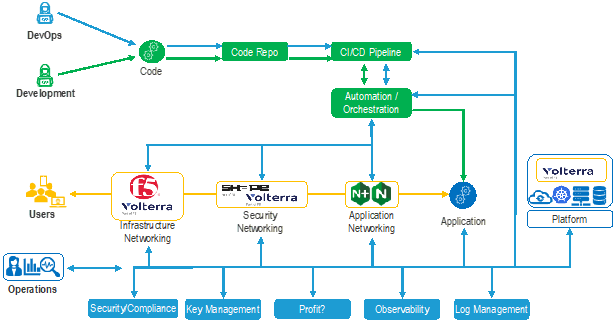
    The announcement was made during an online NGINX Sprint event; two of the projects are extensions of NGINX that will address networking requirements between microservices-based applications in addition to the management of fleets of NGINX instances. The third project is a platform-agnostic open source developer tool for building modern applications that does not necessarily require NGINX proxy software.

    At the same time, F5 Networks also unveiled an open source NGINX Modern Apps Reference Architecture that gives IT teams access to a complete, fully operational microservices-based application that can be deployed in minutes on a Kubernetes cluster. Based on a modular approach made up of open source components that come pre-wired and pre-integrated, F5 Networks is committing to extending this framework in collaboration with multiple third-party vendors and organizations.

    F5

    Rob Whiteley, general manager for the NGINX product group at F5 Networks, said the company is also committing to modernizing its NGINX proxy software to leapfrog rival open source Envoy proxy software being advanced under the auspices of the Cloud Native Computing Foundation (CNCF). NGINX is still more widely employed than Envoy largely because it is lighter-weight and easier to deploy, but Whiteley conceded that Envoy has more advanced capabilities.

    Envoy, of course, is at the core of the Istio service mesh. F5 Networks supports both Istio as well as a service mesh it has developed on top of NGINX. Depending on the number of application programming interfaces (APIs) that an organization needs to support, an IT team might make use of proxy software, ingress controller or an API gateway for a service mesh to manage them.

    Finally, F5 Networks said it will participate in the Kubernetes ingress project and that it is joining the gateway API community as its implements its own NGINX-based gateway controller to ensure its proxy software and Kubernetes remain tightly aligned in the future.

    In general, Whiteley said F5 Networks also is making a commitment to be clearer about where the line between the open source and commercial editions of its offerings is drawn. As a rule, the open source editions are designed for developers and small teams while the commercial version is designed to scale within enterprise IT environments. The overall goal is to promote innovation without enabling cloud service providers to reap all the revenue benefits of F5’s research and development by creating a service based on that open source software, said Whiteley.

    As part of that effort, F5 Networks is expanding the number of open source projects it supports to make it easier for developers to contribute code beyond the core NGNIX proxy software, said Whiteley.

    It’s not clear to what degree F5 Networks will be able to rally the open source community to advance additional projects beyond NGINX. The company is promising to provide additional details at an unspecified future date. However, Whiteley said there is still plenty of room for innovations not only in emerging technologies such as service meshes but also proxy software that is already widely employed within many enterprise IT organizations. Especially since most of them are embracing microservices-based applications that will ultimately change every aspect of IT.

  • Kentik Open Sources Five Projects to Advance Network Observability

    Kentik Open Sources Five Projects to Advance Network Observability

    Kentik today unfurled a developer hub, dubbed Kentik Labs, through which it is making five open source projects available as part of an effort to advance observability across network operations (NetOps).

    The five projects are:

    kTranslate: A system for pulling and pushing network data that is the basis of the Kentik Firehose integration the company created for the New Relic observability platform

    NetDiag: Scalable, asynchronous implementations of low-level network diagnostics

    Convis: Example code showing how to attribute process and container information to network traffic via the Linux kernel using eBPF

    kProbe: A high-performance host and sensor network probe (PCAP)

    Grafana App: A real-time tool for ingesting and querying network data

    Nick Stinemates, vice president of business development at Kentik and co-chair of Kentik Labs, said the goal is to enable DevOps teams to incorporate NetOps within the workflows already being employed to programmatically manage the rest of IT.

    Stinemates noted that, as IT environments become more distributed, managing NetOps has become more challenging. If there is a failure, it can be difficult for DevOps teams to determine if the issue is due to application code, the underlying infrastructure or some other root cause. Kentik Labs is committed to providing tools that will help DevOps teams reduce their mean time to recovery (MTTR), he added.

    Most NetOps teams increasingly rely on software to manage distributed networks either in the form of graphical tools provided by router and switch vendors or by using the Python programming language and the open source Ansible automation framework that enables IT teams to declaratively manage IT infrastructure.

    As the teams that manage network operations gain more proficiency with those tools, it becomes simpler to incorporate them within the construct of a larger DevOps team. While DevOps teams have been programmatically managing IT infrastructure-as-code (IaC) for years, network management has largely remained in a separate silo. However, as more applications are deployed in the cloud, it’s clear NetOps needs to become more integrated with the rest of the workflows employed to deploy and manage a highly distributed IT environment, said Stinemates.

    Less clear is to what degree the networks that make up a hybrid cloud computing environment will continue to be managed by network administrators versus site reliability engineers (SREs) that are starting to assume responsibility for managing compute and storage.

    Regardless of who manages the network, the next generation of microservices-based applications that are dependent on application programming interfaces (APIs) to call various services are much more latency-sensitive than previous generations of applications. Many of those applications will regularly experience performance issues due to networking issues that are often not readily apparent to DevOps teams. The goal should be to, at the very least, arm those DevOps teams with the tools required to confirm the source of those issues before a “war room” is convened to determine how to address the issue.

  • Micronaut Taps Moderne to Automate Java Framework Updates

    Micronaut Taps Moderne to Automate Java Framework Updates

    Micronaut, a provider of a framework for building applications based on microservices and serverless computing platforms, today revealed it is allying with Moderne, a provider of a tool for refactoring code, to create a “recipe” that will automatically update the Micronaut framework.

    Moderne CEO Jonathan Schneider said the open source OpenRewrite refactoring tool for code, originally developed at Netflix, makes it possible to automate updates to codebases, remediate vulnerabilities and provide a foundation for high-level building blocks that will make authoring custom transformations simpler. That approach will eventually be embraced by other providers of application development frameworks.

    Fresh from raising $4.7 million in initial funding, Moderne makes OpenRewrite available via a software-as-a-service (SaaS) platform to enable IT teams to search and transform millions of lines of code in minutes. OpenRewrite currently supports Java, but the company is working toward adding support for additional languages, including infrastructure-as-code (IaC) tools such as Kubernetes, YAML and XML.

    Moderne has also developed “recipes” for common search and refactoring operations that can be assembled into more complex recipes for framework migrations involving, for example, an upgrade from Java 8 to Java 11. Micronaut is the first provider of a development framework to create a recipe for its own framework using OpenRewrite.

    At a time when applications are more distributed than ever, updating codebases is a major challenge. In fact, the manual effort involved in making those migrations is one of the primary reasons many organizations continue to employ older versions of frameworks such as Java 8. OpenRewrite is designed to automate that process at scale in a way that leaves it up to the individual developer to determine how involved they want or be or if they simply prefer to have a DevOps team manage the upgrade process on their behalf, said Schneider.

    In the longer term, Schneider said he expects recipes will be created to address everything from mass migrations to remediating specific types of vulnerabilities across an entire codebase.

    Too much reliance on legacy development frameworks generally stymies innovation. The latest versions of Java, for example, are designed to make it simpler for developers to build microservices-based applications.

    It remains to be seen to what degree DevOps teams will embrace automation to upgrade code. Many developers are hesitant to rely on automated tools of any kind. However, given the need for most developers to spend more time writing new code, it’s only a matter of time before most of them come to terms with automated approaches to updating existing code.

    In the meantime, the cost of supporting legacy frameworks should decline as organizations begin to migrate their codebases faster. One of the reasons there is so much technical debt in the enterprise is because different development teams tend to adopt different framework versions at different times. DevOps teams can find themselves being asked to simultaneously support multiple versions of the same framework. There may always be multiple versions of those frameworks, but, over time, DevOps teams should eventually see the bulk of deployed applications all using the same framework as the upgrade cycle becomes more automated.

  • Foundation Proposes Advancing eBPF Adoption Across Multiple OSes

    Foundation Proposes Advancing eBPF Adoption Across Multiple OSes

    The eBPF Foundation, which proposes to advance adoption of an approach that enables sandbox programs to run faster at the kernel level, is being launched today as an arm of the Linux Foundation.

    The technology known as eBPF was originally developed for Linux. The eBPF Foundation is now committed to expanding use of eBPF across all operating systems. Members of the eBPF Foundation include Facebook, Google, Isovalent, Microsoft and Netflix.

    Thomas Graf, CTO and co-founder of Isovalent, a provider of networking and security tools that leverage eBPF, said IT organizations should expect to see the technology become part of Windows, along with other operating systems, as the core technology is tested and validated across a much wider range of platforms.

    In effect, eBPF changes the way operating systems are designed. It bridges the boundary between kernel and user space by enabling developers to combine and apply logic across multiple subsystems that, historically, were completely independent of one another. That approach enables, for example, a security tool to scale to the point where it can identify threats at much higher levels of throughput to improve overall scale at a time when the volume of cybersecurity attacks being simultaneously launched continues to increase.

    Currently, eBPF is widely employed by web-scale companies such as cloud service providers. Facebook is using it as the primary software-defined load balancer in its data centers while Google is using open source Cilium networking software within its managed Kubernetes offerings.

    However, adoption within on-premises IT environments that have deployed Linux has been more limited simply because the number of vendors that have optimized networking, security and storage offerings to take advantage of eBPF is still fairly limited.

    Sysdig, for example, recently launched made available an instance of the open source Falco container security platform available that employs eBPF. Tigera has also made available an instance of its container networking platform that leverages eBPF at the kernel level of Linux.

    Ultimately, Graf notes the biggest benefit of eBPF is efficiency. The total cost of processing for security, networking and storage platforms should decline as more vendors take advantage of a capability that will one day be widely employed across multiple operating systems.

    In the meantime, IT organizations would be well-advised to ask their vendors when they plan to support eBPF. Cloud service providers generally require it to deliver their own managed services more efficiently, so any vendor that hopes to sell a platform to those providers will need to support eBPF to drive performance at scale. The issue then becomes determining which platforms that have embraced the technology are also available in on-premises IT environments looking for similar benefits.

    Regardless of approach, it’s clear there will soon be a reason to upgrade not just networking, storage and security platforms but also instances of operating systems that don’t yet support eBPF. DevOps teams would be well-advised to plan accordingly because the number of platforms that will ultimately benefit from eBPF spans the entire enterprise.

  • Google Unveils Tool to Better Secure GitHub Repos

    Google Unveils Tool to Better Secure GitHub Repos

    Google today launched a GitHub app that provides automated continuous enforcement of security best practices for GitHub projects.

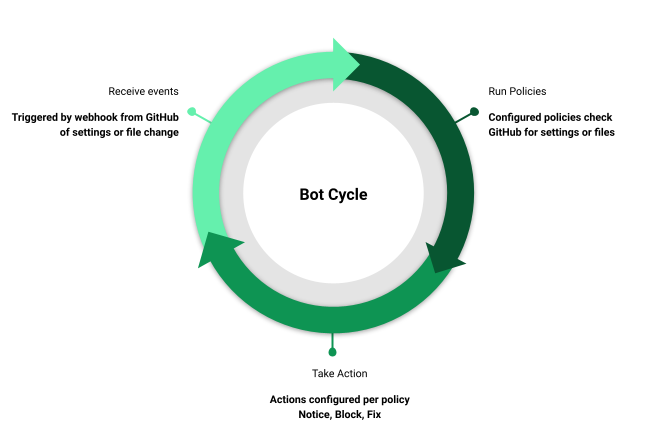
    Kim Lewandowski, a product manager for open source software security at Google, said the Allstar application enables IT teams to assess any project on GitHub to check for security policy adherence. In addition, Allstar sets desired enforcement actions and automatically applies those rules when triggered by a setting or file change in a repository.

    The goal is to provide the open source community with a tool that makes it possible for organizations to have more confidence in the open source software that is being employed within a software supply chain, said Lewandowski.

    Allstar is intended as a companion application for Security Scorecards, a tool that Google made available last year to assess whether, for example, an open source project employs branch protection to ensure that malware isn’t inadvertently committed to a project. Allstar continuously checks expected GitHub API states and repository file contents against security policies and the enforcement actions defined by an IT organization. After it detects a policy violation, the tool can be configured to simply send an alert or to automatically enforce a specific policy to remediate the issue, said Lewandoski. Specifically, she said the options available are to log the security policy violation without taking any additional action, open a GitHub issue or modify the GitHub setting to match the original Allstar configuration.

    At present, Allstar provides a limited number of security policy checks, but more will be made available over the coming months, said Lewandowski. Current security policy checks include branch protection, vulnerability disclosures, access controls and detection of binary artifacts that can’t be scanned. Additional checks that will be added include automatic dependency updates and frozen dependencies.

    Lewandowksi said Allstar and Security Scorecards are part of an ongoing Google effort to give back to the open source community that is being targeted by cybercriminals attempting to compromise software supply chains. Just about every application is now dependent on open source components, to some degree. The maintainers of those projects, however, don’t always have the tools or expertise required to check for malware that has been injected into a codebase, she noted.

    In general, Lewandoski noted that achieving DevSecOps best practices will require a lot more automation of application security. It’s not possible for each developer to become a world-class cybersecurity expert. The challenge is finding a way to introduce that automation into the application development process as early as possible, which, she noted, in many cases starts with open source components that are incorporated in applications.

    It may take a while for every maintainer of an open source project to revamp the processes through which code is added to their project. However, the easier it becomes to continuously review that software, the more confidence organizations that use it will have in its security. In fact, the maintainers of those projects should expect the downstream users of that software to be asking some pointed questions about how security is being managed in the wake of a series of recent high-profile breaches of software supply chains.

  • Datadog Cloud Security Platform Advances DevSecOps

    Datadog Cloud Security Platform Advances DevSecOps

    Datadog has launched a Datadog Cloud Security Platform that promises to advance DevSecOps by identifying potential threats using the same agent software many DevOps teams already rely on to instrument applications.

    Renaud Boutet, senior vice president of product for Datadog, said organizations that rely on the Datadog software-as-a-service (SaaS) platform can now more easily invoke security services based on the same data model used to observe applications.

    The security services provided by Datadog include a cloud security posture management (CSPM) offering that identifies misconfigurations and applications that are not compliant with industry standards such as the Payment Card Industry Data Security Standard (PCI DSS).

    A cloud workload security (CWS) offering, meanwhile, detects threats to production workloads by monitoring file and process activity, while a monitoring tool identifies threats to cloud environments by analyzing operational and security logs. It also provides integrations and threat detection rules that are easy to extend and customize.

    Finally, there is an application security tool, currently in beta, that identifies and blocks attacks that target code-level vulnerabilities, such as SQL injections and cross-site scripting (XSS) exploits.

    Boutet noted that many DevOps teams are reluctant to roll out security platforms that require them to deploy, manage and update an additional set of agents across their application environment. Datadog is now effectively unifying application observability and security in a way that makes it simpler for those DevOps teams to embrace DevSecOps best practices, added Boutet.

    In some cases, the dashboards surfaced by Datadog will be employed by DevOps teams that have assumed responsibility for cybersecurity as part of an effort to shift more responsibility for application security further left, noted Boutet. In other instances, cybersecurity teams will be able to view the same alerts shared with their DevOps colleagues, he added.

    Pressure to address DevSecOps is mounting in the wake of a spate of high-profile software supply chain breaches. While the majority of organizations have not been breached, questions are now being asked at the boardroom level as concerns over application security increase. Many organizations are wondering if they should slow down the pace of application development to ensure better security and to what degree.

    Regardless of the path forward, awareness of application security has never been higher. An executive order issued by President Biden calling for improvements to security will likely have a cascading effect across not just government agencies but also on organizations that do business with those agencies. One way or another, DevOps teams and cybersecurity professionals will be required to work more closely together. The challenge is striking the right balance between security and productivity. Most developers are never going to become world-class security experts. Conversely, most security professionals know next to nothing about coding. That doesn’t mean, however, that efforts shouldn’t be made to educate both camps as much as possible. After all, even a small amount of education can have a profound impact when most of the attacks being made against applications are not especially sophisticated.

  • Sophos Acquires Refactr to Advance DevSecOps

    Sophos Acquires Refactr to Advance DevSecOps

    Sophos this week revealed it has acquired Refactr, a provider of an automation platform that makes it simpler to add static and dynamic security scanning and application testing to a DevOps pipeline. Terms of the deal were not disclosed.

    Joe Levy, Sophos CTO, said Sophos will extend the Refactr DevSecOps automation platform to add security orchestration automation and response (SOAR) capabilities. This will provide DevOps teams with access to its managed threat response (MTR) and extended detection and response (XDR) platforms. The goal is to make it simpler for DevOps and cybersecurity teams to collaborate once those integrations are achieved in early 2022, added Levy. Sophos will also continue to develop the Refactr platform as a standalone offering in addition to maintaining the current community edition of the platform, noted Levy.

    Refactr Sophos

    Sophos has acquired a range of cybersecurity companies since it rearchitected its core platform to create an extensible security framework known as the Adaptive Cybersecurity Ecosystem. That platform is built on a modern microservices-based architecture that simplifies integration of acquisitions. Collectively, those acquisitions enable Sophos to collect a wider range of data that can be used to train artificial intelligence (AI) models and continuously better automate DevSecOps processes, noted Levy.

    Recent Sophos acquisitions include Capsule8, a provider of a platform for securing containers and BrainTrace, a provider of managed security services. Sophos also acquired Rook Security, another managed security services provider, in 2019.

    In general, Sophos is making the case for a security platform that both DevOps and cybersecurity teams can navigate. In addition to integrating with continuous delivery and continuous deployment (CI/CD) workflows via application programming interfaces (APIs), the Refactr platform can also be accessed via visual tools that can be employed to create launch tests using a drag-and-drop tool.

    In the wake of a spate of high-profile software supply chain breaches, there’s now more focus on implementing DevSecOps best practices. The challenge organizations face is finding a way to achieve that goal without unduly slowing down the rate at which applications are built and deployed. Achieving that goal requires finding more ways to automate, for example, scans of code during the build process.

    In the meantime, however, a recent Sophos Active Adversary Playbook 2021 illustrates how organizations find themselves outgunned by their cybercriminal adversaries. The report details how 37 different attack groups used more than 400 different tools between them to launch cyberattacks. The attackers’ median dwell time before the attacks were detected was 11 days.

    It’s clear that without advances in automation and AI, the odds of securing software supply chains are slim to none. The challenge organizations face is finding a way to affordably tap into AI and automation technology and expertise. Individual organizations are not really in a position to build, for example, AI models capable of automating a cybersecurity process. Most organizations will wind up using APIs to invoke advanced security services delivered via the cloud within the context of a DevSecOps workflow. The issue is determining which service provider offers the most integrated and robust capabilities at the lowest cost.

  • Harness Updates Cloud Cost Control Tool for DevOps Teams

    Harness Updates Cloud Cost Control Tool for DevOps Teams

    Harness today announced that it has updated its cloud cost management (CCM) module for its namesake continuous integration/continuous delivery (CI/CD) platform to add support for Kubernetes at the node level in addition to providing business intelligence tools to analyze overall cloud costs.

    Harish Doddala, senior director of product management for Harness, said the update surfaces more granular insights into cloud costs that DevOps teams are incurring because cloud resources are being wasted. The latest version of CCM enables DevOps teams to create their own customized views of those resources.

    As the overall economy continues to recover from the COVID-19 pandemic, more organizations are looking to exercise greater control over IT costs. In the immediate aftermath of the pandemic, many DevOps teams consumed cloud resources without much regard to cost to enable organizations to advance various digital business transformation initiatives. Now, finance teams are requiring DevOps teams to account for those cloud costs.

    The goal is not only to reduce costs whenever possible—by, for example, quickly identifying a sudden spike in cloud resources consumption—but to accurately forecast budget costs on a monthly basis so that both IT and finance teams can collaboratively track spending. The typical finance team is just as concerned about accurately predicting costs as they are the total amount spent.

    Harness Cloud Cost

    Ultimately, Doddala says Harness’ CCM enables organizations to better assess which software development projects to prioritize based on the cloud resources allocated. It’s not uncommon for organizations to suddenly have to shift software development priorities as business conditions change and evolve. A project that may be a top priority today can easily be downgraded because, for example, a rival has been able to launch some new capability that an organization now needs to quickly match.

    DevOps teams, unfortunately, don’t always pay as much attention to infrastructure costs. Harness’ CCM helps reduce those costs by automatically stopping idle resources running on Amazon Web Services (AWS), Microsoft Azure, Google Cloud Platform (GCP) or any Kubernetes cluster, said Doddala.

    There are, of course, any number of existing tools that cloud service providers make available to enable IT teams to reduce costs. CCM, however, provides that capability within the context of a DevOps platform that can span multiple cloud computing environments, noted Doddala. DevOps teams, for example, can create and enforce cost policies for cloud infrastructure into a CI/CD pipeline and prevent an organization from being surprised by a bill from their cloud service provider at the end of the month.

    It’s not clear the degree to which cost control modules will influence the selection of one CI/CD platform over another. However, it’s apparent the days when organizations consumed cloud resources with little regard to cost are ending. In fact, there may soon be more cost controls imposed on software development projects than there were prior to the pandemic. The challenge, of course, is finding a way to automate the implementation of those controls and minimize the impact on software development velocity.

  • Report: Lots of Room for Continuous Delivery Improvement

    Report: Lots of Room for Continuous Delivery Improvement

    A report published by the Continuous Delivery (CD) Foundation suggests that, in terms of achieving that goal, most organizations still have a long way to go. Based on analysis of the Developer Nation survey data collected by SlashData, nearly two-thirds of developers said it takes at least one week to go from code committed to code successfully running in production. Only one in 10 developers are deploying code in a production environment multiple times per day.

    On the plus side, half of developers reported that they restore service from an unplanned outage in less than a day.

    The survey identified the top programming languages being employed as shell scripting languages, Go/Golang, JavaScript, PHP, Scala, Dart, C#, Ruby, Python and Java.

    Surprisingly, the vertical industry furthest along in terms of achieving continuous delivery is the retail sector that has embraced digital business transformation, while the furthest behind is the telecommunications sector.

    Tracy Miranda, executive director for the CD Foundation, noted that even after more than 10 years of advocacy, DevOps adoption of CD best practices remains nascent. Many organizations have adopted so-called continuous integration/continuous delivery (CI/CD) platforms, but they are mainly used to drive a set of CI best processes. CD, in comparison, has proven to be a more elusive goal to achieve mainly because each platform on which an application is deployed tends to have unique attributes. Automating the delivery of applications across multiple platforms has, as a result, been difficult to achieve and maintain, she noted.

    Nevertheless, with the arrival of cloud-native container-based applications destined to be deployed on Kubernetes clusters that expose a consistent set of application programming interfaces (APIs), the prospects for more widely achieving CD are improving. Each platform that has a Kubernetes cluster running will expose the same API to a CD platform.

    In the short term, however, Miranda noted that many IT professionals are still somewhat intimated by both Kubernetes and CD best practices. Too many organizations still tend to think of CD as a platform to acquire rather than a set of processes and skills to be defined and nurtured, she added.

    One way or another, however, the CD challenge will need to be addressed as more organizations realize how dependent they are on software to deliver a differentiated customer experience. The rate at which that customer experience improves will determine the level of customer affinity that organizations will be able to attain and retain. That’s doesn’t mean every organization has to be as proficient as, for example, Netflix when it comes to implementing DevOps best practices, Miranda added. However, she said, it’s already apparent most organizations will need to improve how they deliver software to drive multiple digital business transformation initiatives. The opportunity lies in reviewing those processes now with an eye toward creating a culture squarely focused on continually improving the customer experience, she said.

    It may still be a while before most organizations truly master CD, but, as is the case with most journeys, the most important thing is to simply take that first big step.