Category: Features

  • Organic engineering team a must for long term DevOps success

    Organic engineering team a must for long term DevOps success

    Last month I was out in Las Vegas at CA World. While there I had a chance for a one-on-one meeting with CA CEO, Michael Gregoire.  In our discussion Gregoire told me that one of the things he is most proud of in his time at CA is the fact that he has instilled a culture of an “organic engineering team”.  According to Michael you can’t truly be a successful software company (and just about every company is a software company today) or a DevOps empowered organization without this organic engineering team.

    I don’t think any CEO would be against having a high functioning engineering team. But what does Gregoire mean by organic? My understanding is that he is talking about the team being internal. Not outsourced or acquired, but built, grown and nurtured within the organization.

    So what does that mean for outsourcing? When software is eating the world, can you have a successful business when you can’t develop and operate your own software? If DevOps is a key ingredient in a high functioning IT organization, can you outsource DevOpst?

    In the case of DevOps, with cultural change being such an important ingredient in the recipe, it would seem that you can’t outsource culture, it has to be organic. But if you can’t outsource cultural change and DevOps, can you import it? Can you graft a culture of DevOps into your organization?

    This was exactly the conversation I had with another person at CA World and with several people thereafter. At CA World I had a chance to speak with Rohit Antao, a Principal at PwC who heads up many of the DevOps engagements that PwC is involved in. Rohit shared with me that in many of the IT advisory and transformation engagements that the firm undertakes instilling a DevOps friendly culture and process is just about obligatory.

    I asked Antao how they go about grafting a DevOps branch onto the main trunk of a company’s IT tree. Like similar paths I have heard from IBM and others, he explained that their blueprint is usually to pick a few small projects to build success upon. From these small projects where DevOps is injected they seek to expand this DevOps way deeper and deeper into the organization. The idea is that after some months the DevOps way of doing things take root. It becomes organic to the organization.

    Actually this kind of engagement involving coming in and transforming IT from within, then leaving behind a team and new way of doing things while you move on to the next engagement was something I first saw put in action by a company called The Feld Group. Charlie Feld in many ways pioneered modern CIO models. He and his firm would come in and turn an IT department on its head, hire in some new leadership and when things were on track leave to the next engagement. But leave behind a solid team and culture.

    This type of engagement is not only the purview of IBM, PwC and other big name firms. I had a chance to speak with Laszlo Szalvay, VP of SolutionsIQ. They are an Agile Enterprise Solutions company who today announced the acquisition of Boson-based Big Visible to form the largest agile consultancy focused on enterprise transformations.

    Laszlo explained to me that in his view there are two kinds of IT transformation consulting engagements. You can tell them apart by a cup of coffee. In one type of engagement the consultant tells the customer to grab a cup of coffee and leave the consultant to his work. The consultant will let the customer know when finished. In the other type of engagement the customer and the consultant sit down over a cup of coffee and plan how they will work together to accomplish the goal which ends when the consultant hands the keys back to the customer after they have worked together to instill in the case of SolutionsIQ a culture, processes and tools for an agile development team.

    Funny how though the names, faces, technology and tools change, the process stays the same. The same thing the Feld Group was doing 25-30 years ago is what these companies are doing today. You can graft a new culture and a new way of doing things into organizations. If planned well and done correctly you can grow your own organic engineering team.

    Can you outsource DevOps though? Can you have DevOps-a-a-Service? I am not sold on that one. I guess someone will have to convince me on that before I buy into it.

  • DevOps in Action:  MYOB

    DevOps in Action: MYOB

    This is the first in a new series called DevOps in Action. A look at organizations who are putting DevOps into practice. Does your organization have experience putting DevOps into action that you think our readers might find useful or interesting? If so contact us at editor@devops.com and perhaps we can feature your story here.

    Australia-based MYOB is a long-established developer of accounting systems and related software. During the last several years its original focus on desktop software has changed, and it now offers cloud-enabled and pure SaaS products. This change had two significant impacts on the company.

    Firstly, it meant that instead of simply delivering packaged software to customers, MYOB now has to manage the infrastructure that its SaaS products run on.

    Secondly, the traditional annual update cycle primarily driven by tax and compliance issues goes out of the window in a SaaS world, where the norm is continuous improvement based on customer feedback.

    “Traditional operations management just doesn’t keep pace with that,” said MYOB business division product delivery manager John Sullivan. “The pace of change has changed dramatically.”

    Not only are there more ideas for improvements and new features, but the changes are increasingly “externally fuelled,” he said. This makes it difficult to plan infrastructure requirements very far ahead.

    MYOB joined the DevOps movement as it was seen as a way of releasing better software more quickly, and of ensuring that the hardware could be scaled to meet the demands of new software releases.

    At some companies, DevOps is about building infrastructure for developers to use, or having operations build infrastructure in parallel with software development, he said.

    But MYOB now has operations staff that literally work alongside developers to translate features requirements into infrastructure requirements, and then use repeatable methods to build that infrastructure.

    “We scale our infrastructure at the time features are being built,” said Sullivan.

    The company uses multiple cloud providers, reflecting the varying needs of its 40-plus products. AccountRight Live (a desktop program that stores its data in the cloud) was written using .NET, so it made sense to use Azure for the cloud element.

    And it has adopted a microservices architecture so a single implementation of a function can be used by multiple products (read more about this in ‘MYOB moving ahead with microservices’ http://www.itwire.com/business-it-news/accounting-software/65878-myob-moving-ahead-with-microservices). These microservices mostly run on Amazon Web Services.

    Everything else runs on virtual cloud infrastructure provided by Macquarie Telecom.

    Using these larger providers means MYOB can be confident that the physical resources are available whenever they are needed, without having to invest large amounts of money in private infrastructure. Having the infrastructure “come alive” at the moment any particular piece of software goes live provides significant savings.

    MYOB had an important advantage when starting its DevOps journey: the need for operations staff was new, as it was going from being a traditional software vendor to also offering SaaS products. Sullivan said that made it easier to put development and operations staff together than it would be for an organisation that has a history of managing its own infrastructure, especially with a steady release cadence as opposed to the rapid tempo associated with cloud services.

    “We were very lucky that we needed to manage infrastructure for the first time,” he said.

    But there were some cultural issues, particularly around making the delivery teams understand they had to take infrastructure into account when building features, as it is important that the cost of delivering the service is kept within reasonable limits. So developers need to tap into operational expertise to ensure that the patterns they use will scale adequately, and that the hooks for monitoring and managing the software are included.

    MYOB started with an independent DevOps team with an oversight role, but this was less than optimal, Sullivan said. “If you say you have a ‘DevOps team,’ you probably haven’t” because the closer that development and operations staff are, the better the systems become – getting the right design means looking at application features from several different angles.

    Those on the operations side need to be able to advise developers about the software patterns and tools that will be able to handle increasing load. Not only does that potentially avoid the need to build complex failover arrangements, it also saves you running into a situation where you have to re-architect the whole system when demand reaches a certain level. “That’s the advantage of having operations and development people close together.”

    MYOB uses the Agile methodology, and infrastructure concerns and requirements are included on feature cards so the software and infrastructure can be built together. As the company gets better at DevOps, developers become increasingly aware of infrastructure requirements and so they build as they go – “we’re just about there with one of our teams.”

    “You need operations people with the mindset of a developer … or you’re going to struggle,” he said. For example, you want systems that can automatically scale on demand, and that requires scriptable deployment processes: “a difficult thing to do at times.” Fortunately for MYOB, the company was able to find the right people. It can be hard for development staff to adapt to DevOps, Sullivan suggested, but it’s even harder for traditional operations staff.

    One of the ‘tricks’ used by MYOB to build the DevOps culture was to rotate developers into operations roles after the software they had been working on entered production in order to learn about operational requirements. “Then they actually feel the pain of phone calls in the middle of the night if something goes wrong.”

    Another is that the company favours ‘self-reflective teams’ (regardless of function) that review what has or has not worked for them during the last two weeks, and adapt their practices accordingly. DevOps is just one area where this practice is used. Sullivan notes that because the environment is so dynamic, ideas are not rejected permanently. So teams can decide that just because a certain technique or idea did not work on a previous project, it might be successful this time because the situation is different in a relevant way.

    Early in the transition MYOB filled some key roles with DevOps practitioners that had Azure and AWS experience. But Sullivan warned “there are very few conferences or training courses on DevOps … so most companies don’t do DevOps correctly.” Consequently, special care is needed when hiring people that claim experience in the field.

    “The term ‘DevOps’ is overused and sometimes misunderstood.” So some people say they have DevOps experience when all they really know about is doing scripted builds, and do not have the skills and practices to be embedded in a DevOps team.

    “There are few people that have the right mindset,” said Sullivan, so it is very important to check a candidate’s skill set against your requirements – and on the flip side, to take the steps necessary to retain your good DevOps staff.

    So did MYOB get what it wanted from DevOps?

    One initial goal was to go from the traditional software-only annual release to a six-week ‘software and infrastructure’ cycle. “We met that pretty quickly,” said Sullivan, and the company is now targeting ‘any time’ releases for online services with minimal or no interruption. This will allow the company to pick and choose which new features are to be released and when according to marketing priorities, rather than being hamstrung by arbitrary release cycles.

    The other was to achieve “one click deployment,” that is to be able to release code and infrastructure to customers with no manual tasks beyond initiating the process. The automated process should either run to completion, or back itself out if something goes wrong. This has been achieved for most products, the main exception being those for mobile devices because the requirements of the various app stores get in the way.

    “Other companies may have different metrics, but ours were about release capability and infrastructure efficiency,” said Sullivan.

    Asked if MYOB had any regrets about going down the DevOps route, the answer was succinct: “None whatsoever.”

    And his advice for others considering following this path sounds sensible for any part of working life. “Embrace the idea that you have to grow and learn, and keep making the best decisions you can at every step.”

    About the Author:

    stephenWithers

    Stephen Withers is one of Australia¹s most experienced IT journalists, covering everything from gadgets to enterprise systems. In previous lives he has been an academic, a systems programmer, an IT support manager, and an online services manager. Stephen holds an honours degree in Management Sciences, a PhD in Industrial and Business Studies, and is a senior member of the Australian Computer Society. You can see his Linkedin profile here: http://au.linkedin.com/pub/stephen-withers/0/222/687/

  • Q&A with Ken Cheney: Chef and HP partner to bring DevOps to the enterprise

    Q&A with Ken Cheney: Chef and HP partner to bring DevOps to the enterprise

    HP and Chef issued a joint press release last week revealing their new partnership. HP Technology Services now offers Chef’s IT automation platform as part of its Datacenter Care service. The move is big news for both HP and Chef, and is yet another illustration of how DevOps is transforming enterprise IT.

    The partnership makes sense. It’s hard to talk about DevOps without mentioning Chef, and virtually impossible to talk about enterprise IT without bringing HP into the conversation. The press release explains, “Enterprises in every industry are under significant pressure to deliver on-demand digital products and services to remain competitive. In doing so, they are adopting web-scale practices, including DevOps, to create more agile and resilient infrastructure.”

    How does bringing Chef into the mix enable HP to help its customers achieve those goals? With capabilities for high availability, replication, and analytics, as well as comprehensive integration with all major operating systems and cloud providers, Chef gives enterprises a comprehensive platform for automating IT infrastructure and application delivery across Windows, Linux, and Unix, whether in a local datacenter, or a cloud environment.

    This isn’t the first big news of the year for Chef. Earlier this year Microsoft jumped on the DevOps bandwagon by integrating Chef and Puppet Labs into the Azure cloud platform. Teaming up with HP is another significant rung on the ladder to making DevOps a mainstream enterprise concept.

    I conducted a little Q&A with Ken Cheney, vice president of business development for Chef, about the new relationship with HP:

    DevOps: What does this new relationship with HP mean for Chef?

    Cheney: This is a multimillion dollar deal with HP—it’s the largest partner deal we’ve ever done. HP Technology Services is packaging Chef’s IT automation platform into its Datacenter Care offering, serving more than 2000 customers globally.

    This represents significant validation for both Chef’s commercial automation platform and our market leadership. With HP’s channel, we can enter and help transform very traditional datacenters to adopt DevOps patterns, increase efficiency and reduce costs.

    DevOps: In your opinion, what does it mean for HP?

    Cheney: HP Technology Services will now offer Chef’s IT automation platform as part of its Datacenter Care—Infrastructure Automation offering. By turning infrastructure into code, HP will now enable even more IT agility and reliability for businesses.

    DevOps: There are benefits for both Chef and HP, but the customers are what really matter. How does this partnership benefit Chef or HP customers, or IT admins in general?

    Cheney: This new offering will enable HP’s enterprise customers to unify development and operations on a single codebase, accelerating software and application delivery, as well as ensuring maximum security and eliminating costs related to human error or system breaches.

    DevOps: What impact does Chef’s partnership with HP have on DevOps in the enterprise?

    Cheney: Today, every business must transform into a software company to compete in the always-on digital economy. This shift toward what is called “web-scale IT,” requires companies to embrace web-oriented architectures and open source software, automate operations and move services to the cloud, and take on new cultural practices based on the DevOps movement.

    Our new partnership with HP is further validation that the DevOps movement is hitting the bow of the enterprise – we are working together to help deliver the web-scale architecture enterprise customers are looking for.

    Only time will tell the true impact of this partnership, or how DevOps culture evolves in the enterprise. It’s safe to say, though, that the combination of Chef and HP is a powerful force, and that the partnership will make DevOps available to many large enterprise customers.

  • DevOps Sometimes Means Kill It Before Fixing It

    DevOps Sometimes Means Kill It Before Fixing It

    The public attention for DevOps is having a very positive effect on many areas of IT with regard to improving their ability to deliver for the business. Yet, I see little attention being paid to an integral part of this desire to change, which is to assess and baseline the current approach and then strategically select those areas where attention needs to be paid. Alternatively stated, many DevOps efforts are focused on improving current approaches without even determining if the current approach is appropriate for the business.

    In their book, “The Lean Mindset: Ask the Right Questions,” the authors question the focus on productivity as an aspect of implementing lean or agile methods. This comes up quite often in discussion with customers regarding DevOps adoption. There’s a misconception that becoming more productive is the way to fulfill demand from the business. But productivity is not the right question or answer. Regardless how you approach the problem domain lack of infinite resources—money, time and people—the demand will typically exceed the ability to fulfill.

    The way for IT to help the business achieve agility is to deliver the right set of features at the right time, which means the first step has to be looking at what you’re doing today and being willing to stop spending time and effort where there is minimal value or gain. The authors of “The Lean Mindset” have some interesting anecdotes around the realities surrounding this in enterprise settings.

    • Politics – one company decided to financially incent development management to deliver agreed upon features on a behind schedule project even though it meant that testing would suffer and the final product would be unreliable. When later asked if they could have reduced the feature set and delivered fewer high-quality features, the team stated that it could have been done as less than 50% of the features were being used in the final deliverable anyway. The politics of delivering what was agreed upon was more important than delivering fewer high-quality features.
    • Can’t Say No! – many IT executives find it difficult to push back on the business and, hence, end up attempting to deliver all that is already on their plate plus new requests that arise during the year. In many cases, much of what is already on their plate is no longer needed or provides minimal value to the business. Without a system of measurement around cost to deliver versus value delivered, IT cannot justify to the business the need to shift resources elsewhere to ensure optimal value.

    For these reasons, among others, any attempt at DevOps needs to start with an understanding for where resources are being applied today and where they should be applied in the future. Doing useless stuff faster doesn’t help IT and it doesn’t help the business. It’s also why IT/Business alignment is a critical part of any DevOps adoption strategy. IT needs to work with the business in an open manner to select the most important features, capabilities, systems, etc. that will deliver value for the business. This also means IT is responsible for instituting the necessary systems to measure resource consumption and provide the business with the necessary data for them to make intelligent choices about where they want to spend their IT capital.

    There’s a great Peter Drucker quote in the book, “There is nothing quite so useless as doing with great efficiency something that should not be done at all.” So, if your IT Operations team spends six weeks automating deployment for a system that really should have been sunset, that’s six weeks lost that could have been better spent on a more business critical function. Of note, this is not the IT Operations’ fault. If that system is not going to be sunset and has been the bane of their existence consuming time due to outages, then they have driven improvement. The failure is on IT management and the business having not taken the necessary steps to allow these resources to be focused on more important initiatives once again illustrating the importance of executive sponsorship for DevOps initiatives prior to tooling, automation, process improvement or organizational shifts.

  • Shooting a Rocket Over Docker’s Bow

    Shooting a Rocket Over Docker’s Bow

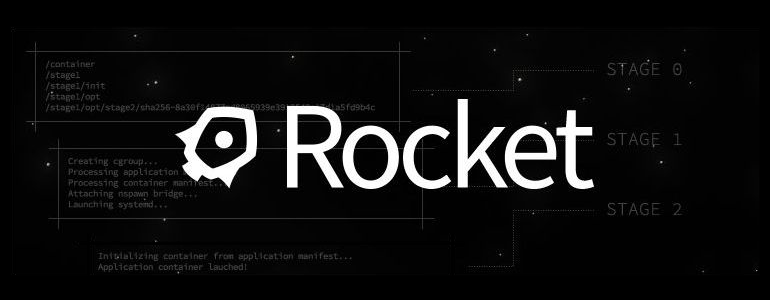
    As momentum continues to build for the Docker containerization platform, some of the open source project’s biggest contributors argue that it has lost its way. Priorities have shifted at Docker from the ideal of building a standard container to instead supporting an entire containerization ecosystem. According to the developers at Linux disto company Core OS, it’s this move has left the entire Docker process “fundamentally flawed.” It’s why they announced this week a competing container runtime called Rocket that they hope will become the “simple composable building block” they’d originally envisioned Docker would be.

    “Unfortunately, a simple re-usable component is not how things are playing out,” wrote Alex Polvi of CoreOS in a blog about the launch. “Docker now is building tools for launching cloud servers, systems for clustering, and a wide range of functions: building images, running images, uploading, downloading, and eventually even overlay networking, all compiled into one monolithic binary running primarily as root on your server.”

    That’s an inherently risky prospect for security-conscious organizations, Polvi argues. What’s more, as Docker starts moving toward expanding the capabilities of its platform it will only increase its complexity and diminish its ability to integrate containers elsewhere. Which is why CoreOS is leading the charge for Rocket. Introduced as a prototype on GitHub this week, Rocket is a command line tool designed to run what it calls ‘App Containers.’ These can be a specification of an image format, container runtime or discovery mechanism.

    “Rocket is the first implementation of an App Container, but we do not expect it to be the only one,” Polvi says. “An open specification allows other systems do their own implementation of App Container without using Rocket at all. CoreOS fully supports and embraces alternative implementations.”

    It’s a big move considering that the company’s co-founder and CTO, Brandon Philips, is a huge Docker contributor and on the Docker governance board. However, CoreOS argues that the clients that run Docker on CoreOS are clamoring for something with the kind of flexibility that Docker seemed to promise early on.  So while CoreOS will continue to support Docker long into the future it hopes Rocket can help solve some problems that many of its clients have with the platform.

    “Our primary users have existing platforms that they want to integrate containers with,” Polvi says. “We need to fill the gap for companies that just want a way to securely and portably run a container.”

    Polvi says that as CoreOS designed Rocket around four major factors that its team believes are key for good design of a standard container. First, it should be independent and composable. Second, container images should be designed for easy, distributed retrieval. Third, it should be open so that independent implementations of tools can run in the same container consistently every time. That’s why CoreOS says that it’s developing an open specification so that other systems can implement an App Container without even using Rocket.

    And, fourth, security should be tantamount.

    “Isolation should be pluggable, and the crypto primitives for strong trust, image auditing and application identity should exist from day one,” Polvi explains. “Security primitives are very important to us, so we added an identity feature to the meta-data service. This means every instance of a running container is given a unique identity, coupled with a lightweight HSM-like service for signing.”

    This is a new approach for container environments, so CoreOS is especially seeking community feedback for this design. However, the entire project is essentially ready and waiting for community support. Those interested should  out the details on GitHub.

  • DevOps Drives Innovation, Enterprise Differentiation

    DevOps Drives Innovation, Enterprise Differentiation

    It’s hard to believe that it’s been more than a decade since Nicholas Carr wrote his controversial article “Does IT Matter,” where he argued that IT had become such an integral part of business that IT disappeared into the infrastructure in the way roads, rails, electric utilities, and engines have in industry. IT, like such infrastructure, became so commonplace that it no longer provided a competitive advantage.

    While Carr nodded to the transformative nature of cloud computing, he didn’t see the competitive advantage made possible by businesses that could develop rapidly and innovate. And that’s at the heard of what DevOps, and the associated processes and collaboration is all about. And enterprises that are able to identify opportunities and rapidly innovate using IT more effectively than their competitors would succeed.

    However, to succeed, IT investments need to be viewed as more than just ways to cut costs in applications or IT infrastructure. IT has to be looked at as a way to actually drive innovation. And DevOps itself needs to be viewed as more than just a way to reap increased efficiencies out of existing processes and technologies: but as a way to also more tightly couple business needs with IT efforts. One of the most effective ways to do this is to build applications that matter to business users.

    When it comes to building great business applications, enterprises often don’t get apps right – however that is a gap DevOps can help to close. When it comes to building apps, organizations often try to build the same apps on mobile devices that they’ve been providing on desktops for years. Or, they try to build applications that attempt to accomplish too much, and end up being overly complicated and largely unused as a result.

    “Businesses don’t always get apps built right,” says Brian Katz director, head of end user experience and innovation at Sanofi. “In fact it’s common that they don’t. They try to develop complicated apps that people don’t actually use instead of developing apps that users really need,” says Katz.

    “If good app design isn’t part of the equation, all you get is operations and development tools and processes that are optimized to deliver poor app quality,” says Katz. “Design isn’t always part of DevOps, but I think it should be. But design is one of those things that is critical to driving innovation, but people don’t always think about it that way,” he adds.

    One way DevOps can help address app development speed bumps is to make sure that these teams are integrated more closely with those who are designing the apps and know what the end users want to do – and how they want to do it. This is especially true when it comes to mobile development, when users may have seconds to input or grab data while they are on the go.

    Chris Cera, CEO at mobile and web product development firm Arcweb agrees, and says that testing and design are crucial to building the apps users want to use and to driving IT innovation. “You want to test the user interface and get feedback. It’s so crucial to developing the apps that will not only be apps users want to use, but it’s the key to driving innovative design too,” says Cera.

    Those enterprises that do manage to successfully integrate great app design with their DevOps efforts will prove themselves formidable competitors in the years ahead. “The organizations that embrace DevOps are seeing what good happens when the business and IT collaborate, and in the years ahead we will probably see more technology leaders show how IT can lead the organization forward,” says Gene Kim, co-author of The Phoenix Project: A Novel About IT, DevOps, and Helping Your Business Win.

    The data are starting to prove such claims valid. According to the 2014 State of DevOps Report from Puppet Labs, DevOps enterprise adoption is increasing and those organizations that embrace DevOps are deploying code 30 times more frequently and with half as many failures as non-DevOps enterprises. That data helps to support the findings of a CA Technologies study published last year, TechInsights Report: What Smart Businesses Know About DevOps, which found that respondents claim to experience a 17 to 23 percent improvement in certain business outcomes, such as increased revenue, and faster time-to-market.

    That all certainly sounds like IT as a way to innovate and differentiate. While the day will come when “IT Doesn’t Matter” – that’s a time that is likely decades away.

  • Choose Digital Chooses Jenkins For Continuous Deployment

    Choose Digital Chooses Jenkins For Continuous Deployment

    Challenge: Shrink Time To Innovate

    Choose Digital  offers a white label media store solution (think iTunes) for enterprises that want to reward brand loyalty with opportunities to use miles, points, or cash to buy digital products. As a competitive media company, Choose Digital was eager to test and adopt innovations to its software platform as fast as its developers could produce them. The media firm was ready for a model that lifts the burden of maintaining tools in-house.

    “We were looking for a way to move from a straight compute environment to a DevOps approach that would enable us to push lots of code and new builds out daily while quickly iterating a lot of new ideas for improvements to our digital marketplace,” says Mario Cruz, Co-Founder & CTO, Choose Digital. A managed service could also relieve the headaches of supporting all the development applications internally. Choose Digital chose CloudBees’ Jenkins , a Java-based pipeline and orchestration tool for continuous deployment, which was also available as a hosted service, to meet those needs.

    Solution: Simplification

    Once Choose Digital made its decision, CloudBees made it simple to get up and running. “We opened our account with CloudBees and were productive with our Dev and Stage environments in two days using a fully functional Jenkins trial implementation,” says Cruz. Choose Digital moved production into the cloud 30-days later.

    Jenkins enabled Choose Digital to find and fix bugs and try new things fairly quickly, without waiting for monolithic releases. “Jenkins is how we innovate, test our code, and enable the coder to immediately fix what he breaks,” says Cruz. Jenkins provides continuous integration services for software development and enables Cruz’s team to run build tests and functional tests.

    “Jenkins gives us a quick snapshot so we can find broken code right away, not five weeks from now,” says Cruz. Enterprises that are still using older approaches don’t typically have time to fix small bugs, and certainly can’t fix them right away.

    Choose Digital uses Jenkins in the cloud (DEV@cloud), which CloudBees fully manages and hosts on AWS EC2 http://aws.amazon.com/ec2/. Cruz doesn’t worry about maintaining the environment or whether his media platform has enough space or capacity. “CloudBees manages all the updates and issues with Jenkins CI. They support all the plugins for Jenkins, even if it is not their own plugin,” says Cruz.

    As a managed service, Jenkins simply works from machine to machine. “My developers can focus on the product. They don’t have to worry about whether they have the right software build, the right apps on their machines, or the right versions of those apps,” says Cruz.

    “As a result, development is up to 5 times faster in our continuous deployment environment than it would be if we had set up our own hardware or used an IaaS solution. Things that could take months or years we can now do in days,” says Cruz.

    A Bump In The Road

    As Cruz and his team moved to Jenkins, the biggest challenge was communication. “The toolset is not the challenge, it’s having everyone thinking with and getting used to the new DevOps mindset,” says Cruz; “while we were fully functional in two days, it took two weeks to get used to the new mindset.”

    Today, Cruz’s software team communicates across stakeholders and team members in a DevOps approach that leverages Slack https://slack.com/ (IRC) and HipChat https://www.hipchat.com/ plugins for Jenkins. “DevOps is more a culture than it is tools; DevOps is all about communication. We communicate to our team, to the QA department, and to product managers,” says Cruz.

    Current State: Everyone Knows, So We Can Fix Everything

    Jenkins brings transparency so that what only some could see—such as what a developer has broken—becomes everyone’s knowledge. “Things get flushed out pretty quickly. By using Jenkins CI, you see the hidden things that no one knows about quickly,” says Cruz.

    Cruz has some realistic advice for his peers: The sooner you get to an environment and mindset like Choose Digital uses, says Cruz, the sooner you will see the benefits and flush out bigger problems. “It’s not perfect the first time around but it gets better and better on every build. You get rid of the technical debt you didn’t know you had,” says Cruz.

  • Q and A: ITinvolve’s Matthew Selheimer on DevOps and Culture Change

    Q and A: ITinvolve’s Matthew Selheimer on DevOps and Culture Change

    The intersection of DevOps and culture is a common subject here at staging-devopsy.kinsta.cloud. Is it tools and processes that help support the culture, or does the culture of an organization drive toolset and process building decisions? Perhaps a little of each. We recently had a talk with Matthew Selheimer, Chief Technical Evangelist at ITinvolve, a Houston, TX-based maker of IT collaboration and workspace management applications.

    staging-devopsy.kinsta.cloud: Tell us a little about ITinvolve, and the IT challenges the company tries to solve?

    Selheimer: One of the core challenges that the founders of ITinvolve identified was the fact that organizations really didn’t have an effective understanding of their environments, and all of the associated dependencies. It’s a reflection of how today’s configuration management efforts, using their databases and discovery tools, fall short. They only filled in part of the picture, and a lot of times organizations spend a significant amount of money investing in CMDB initiatives only to have people not even bother to use the data. Maybe they didn’t trust the data sources, or they had their own private systems, spreadsheets and things they were accustomed to using, and they kept using those familiar toolsets.

    The founders took a close look at what could be achieved if we apply the principles of Enterprise 2.0 to the way IT is managed. What if we actually embrace the notion that it’s all about people, process, and technology, and in that order, instead of not putting technology or the process first. That is, historically, the approach of many management vendors. So ITinvolve was founded on the principle of embracing people as the most important asset in the IT organization.

    I know you’ve been in the industry for a long time, so you’ve lots of anecdotes you can look back on your career where it was either that the tribal knowledge created the great success – or it ended up creating the great failure. And when people left an organization, the business was at risk because it was so dependent upon tribal knowledge, or even a single person. So, when they left the company, there was a big freak-out because they knew how everything was configured and why it was configured that way and that tribal knowledge was something that couldn’t be lost.


    staging-devopsy.kinsta.cloud: With that dynamic in mind, are you seeing DevOps impact traditional CMDB usage? Are organizations using them widely, or are they still more a promise than reality?

    Selheimer: I think these are real problems that organizations continue to struggle with, that there is so much risk involved in change because we’ve cobbled together all of these architectures and infrastructures over the years. That was the core idea behind the company. And the initial effort product was to take discovered data – CMDB data, SharePoint data, Visio diagrams, all the scattered data sources – and bring them together in a way that is visual, logically organized, and within an application that people want to use.

    We were initially focusing more on the traditional ITSM market, but what led us to the DevOps market is that DevOps is the area that has everybody’s attention, because it is so much closer to what the business really cares about. At the end of the day, resolving incidents and delivering better customer support and customer experiences, are critical parts of the IT organization. But how do you actually get applications developed and employed, how do you modernize legacy infrastructures and legacy applications, which aren’t going to go away? How do you mobilize the front end of them and those kinds of things?


    DevOps: Automation helps, but it’s not about just automation for the sake of automation. The danger there is you end up just accelerating bad process.

     Selheimer: Kevin Behr and I were talking about this a couple of weeks ago. We concluded that automation is the last thing you should do. What you really need to be doing first is figuring out how to actually get the mindset shift necessary for people to start thinking about end-to-end flow? It’s not about optimizing a workstation, it’s about thinking in manufacturing terms. It’s about flow all the way across, and that starts with requirements and what we’re trying to achieve from a business standpoint. That carries all the way through to the actual deployment and their ongoing operation.

    But there are huge communications gaps when it comes to attaining that end-to-end flow that are not being addressed by traditional communications – whether that’s conference calls, whether that’s email and instant messaging, whether it’s SharePoint sites. We see pockets of collaboration, so you have GitHub on the source code side of things. You’ve got some collaboration products that are doing some level of basic Wiki and other kinds of collaboration. But there is no real collaboration engine that’s really orchestrating that flow.

    So we see that there are a lot of gaps in this DevOps tool chain. Things are still getting passed on down to operations, which doesn’t have enough clarity as to what is needed, why it’s needed, or when it’s needed. Organizations have been able to overcome these challenge on a small scale. A lot of the DevOps science projects that are out there haven’t fully seen this issue yet. I was just reading O’Reilly’s book DevOps in Practice, which profiles a case study with Nordstrom and a service provider for the Texas government.

    I think that is a great book. It is a great example of the maturity of DevOps. So I can take a small project and a small team and I can say, let’s go stand up this project around how we are going to start doing middleware configuration and automation better. And bite off that little piece of it – and have some degree of success in being able to have infrastructure as code and that well-bounded box. But, once we start trying to think about taking this up to full-scale applications – once we start thinking about taking this outside of a new generation web company that’s grown from the ground up using agile principles but doesn’t have a lot of legacy – and start trying to apply this to JP Morgan Chase, or to Merck, or to big companies that have duct tape and baling wire holding all of these legacy applications from mainframe to everything altogether, that’s something different altogether.

    I think that’s where these communication problems are really going to be amplified in a big way. And that’s what we’re seeing some of the dialog that we’re having with prospects and the marketplace – around how to really do DevOps at an enterprise level. How do we take it out of these small-scale projects where you can have this startup mindset and actually start applying that to 300 people scattered across five, six, eight different time zones and eight different nationalities?


    staging-devopsy.kinsta.cloud: How do you that? Is that culture? Is it learning how to work across silos?

    Selheimer: Everybody has been saying that culture is the challenge, right? It’s the ability of the organization to adopt a different mindset; it’s the ability of people to think more in terms of the end-to-end process as opposed to their particular area. It’s the old silo versus flow debate. My position on that is we have to have silos, and we have to have expertise. There are still heart surgeons in the world and there will always be heart surgeons in the world. But what we need is this kind of T-shape. We need the vertical siloed expertise, but we need the horizontal flow coming across as well. And we have to tie the conversation together and create opportunities for serendipity and for people to engage and to collaborate in ways they haven’t been able to do before. That’s what success looks like.

    Enterprises try to do this in an ad-hoc way today. It’s with the water cooler conversation, but generally that ad-hoc happens within a function of the organization, rather than a cross-function. So, one thing I recommend is to have your developers and system administrators have lunch once a week. Have your teams get to know each other better and understand each other’s work better. That’s what is important when it comes to culture change.

  • Detours Ahead: Overcoming DevOps Challenges

    Detours Ahead: Overcoming DevOps Challenges

    Saying that you’re interested in DevOps is another way of saying you’re interested in change. That’s what DevOps promises any organization. No matter the problems a company is trying to solve or the goals it’s trying to reach, DevOps depends on a willingness to embrace some big changes. Sure, it can help you streamline software deployments, but it requires shaking up a company’s usual processes and routines. As we all know, change can be complicated, so before your organization transitions to an agile culture, it’s best to prepare for the likely challenges ahead.

    Breaking Old Habits for Continuous Delivery

    Many of the procedures we follow at work each day are second nature, and what’s familiar carries a certain comfort with it. Even when we realize a more efficient process is within reach, old habits are tough to break. For an organization that employs hundreds, any change can be a challenge.

    And DevOps offers no shortage of challenges. It entails overhauling a company’s deployment process, its communication patterns, its department structures and even the roles of individuals on a team. Yet unless an organization is willing to let go of its old habits, the benefits of continuous delivery won’t ever be achieved. When acclimating people to this new procedure, it’s important to convey that the old procedure – one team throwing code over the wall to another one – will be left behind for actual collaboration in which Development, Operations and possibly other departments work together, not just in silos.

    Getting Past the Resistance to Change

    Encountering some reluctance to change will be natural, and a smooth transition depends on making everyone aware of why DevOps will be a big step forward. This includes communicating what the advantages will be for individuals, departments and the company as a whole. With an agile plan in place, greater efficiencies will become the norm, and a team will have the ability to spot and fix problems more quickly, so 3 a.m. phone calls to the system admin won’t happen anymore. Once managers through C-level folks are aware of these potential advantages, resistance will gradually turn into acceptance and enthusiasm.

    Combating the Myths and Rumors

    Many think DevOps is only for the well-known unicorn companies, such as Etsy and Facebook, or that it’s an exact science that will produce the same results for everyone. Some even believe the rumor that DevOps only works with certain operating systems. The truth is that continuous development can take place anywhere as long as the company culture is right. As detailed in the Rackspace-sponsored e-book, The DevOps Mindset: Real-World Insights from Tech Leaders, many DevOps practitioners went through their own uphill climbs to become more agile, and they have the firsthand experience to resolve many popular misconceptions.

    “You don’t have to be in Silicon Valley to embrace the DevOps culture,” says James Kenigsberg of 2U. “In fact, many new firms these days have a bad habit of building shiny technology because it is shiny, which goes against the DevOps principles of communication and transparency.”

    Jeff Hackert of Chef dispels the myth that DevOps is a one-size-fits-all solution. “It is not a set of proscriptions or a recipe that will give you a defined best practices outcome,” he explains. “Your best practice is the collective wisdom of the very smart people you’ve hired to solve your problems. And if what you have is a siloed or broken environment, you want to increase the communication, not impose new rules.”

    Getting Automated Without a Struggle

    When an organization is considering DevOps, they may find that the opportunities for efficiency not only involve employee collaboration, but technology as well. Most IT departments would jump at any chance to save time when it comes to coding procedures, and automation is a means of making this happen. By offloading these processes to an automated system, people can tackle other tasks, and businesses that release several deployments a day can greatly simplify their rollouts. For those who might not be familiar with the ins and outs of automation, receiving some guidance from a trusted IT provider can be a good first step. Finding an advisor to guide your initial automation efforts can prevent the expense of hiring a DevOps engineer with automation knowledge.

    Finding a Path Around DevOps Obstacles

    Every company’s DevOps strategy will be unique, and every company’s plan for overcoming challenges will be just as unique. Whatever the circumstances, communication will be crucial to any adoption, as it ensures that everyone understands why such a change is necessary. Getting acquainted with the success stories out there will dispel any myths circulating among team members, and stumbling blocks can be avoided by the understanding that familiar silos will be replaced by more efficient collaborations.

    Despite its challenges, DevOps can be the catalyst for a variety of improvements, from productivity to employee morale. Those who are the most successful at being agile will not only have the right culture in place, but be able to negotiate the challenges that DevOps has in store for those ready to embrace change.

  • How the Heck do you Jumpstart DevOps culture?

    How the Heck do you Jumpstart DevOps culture?

    When the thought leaders in DevOps get onto their soap boxes, it’s pretty much a guarantee that at some point or other the discourse is going to turn towards culture. But often the speeches and conversations never dive deeper than platitudes about putting emphasis on people over tools.  As true as it may be, though, most newbies want to know what that really means. How exactly does an organization shift to a DevOps culture?

    Answering that question should start with a little bit of translation. When speakers hit the conference circuit, generally their references to “culture” are interchangeable with “collaboration.” An organization with a healthy DevOps culture is an inherently collaborative one.

    Take a hypothetical situation where an DevOps organization is setting a requirement for a certain  amount of performance throughput on an application, says Matt Selheimer, chief technical evangelist for ITinvolve. Developers in a traditional organization with that requirement would probably have to scratch their heads and wonder how to write the code, and figure out what middleware components they’d need to deliver that level of throughput. But an organization running with a collaborative DevOps culture would ideally give operations folks visibility into that project much earlier in the process.

    “They might be able to come and say, ‘Hey, we can solve that through upgrading the IO on the storage area network, and if we do that, that will shave two weeks off your development schedule, and we’ll be able to deliver that faster to the business,’” Selheimer says. “So it’s those moments of opportunity — those synergies that you get when you get people engaged and when you get people who have like interests following one another and engaging one another that creates opportunity.”

    That’s the ideal organizations are striving for, but it still doesn’t answer that question of how to achieve that culture of cooperation. There’s no pat answer for that, but perhaps one of the catalysts most likely to shift people’s behavior and beliefs is the fostering of a collaborative work environment. And that starts with the establishment of some sort of collaborative infrastructure.

    See, sometimes even culture needs a boost from better use of tools. They’re just not necessarily the ones most people talk about when they’re discussing DevOps. Instead of thinking so much about automation tools, DevOps organizations need to prioritize tools and processes that enable knowledge transfer.

    “So there’s an inherent bias in the community against tools, and I’ve seen that bias be eroded on the automation side, but I haven’t quite seen that bias be eroded on the collaboration side,” Selheimer says. “It’s time to really take a look at what tools you’re using to collaborate, because I guarantee you’re using tools.  You know, you’re using email, you’re using instant messaging, you’re using SharePoint, you’re using Vizio, you’re using spreadsheets, you’re using phone calls — those are tools. ”

    The question is, how effective is your existing toolset at greasing the skids for easy collaboration? The point is that automation may be important, but collaboration is the horse to automation’s cart. The problem is, that too many organizations are putting automation tool sets and processes first, leaving collaboration as an afterthought. That’s dangerous, says Alan Sharp-Paul, CEO of ScriptRock, a developer of configuration management tools.

    “The automation of a system is often considered an ‘end’, not a ‘means’. Bad process and bad design become codified because they get buried,” he explained in a blog post. “Taking the necessary steps to ensure collaboration on requirements is often pushed aside in the interests of simply getting it done.”

    Obviously, Selheimer has a biased stake in this game—his company creates collaborative software for IT teams. But his point is valid—organizations generally need to establish better mechanisms for their IT workers to share their work, their processes, their tools and system statuses so that they can better establish a continuous delivery model. More DevOps organizations are slowly coming to that realization. It’s why we’re starting to see more announcements from companies seeking to bulk out the collaborative tool box.

    For example, yesterday the folks at VictorOps released its VictorOps Transmorgrifier to help organizations bake in more existing documentation, graphs and data about relevant systems into IT alerting. And earlier this month AppDynamics announced the release of its new DevOps Virtual War Room to help consolidate application and system information and metrics. Similarly, not long before that Tasktop introduced a new product called Tasktop Data that’s meant to help act as a data repository for real-time analytics across teams, projects domains and tools. Clearly, the pool of tools is growing deeper as organizations voice the need for a better infrastructure to support cooperation across IT tribes.

    But that doesn’t necessarily mean that mechanism has to be expensive or complicated. It just needs to be more cohesive than a bunch of disparate documents spread out across multiple locations.

    “There’s got to be a centralized, secure, well-lit place where people can document how everything fits together,” explains Chris Clarke, senior vice president of product management for CollabNet, saying that even something like a Wiki or a meta site can help  organizations start to link together documentation about processes, architecture diagrams, pointers to tools and so-on.  The simpler that an organization can make it for team members to share information like that, the more likely they’ll start working closely together.

    This consolidation and dissemination of knowledge is also crucial for the long-term resiliency of DevOps teams. As many more organizations seek DevOps-savvy personnel to help jump-start their continuous delivery programs, employee turnover can pose danger to those organizations whose knowledge base is concentrated around a few DevOps rock stars or isolated teams.

    “Churn can be dangerous because you get enough little islands that are each trying to satisfy their own goals and you get the superheros on those island and then effectively what happens is those superheros walk out and those islands blow up,” Clarke says.

    This is why effective infrastructure for sharing knowledge is especially important  in 2015. According to a recent survey by Rackspace, only about 38 percent of organizations who currently use DevOps for all applications across the organization. However, approximately 20 percent more of these organizations are currently working on pilot projects. And among those who haven’t yet implemented DevOps, nearly 50 percent say they have plans to fully integrate development with operations in the near future. Effective collaboration will be critical in ensuring success as as large organizations push simple DevOps pilot projects to full-blown IT departmental transformations. On the enterprise-wide level, collaborative infrastructure lag becomes unsustainable.

    “If I’m a small startup company and everybody’s all in the same offices, I have a lot more opportunity collaborate in a face-to-face manner,” he says. “But if I’m General Motors or Ford or Bank of America, and I’ve got thousands of developers and thousands of operations personnel scattered across every country and continent, I can’t do that effectively.”