Category: Infrastructure/Networking

  • Improving Mainframe Agility With DevOps

    Improving Mainframe Agility With DevOps

    Mainframe workloads were on the rise even before the coronavirus pandemic, and transaction-processing mainframes became vital as lockdowns went into effect and every aspect of business and personal life occurred online. Mainframes are reliable, secure, highly available and affordable, and it is essential for organizations to ensure their mainframe can achieve peak agility to enhance profitability and improve customer experience.

    There are four areas of focus for DevOps teams who want to improve mainframe agility: teamwork, cloud services, KPIs and automation. Let’s look more closely at each one.

    Encourage Teamwork Between DevOps and Mainframe Ops Teams to Improve Agility

    It’s vital that mainframe ops teams work seamlessly with DevOps teams to ensure adoption of best practices in both areas, where practical, and that those best practices are adhered to. No matter how skilled your DevOps team, they must always be open to learning from mainframe professionals, operational and cybersecurity experts.

    To truly empower everyone on your team to achieve maximum mainframe agility, mainframe code must translate within the larger, multi-platform DevOps toolchain. If DevOps and mainframe code are not in sync, mainframe code could slow down software development lifecycles. Important processes, such as diagnostics, test execution and source code need to be integrated to enable DevOps teams to achieve better productivity.

    Enterprise DevOps is shifting focus away from software development exclusively to encompass surrounding processes within organizations. Successful DevOps teams must be able to work with cybersecurity experts and mainframe ops teams throughout the coding life cycle to ensure that everyone is on the same page and applications are functioning optimally.

    Decide Whether to Move Entirely to the Mainframe or Integrate Cloud Services with On-Premises Mainframes

    Scaling your organization for growth by migrating entirely to the cloud is not necessarily the right choice for everyone. In some cases, moving away from the mainframe’s core systems can be costly and unnecessary.

    Cloud-based services don’t have to be eliminated entirely, either. The cloud can and should be used for business processes that could benefit from real-time data updates, easy team collaboration and seamless integration with other software and tools. Mainframes excel at functions that require reliable, secure transactions.

    Whatever decision your organization makes, it must be communicated and agreed to at all levels. A customer-centric approach is ideal here, where the needs of the business are considered, but a seamless customer experience is prioritized.

    Establish Measurable KPIs

    Achievable and measurable key performance indicators (KPIs) are essential to monitoring your progress as an organization. KPIs for mainframe functionality usually include an availability rate of 99.999%, which roughly translates to downtime of less than 5.6 seconds per year. KPIs also generally measure time windows for batch completions. Software delivery velocity, efficiency and quality should be evaluated, but make sure you’re not prioritizing one of these metrics at the expense of another.

    There are more nuanced goals that need to be prioritized, too. Continuous improvements in software delivery are harder to quantify, but no less important. By fostering a collaborative environment where communication is key and teamwork is valued, your organization can create a better product or deliver better services for developers and customers.

    Use Automation Whenever Possible for Mainframe Agility

    Automated testing and AI-enabled processes can solve problems in real-time and free your DevOps teams to focus on larger issues. Mainframe ops teams can save their organizations money by relying on automated processes, which can also reduce personnel costs.

    Despite the benefits of automation, mainframe code is often removed from automated processes commonly applied to DevOps toolchains. Javascript, for instance, is one of the most commonly used programming languages due to its platform independence. It’s an essential tool for DevOps developers to enable the smooth configuration and installation of applications.

    But as infrastructures grow more complicated and surface areas expand to accommodate more users, operations teams can feel overwhelmed. With the continuous pressure to create new and better software on accelerated timelines, DevOps teams can unwittingly introduce vulnerabilities in Javascript coding as they speed through the software development and delivery pipeline.

    Automated mainframe diagnostics and optimization tools are vital to improving both the customer and developer experience.  Comprehensive and accurate data presented to mainframe ops teams in real-time can detect vulnerabilities and to find and fix potential issues.

    Ultimately, the mainframe is here to stay, with 93% of software experts citing the strength, reliability and scalability of the platform. Mainframes form the backbone of most monetized applications and websites, so it’s no surprise that mainframe agility has become a top focus for many IT departments. No matter how sleek and flashy your application is, if customers have a bad experience at the transactional level of the process, it could mean lost sales.


  • Cloudflare Lays Out GitOps Ambitions for CDN Platform

    Cloudflare Lays Out GitOps Ambitions for CDN Platform

    Cloudflare’s acquisition of Linc is the latest move in the hosting provider’s move to better align its content delivery network (CDN) service with the tools and frameworks organizations rely on to build modern applications using GitOps processes, according to CEO Matthew Prince. Cloudflare also announced other updates and automation-related features, including a way to automatically deploy JavaScript applications using Linc’s technology.

    Prince said these latest moves are part of an ongoing effort to simplify integration of front-end applications with back-end services.

    Cloudflare Pages, for example, enables developers to select their preferred repository, identify what types of frameworks they are using, and then automatically deploy their applications on the Cloudflare CDN. The goal is to automate the continuous integration process in a way that enables developers to focus more of their time and effort on developing code, said Prince.

    Linc’s technology, meanwhile, will make back-end services more accessible to front-end applications using Front-end Application Bundles (FABs) that accelerate server-side rendering by combining front-end and back-end logic. The result is better performance across any type of application that relies on JavaScript, application programming interfaces (APIs) and markup languages, otherwise known as JAMstack, a framework for building complex applications.

    Prince said JAMstack adoption is accelerating because it allows developers to continuously modify the user experience (UX) without the need to modify back-end services. The CDN, meanwhile, has emerged as a platform for continuously deploying applications closer to the point where they are consumed by the end user, said Prince.

    That’s become especially critical at a time when digital business processes require data to be processed in near-time, and as closely as possible to the point where it is generated, said Prince. That’s not possible when application logic runs on a public cloud, Prince added.

    Cloudflare currently has points of presence in 200 cities worldwide, and is actively courting developers as part of an effort to usurp CDN rivals. Most recently, Cloudflare added a Durable Objects capability that makes it possible to run stateful applications across a distributed, serverless Cloudflare Workers service.

    Ultimately, Prince said the goal is to automate the majority of the DevOps process, as code moves from a Git repository to the network edge. A CDN will also provide the means to monitor and secure applications running at the network edge, Prince added.

    It’s not clear how much application logic will be pushed to the network edge via CDNs; however, it’s apparent CDNs are emerging as an important deployment platform that should be incorporated with DevOps processes. How providers achieve that goal is, in part, dictated by the framework used to build an application.

    Cloudflare’s moves are indicative of the larger trends of automating DevOps processes, a development that should make DevOps best practices more widely accessible to many more developers.

  • BMC Expands Scope of Mainframe Management Portfolio

    BMC Expands Scope of Mainframe Management Portfolio

    BMC this week updated its portfolio of mainframe tools as part of an effort to make mainframe platforms more accessible to IT operations teams and developers.

    At the core of these offerings is BMC Automated Mainframe Intelligence (AMI), which embeds machine learning algorithms in mainframe platforms to automate a wide range of processes. BMC AMI supplants the company’s existing MainView tools with a framework that promises to make artificial intelligence (AI) more accessible via a revamped user interface.

    BMC AI Ops

    John McKenny, senior vice president and general manager for ZSolutions at BMC, said an AI model based on the data collected by BMC AI can now be spun up in a matter of minutes, and can identify a potential issue days before it might otherwise occur.

    BMC AMI also exposes a REST application programming interface (API) through which more mainframe tasks will be automated.

    McKenny said as organizations accelerated digital business transformation initiatives in the last year, the need to modernize mainframe platforms became more acute. Mainframes are now the backend for multitier application environments that need to be managed in concert with other platforms, McKenny said.

    BMC is also adding Compuware zAdviser dashboards to the DevOps platform it gained with the acquisition of Compuware last year. BMC also updated Compuware Topaz for Total Test to streamline test creation for mainframe applications. There’s a growing need for better tools to test digital business processes created for the mainframe, noted McKenny.

    Other updates include Control-M job scheduler and Compuware ThruPut Manager integration, to ensure jobs run at or before their expected times on a mainframe, and an update to BMC AMI Data for IMS that simplifies database management in mainframe environments.

    Finally, BMC updated the BMC AMI Security offering with the Compuware Application Audit tool; this update allows for better capture of relevant user access and behavior data.

    McKenny said while mainframes remain one of the most secure platforms available, administrators must ensure security policies are properly implemented. IT organizations should avoid complacency and ensure zero-trust security in mainframe environments, McKenny said.

    McKenny added that, despite their long tenure and the rise of cloud computing, mainframes remain relevant. Many organizations determined that the fastest way to achieve their digital business transformation goals is by extending their mainframe platforms – platforms many of them already rely on to process and analyze transactions.

    What’s changing is the IT professionals that manage mainframes alongside other platforms, such as the cloud. Many of those IT professionals naturally expect integrated AI capabilities that enable the average IT administrator to manage a platform that was once the sole realm of dedicated IT specialists.

  • How to Make a Self-Healing IT Infrastructure a Reality

    How to Make a Self-Healing IT Infrastructure a Reality

    In 2019, enterprises worldwide reported that every hour of infrastructure downtime cost them an average of $301,000- $400,000. If a system is down for five hours, that’s $1.5 million lost—and that’s on the low end. Five hours of downtime can impact companies for months down the road. It’s in the hands of DevOps practitioners to ensure systems are up and running and budgets are kept in line. But if they don’t have the proper tools on hand that allow them to juggle their responsibilities while adding value to the business, it makes their jobs that much more difficult—or, dare I say, impossible.

    Teams simply can’t afford to go offline to fix incidents, but neither can they afford to manually sift through data to find the root cause. By automating the incident management process, developers have more time to focus on building new products and capabilities that drive revenue. With a self-healing IT infrastructure, teams can tackle these issues before they become larger issues costing millions of dollars.

    Imagine you’re running to catch a bus and your heart rate increases, but when you sit down, it doesn’t come back down to a normal rate. This could quickly become a much larger, even fatal issue. In this instance, the body should “self-heal” to get back to a normal rate. On a similar note, a self-healing IT infrastructure allows teams to quickly get back on track by fixing issues before they become a $1.5 million problem.

    Let’s look at how DevOps practitioners can turn a self-healing IT infrastructure into a reality.

    Self-Healing Infrastructure Needs Observability and AI

    Observability is the practice of collecting deep data from applications and services to provide insights through three core components: logs, traces and metrics. While these three components are essential to a self-healing infrastructure, they are most powerful when used together. Similar to our senses of sight, hearing and touch, they each tell us something different but are equally important. When combining the power of all three, development teams can determine where, when and how an incident occurred and take action as needed.

    We all know the pain of traditional monitoring tools. They don’t surface immediate issues or identify root causes. They rely too heavily on developers to interpret and analyze immense amounts of data then sift through it in a tedious and time-consuming process requiring extra budget for more human power, and extra time to identify and remediate incidents. Using today’s cloud-native self-service approaches to combine observability and artificial intelligence, teams can set up tools themselves that automate the process of gathering and correlating metrics, logs and traces at machine speed to provide a complete, intelligent and actionable picture of what’s happening and why. And that’s where a self-healing IT system starts.

    The Future Is Within Reach

    By ingesting observability data, applying AI to analyze that data and create insights around root causes, then leveraging automation in a closed-loop, dev teams can not only see what’s happening but also take action on it for remediation. When this closed-loop process is done intelligently at machine speed, that’s when self-healing becomes a reality.

    The idea of a self-healing IT infrastructure doesn’t have to be a distant vision. In fact, the democratization of cloud computing and advanced data science have put the required observability technology within reach of teams of any size with any budget. When artificial intelligence and observability come together, DevOps practitioners can operate less and innovate more.

  • Netlify Extends JAMstack Reach to Edge Computing

    Netlify Extends JAMstack Reach to Edge Computing

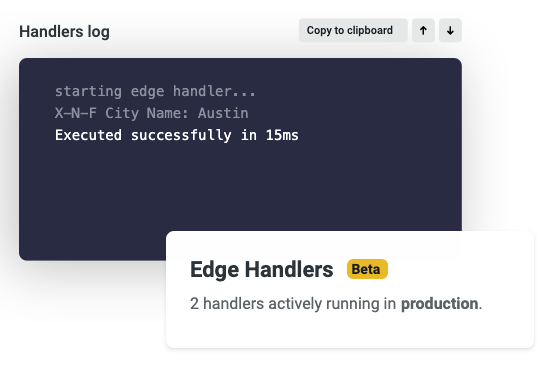
    Netlify, at its JAMSTACK CONF VIRTUAL event today, announced Netlify Edge Handlers, which make it possible to extend a Git-based workflow to edge computing applications.

    Company CEO Matt Biilmann said Netlify Edge Handlers, available in beta, puts the primitives in place for deploying serverless web applications based on a JAMstack software architecture that employs JavaScript, application programming interfaces (APIs) and markup languages, otherwise known as JAM, to isolate front- and back-end components of an application.

    A Git-based approach will also enable DevOps teams to extend workflows to edge computing applications that can be deployed on any number of platforms, he said. As an extension of a Netlify platform written in a modern Rust programming language, Netlify Edge Handlers makes it possible to build and launch web applications and websites based on a JAMstack architecture from within a continuous integration/continuous delivery (CI/CD) environment.

    Prior to the availability of Netlify Edge Handlers, building and deploying web applications on edge computing platforms required extensive coordination across teams, the creation of detailed edge logic with many dependencies and deviation from standard web development best practices, Biilmann said. Now, developers can write simple JavaScript that builds and deploys to the network edge in a way that enables simplified A/B testing, custom authentication and API aggregation, he noted.

    Developers also can build and manage edge logic from preview to production, including deploying those applications via the existing Netlify multi-cloud network.

    More application code is being pushed out to the edge because many organizations are now processing and analyzing data closer to where it is created and consumed, as part of their digital business transformation initiatives. Web applications that execute closest on a node to the user eliminate or reduce roundtrip request and response flows with the client.

    Biilmann also noted that because those applications are employing a platform developed using Rust, they are also inherently more secure.

    There may come a day when there are more application workloads collectively running at the edge than there are on cloud computing platforms. However, if that goal is ever to be achieved, it needs to become easier for developers to build those applications. Given the fact those applications are also likely to be targeted by cybercriminals, it’s critical to ensure those applications are as secure as possible.

    In the wake of the economic downturn brought on by the COVID-19 pandemic, many organizations have accelerated digital business transformation initiatives, many of which depend on edge computing platforms. The only way to achieve that goal, however, is to make it possible to build these applications using JavaScript tools that most developers of web applications have already mastered. Otherwise, organizations will need to invest in training developers to master another framework for deploying edge computing applications. That would require time they might not have.

    Regardless of the path forward, a massive wave of edge computing applications soon will stretch the boundaries and limitations of whatever DevOps processes organizations have in place today.

  • Cloudflare Expands Range of CDN Alternatives to the Public Cloud

    Cloudflare Expands Range of CDN Alternatives to the Public Cloud

    Cloudflare, a provider of a content delivery network (CDN) based on more than 200 data centers, this week announced it has made available a Durable Objects capability in beta that makes it possible to run stateful applications across a distributed serverless Cloudflare Workers service.

    Company CEO Matthew Prince said Durable Objects provide a truly unified approach to managing storage and state that ensures low application latency across the CDN service.

    Cloudflare this week also launched API Shield, which employs client certificate-based identity and strict schema-based validation using hosted public key infrastructure (PKI) that only allows application programming interfaces (APIs) with known behavior and identities to access the CDN service.

    The company also added a Cron Triggers tool that enables IT teams to schedule jobs on Worker nodes rather than always having to make HTTP requests.

    Finally, Cloudflare this week added a free Cloudflare Web Analytics tool and a free Cloudflare Radar tool that allows IT teams to view global traffic and security trends across the internet as they happen using data gathered from a network that touches more than 25 million internet properties in more than 100 countries.

    As applications become more distributed than ever thanks to the rise of edge computing, there is a growing need to deploy stateful applications that process data closer to where it is generated and consumed. Rather than IT teams having to manually deploy those edge computing platforms, Cloudflare has been making a case for a serverless computing platform that enables IT teams to leverage platforms it manages on their behalf.

    A Durable Object, in the case of Cloudflare, is an instance of a class that can be written in any programming language. Each object has a unique identifier and exists in only one location. Any Worker running anywhere in the world that knows the object’s ID can send messages to it. Durable Objects can have persistent state stored on disk. Each object can also maintain a consistent copy of the state in memory to eliminate latency. The in-memory object will be shut down when idle and can be re-created later on-demand.

    The Cron Trigger tools provide IT teams with more control over how they consume capacity on the Cloudflare CDN, added Prince.

    The Cloudflare CDN ultimately provides a lower-cost alternative to cloud services for deploying edge computing applications that gives IT teams more control over where and when application workloads run, Prince said.

    In the age of COVID-19, the days when IT organizations dispatched IT staff to physically install and update physical infrastructure may be coming to an end. There’s no real need to incur the cost or put IT staff at risk of contracting the virus. The issue now is determining whether to employ a cloud service provider or rely on any one of several CDN options that have historically been employed to optimize web applications.

    Regardless of the path chosen, the ability to remotely deploy any type of application on IT infrastructure resources has never been greater or easier.

  • Serverless Computing: Taking DevOps to the Next Level

    Serverless Computing: Taking DevOps to the Next Level

    Serverless computing enables you to outsource information, thus freeing teams to focus on front-end work. Organizations choose serverless when they look for faster and easier ways to release updates and patches. DevOps teams often use serverless when they are looking to automate infrastructure tasks. However, each provider offers different capabilities, and each service does require a level of training pre-adoption.

    What Is Serverless Computing?

    Serverless computing is a method that outsources infrastructure and infrastructure tasks to external providers. Organizations choose serverless computing because it enables development and operations teams to focus on the front-end of products and services.

    There are a few traits that distinguish serverless infrastructures from traditional cloud automation models:

    • Serverless computing services eliminate user responsibility for the management or operation of infrastructure.
    • Serverless computing services enable users to run code on-demand according to requests or event triggers. Infrastructure use scales transparently based on how many requests or events occur.
    • Serverless computing is pay-for-use and can be used to ensure that users pay only for actively used resources.

    The benefits of serverless in enterprise environments include:

    • Better control over production deployments.
    • Faster and easier updates or patches.
    • Increased productivity and easier release rollouts.

    Popular Serverless Computing Services

    All three major cloud providers offer serverless computing services. Below you can learn about these services and how each operates.

    AWS Lambda

    AWS Lambda is a service for serverless computing with other AWS services or via API. It can be connected to applications or run as standalone code. When using Lambda, users pay for active compute time although instances can be reserved to ensure their code runs with menial latency.

    Lambda can be triggered by a variety of AWS services, including Kinesis and DynamoDB. It can be monitored through Amazon Cloud Watch. Common use cases for Lambda include data processing, stream processing, machine learning and application backends.

    Azure Functions

    Azure Functions is Microsoft’s serverless service. You can use it for end-to-end development, including building, testing and deploying code. Functions can be used with a variety of Azure services and integrate with Visual Studio and Visual Studio Code for easy use.

    In addition to Functions, Azure offers Logic Apps, a service for creating visual design workflows and orchestrating Functions activities, and Event Grid, a message routing service to integrate Functions with other Azure services.

    Google Cloud Functions

    Cloud Functions is Google Cloud Platform’s functions as a service (FaaS) (i.e. serverless) offering. It can be used in the cloud or with hybrid deployments and it includes built-in monitoring, logging and debugging features.

    Cloud Functions supports a variety of environments including Cloud Run, Kubernetes and other Knative-based environments. Use cases for Cloud Functions include integration with third-party services, application backends, real-time processing, virtual assistants and machine learning.

    Why Serverless for DevOps

    If you are already using a DevOps approach or are considering adopting one, serverless can be a good option. Many DevOps teams, especially those operating in the cloud, are already working with modular components managed via a pipeline. Moving these modular services to serverless can enable teams to eliminate some of the tasks related to pipeline management and focus on development and deployment.

    This capability is especially valuable for teams that are just getting started or are looking to switch to DevOps practices. Serverless systems can enable teams to get started with development and testing right away on a comfortable scale. Then, as productivity increases, the serverless infrastructure can smoothly scale with minimal to no effort on the part of operations.

    Another benefit of serverless infrastructures is the ability to easily enable DevOps automation. With serverless, you can deploy your pipeline without hosted solutions. You are only responsible for “glue code.” This infrastructure is flexible and you can easily modify it as needed using infrastructure as code (IaC) solutions and automated events.

    Despite these benefits, there is a potential downside to serverless. Your DevOps team does not have the same visibility into or control of the functioning of the infrastructure. While you can integrate monitoring, teams are limited in how much of the infrastructure can be customized or manually affected.

    How Serverless Can Take DevOps to the Next Level

    There are several ways serverless deployments can be leveraged to improve DevOps productivity. Below are a few examples to consider.

    Infrastructure as Code

    Provisioning infrastructure is often a significant portion of deployment processes. Many applications use a variety of serverless services as building blocks through all stages of development and release. Making sure that these services are correctly connected and configured is key to a successful deployment.

    IaC can help users accomplish these tasks smoothly by leveraging declarative languages and tools such as Terraform. With these solutions, users can version your infrastructure along with their code, keeping tasks in sync and deployments consistent.

    Flexible Deployments

    With serverless services, infrastructure is immutable. Any changes result in new instances being spun up and activated. This means both old and new versions can run simultaneously.

    This immutability can be used to perform flexible deployments that are not possible or are much more difficult with traditional infrastructures; for example, canary or blue-green deployments. With serverless infrastructure, users can switch from one version to another with minimal fear of service interruptions and the ability to easily rollback updates.

    Distributed DevOps

    Serverless services can enable DevOps teams to work across a variety of environments and locations with minimal impact on others. These services allow the distribution of workloads at scale and can ensure that infrastructure is always available.

    The catch is that greater distribution and the ephemeral nature of serverless can make infrastructure much more difficult to monitor effectively. To account for this, teams need to ensure centralized monitoring with real-time alerts. Teams should also periodically audit infrastructure availability and performance to ensure that resources are functioning as expected.

    Conclusion

    Serverless computing enables DevOps teams to eliminate time and cost on the back end. Each serverless provider offers different services that can help achieve different capabilities. The main capabilities are provided via the use of functions, which enable the automation of infrastructure. However, in most cases, teams do need to learn how to use functions to properly configure customized IaC workflows. Once teams understand how to use the software, they can create flexible deployments and a distributed DevOps pipeline.

  • IaC and Kubernetes: A Natural Pairing

    IaC and Kubernetes: A Natural Pairing

    Using IaC with Kubernetes helps standardize Kubernetes cluster configuration and manage add-ons

    Infrastructure as code (IaC) is the ability to provision and manage infrastructure using a configuration language. It offers repeatability, transparency and the application of modern software development practices to the management of infrastructure including networks, load balancers, virtual machines, Kubernetes clusters and monitoring.

    IaC helps to reduce error and configuration drift while allowing engineers to spend time on higher-value tasks. IaC defines what the end state of infrastructure should look like, instead of defining a process to be executed.

    So Why Aren’t All Companies Using IaC?

    There are three main reasons why companies may not yet be embracing IaC.

    Many industries and engineers have not fully embraced or adapted to the paradigm shift of infrastructure APIs and code

    A lot of us think about infrastructure as touchable, involving physical installation and cabling. It’s only relatively recently in enterprise IT years that the industry has adopted APIs that allow borrowing and configuring infrastructure on-demand without the physicality. Engineers are good at standing up infrastructure using a time-tested, battle-hardened process. Incremental learning and integrating IaC into processes and culture helps to digest an otherwise daunting and challenging project.

    Industries are hard at work adapting security controls and regulations to incorporate the opportunity of cloud and automation without compromising high standards for privacy, safety and security. Engineers using IaC to improve their own efficiency can help champion its use in wider circles. One such example of this success is the 18F office which helps improve how the government serves the public through technology.

    IaC may feel like a loss of security or control

    Increasing the awareness of how and why infrastructure is configured can invite questions or feedback that initially may feel uncomfortable to those who have made infrastructure decisions. The ease with which others can make changes to infrastructure may feel dangerous or devaluing to engineers who have always pushed those buttons.

    IaC provides an opportunity for improving single human points of failure and knowledge bottlenecks without jeopardizing necessary controls. Access to infrastructure code and IaC tools can still match organizational structure, culture and approval processes. Infrastructure engineers remain integral to its evolution and success, and they are more available to tackle next-level problem-solving.

    ‘We move too quickly to take the time to ramp up with IaC, and we’re fast at clicking in user interfaces’

    The repeatability achieved by IaC means artisanally created infrastructure does not need to be kept around because it may be needed next month and parallel infrastructure can be created for testing and destroyed tomorrow. Start using IaC for something small such as spinning up that occasional temporary VM, then create a limited-access service account that someone else can use along with your IaC when they need that VM. Your IaC efficiency will grow with your organization’s body of IaC knowledge and code.

    Kubernetes and IaC

    Using IaC with Kubernetes helps standardize Kubernetes cluster configuration and manage add-ons. Infrastructure now can be versioned and committed to a Git repository, and it can more easily be “stood up” elsewhere when the company needs to expand to new regions or clouds. IaC benefits are vast and include:

    • Reduced human error and increased predictability: Create new test environments without impacting production and make changes across multiple environments using code review processes. Focus and attention to detail are less impacted by repetitive manual work.
    • Consistency: The repeatability of IaC with Kubernetes allows for the rapid creation of consistent infrastructure. This frees up time to address other challenges.
    • Improved changed tracking and auditability: When infrastructure is represented in a versioned repository such as Git, commits to the Git repository can reflect who, when and why changes were made. The code provides a record of how environments were built and evolved.
    • Faster speed to recovery: The reliability of an application is impacted by the ability to pivot and the speed to redeploy. Infrastructure as code can help you know what the recovery process looks like and practice that process more often.

    Start Using IaC and Kubernetes

    As a company moves into the world of containers, cloud-native apps and Kubernetes, IaC will help teams improve application reliability and stability, streamline development and operations and support a better user experience.

    In a Kubernetes environment, reliability becomes much easier to achieve with IaC because teams are deploying standard configurations. DevOps teams can use IaC to embrace the ephemeral nature of containers and Kubernetes pods, as well as avoid single points of failure.

  • Barracuda Networks Partners With Microsoft on SD-WAN Service

    Barracuda Networks Partners With Microsoft on SD-WAN Service

    Barracuda Networks today launched a software-defined wide area network (SD-WAN) service that runs natively on the Microsoft Azure cloud.

    Klaus Gheri, vice president of network security for Barracuda Networks, said Microsoft has made it possible to launch an SD-WAN service using Azure Virtual WAN Hubs, a networking service based on a hub-and-spoke architecture that unifies networking services such as security and routing under a common interface. Those services span branch connectivity, multiple types of virtual private networks, cloud interconnects, firewalls and encryption services.

    Gheri said rather than having to replicate all those networking services, Barracuda Networks is layering a Barracuda CloudGen WAN service on top of the Azure Virtual WAN Hubs to provide a service that, like any other cloud service, can be consumed per billable hour.

    Developed in collaboration with Microsoft, the Barracuda CloudGen WAN service provides the management framework needed to convert Azure Virtual WAN Hubs into an SD-WAN service that IT teams can employ to securely connect remote offices to cloud applications or on-premises IT environments, he said.

    SD-WAN services today come in four basic forms. IT teams can deploy and manage their own SD-WAN appliances. Alternatively, telecommunications carriers make SD-WAN services available on their networks or a managed service provider (MSP) can create its own SD-WAN service by deploying the appliance on points of presence (PoP) on a global network it manages. More recently, cloud service providers have been making SD-WAN services available via the networks they built to connect all their data centers.

    Gheri said Microsoft is now taking that SD-WAN capability a step further by adding a management portal created by Barracuda Networks.

    A recent survey of 750 business and IT professionals conducted by Vanson Bourne on behalf of Barracuda Networks finds more than half (52%) are looking to employ SD-WAN services delivered via the cloud. In comparison, the survey finds 16% prefer to get SD-WAN from an independent vendor, 15% would opt for a telecommunications partner and 12% would rely on a value-added reseller.

    With more application workloads moving into the cloud, the way networks are deployed and managed is evolving rapidly. Instead of connecting branch offices to local data centers to access cloud applications, more organizations are employing SD-WANs to provide direct access to cloud applications without having to backhaul network traffic through a local data center. That approach significantly improves overall application latency and, in many cases, reduces the need to rely on leased MPLS lines from a telecommunications carrier.

    Rather than build those SD-WANs themselves, many IT organizations want to be able to access and manage them via a portal through which they can allocate bandwidth to applications as they best see fit. It’s not clear to what degree IT organizations will continue to prefer to deploy appliances versus consuming SD-WAN as a service. However, given the complexity of managing SD-WANs, there’s a high probability that SD-WAN services delivered via existing cloud networking infrastructure will soon become a widely employed alternative.

  • Bringing NetOps Up to Speed With DevOps

    Bringing NetOps Up to Speed With DevOps

    Automation can be an unwieldy topic for network operations and DevOps teams who have enough challenges working together cohesively. Networks have been traditionally viewed as the long pole in the tent for emerging DevOps practices.

    But for DevOps practitioners and business leaders alike, there’s good news: NetOps are more prepared than ever to embrace automation and programmability—increasing the likelihood of on-time service delivery, with far less friction between IT teams.

    According to Enterprise Management Associates (EMA), a strong majority (77%) of organizations deem network automation a high priority, and 58% have already implemented or are planning to implement, approved solutions. This is an important and promising shift.

    Traditionally, network leaders have favored an operating model that emphasizes stability and resiliency over agility. Understandably so, as any network interruption can have a cascading impact on the business’ operations and profitability.

    While ensuring five 9s of availability remains a top priority for NetOps, the growing need to support DevOps, containerized infrastructure for applications and cutting-edge digital services—among other initiatives—continues to highlight some of the glaring inefficiencies of traditional network management tools that are too error-prone and bound by scalability issues.

    With the right automation framework, NetOps can play an equal part in enabling DevOps practices by becoming more adaptable to evolving business and application requirements in the cloud and locally.

    Centralizing Management With Cloud-Based Service Delivery

    For decades, improving agility has been a dyed-in-the-wool practice for network teams. Organizations worldwide have now realized enormous benefits by implementing new software-defined management tactics that allow the network to become more centralized, programmatic and dynamic in nature. By disaggregating software from hardware, networking teams now can manage many more services and devices with less effort and resources.

    Among NetOps’ new arsenal of tools and best practices, centralized management has become one of the key ingredients driving toward greater efficiencies. Utilizing a cloud-based approach for provisioning, deploying and managing network services closely mirrors the way IT has spun up cloud storage and compute over the last decade. Now, DevOps teams no longer have to wait days or weeks for the NetOps team to provision the right networking resources so that they can begin designing, testing and deploying new applications.

    Along with the added efficiencies, NetOps teams have greater and more uniform control over device configurations and policies, where security vulnerabilities lie in wait if these do not establish a zero-trust environment. Orchestrating these elements centrally, rather than device by device, places far less burden on individual network operators for protecting high-value corporate assets. Rock-solid network access control also reduces the risk of security or performance degradation that commonly arise from using an ad hoc patchwork of scripts, templates and CLI commands.

    Advancing Network Automation Frameworks

    Because creating a cloud-native network infrastructure does not all happen with the press of a button, network operations won’t become fully automated overnight. Other factors come into play that inhibit broader adoption of automation frameworks, including budget constraints, difficult technology implementations that lack integration with legacy systems and skill gaps for existing staff.

    It’s essential that NetOps teams embrace a network automation framework that aligns to current and future operating models. Through proactive collaboration, NetOps folks can extend the value of automation platforms already used by their DevOps or application counterparts.

    Fortunately for NetOps teams, myriad networking vendors today readily offer pre-built, certified solutions for DevOps platforms, making it easier to get started on a cloud-native journey by automating activities such as device onboarding and configuration changes. This way, network administrators can leverage existing vendor partnerships, in-house knowledge and technology that is already proven within the larger IT environment.

    Additionally, network engineers shouldn’t need—and won’t have the extra time—to become top-notch developers to take advantage of programmability during their cloud-native journey. Developing basic programming skills is advantageous, but network management systems that offer Python scripting, a consistent set of APIs and webhooks can perform the “heavy lifting” when it comes to enabling extensibility with third-party IT platforms.

    Today, this level of extensibility includes being able to integrate with third-party IT service management tools. A common use case that can realize significant time savings and greater network and application availability is to auto-trigger and assign an incident ticket when a performance SLA is breached. It’s very easy to collect and use machine learning-based tools to correlate all of the relevant diagnostics data in order for a network operator to immediately begin a root cause analysis and quickly resolve the issue.

    On the Horizon: AI-Driven Operations

    Another core aspect of DevOps is continuous improvement—both in terms of elevating service levels, as well as enhancing user experiences. But faster rates of change resulting from continuous improvement processes can negatively impact application performance, and the network is often the first to be blamed.

    But there is a huge silver lining within this cloud created by faster rates of change, which also highlights another growth area for NetOps teams to learn and master. That is, the use of AIOps.

    Today’s networks are bound by human scale. When things break, it takes a human to realize it broke, research the issue and then apply the fix. While traditional management and monitoring tools can alleviate some of the burden, alert fatigue often becomes a huge problem—in other words, too many false alarms, false positives or, worse yet, drawing attention away from more critical issues.

    AIOps tools and technologies mitigate these issues and limitations by combining artificial intelligence, machine learning, and advanced network analytics to automate many aspects of traditional monitoring and troubleshooting. Once deployed, IT organizations have the ability to predict and preempt failures,\ or quickly recover from issues when they do occur. This includes being able to:

    • Leverage ML-trained data sets to continuously monitor network performance and detect anomalies.
    • Eliminate guesswork by prioritizing fixes or improvement efforts and validating that those efforts have the desired business impact.
    • Continuously optimize network performance based on benchmarks.

    Put another way, AIOps systems are worth their weight in gold by helping networks move toward a self-healing, self-securing and self-optimizing model. Even in the interim, during the early phases of deployment, such AI-assisted operations can help IT identify and resolve network- or user-impacting issues faster and easier. The results are that dramatic.

    Next Steps: Bring a DevOps Mentality to NetOps

    Contrary to popular belief, the goals of NetOps are not diametrically opposed to DevOps. Both groups want to deliver more value and help the business innovate.

    Equipping NetOps teams to build on existing DevOps-based automation frameworks, paired with AI-driven insights and modern management tools, will go a long way in ensuring frictionless delivery of new services.

    Now is the time for network operations teams to get to know your DevOps team, learn how they operate and come together to create new methods for advancing the organization’s IT mission. The investment in time and effort should be a creative win-win for both groups and produce a big payoff in IT’s strategic position and importance to the organization.