Category: Infrastructure/Networking

  • Can NetOps and SecOps Finally Get Along?

    Can NetOps and SecOps Finally Get Along?

    For years, the very definition of NetOps and SecOps has involved friction and even contentious relationships that make their respective jobs more difficult and lessen their efficiency and effectiveness. Much of this conflict originates from having charters that are seemingly in opposition to each other. At the surface, NetOps stands for connectivity, openness, speed and capacity. In contrast, SecOps comes across as binary opponents, posting for far too many regulations with segmented connectivity and a more or less closed or impaired environment.

    The truth is, however, both groups have the same goals:

    • Ensuring business operations and agility.
    • Protecting resources.

    The network is only important in its ability to connect users, systems, applications, information or data and other resources, ensuring effective business operations and agility. The network is means to an end, and not necessarily an end to itself. In a somewhat similar way, security is also not an end, but, rather, the means to an end. Security exists to protect these same users and resources. It’s all about the users and resources being able to run business operations effectively and with the agility and flexibility necessary to give it strategic advantages. Reflecting on this perspective may help NetOps and SecOps realize that they are not so far apart from each other.

    Both NetOps and SecOps struggle with many of the same issues. Both are usually overworked and understaffed, responsible for critical components or aspects of business, face constantly changing environments and challenges and slowed by cumbersome processes and a lack of agility. Because of these things, NetOps and SecOps are largely in the same boat, sharing the same storm.

    netops secopsThe lack of agility is a particularly important issue, as new technologies and techniques are constantly being developed that enable security teams to stay ahead of—or at least keep pace with—attackers. Motivated attackers tend to be far more innovative that defenders and can use anything at their disposal to accomplish their goals. Entire cybercriminal supply chains exist to provide attackers with applications, utilities, routines and even services to conduct their campaigns. These things can and will be used against defenders.

    On the other hand, deploying a new security solution on the network is generally a long, involved, cumbersome process. Even changing solutions involves considerable effort. Sometimes the rules or process gets invented along the way, compounding the difficulties. Additions or changes to the network involve tedious review processes mostly dictated by NetOps. The NetOps team also faces some of these same difficulties in adding or changing network management or monitoring solutions.

    While a careful review is warranted, current processes are too time-consuming and involved. One significant improvement can come from NetOps and SecOps coming together with an established and codified approach for network changes or additions. Getting issues out on the table for discussion is a great start. This means more collaboration and a joint learning cycle on short- and long-term organizational objectives. Both groups need to understand and appreciate the concerns of the other and realize their common ground. Prioritizing issues and agreeing on a fundamental set will ease the overall process, reduce unwarranted fear and antagonism, and eliminate much of the inventing the process on the fly.

    An emerging approach seeks to establish a centralized deployment point for both networking and security solutions with pre-established rules agreed upon by both teams. Ideally, many of the concerns can be addressed or mitigated by hardware and software designed to enforce policies or rules, provide failover as necessary, prevent performance degradation or add to the attack surface. These can allow solutions to drop into the network while offering guarantees of performance or availability.

    Streamlining deployment of shared management will result in much-needed agility and also boost efficiency and overall effectiveness. It will also lessen the typical tensions or outright opposition.

    NetOps and SecOps are much closer to each other than either realizes. Their shared guardianship of users and resources can benefit from joint discussions, plans, tools and policies. Not only can they better accomplish their own charters of connecting and protecting while providing agility and flexibility, but they also can become far more efficient with their operations. They need each other, and their organizations need the vital contributions from both. As typically said in security jargon, “A chain is only as strong as its weakest link.” The new paradigm of security-driven networking is about preventing weak links through the collaboration and synergy between NetOps and SecOps.


  • Report: SD-WAN Shift to the Cloud Accelerates

    Report: SD-WAN Shift to the Cloud Accelerates

    The rate at which software-defined wide area networks (SD-WANs) are being consumed as a cloud service appears to be accelerating in the wake of the COVID-19 pandemic.

    A global survey of 750 IT professionals conducted by the market research firm Vanson Bourne on behalf of Barracuda Networks finds over half of respondents (52%) are looking to acquire an SD-WAN solution via a cloud provider, with Microsoft Azure being cited as the most preferred option.

    Only 16% said they prefer an SD-WAN from an independent vendor, while 15% would opt for a telecommunications provider. Another 12% said they would rely on a reseller.

    Klaus Gheri, vice president of network security for Barracuda Networks, said the survey suggests that as application workloads move into the cloud, more IT organizations want to centralize acquisition of networking services alongside compute and storage. As such, he said, providers of SD-WAN appliances such as Barracuda Networks will need to evolve to extend the basic SD-WAN capabilities provided by cloud service providers.

    At the same time, Gheri noted that way applications are being accessed is also evolving as more employees are working from home. Rather than directly accessing applications running in a local data center or office, many organizations are routing access requests to those applications through their cloud service provider. That approach reduces costs by using a public internet connection to access to cloud service, which then routes that request over a virtual private network (VPN) to a local data center.

    Given the egress charges a cloud service provider requires, that approach may not reduce costs in the case of every workload. However, it may reduce costs by reducing the amount of network traffic moving across a leased MPLS line, he noted.

    Gheri said the rise of the cloud as a networking conduit illustrates how varied SD-WAN implementations have become. Organizations increasingly need some capability at the client level to automatically determine which network path makes the most sense for any request based on cost and latency requirements.

    In the meantime, frustrations with VPN clients continue to mount. Most VPN implementations were designed to support a small percentage of employees for occasional access. With more employees working from home more frequently, many organizations are reconsidering their SD-WAN strategies. In addition to being able to scale services more easily, Gheri noted SD-WANs also afford organizations the opportunity to implement zero-trust networking services to better isolate application environments in the event of a security breach.

    Over the last few years, SD-WANs have been one of the fastest-growing categories in IT. The Barracuda survey found 23% of respondents have already deployed SD-WAN, with another 51% either in the process of deploying or expecting to deploy one within the next 12 months.

    Clearly, competition between cloud service providers, telecommunication carriers and independent providers of SD-WAN services will intensify in the months ahead. The challenge facing IT teams now is determining to what degree they want to be directly involved in managing SD-WAN networks versus simply consuming SD-WAN services on an as-needed basis.

  • Why the Success of Edge Computing Relies on a Linux Legacy

    Why the Success of Edge Computing Relies on a Linux Legacy

    At this point you’ve certainly heard rumblings of the promises of edge computing and may wonder if it’s right for your organization and how to assess its viability. The way we think about edge is as a decentralized extension, or evolution, of cloud computing, enabling many of the same technologies and applications to be leveraged in areas/locations that weren’t possible before.

    I believe that the promise of edge computing and the opportunity it unlocks is valuable enough to be a major driver in our industry over the next decade. Here’s how to think about implementing edge computing in your organization. 

    Getting Started

    Since edge is an evolving space, the exploration of edge computing should start as soon as possible, and we’d recommend a phased implementation approach to help deal with change as it comes. 

    Many of the companies we work with who delayed their cloud initiatives found that it contributed to their falling behind from a technology standpoint. Given the choice, it’s better to deal with some sharp edges — no pun intended — than to fall behind your competitors in reaping the benefits.

    Edge requires careful life cycle analysis at the beginning of the journey, rather than an afterthought. The decentralized nature of edge computing raises the stakes and amplifies any potential problems you would have in other computing scenarios. So as you begin, keep in mind issues such as adaptable infrastructure, security and life cycling between hardware and software.

    The Value of Adaptability, Linux and Open Source

    Twenty-five years ago, innovation was a slow, laborious, bug-filled crawl — with any advances crippled by proprietary technology. The breakthrough that paved the way for the continuous, rapid pace of innovation possible today was Linux.

    We need to heed the lessons from the early days around private cloud adoption and, more recently, Linux containers with regards to adaptability. Many man-hours were lost in slash-and-burn style rebuilding of infrastructures. The logistics at the edge make it impractical to have the same learn-as-we-go freedom we had inside the datacenter. 

    As we’re likely to see edge computing evolving quickly, the only adaptable architectures will be the ones that can avoid a total tear-down. Adaptable architectures will also be well-positioned to take advantage of the newer capabilities as they become available. 

    Remember, Linux has a strong history in the embedded world and is well adept at tackling a number of the historic challenges in this space. The more immediate impact is being felt at the distribution level. Our distributions, for example, have objectives around minimization and we expect to see more low-level enablement work on the security side for edge happening in the near future.

    For edge computing to reach its full potential, we need to be completely driven by open source and open standards. What we’ve learned from previous technology waves is that while most proprietary technologies have their merits, they miss out on the multipliers that can come from a thriving community.

    Final Considerations

    Security is a longer topic on it’s own, but given that we’re giving up many of the security barriers that are easy to take for granted in the datacenter and cloud (physical access, networking perimeter, security groups/policy, etc.), we are going to rely more and more on lower-level hardware and operating system security.

    No company wants to risk a common vulnerability across a hundred thousand nodes. This makes it our job to keep enterprise deployments from following the pattern of some consumer-grade devices that are long out of software maintenance.

    For edge computing innovation, we need to be thinking more about how we create sustainable solutions and technologies given how many deployments will require a longer life cycle and are more tightly bound to hardware and equipment refreshes. The path of innovation leads from Linux to and through the network edge. Companies that follow this approach will be better positioned to leverage the promise and power of the edge while avoiding fragmentation and lock-in.

  • Cisco Moves ACI Strategy Forward

    Cisco Moves ACI Strategy Forward

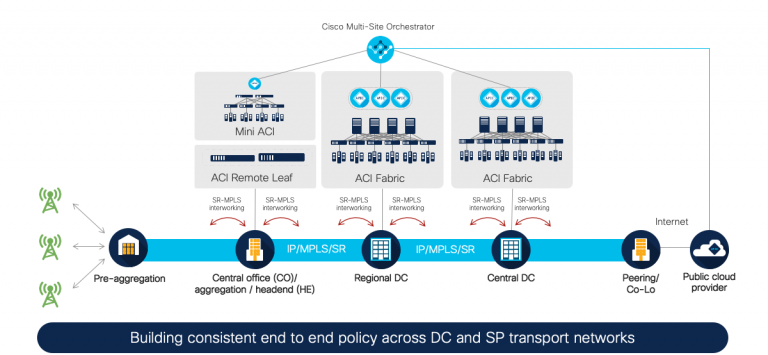
    Cisco is advancing its hybrid cloud computing strategy with release of version 5.0 of Cisco Application Centric Infrastructure (ACI), a software-defined networking (SDN) that can be deployed on cloud platforms or networking equipment deployed in an on-premises IT environment.

    The latest version of Cisco ACI adds support for a transit gateway between virtual private cloud (VPC) instances on the Amazon Web Services (AWS) cloud to provide a more efficient means of routing traffic across east-west and north-south cloud computing environments.

    Cisco is also extending the networking services it provides for the Microsoft Azure cloud to include VNET peering within the Azure Virtual Network, shared service deployments, additional service automation functions.

    Via ACI 5.0, IT teams are now provided a centralized view of cloud resource inventory within AWS and Microsoft Azure along with status indicators and a set of wizards to simplify configurations.

    Cisco also has deepened the level of integration between Cisco ACI and Kubernetes as well, to increase the level of scale that can be achieved in IT environments based on platforms such as VMware vSphere.

    Finally, Cisco has added support for role-based access control (RBAC) in multi-tenancy environments along with two-factor authentication (TFA) capabilities enabled by the Cisco DUO platform. Cisco also added a more flexible policy construct, dubbed Endpoint Security Group (ESG), that can be employed to group endpoints based on L3 attributes and apply contracts between ESGs.

    Srinivas Kotamraju, senior director for product management for Cisco ACI, said the latest update to the SDN platform provides IT teams with the equivalent of many of the same networking services that Cisco historically has provided in an on-premises IT environment.

    Cisco has been making the case for a hybrid cloud computing approach to delivering network services that enables IT teams to manage those services via a central console. Rather than having to manage networking services provided by each cloud service provider, Cisco ACI makes it possible to deploy the same SDN across multiple clouds and on-premises IT environments. Cisco contends that approach ultimately serves to reduce the total cost of delivering networking services by both centralizing management and making it easier to automate the management of networking services across multiple IT environments.

    There are two primary ways Cisco exposes those networking services. DevOps teams can take advantage of application programming interfaces (APIs) to programmatically invoke ACI services. Alternatively, Cisco provides network managers access to a graphical user interface (GUI) through which they can access a command-line interface (CLI) to configure a specific router or switch.

    Kotamraju said with the rise of DevOps the number of organizations giving developer programmatic control over networking services continues to rise. It’s too early to say to what degree NetOps and DevOps teams might ultimately converge; however, Kotamraju said finding ways to meld those two groups is being discussed more frequently within many IT organizations as applications become more distributed.

    Of course, the biggest challenge when it comes to achieving that goal will be more cultural than technical. However, as networking services become more accessible via APIs, it’s now more a question of when and how than if.

  • Deploying OpenStack: Pick a Distribution With These 7 Qualities

    Deploying OpenStack: Pick a Distribution With These 7 Qualities

    OpenStack, which turns 10 years old in July, remains the leading open source infrastructure component in private clouds. But, there is a plethora of OpenStack distributions out there, and selecting the right one is vital to the success of every organization’s OpenStack project.

    How do you know which is best? It’s an important question because, despite OpenStack’s popularity, companies often face serious challenges when adopting and deploying it. Put simply, OpenStack can be time-consuming and skill-heavy in order to deploy it, unless the chosen distribution is equipped to overcome those challenges.

    Thus, anyone planning to deploy OpenStack should make sure the distribution they pick meets the following seven criteria.

    Strong Economics

    Cloud environments are supposed to be more cost-efficient than proprietary hardware. That’s why enterprises love the cloud, after all. Therefore, the number one priority when choosing an OpenStack distribution is to make sure it can indeed reduce costs. That means steering clear of OpenStack platforms that are hard to deploy, maintain, upgrade and force you to struggle with basic operations. It’s also important that the distribution’s pricing model be clear and predictable so that organizations can plan expenses accurately.

    Totally Open Source 

    While OpenStack itself is open source, the installers provided by the vendors as part of their distributions often are not. This can lead to additional costs being applied to the licenses and situations where organizations are forced to pay for the distribution before even trying it out. Furthermore, all types of environments in use—including staging and development—need to be covered by the license, too. These pitfalls are sidestepped with OpenStack distributions that are 100% open source, providing better economics and flexibility for organizations.

    Predictable Release Cadence 

    While the release cadence of OpenStack is predictable and well documented, not all distributions follow the upstream quickly enough. Making sure the OpenStack distribution you choose supports the latest stable upstream release as soon as possible is crucial for a few reasons. The upstream release may have features that are important for the organization. Or there may be bug fixes that they feel are critical. Picking a downstream distribution with a predictable release cadence that stays in sync with the upstream ensures transparency and allows organizations to plan the upgrade process. 

    Long Support Runway

    Support services are essential for OpenStack production environments, especially when service level agreements (SLAs) apply. But, how long vendors will support older versions of OpenStack can vary. Though there is always an option to upgrade or re-deploy, there are times when it may be beneficial for organizations to stay with the current version. Thus, how long the vendor will provide support services is a key factor in choosing a distribution.

    Upgrades Made Easy

    There inevitably comes a time for most organizations when they want to upgrade their upstream OpenStack. However, OpenStack upgrades are known to be complex, and many commercial distributions do not support them. Even if they do, the process is complex and must be executed manually. Thus, choosing an OpenStack distribution that provides support for fully automated upgrades is essential for the success of the cloud operations team.

    Simplified Operations 

    Even after an OpenStack cloud is deployed, consideration must be given to the ongoing operations that can become complex and fragile. Maintaining the cloud on a daily basis includes operations such as scaling the cluster out or recovering it from failure. While most OpenStack distributions don’t provide mechanisms to simplify these tasks—forcing users to execute them manually—some do. Organizations should look to distributions that do a good job automating complex operational tasks, saving time and money.

    Flexible Technology Choices 

    OpenStack is a flexible cloud platform, supporting various hypervisors, software-defined networking (SDN) solutions and storage plugins. But many distributions are tied to a single stack. That means an organization may need to re-platform or move to a heterogeneous environment in the future. Avoid that trap by selecting a distribution that can adapt to work with new technologies.

    By looking for these seven qualities, organizations can get the most out of their OpenStack distribution and optimize the cloud infrastructure on which they increasingly rely.

  • Embracing the Journey to Public Cloud

    Embracing the Journey to Public Cloud

    One of the fascinating competitions in today’s business world is the one between the digital disruptors—companies whose business vision is rooted in technology and driven by the cloud—and the so-called incumbents.

    One sector where this competition is particularly intense is financial services. In this sector, the digital-first companies typically don’t compete with banks and other financial institutions directly. Instead, they target specific functions based on a clear—and often data-driven—understanding of what customers want. This strategy has proven particularly successful with millennials. For example, until recently the norm for giving money to a friend or family member was to write a check. Now, almost two-thirds of 20- and 30-year-olds use payment apps, such as Venmo.

    In healthcare, a different pattern is emerging, one where digital-first giants either buy or innovate their way into the sector. Examples include Amazon’s billion-dollar acquisition of the online pharmacy PillPack and the new Apple Watch, which is capable of taking electrocardiograms.

    Whatever the sector, digital disruptors have one characteristic in common. They leverage the capabilities of the cloud to the maximum extent possible. A shift in power toward digital-first companies is underway, and the cloud plays a major role in helping these companies establish themselves.

    Many incumbents are just now taking their first steps on the journey to the cloud, and still working on the challenges involved in migrating their existing legacy applications to more scalable and agile public cloud environments. While they’re engaged in this process, digital insurgents are already exploiting the full potential of the cloud to deliver solutions that meet emerging customer needs associated with today’s evolving lifestyles.

    In highly regulated industries, such as financial services and healthcare, major brands will not necessarily see an immediate decline in their customer base, nor profits. Nonetheless, digital-first companies are capturing millions of customers annually, and this growth poses a considerable challenge over time. Embracing the journey to public cloud is crucial for legacy enterprises.

    The most successful cloud-based disruptors use experimental sandboxes as a critical component of development. The public cloud can drive progress toward almost any business goal involving IT—operational transformation, new market penetration, new product launches, automation.

    Digital transformation to the public cloud is also the only way companies can leverage storage scalability and the essential innovations of the open-source community. There are still lingering concerns among executives in highly regulated, data-sensitive industries concerning privacy and regulatory compliance, and these can lead to hesitation. The face is, public clouds have been in place for over two decades now, and their security is often superior to older on-premise security. Incumbents can, therefore, tap into the public cloud to ensure safety for mission critical workloads.

    To accelerate the transition to the public cloud, consider the following best practices.

    Learning to Fail Fast and Learn from Experience More Quickly

    The Silicon Valley maxim to fail fast may run counter to incumbent corporate culture, but it is the best path to success in the new digital reality. The key is being able to learn from failures quickly and adjust accordingly.

    Partnering for Progress

    A digital native approach to business is often lacking in the corporate culture of incumbents. Cloud partners that have a digital disruption in their DNA can play an important role in driving cultural renewal at every level of the organization. A reliable cloud service partnership can accelerate concepts, pilots, staffing and other mechanisms designed to deliver value quickly and securely.

    Re-Examining Compliance Processes

    Operations should be streamlined to transform enterprise IT to be well-suited for the cloud. Companies can apply artificial intelligence to supplement human intervention, and encourage cloud adoption among employees. First, building a solid foundation, then working your way up, enables businesses to make important changes that transform the enterprise into an environment that is compliant by design.

    Successfully competing with digital natives means using the cloud to find new opportunities to streamline and better comprehend customer needs and behaviors. It also means being unafraid to change time-honored business practices. At the same time, in highly regulated and data-sensitive industries, compliance and security must be prioritized. Cloud transformation has quickly become vital for companies in all sectors and represents an essential foundation for future business success.

  • GigaSpaces to Provide Free Go-Live Services

    GigaSpaces to Provide Free Go-Live Services

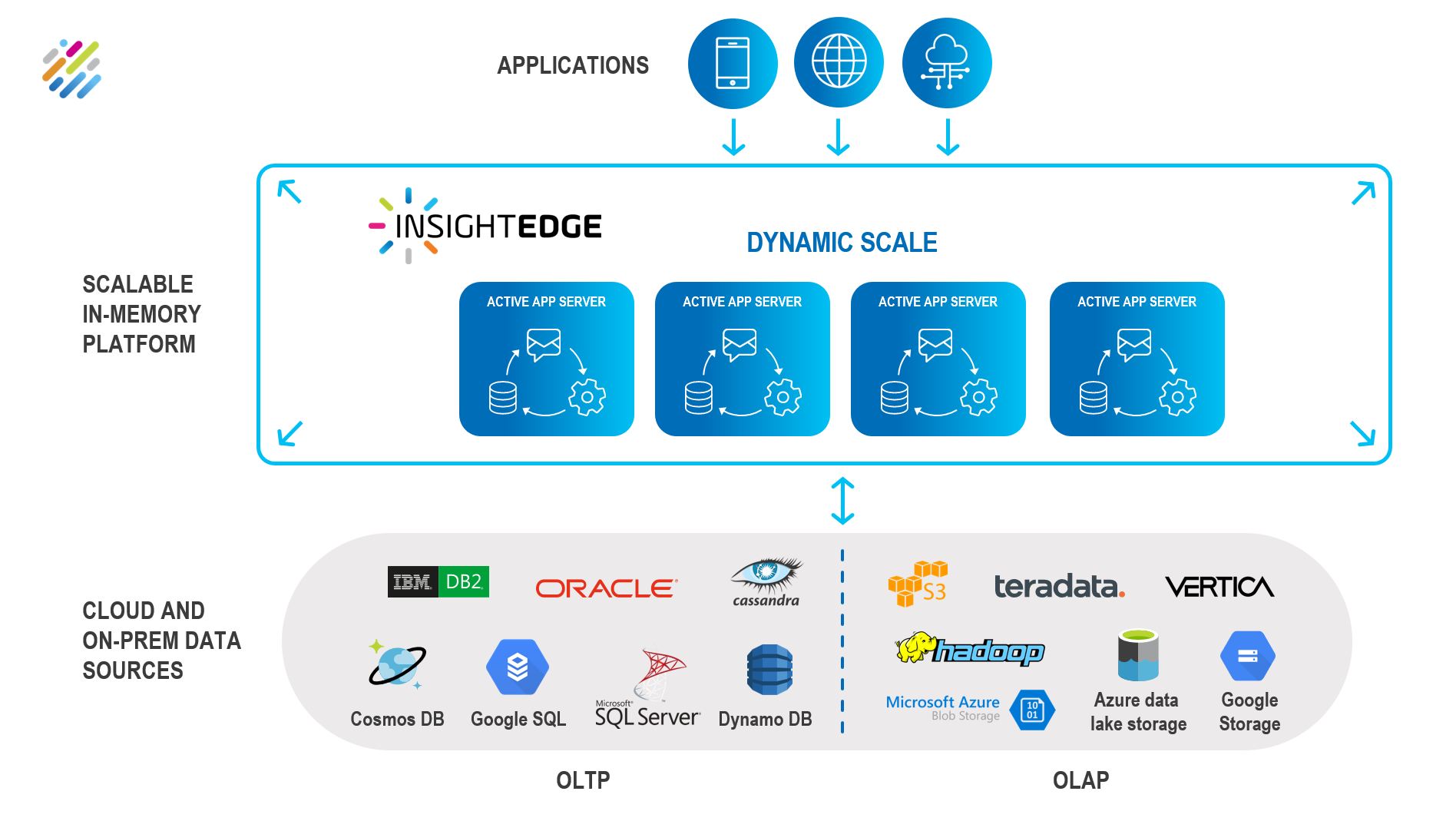
    GigaSpaces, a provider of a platform for processing analytics data in real-time, will be making available professional services for free during the duration of the COVID-19 pandemic as part of a Go Live initiative to reduce the total cost of acquiring and implementing its platform.

    Yoav Einav, vice president of product for GigaSpaces, said the economic impact of the COVID-19 pandemic shows it’s apparent organizations of all sizes will need to reduce their IT costs. At the same time, many organizations will need to keep IT projects moving forward as nascent digital business strategies now become business continuity strategies, he said. Most of those business continuity plans will be contingent on providing a better digital customer experience based on real-time analytics.

    GigaSpaces has been building up its professional services capability for the past several months and plans to tap into the expertise of third-party IT services providers to make sure there is enough available expertise in the right place to meet anticipated Go Live demand.

    GigaSpacesIt’s still unclear to what degree IT projects will be impacted by the COVID-19 pandemic. Undoubtedly, many IT projects are being paused or outright canceled, especially in vertical industry segments that have been among the hardest hit. Organizations that are moving IT projects forward, however, should expect to IT vendors to help reduce the total cost of implementing those projects by providing free additional services, as in the case of GigaSpaces, or at the very least much more flexible payment terms.

    There are, of course, some vertical industry segments where organizations are building new applications that are highly relevant. One GigaSpaces customer, for example, is racing to build an application that will make it easier to find critical healthcare supplies that are frequently out of stock when needed most, noted Einav. Other organizations are simply moving to reduce costs by offloading queries from traditional databases.

    In many cases, organizations will be evaluating which platforms to employ to build these applications not just on the raw performance attributes of the platform but also how quickly those platforms can be implemented. As such, the robustness of the IT services ecosystem, including its overall DevOps acumen, will become a more critical evaluation criterion.

    In the meantime, a major transition away from legacy batch-oriented applications toward applications that process data in near real-time that has been gaining momentum now for several years should continue. Most organizations are now going to require the sub-second performance of a financial services application. However, visibility into supply chains in near real-time is becoming a bigger requirement, especially when many of the organizations that make up the supply chain are potentially not as economically resilient as they once were.

    Less clear is the rate at which the transition to near real-time applications will now occur. However, at a time when competition between organizations is about to become more fierce than at any time in recent memory, many organizations are about to discover how big a difference modern applications can really make.

    — Mike Vizard