Your SRE team is drowning. Not in downtime or failed deployments — in notifications. According to research from PagerDuty, most incident responders receive over 10 alerts per shift, the vast majority of which require no immediate action. Across a typical enterprise, that volume can exceed 2,000 alerts per week, with only 3% genuinely warranting attention.
The rest? Noise. Expensive, demoralizing, burnout-inducing noise.
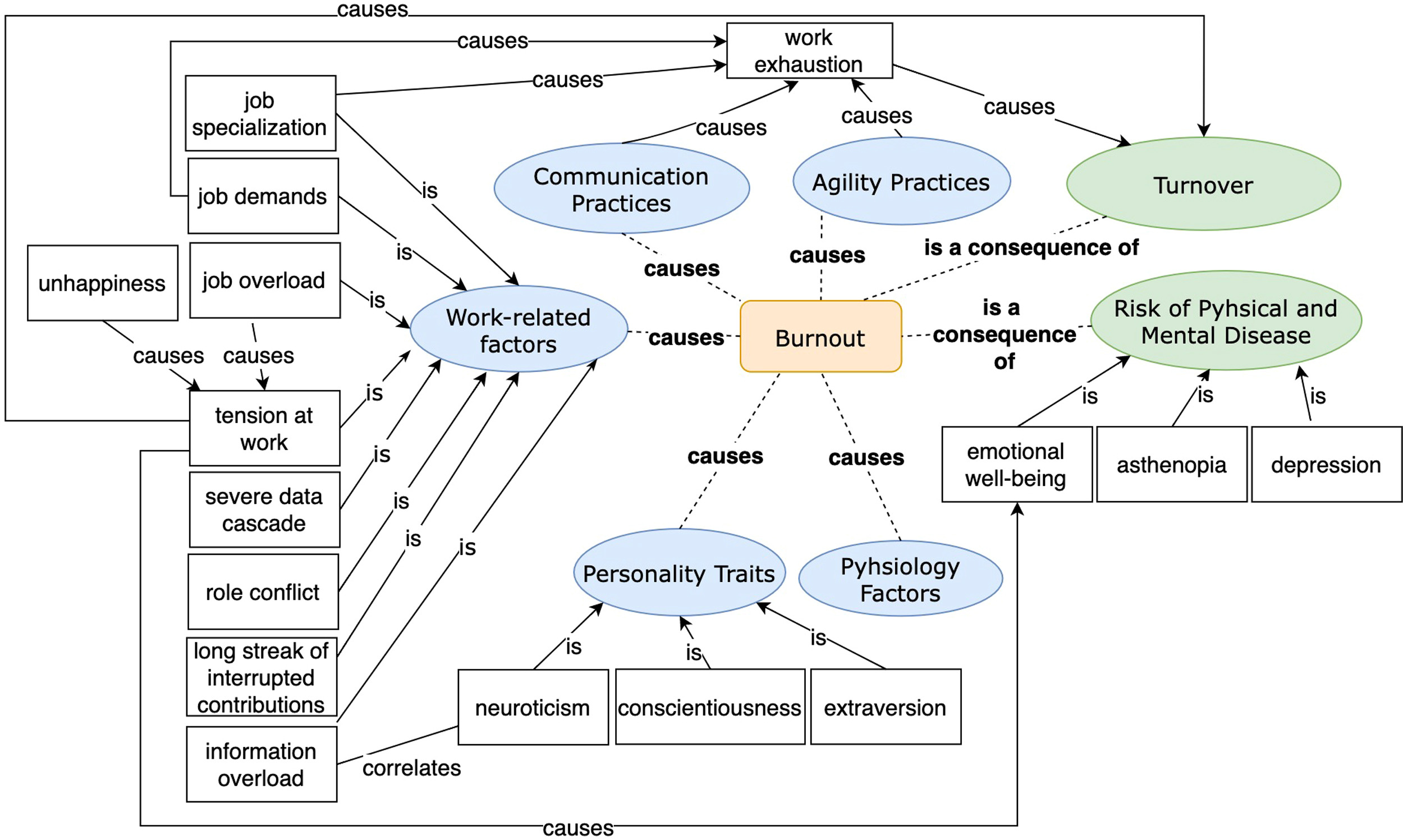
Alert fatigue isn’t a new problem, but in 2026, it’s reaching a breaking point. The Catchpoint SRE Report 2025 found that nearly 70% of SREs say on-call stress has impacted burnout and attrition on their teams. With unplanned downtime costing organizations an average of $5,600 per minute, the cost of getting this wrong is enormous — both for the business and for the people doing the work.
The good news: AI-powered observability is finally making a real dent. In this post, we’ll break down why alert fatigue has gotten worse, what AIOps platforms are doing differently and how teams are cutting alert volumes by up to 95% while reducing mean time to resolution (MTTR) by 40–58%.
Why Alert Fatigue has Gotten Worse, not Better
You’d think that with more monitoring tools, we’d have less noise. Instead, we have more.
The average enterprise now runs dozens of observability and monitoring tools across applications, infrastructure and networks. Each tool generates its own stream of alerts, often with overlapping signals and no shared context. A single incident might trigger 50 or more alerts across Prometheus, Grafana, application performance monitoring (APM) tools, log aggregators and cloud provider dashboards — all independently, all at once.
This isn’t just an inconvenience. It actively degrades reliability. When engineers see 500–1,200 alerts per day, they start tuning out. According to INOC’s 2026 Event Correlation Guide, a service provider with 700 devices can see over 35,000 events per week. During maintenance windows, volumes spike 300–400% further. In that environment, the critical alert — the one that actually matters — is buried.
The operational burden compounds over time. The Catchpoint SRE Report 2025 found that the median time spent on operations activities had risen to 30% in 2025, up from 25% in 2024. That’s time not spent on reliability engineering, automation or building better systems. It’s reactive firefighting instead of proactive engineering.
The human cost is even steeper. 67% of SREs surveyed in the same report said they don’t have enough time for technical training. Teams are running to stand still — and burning out doing it.
What Traditional Alerting Gets Wrong
Traditional monitoring tools operate on a threshold model: If metric X exceeds value Y, fire an alert. It’s simple, auditable and hopelessly inadequate for distributed cloud-native systems.
Here’s the core problem: Modern infrastructure is dynamic. Kubernetes clusters autoscale. Microservices communicate asynchronously. Traffic patterns shift by the hour. Static thresholds set for yesterday’s workload create cascading false positives on today’s. Teams spend hours chasing alerts that turned out to be expected behavior from an auto-scaling event or a batch job.
Even rule-based correlation engines struggle. They can group alerts by label or service name, but they can’t reason about causality. They don’t know that the database connection pool alert is a symptom of the upstream API rate-limiting issue — they just report both separately to the same on-call engineer at 3 a.m.
The result: Alert noise grows, trust in alerting systems erodes and engineers start ignoring notifications. The very system designed to catch real problems starts hiding them.
How AI-Powered Observability Changes the Model
AIOps — AI for IT operations — takes a fundamentally different approach. Instead of setting static thresholds, it learns the normal behavior of your systems continuously and flags deviations that actually matter. Instead of reporting individual events, it correlates signals across metrics, logs and traces to surface root causes, not symptoms.
The market is moving fast to catch up with this need. The AIOps market reached $11.16 billion in 2025, at a CAGR of 25.3%, with some analysts projecting $32.56 billion by 2029. Enterprises are voting with their budgets: Adoption of AI-powered monitoring jumped from 42% to 54% between 2024 and 2025 alone.
The results teams see are significant:
- 95% Reduction in Alert Volume: Organizations implementing AIOps routinely see daily alerts drop from over 5,000 to roughly 100 actionable items — and often fewer. Teams that were handling over 800 alerts per day are down to 20–50.
- 40–58% MTTR Reduction: A global technology services provider cut MTTR by 58% in the first 30 days after implementing event correlation. Broader enterprise case studies show a consistent ~40% reduction across implementations.
- 15% Increase in Revenue-Generating app Availability: A Forrester-commissioned study found that combining observability with AIOps increases the availability of revenue-critical applications by 15%, in addition to the MTTR improvements.
One major retailer reduced incident resolution time from hours to under 15 minutes using AIOps. That’s not an incremental improvement — it’s a fundamentally different operational posture.
The Three Pillars of Effective AI-Powered Observability
Not all AIOps implementations deliver these results. The ones that do tend to share three characteristics.
1. Unified Telemetry Across Metrics, Logs and Traces
AI is only as good as the data it sees. If your metrics live in Prometheus, your logs in a separate stack and your traces in yet another tool, no AI layer can reason across them effectively. The starting point for meaningful AI-powered observability is a unified data plane.
This is why the shift toward unified observability platforms is accelerating. When all telemetry flows into a single system — whether you’re using Grafana, Loki, Jaeger or other open-source components — AI can work across the signal landscape simultaneously, identifying multi-dimensional correlations that humans simply can’t track manually.
Platforms such as StackGen’s ObserveNow and Grafana are built on this principle, unifying metrics, logs and traces from across the stack into a single pane of glass. Rather than replacing the open-source tools teams already use, the goal is to integrate with them — giving AI a complete picture without forcing a rip-and-replace of existing investments.
2. Root Cause Analysis, not Just Symptom Surfacing
The difference between useful AI and noise-amplifying AI comes down to causality. A system that groups 50 alerts into 10 groups hasn’t solved alert fatigue — it has just reorganized it. What teams need is a system that looks at those 50 alerts and says: “There’s one root cause. Here it is. Here’s the confidence level.”
Automated root cause analysis (RCA) is now a core capability of mature AIOps platforms. By learning dependency maps — which services call which, which infrastructure components underpin which applications — AI can trace an incident from symptom back to source in seconds. The on-call engineer sees the root cause and recommended action, not a wall of cascading symptoms.
Aiden AI Copilot for SRE, part of the StackGen platform, does exactly this: Correlating signals across the stack, identifying the underlying failure and surfacing it with context so teams can act immediately rather than investigating for hours.
3. Automated Remediation for Known Failure Patterns
The final frontier is closing the loop entirely: Not just detecting and diagnosing incidents faster but automatically resolving known failure patterns before an engineer needs to get involved.
This is where SRE teams are seeing the most dramatic quality-of-life improvements. Runbook automation — where AI executes pre-approved remediation steps for common failure patterns — means that memory pressure on a Kubernetes node, a database connection pool exhaustion or a stuck deployment pipeline can be resolved automatically, with full audit logs, without waking anyone up.
This isn’t removing humans from the loop. It’s removing humans from the loop for problems that don’t require human judgment. Engineers still own complex, novel incidents. But the 80% of incidents that follow predictable patterns? Those can be handled by automation while engineers sleep.
staging-devopsy.kinsta.cloud highlighted this shift directly: “Many SRE teams already rely on automated incident-response playbooks, where scripts or AI-driven workflows resolve common failures instantly, rather than waking a human at 3 a.m.”
What This Means for SRE Teams Right Now
The shift to AI-powered observability isn’t just a technical upgrade. It’s a structural change in how reliability engineering works.
Teams move from reactive to proactive. When AI handles the noise and resolves known issues automatically, SREs get time back. That time goes into reliability engineering: Improving SLOs, building more resilient architectures and reducing the blast radius of failures before they happen.
On-call becomes sustainable. The data is clear: Burnout correlates directly with alert volume and false positives. Organizations that cut alert noise by over 90% consistently report improvements in on-call satisfaction and reductions in attrition. This isn’t just a morale improvement — retention of experienced SREs is a direct reliability investment.
Incident response becomes a learning loop. AI systems improve with every incident. Each time the system identifies a root cause, validates a remediation action or learns a new failure pattern, it gets better at handling the next one. Unlike traditional threshold-based monitoring, which stays static until someone manually updates a rule, AI-powered systems compound their value over time.
The observability stack becomes an asset, not a burden. Right now, many teams treat their observability infrastructure as necessary overhead — it costs money, someone has to maintain it and its primary output is noise. With AI embedded in the stack, observability becomes a competitive advantage: Faster resolution, higher availability and better developer experience.
Getting Started: What to Prioritize
If you’re ready to move beyond threshold-based alerting, here’s where experienced teams tend to start:
Start with data unification. Before AI can help, it needs complete visibility. Consolidate your telemetry into a unified observability layer. If you’re running fragmented tools, connecting them via a platform that integrates across your existing open-source stack (rather than replacing it) is the fastest path to AI readiness.
Instrument the relationships, not just the metrics. Service dependency maps and topology data are what make automated RCA possible. Invest in distributed tracing and service mesh instrumentation early — it multiplies the value of everything built on top.
Start automating runbooks for high-frequency, low-complexity incidents. Identify the 5 or 10 incidents your on-call team resolves most often. These are your automation candidates. Document the steps, build the playbooks and let AI execute them when the pattern matches. Measure the reduction in on-call interruptions over 30 days.
Measure what matters. Track alert-to-incident ratio (how many alerts translate to real incidents), MTTR by incident type and on-call interruptions per week. These are the leading indicators that tell you whether your AIOps investment is working.
Frequently Asked Questions
1. What is alert fatigue in SRE?
Alert fatigue occurs when SREs and DevOps engineers receive so many monitoring notifications — many of them are false positives or of low priority — that they become desensitized and begin missing critical alerts. Research shows that typical enterprise teams receive 500–1,200 alerts per day, with only a small fraction requiring immediate action.
2. How does AIOps reduce alert fatigue?
AIOps platforms use machine learning to learn normal system behavior, correlate signals across metrics, logs and traces and suppress non-actionable alerts automatically. Teams implementing AIOps commonly see alert volumes drop by 90–95%, from thousands of daily alerts to fewer than 100 actionable items.
3. How much can AI-powered observability reduce MTTR?
Case studies show MTTR reductions of 40–58% with AIOps. A Forrester-commissioned study found that combining AI observability with automated correlation can cut MTTR by up to 50% and increase revenue-generating app availability by 15%.
4. Does AI-powered incident management replace SREs?
No. AI handles known failure patterns and high-volume noise so that SREs can focus on novel, complex incidents and proactive reliability engineering. Most teams implementing AIOps report that SRE job quality improves significantly — less reactive toil, more strategic work.
5. What tools support AI-powered observability?
The ecosystem includes open-source tools such as Prometheus, Grafana, Loki and Jaeger as data sources, AI platforms that layer on top for correlation and RCA and copilot products such as Aiden AI for SRE that automate detection, diagnosis and remediation. StackGen’s ObserveNow integrates across the open-source stack and feeds into Aiden AI for end-to-end automated incident management.
Conclusion: The Alerting Tipping Point is Here
Alert fatigue has been eroding SRE effectiveness and engineer well-being for years. However, 2026 is shaping up to be the year the industry actually closes the gap — not through better threshold tuning or smarter dashboards, but through AI that understands your systems as deeply as your best engineers do.
The numbers are compelling: 95% noise reduction, 40–58% faster resolution and 15% higher availability for revenue-critical systems. However, the real value is what those numbers enable: SREs who are less burned out, more focused on reliability engineering and able to stay in the profession long enough to build the institutional knowledge that makes systems truly resilient.
If your team is still managing alert fatigue with silence windows and PagerDuty escalation policies, it’s time to look at what AI-powered observability makes possible.