Tag: devops

  • When DevOps and Marketing Collide: Insights From Adobe Summit 2019

    When DevOps and Marketing Collide: Insights From Adobe Summit 2019

    I attended Adobe Summit 2019 to research the intersection of DevOps and marketing. Below are insights from my interviews with leading marketing technology experts. 

    Is DevOps making its way into marketing? In a short answer, a soft “Yes.”

    I recently attended the Adobe Summit, held March 26-28 in Las Vegas. This year emphasized digital customer experiences, and I was curious to take a peek into this world of marketing tech to see if DevOps was having any impact.

    Many of the people I talked to described how marketing technology is adopting a more agile, DevOps-inspired mindset. But is marketing actually driving product change? While Adobe and proponents would like to have us think so, some are not as sure.

    At Adobe Summit, I had some eye-opening meetings with professionals invested in digital marketing, retail and analytics services, most of which are using Adobe products in some form. In this article, we’ll highlight what they had to say on the intersection of DevOps and marketing.

    What is the Role of DevOps in Marketing?

    The need to break down data silos was a common theme among keynotes, sessions and throughout my meetings at Adobe Summit.

    When large digital marketing agencies take on clients, for example, a common disability they find is a disparate and dysfunctional customer data storage system. In our meeting, Alex Kelleher, managing director at Deloitte Digital, noted, “Data needs to be available, and integratable. That is the first thing we typically fix for our clients—we’ll fix the data in silos, get it in the same place, and usually simplify it.”

    Deloitte Digital’s process involves three D’s: first, they consolidate data silos, then build data-driven decisions, then deliver agile products. In doing so, Kelleher is seeing more and more developer practices making their way into marketing and sales.

    “We’re seeing CMOs manage their teams as agile teams, recruiting agile and scrum masters,” he said. “That’s very cool for CMOs to be involved in … those worlds colliding is super exciting.”

    Is DevOps Eroding Traditional Boundaries?

    DevOps principles encourage shared knowledge and open communication between teams. Now, it appears such ideas are affecting how marketing technologists architect their teams and delivery cycles.

    Rachel Lane, solution principal customer experience at Medallia, sees a trifecta of forces working in tandem. “Development, Ops, and Marketing must work together,” she said. “If one of those doesn’t link up, then we see extended lead time to launch, and it can become problematic.”

    Medallia’s goal is to meet customers where they are to gather actionable feedback through push notifications, surveys, embeddable surveys, Net Promoter Score (NPS) systems and other means. Engrossed in this world of customer feedback, Lane reminded us: “You should never ask a question that you already know the answer to.”

    Unfortunately, this still happens often. User data is often locked in silos and if multiple teams (sales, marketing, support engineers, etc.) are using separate user data repositories, customer interaction can suffer. Thus, user conversation data must be de-siloed and unified.

    For Lane, having tight customer experience-driven feedback is critical for reiterating the overall product. However, customers typically hate filling out surveys. To decrease friction, she foresees more passive voice-driven feedback through home AIs.

    Rearchitecting the Digital Footprint for Agility

    By now it’s evident that unclear data initiatives and messy data storage can hinder digital transformation. So, what are organizations doing to de-silo and open up data?

    Anheuser-Busch (AB) is a huge beer corporation, overseeing brands including Budweiser, Busch, Elysian and many others. Each has unique online eCommerce storefronts to sell ancillary swag, such as T-shirts, drinkware and other products.

    With public-facing sites for hundreds of brands, maintaining data standardization across its product lists was a nightmare. Disparate data structures can also inhibit directing change from within, slowing corporate-led growth.

    John Faviano, director of demand and integrated marketing technology at Anheuser-Busch, described how AB solved the issue by creating a consistent data structure from which all online stores can pull content from.

    “We’ve standardized the tech stack in the last three years to enable the business to run more efficient … You have to think from a platform perspective, not a single siloed technology,” he said.

    AB’s web APIs now grant incredible scalability, as the content is now delivered agnostic of client or brand. AB brands retain independent facades yet are fueled by a unified content storage and delivery process. “Our API strategy is a build-once-and-scale mechanism,” Faviano said.

    Digitization with IoT and AI

    Sreedhar Bhagavatheeswaran, SVP and global head of digital business at Mindtree, believes that every part of the enterprise needs to be digitized. He sees a wealth of untapped data that enterprises can leverage to transform user experiences.

    Having built digital presences for big-name consumer brands including Marriott, P&G and Kellogg’s, Mindtree understands the advantages of using a DevOps approach for software cycles. Though it may require a cultural change, “The probability of project success in a DevOps environment is much higher than in a non-DevOps environment,” Bhagavatheeswaran said.

    Release automation is integral to Mindtree’s process. Coding checks and CI tools such as Jenkins bring quick releases, enabling business teams and clients to see the impact on a daily basis. They also privilege API-fueled microservices designs for increased agility.

    “From an agile program management perspective it gets challenging, but that is the nature of the beast,” he noted.

    Bhagavatheeswaran is excited for the potential IoT has to evolve industrial, business and consumer-facing touchpoints. For example, industrial engineers could conduct remote servicing using digital twins of real physical equipment. He also described developing mobile IoT apps for his clients: Push notifications triggered by removing caps from makeup bottles, for example, could empower consumers with advice on how to apply makeup correctly.

    To sum it up, Bhagavatheeswaran described our current paradigm with a simple, powerful sentiment: “The experience is at the confluence of edge, humanity and intelligence.”

    Approaching the Developer Experience

    But digital transformation doesn’t stop with open data, APIs and IoT. Developer experience (DX) has become an important factor in maturing countless digital services.

    Jason Woosley, VP of commerce product and platform at Adobe, founded the Adobe-acquired Magento, which began as an open source project on GitHub, welcoming pull requests to alter product features (with the proper vetting in place, of course).

    By investing in open source and developer communities, Magento over time reached a critical mass, democratizing how developers build online storefronts.

    Woosley estimated that 50 percent of Magento code was built by third-party developers. One such feature is multi-source inventory, which, he said, accounts for 70 percent of the Magento code base. Naturally, he has a deep appreciation for the power of developer communities.

    “You can’t buy a developer community. You can’t steer or create a culture,” Woosley said. “Code custodians are actually participants, and to deserve that role DX needs to be delightful and empowered.”

    To improve the developer experience, Magento has hosted countless events, increased developer support staff, annotated its APIs, adopted GraphQL for extensibility, invested in optimizing developer portals and more. With the inclusion of Magento in Adobe Experience Cloud, more capital is available to further DX enhancements—something Woosley is excited about.

    Wednesday March 27, 2019 in Las Vegas. (Jeff Bottari/AP Images for Adobe)

    DevOps is Kicking Martech to Innovate

    Deloitte Digital’s Kelleher noted that “nowadays, your competitors are any digitally active application,” regardless of whether they’re even in the same industry.

    This means that a consumer will judge a mobile digital experience with an airline with the same scrutiny as calling an Uber or making a PayPal transfer. Users hold the same lofty digital expectations from any business, forcing us all to adapt dramatically.

    Fueled by the relentless pressure from users, marketing technologies are adopting DevOps principles to improve their offerings in a few ways:

    • Continuous releases: Martech uses DevOps strategies to release quickly. User-facing mobile app release cycles, for example, routinely adopt CI/CD.
    • De-siloing: User data and consumer conversation information are being distributed with greater alacrity across enterprises, improving end UX.
    • Open data initiatives: With web APIs, new platform-agnostic content distribution architectures have emerged. Development procedures are standardized across an enterprise, quickening the release cycle.
    • Cloud architecture: By adopting cloud-based management tools, martech is improving the asset management condition of supporting many user-facing touchpoints.
    • Developer experience: By embracing open source and supporting developer community, leading e-commerce groups are improving their offerings.

    While marketing is critical to the whole, it may not be the No. 1 business driver. When I asked Bhagavatheeswaran whether marketing was really driving the creation of new tools, he responded: “Is marketing driving the tools? Are they influencing? Not quite yet. However, it has the ability to influence the developer’s quality. Probably not their job.”

    Even if marketing is not directly influencing product development, we’re still seeing DevOps seep into traditionally non-technical environments, which is exciting.

    It was eye-opening to enter the world of marketing technology to see firsthand how these institutions—such as Ansira, a 100-year-old company—are using agile means to streamline digital transformation initiatives.

    With an emphasis on both creating and managing quality digital customer experiences, Adobe Summit 2019 shed light on many unique strategies being undertaken in the realm of martech.

    Whether it’s leading the development of user-facing apps, overseeing expansive brand catalogs, using a cloud-based single source of truth for content management or building developer communities to reap huge R&D benefits, the intersection of marketing and technology has never required more strategic action than it does now.

    — Bill Doerrfeld

  • F5 Networks Acquires NGINX to Meld NetOps with DevOps

    F5 Networks Acquires NGINX to Meld NetOps with DevOps

    As part of an effort to better align DevOps and network operations (NetOps), F5 Networks plans to acquire NGINX, a provider of widely employed open source loading balancing software.

    The two companies revealed in a call with financial analysts that the primary goal of the $760 million deal is to meld the two companies’ combined expertise to develop application delivery controllers (ADCs) that are optimized for modern applications based on microservices.

    F5 Networks CEO François Locoh-Donou said F5 Network plans to continue operating NGINX as an independent brand in addition to maintaining support for the NGINX open source community. NGINX CEO Gus Robertson will become general manager of the NGINX business unit. NGINX founders Igor Sysoev and Maxim Konovalov also plan to stay on.

    Locoh-Donou also disclosed that while NGINX software is employed today at more than 375 million sites, the company only generated $26 million in revenue in 2018, mostly by providing commercial support to enterprise customers. F5 Networks will move to combine investments both companies have been making in containers to deliver a next-generation ADC optimized for microservices-based applications spanning multi-cloud computing environments, he said.

    As part of that strategy, however, both companies will need to come to terms with Envoy, an open source load balancing project led by the Cloud Native Computing Foundation (CNCF). Envoy is already providing the foundation for multiple service mesh projects that make load balancing a feature of a higher-level mechanism for managing services running on a Kubernetes cluster. Obviously, F5 Networks hopes to fulfill an opportunity to manage multiple instances of service meshes running on multiple Kubernetes clusters that.

    In fact, Locoh-Donou cited industry research that forecasts by 2022 there will be more than 198 million workloads running on some form of a microservices-based architecture. In contrast, 44 million workloads are expected to be running on legacy platforms.

    Locoh-Donou said F5 Networks also expects to leverage NGINX to expand its presence in application programming interface (API) management and associated web application services, which he noted collectively represent multibillion-dollar market opportunities.

    The decision to acquire NGINX reflects the inevitable melding of NetOps and DevOps, he added, noting that inconsistent approaches to managing application service across emerging microservices-based environments are a recipe for creating unstable IT environments.

    While it’s still a little too early to determine to what degree NetOps will be subsumed into DevOps processes, Locoh-Donou said F5 Networks plans to advance adoption of NGINX software by educating its core base of NetOps administrators on how microservices applications are deployed across extended networks and the rigors of the DevOps processes required to manage them.

    Both F5 Network and NGINX made a name for themselves by interconnecting IT environments made up largely of virtual machines. While virtual machines are not going away anytime soon, so-called cloud-native applications built using containers running on Kubernetes clusters require a different approach to delivering infrastructure services. The challenge facing the combined company is finding a way to deliver those services in a way DevOps teams want to consume.

    — Mike Vizard

  • Report Identifies DevOps Skills in Highest Demand

    Report Identifies DevOps Skills in Highest Demand

    When it comes to DevOps there’s general agreement that a skills shortage is holding back broader adoption. The real issue, of course, is identifying what specific DevOps skills are required most.

    With that goal in mind, the DevOps Institute this week published a report that finds the DevOps skills most in demand fall into three broad categories: automation skills (57 percent), process skills (55 percent) and soft skills (53 percent).

    DevOps Institute CEO Jayne Groll said that, given the fact that DevOps is all about automating repeatable processes, the fact that automation skills are the most sought-after is not all that surprising. But when it comes to process skills, the top five areas where organizations need the most help are software development life cycle (47 percent), understanding of process flow and analysis (46 percent), agile development expertise (42 percent), experience with test-driven deployment concepts and methods (40 percent) and system thinking (39 percent).

    The survey also identifies areas where survey respondents need additional functional skills; most notably, IT operations knowledge (52 percent), security (47 percent), IT infrastructure (44 percent), application design and development (42 percent), quality assurance (34 percent) and testing (31 percent).

    While the survey makes it clear what skills are needed most, it’s less clear whether organizations want to train people with the right attitude toward DevOps skills or find individuals with proven skills. About 30 percent of the survey respondents said they look for soft skills first, with an eye toward training or educating new hires on the process and technical skills later. But 32 percent of respondents said they first look for technical skills.

    In that context, however, it’s also worth noting that 43 percent of the C-level executives and IT management executives that participated in the survey identified business skills—defined as communication, influencing, negotiation, strategic thinking and leadership skills—as being the most important attribute of a new hire.

    Other noteworthy attributes of the organizations participating in the DevOps Institute include:

    • Two-thirds (66 percent) have already adopted DevOps to some degree.
    • More than three-quarters (76 percent) employ agile development processes.
    • Nearly half (47 percent) have adopted the ITIL framework as a best practice for IT service management.
    • Only 10 percent rely on site reliability engineering (SRE) practices defined by Google.

    Groll said the survey makes it clear there is still much work to be done in terms of advancing best DevOps practices. One the biggest challenges are all the silos within IT organizations that have their own nomenclature and culture. Each of those silos creates technical and cultural inertia that must be overcome to integrate processes end to end, she said.

    On the plus side, Groll noted the next-generation of IT professionals are being taught best DevOps practices in academic settings, which means the pool of job candidates with familiarity with DevOps practices should increase steadily. The downside is that it might take a while before those individuals learn enough about the business of the company that hires them to effectively employ those DevOps practices.

    — Mike Vizard

  • DevOps Chat: AppSec and DevSecOps with Contrast Security’s Jeff Williams

    DevOps Chat: AppSec and DevSecOps with Contrast Security’s Jeff Williams

    I have known of Jeff Williams in the security industry for more than several years. He is a well-respected thought leader in AppSec and OWASP. I finally got a chance to catch up with Jeff and talk with him about Contrast Security, the company he co-founded and how it is helping.

    In this DevOps Chat, Jeff and I discuss the state of application security and how AppSec fits into the larger DevOps realm. Jeff’s a great interview with lots to share.

    As usual, the streaming audio is immediately below, followed by the transcript of our conversation.

    Transcript

    Alan Shimel: Hey, everyone, it’s Alan Shimel, staging-devopsy.kinsta.cloud, and we’re here for another DevOps Chat. Today’s chat has a decidedly security bent. I’m happy to be joined by Jeff Williams, CTO and co-founder of Contrast Security. Jeff, welcome to DevOps Chat.

    Jeff Williams: Thanks, Alan. Good to be here.

    Shimel: Hey, my pleasure. So, Jeff, you know, as we were talking off mic, this is the first time we’re kinda interviewing anyone at Contrast. Why don’t we—I think it’s only fair we start off with sort of, let’s give our audience a little background. Who and what is Contrast Security?

    Williams: Sure. So, I mean, you know that many enterprises struggle with application security. You know, there’s been an application security industry for like 20 years. I helped to start OWASP back in the early 2000s and I wrote the OWASP Top Ten, and organizations are still struggling with the same problems.

    So, Contrast targets exactly those problems. We are kind of a radically different approach to doing application security. We’re very compatible with DevOps kinds of processes. And basically, we find vulnerabilities so you can shift left in the development and fix them. We analyze open source code, so you can make sure you’ve got safe versions of the components you’re using, and we protect applications in production. And we do it all through dynamic binary instrumentation. So, very much like a New Relic or an AppDynamics, but for security, not performance.

    Shimel: Security prudent security monitoring—excellent. And Jeff, you mentioned, though I don’t know if we’ve spoken like this before, but I’m certainly aware of you for a long time within the security community. This isn’t your first rodeo. [Laughter] You were instrumental in OWASP. You know, we’ve seen application security not—it’s evolved, yes, but it’s still, at the end of the day, it’s about the application, right?

    But yet, you know—look, it used to be, application security meant some kind of app firewall, which—

    Williams: Yeah.

    Shimel: – I’m not saying a WAF isn’t a great tool, it is. It’s changed the game in a lot of ways, I think, in what—

    Williams: Not really. [Laughter] I don’t think so.

    Shimel: Well, it’s made a lot of people a lot of money and it’s taken a lot of venture capital, let’s put it that way, right?

    Williams: Well, that’s not my measure of success. [Laughter]

    Shimel: Yeah. But has it made us safer?

    Williams: Not really, no. No.

    Shimel: But one can argue we’ve done a lot of things and not a lot of them have made us safer, right?

    Williams: That’s right.

    Shimel: You and I have both been in security for 15, 20–plus years, Jeff. And the latest buzzword is DevSecOps, and being that I’ve transitioned to DevOps five, six years ago, and I run staging-devopsy.kinsta.cloud and I’m involved in Security Boulevard, I’m all about DevSecOps, and I’m not here to say it’s snake oil or bull or anything like that. But as we were talking about, it means a lot of different things to a lot of different people.

    Williams: That’s right, that’s right.

    Shimel: Why [Cross talk], what do you think it means?

    Williams: Well, you know, to me, DevSecOps is a way of viewing security the way that folks viewed software development through a DevOps lens.

    Let me back up. So, software had a ton of problems 15, 10, 20—I was a developer for a long time back in the early ‘90s and so on. And, you know, software development back then had tons of problems. It was late, it was very error prone, long feedback cycles, slow release times. I worked on one government program for three years, and it never was fielded. [Laughter]

    Shimel: Mm-hmm.

    Williams: So, that kinda thing plagued software. But, I think, DevOps has really revolutionized that, you know, basically just focusing on getting work flowing, creating short feedback loops and creating a culture of innovation of learning. Like, those things transformed the way that software is produced. I love the factory analogies and all that.

    Now, if you look at security, we have exactly the same problems. Security doesn’t really deliver a tangible result. Like, you never know when you’re done. So, the work isn’t defined. That means the work isn’t flowing. You know, we have these tremendously long feedback loops. I did a bunch of work for a major financial institution. They were on a system where some apps got a one year pen test, some apps got a two year pen test, and some apps got a triannual pen test. So, every three years, they would take a look at security. It’s crazy.

    And, you know, so we need to make tighter feedback loops, and security has this culture problem. It’s not a culture of innovation and learning, it’s a culture of enforcing rules and compliance and gates and guards and bottlenecks. And that all can change. If we apply the lessons of DevOps to the problem of creating security in an enterprise, we can define the work, we can create shorter feedback loops, and we can create a culture of innovation and learning. That’s really the challenge. In my opinion, that’s why security continues to struggle is, it’s just not delivering what we want it to deliver.

    Shimel: Yeah. You know, and—look, truth be told, Jeff, that’s what attracted me to DevOps. I thought it was an opportunity for us to kinda reshape the playing board and maybe change the rules and finally deliver—nothing’s perfect, and I don’t think anything is, I’ve seen enough so-called silver bullets to know none of them—

    Williams: Sure.

    Shimel: – [Cross talk] full of crap. But I thought, at least, it shifted the game pieces in such a way that we could, it was a more even playing field, or a better situational playing field for us.

    Williams: Yeah. Done right, I think DevOps can have a tremendously transformative effect on organizations building software. I’ve seen it in a bunch of large enterprises and small companies, you know, and we’re a DevOps shop here at Contrast as well. You know, we’re deploying six, seven times a day, and I have a huge amount of confidence that that makes us deliver much better software.

    And so, my challenge—

    Shimel: Much better software, or much—but is it also more secure? Because shouldn’t that be—I mean, that’s something I strive for, right?

    Williams: Right.

    Shimel: That security becomes synonymous with quality.

    Williams: Yeah. That’s right, that’s exactly right.

    Shimel: Is it more secure?

    Williams: Absolutely, it’s more secure. But you do need some better tools. So, I think, you know, to do security in a DevOps way, you need accurate, real time feedback on the code that you’re building. If you don’t have that, then you have to have experts involved. So, there’s a fundamental relationship. If your tools are producing inaccurate results, then you have to have experts to dig in and resolve the false positives and find the false negatives and, you know, it’s a ton of human expert work.

    That’s not compatible with DevOps. So, you need these accurate tools in order to give real time feedback right to developers. But that’s where instrumentation comes in. If you can get inside the code that you want to test for security or protect against attacks, that’s where all the context is. That’s where the information is. And so, using all that information, you can make really accurate decisions about whether something’s a real, exploitable vulnerability, or whether something’s a real, viable attack. And then you can give that instant feedback, you can create tight feedback loops, and you can deliver security.

    And I’ve seen it work. Companies have transformed themselves from the way they used to be with a big backlog of security vulnerabilities, they’re running scans every six weeks or six months or whatever. They’re piling up vulnerabilities, they’re not really fixing anything, and that’s a very unhealthy way to be. They transformed from there into an organization where they’ve worked off the backlog and now they’re in what I call the new normal. They’re just dealing with new vulnerabilities as they come in, as part of the normal workflow. And it’s massively more cost effective, because they save all that downstream work of tracking and classifying and risk creating and all this stuff. You know, it’s super expensive and doesn’t produce anybody any value.

    Shimel: Yeah. I mean, just, even from the security guy’s point of view to work in that scenario where I don’t have that technical debt, if you wanna call it that—

    Williams: It is—security debt.

    Shimel: Security debt. That’s a great word for it, right? Without that hanging over my head, how much easier and better is my life? And it’s so true. And the other thing, Jeff, is—honestly, until you’re at that point, I don’t think you can talk about automation and velocity and speeding up this whole thing, because when you’ve got all that dreck hanging in your background, you know, you can’t do it, right? You can’t—

    Williams: Well, that’s right. Traditional security is very destructive to modern software development. If you have to involve those bottlenecks and get experts involved, I’ve seen it just wreck DevOps—you know, organizations are trying to do DevOps, but they’re hamstrung by their legacy security teams and processes and technologies. And I wish it wasn’t that way, because security has potential to be a great force for innovation.

    Shimel: Yeah.

    Williams: If you can give people a fantastically secure platform, they can roll out awesome applications and awesome functionality at super high speed. Do things that normally you wouldn’t think you could do, but if you have the platform, you can really make crazy things secure.

    Shimel: Absolutely.

    Williams: It’s just—

    Shimel: I mean, and, you know, I was talking to my friends, John Willis and Damon Edward, they’ve both presented at Dozen, and the notion is, you can have it all. You can have faster applications, better, more secure applications, higher quality—all three, right? You could have two out of three ________, you could have all three doing DevOps and DevSecOps if you’re doing it right.

    But here’s another thing I want to touch on, Jeff, and that is, I don’t know whether it’s shiny trinket syndrome or single-mindedness or we can’t multitask, but just because someone says DevSecOps can do, can make your life better, can do all of the things that you and I are talking about doesn’t mean that we throw everything we learned about security out the door, right?

    Williams: No, no—of course not.

    Shimel: Well, for too many people, they’re like, “Hey, we don’t—okay, man. You know what? Screw that AppSec stuff, we’re just shifting left,” even though shifting left is, you know, fundamentally AppSec. “We’re just shifting left and we don’t have to worry about all of these other CIA things that we learned about, right, traditionally in security.”

    I don’t think anyone’s saying one necessarily replaces the other, or that it—

    Williams: No, I think really it’s more about being extremely clear about the outcomes that you want to achieve with security, and then putting in place a highly tuned machine that can produce those results continuously and repeatedly over the course of a project. Shifting left is a weird term, to me.

    I love the idea of doing security earlier in the process, but many people see that and say, “Oh, well, developers just do security now,” and they wash their hands of kinda the old ways of doing things. And unfortunately, that’s a recipe for disaster. I think you need to empower those developers with technologies that can let them do their coding and not introduce security vulnerabilities.

    And it’s not just about shifting left, because in QA and in staging and CI/CD environments, you want to verify that everything is secure before you push to production. So, you’re really not losing that step. You need to do both, shift left and where it is now. And frankly, I think a lot of organizations should also consider shifting right and doing more protection in production. Because so many organizations that I talk to—I was just talking to a massive technology company here on the West Coast this morning—they’re really pretty blind about what’s going on at the application layer from a security perspective.

    So, to me, it’s not really about shifting left, it’s actually about extending left and extending right and using a DevOps process to produce the outcomes that you really want.

    Shimel: Yeah. I don’t disagree there. The reason I brought it up, though, is, you know, we could point fingers all around, but sometimes the security industry is its own worst enemy, and the cynics and the cynical within—well, we’re consuming ourselves with other stuff right now, but the cynics and the cynical folks would then say, “Oh, it’s just another buzz word, and it’s just something meant to take your eye off the ball, and we have got to hold this thing in our cold, dead hands and not let go.”

    Williams: Yeah, yeah. It’s a fair point. I mean, DevSecOps is a little buzzwordy, and frankly, I’m sympathetic to the folks that say, “No, it’s just DevOps, and security is a part of it, of course.”

    Shimel: Now, that’s my—so, that’s where I am.

    Williams: Here’s how I think about it, though. Let me try and change your thinking about it—it is just DevOps, but there’s a view of the DevOps process that emphasizes the security pieces. It’s very much like a blueprint for your house. You know, you’ve got the elevations, then you turn the page and it’s got the plumbing plant, and then you turn another page and it’s got the electrical plant and so on.

    It’s a little bit like that, for me. DevSecOps is the security view of DevOps. It just emphasizes the security aspects of the DevOps process so that you can see what’s going on and actually understand it in a little different way than if you were just viewing the whole thing all mashed together. It doesn’t really help to just smash it all together and call it all quality. So, that’s how I think about it, it’s just a view of the normal DevOps process.

    Shimel: I don’t necessarily disagree. I think there’s only one DevOps, but I think—I know, I mean, so this year, at RSA, for instance, for the fifth year on the Monday of RSA week at the Moscone Center, we’re gonna be putting on DevOps Connect: DevSecOps Days. And over the course of the five years, we’ve called it DevSecOps, we’ve called it Rugged DevOps.

    Williams: Yeah.

    Shimel: Just don’t call us late for dinner.

    Williams: [Laughter]

    Shimel: And it’s kind of the security community that has driven the DevSecOps name, because they wanna make security is kinda in the middle, I guess. But—hey, whatever. If that’s what it takes to get people on board and doing things to make this more secure, so much the better.

    Jeff, we started talking and I wanted to talk more about Contrast, though. Share with our audience—so, you guys are involved in AppSec, you’ve got a bunch of things going on. Any new news, anything, you know, we are coming into RSA season, everyone always has some sort of news around that. Anything you can share or talk about?

    Williams: Well, I think the big thing for us this year is launching what we call run time exploit prevention, which is sort of our next generation attack detection. And the reason that it’s, I think, so compelling is because it leverages our deep experience in instrumenting applications at run time.

    And so, instead of just trying to block attacks by looking at HTTP traffic and saying, “Oh, well, that’s got a SQL injection in it” or, “That’s got an XXE in it or something.” Instead, we’re instrumented deep within the code, and using that position, we can access a lot more contextual information. We can make really smart decisions about what an attack really is.

    And this is interesting—we’re essentially defusing all forms of SQL injection and deserialization problems and XXE and expression language injection and so on by sandboxing powerful components inside the platforms.

    So, I can give you an example. All these struts and spring vulnerabilities from over the last year and a half or so? They all involve sending untrusted data to an expression language and evaluation engine. So, what Contrast does is, we sandbox those evaluation engines to prevent dangerous stuff from happening while they’re being executed. So, you know, when you’re evaluating an expression, you don’t expect to be starting native processes and accessing files and opening socket connections and stuff like that. So, we prevent all those things from happening during expression language evaluation and restrict the program to only evaluating a normal expression.

    It’s a very powerful technique for ruling out not just known vulnerabilities like in struts and spring, but we’re ruling out all forms of expression language injection, even ones that nobody’s discovered yet. So, I think that’s very exciting and puts you in a really unique position for dealing with new CVEs that are coming out every week.

    Shimel: Yep. Absolutely, and that’s huge. I mean, in spite of everything and in spite of the cynicism, the pessimism, and everything else, it actually is an exciting time to be in development and security, right? We are—

    Williams: I love it. [Laughter]

    Shimel: Yeah. You know, we’re making progress where good things are happening in spite of, you know, every day we still hear about another breach or another, you know, incident.

    Williams: Well, I’ll say this—I think it’s time that every application has the ability to detect if someone’s attacking it, and respond appropriately.

    So, forever, we’ve—basically, our policy around AppSec has been, “Well, let’s build a wall around it to try to keep out the bad stuff, and then let’s scan it to see if we can find where any holes are.” And both of those approaches, I think, have sort of gotten less and less useful over the last seven or eight years, to the point where, today, they’re not really very helpful, particularly on modern applications that are built using APIs, they’re deploying containers in cloud and they move around and all sorts of things. Those approaches just don’t work any more.

    So, fundamentally, building that protection into the applications itself is very compelling to me. It works at scale, it’s accurate, it’s very fast, it’s much faster than building barriers around stuff. And so, there’s just a number of advantages, and I’ve seen it transform organizations from the kind of organization we were talking about before with the huge security backlog, security debt. And they’ve, over the course of a year or a year and a half, they’ve transformed themselves across thousands of applications, to the point where they’re just dealing with the new stuff coming in. They’re in that new normal.

    Shimel: Yep, absolutely. Alright, man. Hey, Jeff, we are—we’re well over our 15 minutes.

    Williams: [Laughter] Awesome.

    Shimel: Yeah, so, we’re gonna have to call it a break on this one. But you know what? Between now and RSA, maybe we can get you back on here, we can talk a little bit more about this. It’s a hot topic, it’s—

    Williams: One quick point, if you want to try Contrast or expose yourself to IAST and RASP, you can use Contrast community edition for free. It’s fully powered, free for one app, and you can just sign up and start using it today.

    Shimel: Where do you get it?

    Williams: It’s at ContrastSecurity.com/ce.

    Shimel: CE. Alright, excellent. Hey, Jeff Williams, CTO of Contrast Security, thanks for being our guest on this episode of DevOps Chat. Until next time, everyone, this is Alan Shimel, have a great day, for staging-devopsy.kinsta.cloud, DevOps Chat, and Security Boulevard—take care, everyone.

    — Alan Shimel

  • How SRE Creates a Blameless Culture

    How SRE Creates a Blameless Culture

    People in tech love to praise failure as essential to innovation. But at far too many organizations, when failure happens, it is punished. When an IT system goes down, an individual or a team is immediately ID’d, blamed and shamed. This is counterproductive. Blame damages companies by creating a play-it-safe atmosphere and stifling innovation; even worse, when mistakes are made, they are often hidden.

    Fortunately, more and more organizations are recognizing the damage that blame can do and embracing a blameless culture. This is a big shift, yes, but companies can make the move to blameless—and make it stick—if they bring site reliability engineering (SRE) best practices to their technology teams.

    Why Blame is Bad

    I’ve worked at several fast-growth companies that suffered under a culture of blame. At one, we were scaling quite rapidly. Change was constantly being introduced to the infrastructure, which meant that it broke all the time.

    Because we had customers running their core business on our systems, our reliability requirements were very high—so high that for a while we stopped feature development altogether, in fear that new features would bring our systems down.

    This was difficult enough, but the culture of blame made it worse. There was no psychological safety net and fingers were pointed constantly. There was an us-versus-them mentality—engineers versus non-engineers, developers versus operations, developers versus developers. Developers dedicated way too much mindshare to protecting themselves and their domain.

    In a blame-rich environment, developers who should be delivering concrete results spend too much of their time in meetings trying to justify their work. There is a culture of retribution for mistakes. This leaves little room to learn and grow from failure because developers get harassed by management when they do make mistakes, or they get fired.

    Your best people—those empowered to make decisions—see their responsibility undermined and go elsewhere. Creativity and innovation slow to a crawl. Meanwhile, competitors run ahead.

    Why Blameless is Better

    In a blameless culture, everyone feels safe and no one is afraid to make mistakes. It’s a psychologically secure environment, where true DevOps can happen. Developers feel confident enough to express their ideas and take chances. Development folks and operations folks collaborate well, and everyone is aligned on the problem.

    The work environment is positive and workers are assumed to be doing their best. When mistakes happen, people aren’t blamed. Instead, any error is viewed as a manifestation of an underlying vulnerability in the systems. Attention is focused on fixing those vulnerabilities and, as a result, systems are constantly improving.

    How to Get to Blameless

    Let’s say you just had an outage and your database crashed. Don’t start by placing blame on a team or individual. Rather, start by conducting a postmortem. Ask questions and find the answers: Why did the database crash? Because Alex pressed the wrong button. Well, why? Because we didn’t have a system in place to enable automatic checking or a review process. So why did we not have that?

    Now you’re getting to blameless and you’re reaping the benefits. You’re having a productive conversation and you’re focused on fixing your systems, not affixing blame. It’s not about Alex pressing the wrong button; it’s about how your organization is not set up to ensure success. It’s about this vital opportunity to learn from a mistake and get better. Don’t fire Alex. Put a solution in place so the problem doesn’t happen again.

    How SRE Can Help

    To get to a truly blameless environment, you need to implement SRE best practices. Why? Because SRE creates ultra-scalable and highly reliable software systems, by building in automation and tooling—moving the human element out of the picture and focusing on the systems.

    One of the founding principles of the SRE movement is blamelessness. By implementing an SRE team and establishing SRE practices, your organization can move from the traditional operational model of break-fix to an environment that applies a development approach to IT operations, with the goal of improving reliability via automation, continuous integration and delivery.

    For this to happen, you will need a SRE champion to quarterback your SRE effort. You will also need organizational buy-in to blamelessness. It has to be practiced top-down and have the full support of all leaders in the organization.

    Tooling is critical, too. Look for tools and dashboards that can quickly do postmortems and find action items that need attention, that can identify the most commonly impacted services, products and customers, and the contributing factors that most often lead to incidents. The right tools will help you resolve incidents faster, by providing a clear overview of metrics related to incident identification and the actions that need to be taken.

    You want to move fast and be innovative. But can you do it reliably? With a blameless culture, you can. You’ll have a safe environment that attracts and retains the best talent. You’ll move quicker, because you’ll be focused on fixing systems that break and finding out why—not the blame game. By delivering a higher degree of reliability, you’ll build greater trust with your customers.

    You’ve heard the saying: Failure is not an option. In a blameless environment, failure is always an option—because it means that systems are always improving and innovation is always happening.

    — Ashar Rizqi

  • FinOps Foundation to Help Rein in Cloud Costs

    FinOps Foundation to Help Rein in Cloud Costs

    A new consortium has been formed to promote best practices for controlling cloud computing costs.

    Announced at the Cloud Economic Summit, the non-profit FinOps Foundation counts among its founding members Atlassian, Autodesk, Cloudability, HERE Technologies, Just Eat and Nationwide.

    Cloudability co-founder J.R. Storment said the goal is to bring financial accountability to variable cloud spending that can easily spiral out of control if not monitored carefully. The adoption of best DevOps practices makes IT organizations more agile, but not every organization has the financial controls in place to ensure spending on cloud services is aligned with business outcomes, said Storment.

    These days engineers can use their corporate credit card to spin up virtual machines in the cloud. The FinOps Foundation is making a case for more accountability over the spending.

    Gartner estimates worldwide cloud spending will reach $360 billion by 2022, which is five times the compound annual growth rate for overall IT spending. The unfortunate truth, however, is that most finance organizations don’t have a lot of visibility into how those dollars are being allocated.

    To coincide with the launch of FinOps, 451 Research also published a survey of 300 IT and finance executives in the United States and the U.K. that finds more than half (57 percent) of large enterprises worry about cloud costs daily, with 80 percent admitting poor cloud financial management has had a negative impact on their business.

    In fact, the 451 Research report makes it clear most finance departments have little visibility into cloud spending. Almost three-quarters (72 percent) of finance executives acknowledged they have no formal reporting capacity between departments. More than half (51 percent) of respondents admitted to occasionally overspending and 68 percent said they are only alerted to overspend too late. A full 82 percent of finance respondents rely on cloud vendors, spreadsheets and manual processes to track cloud costs.

    Despite much of the variable cost hype surround cloud computing, 73 percent of the finance respondents in the United States and 81 percent in the U.K. still treat cloud as a fixed capital expense rather than an operating expense.

    To help finance teams better understand how cloud spending is being allocated, the FinOps Foundation will provide access cloud economic research and related articles, FinOps training and meetup groups. Early access to the forthcoming “Cloud Financial Management Strategies, Creating a Culture of FinOps” book published by O’Reilly Media will also be provided.

    As IT organizations increasingly employ multiple cloud platforms to run different classes of workloads, understanding the true cost of choosing to use one cloud over another will become more important. At the same time, IT organizations have a greater appreciation for the need to move workloads between platforms as costs rise. Just because an application workload was created in the cloud doesn’t mean that workload should be deployed there. Many long-running applications are less expensive to deploy in an on-premises IT environment. The challenge IT organizations arguably face going forward will be integrating streams of real-time financial data into DevOps processes to make more economically informed decisions about how to allocate their cloud resources.

    — Mike Vizard

  • Top Trends in DevOps for 2019

    Top Trends in DevOps for 2019

    DevOps is poised for healthy growth over the next several years, with analysts large and small weighing in with forecasts. For instance, IDC predicts the worldwide DevOps software market will reach $8 billion by 2022, up from $3.9 billion in 2017. Similarly, Grand View Research estimates the global DevOps market will hit $12.85 billion by 2025, registering a CAGR of 18.6 percent.

    Below are some of the most influential trends driving growth in 2019.

    DevOps Instrumentation in AI and Machine Learning will Increase Productivity Gains

    Web-based forms are the nemesis of process automation. Everyone dreads manual forms, but that’s what organizations use when they want to capture data from customers, employees or partners.

    AI and machine learning technologies are mature enough to reliably process voice, video, text and images. That means data-enriched forms could be filled out simply by making a phone call, taking a video, taking a picture or some other natural activity. The analog inputs from the external world are captured digitally and automatically.

    Of course, the error rates in such conversions would depend on how well the AI models have been trained and how well we use the real-world input to enhance the model. DevOps-level instrumentation needs to be introduced in the pipeline. That way, either the customer or the person in-loop will be able to take these errors as inputs for enhancing the accuracy of the models.

    Key Management is Key for DevOps

    In 2019 and beyond, data usage will be closely monitored as GDPR becomes a reality and similar privacy laws are passed across the globe. This is when data tagging becomes critical. Therefore, tools related to data tagging and master data management will become crucial for tracking the origin of data usage.

    Sensitive data will need to be encrypted in rest and in motion. Along with data encryption comes the important responsibility of managing encryption keys. Not only should the keys be stored securely, they also may need to be rotated. Key management services that offer such functionality will become commonplace in the DevOps world.

    Container Adoption Increases with Data Locality Demands

    Data locality is driven by countries that mandate data must reside within their geographical boundaries. Enterprises using SaaS or PaaS will use country-specific public clouds or even private clouds. As a result, critical data and applications will have to be deployed across geographies. Deployments will become more complex due to geographical expansion as well as agile development methodologies.

    In response, container-based development, release and deployment models will become commonplace within the enterprise. While containers offer many advantages by creating siloed workloads, they also increase the demand for sophisticated monitoring tools and technologies that help consolidate the view of these applications.

    The Compiler is the New King of the Data Center

    The demise of Moore’s Law is not helping the CPU keep up with increasing workloads in the data center. To bridge the performance gap, modern hardware such as GPUs, FPGAs and ASICs will infiltrate the data center.

    Developers will start using higher-level languages such as OpenCL and CUDA, and the compilers will generate code to run on the various hardware, depending on deployment-level input including workload, hardware configuration and data size. DevOps practices will have to start befriending compilers so that code can be generated just in time, very close to the point of deployment.

    Technological advancements, security requirements and legislative changes will impact the professionals within this sector, which is growing at a rapid pace that could see it double within five years. As developers prepare to manage a higher volume of sophisticated data, an increasing amount of DevOps solutions will enter the market to further automate processes, accelerate deployments and address the above trends.

    — Shailesh Kumar Davey

  • IBM Adds Automated Testing Tool for Mainframe to DevOps Portfolio

    IBM Adds Automated Testing Tool for Mainframe to DevOps Portfolio

    IBM has added an automated testing tool to the portfolio of DevOps tools it has developed for mainframes.

    Sanjay Chandru, director of Z DevOps for IBM, said IBM Z Open Unit Test adds a continuous testing capability to the continuous integration/continuous development (CI/CD) platform based on an instance of an open source Git repository developed by Rocket Software that IBM launched last year. The automated unit testing tool automatically records and plays back test data for both batch-oriented applications written in COBOL or PL/I and CICS transaction processing applications.

    Chandru said IBM Z Open Unit Test is unique in that it eliminates the need to employ traditional debugging tools. Developers can generate test cases for COBOL CICS programs, as well as “stub out” CICS to achieving environment independence from CICS runtime during test case execution. A stub is an object that holds predetermined data, which is provided in response to calls made during tests. That approach eliminates the need to have objects that answer with real data. That means Z Open Unit Test operates without adding the overhead of a debugging tool, said Chandru.

    Any test case and the resulting program created then can be stored in any source code management (SCM) system.

    IBM is making a concerted effort to make mainframe a natural deployment target for any DevOps team, said Chandru. It increasingly has become apparent that millennials in particular aren’t biased toward one platform or another, as long as each platform is equally accessible, he noted, adding that as organizations embrace best DevOps practices to modernize their application portfolio, IBM wants to make sure the mainframe remains relevant.

    IBM launched the z14 mainframe in the fourth quarter of 2017. According to the company, 92 of the world’s 100 biggest banks use its mainframes, which handle most global credit card transactions alongside billions of ATM transactions and annual passenger flight bookings. While use of mainframes overall isn’t growing, the platform isn’t going away anytime soon.

    IBM has also enhanced the cryptographic capabilities of the z14 to make it one of the most secure platforms available and continues to invest in an instance of Linux for the mainframe. That latter capability makes the mainframe a more natural target for applications being developed and deployed using DevOps processes, said Chandru.

    Of course, the biggest challenge when it comes to DevOps and mainframes is not necessarily the technology. Most mainframe applications have been developed using waterfall processes for decades. Getting those teams to embrace DevOps processes represents a significant cultural hurdle for any IT organization.

    At the same time, however, DevOps teams who ignore mainframes are not taking advantage of an existing platform investment that has performance and security capabilities that are still unmatched after more than five decades. The real challenge is finding a way for old mainframe dogs to learn some new DevOps tricks while exposing proverbial whippersnappers to the capabilities of the most powerful mainstream platform ever built.

    — Mike Vizard

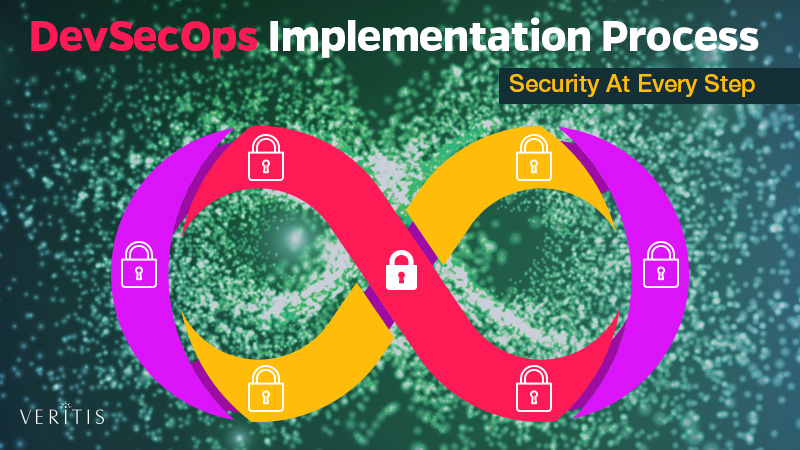
  • DevSecOps Implementation Process and Road Map – Security at Every Step

    DevSecOps Implementation Process and Road Map – Security at Every Step

    DevSecOps is changing our perspective toward security and is equipping us to deal with its challenges in an intelligible manner. The systematic approach of DevSecOps helps us add value to our business processes while ensuring security.

    Here’s a summary of the key inputs and a recipe for a successful software development project. Implementing DevSecOps with the primary goal of enhancing security requires a step-by-step procedure.

    It requires the unification of culturally disparate teams of Security, Operations, Development and Test for the sole purpose of building a product marked by quality and backed by security.

    The DevSecOps process will require effective planning, design and release, which will be put together with a collaborative toolchain of technologies to bring about a common goal.

    Furthermore, as organizations continue to rely on automated delivery, avenues are created for testing opportunities beyond traditional bugs. In-house experts will be able to identify potential loopholes, design errors and even code weak spots.

    Being able to identify weak spots and flaws well in advance helps organizations maintain a competitive front in the market and trustworthiness before its target audience.

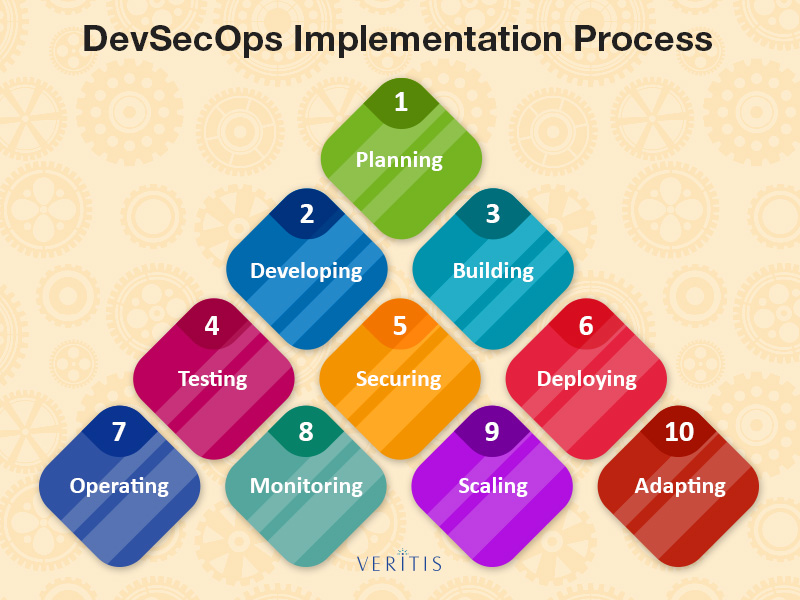
    DevSecOps Implementation Process and Road Map

    DevSecOps Implementation Process and Roadmap

    1) Planning: Planning is the first approach to any task at hand and the core focus of DevSecOps—security—begins from here. In the planning stage, DevSecOps professionals must go beyond creating feature-based descriptions. The focus should also be on security and performance, acceptance test criteria, application interface and functionality and threat-defense models.

    Tech terminology: Acceptance Test Criteria is used by DevSecOps professionals to understand user preferences and behavior to a software application behavior.

    2) Developing: Developers should approach DevSecOps with a “how to do it” approach, rather than a “what to do” approach. It is important for developers to bring together available resources for guidance, have reliable practices and a code review system in place for themselves and for others in the team to follow.

    3) Building: Automated build tools can uplift the whole DevSecOps implementation process tremendously. These tools ensure test-driven development, standards for release artifact generation and utilize tools to ensure the design aspect is in alignment with the team’s coding and security standards through statistic code analysis.

    They can also be used to identify vulnerable libraries being used in your application and replace them with new ones.

    4) Testing: Automated testing in DevSecOps should utilize strong testing practices including front-end, back-end, API, database and passive security testing.

    Tech Terminology: Passive Security Testing is a developmental stage testing where security testing is not conducted directly on the target.

    5) Securing: Traditional testing methods always remain in place in DevSecOps exercise. However, somewhere down the line, there is a tendency to identify issues toward the end of the development process.

    Through advanced practices such as security scanning, we tend to become more aware of the issues and can determine if the threat is a serious one or not.

    6) Deploying: Automated provisioning and deployment can fast-track the development process while making it a more consistent one. Infrastructure-as-code tools can perform the aforementioned audit properties and configurations and ensure secure configurations across the IT infrastructure.

    7) Operating: Regular monitoring and upgrades are the Operations team’s important tasks. DevSecOps teams ensure to deploy infrastructure-as-a-code tools to update and secure the entire organization’s infrastructure in a quick and efficient manner with no scope for human error. Operations personnel have to be especially watchful of zero-day vulnerabilities.

    Tech Terminology: Zero-Day vulnerabilities are a software breach that remains unknown to software productions personnel and can eat away at a computer program and other components such as a network.

    8) Monitoring: Constantly keeping a watch for irregularities in security can save an organization from a breach. Hence, it is essential to implement a strong continuous monitoring program with real-time to keep a track of system performance and identify any exploits in their early stages.

    9) Scaling: Gone are the days when organizations spent precious hours and money on the maintenance of large data centers. With the introduction of virtualization solutions and the cloud, organizations can scale their IT infrastructure or replace it in the event of a threat, which would be impossible to do with a traditional data center.

    10) Adapting: Continuous improvement is key to any organization’s growth. An organization will only be able to achieve the desired growth of it evolves in its practices including DevSecOps practices—security, functionality and performance. Therefore, an organization should adapt to continuous improvement and external changing trends.

    The DevSecOps is in itself a process of innovation that substantially adds value to an organization.

    Point to Remember: Security is everyone’s responsibility.

    — Veritis

  • How AIOps Makes DevOps Less Noisy

    How AIOps Makes DevOps Less Noisy

    For DevOps engineers, “noise” is the enemy of productivity. In this context, the noise we’re talking about is unnecessary or low-priority alerts and notifications that distract engineers from identifying serious issues—and ultimately can cause alert fatigue syndrome, in which alerting systems are ignored altogether.

    Without the application of a well-constructed noise reduction plan, alert noise will end up taking away from the focus of solving the actual problem that may be causing a more critical issue.

    So, how can you fight alert noise? You might be tempted to assume that the answer lies in reducing the number of alerting tools you use, but that’s probably unrealistic. Teams today are dealing with complex application stacks and multiple tools and data sources, all of which can produce their own alerts for issues that may be interdependent or isolated. You simply can’t take tools out of your stack.

    What you can do, however, is analyze and manage alerts more effectively. Dealing with alert noise ultimately boils down to developing an effective problem analysis strategy. Let’s explore how, with a specific focus on how AIOps factors into keeping alerts manageable.

    Reduce the Time in Analyzing Alerts

    While reducing noise is important, DevOps teams risk losing valuable time solving critical problems if they also have to create and/or add systems to properly analyze alerts and their sources and priority level. Maintaining this system also would be a source of unnecessary labor that may reduce the alert noise, but also reduces the amount of time that DevOps staff can work on the solution to the root cause— which brings up another consideration. When coming up with a plan, the amount of complexity involved in adding the monitoring tools necessary to cover an entire application and/or service can be equally laborious compared to not having a solution at all. At this point, we may be merely shifting the labor emphasis.

    This is Where AIOps Comes In

    Now, let us envision a way that a team can gain full insight into a root cause without exposure to alert noise. The team doesn’t need to analyze every single alert, which would include:

    • Duplicate alerts.
    • Alerts from multiple sources (tools, microservices).
    • Informational alerts (warnings).

    Instead, the team can let AIOps analyze and classify the stream of alerts and identify critical issues. DevOps no longer would need to spend valuable collaboration time analyzing every link in the toolchain. When a team has to analyze every tool, the team could produce false positives, redirect resources toward the wrong solution, spend too much time trying to identify the root cause and create excessive alert noise. Let us envision a way in which the team does not need to spend excessive time in analysis and can experience more effective collaboration in service of solving the actual problem.

    AI and machine learning can relieve this manual process through AIOps. Automated collection of data across the application stack, alert correlation, identifying root cause and decision-making can be leveraged by a team to get to the problem immediately without all of the messy work of manual analysis, sorting and identifying root cause. This level of automation allows for needed human interaction through collaboration across teams, which can result in faster resolution, decreased downtime and effective communication of key events to company staff and end users.

    Analyzing to Predict Future Problems

    Another benefit of AIOps and the power of automated data collection, analysis, issue identification and decision-making is the ability to predict future events. A DevOps team can leverage these insights into effective preventative measures. The ability of AIOps to produce these insights will help a team find ways to automate and/or improve operations. Reducing alert noise no longer needs to be a goal because it is happening through a smooth interaction between the human team and the AI.

    There is a growing need for DevOps teams to utilize the power of AIOps. While human teams are not replaceable, redundant and time-consuming tasks are. The ability of AIOps to effectively traverse a complex toolchain with isolated issues to analyze alert importance, correlate alerts, collect and analyze relevant data, identify root cause and produce holistic actionable insights eliminates inefficiencies in problem-solving and reduces alert noise.

    Making DevOps less noisy is a goal with its roots in effective use of information. Alerts serve to inform, but thanks to the increasing complexity of applications, alerts become noise. Leveraging the power of AIOps serves to do a lot of the dirty work for a team so that noise can be reduced—but more importantly, it can make operations run smooth and keep customers happy.

    — Phillip Lorenzo