Tag: devops

  • A DevOps Checklist for Traditional Service Providers

    A DevOps Checklist for Traditional Service Providers

    As companies such as Amazon and Google rapidly innovate to deliver new services, traditional service providers recognize that change is necessary to keep up with shifting customer expectations. Given the pace at which technology continues to morph, creating better, faster and more innovative solutions is a necessity, and if this isn’t achieved, even longtime customers will eventually look elsewhere.

    For younger businesses, taking a collaborative approach to IT and product development often comes naturally as it’s built into the company’s DNA. However, for more established service providers, adapting to this new way of doing business can prove challenging. Traditional service providers have spent years perfecting their technology and require multiple layers of review prior to rollout. While these checks and balances are in place to ensure a level of quality customers have relied on for years and expect to receive from traditional providers, it also can hinder their ability to react quickly to client demands. However, the adoption of the principles embedded in DevOps can allow traditional service providers to work more like a startup by accessing their technology and human skills in a new way, while also continuing to deliver products which meet the expectations of their established customers.

    Now the question is, how can traditional services providers successfully implement this DevOps approach? While it can (and has been) done successfully, there are five critical steps that need to be taken into account:

    1) Establish a clear goal. The most important step is the first: Management must have a clear understanding of what they are looking to accomplish with the DevOps transition. Service providers have a long legacy of well-defined, reliable services, so all changes must complement their current product offerings and live up to the quality their customer base has come to expect. If an overall goal is not defined, customers will be left confused and disappointed, and ultimately, there will be no impact on the bottom line.

    2) Set a timeline. While creating an unrealistic timeline is never advised, it is critical to set an aggressive, pragmatic and adjustable one. As mentioned above, without aggressively pushing forward, an organization will find itself continuously playing catch up to its competitors. The timeline is meant to push an initiative forward even when there are setbacks or changes that need to be made along the way. The right timing is a balancing act: too fast and you have a poorly crafted product rollout; too slow and you are stuck behind the competition. The key metric to measure progress is the degree of evolution to the DevOps model within key stakeholder organizations. If solutions are delayed due to existing processes, then either the scope of the team needs to be adjusted to encompass those processes or the goal needs to be changed so they are no longer an issue.

    3) Collect necessary resources. Typically, the biggest gap that needs to be filled to move forward is with human resources. For many established companies, having design and architecture skills—core capabilities needed to develop a new product—hasn’t been a priority. Creating the right team that consists of new talent that have these missing skills, along with the addition of current employees who have a more intimate understanding of the company and customer, is a critical aspect in making sure this more collaborative and innovative approach to solution development and delivery works. And it doesn’t stop once the team is created, it is important to continue to foster an environment that encourages the new team to work together and promote their process within the broader organization.

    4) Create benchmarks. To ensure the established timeline is being met and that there is an opportunity to change course if necessary, it is important to set clear deliverables at various stages of the process. These benchmarks must look to what people are doing today, not just the end goal. Initial measures should focus on the pace at which progress is being made, and later, focus on the end products being delivered.

    5) Get the entire company on board. Changing an embedded philosophy isn’t easy, especially one that has worked well for so long. No matter the organization there is almost always resistance on some level when fundamental changes are being made. It is up to leadership and the DevOps team(s) to demonstrate internally and externally that the changes being made are not just for the sake of change, but in the end will benefit the entire company, as well as the customer.

    While taking a deeper look at an organization’s “people, process, technology and information” and moving to a new mindset doesn’t happen overnight or come without its hiccups, the status quo is no longer sufficient to compete. The reality is, a more collaborative and faster delivery model is necessary to be successful in tomorrow’s marketplace.

    About the Author / Tim Pearson

    timpearsonTim Pearson is the director of product line management at Ciena. In his role, Tim leverages DevOps practices to break barriers in network delivery to meet the demands of mobile, VR and video applications.  Driven by challenge and fueled by deep industry knowledge, he has built a reputation for developing innovative business and product strategies to drive growth and open new markets. Tim holds a Bachelor degree in Electrical Engineering from Memorial University, a Masters degree in Management Science from the University of Waterloo and an MBA from the MIT Sloan School of Management. Connect with him on LinkedIn and Twitter.


  • The 3 Secrets to Overcoming the Agility-Stability Paradox

    The 3 Secrets to Overcoming the Agility-Stability Paradox

    Regardless of whether an organization subscribes to a bimodal IT approach, one thing is clear: It’s more important, and more difficult, than ever to fight the agility-stability paradox. Today’s businesses must build on a delicate balance of being compliant, plan-driven and keeping the lights on while also seeking ways to become more fluid and agile with high customer touch. The barriers standing between these two key initiatives are numerous and complex; whether it’s mismatched technology or a lack of mutual understanding, the agility-stability paradox remains.

    In a lot of ways, this paradox comes down to a difference between traditional and new forms of IT. Traditional IT can be described as predictable–it’s compliant and plan-driven, with conventional processes and long-term cycles. But as the next generation of IT starts to take hold, today’s businesses must find ways to also fold in a new IT that’s dynamic, fluid, agile and continuous, with short cycles and high customer touchpoints. In this way, traditional IT and new IT are polar opposites, and many companies struggle to find a balance between the two. Competing attitudes, too much change at once and tooling challenges all stand in the way of harmony between the reliability of the traditional approach and the need for agility in the new way of doing things.

    Balance is Possible

    While there is no magic tool or wand that can solve for the incongruities so many organizations face, balance is possible. Enterprises don’t have to choose reliability, customer experience, uptime and performance over agility, release velocity, new markets and competitive response. The real secret to overcoming the agility/stability paradox lies in establishing who, what and how. What this means is that with the right people, processes and tools in place, any company can achieve the balance between agility and stability needed for success.

    Who? People

    People serve as the “who” of finding balance between reliability and agility. This is the chance to integrate your culture into solving the agility/stability paradox. Start by identifying how each member of the team needs to adapt and shift to accommodate changes. The real trick to getting the people aspect of things right is communication. Define a communication path and be really clear about why your organization needs to transform, how it will be transformed and when everyone can start expecting to see some real adjustments take shape. Orchestrate a response mechanism across your teams and enable social operations collaboration to facilitate execution. Be sure to provide ongoing updates and encourage feedback.

    What? Process

    Now that you’ve established who needs to play a role in overcoming the agility/stability paradox, it’s time to talk about what exactly needs to change. Process is absolutely crucial here. There are a few keys to establishing the right process for balancing traditional and new IT models. The first is to identify, and not dictate. Dictating change from the top down is never going to be effective. Instead, work together to determine areas of weakness and highlight them. Use your observations as a guide, not a mandate.

    From a more tactical perspective, be sure to streamline workflows wherever you can. Define instead of inheriting urgencies and alerts. Don’t be afraid to rely on automation wherever possible, either. By automating processes that help out on the people side of things, you can free up your team to spend less time on tedious, manual tasks and focus more on innovation.

    How? Tools

    Tools are your best friend when it comes down to actually making all this change happen. Considering the vast number of tools in the market, choosing a toolset may appear daunting at first. But if you start with strong integration across the operational modes already in place, then you’re already in good shape. In particular, to bring new, agile IT into the fold, you’ll want to incorporate IT service management (ITSM) solutions and establish a DevOps tool chain.

    Don’t Boil the Ocean

    The most important thing to remember is to start small—you don’t have to boil the ocean. Build a culture where traditional and new IT environments are encouraged to work closely together, where you can build and run software that addresses both agility and reliability to respond to the pressures on the business. Start by defining what is is right for your team and organization and acknowledge the existing culture and people. Don’t be afraid to experiment and create isolated learning environments, either. Just make sure to maintain a clear connection to customer value and use this as your North Star. Finally, don’t forget to celebrate. Celebrate your failures and learn quickly from them.

    About the Author / Manish Kalra

    manishManish Kalra is director of Product Marketing at PagerDuty. He is responsible for driving product marketing strategy, product positioning, launches and collateral development for the PagerDuty incident management platform. Prior to PagerDuty, he served as Director of Product Marketing at companies like Sumo Logic and Splunk.

  • Chef Boards the DevOps Express with CloudBees, Others

    Chef Boards the DevOps Express with CloudBees, Others

    You often may have more questions than answers as you progress along your DevOps journey. Which tools should I choose? Do these tools work well together? What have other people done in my situation? You’re often left Googling to find the right integrations and piece together an architectural solution.

    Today, I’m excited to announce that Chef is joining DevOps Express, a new industry initiative comprised of 14 leading DevOps vendors and service providers. Led by CloudBees and Sonatype, and including everyone from Atlassian to GitHub, this initiative is focused on creating solutions that will help you adopt DevOps practices. Specifically, by defining reference architectures and highlighting best practices, supported integrations and solutions, we believe that DevOps Express will simplify and accelerate DevOps adoption for organizations of all kinds.

    DevOps Express uses popular technologies spanning multiple solution components to provide a framework for building reference architectures that are better integrated and supported. Creating reliable and actionable reference architectures for organizations will ease DevOps adoption and minimize risk for organizations.

    DevOps is collaborative by its very nature—it’s all about bringing teams together. This includes cultural transformation, breaking down silos between disparate teams and working together around the common goal of adding value for customers. These principles are just as true for us, the vendors providing tools to help you on your DevOps journey. We, too, must break down silos and work together to provide more value for you, our common customer. I’m looking forward to what we’ll build.

    About the Author / James Casey

    james_caseyJames Casey is vice president of Partner Integration at Chef. His career spans more than 15 years in companies ranging from mobile and finance startups to CERN, the birthplace of the World Wide Web. He specializes in building tools for operating large computing infrastructures. He previously created monitoring tools at CERN for the Large Hadron Collider.

  • GRC: A Key Ingredient in DevOps’ Secret Sauce

    GRC: A Key Ingredient in DevOps’ Secret Sauce

    By now, surely everyone has seen cooking competition shows such as “Hell’s Kitchen” and “Top Chef,” in which people compete to create and serve the best dishes as quickly as possible. These hit TV programs are like the DevOps world, which also consists of people creating and releasing the best software as fast as they can with whatever they are given. In both instances, the best use of random ingredients brings rewards and failure brings disappointment.

    DevOps is becoming evermore common as companies in all industries work to unify their developers and other IT staff while automating as much of the process as possible, creating nimble, fast-moving teams. Think of it in the same way professional kitchens have cooks dedicated to specific stations, such as vegetables or fish, and are able to react swiftly to whatever orders are placed. By redesigning their in-house teams in this fashion, organizations can add speed, agility and resilience to critical functions.

    But, often what’s forgotten in the high-pressure, rush-rush-rush world is the critical importance of security and regulations. Governance, risk management and compliance (GRC) always must form the base decisions; otherwise; the final products will either not be able to be used or, worse, be dangerous to the company, its customers and its shareholders. It’s really no different than cooks having to abide by health code regulations or risk sickening and possibly even killing their diners. Don’t think GRC is that serious? It wasn’t long ago that Dwolla was fined $100,000 by the Consumer Fraud Protection Bureau (CFPB) for lying to customers about data risks. That was the CFPB’s first fine and you can bet more are sure to follow.

    Of course, a key difference is that in the business world, regulations and compliance standards constantly are being created or changed. That makes DevOps even more challenging, but that challenge cannot mean ignoring GRC. In fact, GRC should be seen as a key DevOps enabler, not an obstacle. An organization’s legal and compliance team can take advantage of highly agile, forward-moving DevOps teams to design and implement changes that satisfy risk and control points (resulting in successful audits and avoiding fines) while, at the same time, staying abreast or even beating the competition.

    The key here is to ground DevOps in GRC requirements so they become second nature and security measures are incorporated effectively into all DevOps processes, even automated ones. It’s crucial these measures are seen as integral to the processes and not simply layered on top as an afterthought, just as you wouldn’t try to get raw chicken juice off of lettuce after you’ve made a salad.

    Tactically speaking, how is this accomplished? DevOps teams need awareness and training. They need to learn the rules and laws specifically governing their particular industry, and how to implement them. And, companies need to have internal audits and other review policies in place to ensure GRC is enforced.

    For all of this to happen, however, a very important role must orchestrate it: management. Just as every kitchen depends upon a head chef to ensure not only that each station is obeying health codes (i.e. the law) but also that overall the meal is being prepared and delivered properly, company management must assume its authoritative role in setting up and defining the organization’s internal communication. This means breaking down silos and coordinating a regular flow of information from Compliance to DevOps team and back again.

    If this is done properly, DevOps can enable an innovational Nirvana, with companies boosting speed while maintaining security, creating the perfect consumer experience.

    About the Author / Robert Hawk

    Robert HawkRobert Hawk serves as Information Security Expert at xMatters, Inc. He has extensive experience in information systems security, computer security, cyber security, information assurance and governance, risk, and compliance (GRC) management. He specializes in frameworks and standards from: ISO/IEC, NIST, IEEE, IETF, ITU-T, Common Criteria, AMI-SEC, NERC, CIS, DoD, ANSI, PCI and ISECOM. Robert is a lifelong researcher, innovator and instructor. Connect with him on LinkedIn.

  • Why Your Organization Needs DevOps

    Why Your Organization Needs DevOps

    The recently released fifth annual “State of DevOps Report” by Puppet has once again brought with it fresh insights into what drives high-performance teams. The report, which comes at a time when DevOps has ceased to be a buzzword, provides proof of why more and more businesses across the world are adopting DevOps to improve their organization’s performance, revenues and profitability. DevOps has truly come of age and this year’s “State of DevOps Report” clears any doubts fence-sitters may have about the effectiveness of the DevOps approach.

    The 2016 report reasserts that unparalleled IT and organizational performance is a result of a team effort spanning development and operations. The report also highlights the importance of improving the entire product life cycle—from initial product planning, to quality and security assurance, to customer feedback—to speed up delivery while improving quality, security and business outcomes. You can read the full report here.

    In today’s competitive business environment, DevOps has emerged as a vital solution that helps organizations meet ever-growing industry demands. The “2016 State of DevOps Report” helps us understand how the practices associated with DevOps affect IT performance and organizational performance. Let us examine the findings of the report to ascertain how DevOps can benefit your organization.

    Why Does Your Organization Need DevOps?

    The “2016 State of DevOps Report” makes it plain and simple that companies that incorporate DevOps practices get more done. According to the report, high-performing IT organizations deploy 200 times more frequently than low performers, with 2,555 times faster lead times. They have 24 times faster recovery times and three times lower change failure rates. High-performing IT teams spend 50 percent less time remediating security issues and they spend 22 percent less time on unplanned work and rework, the report states.

    Performance

    If we boil down the report findings into actual benefits of adopting DevOps, we could say that DevOps enables continuous software delivery with less complex problems to fix and faster resolution of problems. This essentially means that you can deploy faster and more effectively in more stable operating environments and add value rather than just fixing or maintaining.

    DevOps can revolutionize the performance levels of organizations and allow them to deploy at a rate never seen before. It has certainly enabled organizations such as Etsy, Netflix, Facebook, Amazon, Twitter and Google deploy hundreds and thousands of code per day while delivering world-class stability, reliability and security. You can find out how different organizations have implemented DevOps to their benefit in this YouTube video.

    Security

    Higher performance is not the only payoff in the DevOps culture. Organizations that adopt DevOps practices are known to have better information security. The “2016 State of DevOps Report” clearly states that organizations that integrate information security objectives into daily work spend 50 percent less time remediating security issues than low performers. This has a positive impact on IT performance and security outcomes.

    Any organization, irrespective of size, can employ DevOps to achieve high performance levels and meet business goals while cutting down on costs related to fixes and remediation security issues.

    How DevOps Transforms Teams

    Consider this scenario: In an organization that does not apply the DevOps methodology, the development team writes code and develops a product, which is then sent to the testing team that verifies if the code meets the requirements. The operations team steps in to run the product only after this process is complete. The DevOps philosophy was created to break the silos that teams operate in and effect better collaboration and performance.

    The culture shift DevOps brings about in organizations is substantial, and since culture is a key factor responsible for a company’s performance, application of the DevOps philosophy provides measurable and non-measurable results. A few of them are:

    Employee Engagement

    DevOps is neither a method nor a tool, it’s a culture! In organizations that observe the DevOps culture, the development and operations teams work outside silos, releasing products faster, thereby increasing operational efficiency. This is made possible by the operations team giving the developers constant feedback about the code and troubleshooting problems with the user experience in mind. This continuous learning and delivery practice allows cross-functional teams collaborate as one team with one goal, thus facilitating higher performance levels. The improved organizational culture and enhanced employee engagement can help organizations not only in retaining great talent but also in recruitment.

    Organizational Success

    The “2016 State of DevOps Report” effectively explores the relationship between employee engagement and organizational success and goes on to show that there is a strong correlation between these two factors. The report states that employees in high-performing organizations are more than twice as likely to recommend their organization to a friend as a great place to work.

    Organizations can greatly benefit from adopting the DevOps culture. The “2016 State of DevOps Report” shows that high-performing organizations are widening their lead against lower-performing organizations. This can be attributed to the increased productivity and creativity of highly engaged employees that helps them provide better experiences to customers.

    Organizations can achieve great business results by reinvesting the human time, creativity and energy saved by reducing rework and downtime through DevOps. Herein lies the ROI of DevOps—the competitive advantage that organizations get by investing in a philosophy that positively affects bottom-line results!

    About the Author/ Pallavi Poojary

    Pallavi Poojary1Pallavi Poojaryis a writer with Edureka, an online learning company with more than 250,000 learners spread across the globe. She writes on hot technologies and skills that are in demand today, including DevOps, Big Data and Project Management, to name a few. She is a believer in transformation of careers through learning


  • Q&A: CNCF on Instilling a DevOps Culture, Part 1

    Q&A: CNCF on Instilling a DevOps Culture, Part 1

    The Cloud Native Computing Foundation (CNCF) is a non-profit comprised of some 49 industry participants that have come together to drive development and adoption of cloud-native applications and services. The CNCF is uniting such giants as Google, IBM, Intel and Cisco Systems to distill a collection of container technologies that end-user companies deem praiseworthy to reach its goal.

    The CNCF intends its membership to represent end users (the CNCF website lists one end user, Goldman Sachs), cloud and container technologies, online and IT services, and academic institutions.

    On behalf of the CNCF, Craig McLuckie, its Governing Board chair, and Brian Grant, its Technical Oversight Committee representative, weigh in on leading the DevOps transformation and instilling a DevOps culture in this two-part Q&A.

    staging-devopsy.kinsta.cloud: How is the CNCF specifically involved in leading the DevOps transformation by instilling the DevOps culture, in the industry or in member companies, for example?

    McLuckie: We believe that at the heart of the DevOps culture is the need to reduce the friction and, indeed, the barriers between teams that build an application and the teams that run an application. Developers learn to think about an application as a living service that evolves continuously and rapidly to meet the evolving business needs. Operations is there to deliver the tools and environment needed for them to successfully drive their application.

    staging-devopsy.kinsta.cloud: Why do developers need an environment that is safe to change? What kind of change? Safe how?

    McLuckie: Safe change has many potential meanings: The first kind of “safe” is about creating deterministic behavior in operations. Does the system handle a change correctly every time? If I make a change to two systems, will they have the same state? How about to 1,000 systems? It’s important to focus on creating strong determinism by removing the moving parts in a production deployment.

    The second kind of “safe” is about being able to validate that a change is good—not just in pre-production environments, but in the actual production environment—with a simple and deterministic rollback. It is important to make it trivial to replicate environments, and offer a way to run a simple experiment in production (e.g. route 1 percent of my traffic to this new version) with the option to deterministically roll forward or backward without effort.

    A third kind of “safe” is about being able to ensure that every change is deliberate. One of the problems we often see in production systems is “configuration drift” that isn’t driven through any kind of formal process. This should be addressed by creating a strongly declarative toolset that makes every change deliberate and trackable.

    staging-devopsy.kinsta.cloud: How do you recommend providing these things that developers need? How do you help provide them?

    McLuckie: There are multiple issues like data, security governance and applications that need to be addressed. Additionally, companies want to deliver apps with high velocity. How do you solve all of this? A vendor-neutral organization that can harmonize emerging technologies is important for facilitating cloud-native. Given the large number of players in the marketplace with competing approaches, having an open source way to solve this is also important.

    Grant: Cloud-native infrastructure enables self-service and “hands-off” operation, including provisioning, deployment, scaling, healing, discovery, monitoring and more, with relatively little marginal effort for specific applications. By supporting open source projects such as Kubernetes and Prometheus that provide such functionality, the CNCF hopes to democratize high-velocity application delivery, which was previously achievable mainly by web-scale companies.

    staging-devopsy.kinsta.cloud: How does this align with instilling a DevOps culture?

    Grant: In a DevOps culture, operators are both partners and customers of the developers. Developers take responsibility for meeting operational requirements: security, reliability, availability, scalability, efficiency, actionable monitoring and logging output, necessary configurability, compatibility with the production environment, etc. Cloud-native infrastructure provides mechanisms developers and operators need to facilitate and capitalize on those capabilities.

    Stay tuned for part two of the CNCF interview.

  • How DevOps is Killing QA

    How DevOps is Killing QA

    If you work in software quality assurance (QA), it’s time to find a new job.

    The overall software development process has always consisted of the following core activities:

    • Creating a requirements analysis;
    • Producing a specification of the software artifact;
    • Constructing the software;
    • Investigating the quality of the product or service;
    • Finding and fixing defects; then
    • Deploying to production.

    In most organizations, this process generally has occurred within one or more methodologies such as waterfall or agile. In waterfall, the testing process occurs relatively late. The software is produced, bugs are found by the QA team and then the software is fixed. These last two practices repeat in a cycle until management is comfortable that it can be released to the public.

    In agile, individuals and teams—including QA—work closely together to release and then update software on an ongoing basis rather than deploy an entire platform all together and all at once. DevOps, as we have written in our “What is DevOps?” guide, is the next generation of agile development. Agile is a way of thinking in software development; DevOps goes one step further and is a concrete cultural change that implements the philosophy within an organization.

    And that implementation eliminates the need for QA as a separate entity in the organization and disperses the responsibility for quality across different teams, even though many have argued that the discipline is still needed in one form or another.

    Past Interpretations of QA in DevOps

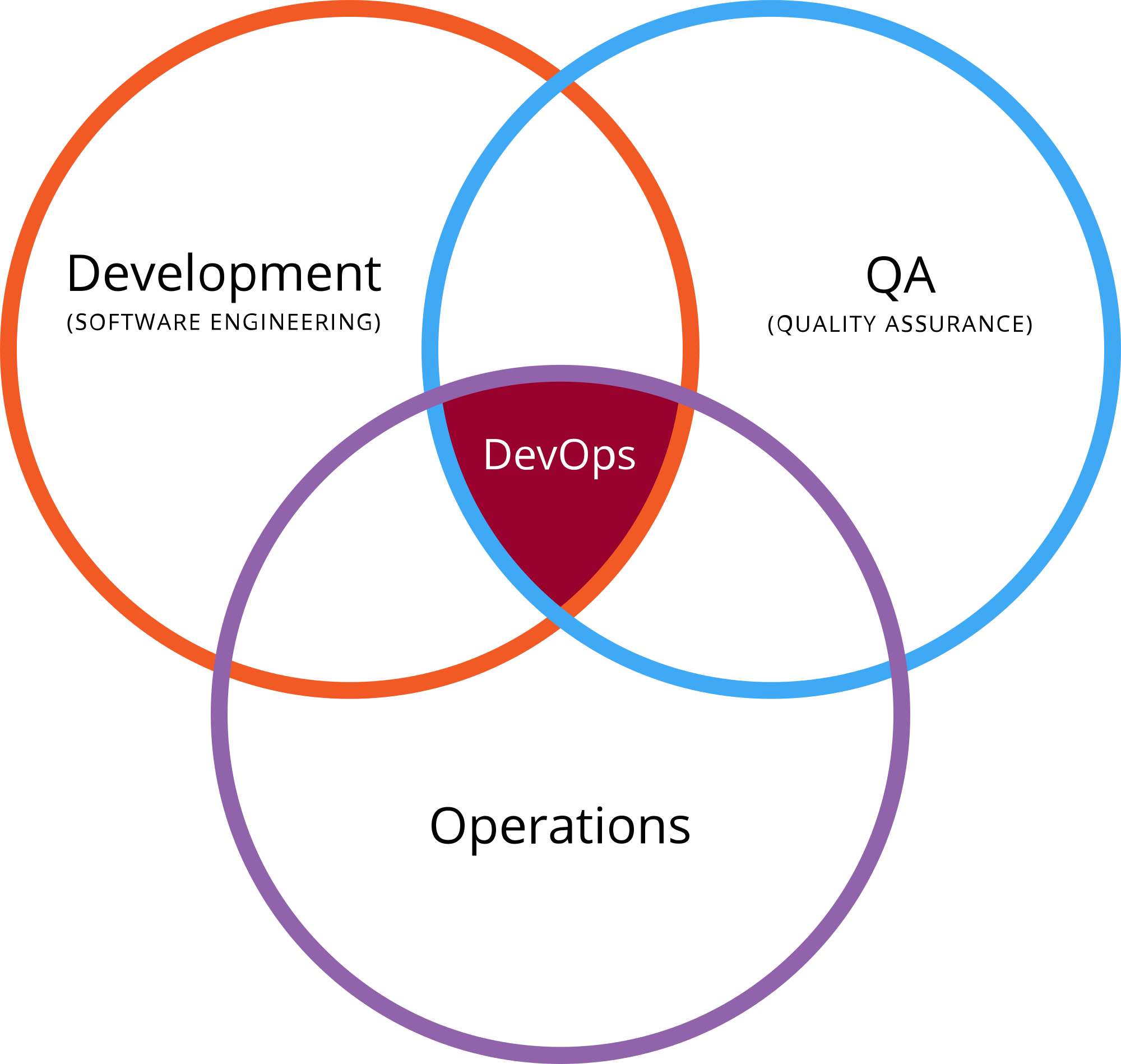
    devops qaOne common argument is that DevOps sits at the center of a Venn diagram of dev, ops, and QA:
    On one side, QA works together with development in trying to push more of their tests into the continuous integration system. Tests must have zero human intervention and generate their own test data.

    On the other side, QA works with operations to collaborate on monitoring tools; perhaps to continuously run smoke tests in production. Chances are that operations is developing scripts for backup and restore of production systems, rollback of deploy, or scripts for disaster recovery.

    Tim Hinds at NeoTYS looks at the issue differently and says that “DevOps QA” is meant to prevent defects rather than find them:

    QA takes a critical role in this organizational structure because they have the visibility and the directive to push code out when it is working, and roll it back when it is not. This is a very different mindset from QA organizations of 10 years ago, whose primary responsibilities involved finding bugs. Today QA groups are charged with preventing defects from reaching the public site.

    With all due respect, both are wrong.

    Why DevOps Does Not Need QA

    DevOps often uses continuous integration (CI) and continuous delivery (CD). In CI, developers use various continuous integration tools to integrate code into a shared repository multiple times each day, and DevOps relies on automation to determine the quality of the version. You cannot have any human interaction if you want to run CD, which ensures that any version of a batch of code in the repository can be released at any given time.

    Essentially, the traditional QA cannot work in a full CI/CD environment. In older structures, the responsibility for software quality was in the hands of QA. Today, it’s part of the DevOps culture and methodology—the developers now own the responsibility rather than a separate entity within the organization.

    Specifically, DevOps entails the use of vendors and tools such as BUGtrack, JIRA and GitHub to aggregate and report software bugs and defects. Test automation tools including Selenium, Cucumber, JUnit, TestNG and JMeter manage, execute and measure functional tests and cycles.

    In the end, if there is a layer of people in the middle between development and operations, then you cannot perform CI and CD seamlessly and, therefore, cannot do DevOps. To run a proper DevOps operation, you cannot have QA at all.

    The Future of QA

    So, what will happen to all of the people who work in QA? One of the happiest jobs in the United States might not be happy for long as more and more organizations move to DevOps and they become more and more redundant.

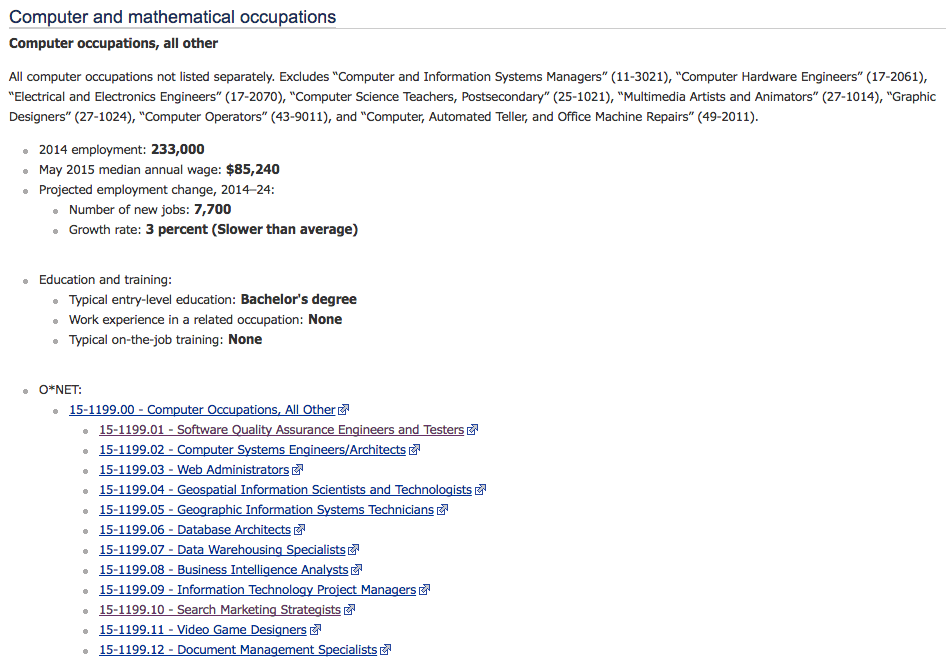
    According to the U.S. Bureau of Labor Statistics (BLS), software quality engineering is one of the high-tech professions whose growth rate is projected to be slower than average:

    qa job outlook

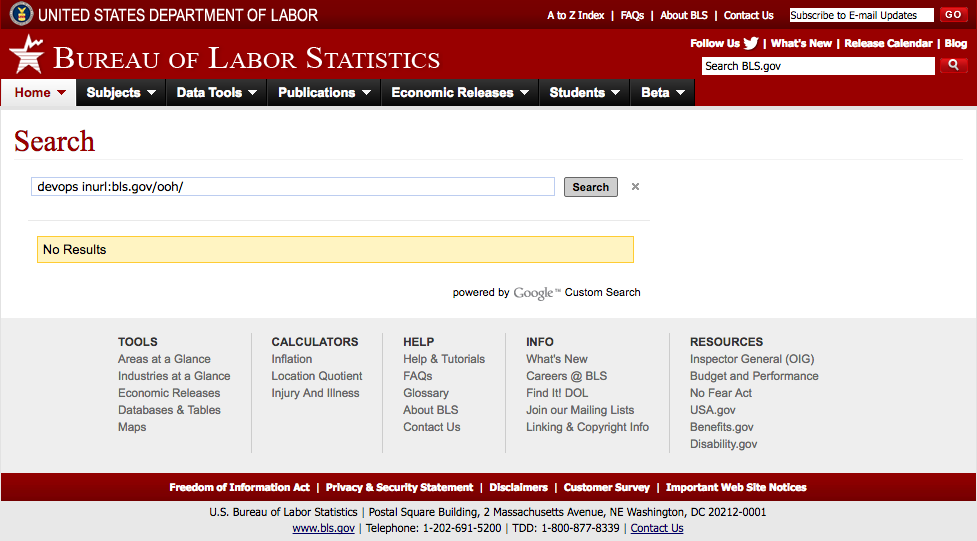
    However, the BLS numbers are likely too generous because the bureau does not yet recognize “DevOps” as a separate profession at all:

    image02

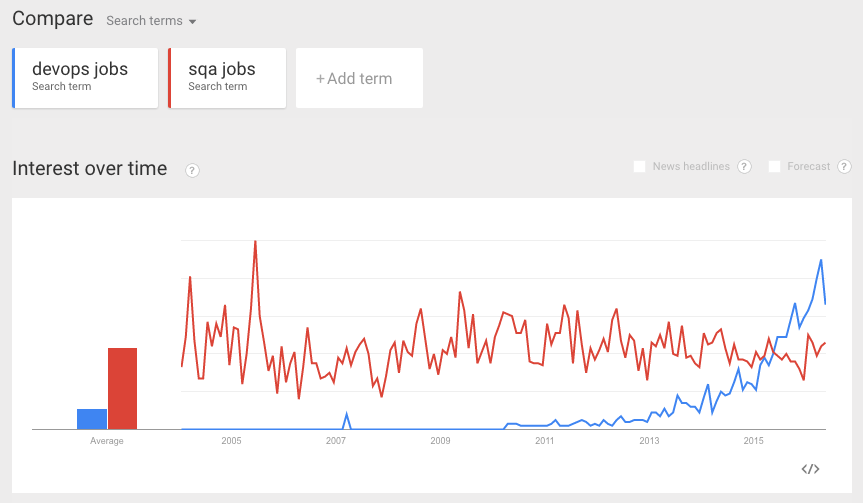
    As evidence, just look at how the relative number of Google searches in Google Trends for “sqa jobs” is slowly declining while the number for “devops jobs” is rapidly increasing:

    qa jobs vs devops jobs

    For QA, the trend definitely does not look good.

  • DevOps: Shift Left to Reduce Failure

    DevOps: Shift Left to Reduce Failure

    DevOps is all about increasing the feedback loop from idea to customer and back again. Tremendous gains have been achieved in automation and tools to drastically reduce the amount of manual labor involved in progressing down the release pipeline. But mission-critical applications in a highly competitive market cannot afford to go down. Complex applications, environments and infrastructure increase risk, which can cause failure.

    The failure rate of production deployments is still too large. Studies show that the average cost of a production outage is roughly $5,000 per minute, while the average cost of a critical application failure per hour is $500,000 to $1 million.

    Why so much failure? All too often we’re still seeing a lack of consistency across the release pipeline. Many times the provisioning and deployment processes are very different at the opposite ends of the pipeline. But by shifting left the operations concerns, you can achieve much more success in production.

    Understanding How to Shift Left

    The term “shift left” refers to a practice in software development in which teams focus on quality, work on problem prevention instead of detection, and begin testing earlier than ever before. The goal is to increase quality, shorten long test cycles and reduce the possibility of unpleasant surprises at the end of the development cycle—or, worse, in production.

    Shifting left requires two key DevOps practices: continuous testing and continuous deployment. Continuous testing involves automating tests and running those tests as early and often as possible, along with service virtualization to mimic unavailable systems. Continuous deployment automates the provisioning and deployment of new builds, enabling continuous testing to happen quickly and efficiently.

    The first and most obvious way to shift left operations is to work side by side with development in creating the deployment and testing processes. Failures observed in production often are not seen earlier in the life cycle. Many times these failures can be attributed directly to differences in deployment procedures. Development may create its own deployment procedures that are very different from those used by operations for production. Sometimes production procedures are much more manual and may even use different tooling. Operations and development need to take ownership in building standard deployment procedures. The deployment process is then practiced potentially hundreds of times in test environments before reaching production. You then have much more confidence that the production deployment will be successful.

    Another way to reduce the failure rate is to make all environments in the pipeline look as much like production as possible. This is almost impossible using traditional provisioning processes. Production environments usually are much heavier and detailed than are needed by development. But by using cloud and pattern capabilities, you can get much closer.

    The ability to use patterns to define consistent environments eliminates the failures that occur simply by configuration inconsistencies. This again requires operations and development to work together in creating the provisioning process so developers create their test environments the same way they are created in production. Using IBM UrbanCode as an example, this can be done by connecting UrbanCode Deploy to an automated self-service provisioning system such as OpenStack HEAT or IBM Cloud Orchestrator connected to OpenStack.

    Picture1

    These standard patterns can be used to create environments for all stages of the pipeline. And by using cloud capabilities you can deprovision these environments as fast as you can create them. This also allows the enterprise to have confidence in their environment patterns. They are tested on a daily basis and, therefore, operations can feel confident that testing is done on production-like environments.

    No one wants to experience production failures—and it is in everyone’s best interest to do all they can to prevent them. At the root of DevOps is the removal of those silos between development and operations. By applying these shift left operations principles you are well on your way to reducing your failure rate.

    The ingredients to make shift left are real and available: automated testing and deployment tools, service virtualization technology, agile practices and cloud environments. The main obstacle that remains is the mindset of delivery organizations. Learn more from the newly updated Application Deployment and Release for Dummies ebook to find out more.

    About the author / Dr. Darrell R. Schrag

    Darrell Schrag

    Dr. Darrell R. Schrag (@devopsdrs) is an experienced software lifecycle consultant specializing in the IBM cloud solution, helping customers establish their cloud strategy across the enterprise. He’s focused on implementing continuous delivery of software applications through the delivery pipeline incorporating cloud and provisioning solutions. He’s experienced in helping clients transition to “born on the cloud” applications utilizing microservices to take advantage of a flexible and nimble cloud platform.

  • IBM Offers Watson Services on Twilio Marketplace

    More than one million registered developers will have access to new cognitive capabilities 

    SAN FRANCISCO – 24 May 2016: IBM (NYSE: IBM) today announced it is collaborating with Twilio, the cloud communications platform for developers, to introduce two new offerings, IBM Watson Message Sentiment and IBM Watson Message Insights, which will be available as Add-Ons in Twilio’s recently announced Marketplace.

    Pre-integrated with Twilio’s APIs, the new Watson offerings are now readily accessible as “Add-ons” to the more than one million registered developers in Twilio’s community, in addition to the developers who currently access Watson technology via Bluemix, IBM’s Cloud platform.

    The new Watson Add-ons offer additional message enhancement capabilities through natural language processing to help understand sentiment, keywords, entities and high-level concepts from text messages. The insights gleaned from this unstructured data will give businesses actionable insights. The capabilities include:

    • IBM Watson Message Sentiment: using sentiment analysis, the new service allows users to retrieve sentiment from SMS in a scalable manner. For example, a customer service manager would be able to easily analyze customer SMS messages to determine whether they are positive, negative, and neutral, to help to assess a customer’s satisfaction with a brand, service or product.
    • IBM Watson Message Insights: using a combination of sentiment analysis, keyword extraction, entity extraction and concept tagging, this capability allows developers to distill key meanings from SMS. For example, a developer would be able to extract trending topics and match specific products or services to certain sentiments.

    Add-ons are pre-integrated technologies available through the Twilio Marketplace that allow developers do more with the Twilio API, and are designed to make it easier for developers to integrate with other platforms and technologies.  The new offerings complement the more than thirty Watson services

    currently available from IBM. Future plans include extending these offerings on third party platforms like the Twilio marketplace, bringing cognitive to where developers work.  Watson Speech to Text Add-on, as part of the Recording Add-on category, is up next for Twilio developers.

    “We are committed to equipping all developers, everywhere, with self-service AI and IBM’s cognitive capabilities, backed by the best science, ease-of-use and scalability. We are motivated by what developers are creating with Watson technology, and are constantly seeking new ways to help them build and innovate,” said David Kenny, general manager, IBM Watson. “By joining the Twilio Marketplace, we have opened another avenue for many more developers to harness the power of Watson.”

    “Add-ons make it possible for developers to do more with their Twilio applications using less code,” said Patrick Malatack, VP of Product at Twilio. “The IBM Watson Add-ons apply Watson’s sentiment analysis capabilities to customers’ text messages at scale, better equipping businesses with insights into how their customers feel. We’re pleased that customers can now add the functionality of IBM Watson in a single click.”

    These new services are the latest example of IBM’s commitment to empowering the developer community to build cognitive-enabled apps and businesses with Watson. They build upon IBM’s open Watson platform that offers cognitive APIs in the areas of Language, Speech, and Vision available through BlueMix, IBM’s Cloud platform.

    IBM Watson: Pioneering a New Era of Computing
    Watson represents a new era in computing called cognitive computing, where systems understand the world the way humans do: through senses, learning, and experience. Watson continuously learns from previous interactions, gaining in value and knowledge over time. With the help of Watson, organizations are harnessing the power of cognitive computing to transform industries, help professionals do their jobs better, and solve important challenges.

    To advance Watson, IBM has three dedicated business units: Watson, established for the development of cloud-delivered cognitive computing technologies that represent the commercialization of “artificial intelligence” or “AI” across a variety of industries; Watson Health, dedicated to improving the ability of doctors, researchers and insurers and other related health organizations to surface new insights from data to deliver personalized healthcare; and Watson IoT, focused on making sense of data embedded in more than 9 billion connected devices operating in the world today, which generate 2.5 quintillion bytes of new data daily.

    For more information on IBM Watson, visit: ibm.com/Watson and ibm.com/press/watson. Join the conversation at #ibmwatson.

    About Twilio

    Twilio’s mission is to fuel the future of communications. Developers and businesses use Twilio to make communications relevant and contextual by embedding messaging, voice and video capabilities directly into their software applications. Founded in 2008, Twilio is privately held and has over 500 employees, with headquarters in San Francisco and other offices in Bogotá, Dublin, Hong Kong, London, Mountain View, Munich, New York City, Singapore, and Tallinn.

  • What is a DevOps ‘Best Practice’?

    What is a DevOps ‘Best Practice’?

    In IT, we love our frameworks. Whether agile, ITIL, lean, cobit, six sigma or others, our thirst for “best practice” guidance seems to be unquenchable.

    The concept of a “best practice” is an enigma. Who decides if a practice is actually the best? And best for whom? While an “adopt and adapt” mentality is advocated in most frameworks, there is still a tendency to benchmark efforts against and conform to published best practices. Whether promoting “best in breed,” “world-class,” or “best practices,” many organizations swing these terms around as some form of competitive advantage.

    Is it really? Shouldn’t business outcomes be the real competitive advantage and measure whether IT’s practices are really the “best” to meet customer requirements?

    The DevOps Institute was founded in 2015 as a global learning community for emerging DevOps practices. Since our launch, we have intentionally avoided any reference to DevOps “best practices.”

    We believe that DevOps practices are constantly emerging and, in many cases, being proven in the wild.

    Through research, interviews, conferences and the experience of our Regents and partners, DOI’s goal is to identify, capture and share emerging DevOps practices through knowledge, education and certification models that best serve the learning community and enterprise IT. We feel it is premature to certify an individual as an “Expert” or “Master” when the expertise and mastery needed for successful DevOps is not clear and may not be appropriate in a single person.

    DevOps is fairly young. It does not have a single body of knowledge. There is disagreement on whether it is a philosophy, movement or framework. Despite that, DevOps is crossing the chasm from innovators to the early majority faster than any other IT framework. Why? Perhaps it is because DevOps speaks to many of the cultural and technical challenges that IT has been amassing for years.

    So instead of focusing on best practices, let’s agree on DevOps’ core principles:

    • Go faster
    • Shorten feedback loops
    • Experiment and learn
    • Cultural transformation
    • Deliver business and customer value constantly and consistently

    No doubt, some practices have clearly risen as being critical to the realization of DevOps’ core principles:

    • Agile software development
    • Continuous integration
    • Continuous delivery pipelines
    • Automated and continuous testing
    • Proactive monitoring
    • Improved communication and collaboration

    Still, over the past year, DOI has seen additional practices gain interest

    • DevSecOps/rugged DevOps
    • ChatOps
    • Agile service management
    • Lean
    • Immersion practices (Garage, Lofts, Dojos)
    • DevOps teams

    What will emerge next year? Who knows—but that’s the exciting part of DevOps. As time passes, there is less contradiction and more supplementation. Each emerging practice seems to complement and fine tune what came before.

    Even without a standard definition, DevOps is already encouraging organizations to examine their proprietary practices, identify gaps, assess their automation and, most importantly, engage in collaborative discussions. Transformations have taken seed without defined best practices. That’s awesome! Let’s not quell the momentum by attaching a static set of best practices.

    Will DevOps’ best practices eventually be agreed? Maybe. DevOps touches almost every aspect of IT management—people, practices and automation. That’s a tall order for a set best practices. Certainly some will try to publish their version of a “definitive” DevOps body of knowledge. Even “The DevOps Handbook,” an important book publishing later this year, was built as a collaborative effort between many of the early founders of the DevOps movement. Their perspective and insight will be awesome but not finite.

    I understand the frustration by the lack of a single body of knowledge and prescribed best practices. In past frameworks, the body of knowledge was both a enabling tool and constraining limitation. Bodies of knowledge are difficult to keep current. For DevOps, let’s embrace the concepts of spirit of sharing, collaboration and continuous innovation by promoting an inclusive and collective body of knowledge of emerging practices.

    If we settle on a set of DevOps best practices, are we actually inhibiting the very values that we are trying to instill? I hope not.