Tag: devsecops

  • SecDevOps is the Solution to Cybersecurity

    SecDevOps is the Solution to Cybersecurity

    Anybody paying attention to world news will notice that the threats and risks perpetrated by cybercriminal actors, in many forms, is a serious problem on the rise, affecting individuals, organizations and nations daily. The cybersecurity threat space is indeed alarming and growing rapidly. The cybersecurity solution space is struggling to keep up. After all, there is no such thing as 100% security.

    What is the Solution to Cybersecurity’s Problem?

    In my opinion, the industry has long underestimated the problem of cybersecurity, which has resulted in solutions that do not sufficiently stand up to the cybersecurity threat space. What is clear is that solutions must come from rapid software changes that detect and plug security holes as fast as they are found, and continuously deploy innovative defensive solutions that keep bad actors off their guard. To do that requires Agile and DevOps continuous delivery practices coupled with a security-aware mindset.

    What is a Security Aware Mindset?

    To put things in perspective, it is useful to consider the mindsets of design, QA, operations and security.

    Design mindset – create a product or service that customers want, now. The Agile framework addresses this requirement.

    QA mindset – verify a product or service works the way customers expect it to, when it is released, for all production configurations available at the time of the release. The DevOps framework addresses this requirement.

    Ops mindset – ensure a product or service continues to work the way customers expect, for all production configurations, for the life of the product or service. The site reliability engineering (SRE) and ITIL frameworks address this requirement.

    Security mindset – defend valuables for organizations that create or use a product or service against unintended and malicious actions, by people and organizations, both inside and outside of the organizations, for all production and non-production configurations, for as long as there is something of value to protect. The DevSecOps framework was created to address this requirement; as we have seen, this does not yet offer sufficient safeguards for the growing cybersecurity threat problems.

    The security mindset has multiple additional vectors of thought required compared to the design, QA and ops mindset. This helps us to understand why the cybersecurity problem space is bigger and requires more comprehensive solutions.

    Not long ago I considered security assurance to be a subset of testing practices. In 2016, in my blog, “Seven Pillars of DevOps – Essential Foundations for Enterprise Success“, I did not break out security as a separate pillar. At that time, this type of thinking was typical of developers. Security was someone else’s job. Perimeter defenses were deemed sufficient.

    Soon after, I realized that way of thinking was naïve on my part. By the time that I co-authored a subsequent blog, “Nine Pillars of Continuous Security Best Practices,” I added a separate pillar for security specific practices, and also added security practices within each of the other pillars.

    In parallel, DevSecOps became a thing in the DevOps world. The idea of integrating security practices into DevOps makes a lot of sense, because DevOps is the answer to continuous delivery of software, and security needs continuous delivery of defensive solutions. However, simply adding security to DevOps is not a sufficient solution, because DevOps was conceived to address specific problems associated with design, QA and Ops – not security. Simply adding security as another metric for releases is not enough. What is needed is a re-think of how DevOps can be used to deliver continuous security, as indicated in my book, “Engineering DevOps.” This is the same idea behind what is referred to as SecDevOps.

    In my opinion, it is now time for SecDevOps to gain favor over DevSecOps when it comes to integrating security practices with DevOps practices. This represents a much more significant shift than simply putting security first in the name. With SecDevOps, security concerns within the entire development organization and at every stage in the DevOps value stream, are explicitly prioritized over other types of concerns. This makes sense, given the much wider blast radius of security events versus other quality concerns that DevOps was originally designed to address.

    With SecDevOps, security tools and resources are weighted at the highest priority level. SecDevOps and secure coding practices are required training for application developers. Threat modeling is part of the value stream. Security tasks that are required to mitigate security risks are given the highest priority in backlog planning. At each stage in the DevOps pipeline, security concerns rise to the top of the priority list. Release and deployment readiness are weighted at the highest level. In short, SecDevOps explicitly plugs some important security holes that are not covered by DevSecOps. With SecDevOps, security becomes continuous, not just an add-on to DevOps.

    What This Means

    By explicitly plugging some important security holes that are not covered by DevOps or DevSecOps practices alone, it makes sense for SecDevOps to now emerge as the preferred framework to close the gaps between the growing security problem space with the evolving security solution space. SecDevOps offers the required security-first mindset and solves the need for rapid software changes that detect and plug security holes as fast as they are found, and continuously deploys innovative defensive solutions to keep bad actors off their guard.

  • Why Businesses Need to Transform From DevOps to DevSecOps

    Why Businesses Need to Transform From DevOps to DevSecOps

    The need for modern applications to support continuous integration, delivery and deployment spawned the need for DevOps. Increasingly, as cyberthreats evolve and grow and application development methods and time frames change, security now needs to be an integral part of today’s application life cycle. As a result, businesses should move from DevOps to DevSecOps.

    DevSecOps is needed to address security implications introduced by changes in the way applications are now developed, deployed and updated. Some of the main drivers for moving to DevSecOps include:

    The speed and frequency of new apps creation and updates: It is no secret that developers are under great pressure to create new applications and features in faster time frames than ever before. Some industries such as banking and financial services are being challenged by nimbler FinTech organizations offering innovative services and better customer engagement. The same is true in retail versus online competitors. And most other businesses are in the midst of a digital transformation. All of this necessitates the development of more apps in shorter time frames.

    As the industry knows from DevOps, app development is just one part of the more extensive application lifecycle work that needs to be done. Here again, there is a change from tradition. Beyond the customary needs to update, patch and maintain applications, today’s users are accustomed to quick actions on their demands. They have an app store mentality. When they point out a flaw or suggest an enhancement, they expect these things to be addressed immediately.

    They want the same responsiveness in their business applications. It is no longer enough to put items in a Jira or some other project tracking solution for later consideration; actions must be taken immediately.

    In both the building and enhancing of the apps, the need for speed can overlook security issues.

    Cloud-native architectures: Many modern apps are built using cloud-native architectures based on loosely coupled microservices and containers. The architecture lets developers quickly build and update applications. The approach typically makes use of third-party and open source code to build a larger application. For instance, a loan processing application might include an open source decision engine, an outside financial institution’s credit rating service and a commonly used mobile app user interface.

    Another advantage of using a cloud-native architecture is that changes can be made quickly. Rather than writing a monolithic app from scratch or recoding an entire app when small changes need to be made, changes only need to be made to impacted elements. If a new feature needs to be added to a front-end mobile user interface, that’s the only element of the app that must be changed.

    These conveniences that make cloud-native so well-liked in the development community, again, can mean that security issues are overlooked.

    Low-code/no-code and composable applications: New technology such as low-code and no-code platforms abstract details about the code from developers. And they enable citizen developers, who certainly do not have an eye for security, to build their own apps. Composable techniques further simplify application development via the reuse of components.

    Bringing Security Into DevOps

    The implication of these industry changes is that security needs to be entrenched in the process throughout an application’s life cycle. It is no longer enough to test for vulnerabilities after the fact.

    Specifically, security operations must be integrated at every step of application development, modification, and deployment. It must be real-time instead of reactive. Security can no longer wait for a breach or attack; it must constantly examine the elements of an application as they operate and are modified.

    Additionally, DevSecOps is increasingly needed to find weaknesses and vulnerabilities due to hidden dependencies in today’s cobbled-together applications. The bottom line is that implementing cybercrime protection at the code-level and secure coding practices are lower cost, more efficient and more effective than trying to patch security holes in a finished application.

  • Trend Micro Allies With Snyk to Advance DevSecOps

    Trend Micro Allies With Snyk to Advance DevSecOps

    Trend Micro and Snyk unveiled today a software-as-a-service (SaaS) platform the two companies have jointly developed to identify vulnerabilities in open source code.

    The Trend Micro Cloud One – Open Source Security by Snyk platform enables DevOps teams to both identify vulnerabilities and licensing issues to better monitor, prioritize and share information about risk and exposure rates within application development projects.

    Trend Micro COO Kevin Simzer said the SaaS platform provides a unified approach that combines six services within a single subscription to enable organizations to better protect a software supply chain.

    Snyk CTO Geva Solomonovich said that while the relationship between the two companies is not exclusive an alliance with Trend Micro will enable organizations to employ Snyk tools and the open source vulnerability database to implement a set of best DevSecOps practices within their organization.

    Simzer said Trend Micro is also including automation tools that make it easier for cybersecurity teams, along with the rest of the IT organization, to discover what application development projects are underway with their organization. The goal is to provide cybersecurity teams and DevOps teams with a set of tools that provides them with a common language through which they can collaboratively address vulnerabilities.

    Trend Micro claims approximately eight hours can be saved per vulnerability through automation and early discovery of the versions of open source code being employed. Roughly 80% of all application code in use today is derived from open source software, noted Trend Micro. That translates to saving more than 650 hours of development time per application, according to the company.

    Snyk, meanwhile, claimed to have observed a 2.5x increase in the number of open source vulnerabilities it has discovered over the past three years. In the wake of some recent high-profile breaches the security of software supply chains has become a greater area of focus, with many organizations now implementing a more rigorous review of all the code they employ and any associated dependencies.

    It’s still early days as far as adoption of DevSecOps best practices are concerned within most organizations. Responsibility for application security is clearly shifting further left toward developers. As part of that effort, cybersecurity teams are trying to adjust their processes in a way that enables them to vet the efforts of developers without slowing down the rate at which applications are developed. That’s becoming more challenging as the rate at which applications are being developed continues to increase.

    The conundrum organizations are trying to navigate is that every minute a developer spends on security is, theoretically, one less minute they have to write applications or business logic. At the same time, however, if vulnerabilities are not addressed early in the development cycle, they may take longer and cost more to fix, especially if they are discovered after an application is deployed in a production environment.

    Of course, there may come a day a when application security is just another set of steps to be performed within a quality assurance process. In the meantime, however, a lot more attention is being paid to application security today, in part, to make up for the many sins of the past.

  • The Basics of DevSecOps Adoption

    The Basics of DevSecOps Adoption

    Embracing DevOps is essential, but keeping the software delivery and deployment pipeline safe has become more critical than ever. While attackers are keen on getting into your Docker containers or Kubernetes clusters, securing your images, pods and clusters can deter attackers. Securing your artifacts, deployment workloads and production environments remains critical today. While we have many tools to get these jobs done, it is vital to understand DevSecOps and its related factors.

    DevSecOps has become a mass movement today. But what makes it so important?

    What is DevSecOps?

    DevSecOps addresses software development security via the mindset that everyone is responsible for security at every stage in the development process.

    DevSecOps is a culture and an evolution where security is given the utmost priority in the software development life cycle (SDLC). Security is everyone’s responsibility, and inspection is done at each stage of the development cycle. Basically, implementing a process for inspecting, scanning and reviewing code by developers at predetermined checkpoints to immediately tackle any identified bugs or vulnerabilities. One of the most challenging parts of the transition from DevOps to DevSecOps lies in building more open and communicative teams.

    Why DevSecOps?

    Using DevSecOps, security becomes an integral part of the planning, coding, building, testing, deployment and production stages. DevSecOps makes continuous testing the default for developers and security professionals to deliver more secure features to the market more quickly.

    In many organizations, most development, operations or DevOps teams see security or security teams as a roadblock to getting things done faster; delaying features. In traditional DevOps implementations, the security aspect was missing, DevSecOps was introduced to stress the priority of security in DevOps.

    The Importance of DevSecOps

    Let’s take Uber’s security breach in 2017 as an example. Personal details and information of 57 million customers and over 600,000 drivers was exposed. Uber paid a $100,000 ransom to hackers in an attempt to get them to delete the breached data. This breach happened because engineers failed to secure and update the credentials they were using on GitHub.

    Similarly, in 2018, Tesla’s Cloud was hijacked and used to mine cryptocurrency by abusing a vulnerability in the company’s Kubernetes cluster. A significant amount of FedEx data was also exposed in the same way, affecting 119,000 individuals.

    Logz.io’s annual DevOps Pulse 2020 survey revealed that, out of 1,000 respondents, only 3% indicated their development methodology as DevSecOps, hinting at the slow pace of DevSecOps adoption in the industry.


    Image source: Logz.io

    DevSecOps Best Practices

    Adopt a Shift Left Approach

    Shifting security left helps organizations secure each stage of the development life cycle. This refers to starting testing earlier in the SDLC. The goal here is to enhance quality, cut down long test cycles and reduce the likelihood of unpleasant security surprises at the end of the development cycle or in production.

    Include a Threat Modeling Mechanism

    It is essential to implement a threat modeling mechanism in DevOps workflows since it helps developers and security professionals to view software from an attacker’s perspective. It makes developers more careful while writing code and encourages them to more closely follow code writing and review best practices. Threat assessment or threat modeling will also help identify potential vulnerabilities in system design and architecture, and acts as a crucial part of successful security integration in the SDLC.

    Mandate Developer Training

    Training developers on the importance of security is a critical best practice. Making sure each developer who writes, tests and deploys code understands that security is part of their job description is a priority. Training developers on security best practices, how to embed security, check for vulnerabilities and use appropriate security tools will improve overall security knowledge and increase its application within the organization. 

    Use Available Security Vulnerability Tools

    A vulnerability is considered a flaw in the code, application dependencies, external libraries, licenses used or operating system (OS) packages. There are a number of static and dynamic application security tools that can help the development team to find and address bugs and vulnerabilities as early as possible in the development pipeline. Many are automated to reduce the time it takes for developers to find these flaws.

    Sponsor Bug Bounties

    Bug bounty programs and rewards motivate external and internal security experts to experiment with the platform, analyze, think outside the box and report any major bugs and security flaws found. 

    Security-as-Code

    Security-as-code is the next evolution in DevOps, where security is fully embedded in the development processes. This practice implements security and secure coding practices in the earliest stage of development. With security-as-code, developers will be able to identify vulnerable code ahead of time and add security checkpoints/measures to tackle such irregularities. 

    DevSecOps Tools

    When we talk about DevSecOps, the software development cycle involves multiple checkpoints to identify bugs and any other vulnerabilities and resolve them so that the application works as designed. The aim is to deploy software with quality and confidence, and this is achieved by using various tools at different stages.


    Image credits: CatchPoint

    Organizations can choose to use the type of security tools that best work for their needs from their preferred vendor. While the security tools themselves are critical for detecting vulnerabilities in the application through the DevSecOps pipeline, monitoring is also considered an integral part of this process. It not only lets developers analyze and evaluate security vulnerabilities from the end user’s viewpoint, but it can help identify breaches and anomalies after an application is in production.

    DevSecOps Pipeline

    While DevOps focuses on speed and agility, DevSecOps adds a layer of security throughout the software development life cycle. A DevSecOps pipeline adds security activities to every stage of the development process, not simply tacking it on to the end as an afterthought. This is achieved by integrating security checkpoints, controls, policies, tools and techniques from the beginning of the DevOps pipeline until the end. These additions facilitate automated security controls at each stage of the software delivery pipeline.

    Image credits: JFrog

    In his swampUP conference keynote The Divine and Felonious Nature of Cyber Security, John Willis shared some valuable DevSecOps best practices, including:

    • Treat security issues as you would software issues.
    • Adopt a “security-as-code” approach to enable the automation of security.
    • Build security controls and vulnerability detection into CI/CD pipelines.
    • Automate security testing as part of the build process.
    • Proactively monitor the security of production deployments.

    Embedding security earlier in your software development life cycle will yield bug-free features and satisfied customers. Have security checkpoints at each stage and make sure developers understand that security is everyone’s responsibility, including theirs. Manage your software and build artifacts, scanning and securing them at every stage of the pipeline using appropriate tools and techniques. Happy DevSecOpsing!

  • DevOps Connect at RSAC 2021: Insightful Talks, Live Q&A, Workshops, Pilates and More

    DevOps Connect at RSAC 2021: Insightful Talks, Live Q&A, Workshops, Pilates and More

    We are excited to announce the return of DevOps Connect: DevSecOps Virtual Summit on May 19, as part of the RSA Conference 2021. This year, internationally recognized speakers will take a deep dive into “Securing the Cloud Native World.”

    DevOps Connect is a full-day event, featuring four different content tracks, with more than 50 speakers, including keynote presentations, demos, insight talks and featured sessions.

    The agenda features a mix of topics, including cloud security, CI/CD, Kubernetes, GitOps, AppSec, security risks, shift left, open source, case studies covering DevSecOps and more. Attendees will learn how the finance, manufacturing, healthcare and hospitality industries are securing their cloud environments, and how to better secure and monitor their systems.

    DevOps Connect 2021 Lineup

    DevOps Connect 2021 features an exceptional lineup of the most prominent and respected security and DevOps leaders, including:

    • Featured keynote speaker: Christopher Krebs, former director of the Department of Homeland Security’s Cybersecurity and Infrastructure Security Agency (CISA), and co-founder of Krebs Stamos Group LLC
    • Chenxi Wang, founder and general partner at Rain Capital
    • Allan Friedman, director of cybersecurity initiatives at National Telecommunications and Information Administration in the U.S. Department of Commerce
    • John Willis, senior director of Global Transformation Office at Red Hat
    • Cyndi Gula, managing partner at Gula Tech Adventures
    • Alessandro Vozza, principal software engineer at Microsoft
    • Caroline Wong, CSO at Cobalt
    • Thomas Krane, principal at Insight Partners
    • Charles J. Kolodgy, principal at Security Mindsets LLC and analyst at Accelerated Strategies Group
    • Nisha Kumar, open source engineer at VMware
    • Mike Rothman, president at DisruptOps
    • Dave Howell, VP at ZeroNorth
    • Maciej Mensfeld, senior product manager at WhiteSource
    • Matt Wilson, senior product manager at GitLab
    • Erkang Zheng, founder and CEO at JupiterOne
    • Philippe Humeau, CEO at CrowdSec
    • Jennifer Czaplewski, director of product security at Target
    • Al Sargent, senior director of product at InfluxData

    Former CISA director Christopher Krebs, our featured keynote speaker, will be answering questions from the audience during a live Q&A.

    Workshop Friday

    We are also hosting Workshop Friday, as we wrap up the RSAC 2021, offering live workshops designed to be as interactive and hands-on as possible with experts from Google, JupiterOne, Sysdig and Sonatype. These workshops provide professional guidance and training on a variety of topics, including Site Reliability Engineering (SRE), AWS cloud security and protecting against supply chain attacks. On May 21, attendees will have the opportunity to interact with the experts, share their process, get immediate feedback and personal assistance. Each workshop will be live-streamed through our online platform at no cost to attendees. We have limited spots available. Seats are reserved on a first-come, first-served basis. To save your spot, visit the Workshop Friday website.

    A Unique Virtual Environment and a Few Surprises

    The virtual environment features an auditorium with different tracks where attendees can watch the sessions by industry experts. There will be an expo hall lined with booths featuring interactive chats and downloadable resources. The expo hall will be open throughout the event, giving attendees the opportunity to chat with sponsors, including GitLab, Prisma Cloud by Palo Alto Networks, Sonatype, WhiteSource, Sysdig, JupiterOne, Snyk and more.

    We have a few surprises planned to make this year’s DevOps Connect extra special. Take a break between presentations, grab your yoga mat and enjoy a Pilates class by a certified instructor, dance to the music of our featured DJ and check out how to make a delicious cloud drink by a professional mixologist. You can also participate in a raffle to win a copy of “You Can Stop Stupid” by Ira Winkler, author and president at Secure Mentem, and a copy of “Security Yearbook 2020” by Richard Stiennon, industry analyst at IT-Harvest.

    DevOps Connect 2021 offers the best of a physical environment in a virtual context combined with the advantages and convenience that a virtual environment offers.

    Registered attendees will receive a link to access the virtual environment on-demand. To check out the full agenda and to register, visit the DevOps Connect website.

  • The Time for Collaborative Security Is Now

    The Time for Collaborative Security Is Now

    As Bruce Schneier famously said, “security is a process, not a product.” We commonly see companies pour millions of dollars into cybersecurity products and tools to protect against vulnerabilities and lower risks, and yet, more often than not these ample funds are not enough to defend against attacks. 

    Within the span of two decades, we have seen how social power can be leveraged to benefit the masses with applications like Waze, Airbnb, Uber and many others. This same innovative idea could revolutionize the way the cyber world operates by giving security professionals the edge in identifying potential threats. 

    CrowdSec CEO Philippe Humeau recognizes the capabilities of crowd power to invigorate the cyber realm. The community firewall created by CrowdSec uncovers thousands of malicious IP addresses worldwide and helps cripple hacker behavior before it can evolve into major cyberattacks and data breaches. Additionally, the start up just announced it raised $5 million to help take the collaborative firewall to the next level as they work to transform the cybersecurity landscape. 

    In the interview below, Philippe emphasizes the benefits of collaborative, open and transparent security environments in tipping the scales against the hacking dilemma that plagues companies across the globe. 

    Join Philippe at DevOps Connect 2021 on May 19, during the RSA Conference, where he expands on this topic in his session “The Age of Collaborative Security.” Also, learn more about CrowdSec and see a demo of the tool during his spotlight session, “Introducing CrowdSec, The Open-Source Massively Multiplayer Firewall.”

    To see the full agenda and secure your free spot at the virtual event, visit the DevOps Connect website.

  • How to Bring DevOps and Security Teams Closer Together

    How to Bring DevOps and Security Teams Closer Together

    More often than not, there seems to be friction between DevOps and security teams. Despite having the same end goals of creating the most secure code and preventing any potential security pitfalls, these groups of professionals often lack the unity needed to accomplish these end goals effectively and efficiently. 

    In the interview below, Naomi Buckwalter, director of information security and IT at Beam Technologies, addresses this issue and outlines key ways development and security teams can come together to better accomplish their shared missions. She stresses the importance of security professionals reaching out a hand to their DevOps counterparts to teach them how to be security-forward when writing code. However, she highlights how not every security expert has a developer background, so it really takes these two groups of skilled tech specialists working in unison to fill those knowledge gaps for each other.

    Naomi brings over 20 years of IT and security experience to her upcoming session “Six Things Developers Want From InfoSec,” at DevOps Connect 2021, during the RSA Conference. She will expand on some of the key topics discussed in this interview during her talk on May 19 at 4 p.m. EDT.

    To see the full agenda and secure your free spot at the virtual event, visit the DevOps Connect website.

  • The Pandemic’s Impact on Mobile App Security

    The Pandemic’s Impact on Mobile App Security

    Mobile device use has continued to grow throughout the global pandemic, surpassing 5.19 billion mobile phone users worldwide over the past year. As a result, companies have been launching mobile apps at an incredible pace to capitalize on the abundance of potential users.

    The rapid pace of mobile app development, however, has led to a sudden uptick in privacy and security issues as well. As a result, many mobile developers are starting to recognize the need for a more proactive and streamlined approach to app security by adopting a DevSecOps mindset.

    Mobile Security In The Spotlight

    Mobile apps have become an enticing target for criminal exploitation because many developers don’t have the time to prioritize security measures like obfuscating their code, encrypting sensitive information or monitoring for live attacks after publishing an app. In fact, the FBI has reported a 50% surge in mobile banking usage, which has led to an increase in banking trojans and other attempts at financial fraud. Moreover, studies have shown that nearly every sector and companies across industries are facing cyberthreats, with 55% saying that being compromised had a lasting impact.

    With regard to government responses to COVID-19, the release of contact tracing apps intended to help contain the coronavirus were recently in the spotlight for their lack of adequate security measures. These crowdsourced solutions gave governments more widespread reach for warning individuals that may have been exposed to the virus, but many mobile app developers had to launch them quickly, and security was not made a priority. Some contact tracing apps, like many other mobile apps on the market, failed to protect user privacy because they relied on the phone’s GPS, harvested personal information or sent data to a centralized database.

    In an effort to make these contact tracing apps more secure, build trust and gain more user adoption, Apple and Google jointly released an Exposure Notification API. One year into the pandemic, mobile developers can use this API to build more secure contact tracing apps without compromising personal information. While the majority of contact tracing apps have adopted the API, this issue has revealed broader concerns about mobile application security and the need for DevSecOps in the industry.

    DevSecOps For Mobile Developers

    DevSecOps is an approach to application security that integrates security processes throughout the entire development pipeline. For mobile apps, this means scanning for issues during development, testing, deployment and following up on threats after release. By creating a secure software development life cycle (SSDLC), organizations can leverage automation to improve application security without burdening developers.

    A key aspect of DevSecOps is catching issues earlier in the SSDLC, which is often called “shift left.” This is a proactive approach to application security where app developers use code hardening tools to protect their apps and code scanning tools to detect and remediate issues during development. By preventing vulnerabilities from reaching later stages of the SSDLC, the cost and effort involved with remediating security issues is much lower. While mobile app developers have prioritized being first to market in the past, many companies are now recognizing that a shift left of security efforts aligns with this goal.

    Besides the development phase of the pipeline, it’s crucial for mobile app developers to implement security processes in the testing phase, as well. Both static and dynamic automated testing tools can detect vulnerabilities in the source code and execution of mobile apps to prevent issues from reaching production. With a DevSecOps approach, mobile developers can integrate these tools directly into the continuous integration and continuous delivery (CI/CD) pipeline to minimize the manual effort involved with improving their security posture.

    While many mobile app developers have had to learn the hard way by experiencing a security breach, the pandemic has motivated others to take security more seriously. As people spend more time at home and shift to digital means for everyday tasks like shopping and banking, they’re using mobile apps far more frequently. Prioritizing security as well as speed by adopting DevSecOps methodologies allows mobile app developers to better protect their users and intellectual property as well as build greater trust in their apps without sacrificing time-to-market.

    Enterprises may have more mature security programs in place, but mobile app developers are quickly catching up. The pandemic has put mobile security issues in the spotlight and motivated app developers to adopt DevSecOps. As mobile apps continue to become more critical for businesses, the maturity of security programs within the mobile app industry will likely improve even further.

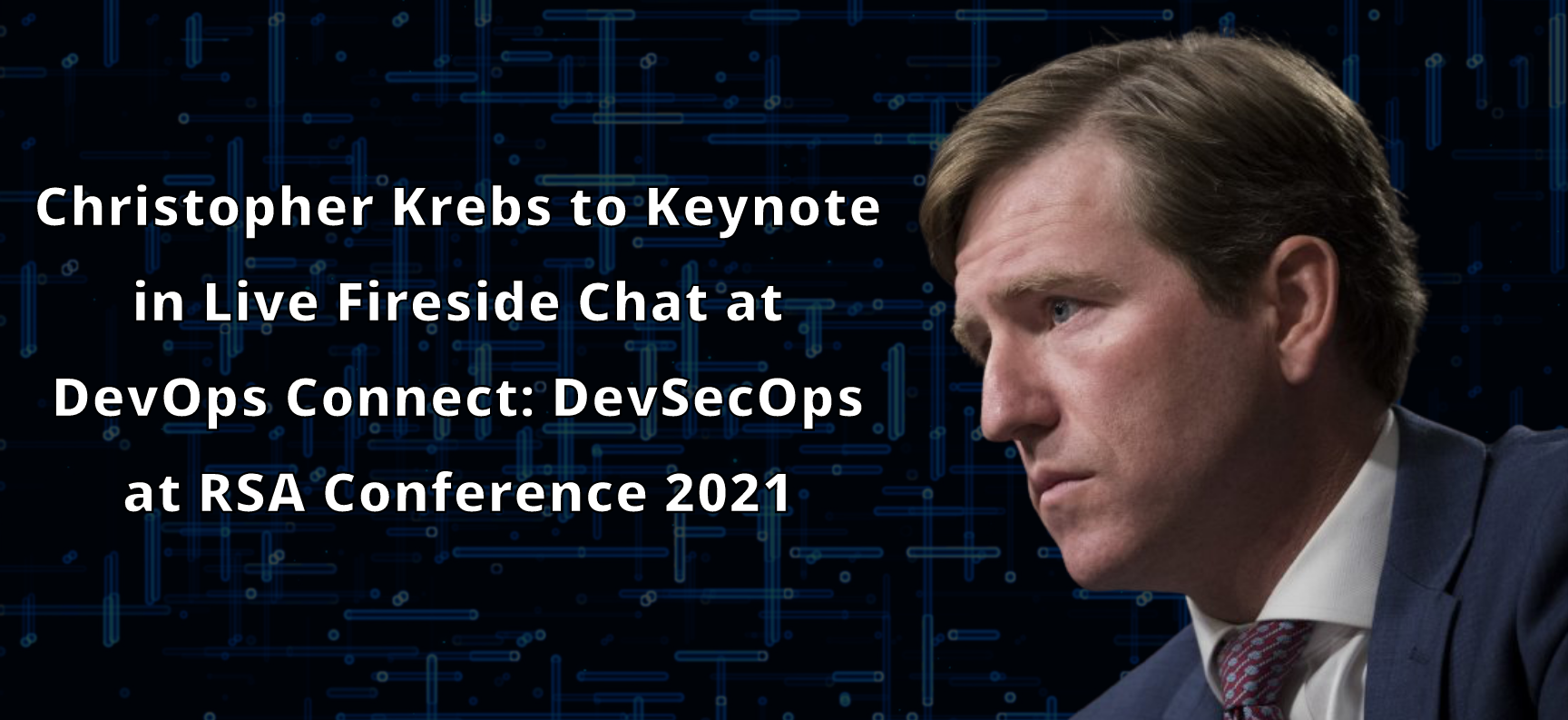
  • Christopher Krebs to Keynote in Live Fireside Chat/Q&A Session at DevOps Connect: DevSecOps at RSA Conference 2021

    Christopher Krebs to Keynote in Live Fireside Chat/Q&A Session at DevOps Connect: DevSecOps at RSA Conference 2021

    Former Director of Department of Homeland Security’s Cybersecurity and Infrastructure Security Agency (CISA) to headline free one-day event

    Boca Raton, FL, April 26, 2021 — MediaOps, the place to tell your story in the most powerful way, today announced that Former Director of the Department of Homeland’s Cybersecurity and Infrastructure Security Agency, Christopher Krebs, will be its keynote speaker at DevOps Connect: DevSecOps, a free one-day virtual event to take place on Friday, May 19, during the week of RSA Conference 2021. For the keynote session, Krebs will participate in a live fireside chat with MediaOps Founder and Editor-in-Chief Alan Shimel, which will also include questions fielded from attendees.

    “I am excited to have Chris headline our DevOps Connect: DevSecOps security event at RSA Conference this year. His experience in both the public and private sector of managing risk to businesses and government agencies, enabling them to defend themselves against cyber and physical threats is impressive. Chris probably knows as much about election security and working in a public-private partnership to safeguard our critical infrastructure as anyone. I look forward to an engaging discussion with him,” said Shimel.

    Krebs is a founding partner of the Krebs Stamos Group, and previously served as the first director of the federal Cybersecurity and Infrastructure Security Agency (CISA) for two years. Before serving as CISA Director, Krebs served in various roles at the Department of Homeland Security (DHS), responsible for a range of cybersecurity, critical infrastructure and national resilience issues. Prior to his time at DHS, he directed U.S. cybersecurity policy for Microsoft and advised industry and government clients on complex cybersecurity and business risk matters while serving in positions with Obsidian Analysis and Dutko Consulting. Finally, he also served in the George W. Bush Administration, advising DHS leadership on domestic and international risk management and public-private partnership initiatives.

    Krebs holds a Bachelor’s degree in environmental sciences from the University of Virginia and a J.D. from the Antonin Scalia Law School at George Mason University.

    For the sixth year in a row, DevOps Connect: DevSecOps is again part of the RSA Conference. Each year, MediaOps puts together a line-up of internationally recognized speakers to bring security and DevOps professionals the best in peer-to-peer knowledge exchange. In addition to keynote speaker Christopher Krebs, this year’s event features a powerhouse lineup of 30 cyber DevSecOps experts.

    Additional Resources

    About MediaOps

    MediaOps, the place to tell your story in the most powerful way, is an omniversal media company covering IT industries and practices that are re-shaping the world of technology, including DevOps, Cloud-Native, Cybersecurity and Digital Transformation. Through a convergence of new media distribution platforms, we deliver the experiential stories IT professionals need to gain fresh insights and learn new skills. For marketing partners, MediaOps delivers unparalleled access to inform and engage with a highly involved IT community, for thought leadership, demand generation and specialized campaigns. MediaOps is not only the most trusted name in technology media, but the most loved as well.

    ###

    Contact

    Rebecca Auguste

    rebecca@mediaops.com

    (561) 430-3347

  • DevOps Chat: Maximizing the Benefits of DevSecOps

    DevOps Chat: Maximizing the Benefits of DevSecOps

    When discussing security in DevOps, we often focus on the security tools instead of the DevSecOps process itself. In this DevOps Chat, ZeroNorth CEO John Worrall takes us to the root of “why” DevSecOps, focusing on the business benefit, gain and measurement of what we seek to accomplish through DevSecOps. John advocates we concentrate on the process and data enabling us to assess risk, prioritize the most beneficial security work and for decision making to creating business value.

    As usual, the streaming audio is immediately below, followed by the transcript of our conversation.

    Transcript

    Mitch Ashley: I have the pleasure of being joined by John Worrell, who is CEO of ZeroNorth. Welcome, John, good to be talking with you today.

    John Worrell: Thank you, Mitch. Good to be here as well.

    Ashley: And we’re talking about security and DevOps, DevSecOps. But before we get to that topic, would you tell us a little bit about yourself, let our audience know a little bit about ZeroNorth, too?

    Worrell: Sure, I’d be happy to, Mitch. I’m John Worrell, CEO of ZeroNorth. We’re in the DevSecOps space, maybe with a different approach that, a lot of times people focus on tooling. We believe that you need to kinda build a process out first for DevSecOps to actually have business value, and I’d like to maybe talk through that with you, Mitch.

    Ashley: That’d be excellent. I’m all about the business value, too. [Laughter] So, let’s talk about that. So, usually, when you say DevSecOps, it’s about shift left, how you need to get to the security people working with the software folks, how do you help developers write more secure code? You get to the tooling conversation.

    So, I think you’re talking about—well, let’s stop for a minute and ask why are we doing all that stuff? Yes, let’s create better app security, but why do we need to make this a process that produces, maybe, some business value, measurable results, those kinda things?

    Worrell: Yeah, you bet. That’s exactly right. We’re all for the tooling, we’re all for building the bridges between security and the Dev teams. But you have to have an objective in mind, and you have to have some help along the way. You have to have some data along the way that’s gonna actually get you there to pull all that together.

    One of the best quotes I ever heard that got applied to this was channeling your inner Deming, which is, you know, if you can’t describe what you’re doing as a process, you don’t know what you’re doing, right, and there is a real lot of truth to that. If you step back and look at AppSec over the years, it’s been very tool-centric, very sporadic, anything but a process. When you look at DevOps, it’s a process, it’s repeatable, it’s scalable. It’s kind of a self-learning or positive flow of information with telemetry so you can get better and better at it over time just by learning from your past experiences.

    And when you think about integrating security into Dev to drive DevSecOps, you have to think about it the same way, and I think that’s where it all starts. This is a process, this is not a tool selection, this is not just a scan or an integration, it’s that process that you need to build first, and then you can start building out your tooling, your technology underneath that.

    Ashley: You have a really good point, and if I’m being over general here and generalizing this, as security professionals, we kind of think of, “Let’s buy boxes, let’s buy software, let’s put functions into the network, into software, and not into the software development process that will solve our security problem.”

    But security is not just people attacking you, it’s also how you do your work and making sure you create a secure environment, you operate securely, write secure code. So, I think you’re spot on about the process and how you can do that consistently, referring back to Deming, right?

    Worrell: Yep.

    Ashley: You can’t manage what you can’t measure, your adaptation of that phrase. So, talk to us a little bit about how do you make that real? When you talk with people, how do you help them sort of elevate the conversation to that and then get on the right track?

    Worrell: So, I think it starts out with that process conversation and whichever analogy you’d like to us for that. Think about it this way—the process, in our view, works like this. You’re gonna set some kind of a governance standard for your organization. You can’t have each Dev team setting their own or each business unit setting their own, you’re gonna wanna try to get global visibility so you can actually have effective global risk management. And we’ll start that as a kinda catch-all for the business objective—but in a sense, that really captures what we’re trying to do with DevSecOps. You need global risk management across your organization. That means you have to have some visibility into it, but you have to have a way to impact your current state to make it better, and you need a process to drive that in a continuous way.

    It starts with setting some governance standards and saying, “Okay, what is our ideal objective for our top tier applications? What is our ideal objective or governance model we wanna put around our mid-tier?” or whatever the application categorization might be. Then you wanna make sure you’ve got a continuous process to build the data that’s gonna inform you, whether or not you’re actually meeting those objectives. You have to look at performance reporting so you can measure how you’re doing against that. 

    And then you have to be able to action that intelligence to say, yeah, that data is helpful to me for a number of reasons. Number one, I get visualization of risk, I can get prioritized remediation if I do this right so my developers can make intelligent business decisions about which vulnerabilities get fixed now before we progress the build and through the build. The third piece of that is, which teams need what kind of training on security coding, good security coding practices? Instead of trying to treat everybody the same, use this telemetry to say, “You know what? Team A is struggling with cross-site scripting. Let’s go do a lunch and learn with those guys and watch the immediate impact we’re gonna get from that” and then let the process continue and go all through. There’s a lot of technology in there, there’s a lot of things in there, but it starts with the process.

    The next piece that’s really critical is the data that comes out of that, right?

    Ashley: I was just gonna ask you about the data part of it. [Laughter] 

    Worrell: [Laughter] That data drives everything. It drives so much. You know, we had talked about this idea that you’ve got different tooling—well, sure you do. You want the best tool that you can get, you want best of breed. But trying to pull those tools or the data from those tools into some meaningful, actionable intelligence is a key step in the process, right? You wanna take different data points and put them together so you get a complete view of what the risk posture is for that particular target or entity or application you’re working with.

    We talk about the analogy of the blind man and the elephant. You have four blind men all experiencing an elephant from different places, and they all can come up with a different understanding of what they’re really touching and trying to investigate. And it’s a perfect analogy for a multi-tool environment when you’re scanning across the pipeline that, if you just look at one experience or one tool, you’re not gonna get a complete view of what’s going on.

    Imagine the difference of being able to just do static scanning and realize that you’ve got all these highs and criticals, but not compare that with your dynamic. So, a lot of those highs and criticals may not be exposed in my environment, right? I wanna pull those together.

    I’m trying to understand, number one, where the risk is, but I’m also trying to optimize my developer productivity and making sure they’re not fixing a bunch of stuff that doesn’t need to get fixed, if I’ve got a compensated control in place or it’s just not exposed already. That’s not high on my list. I want to really focus in on what’s valuable.

    So, that data can be used for making good business decisions on risk. It can be used for prioritizing remediation. That data can be used for, you know, call it the wall of fame, wall of shame. It’s how do you really measure and incent and reward your business units for meeting their risk management targets, right? Again, how do you help those that are lagging behind, how do you help them get better?

    And that, to me, built into this process, is where you get real business value. You’re getting the faster delivery of software, you’re getting the better developer productivity out of this, you’re getting that risk management layer and visibility you need, but you’ve got it as a process, and you can measure week to week, month to month, quarter to quarter, how much better you’re getting at it. That, to me, is a real business solution.

    Ashley: You know, you described a lot, so let’s unpack some of those things. The third piece of it usually is, you know, you talk about people process and technology people. What are the kinds of roles of people who are gonna be using that kind of information, that kind of data? Because we’re often talking about getting security information into the developer’s hands so they can fix things, but you’re also talking about, “Well, what should we fix? Let’s not waste our time on things that don’t matter, right? The environment secures against cross-site scripting, so let’s not worry a much about maybe that as something that can be exploited.” Who uses that information?

    And then I guess the third part of it is, it’s about continuous improvement, that’s a cyclical process of, “Are we getting better? Are we getting value? Is there benefit to the work we’re putting in on this?”

    Worrell: You bet. So, you’ve actually said a lot there, too, so, I’ll try to—

    Ashley: I did. I’m just following your lead, John. [Laughter]  

    Worrell: Yeah. [Laughter] Good, we can confuse each other in this whole process.

    So, you know, if we start with this idea of the continuous improvement, just kinda going backwards here, the whole goal is to have that process, which is a continual healing process, if you will, you’re always gonna get better. DevOps does that with telemetry about, “What is the productivity of my developers? What are my key metrics on how many story points I’m taking down, how many am I delivering, and am I getting better, sprint after sprint after sprint?” All great stuff—the same model plays out in security.

    That ties back to one of your comments about the role of the CISO. You mentioned, you know, typically, security guys, via technology, they deploy it. And that works or a proactive control, which is what security’s been doing so much for. My days of running the product for RSA SecurID and working at CyberArk and any kind of blocking technology or control—it is. You buy it, you deploy it, you set it and forget it, for the most part, and it works, right?

    By the same token, this isn’t really responding on the SOC side, either, right? This is not responding to an in process attack, this is a different approach to security. And I think the reason that’s important is, number one, businesses are demanding more business metrics, business telemetry out of their security programs, what am I getting for my investment? How do I know I’m investing in the right things? Am I spending in the right places? All of those things are really important, right?

    And the role of the CISO, by definition, is evolving as well. And you can see the people that were running security teams 10 years ago are very different than the model who’s out there now. Many people have grown into that role. Other people have come from the business side of the house, and they’re not the technology experts that were good at configuring firewalls that were really trying to deliver business value to the organization. And if you’re gonna step from infrastructure into the world of application security, you need to be able to have value to the business, and this data is a great way to deliver value to the business.

    Ashley: Really important point, because the CISO role is evolving, and oftentimes, it’s becoming a CIO/CISO kind of role, which means you’re getting into the application stack, not just the network stack. Not saying that they weren’t worried about the app stack, but now you’re getting much more into the nitty gritty of it. And are your security people software people? Well, not necessarily, but they are very accustomed to getting data and responding to that data, and in this case, maybe helping development teams, developers, others with understanding what the true severity, not what some scanning tool might say, right?

    Worrell: You bet.

    Ashley: Which is sort of our history with vulnerability management, [Laughter] to really help them understand, “Okay, great”—and then demonstrating to the business, to compliance, to whoever you may need to be reporting to, it could be customers as well, to say, “Here’s what we’re doing. Here’s the actions that resulted from investment in these tools, people, and processes.”

    Worrell: And that customer angle is actually really important. And I hate to use the word SolarWinds, but I’ll use it. It’s just put, yet again, a big spotlight on software supply chain, software security, and how critical that is. And so many organizations now are asking of us, as well as our customers, “What is your software development process? Prove to me you’ve got one.” Right? Great use of this data.

    When you think about your business line risk owners, the people that are actually responsible for data, they work for the GM or the SVP of that business unit, they’ve got the risk management challenge. They need this data to do their job well. If you take that data to the board, our data is being used as part of the quarterly board package to talk about how they are addressing and how they are improving the risk posture of the organization.

    And then, I wanna go down, really, one level deeper. Because when you think about this, you know, integrating into the DevOps process means that it’s not necessarily just about the developer making that independent decision. Typically, there’s a product owner in there some place that’s gonna be making some decision about what’s gonna get done now versus what’s gonna get done later, right?

    So, being able to feed that product owner with the data they need to help do the triage and make those decisions, that’s another great use case of this data we’re pulling together.

    Ashley: You know, you mentioned a lot of roles, too, including the product person. In your experience with ZeroNorth—and I really appreciate your background in security, too, so we can relate about those days as well—what’s most often, when people come to ZeroNorth and say, “Hey, we need your help, here’s what we need your help with?” Is it the software team, is it the product team, is it the compliance group, is it the CISO/CIO? Usually, what’s that initial driver for engaging with you.

    Worrell: Yeah, there’s probably two different ones we hear most commonly. One is, “Hey, I’ve got a somewhat mature program, I’m running two or three different tools. I can’t make heads or tails out of the data, or if I try to do it, it’s manual, I can only do it once a quarter or once a month, it’s just too labor intensive. So, I think I’m getting good, I’ve got a decent process right now for scanning, but I wanna start pulling that data together.”

    The second use case is those that wanna start out on building what we would call a federated or a shared governance model, and it’s led by the security team, perhaps, but they know they’ve gotta bring in the business line owners into this process, or business line risk owners into the process. And they say, “Hey, can you help me get data out there so I’ve got a single source of vulnerability truth or my applications?” And I’m looking at the same data that they’re looking at, we’re all making decisions off that same set of data so we can build a governance model that makes sense. 

    The security guys wanna work in partnership with the business owners and the people that are actually doing the software development and risk owners in the business. But that relationship is gonna get built on having really good data and everyone using the same data. I think that’s another use case.

    The third one, which is a variation of that, is people that are coming in and really saying, “Hey, listen, I need to go to full DevSecOps right away. I know that I can put this layer of reporting and analytics on top of my current tooling and that’s a great start, and I’m gonna build this over time.” It’s a fine strategy. Other people are coming in because they’re just getting started or they just have a business imperative to do it and they’re saying, “We’re going to DevSecOps right now, and we wanna do the pipeline integrations as well as the reporting and analytics that we’ve been talking about so that I do get that data in real time, I do have a consistent scanning process, it is automated, I don’t have to worry about the developer forgetting or not doing it, and I’m gonna get that data value out of this in that particular way.” 

    Ashley: Yeah, “Help me accelerate through the learning curve instead of making all those mistakes myself to get to DevSecOps, if you will.”

    Worrell: You bet, you bet.

    Ashley: That second example especially kind of is a multiplication of the first one, which is, you have Dev teams with all this data, maybe it’s the primary group—usually, it’s multiple, right? How do you pull it together into something? They can’t make sense of it. How do you do that across the enterprise to meet compliance requirements or even just your own internal assessment and reporting up the management chain maybe to the board.

    Worrell: You bet. If you step back, the biggest concern we get out of just about everyone we talk to is a CISO or a Risk Manager saying, “Hey, help me, I’m flying blind. I don’t know what highs and criticals I’ve got in my production environment right now. I just don’t know. I don’t have visibility into it. And for me to get it, it takes too much effort, and once I get it, it’s outdated, because it’s 30 days old. I’m pushing code every day” or every week or whatever it might be.

    And that is the primary motivator or so many people who just say, “Gimme that visibility, and that’s the starting point. And then at least I know what I’m dealing with and then I can start building out a program that’s gonna help me address that over time.”

    Ashley: You know, you brought up SolarWinds, so I’ll bring up COVID. What have you seen happening over the last 12 to 18 months with the acceleration to the cloud, acceleration of digital transformation projects? Has it taken these same issues and just made them even more visible critical to address, or have new problems emerged?

    Worrell: I think it’s more of an acceleration of the entire process. In general, COVID has driven people to be more comfortable or more reliant on relationships with their customers, with their partners, with their employees. And that means more software, by definition.

    So, as digital transformation accelerates because of more online interaction and new business models that this opens up, it’s just really accelerated the pace and some of the maturity of people coming. The types of questions we’re getting from our prospects now are much more advanced than they were a year ago. And that just shows that the market is really getting smart about this and they’re kind of moving beyond the tool only approach to say, “Okay, how do I get some business value out of this that can really, really help us move our risk management program forward?

    Ashley: That’s one of many indicators I see, kind of data points that are saying the technology groups, the software groups are getting out from under, looking at themselves and starting, trying to get aligned with the business and meet where the business is headed.

    Worrell: And as a big consumer of software, as we all are in our lives today, I’m really happy to see that, right? I mean, that’s what I—I know it’s gonna take bringing the two together and working cooperatively in that federated or shared model to make this work, and I’m really happy to see that kind of a progress. Because, like you and everybody else, software just drives so much of our daily experience.

    Ashley: It is. Can’t do much without it these days. Well, it’s been great talking with you, John. Where can folks learn more about ZeroNorth?

    Worrell: Well, that’s easy, ZeroNorth.io. We’d be happy to talk to you. Take a look, see what we have, and if we can help you out or you wanna hear more about it, we’d love to chat with you. Thank you very much.

    Ashley: Yeah, I think we’ve had a great conversation. Hopefully, that’ll spark some folks to elevate that conversation with you and the ZeroNorth team, so take care, we’ll talk to you again soon.

    Worrell: Thank you, Mitch. I appreciate it.

    Ashley: You bet.