Tag: security

  • GitLab Survey Surfaces Major DevSecOps Challenges Ahead

    GitLab Survey Surfaces Major DevSecOps Challenges Ahead

    A report based on a survey of 4,071 software professionals published this week by GitLab, a provider of a continuous integration and continuous deployment (CI/CD) platform, found that while appreciation of the potential value of DevSecOps best practices is high, the ability to implement those practices is uneven at best.

    According to the survey, half of the respondents reported that security vulnerabilities are discovered mostly by the security team rather than developers after code is merged and in a test environment. And, when cybersecurity professionals participate in a DevSecOps process, the survey found those organizations are three times more likely to discover bugs before code is merged. In addition, a full 90% of those organizations are more likely to have tested between 91% and 100% of their code early in the development process.

    Obviously, that’s better than discovering them after they’ve been deployed in a production environment. On the downside, however, nearly half of security professionals participating in the GitLab survey (49%) said they struggle to get developers to make remediation of vulnerabilities a priority. That challenge may reflect the overall maturity of the DevSecOps practices in place. For example, only 25% of developers participating in the survey rated their security practices as being good. That compares to only 20% of security professionals who rated their processes as good. Only 14% of respondents said they are relying on application security tools to test more than 91% of their code. A full 44% are using these types of tools to test less than a third of their code.

    Priyanka Sharma, director of technology evangelism for GitLab, said the survey makes it clear that DevSecOps is now officially a thing in the enterprise. However, only 44% of the survey respondents said that security vulnerabilities are a performance metric for developers in their organizations. As such, it’s clear there is still a long way to go before anything approaching DevSecOps nirvana is likely to be achieved. In fact, Sharma noted building and deploying more secure applications may require organizations to slow down the rate at which applications are being built, at least initially.

    The GitLab survey makes it clear most organizations are still struggling with mastering DevOps. Only 28% of developers said they feel good about their organization’s level of DevOps sophistication, while less than half (45%) said they have been able to implement continuous code deployment at least somewhere in their organization. That level of adoption suggests there still is plenty of opportunity to refine DevOps processes that are not fully ingrained. In fact, it appears most organizations are still trying to master agile development methodologies—more than half of the respondents said they employ Scrum (54%) as their application development methodology, followed by Kanban at 37% and DevOps at 36%.

    Ultimately, most organizations will have no choice when it comes to embracing DevSecOps. There simply are not enough cybersecurity professionals available to secure every application on their own. That means developers will need to assume more responsibility for cybersecurity, regardless of whether they like it. DevSecOps processes will be required to validate whether developers have implemented all the security patches and controls required. Anything less than that going forward will be deemed as nothing short of reckless—which, as any lawyer will gladly share, means much higher penalties for everyone involved.

    — Mike Vizard

  • DevOps Chat: AppSec and DevSecOps with Contrast Security’s Jeff Williams

    DevOps Chat: AppSec and DevSecOps with Contrast Security’s Jeff Williams

    I have known of Jeff Williams in the security industry for more than several years. He is a well-respected thought leader in AppSec and OWASP. I finally got a chance to catch up with Jeff and talk with him about Contrast Security, the company he co-founded and how it is helping.

    In this DevOps Chat, Jeff and I discuss the state of application security and how AppSec fits into the larger DevOps realm. Jeff’s a great interview with lots to share.

    As usual, the streaming audio is immediately below, followed by the transcript of our conversation.

    Transcript

    Alan Shimel: Hey, everyone, it’s Alan Shimel, staging-devopsy.kinsta.cloud, and we’re here for another DevOps Chat. Today’s chat has a decidedly security bent. I’m happy to be joined by Jeff Williams, CTO and co-founder of Contrast Security. Jeff, welcome to DevOps Chat.

    Jeff Williams: Thanks, Alan. Good to be here.

    Shimel: Hey, my pleasure. So, Jeff, you know, as we were talking off mic, this is the first time we’re kinda interviewing anyone at Contrast. Why don’t we—I think it’s only fair we start off with sort of, let’s give our audience a little background. Who and what is Contrast Security?

    Williams: Sure. So, I mean, you know that many enterprises struggle with application security. You know, there’s been an application security industry for like 20 years. I helped to start OWASP back in the early 2000s and I wrote the OWASP Top Ten, and organizations are still struggling with the same problems.

    So, Contrast targets exactly those problems. We are kind of a radically different approach to doing application security. We’re very compatible with DevOps kinds of processes. And basically, we find vulnerabilities so you can shift left in the development and fix them. We analyze open source code, so you can make sure you’ve got safe versions of the components you’re using, and we protect applications in production. And we do it all through dynamic binary instrumentation. So, very much like a New Relic or an AppDynamics, but for security, not performance.

    Shimel: Security prudent security monitoring—excellent. And Jeff, you mentioned, though I don’t know if we’ve spoken like this before, but I’m certainly aware of you for a long time within the security community. This isn’t your first rodeo. [Laughter] You were instrumental in OWASP. You know, we’ve seen application security not—it’s evolved, yes, but it’s still, at the end of the day, it’s about the application, right?

    But yet, you know—look, it used to be, application security meant some kind of app firewall, which—

    Williams: Yeah.

    Shimel: – I’m not saying a WAF isn’t a great tool, it is. It’s changed the game in a lot of ways, I think, in what—

    Williams: Not really. [Laughter] I don’t think so.

    Shimel: Well, it’s made a lot of people a lot of money and it’s taken a lot of venture capital, let’s put it that way, right?

    Williams: Well, that’s not my measure of success. [Laughter]

    Shimel: Yeah. But has it made us safer?

    Williams: Not really, no. No.

    Shimel: But one can argue we’ve done a lot of things and not a lot of them have made us safer, right?

    Williams: That’s right.

    Shimel: You and I have both been in security for 15, 20–plus years, Jeff. And the latest buzzword is DevSecOps, and being that I’ve transitioned to DevOps five, six years ago, and I run staging-devopsy.kinsta.cloud and I’m involved in Security Boulevard, I’m all about DevSecOps, and I’m not here to say it’s snake oil or bull or anything like that. But as we were talking about, it means a lot of different things to a lot of different people.

    Williams: That’s right, that’s right.

    Shimel: Why [Cross talk], what do you think it means?

    Williams: Well, you know, to me, DevSecOps is a way of viewing security the way that folks viewed software development through a DevOps lens.

    Let me back up. So, software had a ton of problems 15, 10, 20—I was a developer for a long time back in the early ‘90s and so on. And, you know, software development back then had tons of problems. It was late, it was very error prone, long feedback cycles, slow release times. I worked on one government program for three years, and it never was fielded. [Laughter]

    Shimel: Mm-hmm.

    Williams: So, that kinda thing plagued software. But, I think, DevOps has really revolutionized that, you know, basically just focusing on getting work flowing, creating short feedback loops and creating a culture of innovation of learning. Like, those things transformed the way that software is produced. I love the factory analogies and all that.

    Now, if you look at security, we have exactly the same problems. Security doesn’t really deliver a tangible result. Like, you never know when you’re done. So, the work isn’t defined. That means the work isn’t flowing. You know, we have these tremendously long feedback loops. I did a bunch of work for a major financial institution. They were on a system where some apps got a one year pen test, some apps got a two year pen test, and some apps got a triannual pen test. So, every three years, they would take a look at security. It’s crazy.

    And, you know, so we need to make tighter feedback loops, and security has this culture problem. It’s not a culture of innovation and learning, it’s a culture of enforcing rules and compliance and gates and guards and bottlenecks. And that all can change. If we apply the lessons of DevOps to the problem of creating security in an enterprise, we can define the work, we can create shorter feedback loops, and we can create a culture of innovation and learning. That’s really the challenge. In my opinion, that’s why security continues to struggle is, it’s just not delivering what we want it to deliver.

    Shimel: Yeah. You know, and—look, truth be told, Jeff, that’s what attracted me to DevOps. I thought it was an opportunity for us to kinda reshape the playing board and maybe change the rules and finally deliver—nothing’s perfect, and I don’t think anything is, I’ve seen enough so-called silver bullets to know none of them—

    Williams: Sure.

    Shimel: – [Cross talk] full of crap. But I thought, at least, it shifted the game pieces in such a way that we could, it was a more even playing field, or a better situational playing field for us.

    Williams: Yeah. Done right, I think DevOps can have a tremendously transformative effect on organizations building software. I’ve seen it in a bunch of large enterprises and small companies, you know, and we’re a DevOps shop here at Contrast as well. You know, we’re deploying six, seven times a day, and I have a huge amount of confidence that that makes us deliver much better software.

    And so, my challenge—

    Shimel: Much better software, or much—but is it also more secure? Because shouldn’t that be—I mean, that’s something I strive for, right?

    Williams: Right.

    Shimel: That security becomes synonymous with quality.

    Williams: Yeah. That’s right, that’s exactly right.

    Shimel: Is it more secure?

    Williams: Absolutely, it’s more secure. But you do need some better tools. So, I think, you know, to do security in a DevOps way, you need accurate, real time feedback on the code that you’re building. If you don’t have that, then you have to have experts involved. So, there’s a fundamental relationship. If your tools are producing inaccurate results, then you have to have experts to dig in and resolve the false positives and find the false negatives and, you know, it’s a ton of human expert work.

    That’s not compatible with DevOps. So, you need these accurate tools in order to give real time feedback right to developers. But that’s where instrumentation comes in. If you can get inside the code that you want to test for security or protect against attacks, that’s where all the context is. That’s where the information is. And so, using all that information, you can make really accurate decisions about whether something’s a real, exploitable vulnerability, or whether something’s a real, viable attack. And then you can give that instant feedback, you can create tight feedback loops, and you can deliver security.

    And I’ve seen it work. Companies have transformed themselves from the way they used to be with a big backlog of security vulnerabilities, they’re running scans every six weeks or six months or whatever. They’re piling up vulnerabilities, they’re not really fixing anything, and that’s a very unhealthy way to be. They transformed from there into an organization where they’ve worked off the backlog and now they’re in what I call the new normal. They’re just dealing with new vulnerabilities as they come in, as part of the normal workflow. And it’s massively more cost effective, because they save all that downstream work of tracking and classifying and risk creating and all this stuff. You know, it’s super expensive and doesn’t produce anybody any value.

    Shimel: Yeah. I mean, just, even from the security guy’s point of view to work in that scenario where I don’t have that technical debt, if you wanna call it that—

    Williams: It is—security debt.

    Shimel: Security debt. That’s a great word for it, right? Without that hanging over my head, how much easier and better is my life? And it’s so true. And the other thing, Jeff, is—honestly, until you’re at that point, I don’t think you can talk about automation and velocity and speeding up this whole thing, because when you’ve got all that dreck hanging in your background, you know, you can’t do it, right? You can’t—

    Williams: Well, that’s right. Traditional security is very destructive to modern software development. If you have to involve those bottlenecks and get experts involved, I’ve seen it just wreck DevOps—you know, organizations are trying to do DevOps, but they’re hamstrung by their legacy security teams and processes and technologies. And I wish it wasn’t that way, because security has potential to be a great force for innovation.

    Shimel: Yeah.

    Williams: If you can give people a fantastically secure platform, they can roll out awesome applications and awesome functionality at super high speed. Do things that normally you wouldn’t think you could do, but if you have the platform, you can really make crazy things secure.

    Shimel: Absolutely.

    Williams: It’s just—

    Shimel: I mean, and, you know, I was talking to my friends, John Willis and Damon Edward, they’ve both presented at Dozen, and the notion is, you can have it all. You can have faster applications, better, more secure applications, higher quality—all three, right? You could have two out of three ________, you could have all three doing DevOps and DevSecOps if you’re doing it right.

    But here’s another thing I want to touch on, Jeff, and that is, I don’t know whether it’s shiny trinket syndrome or single-mindedness or we can’t multitask, but just because someone says DevSecOps can do, can make your life better, can do all of the things that you and I are talking about doesn’t mean that we throw everything we learned about security out the door, right?

    Williams: No, no—of course not.

    Shimel: Well, for too many people, they’re like, “Hey, we don’t—okay, man. You know what? Screw that AppSec stuff, we’re just shifting left,” even though shifting left is, you know, fundamentally AppSec. “We’re just shifting left and we don’t have to worry about all of these other CIA things that we learned about, right, traditionally in security.”

    I don’t think anyone’s saying one necessarily replaces the other, or that it—

    Williams: No, I think really it’s more about being extremely clear about the outcomes that you want to achieve with security, and then putting in place a highly tuned machine that can produce those results continuously and repeatedly over the course of a project. Shifting left is a weird term, to me.

    I love the idea of doing security earlier in the process, but many people see that and say, “Oh, well, developers just do security now,” and they wash their hands of kinda the old ways of doing things. And unfortunately, that’s a recipe for disaster. I think you need to empower those developers with technologies that can let them do their coding and not introduce security vulnerabilities.

    And it’s not just about shifting left, because in QA and in staging and CI/CD environments, you want to verify that everything is secure before you push to production. So, you’re really not losing that step. You need to do both, shift left and where it is now. And frankly, I think a lot of organizations should also consider shifting right and doing more protection in production. Because so many organizations that I talk to—I was just talking to a massive technology company here on the West Coast this morning—they’re really pretty blind about what’s going on at the application layer from a security perspective.

    So, to me, it’s not really about shifting left, it’s actually about extending left and extending right and using a DevOps process to produce the outcomes that you really want.

    Shimel: Yeah. I don’t disagree there. The reason I brought it up, though, is, you know, we could point fingers all around, but sometimes the security industry is its own worst enemy, and the cynics and the cynical within—well, we’re consuming ourselves with other stuff right now, but the cynics and the cynical folks would then say, “Oh, it’s just another buzz word, and it’s just something meant to take your eye off the ball, and we have got to hold this thing in our cold, dead hands and not let go.”

    Williams: Yeah, yeah. It’s a fair point. I mean, DevSecOps is a little buzzwordy, and frankly, I’m sympathetic to the folks that say, “No, it’s just DevOps, and security is a part of it, of course.”

    Shimel: Now, that’s my—so, that’s where I am.

    Williams: Here’s how I think about it, though. Let me try and change your thinking about it—it is just DevOps, but there’s a view of the DevOps process that emphasizes the security pieces. It’s very much like a blueprint for your house. You know, you’ve got the elevations, then you turn the page and it’s got the plumbing plant, and then you turn another page and it’s got the electrical plant and so on.

    It’s a little bit like that, for me. DevSecOps is the security view of DevOps. It just emphasizes the security aspects of the DevOps process so that you can see what’s going on and actually understand it in a little different way than if you were just viewing the whole thing all mashed together. It doesn’t really help to just smash it all together and call it all quality. So, that’s how I think about it, it’s just a view of the normal DevOps process.

    Shimel: I don’t necessarily disagree. I think there’s only one DevOps, but I think—I know, I mean, so this year, at RSA, for instance, for the fifth year on the Monday of RSA week at the Moscone Center, we’re gonna be putting on DevOps Connect: DevSecOps Days. And over the course of the five years, we’ve called it DevSecOps, we’ve called it Rugged DevOps.

    Williams: Yeah.

    Shimel: Just don’t call us late for dinner.

    Williams: [Laughter]

    Shimel: And it’s kind of the security community that has driven the DevSecOps name, because they wanna make security is kinda in the middle, I guess. But—hey, whatever. If that’s what it takes to get people on board and doing things to make this more secure, so much the better.

    Jeff, we started talking and I wanted to talk more about Contrast, though. Share with our audience—so, you guys are involved in AppSec, you’ve got a bunch of things going on. Any new news, anything, you know, we are coming into RSA season, everyone always has some sort of news around that. Anything you can share or talk about?

    Williams: Well, I think the big thing for us this year is launching what we call run time exploit prevention, which is sort of our next generation attack detection. And the reason that it’s, I think, so compelling is because it leverages our deep experience in instrumenting applications at run time.

    And so, instead of just trying to block attacks by looking at HTTP traffic and saying, “Oh, well, that’s got a SQL injection in it” or, “That’s got an XXE in it or something.” Instead, we’re instrumented deep within the code, and using that position, we can access a lot more contextual information. We can make really smart decisions about what an attack really is.

    And this is interesting—we’re essentially defusing all forms of SQL injection and deserialization problems and XXE and expression language injection and so on by sandboxing powerful components inside the platforms.

    So, I can give you an example. All these struts and spring vulnerabilities from over the last year and a half or so? They all involve sending untrusted data to an expression language and evaluation engine. So, what Contrast does is, we sandbox those evaluation engines to prevent dangerous stuff from happening while they’re being executed. So, you know, when you’re evaluating an expression, you don’t expect to be starting native processes and accessing files and opening socket connections and stuff like that. So, we prevent all those things from happening during expression language evaluation and restrict the program to only evaluating a normal expression.

    It’s a very powerful technique for ruling out not just known vulnerabilities like in struts and spring, but we’re ruling out all forms of expression language injection, even ones that nobody’s discovered yet. So, I think that’s very exciting and puts you in a really unique position for dealing with new CVEs that are coming out every week.

    Shimel: Yep. Absolutely, and that’s huge. I mean, in spite of everything and in spite of the cynicism, the pessimism, and everything else, it actually is an exciting time to be in development and security, right? We are—

    Williams: I love it. [Laughter]

    Shimel: Yeah. You know, we’re making progress where good things are happening in spite of, you know, every day we still hear about another breach or another, you know, incident.

    Williams: Well, I’ll say this—I think it’s time that every application has the ability to detect if someone’s attacking it, and respond appropriately.

    So, forever, we’ve—basically, our policy around AppSec has been, “Well, let’s build a wall around it to try to keep out the bad stuff, and then let’s scan it to see if we can find where any holes are.” And both of those approaches, I think, have sort of gotten less and less useful over the last seven or eight years, to the point where, today, they’re not really very helpful, particularly on modern applications that are built using APIs, they’re deploying containers in cloud and they move around and all sorts of things. Those approaches just don’t work any more.

    So, fundamentally, building that protection into the applications itself is very compelling to me. It works at scale, it’s accurate, it’s very fast, it’s much faster than building barriers around stuff. And so, there’s just a number of advantages, and I’ve seen it transform organizations from the kind of organization we were talking about before with the huge security backlog, security debt. And they’ve, over the course of a year or a year and a half, they’ve transformed themselves across thousands of applications, to the point where they’re just dealing with the new stuff coming in. They’re in that new normal.

    Shimel: Yep, absolutely. Alright, man. Hey, Jeff, we are—we’re well over our 15 minutes.

    Williams: [Laughter] Awesome.

    Shimel: Yeah, so, we’re gonna have to call it a break on this one. But you know what? Between now and RSA, maybe we can get you back on here, we can talk a little bit more about this. It’s a hot topic, it’s—

    Williams: One quick point, if you want to try Contrast or expose yourself to IAST and RASP, you can use Contrast community edition for free. It’s fully powered, free for one app, and you can just sign up and start using it today.

    Shimel: Where do you get it?

    Williams: It’s at ContrastSecurity.com/ce.

    Shimel: CE. Alright, excellent. Hey, Jeff Williams, CTO of Contrast Security, thanks for being our guest on this episode of DevOps Chat. Until next time, everyone, this is Alan Shimel, have a great day, for staging-devopsy.kinsta.cloud, DevOps Chat, and Security Boulevard—take care, everyone.

    — Alan Shimel

  • DevOps Chat: Repos and Nexus Firewall Access, with Sonatype

    DevOps Chat: Repos and Nexus Firewall Access, with Sonatype

    There are really only two repositories of any scale for software components today: the Nexus repo managed by Sonatype and the Artifactory artifact repo managed by JFrog. Up until now they were separate and apart, and working with one was independent of another.

    In a big move toward keeping DevOps open and secure, the Sonatype people have released a plugin that will allow their Nexus Firewall to work with Artifactory as well as Nexus.

    This means that users of both repos can now use the Nexus firewall to make sure that components or artifacts they download are in compliance with the policies they have set up. They can make sure there are no known vulnerabilities to the version users are downloading to use. This is really a big deal and kudos to Sonatype.

    In this DevOps Chat we speak with Wayne Jackson, CEO of Sonatype, and Brian Fox, CTO and co-founder of Sonatype, about what this means for the DevOps community.

    Transcript

    Alan Shimel: Hey, everyone. It’s Alan Shimel, staging-devopsy.kinsta.cloud, and you’re listening to another DevOps Chat. Today’s DevOps Chat is breaking some big news from our friends at Sonatype. I’m really honored and happy to be joined by Sonatype Wayne Jackson and Sonatype CF – CTO, Brian Fox. I hope I didn’t mess that up, guys. Wayne, Brian, welcome.

    Brian Fox: Thanks.

    Jackson: Thank you, Alan. Great to be with you and great to be speaking again.

    Shimel: Yeah. Well, Wayne, you and I go back just a couple years.

    Jackson: [Laughs]

    Shimel: Let’s not go and do a history thing. Let’s get right to the breaking news today, and that is kind of a major addition to the Sonatype – I know it’s a firewall. Do you still call it Nexus Firewall or is there a different name for it now?

    Jackson: Yes, we – yeah, that’s correct.

    Shimel: It is the Nexus Firewall. So before we talk about what the major addition is, let’s lay a little groundwork here. What is the Nexus Firewall? Brian, you’re the CTO, let’s give that one to you.

    Fox: Alright, sure. Nexus Firewall is a set of capabilities that allow us to do analysis of components as you pull them into your supply chain through your repository and be able to match that against your policies to enforce things like architecture, quality, license, et cetera, and so specifically it’s intended to be able to stop components from coming into your supply chain when they’re known to be against your policy right up front. So you can stop developers from pulling in a component that has a known vulnerability or pulling in a component that has a incompatible license, those types of things. So that’s the role Firewall plays in the overall portfolio.

    Shimel: Perfect. And, you know, let’s be clear; that – you know, a Nexus Firewall, if it’s in place the Equifax breach never happens for all intents and purposes.

    Fox: Well, that might – what it doesn’t do – you know, it’s not gonna go back and take out the things you’re already input.

    Shimel: You’ve already put in, you’re right.

    Fox: Right. Certainly. If – you know, we still see lots of cases – I think we’ve done some of the studies recently that show organizations are still downloading the same thing that got Equifax attacked, right?

    Shimel: Absolutely.

    Fox: It’s the same version of Strut. So, Firewall would definitely stop that behavior, no doubt, and be able to prevent it from further propagating through your supply chain.

    Shimel: And just a little shout out, Equifax is now a Nexus – a Sonatype Nexus customer, correct?

    Fox: Yeah, that’s correct.

    Jackson: Yes, that’s correct.

    Shimel: So hope – well, at least it’ll prevent the next one, hopefully. So – but guys, so we understand what Nexus Firewall is now, and again, to put in context the importance of today’s announcement, Nexus Firewall worked when you were pulling components out of the Nexus repository up until now. Am I right or am I off base here, guys?

    Jackson: No, that’s correct.

    Shimel: And so the big news today is you’re expanding beyond the Nexus repository to offer protection from artifacts and code and so forth from other repositories.

    Jackson: That’s right. It’s – you know, it’s an acknowledgement, and it may be the first one in this category, that just acknowledges that the DevOps world is heterogenous. You know, there are bunches of vendors and, you know, people within organizations make different decisions and we just acknowledge the need to provide universal protection.

    Shimel: Absolutely. So Wayne, work with me here. It’s the Nexus repository, and with this new release out today you guys are also announcing support and protection for the Artifactory repository, correct?

    Jackson: That’s correct.

    Shimel: And –

    Jackson: And between those two, you know, I’m not sure what the coverage is but it’s gotta be in the 90th percentile of implemented repositories.

    Shimel: I would agree with you. I think between Artifactory and Nexus it’s gotta be I would say high 90’s even, right? We’re not talking 91 or 92 percent. I think it’s probably way up there, and it’s certainly in the billions when you look at the amount of whether it be code or components or artifacts that are contained between the two of them. And Wayne, you hit on it before about the heterogenous nature of today’s DevOps world. It really is; it’s become Artifactory and Nexus as the two big ones.

    But there’s another aspect to the heterogenous nature of today’s DevOps world and that is this whole notion of the software development life cycle, managing the software pipeline, the modern software factory; different companies are calling it different things but it all refers to kind of the way that software is being both written and assembled in – by, you know, modern IT departments today. Why don’t you guys expand on that a little bit.

    Jackson: Yeah, I – it’s been fascinating to watch. As you know, I came from the network security world before Sonatype and had no grasp of just how much software was being written. As I’m sure you know, you know, one of the assets that we manage in the ecosystem is this thing called Maven Central, and last year we served 142 billion download requests, and so – and that’s just in the Java ecosystem and, you know, other ecosystems like NPM are just as big.

    Shimel: Yeah.

    Jackson: And so as we started looking at the patterns in these download requests we started to see this weird disconnect. You know, the disclosure of a vulnerability had almost no impact on usage patterns, and that led us to thinking about, you know, why that might be and how we might think about solving these problems more systematically, and it dawned on us that we had a massive supply chain problem. You know, where the producers of things didn’t have a very effective mechanism for communicating to the consumers of those things because there were just millions and millions of projects that had to be monitored. And so, you know, we started looking at the works of Edwards Deming, who was the guy that transformed Toyota from being a textile manufacturer to the world’s most efficient automobile producer, and it really wasn’t all that complicated. You know, you have fewer, better suppliers, you use the highest quality parts, maintain transparency throughout the system, and don’t pass defects downstream.

    If you can do those four things, lo and behold, [laughs] producing cars becomes a lot easier. And, you know, we concluded that those exact same principles applied perfectly to software where, you know, to your point, you know, now all of a sudden these software development functions, especially in the more modern organizations, look like a software factory, and so let’s use fewer, better projects, let’s use the versions of those projects that don’t have security defects, that have the kind of license that matches our  distribution model and, you know, let’s build a model where we know [laughs] what’s in the system. And if along the software factory assembly line we discover that there’s an issue, stop it there. You know, don’t pass it downstream.

    So anyway, so it’s a model – you know, I’m a little bit of a car guy so it [laughs] certainly works for me, but it feels like a model that’s right.

    Shimel: I agree. It absolutely does. And even before you mentioned Deming, and of course it’s obvious, I was thinking third-party suppliers just like we do see in the automobile industry. But what’s interesting is as you referenced, the sheer magnitude of the numbers here – you know, 142 billion – think about what that means. I mean it’s just an incredible, incredible amount of downloads of usage and everything else and, you know, it doesn’t take many bad apples to spoil the party for everyone, obviously. You know what’s interesting though, guys? Again, getting back to the DevOps community, the DevOps market today, Sonatype is very much – you know, who you are and what – it seems to me anyway – you know who you are, what you are, where you play and how you fit into this.

    And I think that’s in contrast to – you know, we’re in a little bit of a time of upheaval in the DevOps spaces as the market matures and vendors are jostling and trying to – I think some of them might, you know, even be going through an awkward teenage phase, you know, where they’re trying to figure out who they are and what they’re gonna be when they grow up. You know, what – Wayne, you’re the CEO there – what’s the vision for Sonatype? Are you kind of comfortable in your own skin now and what is that role?

    Jackson: Yeah. I think we are comfortable in our skin. I think this embrace of software supply chain management is who we are, it’s who we’re going to be, it’s sort of a unique position to take in the DevOps category, and it allows us to play very nicely with the vendors that are all a part of the assembly line, you know, whether it’s Artifactory or CloudBees or any of the other vendors. And so being able to produce information that gets translated into knowledge that, you know, automates decision-making with regard to supply chain integrity, I think is a good spot for us.

    Shimel: I agree. I mean and not only is a good spot I think it’s a pivotal role to play at this – you know, as we see the continued maturation of the market and, you know, it’s all wrapped around the digital transformation and everything going on. Brian, you know, your background, you were an early chair of the Maven Project. You’ve been in this opensource, you know, world for some time, and Wayne did too coming from the Sourcefire Snort folks, but what’s your take as we see this, you know, maturation? I mean at some level it’s gotta be – I would imagine it’s gotta be encouraging to see cross – like, you know, being able to protect across different repositories, whether it be Maven and Java or Artifacts or what have you, right? It’s gotta feel like we’re making progress. What do you think?

    Fox: Yeah, I think so. I mean our approach since we kind of went down this path, what, 2012 or so is to take an approach that sits above all of the tools, because we recognize from the early days when we were doing a lot of Maven training and consulting and we had the privilege I guess to go to companies and see lots of horrifying processes and all the ways in which attempts to make this better inadvertently made things worse, and we recognize that it requires a sort of across-the-life cycle approach, which means you can’t solve the problem just by adding features to, you know, the repository or the CI. And frankly, given that we were building Nexus Repo Pro back then – I mean we still are, but that was our main product back then – adding it as features on top of the Repo would’ve been the most natural thing for us to do, but we understood through all of that learning that that wasn’t going to be sufficient.

    It required integration to the Repo and to the CI and to the build and to the release automation tools, et cetera, et cetera, right, to be able to most effectively nuance the process of the components that flow through that, because you may choose to respond to a policy violation differently when something is about to actually be pushed into production versus something that’s just happening in your – you know, on every commit CI build. And so for that reason, being able to integrate into all of these tools, including all of the different repos, is just natural. It’s a natural evolution of the approach we’ve been taking the whole time.

    Shimel: Got it. So, I guess the next question is now that we have – you know, between the two repositories we’ve got high 90 percent of the market – how do we get 90 percent coverage with this Firewall product, right? I think we’d all sleep better. You know, what is the key, guys, to getting more people to realize this is kind of a no-brainer that they need to get done here, right? I mean what do you think is preventing us from really seeing this?

    Fox: Culture. Culture and history. I think there’s a history of application security tools specifically that, you know, are prone to false-positives just by the way they worked and led – and a history of bad approaches, like I was talking about before, that tried to force bad tools onto development that ultimately led to rebellion or disuse and gear grinding, and so in some ways the security tribe I think has become a little bit afraid to engage development in a lot of organizations, right? So they very much try to work at the end of the process, try to produce lists. We know that those things tend to get ignored, that they don’t usually have a profound effect on what’s happening, and so the organizations that are really successful are the ones that, you know, can set all of that history aside and still work together in a DevSecOps type of way and, you know, look at the problem holistically and understand that, yeah, actually it makes sense. If we can stop the bad things from coming into the process to start with we don’t have to chase them out later.

    The security guys don’t have to track it in the list and the Dev guys don’t have to go rework it, right? And so, you know, that’s kind of the approach that we’ve been trying to take, that all of these different constituents have an important job to play in the success of a business and it works best when [laughs] they’re all working together, not working against each other and throwing grenades over the walls.

    Shimel: Absolutely.

    Fox: And so really, you know, the biggest hurdle to adoption in most places just simply is that culture and the history of disdain and things like that.

    Shimel: Yeah, I agree, Brian. And guys, I’m gonna tell you something. Here’s a private theory that I’ve been working on and I’m gonna be speaking about it in the months ahead. You know, we’ve worked really hard – Sonatype more than most any other vendor I can think of – to advance the cause of DevSecOps. You know, Derek and Mark on your team and myself have been putting on DevSecOps events at RSA for the last five years now, and we do it in Singapore at RSA and we go all over the world with this DevSecOps thing. And recently, in the last couple months, I’m starting to see sort of a bifurcation in how security is dealing with DevSecOps, right?

    I’m seeing some companies that are embracing the Dev sides of things, and let’s call that DevSec. They’re working with developers to make the code more secure and make sure that pre deployment and everything is tested, everything is secure, and we release really tight, good quality, right? Security is synonymous with quality, and let’s call that DevSec. Then there’s another group of vendors, Brian, that are dead into what you’re talking about, right? They’re almost afraid, intimidated, or just fed up with dealing with developers, and they’re really focusing on the post deployment aspect of things here, right, and let’s call that SecOps, because they want to work more with the Ops folks, post deployment, you know, monitoring and that kind of thing.

    And I’m not saying that there’s not a reason to do that or it’s not right to do that – it absolutely is – but when we start looking at it as DevSec and SecOps, we’re committing the same mistakes that we did to begin with and we’re losing that it is DevSecOps for a reason. It’s Dev and Ops and Sec all working together. We can’t say, “Oh, we’re gonna work with the Ops guys but not the Dev guys or vice versa.” It’s gotta be everyone’s in it to win it. And I –

    Fox: Completely agree.

    Shimel: But I’m – yeah – but I’m seeing security vendors now kind of, you know, taking sides here on this. I’ve recently done a few podcasts – and some of them are new companies that are launching or coming out of stealth and RSA, and they’re growing this distinction that they’re SecOps, not DevSecOps, or they’re DevSec, not Dev – and I think it’s a huge mistake, a huge mistake.

    Fox: I think that’s largely led by the constituent. If you go and talk to the security guys, that’s what they’re gonna tell you that they want, right? It’s part of that history.

    Shimel: Yeah.

    Fox: You know, so if you allow yourselves to be pulled directly in the direction of what people want based on their perceived understanding of just how things work and that’s the way it’s always gonna be, that’s I think where you end up, so you have to buck that trend a little bit and say, “Guys, it doesn’t have to be this way. It can be better.” But we have to work together to do it, right, and we have to think about things a little bit differently. You know, and I have many conversations – you know, it’s happening more and more as AppSec and OPSEC is becoming more generally aware of the opensource component, you know, risk. They’re starting to come at the problem, but unfortunately they’re just trying to add more data to their existing process, and I have to remind those guys all the time that developers are picking new components all the time, they’re picking new versions of those components all the time.

    They’re not only doing it because you handed them a list of vulnerable components or a list of CVEs and said, “Fix it or else,” right? So wouldn’t it be nice if you had a process and a set of tools that could support them in that behavior so they don’t come on your list later? [Laughs] Right? And a lot of times that is like a shocking realization to that tribe, right, and that’s that culture that I was talking about. It’s a big challenge.

    Shimel: Agreed. And look, our work is not done, right? That’s what that means to me. We still have more work to do evangelizing DevSecOps and making sure people under – take a whole holistic aspect to it, and it goes back, Wayne, to what you were talking about in terms of the pipeline and the software, you know, automation and pipeline kind of thing, is it’s not bifurcated at the pre deployment versus post deployment juncture or junction. It – DevSecOps is about the whole thing from end to end.

    Jackson: Yeah, the organizations that can think about this holistically are just bound to be more effective and more efficient and, you know, to your point about evangelism, I mean one of the things that we’re going to see, and I think we are seeing, is that the most highly-performing organizations are the ones that are getting it.

    Shimel: Yeah.

    Jackson: They’re the ones that are gonna be leveraging software to more effectively differentiate their business. [Laughs] And at some point, unless you want to lose, you’re gonna have to start thinking about the ways that these, you know, forward-thinking, advanced organizations are doing what they do to make themselves better every day.

    Shimel: Absolutely. And you’ll have winners and losers, and look, that’s capitalism and that’s the market dynamics at play, right? You can adapt or die or not, right? I mean it’s up to you. Guys, we’ve spent a lot of time talking, you know, about this at a macro level. Brian, if you don’t mind, I’d like to get a little geeky on you and ask if you can explain to our audience at a nuts and bolts level really what’s going on with the Nexus Firewall.

    It’s software, right? It’s not an appliance, per se. Where does it sit, how does it intersect, how do you set policies in it? You know what I’m saying? Let’s give our audience a little bit of a…

    Fox: So our Nexus platform is kind of composed of maybe three parts. At the core is a piece of software that you run on prem or in your cloud that we call the IQ Server, and this is the thing were you define your policies, it’s the database of all of the components and which applications they’re used in, the dashboarding, the reporting; you know, all of that type of stuff occurs within the IQ Server. The IQ Server works with services that we have in our cloud to provide the real-time information around the components and the security and the licensing and all that type of stuff, right? So that’s a real-time feed, it’s not a data dump that you have to download periodically.

    And then there’s all of the plugins, the plugins that go into all of the places I mentioned before; your build, your IDE, your CI, your repository, your automation tools, et cetera, right? And so what we’re talking about here is we’ve added a new plugin that plugs into JFrog Artifactory. So when a component is being proxied from an external repo, such as Maven Central, the plugin will do the analysis of the thing being requested, it will understand what it is, work with the IQ Server to understand if it’s in compliance with the policy or not, and the depending on how the policy is configured it can either allow it, it can quarantine it, or it can just outright block it, right? So that’s the same capability that we’ve had for a couple of years now inside of the Nexus repository, so it replicates that functionality for our JFrog users.

    Shimel: Fantastic. Wayne, how are we going to market with this?

    Jackson: I get that question asked to me a fair bit, and we have a very multifaceted go-to-market model. You know, we still have folks that are very senior out in key regions that are evangelizing, because this is still an immature market, but increasingly as the market’s maturing are starting to lead with product and product capabilities in our marketing function. So, a mixed model, but one that we think aligns with where the market is in terms of its maturity, you know, that will change over time.

    Shimel: Understood. Guys, we’re almost out of time. If it’s okay I wanted to return back to the DevOps market in general. Wayne, you know, you and I kind of saw the security industry mushroom, right, from let’s say early 2000’s through even 2008, ’09, ’10, you know? I – and we now have both – and have both seen the DevOps market mushroom, you know, from 2013, ’14 to today. It’s only been four or five years. And, you know, we touched on it earlier with companies trying to kind of jostle for where they are, what they do and how they fit into this brave new world. You know, put on your visionary hat, if you will. Where’s this going? Where is it – you know, is there a logical sort of conjunction of security in the DevOps? And if so, what does that mean for the broader market? What do you think?

    Jackson: I disagree with you a little bit in that – with regard to DevOps having mushroomed. I think we in the industry kind of feel like it has because now all of the sudden people are starting to use our words back at us, but I think in terms of, you know, DevSecOps being a mainstream thing that’s just a part of how people work is still a bit away, and I think, you know, the work that you’re doing, I think the work that we’re doing and other vendors in this space is still enormously critical because even organizations that aspire to DevSecOps still need help. It’s not an easy thing to embrace and implement, as you know, and so there’s still some work to do, which I think is cool.

    Shimel: Yeah. Well, it keeps me going every day and gets me up. And you’re right, you know, we tend to forget that we live in a bubble. When you’re a hammer, everything looks like a nail, right?

    Jackson: [Laughs] Right.

    Shimel: When you’re talking DevSecOps all the time people tend not to look at you and say, “What are you talking about?” So, you know, we kind of breathe our own exhaust, if you will. But there is, there’s a lot of work to be done, even – forget DevSecOps – even in the basic DevOps level, right? When you – a lot of companies have dabbled in DevOps but how many are truly end-to-end DevOps, right, and that number I’m gonna guess is well – is below 20 percent, probably closer to 10 percent.

    Jackson: I think you’re right, I think you’re right.

    Shimel: Yep. So our work is still in front of us. But hey, you know what? It wouldn’t be fun if it wasn’t, right? I mean that’s what keeps us –

    Jackson: [Laughs]

    Shimel: Anyway, guys, when is this new plugin for Nexus Firewall available?

    Jackson: More or less now.

    Shimel: Okay.

    Jackson: I think the official release date is March 1, but yeah, happy to show it to anyone who’s curious to see and very proud of the technology.

    Shimel: Absolutely. And they can get more information at Sonatype.com?

    Jackson: That’s right.

    Shimel: Fantastic. Wayne Jackson, Brian Fox, CEO and CTO, cofounder of Sonatype, respectively. Thanks for being our guests on this episode of DevOps Chat.

    Wayne Jackson: Thank you. It’s been our pleasure.

    Fox: Thanks for having us.

    Shimel: Always a pleasure. Always a great time, guys. Okay, this is Alan Shimel for staging-devopsy.kinsta.cloud. You’ve just listened to another DevOps Chat. Have a great day, everyone.


    [End of Audio]

    — Alan Shimel

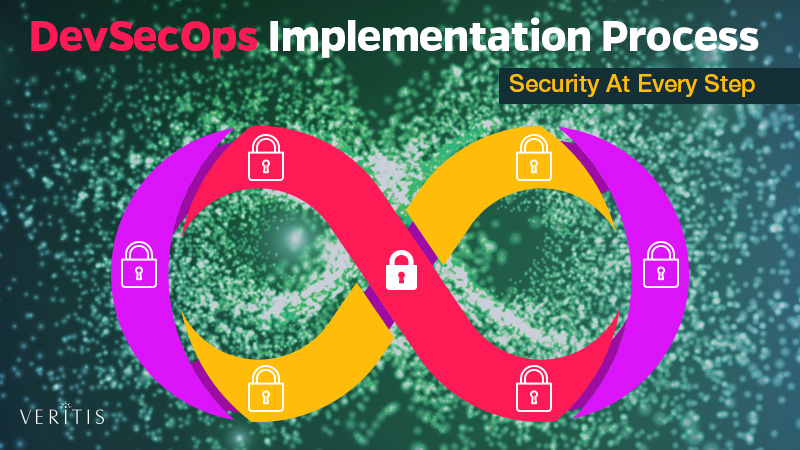
  • DevSecOps Implementation Process and Road Map – Security at Every Step

    DevSecOps Implementation Process and Road Map – Security at Every Step

    DevSecOps is changing our perspective toward security and is equipping us to deal with its challenges in an intelligible manner. The systematic approach of DevSecOps helps us add value to our business processes while ensuring security.

    Here’s a summary of the key inputs and a recipe for a successful software development project. Implementing DevSecOps with the primary goal of enhancing security requires a step-by-step procedure.

    It requires the unification of culturally disparate teams of Security, Operations, Development and Test for the sole purpose of building a product marked by quality and backed by security.

    The DevSecOps process will require effective planning, design and release, which will be put together with a collaborative toolchain of technologies to bring about a common goal.

    Furthermore, as organizations continue to rely on automated delivery, avenues are created for testing opportunities beyond traditional bugs. In-house experts will be able to identify potential loopholes, design errors and even code weak spots.

    Being able to identify weak spots and flaws well in advance helps organizations maintain a competitive front in the market and trustworthiness before its target audience.

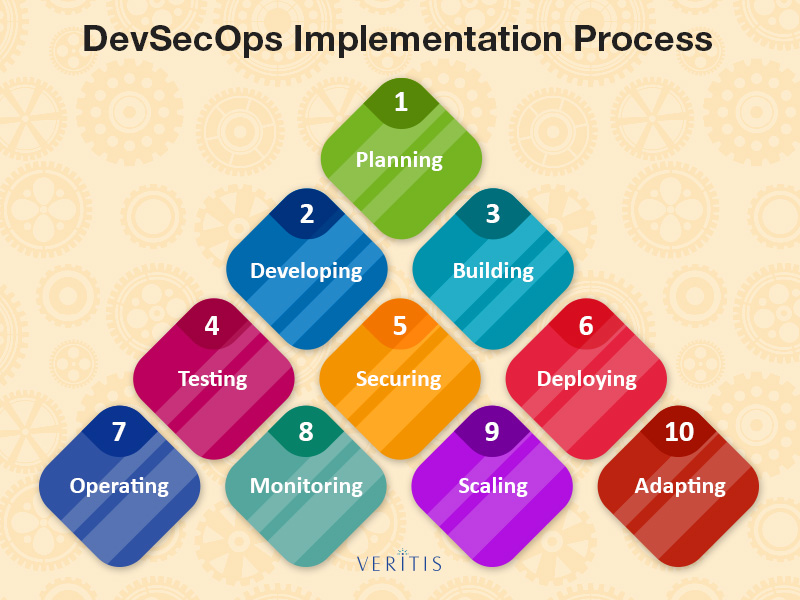
    DevSecOps Implementation Process and Road Map

    DevSecOps Implementation Process and Roadmap

    1) Planning: Planning is the first approach to any task at hand and the core focus of DevSecOps—security—begins from here. In the planning stage, DevSecOps professionals must go beyond creating feature-based descriptions. The focus should also be on security and performance, acceptance test criteria, application interface and functionality and threat-defense models.

    Tech terminology: Acceptance Test Criteria is used by DevSecOps professionals to understand user preferences and behavior to a software application behavior.

    2) Developing: Developers should approach DevSecOps with a “how to do it” approach, rather than a “what to do” approach. It is important for developers to bring together available resources for guidance, have reliable practices and a code review system in place for themselves and for others in the team to follow.

    3) Building: Automated build tools can uplift the whole DevSecOps implementation process tremendously. These tools ensure test-driven development, standards for release artifact generation and utilize tools to ensure the design aspect is in alignment with the team’s coding and security standards through statistic code analysis.

    They can also be used to identify vulnerable libraries being used in your application and replace them with new ones.

    4) Testing: Automated testing in DevSecOps should utilize strong testing practices including front-end, back-end, API, database and passive security testing.

    Tech Terminology: Passive Security Testing is a developmental stage testing where security testing is not conducted directly on the target.

    5) Securing: Traditional testing methods always remain in place in DevSecOps exercise. However, somewhere down the line, there is a tendency to identify issues toward the end of the development process.

    Through advanced practices such as security scanning, we tend to become more aware of the issues and can determine if the threat is a serious one or not.

    6) Deploying: Automated provisioning and deployment can fast-track the development process while making it a more consistent one. Infrastructure-as-code tools can perform the aforementioned audit properties and configurations and ensure secure configurations across the IT infrastructure.

    7) Operating: Regular monitoring and upgrades are the Operations team’s important tasks. DevSecOps teams ensure to deploy infrastructure-as-a-code tools to update and secure the entire organization’s infrastructure in a quick and efficient manner with no scope for human error. Operations personnel have to be especially watchful of zero-day vulnerabilities.

    Tech Terminology: Zero-Day vulnerabilities are a software breach that remains unknown to software productions personnel and can eat away at a computer program and other components such as a network.

    8) Monitoring: Constantly keeping a watch for irregularities in security can save an organization from a breach. Hence, it is essential to implement a strong continuous monitoring program with real-time to keep a track of system performance and identify any exploits in their early stages.

    9) Scaling: Gone are the days when organizations spent precious hours and money on the maintenance of large data centers. With the introduction of virtualization solutions and the cloud, organizations can scale their IT infrastructure or replace it in the event of a threat, which would be impossible to do with a traditional data center.

    10) Adapting: Continuous improvement is key to any organization’s growth. An organization will only be able to achieve the desired growth of it evolves in its practices including DevSecOps practices—security, functionality and performance. Therefore, an organization should adapt to continuous improvement and external changing trends.

    The DevSecOps is in itself a process of innovation that substantially adds value to an organization.

    Point to Remember: Security is everyone’s responsibility.

    — Veritis

  • IoT, Not People, Now the Weakest Link in Security

    IoT, Not People, Now the Weakest Link in Security

    Do a quick search on “people weakest link” and you’ll see a raft of articles in which cybersecurity experts and computer scientists point to employees or end users as the biggest vulnerability. No doubt, people do silly (or outright abusive) stuff and open the door for a variety of enterprise security problems. Spoiler alert: There’s this technology called the Internet of Things (IoT) and it’s a bigger security risk than people ever were. The new theme of this rapidly changing IoT security story is data integrity.

    Increased cybersecurity risk is due in part to the variety of environments IoT applications touch. Most at-scale IoT deployments use some form of a three-tier architecture, with edge, gateway and cloud components.

    • Edge devices are those connected sensors and actuators touching the real world. They are usually small, low-power devices often running a wireless protocol such as Bluetooth, Thread, ZigBee, Z-Wave, sub-GHz, low power wide area (LPWA) networks, cellular IoT technology, Wi-Fi or other protocol.
    • Gateway devices are hubs that groups of sensors connect with. One big role of the gateway is to translate the various protocols from edge devices into Internet Protocol (IP) for transmission into an enterprise network. Gateways also perform a key role in provisioning edge devices securely. Smartphones running Android or iOS often serve as a gateway for consumer IoT devices. For industrial IoT devices, multiprotocol gateways typically are built on a small form factor computer running a real-time operating system or Linux. Edge computing or fog computing architectures use enhanced gateways for more algorithm processing.
    • Cloud platforms are very familiar to most enterprise developers. In IoT apps, data from the edge arrives for processing, storage and presentation. Algorithms can run on a server cluster or in a distributed computing framework such as Hadoop or Apache Spark. Business intelligence and predictive and prescriptive analytics also reside in the cloud.

    In our practice, we see many IoT cybersecurity issues that can be mitigated with proper attention to two areas. The first is shutting down simplistic endpoint attacks by using basic connected device security measures. Avoid edge devices that ship with a well-known default password or PIN—compromising those defaults can be as easy as a battery pull and a factory reset. If a device uses encryption, make sure it doesn’t use a hardcoded key that, if cracked, compromises an entire family. Look for edge devices using over-the-air (OTA) programming allowing for security updates over a long life cycle. As more device developers gain IoT security experience and provide the right features, closing these basic weakest links is easy.

    Now, for the more startling weakest link. When the IoT application runs, is the data any good? According to a just-released survey of 950 IT and business decision-makers, only about 48 percent of companies are confident they can detect an IoT security breach. (BTW, don’t get me started on blockchain; it’s one tool, not a panacea.) A lot can happen before your people get involved. By then, it may be too late.

    Data integrity needs constant monitoring during at-scale IoT deployment, not just during pilot. An easy way into an unprotected IoT network is to add an unauthorized edge device at a gateway, then use it to access other devices. Gaps in end-to-end encryption are also easy exploits. Untrustworthy public cloud elements are also bad news—a big reason we recommend hybrid cloud architecture. A private cloud layer gives you more control over algorithm performance and data stream security. Presentation and archiving can be left to a public cloud layer.

    Bad data can come from either a compromised or faulty device. It propagates quickly across a system, and when an unwitting user at the presentation layer runs a business intelligence tool on it, the bad data could cause issues. How do teams hunt down vulnerabilities and faults that lead to corrupted data and results?

    • Hire a penetration tester, preferably a contractor removed from your day-to-day development who can objectively assess your architecture during pilot and reassess it during deployment.
    • Ensure your architecture can tolerate edge device or gateway failures without ripple effects in algorithms; in other words, protect the application from prolonged operation on bad data streams.
    • Before turning AI loose on automated decision-making, consider an AI-based IoT security analytics tool to spot anomalies and quickly bring people into the loop.
    • Retarget at least part of your cybersecurity experts to ongoing data integrity efforts and help them stay abreast of IoT technology and trends.

    This all sounds like a good job for DevOps, doesn’t it? You know what to do about people; now you’ll need to work magic with devices. The long-held security axiom that people are the weakest link is no longer true when IoT applications run unattended all the way to presentation. There are a few exceptions when people have more interaction at the edge, particularly in the medical device arena. Generally, we’ll see bigger and bigger IoT applications with more data, more processing and less interaction with people.

    If someone on the IoT says there’s a security hole you can drive a truck through, they may mean it literally. Data integrity measures will be critical for DevOps teams moving forward. Do you agree? What types of data integrity issues are you seeing in IoT applications?

    — Don Dingee

  • Blame Replaces Strategy: Enterprise IT War Rooms Causing Incalculable Losses

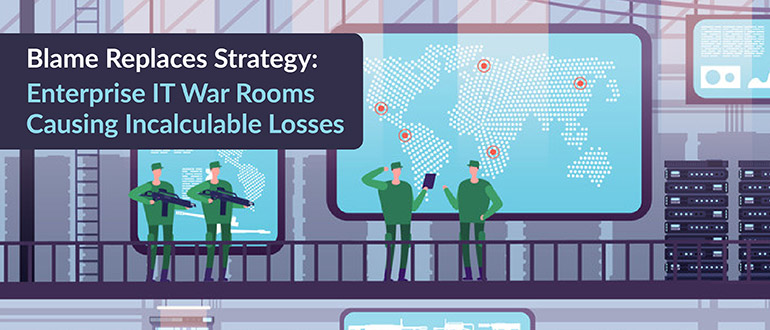
    Blame Replaces Strategy: Enterprise IT War Rooms Causing Incalculable Losses

    The concept of a “war room” is time-honored. One of the early examples is the Churchill War Rooms, an underground bunker that allowed Britain’s leaders to plot the allied route to victory during World War II. British Prime Minister Winston Churchill, as plain-speaking and self-assured as ever, said, “This is the room from which I will direct the war.” 

    Today, the war room concept also serves the world of business—specifically, organizations’ IT departments when troubleshooting a major issue impacting the business applications and their supporting IT infrastructure. The problem? So many parts of the infrastructure, whether hardware or software, can be implicated as the root cause of any problem. As a result, IT war rooms can encompass many stakeholders who are experts in those individual parts. And, while the goal is to collaborate to resolve the problem and minimize the damages from it, IT war rooms often result in a case of too many cooks in the kitchen, all speaking different “languages.”

    War rooms are a symptom of a much bigger problem within the IT organization. At the highest level, it results when IT operations teams have insufficient visibility and have limited proactive control of the infrastructure. For one thing, in a siloed organization (which most enterprises are), discussion across silos is rare. Plus, siloed monitoring tools for resolving infrastructure issues lack a common context and have no inherent understanding of the business impact of the applications. By contrast, the hardware, software and data that span silos do “talk.” In a sense, they collaborate. That’s the nature of connected infrastructure. Data, for example, flows throughout the enterprise, altogether oblivious of silos.

    The lofty view of war rooms, in the words of Dennis Drogseth, vice president at analyst firm Enterprise Management Associates, is this: “Our war rooms can be either physical or virtual. Highly automated or not. Made up of consistent, well-defined teams, or not. But what makes them war rooms is the need for collaborative decision-making across silos.”

    How Low Can IT War Rooms Go?

    The reality is that, despite their noble charters, IT war rooms have devolved into blamestorming—rancorous debate and finger-pointing to indict application development, database analysts, IT operations or DevOps for a failure. Drogseth described a bleary view of war rooms as “disastrous assemblages of finger-pointing adults caught up with siloed versions of the truth.” In an even more disillusioning example, one vendor stated that “mean time to innocence” becomes the IT war room’s chief metric”—rather than isolating and resolving the root causes of issues.

    With so many factors in play, dollar costs of IT war rooms are difficult to calculate. Taking aim at the problem, Enterprise Management Associates said, “The average War Room comprises 15 people and takes 5-6 hours to respond to and resolve the incident that caused it to convene. 29% of War Rooms take more than 11 hours to respond and resolve.” And those figures are over and above the substantial losses that occur if a server or switch, for example, goes down and war room staffers bicker over who’s to blame. Revenue losses can easily reach into the millions of dollars per hour of outage.

    Furthermore, the problems and costs are growing. Infrastructure complexity has ballooned with the growth of hybrid data centers. The hybrid model uses cost-effective, flexible compute and storage via the cloud, while retaining the control and security provided by on-premises infrastructure. However, the reality is that highly virtualized, multi-cloud environments are amazingly complex and problematical when it comes to ensuring application service delivery. Out-of-control infrastructure leads to outages and slowdowns—and finger-pointing.

    Remedies

    There are, however, several ways to mitigate the downsides of IT war rooms:

    • Discover technology solutions that provide cross-domain insights. Stated more simply, that means finding tools that can trace infrastructure issues to their source—exactly where the issue originates—even if the symptoms appear elsewhere in the infrastructure. Achieving this level of sophistication effectively eliminates finger-pointing.
    • Learn from history. Issues repeat themselves; if an issue occurs but is not traced to its source and remedied the first time, it will almost certainly recur. Often, it requires analytics-based tools to make the necessary correlations and remedy an issue.
    • Create what EMA calls an “informed context.” An informed context can help resolve an issue, moving from triage and diagnostics, to remediation, to validation. Knowing where applications live on the infrastructure at any given time and the business priority or tier of each application is one example of “informed context.”

    IT will likely always have its war rooms, and many organizations will claim that they’re necessary. At its best, a war room is a highly motivated, solutions-driven SWAT team. Of course, SWAT teams, like anything to be valued, will forever come at a cost to the enterprise.  One way to view the IT war room is that it’s just one more cost center. Maybe the better way to view it is by quantifying its value: If a war room saves minutes in getting a server up and running after an outage—or prevents an outage altogether—the savings could run in the millions of dollars. But too often, the opposite is the case: IT war rooms further contribute to the lost revenue from a failure.

    Let’s hope that enterprises remember the original intent of IT war rooms and reorient them around strategy rather than blame. If not, enterprises might want to consider closing the door of the IT war room for good.

    — John Gentry

  • How to Become a DevSecOps Engineer

    How to Become a DevSecOps Engineer

    The popularity and success of DevOps means it’s now an increasingly common feature in IT job descriptions.

    One of the most important roles within DevOps, however, is the Security Engineer or DevSecOps Engineer. This deeply rewarding career requires a specific technical skill set, current knowledge of cybersecurity trends and a decent amount of experience.

    Perhaps the best thing about this role is that demand is rising. You’ll find the need for such engineers is sky-high right now and will continue to rise as cyberattacks grow in frequency and sophistication.

    What Does Being a DevSecOps Engineer Involve?

    The work of a DevSecOps Engineer is like many other IT security professional roles. Both use a variety of best practice tools and methods such as cybersecurity software, threat modelling and risk assessments to detect and analyze threats.

    However, in keeping with DevOps practices, there are some key differences when compared to a typical IT security role.

    On DevOps projects, security isn’t an afterthought but is built into the software while it is being created, by using secure coding. During development, the software is attacked to find vulnerabilities, as opposed to running scans once it has been created.

    Collaboration is a core practice of DevOps, and therefore DevSecOps roles work alongside DevOps Engineers to ensure that security vulnerabilities are assessed and fixed during development. Automation tools to detect vulnerabilities play a key role, so DevSecOps need a good understanding of such toolsets.

    Knowledge of threats is shared with the whole team, instead of keeping it within the Ops silo team. Therefore, DevSecOps Engineers require great communication skills.

    What Skills Are Required?

    DevSecOps Engineers require a broad set of skills. They need the technical skill set of an IT security professional, as well as knowledge of the DevOps approach. They’ll also need a passion for cybersecurity, with sound awareness of the latest threats and trends. These are the main skills required:

    • Knowledge of the DevOps culture and principles.
    • An understanding of programming languages such as Ruby, Perl, Java, Python and PHP.
    • Strong teamwork and communication skills.
    • Knowledge of threat modelling and risk assessment techniques.
    • Up-to-date knowledge of cybersecurity threats, current best practices and latest software.
    • An understanding of programs such as Puppet, Chef, ThreatModeler, Checkmarx, Immunio and Aqua. They may also need to know Kubernetes, Docker or AWS.

    Such skills can be acquired on the job, either in formal employment or through an internship or work placement. You can also take courses to learn DevOps principles, programming languages or automation tools. Of course, you can also teach yourself such languages and tools, as many IT engineers tend to do.

    What About Experience and Qualifications?

    Many DevSecOps Engineers have experience in a non-DevOps IT security role. If you have no experience as an IT security professional, it is recommended you start there first before getting into DevSecOps.

    Starting a career in IT security generally requires a degree in computer science, cybersecurity, math, engineering or science. It is then recommended you gain experience on an internship or graduate placement. You can also enter the field without a degree by gaining practical industry standard certification, such as that offered by Microsoft, CompTIA, Cisco or Certified Ethical Hacker (CEH).

    Making the move into DevOps requires IT security experience, and you’ll need to gain knowledge of the languages and automation software commonly used on DevOps projects. It is also advised that you gain accredited DevOps qualifications from the DevOps Institute, specifically the DevOps Foundation and DevSecOps Engineering (DSOE) qualifications. These will equip you with a solid understanding of DevOps principles and DevSecOps methods.

    Summary

    You might think DevOps or DevSecOps are just trendy words for developers, operations and security teams who work closely together. But this is wrong. There is so much more to DevOps than that. Ask Netflix, Amazon or Sony—all hugely successful companies that use DevOps culture to get things done.

    DevSecOps is a crucial part of DevOps, especially given the current cyberattack climate. As the need for such individuals grows, so will the job openings. If you have security experience and want to boost your career or are thinking about which degree and career path to take, keep DevSecOps in mind.

    — Stephanie Rowe

  • Are Developers Your First Line of Security Risk or Defense?

    Are Developers Your First Line of Security Risk or Defense?

    Every organization on the planet, whether public or commercial, is facing an ongoing challenge: to exist in an increasingly digital space. Past products must transform to meet the digital expectations of their customers, and new products must be built with “digital-first” frameworks in mind. After all, if they fail to meet these expectations, there’s almost certainly a competitor ready to swoop on the opportunity.

    So, what does that mean for all these businesses, old and new? It means they are employing teams of developers to create line after line of the code that forms their digital product or service.

    In this fast-moving, high-pressure environment, CIOs have become the new innovators, and are in positions of immense influence. However, they face a strong demand to meet rapid speed-to-market goals, enhance product quality with each update and increase flexibility. This has led to complex, often fragmented development teams whose primary focus is on rapid development of features and functions, without consideration of the vulnerabilities they could be creating in the code they are so quickly churning out.

    If our data is to remain safe, we must implement a new way of working. Just look at the catastrophic damage Equifax faced following its recent breach: a disaster that occurred as a direct result of insecure coding practices.

    CIOs and CISOs need to consider carefully whether their development teams are in fact the first line of data breach risk in the organization or the security champions, their company’s true “first line of defense” against cyberattacks. If they’re not the latter, they certainly could be.

    Secure Coding Checklist

    Where does your own dev team fit? I have created this Secure Coding Checklist to help CIOs and CISOs identify whether their development teams are truly equipped to be secure coding champions, helping to innovate with faster, better and safer code (or, indeed, whether you’re in need of a more robust security program):

    1. Is there acknowledgment at your executive C-level that traditional network security is no longer enough?

    These days, securing the network layer using traditional security measures is simply not good enough (and, let’s face it, is rarely successful anyway) even against semi-professional hackers. Among many consistent reports, Verizon’s “2017 Data Breach Investigations Report” cites that 35 percent of data breaches today are caused by web application vulnerabilities.

    Web application security is equally as important as network security; ignoring fundamental, protective AppSec measures could leave you well and truly open to a breach.

    2. Are you considering security from the start?

    The current approach to application security utilizes tools that focus on moving from right to left in the software development life cycle (SDLC). This, by design, supports a detection and reaction outcome. This means that security teams search for and detect vulnerabilities code that is already written, then react to fix them. According to the National Institute of Standards and Technology (NIST), it is 30 times more expensive to detect and fix vulnerabilities in committed code than it is to prevent them as they are written in the IDE. This doesn’t even take into consideration the production delays, double-handling and time spent in remedying any issues. Secure code champions start at the extreme left of the SDLC, with a focus on continually training their developers in secure coding, so they can be the first line of defense in their organization, preventing common vulnerabilities from occurring in the first place.

    3. Do you actually make the effort to build security skills, or are you just feeding knowledge?

    The vast majority of security training solutions (online and in-classroom) focus on building knowledge instead of building practical skills. For developers to thrive and engage in writing secure code, they need regular access to hands-on learning that actively encourages them to learn and build their skills in a real environment. They need to learn about recently identified vulnerabilities, in real code, and be able to work in their own languages/frameworks. This learning experience should help them understand how to locate, identify and fix known vulnerabilities in the code they are actively working on in the course of their jobs.

    4. Are you measuring your secure coding skills with real-time metrics?

    A vital step in ensuring a security-first mindset is being built within a development team is to collect and review evidence. Metrics seek to prove to the developer and their organization that their hard work is paying off, and secure coding skills are improving. You can’t improve what you cannot measure. There should be relevant assessments, and these should help identify the progress of your development teams in real-time as well as benchmarking their secure coding strengths and weaknesses for continuous improvement.

    5. How sure are you that any outsourced vendors are actively using secure coding techniques?

    Many organizations decide to contract out development work to other development houses. Whether they exist on- or offshore, their general secure coding abilities and practices are a relative mystery. In the best case, the only form of assurance an organization will receive relating to security is a statement in the contract requiring the deliverable to be “secure.” Few companies actually take the step to verify the skills of these development houses upfront, thus winding up with software that has been built without following sound secure coding practices. Worse yet, if the company is not aware of them, it risks going live with a vulnerable application.

    The most common scenario is that any vulnerabilities get picked up by dedicated security specialists (that come at a high cost) and you are faced with a delay of your go-live date, and possible contractual discussions on who needs to pay for fixing these security weaknesses. However, if you’re smart upfront and assess the application security skills of the developers who are going to build your next application, you save a lot of potential delay, frustration and cash.

    6. Are your developers aware of the most common security weaknesses?

    More than 85 percent of exploited web application vulnerabilities are attributed to just 10 known vulnerabilities—the OWASP Top 10. At a bare minimum, your application security training must cover these, in addition to many more vulnerability types. The training challenges your developers contend with must be actively revised and updated on a regular basis, with new challenges for either new coding frameworks or new vulnerability types.

    7. Do you have in-house security champions?

    Every developer-heavy organization should invest in a security champion—someone who is going to take responsibility for a security standard within the dev team. Their purpose is to be a support point of contact for anyone with questions around security, as well as become the chief advocate for following security best practice.

    8. Have you invested in tools for your developers to make secure coding easier?

    If your organization is one in which agile development is practiced, or indeed you are faced with frequent updates to company-built applications, automating parts of your security is one of the only ways to keep up with the frantic pace and volume of work.

    There are tools available at each stage of the SDLC that will serve as advisers, quality gatekeepers or detection tools. Ideally, you should have IDE plugins that focus on certain types of security bugs and act almost like a “spell-checker” while developers are writing their code. There are others that integrate with the build process, detecting certain types of weaknesses as the code is being submitted to a code repository.

    In addition, some tools run automated tests over the code, simulating attempted hacking once the software is in production. All have their own set of benefits and challenges, and none can provide a catchall, 100 percent guarantee that no security threats exist within the application. The No. 1 preventative measure you can employ is that the earlier you can capture the weakness, the faster and cheaper it is to remediate it with the least impact on your business.

    CISOs and CIOs are essentially forced to quickly and aggressively build their enterprise agile capabilities. As such, secure coding skills will be a weapon—not a hindrance to—innovation, and foregoing them could spell the absolute destruction of company reputation and data. Think twice before you skip this critical capability.

    So, how did your organization fare against this checklist?

    — Pieter Danhieux

  • How DevSecOps Can Help Avoid Catastrophic Breaches

    How DevSecOps Can Help Avoid Catastrophic Breaches

    Earlier this year, Tesla’s Cloud was hijacked and used to mine cryptocurrency, exploiting a vulnerability in the company’s Kubernetes cluster. A mountain of FedEx data was recently exposed, affecting 119,000 individuals. The Equifax breach garnered international attention after an estimated 145.5 million Americans were jeopardized. In other news, we’ve reported on how the Vine Docker registry fiasco was hacked, leaving an embarrassing PR trail in its wake.

    What is common across all these scenarios? They arguably could have been avoided with basic safeguards underpinned by a healthy dose of DecSecOps. In hindsight, let’s see what specific strategies developers can adopt to avoid such horrendous leaks.

    Basic DevSecOps Can Prevent Vulnerabilities

    DevSecOps is described as placing security at the forefront of every action. Within the world of cloud tooling, this means instilling protection at every point of the build life cycle. You would think this equates to advanced container and orchestration security, powerful access management and establishing hardened oversight for internal applications, right? Actually, many modern exploits simply involve a lack of basic password protection.

    Case Study No. 1: Tesla Cloud Cryptojacking

    In mid–2018, Tesla’s Amazon servers were hijacked by malware and used to mine cryptocurrency for rogue agents. Similar cryptojacking has transpired at Gemalto, Aviva and others. According to RedLock’s report, the hackers infiltrated the Kubernetes console, which was not password-protected. In one pod, they found access credentials to Tesla’s AWS environment. The breach exposed sensitive telemetry data, though was limited to “internally used engineering test cars only,” according to Tesla.

    How to Prevent

    Password protection for Kubernetes administrative consoles is a readily apparent lesson here. All cloud accounts, even if used internally, must be better-equipped and access credentials sequestered. Surely, instilling a “security by design” mentality can help limit the number of such consoles left accessible.

    Case Study No. 2: Vine Registry Breach

    In 2016 a white hacker by the alias avicoder was able to infiltrate Vine, the video-sharing social network. The hacker used tools to discover subdomains and behind one—https://docker.vineapp.com—found an open Docker private registry that housed the Vine source code. Such a vulnerability could have been used to collect user details or inject malware for malicious purposes. Thankfully, no users were compromised, and the Twitter Bug bounty program awarded avicoder a handsome sum for the discovery.

    How to Prevent

    In this particular incident, there was nothing at fault with Docker or Docker containers. The service (which was meant to be private) was simply left public and devoid of access controls. The lesson is that URLs on the world wide web are just that—publicly exposed to the world. It does not matter if no documentation links to them; such subdomains are easy to discover with crawlers and will be exploited if found.

    Case Study No. 3: Equifax Exploits

    In the Equifax breach, millions of customer records were stolen. The Equifax report notes that hackers exploited a “website application vulnerability.” Further reports detailed that the 2017 breach utilized flaws in Apache Struts, likely through a zero-day exploit, according to the Apache Struts Project Management Committee.

    How to Prevent

    Some note that the deserialization of untrusted data inherent in Apache Struts applications leaves some major vulnerabilities and potentially malicious code execution.

    Containers, due to their short lifespan, are not persistent, therefore making consistent hacking harder. They can also isolate functionalities so as to decrease attack vector. Regarding the Equifax breach, Aquasec speculates that container usage could have lessened the impact:

    “… it’s likely that such a breach would have been more difficult with containers, and that if successful, it would have been less persistent, not as widespread, and mitigated sooner.”

    Some view containers as a formidable force if armed with behavioral analysis and firewalls for network connections. Still, others note flaws in assuming containers are safer.

    Regardless of architecture, In DevSecOps, security for customer data isn’t drafted into the background; rather, it is imbued into the entire tooling process and holds equal footing within each build.

    Instilling a DevSecOps Culture

    Instead of a build-now, secure-later attitude, DevSecOps seeks to elevate security into every decision. With each build, security is melded with greater forethought regarding the repercussions for how data is treated.

    Admin consoles for Kubernetes clusters must be armed and password-protected, and the same goes for private GitHub repositories or Docker registries. Any traversal of data through cloud SaaS services must have authorization in place. A most obvious lesson is to password protect those “hidden” registries with discoverable URLs.

    Bounty programs for white hackers continue to lead to successful bug detection. At least for these institutions, there is less evidence of compromised user data and remediation is quickened.

    Much of this can be distilled by due diligence and through breeding a culture of security. While that’s a little fluffy for some, it apparently still requires repeating for institutions that continually de-privilege these basic safeguards.

    — Bill Doerrfeld

  • DevSecOps: Critical in Building the Bank of the Future

    DevSecOps: Critical in Building the Bank of the Future

    It is no secret that change in a large organization can be difficult. This is often true within banking, an industry that often has sought predictably instead of agility in software delivery. However, with the right tools, guidance and teams, creating a bank that can be both complaint and responsive may be more attainable than initially it may seem. For a digital bank of the future to emerge from a heritage of independent application, information security and operations departments, an organization should embrace new technologies that can unify these groups and improve the ability to respond to change more quickly.

    Read on to learn why the inclusion of information security within DevOps practices can play a key role in establishing a bank of the future, and why it is important.

    Digital-Only Banks Gaining Ground

    One of the shifts in the distribution of banking products is the movement from primarily branch-based banks to digital-only banks. In fact, Citizens Financial Group launched a digital-only bank in July of 2018 to appeal to a growing number of digital-first customers. JPMorgan Chase also has a new digital banking offering, Finn, aimed at millennial customers.

    While digital-only is meant to simplify the end user experience, it complicates security because it increases the number of attack vectors within the digital channel. In effect, bank security is judged not by how well physical transactions are protected within the branch (think bank notes and checks), but how well digital transactions are protected over the internet. This can require a commitment of applying security controls while also honoring agile delivery practices. In turn, this developmental agility can be more effective when it is part of a responsive organization—one that is willing to adapt and adjust quickly, often requiring institutional culture change to an organization that is more transparent, open and ultimately innovative.

    Incorporating Security from the Get-Go

    To be more responsive while at the same time hardening security, adapting to DevSecOps methods is becoming important in the journey to be a bank of the future. DevOps should never be only about the development (Dev) build and operations (Ops) implementation—it should have security in the middle (Sec). Information security should play an integrated role in the full life cycle of apps. DevSecOps can remove the isolation and boundaries that previously existed between the security team and the rest of the organization, and it brings security smack dab into the conversation, rather than as a part of a deployment checklist. With service level expectations from release cycles going faster—from months to weeks or even days—integrating and automated security into the delivery process can be even more critical. In a DevSecOps application methodology, digital bank initiatives would build security into every touch point from the very start.

    How is Information Security Evolving in Banking?

    Banking, like all other aspects of our lives, seems, to be  transitioning to a smartphone transaction. Deposit and savings accounts can now be fully opened and closed through the digital channel. Information is exchanged digitally and the process is often painless. Information security becomes even more critical to help make  information safe and secure from potential fraudsters.  So while these types of transactions are often expected by consumers, it is important to have proper security measures in place and that can be fully automated and throughout the development process.

    The Organizational Change to Embrace the Future of Banking

    The future of banking will not happen exclusively just by changing technology and tools. It can often be successful when it is adapting organizational change at the same pace as technology and Agile best practices, such as DevSecOps, can also be applied to cultural transitions. To prepare organizations to be successful, there should be clear commitment by leadership across applications, operations and information security; otherwise, the change may never be fully absorbed into the organization. The bank of the future will be more likely to be successful if it functions as part of an ecosystem of interdependent and more securely connected people, processes and technology to have the structural support in place to successfully engage.

    — Eric Marts