Author: Mike Vizard

  • Testlio Adds Fused Testing to Automate Testing Platform

    Testlio Adds Fused Testing to Automate Testing Platform

    Testlio announced today it is adding fused testing capability to its application testing platform; Testlio is used by IT organizations to manage application testing teams consisting of internal employees and external contractors vetted by Testlio.

    Fused testing describes the combination of automated and manual testing IT organizations use to improve overall productivity. Fused testing strikes a balance between tests that can be automated and those that still need to be performed by a human.

    To achieve that goal, Testlio has partnered with Applitools, BrowserStack, Headspin, Mabl and Sauce Labs. Failure signals and session artifacts from these tools can be pushed to the Testlio platform to streamline the triage of test results. Testlio is making six device slots and 100 hours per month of automated testing processing time available at no additional cost.

    Finally, Testlio has set up an automated testing center of excellence (CoE) as part of an expansion of its professional consulting services it provides to help organizations implement testing best practices.

    Testlio CEO Steve Semelsberger said those integrations will make it simpler to augment human testers and increase the rate at which applications can be tested as many organizations are accelerating the rate at which those applications are being built and deployed.

    As organizations seek to implement continuous testing within the context of a DevOps workflow it’s apparent there will need to be more reliance on automation to keep pace with application development, he added.

    Through its platform, Testlio provides organizations with access to more than 10,000 freelance application testers on demand. That network of testing professionals can create, run, optimize and diagnose automated tests using Appium and Selenium frameworks written in programming languages such as Python, Java and Node.js. Only 3% of the freelance application testers that apply to join the Testlio network have been accepted, noted Semelsberger.

    The degree to which organizations prefer to rely on internal employees versus contractors to test applications will naturally vary. However, it’s difficult to predict what volume of tests will need to be performed—and when they should be performed—to preserve application development timetables. Contractors provide IT organizations with a degree of testing flexibility that is becoming an absolute requirement given the current challenges of hiring and retaining professional application testers, said Semelsberger.

    Application testing is, of course, difficult to apply uniformly no matter how many testers are available. In addition to providing access to experienced freelance testers, Testlio also provides a platform for managing the overall testing process. The challenge is then aligning those testing tasks with the various application development projects the organization has launched.

    Regardless of the approach to testing, the need for it has never been more critical. As organizations embrace a wide range of digital business transformation initiatives, a much higher percentage of the applications are now externally facing. The tolerance for suboptimal application experiences among customers and partners is much lower than that of internal employees. As such, first impressions, like it or not, are going to determine the success and failure of most of those application initiatives.


  • White House Meeting Puts Spotlight on OSS Sustainability

    White House Meeting Puts Spotlight on OSS Sustainability

    A recent meeting between IT industry leaders and White House officials highlighted open source software sustainability concerns as high-profile breaches and zero-day attacks have many organizations reviewing their software supply chains.

    The White House published a statement describing, among other things, how participants had a “substantive and constructive” discussion on how to make a difference in the security of open source software while continuing to effectively engage and support the open source community.

    Meeting participants included Deputy National Security Advisor for Cyber and Emerging Technology Anne Neuberger, National Cyber Director Chris Inglis, and officials from the Office of the National Cyber Director, Office of Science and Technology Policy, the Department of Defense, the Department of Commerce, the Department of Energy, the Department of Homeland Security, the Cybersecurity and Infrastructure Security Agency (CISA), the National Institute of Standards and Technology and the National Science Foundation. Akamai, Amazon, Apache Software Foundation, Apple, Cloudflare, Facebook/Meta, GitHub, Google, IBM, the Linux Foundation, the Open Source Security Foundation, Microsoft, Oracle, Red Hat and VMware all sent representatives.

    The White House reported that the discussion focused on preventing security defects and vulnerabilities in code and open source packages, improving the process for finding defects and fixing them and shortening the response time for distributing and implementing fixes.

    There were few specific recommendations, but the White House is clearly bringing more pressure to bear after the disclosure of the zero-day Log4j vulnerability in Java applications wreaked havoc in enterprise IT environments and government agencies. That vulnerability made it clear just how dependent organizations are on open source software projects and brought to attention the fact that many are created and maintained by just a handful of volunteer maintainers and contributors. The individuals that created those projects don’t always have a lot of cybersecurity expertise. In fact, many of them would argue that the onus for securing open source software is on the organizations that use what amounts to free software. It’s not the responsibility of the contributors and maintainers of open source software to drop everything and create a patch on-demand to address a zero-day vulnerability.

    The federal government, however, has made it clear via executive order that it expects IT vendors and large enterprises that depend on open source software to do more to secure it. In the meantime, IT teams will need to evaluate their dependence on open source software; especially if, from a security perspective, that software isn’t sustainable simply because there are not enough contributors with the necessary expertise.

    Naturally, this is a complex issue. In many cases, organizations are relying on open source components without even realizing it. Those components have been embedded within an application by an independent software vendor (ISV) that typically doesn’t disclose how that application was constructed. When a zero-day vulnerability is disclosed, cybersecurity teams can spend weeks looking for all the ways the instances of an application they either built themselves or licensed are impacted.

    “There’s no way to really know,” said Mitch Ashley, principal for Techstrong Research, an arm of Techstrong Group, the parent company that publishes staging-devopsy.kinsta.cloud. “A vulnerability can be anywhere.”

    It’s not abundantly clear how critical an issue the sustainability of open source software security is just yet. Relative to the amount of open source software currently employed, the number of security issues that have been encountered is comparatively small, noted Ashley.

    “The innovation benefits enabled by open source software far outweigh the risks,” he said.

    It may be a while before the open source community comes to terms with rising software supply chain concerns. However, it’s clear that many more members of the IT community are about to be held accountable for it.

  • GrammaTech Adds SBOM Analysis Capability to CodeSentry

    GrammaTech Adds SBOM Analysis Capability to CodeSentry

    GrammaTech today updated its CodeSentry code inspection platform to include the ability to create a software bill of materials (SBOM) by analyzing application binaries.

    Walter Capitani, director of technical product management for GrammaTech, said version 3.0 of CodeSentry leverages the algorithms the company uses for binary software composition analysis to enable organizations to better address software supply chain concerns in the wake of a series of high-profile vulnerabilities.

    The tool can be applied to both commercial software and open source components via integration with Risk Based Security’s VulnDB database, created to track security issues.

    GrammaTech

    There is more focus than ever on creating SBOMs in the wake of the Biden administration’s recent executive order that will require federal agencies to only use software that comes with an SBOM. However, most organizations are not provided with access to the source code used within the applications they employ. GrammaTech enables organizations to address that issue by analyzing the binary code within an application to generate an SBOM.

    That report not only identifies all the components in an application, it also lists all known vulnerabilities associated with the version of the components being employed, said Capitani. CodeSentry will also list other common software products and the versions that may be impacted by the same vulnerabilities, along with versions of the software that have remediated the issue or versions of a component that have not been impacted by those vulnerabilities.

    Almost all software applications include third-party and open source components that create blind spots within software supply chains. In fact, that issue is what makes remediating zero-day application vulnerabilities so challenging; especially when they are discovered in, for example, a log management tool like Log4j that is widely used in Java applications.

    GrammaTech is making a case for a binary software composition analysis (SCA) tool that enables DevOps teams to address vulnerability issues prior to an application being deployed in a production environment. At the same time, however, security and compliance teams can now use the same tool to determine the level of risk an organization might be incurring once an application is deployed in production. That latter capability is especially critical because zero-day vulnerabilities are often not discovered until long after an application is deployed in a production environment, noted Capitani.

    Regardless of approach, the need to better secure software supply chains is now a major IT issue that should ultimately encourage more organizations to adopt DevSecOps best practices to better secure applications. The challenge, of course, is not just espousing the need for those practices but also providing developers with tools they will actually use to implement those practices. The success or failure of those efforts comes down to not just the efficacy of the tool but also how well it fits within the overall developer experience. After all, the greatest tool in the world will still languish if it’s too difficult for the average developer to employ.

  • Continuous Delivery Challenge Looms Large in 2022

    Continuous Delivery Challenge Looms Large in 2022

    As 2022 kicks off, it’s becoming apparent that the major DevOps challenge organizations will face is mastering best practices that enable continuous delivery.

    A global survey of more than 19,000 software development professionals conducted by the Continuous Delivery (CD) Foundation found 44% of respondents use either continuous integration or deployment. However, less than one in five (18%) use both practices to automate the entire software delivery life cycle. Continuous integration is currently the most popular DevOps-related activity (32%) followed by continuous deployment at 29%, the survey found.

    The survey also found that only 14% of respondents said, on average, that they can go from code checked-in to successfully running that code in production in one day. Just 10% said they routinely deploy code to production each day. Nearly a third of respondents said they still manually approve code deployments to production.

    Tracy Miranda, executive director for the CD Foundation, said it’s clear there is a need for a better understanding of continuous delivery as a distinct DevOps discipline that stands apart from continuous integration processes. While the two DevOps practices are complementary, she noted that continuous delivery requires a level of engineering expertise that many developers either lack or are simply not interested in gaining.

    In fact, the survey found more than a quarter of respondents (26%) are not involved in DevOps-related activities at all. At the same time, however, the survey revealed that 80% of respondents that work for companies with two or more employees are involved in DevOps to some degree. Nearly 60% of enterprise developers that participated in the survey employ a continuous integration/continuous delivery (CI/CD) platform, as opposed to 48% of developers working in small businesses and 42% of contractors. However, it’s clear from the survey results that much of that activity is focused on continuous integration rather than continuous delivery.

    The survey revealed, for example, that less than a quarter of respondents (23%) are involved in infrastructure provisioning and management at all. That compares to nearly a third (32%) that are involved in application and infrastructure monitoring. Only 20% are involved in creating automated tests, Collectively, the survey results make it clear there is still a long way to go in terms of shifting responsibility for DevOps practices further left toward developers.

    One reason continuous delivery is so challenging is that automating deployments across platforms has never been especially easy. Each platform tends to be customized to the point where it is difficult to automate application deployments. In effect, each platform is its own unique type of “snowflake.”

    However, with more attention focused on the integrity of software supply chains in the wake of a series of high-profile breaches, Miranda noted that automating software delivery will play a major role in achieving automation goals by reducing the need to rely on manual processes that are more easily compromised.

    At the same time, more organizations are starting to embrace Kubernetes clusters—this can simplify automation of software delivery across a set of platforms that all share a common application programming interface (API), she noted.

    The growing complexity of application development projects, coupled with increased reliance on software to drive digital business transformation initiatives, will also accelerate the adoption of continuous delivery best practices, added Miranda.

    One way or another, application deployment in 2022 is shaping up to be a lot more automated than it was in previous years. The only thing left to be determined now is the degree to which that goal can be achieved.

  • NPMs Sabotaged as OSS Sustainability Crisis Continues

    NPMs Sabotaged as OSS Sustainability Crisis Continues

    A long-simmering debate over the sustainability of smaller open source projects moved beyond the theoretical when two widely used open source node packaged modules (npm) were deliberately sabotaged this week, allegedly by a primary contributor.

    Colors.js is an npm that has been downloaded more than 3.3 billion times, with more than 19,000 projects depending on it. Faker, meanwhile, has been retrieved 272 million times, with over 2,500 projects depending on it. Colors.js enables organizations to print colorful text messages on the console, while faker is used to generate fake data for testing applications. Developers that pulled a recently published Colors.js version found their applications caught in an infinite loop, printing ‘LIBERTY’ ‘LIBERTY’ ‘LIBERTY’ followed by a sequence of gibberish non-ASCII characters. Functional code, meanwhile, was also removed from Faker.

    Ax Sharma, senior security researcher for Sonatype, a provider of an open source software security platform, noted these actions occurred in the wake of the series of zero-day vulnerabilities that impacted the widely used Log4j logging tool for Java applications. Sharma first reported the update issues with Color.js and Faker.

    The small team of contributors that work on the Log4j project found themselves creating multiple updates to the package to address vulnerabilities of varying severity on the common vulnerabilities and exposures (CVE) list. There is some debate, however, over how many of those vulnerabilities warranted a CVE listing given their severity, said Sharma.

    That issue has now emerged as a flashpoint for contributors to smaller open source projects. These contributors contend that larger organizations are taking advantage of their efforts without making any substantial contributions to a project in return, much less compensating any of the contributors for their time and effort. The recent updates made to the npms are, essentially, a protest statement, explained Sharma.

    It’s not clear whether other contributors to small open source projects might follow suit, but the debate over the sustainability of these projects has become heated. Many contributors to open source software assume that the organizations who use the free software they created should assume responsibility for securing it. That “user beware” approach to security is understandable for contributors that are not compensated for their efforts. However, when asked to patch open source projects used by billion-dollar organizations—and do so on an urgent, emergency basis—the resentment among those volunteer contributors rises sharply.

    Fortunately, some effort is being made to address these issues. The Open Source Security Foundation (OpenSSF), an arm of the Linux Foundation, raised $10 million to help maintainers embrace best practices and better protect open source projects from malicious code. Google has pledged $1 million to help open source developers adhere to National Institute of Standards and Technology (NIST) guidelines in response to the Biden administration’s recent executive order on cybersecurity. Administered as a pilot program by the Linux Foundation, that effort is part of a larger $10 billion commitment that Google previously made to open source security.

    White House national security adviser Jake Sullivan also recently sent a letter to major software companies and developers inviting them to discuss initiatives to improve open-source software security. The first step is a one-day discussion this month hosted by Anne Neuberger, the deputy national security advisor for cyber and emerging technology. In the letter, Sullivan specifically noted that while open source software has accelerated the pace of innovation, much of it is maintained by volunteers. This is now a key national security concern, he noted.

    It’s not clear how this emerging open source sustainability crisis will play out. However, DevOps teams might want to consider how dependent they are on open source projects whose contributors might have issues with how their work is being exploited.

  • CNCF Takes LitmusChaos Platform to the Incubation Level

    CNCF Takes LitmusChaos Platform to the Incubation Level

    The technical oversight committee (TOC) for the Cloud Native Computing Foundation (CNCF) announced today it is elevating the open source LitmusChaos application testing platform to the incubation level.

    LitmusChaos is a chaos engineering platform donated to the CNCF by ChaosNative in 2020. Since then, it has seen adoption within production environments by more than 25 organizations, including Intuit, Lenskart, Orange, Red Hat and VMware.

    ChaosNative CEO Uma Mukkara says LitmusChaos was developed to provide DevOps teams with a chaos engineering platform built using containers that makes it easier to scale up and down than existing monolithic alternatives. The platform itself, however, can be used to test both monolithic and microservices-based applications.

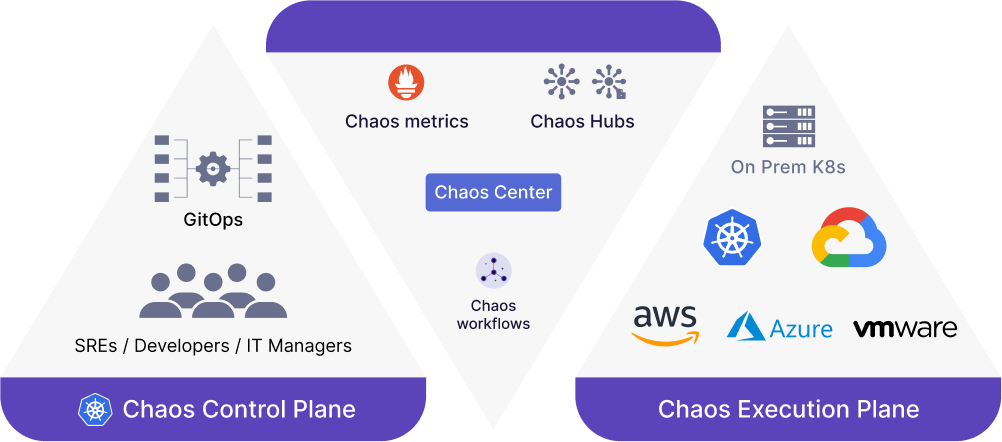
    The platform consists of a Chaos Operator based on a software development kit (SDK); a ChaosHub for hosting and sharing experiments; Litmus Workflows that declaratively chains experiments (either in sequence or parallel) to build a chaos scenario; a centralized control plane, dubbed ChaosCenter, to design, schedule and monitor Litmus Workflows; Litmus Probes for creating chaos scenarios that automate steady-state validation and remediation actions and a Chaos Observability tool to export Prometheus metrics.

    In total, there are now more than 400 contributors to the LitmusChaos project and more than 4,000 pull requests have been made. Mukkara said since the beginning of this year, Litmus operator installations have grown to more than 2,000 per day. Going forward, the goal for 2022 is to significantly increase the number of LitmusChaos integrations there are for a wider range of DevOps platforms, added Mukkara. Additional sets of experiments for Kubernetes and non-Kubernetes targets, improved observability and integration with other platforms—via the open source OpenTelemetry agent software also being advanced by the CNCF—is also planned.

    In general, it’s still early days as far as the adoption of chaos engineering with DevOps workflows is concerned. However, Mukkara said that as more organizations embrace observability to better understand IT processes, the number of organizations that also use chaos engineering to test IT resiliency should also increase. In fact, as IT environments become more complex—thanks mainly to the rise of microservices-based applications—chaos engineering approaches to testing may someday be required, noted Mukkara.

    In the meantime, there are still a lot of IT professionals that are uncomfortable with chaos engineering approaches to testing that deliberately break underlying services to test the resiliency of an application. The core idea, however, is that no application should have a single point of failure that could lead to it becoming unavailable. In theory, a microservices-based application won’t fail because when a service becomes unavailable calls are automatically rerouted to another service. The performance of that application will degrade, but it won’t go offline. The challenge is that building an application that achieves that level of resiliency using microservices requires a significant amount of DevOps expertise.

    Regardless of how an application is constructed, the one thing that is clear is how dependent organizations are on applications to drive revenue. As such, the tolerance for application failures—or performance degradation—has never been lower.

  • GitLab Revamps Observability Strategy After Acquiring Opstrace

    GitLab Revamps Observability Strategy After Acquiring Opstrace

    GitLab plans to make observability a more integrated element of its continuous integration/continuous delivery (CI/CD) platform after acquiring Opstrace.

    Opstrace’s open source project exposes a horizontally scalable application programming interface (API) created by Cortex for Prometheus, an open source monitoring platform being advanced under the auspices of the Cloud Native Computing Foundation (CNCF). It then makes use of a Loki API to collect log data.

    DevOps teams can also point an existing instance of Prometheus to Opstrace or any instance of Fluentd or Promtail software they are using to collect log data, with support for a wide variety of other APIs, such as the Datadog agent, planned. A command line interface (CLI) is provided to set an instance of Opstrace that creates a controller through which the collecting of log data is managed.

    Kenny Johnston, senior director for product management for GitLab, said as part of an ongoing effort to make observability more accessible, GitLab plans to integrate Opstrace by default with GitLab Monitor for organizations that use either the self-managed version of GitLab or the software-as-a-service (SaaS) platform.

    Opstrace currently collects logs and metrics and support for distributed traces is planned. The goal is to extend the overall scope of observability capabilities that GitLab already provides within its CI/CD platform, noted Johnston. The goal is to make it simpler for DevOps teams to employ observability capabilities and interrogate data to optimize workflows without acquiring a separate observability platform, he added.

    GitLab is betting that, as Prometheus continues to gain traction, more DevOps teams will prefer to extend its reach into the realm of observability rather than having to manage a separate platform.

    Although observability has always been a core tenet of DevOps best practices, achieving it has proven to be a challenge. At best, most organizations can continuously monitor IT environments based on predefined metrics that identify when a specific platform or application is performing within expectations. Observability combines metrics, logs and traces—a specialized form of logging—to instrument applications in a way that makes it simpler to troubleshot issues without having to rely solely on a limited set of pre-defined metrics that have been created to monitor a specific process or function.

    The rate at which DevOps teams will embrace observability will naturally vary. In 2022, the biggest obstacle might not be the technology as much as it is simply understanding what queries can help DevOps teams better understand the root cause of an IT issue before there is a major disruption. In the long term, it’s expected that machine learning algorithms will leverage the data collected by observability platforms to automatically identify issues that might lead to a disruption long before it actually occurs.

    One way or another, the ability to discern events even within the most complex IT environment is steadily improving. Whether that’s accomplished as an extension of monitoring or by embracing true observability may not be all that relevant—as long as the ultimate goal is achieved.

  • Intel Expands Scope of OneAPI Toolkit Initiative

    Intel Expands Scope of OneAPI Toolkit Initiative

    Intel has made available a 2022 edition of its oneAPI toolkit through which it makes processor extensions accessible to DevOps teams.

    James Reinders, chief evangelist for Intel software products, said the goal is to make it simpler for DevOps teams to expose extensions to any company’s processors in the runtimes developers use.

    At its core, the oneAPI toolkit is a collection of APIs that Intel created for x86, graphics processing units (GPUs), application-specific integrated chips (ASICs), field programmable gate arrays (FPGAs) and other classes of processors.

    Reinders noted that developers have never had as much ready access to so many different processor classes before. The challenge organizations face, however, is making it simpler for developers to take advantage of those capabilities in a way that doesn’t require them to write low-level code, he added.

    The oneAPI 2022 toolkit adds additional capabilities including the world’s first unified compiler implementing C++, SYCL and Fortran, data-parallel Python for CPUs and GPUs, advanced accelerator performance modeling and tuning and performance acceleration for artificial intelligence (AI) and ray tracing visualization workloads. Collectively, Intel said it has made 900 new and enhanced features available via the oneAPI toolkit in the last year, including deeper Microsoft Visual Studio Code integration, support for Microsoft Visual Studio 2022 and Microsoft WSL2 for Linux development on Windows.

    As IT continues to evolve it will become more routine for developers to invoke heterogeneous classes of processors within the same application, said Reinders. Those capabilities will drive an explosion of software development innovation through the rest of the decade and beyond, he added.

    Intel is especially focused on making it easier for developers to invoke inference engines that take advantage of processor extensions to run AI workloads, Reinders said. Going forward, most applications will take advantage of machine learning algorithms that run inference engines optimized by Intel via extensions to its processors. As those workloads are constructed, integrating AI models within DevOps workflows will become the next major challenge, noted Reinders.

    It’s too early to say how simplified access to heterogeneous processors, also known as XPUs, might change the application development landscape. The one thing that is clear is IT organizations now have more options than ever. The issue now is finding a way to invoke all those capabilities in a way that doesn’t overwhelm developers. DevOps teams will play a key role in deciding which processors and associated extensions to make available to their development teams.

    In the meantime, the battle for processor dominance will only intensify in the months ahead. DevOps teams will need to decide how comfortable they are using processors manufactured by a single company like Intel or whether they want to employ a mix of processors provided by multiple vendors. Regardless of what they decide, it appears APIs will play a critical role in making it easier to benefit from advances in processor technologies.

  • LogDNA Survey Surfaces Observability ROI Concerns

    LogDNA Survey Surfaces Observability ROI Concerns

    A Harris Poll of 200 senior engineering professionals suggests it may be a while before most DevOps teams are able to achieve true observability in their IT environments.

    The survey was conducted on behalf of LogDNA, a provider of an observability platform, and found nearly three-quarters of respondents (74%) are struggling to achieve their observability goals despite investing hundreds of thousands of dollars. In fact, well over a third (38%) said they are already investing $300,000 annually on observability tools.

    Despite those investments, less than half of respondents are very satisfied with their ability to use log data. Key areas of frustration include the challenges of collaboration with colleagues spanning multiple teams (67%), the fact that the tools are not easy to use (66%) and the routing of security events (58%).

    Nevertheless, the bulk of survey respondents said they are optimistic about observability. A full 85% of participants said they believe true observability is possible.

    LogDNA CEO Tucker Callaway said the core issue that many organizations fail to recognize is that observability is really a data literacy and management challenge. Organizations are collecting logs, metrics and traces from a wide range of tools and platforms without thinking through optimal data pipeline construction. The result is an aggregation of data that has not been normalized to simplify surfacing actionable intelligence, he said. In fact, many organizations quickly discover that all they’ve really accomplished is increase their data storage costs, said Callaway.

    In the absence of that data normalization, Callaway noted it becomes exceedingly difficult for cross-functional teams to query all the data being collected within a repository.

    At its core, observability promised to make it easier to identify IT issues before they cause a disruption. Observability in one form or another has always been a core tenet of any DevOps best practice. Initially, DevOps teams focused on continuous monitoring as the most effective way to proactively manage application environments. However, it can still take days, sometimes weeks, to discover the root cause of an issue. Observability platforms make it possible to correlate events in a way that makes it easier for analytics tools to identify anomalous behavior that might be indicative of the root cause of an IT issue.

    In contrast, traditional IT monitoring focuses on predefined metrics to identify when a specific platform or application is performing within expectations. Observability platforms combine metrics, logs and traces—a specialized form of logging—to make it easier for IT professionals to interrogate data being generated by a wide range of DevOps tools and platforms.

    Of course, the assumption is that DevOps teams actually know what queries to launch to determine what the root cause of an IT issue might be. In the longer term, machine learning algorithms should make it easier to identify anomalies within IT environments. In the meantime, however, achieving observability still requires a fair amount of DevOps expertise that is not always readily available.

    Eventually, observability will become much more automated than it generally is today. As that transition occurs, IT teams should find the ROI of observability is steadily improving.

  • New Relic: Observability Tops 2022 DevOps Agenda

    New Relic: Observability Tops 2022 DevOps Agenda

    If 2021 was the year when IT organizations became aware of the need for observability, then the coming year should see observability aspirations realized.

    A report published by observability platform provider New Relic postulates that there are no less than 11 factors converging in a way that will make observability an absolute requirement for organizations.

    At the top of that list is a simple fact: Observability is now required to drive digital business transformation initiatives that typically span multiple processes. In fact, a global survey of 1,300 IT leaders, software engineers and developers conducted by New Relic found 90% of respondents view observability as critical to the business.

    Second, as a result, observability is now starting to be applied in both pre- and post-production environments as organizations take a more holistic approach to managing the software development life cycle, the report noted.

    Third, the report suggested that IT teams are looking to make better-informed decisions based more on facts than intuition. To do this, teams are using data collected from across the enterprise application environment. In fact, the fourth factor advancing observability in the enterprise is that the cost of instrumenting application environments is dropping, which the report notes is making it easier to collect relevant data.

    The fifth and sixth factors reflect a desire to rationalize the number of monitoring tools that IT teams currently use and the fact that usage-based pricing has simultaneously made it less expensive to leverage observability platforms as needed.

    The seventh factor is the overall shift toward open source software that enables observability platform providers to collectively leverage innovations faster. The eighth factor, closely linked to the open source trend, is the rise of more complex open source platforms such as Kubernetes that require much higher visibility to successfully deploy and manage.

    The ninth trend identified in the report is increased adoption of DevOps best practices that encourage IT teams to view observability as a core tenet of any IT management strategy. The tenth factor cited by the report is the need to drive increased collaboration among IT professionals.

    Finally, the eleventh factor driving further adoption of observability is the need for increased application reliability as more organizations appreciate their dependence on software to deliver essential services.

    Buddy Brewer, a group vice president and general manager for New Relic, said now that observability platforms are becoming more accessible, the next big challenge will be teaching IT professionals what questions to ask as they troubleshoot both legacy monolithic applications and a wide range of emerging microservices-based applications. The results of those queries then need to be easily shared with both developers and internal IT operations teams that must work together to maximize application performance and availability, he added. The latter requirement is why New Relic decided to acquire CodeStream to make telemetry data available with integrated development environments (IDEs), noted Brewer.

    There is, of course, no shortage of observability platforms for IT teams to adopt. In fact, the biggest challenge now is getting every application stakeholder to agree to standardize on an observability platform—no small feat, as many DevOps teams may already have a preference for one approach over another.