Author: Mike Vizard

  • Top 10 DevOps Things to Be Thankful for in 2021

    Top 10 DevOps Things to Be Thankful for in 2021

    Thanksgiving has been observed in the U.S. since 1861 and was officially designated as an official holiday in 1863 by president Lincoln. Of course, the tradition itself traces its lineage to the early days of the Pilgrims.

    This past year, of course, has been one of recovery from a pandemic that caused the deaths of millions of people around the world. Vaccines have saved the lives of countless more, so there is much to be thankful for despite all our recent trials and tribulations. In that spirit, there are more than a few things for DevOps professionals, in particular, to be thankful for this year starting with:

    Digital business transformation: Organizations of all sizes have had to adjust their business models because of both major changes in buyer behavior and an ongoing supply chain crisis. DevOps teams are at the core of any major digital business transformation initiative, so the demand for DevOps expertise continues to outstrip the available supply. Going forward, it’s been predicted we’ll see more digital transformation in the next 10 years than in all the last 40 years combined. The vast majority of those initiatives would never see the light of day if it were not for the expertise of developers and engineers working hand-in-hand to build and deploy applications faster than ever.

    Low-code platforms: As the demand for applications to drive digital workflows spiked in the wake of the pandemic, professional developers relied more on low-code platforms to decrease the time required to build an application. While many complex applications will still be built using procedural code, it’s clear not nearly as many applications could have been deployed without relying on low-code platforms to build them. It remains to be seen how many of the next generations of low-code applications will be built by so-called citizen developers that may soon be flooding DevOps pipelines with application code.

    Microservices: As an architecture for building applications the core concept of employing loosely coupled services together to construct an application goes all the way back to when service-oriented applications (SOA) were expected to be the next big thing in the 1990s. Microservices have, of course, been around for several years themselves. However, with the rise of containers as a software artifact for building microservices, it’s only now becoming apparent that building an application constructed using microservices not only takes less time but is easier to maintain and also more resilient.

    Observability: As a concept, observability traces its lineage to linear dynamic systems. Observability in its most basic form measures how well the internal states of a system can be inferred based on knowledge of its external outputs. In the past year, a wide range of IT vendors introduced various types of observability platforms. These make it easier for DevOps teams to query machine data in a way that enables them to proactively discover the root cause of issues before they cause further disruption. That’s a major advance over monitoring platforms that typically only provide predefined metrics to identify when a specific platform or application is performing within expectations.

    Biden’s executive order: In the wake of a pernicious attack against IT service management software from SolarWinds, the Biden administration published a sweeping executive order that requires federal agencies to implement a wide range of security best practices. Foremost among them is guidance concerning the security of software supply chains; which resulted in many organizations reviewing their entire software supply chain to make sure similar breaches will not occur.

    DevSecOps: As an extension of any DevOps best practice, DevSecOps generally describes an overall shift left in terms of making developers more responsible for application security. While still in its relative infancy, DevSecOps is starting to gain traction as DevOps and cybersecurity teams look to bridge a cultural divide that is as wide as any in IT. The ultimate goal is to deliver more secure applications without reducing the speed at which they are being built and deployed.

    GitOps: At its core, GitOps is an operational framework that takes DevOps best practices used to automate application development and extends them to infrastructure. The basic idea is that the configuration software created to manage infrastructure-as-code is just another software artifact to be stored in a Git repository. The approach provides a means for IT teams to achieve a continuous delivery goal that, more than a decade after DevOps best practices were defined, remains elusive. It’s still early days as far as GitOps best practices are concerned, but this has been the year when GitOps become part of the mainstream DevOps conversation.

    Kubernetes: Simultaneously one the most powerful and most complex IT platforms ever to come down the proverbial enterprise IT pike, Kubernetes has emerged as a de facto standard for building and deploying container applications that can more efficiently scale up and down as required to consume IT infrastructure. The challenge (and the opportunity) now is to make Kubernetes much more accessible to mere mortal IT administrators that typically don’t have the programming skills of a site reliability engineer (SRE) and which are both hard to find and retain.

    GraphQL: Employed as a query language for application programming interfaces (APIs), GraphQL provides a more efficient means of accessing data than the REST APIs that have been employed by developers in the past. Originally developed by Facebook, GraphQL adoption is still in its infancy but it’s clear APIs based on GrapQL will one day be as plentiful as REST APIs. That’s especially critical for microservices-based applications that rely on APIs to access data across a highly distributed computing environment that requires a more efficient means for transferring data.

    Venture and Wall Street capital investments: Investment firms are helping fuel DevOps advances as they continue to make capital available for companies vying for their share of a market that is expected to see compound annual growth rates of 24.7% through 2026. There will, of course, eventually be a wave of consolidation as merger and acquisition activity inevitably ensues. In the meantime, however, there is a wide range of DevOps technologies that might not otherwise be as broadly adopted if it were not for all the cash being poured into DevOps companies.

    The most important thing, of course, is that so many DevOps professionals are still here to build and deploy applications. It’s been a trying year for all concerned; however, as the pandemic crisis continues to recede, we can all be thankful for the opportunities that lie ahead.

  • SAP Extends Developer Tool Portfolio

    SAP Extends Developer Tool Portfolio

    At an online SAP TechEd conference this week, SAP announced it has added additional low-code/no-code tools to the SAP Business Technology Platform (BTP) to enable both professional and citizen developers to build applications that invoke application services provided via the company’s cloud platform.

    The effort to increase the number of custom applications invoking those services revolves around a no-code development and automation platform dubbed SAP AppGyver, launched this week, and an existing set of low-code tools dubbed SAP Business Application Studio that the company also enhanced. SAP Process Automation, a robotic process automation (RPA) platform for automating workflows, is also being previewed.

    JG Chirapurath, chief marketing and solutions officer for SAP BTP, said the goal is to make it easier for organizations to build applications faster using tools that provide higher layers of abstraction through which they can invoke, for example, backend RPA and AI services via an application programming interface (API). SAP makes it possible to achieve that goal via an SAP BTP platform it provides to IT teams. The BTP platform allows teams to build applications that can be integrated with SAP application services running on a public cloud or managed by SAP on behalf of the customer. In either case, the goal is to make it possible for developers to spend more time building business logic versus building and maintaining integrations, he said.

    As part of the effort, new capabilities were also added to the SAP Conversational AI service and the company has promised to launch a personalized recommendation service based on a neural network.

    At the same time, the company also revealed it has updated the SAP Integration Suite for SAP BTP to provide access to additional prepacked integrations that are available on the SAP API Business Hub.

    In addition, the company said by the end of this year it plans to make the SAP Integration Suite available on the Google Cloud Platform alongside support it provides for other public clouds.

    Finally, a revamped training site, dubbed SAP Learning, will make it simpler for developers to advance their skills.

    The challenge SAP application developers are trying to navigate is determining which business processes are best served using packaged cloud applications versus ones that require actual customer code. The number of processes packaged in a suite of enterprise resource planning (ERP) applications has greatly expanded over time. With each successive update, ERP platform providers such as SAP identify new processes that could be beneficial to the bulk of their customers. For example, the processes that organizations use to track invoices and issue payments are all pretty much the same. It doesn’t make a lot of sense to write a custom application to manage a set of tasks that are already well-defined within a packaged application.

    Custom application development is typically where organizations have an opportunity to differentiate themselves. After all, if every organization is relying on the same core processes provided by a packaged application vendor, there is no real difference from one organization to the next. Custom applications, on the other hand, built using no-code or low-code tools or procedural code written by developers, should either be used to extend a workflow in some way an application doesn’t or should be used to create an application that provides a sustainable competitive advantage. That challenge—and the opportunity—is first identifying those processes and then finding the simplest way to build and maintain the applications that drive them.

  • Netlify Acquires OneGraph to Integrate GraphQL APIs

    Netlify Acquires OneGraph to Integrate GraphQL APIs

    Netlify this week announced it has acquired OneGraph, a provider of a platform that simplifies the integration and management of application programming interfaces (APIs) based on the GraphQL query language.

    At the same time, the company is committing $1 million to sponsor open source projects and setting aside $10 million for a Netlify Jamstack Innovation Fund that will help drive the development of emerging technologies. Those technologies will be consumed via the platform the company created based on Javascript, APIs and a markup language (referred to as Jamstack) to accelerate web application and website development. Rather than becoming investors in those companies, Netlify intends to make those funds available to advance the development of technologies that benefit the overall community.

    Fresh from raising an additional $105 million in funding, Netlify CEO Matt Biilmann said Netlify is committed to an ecosystem through which developers will be able to consume a wider range of services via both REST and GraphQL-based APIs. OneGraph will provide the core foundation for adding support for GraphQL to the Netlify platform, he noted.

    Overall, Netlify is trying to reduce the friction that developers encounter building web applications and the sites they run on, added Biilmann. That’s becoming especially critical as developers increasingly build microservices-based applications that invoke APIs to consume backend services that are made available via the Netlify platform, he added.

    Earlier this year, the company made available Netlify Build Plugins that provide DevOps teams with a set of continuous integration/continuous delivery (CI/CD) workflows for building websites and web applications. Designed to be launched from within a Netlify platform, those plugin makes it possible to build a web application or website that can be launched directly from within a Git repository.

    The overall Jamstack philosophy enables DevOps teams to separate the development of frontends and backends of websites and applications. That approach is agnostic as far as any specific JavaScript framework is concerned, but it does define a way to automate the build process for a web application or website.

    A recent survey of more than 3,000 Jamstack developers published by Netlify finds one-third of survey respondents have worked on sites serving millions of users over the last year. Nearly two-thirds of survey respondents (62%) work outside the tech industry, including in advertising and marketing (21%), media and publishing (14%), education (14%), financial services (13%) and business support and logistics (13%). Well over a third (38%) work for a technology company. About a quarter (26%) have more than 10 years of experience. Top Jamstack benefits cited by all types of developers are performance, uptime, speed of development, security, compliance and avoiding vendor lock-in, the survey found.

    Jamstack is, of course, not the only framework for building web applications and the sites they run on. DevOps teams are increasingly being tasked with building a much wider range of external applications to drive digital transformation initiatives that are typically built using some type of JavaScript framework. The next big DevOps challenge, of course, is that as the number of applications being built continues to increase, so does the number of applications that need to be maintained and continuously updated.

  • Kyndryl Aligns with Microsoft in the Cloud

    Kyndryl Aligns with Microsoft in the Cloud

    Following its spinout from IBM, Kyndryl has allied with Microsoft to increase the scope of IT services it provides on the Azure public cloud.

    Stephen Leonard, leader of global alliances and partnerships for Kyndryl, said that as part of this initiative, Kyndryl will be expanding the scope of the services it provides to both organizations building and deploying applications as well as those looking to migrate existing applications to the Microsoft Azure cloud.

    Over time, Kyndryl will expand its cloud services to include additional public clouds as part of a larger effort to enable organizations to embrace a hybrid cloud approach to enterprise IT that spans multiple on-premises and cloud computing environments.

    In the meantime, as part of the first partnership established by Kyndryl, the two companies are committing to providing services to address data modernization and governance, security and application workloads infused with artificial intelligence (AI) capabilities. The two companies also plan to establish a co-innovation lab. Microsoft is also committing to establishing a Kyndryl University for Microsoft.

    Leonard said given the overall shortage of IT expertise, more organizations than ever are relying on external IT services to, for example, accelerate application development. Kyndryl plans to work with those organizations to best evaluate where specific classes of application workloads might best be deployed, he noted.

    It’s become increasingly clear that more organizations are attempting to integrate third-party IT services within DevOps workflows. In some cases, that means standardizing on an opinionated DevOps workflow defined by the IT services provider. In other cases, the IT services provider is focused on a specific task such as securely provisioning infrastructure on behalf of developers.

    Regardless of the approach, however, DevOps workflows are evolving into a team sport made up of both internal and external IT professionals that are trying to bridge the cultural divide that always exists between different organizations. Which IT services provider organizations ultimately select often has as much to do with how flexible they are from a cultural perspective as much as it does their technical expertise.

    For its part, Microsoft is counting on IT services providers such as Kyndryl to increase the total number of workloads running on its cloud. Now that Kyndryl is independent of IBM, it is free to establish partnerships that previously would have been more complex to navigate.

    Of course, it’s up to each organization to determine the degree to which they prefer to work with a larger IT services provider versus a smaller rival that may specialize in one specific area or that is simply a better fit for a smaller company. The one thing that is certain is that as IT continues to become more complex, it’s not feasible for organizations to hire all the IT talent they require on a full-time basis. Organizations will need to carefully evaluate when it makes more sense to consume certain IT services as a function provided by someone else versus attempting to hire and retain talent to maintain that service themselves.

  • Cortex Expands Microservices Catalog to Improve Collaboration

    Cortex Expands Microservices Catalog to Improve Collaboration

    Cortex, a provider of a catalog for tracking the ownership of microservices, today announced it has added a service creation capability that enables developers to use templates to scaffold new services in five minutes.

    In addition, the company has added a Cortex Teams offering that improves collaboration across teams of developers working on interdependent microservices.

    Fresh from raising an additional $2.5 million in funding, Cortex claimed it has increased its customer base by a factor of 10 since initially launching last May. Those customers include Rappi, Grammarly and 8×8.

    Cortex CTO Ganesh Datta said the company’s microservices catalog makes it simpler for teams of developers, DevOps engineers and security professionals to collaborate at a time when software development is becoming more complex. While microservices-based applications are easier to update and generally more resilient than monolithic applications, composing an application based on interdependent microservices created by different development teams can be more challenging to build and maintain.

    In some cases, organizations can even discover that different teams within their organization have built redundant microservices. Part of the reason that occurs is many IT teams still rely on spreadsheets to keep track of what microservices are being built and which ones are already deployed in a production environment.

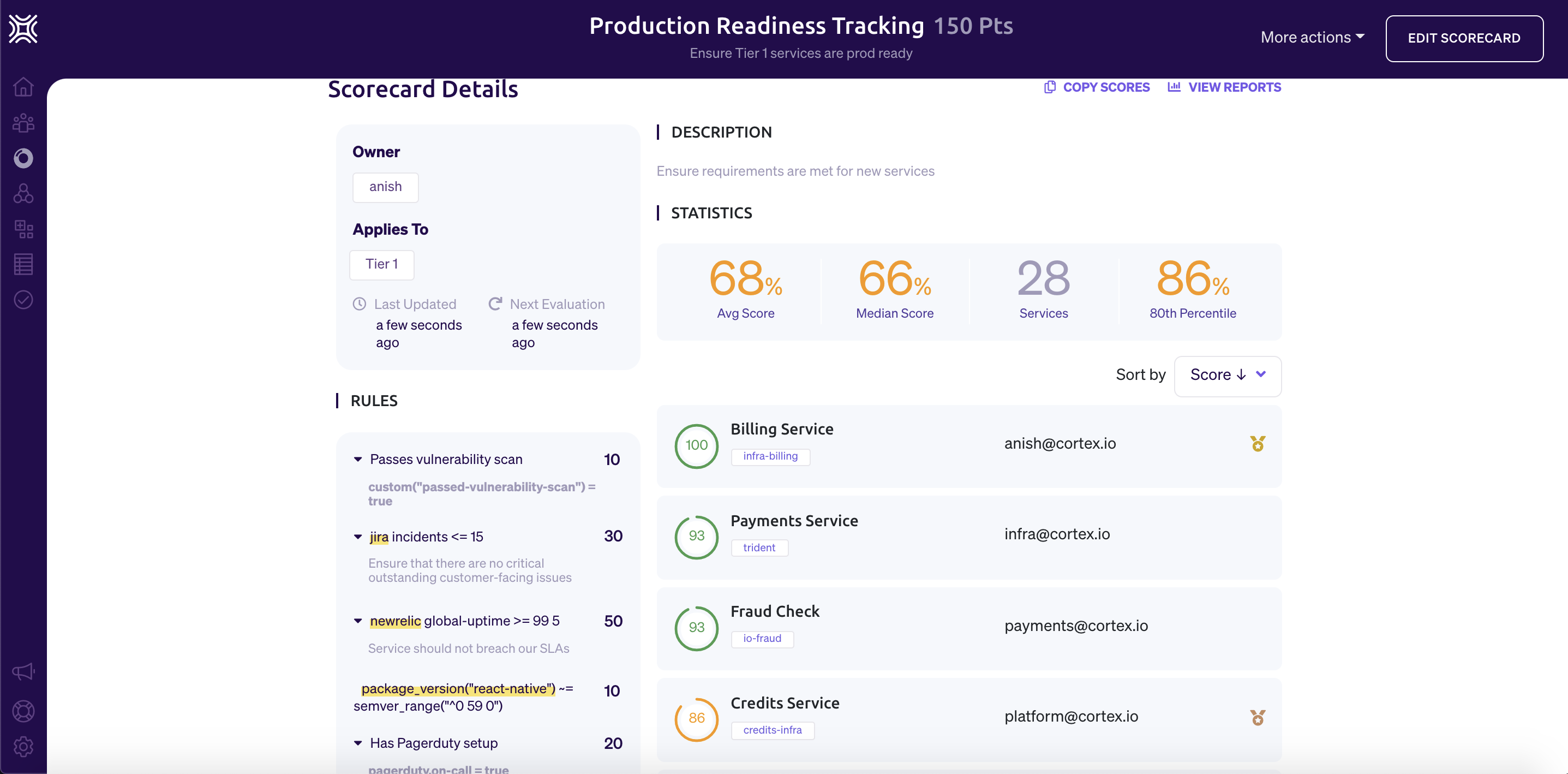
    Cortex, in contrast, automatically imports data residing in developer tools to surface who within an organization is responsible for maintaining which microservices. A Cortex dashboard also enables DevOps teams to see which developers are on-call in the event of an unexpected incident as well as monitor and track the latency rate microservices are experiencing and which vulnerabilities have yet to be remediated.

    At the core of the platform is Cortex Query Language (CQL), a domain-specific language that allows DevOps teams to define granular rules that can be applied to, for example, on-call rotations, security vulnerabilities, package versions, service level objectives (SLOs) and the overall health of the microservice. Engineers can employ code in the form of YAML files to set reliability standards across teams and types of services.

    Grades can also be assigned to specific microservices based on associated metrics. That approach allows DevOps teams to apply gamification techniques using a scorecard to encourage developers to continuously improve their microservices. That capability makes it apparent to other developers which microservices can be most reliably employed.

    It may be a while before microservices-based applications dominate the enterprise landscape. Monolithic applications will be running in production environments well into the next decade. However, many of those monolithic applications are essentially being converted into a larger microservice that other applications can invoke via application programming interfaces (APIs) before being eventually being re-engineered into a set of logically connected microservices.

    The one thing that is clear, however, is that as the number of microservices expands, it becomes more difficult to determine precisely what capabilities are already available to highly distributed application development teams.

  • LogicMonitor Introduces Unlimited Log Data Retention

    LogicMonitor Introduces Unlimited Log Data Retention

    LogicMonitor today announced it will provide an option that allows IT organizations to retain an unlimited amount of log data on its software-as-a-service (SaaS) platform.

    Tej Redkar, chief product officer at LogicMonitor, said one of the issues that is holding back advances in observability is the cost of storing log data. LogicMonitor has decided to remove that issue by allowing IT teams to store log data on its LM Logs service for as long as they require, Redkar said.

    That data will also always be readily available as hot storage with no need to wait for data that has been stored offline to be rehydrated, he noted. Instead, that data is readily accessible alongside the metrics and distributed tracing data that LogicMonitor also collects, said Redkar.

    In general, LogicMonitor is making a case for centralizing observability for the entire IT organization via a SaaS platform infused with machine learning algorithms that automatically surface anomalies in real-time based on millions of events captured via log data. The issue many organizations encounter today is silos of decentralized observability data that are more complex to maintain while providing less visibility at a higher total cost, said Redkar.

    The LogicMonitor platform, in contrast, is designed to be equally accessible to, for example, a network operations team as it is to a DevOps team, he noted.

    Not every organization needs to store log data forever, but Redkar said as IT management continues to evolve, more organizations are moving toward storing metrics, traces and logs for longer periods of time. The rise of open source agent software is also making it less costly for organizations to capture that data in the first place.

    It’s not clear to what degree other providers of observability platforms will provide unlimited retention of data, but as the cost of storing data in the cloud continues to drop it’s apparent that billing IT organizations for storage costs is becoming untenable. There is always going to be some cost associated with storage, but it’s not enough to charge extra beyond the core cost of the service. The only thing accomplished by billing separately for storage is discouraging IT teams from storing the data required to both attain observability and better train the machine learning algorithms that surface anomalies.

    Observability, in one form or another, has been a core tenet of DevOps best practices for years. Initially, DevOps teams focused on continuous monitoring as the most effective way to proactively manage application environments. Observability platforms infused with machine learning algorithms make it possible to correlate events so that analytics tools can more easily identify anomalous behavior in real-time. Armed with those insights, it becomes a lot simpler for IT teams to resolve issues faster.

    In fact, there may even come a day when the so-called “war room” meetings that are convened to identify the cause of an IT issue via a painstaking process of elimination are no longer required. In the meantime, however, the total number of IT incidents that actually lead to disruption should steadily decline, even as IT environments become more complex.

  • Plutora Enhances VSM Platform with Release Insights

    Plutora Enhances VSM Platform with Release Insights

    Plutora has enhanced its value stream management (VSM) platform to provide dashboards that enable DevOps teams to better optimize application delivery.

    Jeff Keyes, vice president of product marketing and strategy for Plutora, said dashboards added to the platform will make it possible for application release managers to leverage predictive analytics to manage application delivery in a more progressive way rather than always having to react to an unexpected event.

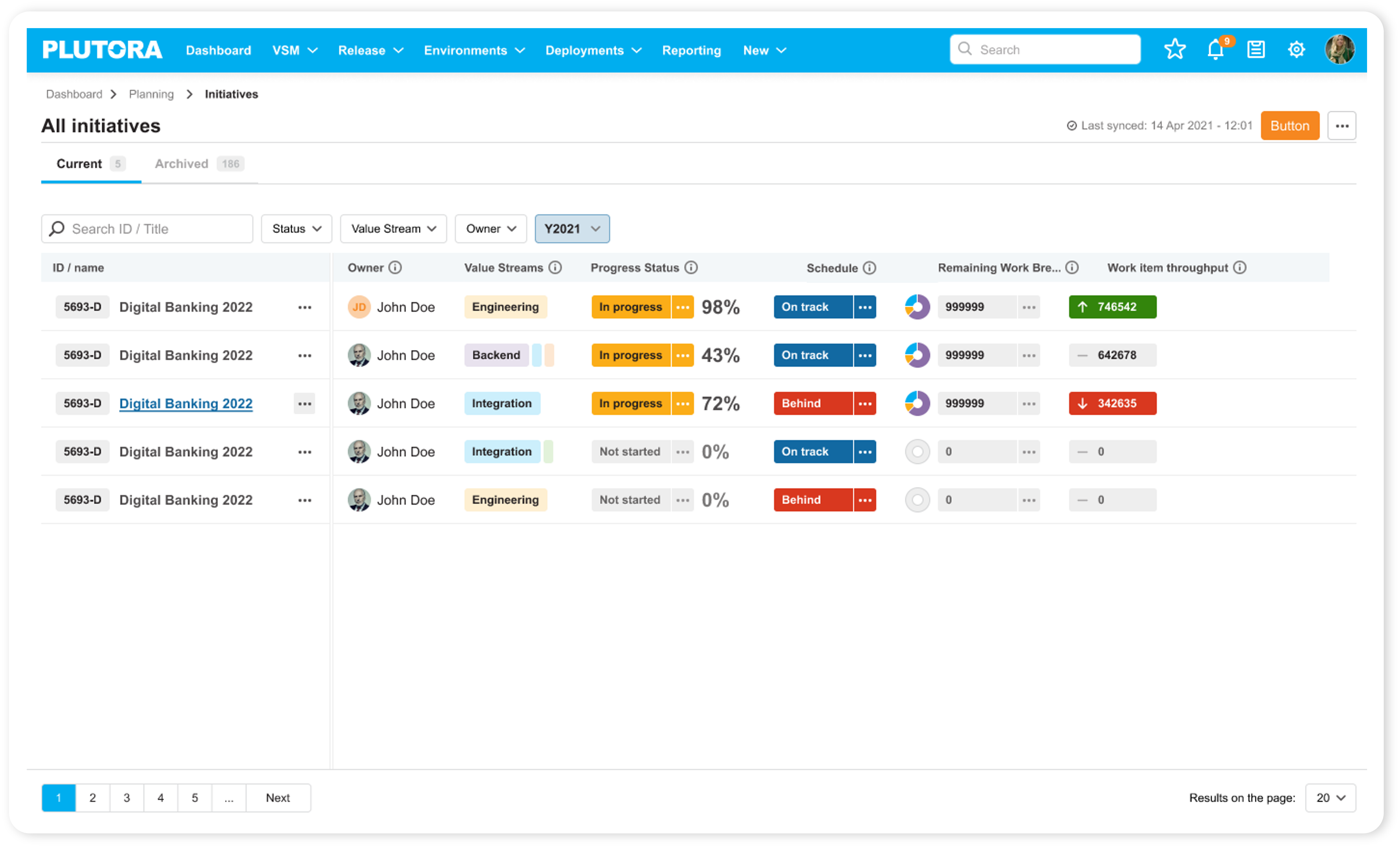
    To enable that approach, Plutora has revamped its release insights dashboard that surfaces problem areas and hot spots in addition to adding analytics that track both software builds and larger project initiatives.

    That latter capability is especially critical for executives that currently find it challenging to keep track of multiple software development initiatives, especially those that may have fallen behind schedule without senior leaders being aware of the implications, said Keyes.

    While VSM platforms are typically used by senior IT and business leaders to keep track of how software deadlines are impacting key performance indicators (KPIs) for the business, Keyes said it’s become apparent that application release managers need access to more advanced analytics to optimize application deployment schedules. The Progressive Release Management capability surfaces insights via dashboards in the Plutora platform; that makes it simpler for application delivery managers to optimally orchestrate allocation of resources.

    Release managers, of course, already have access to a wide range of platforms for automating the application delivery process. However, Keyes said, those platforms don’t provide enough insights into how to optimize application delivery across a DevOps workflow made up of disparate tools and platforms. Plutora enables release managers to employ value stream flow metrics and more traditional DevOps metrics to reduce cycle times and improve overall DevOps throughput.

    Keyes said once organizations are provided with that insight, they should also be able to reduce the overall fatigue level many DevOps teams currently experience by removing friction within those workflows. In fact, that fatigue level is a major reason why there is so much turnover in many DevOps teams, he noted.

    It’s not clear how many organizations have a dedicated application release team, but optimizing the software delivery process is a major challenge for almost every DevOps team. While many organizations routinely make use of continuous integration (CI) tools to build applications faster, continuous delivery of applications has proven to be a more elusive goal. This is largely because each platform on which applications are deployed tends to be unique. As a result, many DevOps teams still rely on spreadsheets to manually manage application deployments.

    However, as the pace at which applications are being built continues to accelerate, it’s clear that application delivery is becoming a bottleneck. VSM platforms provide a means of applying analytics to optimize a process that can then be used to make better-informed decisions that might convince more organizations to automate application delivery. That assumes, of course, that the organization had the foresight to invest in a VSM platform capable of surfacing those insights in the first place.

  • Nobl9 Adds Hydrogen Platform to Surface Technical Debt Issues

    Nobl9 Adds Hydrogen Platform to Surface Technical Debt Issues

    Nobl9 today unveiled a Hydrogen platform that makes it simpler for DevOps teams to identify technical debt issues as they manage service level objectives (SLOs) as code.

    Hydrogen enables DevOps teams to define SLOs using a simple wizard or by embedding code within their application as part of a DevOps workflow. That code is then used to automatically collect data from platforms such as Datadog, New Relic, Prometheus, Splunk and others with requiring any additional instrumentation.

    Nobl9 COO Kit Merker said that approach also makes it possible to surface technical debt that inhibits achieving those goals via the Hydrogen platform. Armed with those insights, it then becomes easier for DevOps teams to focus on reducing or eliminating that technical debt because Hydrogen automatically generates a ticket in the Jira project management application—widely used by DevOps teams—to make sure the issue is addressed. Otherwise, in the heat of a DevOps sprint, the issue is likely to be forgotten as the application development project continues to move forward, noted Merker.

    The ability to identify that technical debt is an outgrowth of the ability to manage SLOs as code that is enabled by the core Nobl9 software-as-a-service (SaaS) platform. Hydrogen extends that capability by automating workflows whenever a specific service shows indications that it cannot meet objectives because of a dependency on a legacy platform that needs to be upgraded, added Merker.

    There is also a service health dashboard that organizes SLOs into logical groups that are mapped to features via labels, which Merker noted makes it possible for multiple stakeholders to easily identify which issues affect a particular service most. Hydrogen can also trigger a variety of automated workflows to prompt additional investigations that escalate as services worsen.

    Overall, Hydrogen is designed to provide engineering teams with more accurate context that can be used to prioritize which issues should be addressed first during any technical debt planning cycle, said Merker. Hydrogen can enforce code release policies based on technical debt budgets that are enforced via integrations with continuous integration/continuous delivery (CI/CD) platforms.

    Technical debt generally refers to any code change that is required to optimize a service that is not immediately addressed. The more legacy platforms there are in an IT environment, the higher that technical debt tends to become. At a time when more organizations are building and deploying microservices-based applications, that technical debt, over time, tends to adversely affect applications that are much more dependent on external services than a traditional monolithic application. A single technical debt issue can have a cascading impact on multiple microservices-based applications that would, otherwise, would be difficult to detect.

    The challenge, of course, is that technical debt doesn’t always get the attention it deserves when most of the IT team is focused on rolling out the next great application. However, as application environments become more complex it may only be a matter of time before all the technical debt that is being accumulated becomes unsustainable.

  • Era Software Adds SaaS Edition of Log Management Platform

    Era Software Adds SaaS Edition of Log Management Platform

    Era Software has unfurled a software-as-a-service (SaaS) edition of its platform for collecting and managing log data that is based on a time-series database it built.

    At the same time, the company has revamped the user interface of the underlying EraSearch log management platform that IT teams can deploy themselves to make it simpler to troubleshoot IT issues.

    Stela Udovicic, senior vice president of marketing for Era Software, said the EraCloud edition of the log management platform provides a more accessible way to access a log management platform based on an object storage system that can handle any type of log data.

    There’s also an indexing engine based on machine learning algorithms that enables the platform to scale better than rival platforms, she noted.

    Available via the Amazon Web Services (AWS) marketplace, EraCloud collects, indexes and analyzes log data from cloud applications, Kubernetes and IT infrastructure platforms to provide a centralized means of collecting data at a lower cost. In addition to being able to continuously monitor billing costs, an EraSearch cluster can now be provisioned in minutes.

    Era Software, previously known as EraDB, earlier this year raised an additional $15.25 million in financing to drive development of a log management platform that provides an alternative to open source platforms, such as Elasticsearch, that don’t scale as well. The result is a higher total cost as the volume of log data that is less efficiently managed via Elasticsearch steadily compounds. As part of that effort, the company also supports a subset of the Elasticsearch application programming interface (API) to facilitate transitioning from Elasticsearch.

    Many organizations today already have terabytes of log data they are trying to manage and store, noted Udovicic.

    It’s not quite clear how many IT organizations are considering alternatives to log management platforms. However, as the amount of log data that IT teams want to be able to store over a longer amount of time increases—in part to facilitate greater observability—the pressure to contain the cost of retaining all the data is also rising.

    Observability, in general, requires combing logs, metrics and traces—a specialized form of logging—in a way that makes it easier to identify the root cause of an issue by querying data. It differs from monitoring in that observability is achieved using a predefined set of metrics that track whether a platform or application is performing within expectations.

    It may be a while before most IT teams generally achieve observability, but the journey typically starts with finding a more efficient way to collect log data in both proprietary and open source formats. Rather than having to normalize all that data, Era Software is making a case for analyzing that data in whatever format it happens to be available.

    One way or another, a much larger percentage of the applications deployed by IT teams in production environments will have to be instrumented to achieve observability. The issue now is determining how best to make all the data collected from those applications available to DevOps teams at a reasonable cost.

  • Google Makes Fuzz Testing Integration Tool Available

    Google Makes Fuzz Testing Integration Tool Available

    Google today made available a ClusterFuzzLite tool that makes it simpler to incorporate fuzz testing into a DevOps workflow.

    Fuzz testing refers to an automated software testing technique that involves providing invalid, unexpected or random data as inputs to an application to discover issues such as potential memory leaks.

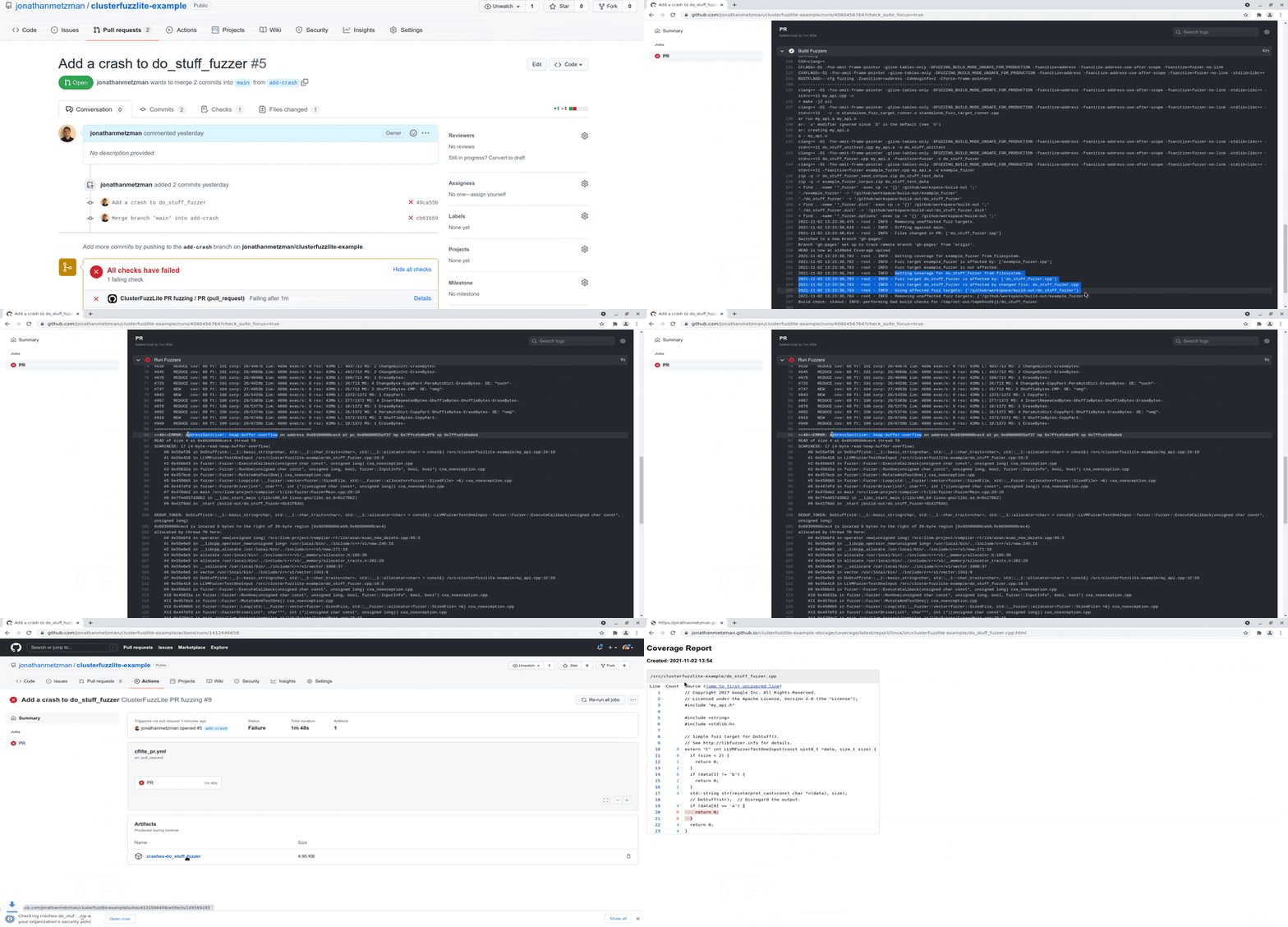
    Jonathan Metzman, a senior software engineer for Google, said ClusterFuzzLite is a lighter-weight version of a tool that Google makes available to its internal development teams. It is not a fuzz testing tool itself, but rather a tool that makes it easier to surface the results of a fuzz test within a DevOps workflow. Once those results are surfaced, it then becomes easier for developers to address issues before an application is deployed in a production environment.

    Core capabilities enabled by ClusterFuzzLite include continuous fuzzing, sanitizer support, corpus management and report generation tools. The goal is to make fuzz testing more accessible to a broader range of developers as part of an overall effort to embrace DevSecOps best practices, noted Metzman.

    ClusterFuzzLite currently supports GitHub Actions and Google Cloud Build, but Metzman said it is easily extensible to other DevOps platforms. It is designed to run as part of a DevOps workflow by adding a few lines of code to a continuous integration/continuous delivery (CI/CD) workflow.

    Google has already made ClusterFuzzLite available to open source projects, but is now providing additional access for commercial developers. Since its release in 2016, over 500 critical open source projects have integrated into the Google fuzz testing program for open source software, resulting in over 6,500 vulnerabilities and 21,000 functional bugs being fixed.

    In the wake of recent guidelines issued by the U.S. National Institute of Standards and Technology (NIST) that were themselves in response to an executive order issued by president Biden, the number of organizations using fuzz testing is expected to increase now that NIST has determined that fuzz testing is a minimum standard requirement for code verification.

    For several years, Google has been making a concerted effort to improve the security of open source software. The challenge for all developers is finding a way to build more secure applications without slowing down the rate at which they are deployed. Fuzz testing makes it possible to identify issues much earlier in the application development life cycle versus just before an application is deployed.

    Less clear, of course, is whether developers are starting to use these tools on their own or if the increased adoption is because of a concerted effort by their organization to embrace DevSecOps best practices. Regardless of the motivation, however, the overall state of application security should continue to improve as it becomes simpler for developers to invoke more advanced testing tools.

    In the meantime, organizations of all sizes are reviewing how they construct software in the wake of a series of high-profile security breaches. In theory, at least, increased focus on software supply chains should prevent issues from arising after deployment when they become much more costly to remediate.