Author: Mike Vizard

  • Akamai Brings Web Application and API Security Together

    Akamai Brings Web Application and API Security Together

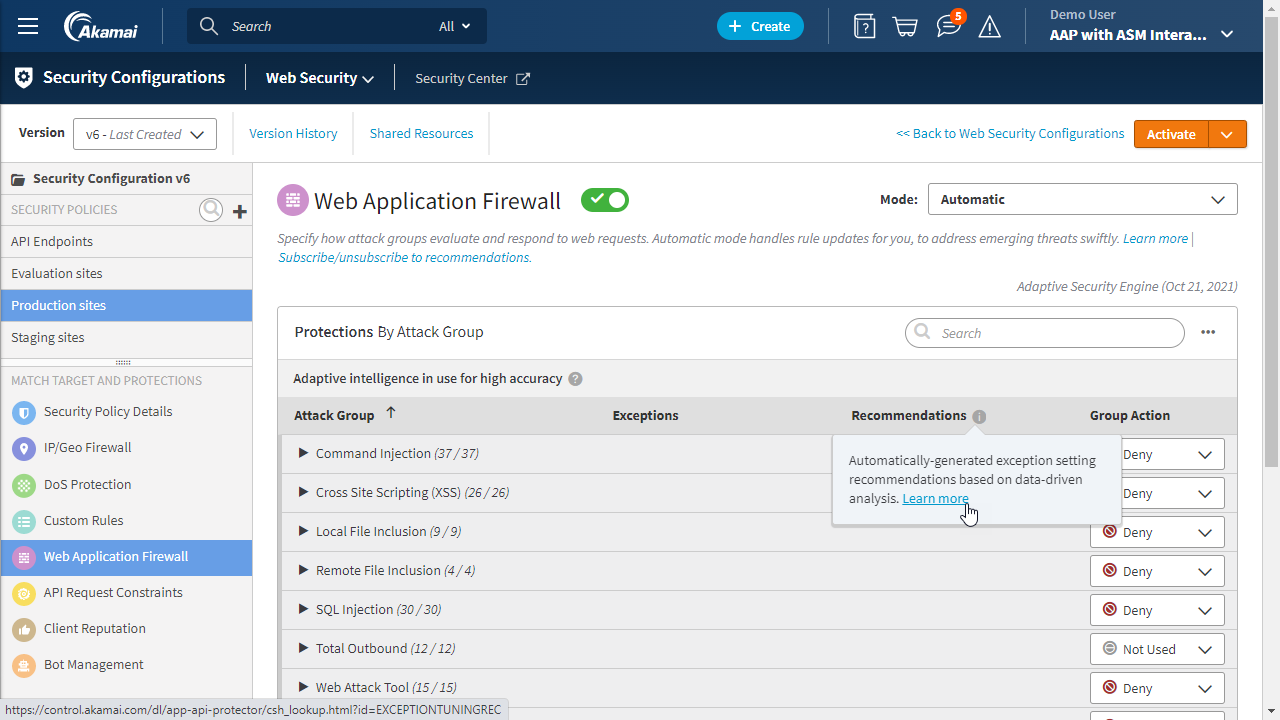
    Akamai Technologies, Inc. this week launched a service that consolidates the process of securing both web applications and application programming interfaces (APIs).

    Amol Mathur, vice president of product management and strategy for Akamai, said with the launch of App & API Protector the managed security services provider is making it easier for IT teams to embrace DevSecOps best practices via a converged web application and API (WAAP) service rather than using separate tools and services to secure them individually.

    The service is also designed to continuously discover API requests that are then automatically inspected for malicious code. Optional API security controls can be enforced based on policies defined by internal IT teams.

    In addition, the company provides access to a multidimensional threat scoring model, dubbed Adaptive, that combines data collected by Akamai with data and metadata from each web and API request to help organizations better understand which threats require immediate attention. Security events are also continuously analyzed using machine learning algorithms to deliver highly accurate policy-by-policy tuning recommendations that can be implemented via a single click.

    Akamai security researchers also make use of machine learning and data mining techniques to continuously analyze over 303TB of daily attack data that is used to automatically update protections. Alternatively, organizations can opt to manually evaluate that data themselves to minimize any unexpected impacts those updates might have on their applications.

    Other capabilities include built-in bot mitigation tools that are informed by a directory of more than 1,500 known bots, integrations with the Akamai command-line interface (CLI), Terraform or scripts used to drive automated pipelines spanning a continuous integration/continuous delivery (CI/CD) platform.
    Akamai

    A recent report published by Akamai found that between January 2020 and June 2021 there were more than 11 billion total attempted attacks made over an 18-month period. The most common attack vector was SQL injection (SQLi) at 6 billion attacks, followed by local file inclusion (LFI) with 3.3 billion attacks and cross-site scripting (XSS) with 1.019 billion attacks.

    The report also found credential stuffing attacks reached more than one billion attacks and peaked between January 2021 and May 2021. Distributed denial-of-service (DDoS) attacks reached a peak of 90 in January of 2021.

    Akamai has been making a case for outsourcing the management of web application and API security via the content delivery network (CDN) it created. Its CDN provides a layer of isolation between web-facing applications and the rest of the enterprise. The challenge organizations now routinely face is that, as they move to deploy cloud-native applications based on microservices, responsibility for security has become more decentralized. The security services provided by Akamai create an opportunity to better manage application security via a single pane of glass at a time when there is more focus than ever on securing software supply chains, said Mathur.

    It’s not clear to what degree organizations are going to rely more on managed security services as part of a larger effort to embrace DevSecOps best practices. However, at a time when application security expertise is hard to come by, it’s becoming apparent that, in many instances, relying on an external service provider to secure application environments is the simplest way to quickly improve the overall security posture of any organization.

  • Data Theorem Adds Runtime Protection Enabled by Observability

    Data Theorem Adds Runtime Protection Enabled by Observability

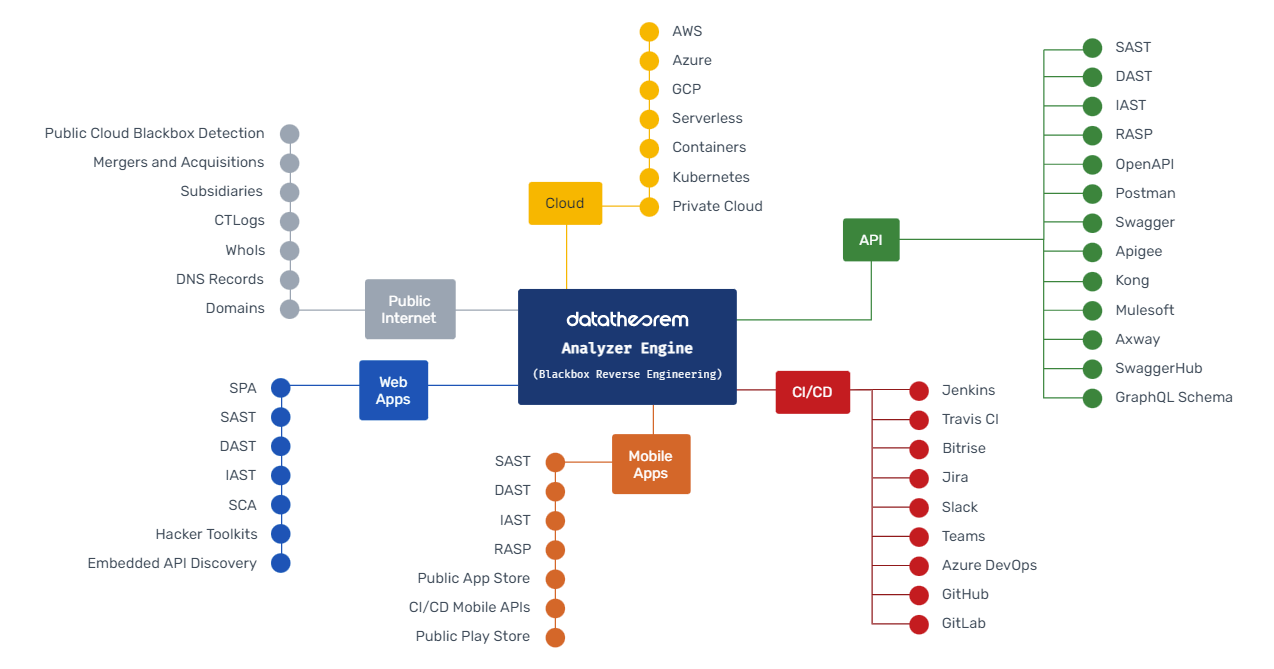
    Data Theorem, Inc. this week added an Active Protection offering to its portfolio of application security services that makes it possible for DevOps teams to embed observability and runtime defenses in their applications via a software development kit (SDK).

    The Data Theorem cloud services are based on Trustkit, an open source framework the company created to make it easier to employ secure socket layer (SSL) to encrypt connections and Analyzer Engine, its runtime analytics engine.

    The company is now extending its services to make it possible to embed observability capabilities by collecting logs and traces. Those logs and traces are then used to enforce runtime security policies that protect applications from known attacks from malicious sources and other common attack vectors as defined by the Open Web Application Security Project (OWASP) Foundation. It also prevents violations of encryption levels, authentication types and authorization rules along with a variety of custom rule checks, including preventing broken object-level authorization (BOLA) attacks.

    Doug Dooley, Data Theorem COO, said Active Protection can be applied across any application stack, including microservices applications based on cloud-native frameworks. In contrast, existing approaches to securing application runtimes based on web application firewalls (WAFs), runtime application self-protection (RASPs) or endpoint detection and response (EDR) agents cannot be applied to cloud-native applications based on containers and serverless computing frameworks.

    Active Protection solves that issue because it is designed to be applied via the Data Theorem software development kit (SDK) or using application extensions made available via a serverless computing framework or as a container sidecar.

    Dooley noted that the Active Protection service is also designed to be fully integrated with DevSecOps workflows that are increasingly being driven via continuous integration/continuous delivery (CI/CD) platforms to enable continuous, automated security inspection and remediation. The company claims to have detected more than one billion application incidents and is currently used by more than 8,000 applications.

    Developers don’t generally set out to build and deploy insecure applications. The issue is most developers don’t have a lot of security expertise, so it’s easy for mistakes to be made. Organizations looking to embrace DevSecOps best practices need to find a way to achieve that goal in a way that developers can easily embrace. The more automated the checks for security issues become during the application development process, the more likely it is developers will make additional efforts to remediate vulnerabilities long before an application is ever deployed in a production environment. In effect, DevSecOps is easier to achieve when addressed from the bottom up rather than via an edict from above without any real implementation plan in place.

    It’s still early days as far as DevSecOps is concerned, but as best practices for DevOps continue to evolve, there may come a day when security is just another gate that needs to be passed within the context of a larger DevOps workflow. In the meantime, DevOps teams and cybersecurity teams should put aside their differences and work together as the number of attacks launched against applications increases.

  • Dynatrace Adds Security Gates to Advance DevSecOps Adoption

    Dynatrace Adds Security Gates to Advance DevSecOps Adoption

    Dynatrace today added a security gates capability to its observability platform to make it easier to automatically embrace DevSecOps best practices within an application delivery pipeline.

    Steve Tack, senior vice president for product management at Dynatrace, said the security gates function much the same as the quality gates that Dynatrace previously added to that platform in that each release is now also automatically assessed to ensure only secure code is being deployed.

    The Dynatrace platform now uses a Davis artificial intelligence (AI) engine to scan for vulnerabilities in application workloads in real-time and then prioritizes them based on the risk they pose, noted Tack. The goal is to make it simpler for organizations to incorporate security reviews in application development processes in a way that doesn’t necessarily require developers to become security experts, he added.

    Instead, the core DevOps platforms should be capable of identifying issues that can be remediated before an application is ever deployed in a production environment, said Tack.

    Dynatrace earlier added an ability to automatically identify the software libraries and open source packages that present the greatest security risk. The security gates capability now extends the scope of that effort to include applications as they are constructed using custom code.

    In general, most organizations are looking for ways to embrace DevSecOps best practices. The challenge is achieving that goal without unduly slowing down the rate at which applications are developed. In fact, a recent survey commissioned by Dynatrace found, on average, organizations expect to increase the frequency of their software releases by 58% over the next two years. However, nearly a quarter (22%) of respondents admit they’re often under so much pressure to meet the demand for application deployments that they must sacrifice code quality, which broadly includes security issues.

    It’s not clear to what degree security reviews will automatically be included within a quality assurance process, but Tack said the goal should be to limit human involvement in the application deployment process as much as possible. The issue many development teams encounter today is that applications are being rejected by cybersecurity teams that are reviewing applications just before they are deployed, noted Tack. As a result, developers are racing to build applications faster only to see them rejected and returned to them at the last possible moment, he added.

    In the wake of a series of high-profile software supply chain breaches, the focus on DevSecOps has increased substantially within most organizations. It’s often not precisely clear who is responsible for application security, but as DevOps platforms continue to evolve, there may come a day when security issues are routinely addressed within every DevOps workflow.

    In the meantime, there needs to be a lot more focus on bridging the divide between DevOps and security teams. Given the chronic shortage of security professionals, there’s no doubt DevOps teams need to assume more responsibility for application security. The challenge and the opportunity is finding a way to achieve that goal with the least amount of friction possible.

  • Allstacks Adds Free Dashboard to Track Software Dev Benchmarks

    Allstacks Adds Free Dashboard to Track Software Dev Benchmarks

    Value stream intelligence platform provider Allstacks today added a free live dashboard populated with anonymized data that DevOps teams can use to benchmark their own progress.

    Hersh Tapadia, Allstacks co-founder and CEO, said the company is making this data available to make it easier for DevOps teams to uncover bottlenecks in their software development processes.

    As part of that effort, the dashboard includes pre-configured benchmarks for the following:

    How many days per week do benchmark teams write code?
    What percentage of issues are planned versus unplanned for benchmark teams?
    What are the cycle times per issue type for benchmark teams?
    What types of code do benchmark companies produce?
    What is the average commit size for benchmark customers?

    Allstacks

    Allstacks has committed to making 12 months of data publicly available on the dashboard and said it will update that data on an ongoing basis. Allstacks customers, however, can also access five years of data to compare historical trends.

    Tapadia said Allstacks plans to add additional benchmarks to a dashboard that can collect data via the various application programming interfaces (APIs) that most DevOps tools now routinely provide. The overall goal is to increase transparency into software development processes, he said.

    Allstacks’ value stream intelligence platform uses machine learning algorithms and artificial intelligence (AI) models to identify projects that are at risk of not meeting delivery goals. That data is then used to analyze the impact those missed deadlines are likely to have on various business objectives.

    Value stream management platforms automatically take technical metrics, gathered via a DevOps process, and match them to a set of key performance indicators (KPIs) defined by business leaders. The challenge many organizations still face is making sure they have the tools in place to collect the appropriate technical metrics and then define the KPIs that truly matter to the business. Once those metrics are gathered and KPIs established, organizations are then able to apply advanced analytics to the massive amounts of DevOps data they collect.

    The concept of value stream management traces its lineage back to lean manufacturing methods, which called for each step of a manufacturing process to be continuously measured. As software development has evolved from being a craft to a process that is highly automated using DevOps best practices, an appreciation for the value of monitoring the impact of missed software development deadlines on the business has grown as organizations realize how dependent they are on software.

    As a result, more organizations realize there is a clear disconnect between their business goals and development processes, noted Tapadia. Business leaders are especially anxious to understand how a software development project delay might impact future revenue projections. Rather than being a set of tools employed mainly by IT leaders to track software development projects, value stream management platforms make it possible for other stakeholders to track KPIs spanning multiple software development projects. It then becomes easier to make informed decisions about how to reassign resources across various projects as different bottlenecks are encountered.

    It may be a while before organizations achieve that level of transparency into their software development processes, but as software continues to ‘eat the world,’ it’s only a matter of time before value stream management becomes a required set of DevOps tools for every organization.

  • Grafana Labs Expands into Incident Management Realm

    Grafana Labs Expands into Incident Management Realm

    During its online ObservabilityCON 2021 conference, Grafana Labs this week previewed an incident management platform in addition to making available an on-premises edition of its distributed tracing tool.

    Tom Wilkie, vice president of product for Grafana Labs, said the Grafana OnCall incident management platform is a natural extension of the observability tools the company already provides using the widely employed open source Grafana dashboard. The platform, which is expected to be generally available in 2022, is based on software Grafana Labs gained by acquiring Amixr earlier this year.

    Grafana OnCall unifies all the alerts created by Grafana, Prometheus and the Alertmanager tool the Prometheus community created to streamline the number of alerts generated by the platform. The goal is to reduce the alert fatigue a DevOps team might experience when dealing with an IT issue that can be traced back to a single root cause, noted Wilkie.

    Grafana

    At the same time, Grafana Labs made Grafana Enterprise Traces available for on-premises IT environments. It is based on Grafana Tempo, a cloud service that makes it possible to store and then analyze distributed traces using inexpensive object storage resources. The latest version of the core open source Tempo project has also been updated to add service graphs and the ability to search recent traces.

    Grafana Labs this week also updated Loki, an open source log management platform, to add support for out-of-order log lines, custom log retention policies per log stream and per tenant and a deletion API that makes it easy to scrub log data. Version 2.4 of Loki also adds additional high-availability capabilities.

    Other updates to the Grafana Labs platform include support for recorded queries, a set of pre-built dashboards that enable users to quickly drill into their Prometheus metrics data, the ability to consume metrics from the AWS CloudWatch service provided by Amazon Web Services (AWS), improvements to its ability to monitor Kubernetes clusters and updates to the open source load testing tool the company gained by acquiring k6 last year.

    Grafana Labs is also committing to expanding its integration with Microsoft Azure cloud service alongside its integrations with AWS, noted Wilkie.

    While competition among providers of observability platforms is already fierce, Wilkie said an observability platform based on an open source dashboard that can already collect data from more than 100 sources provides a unique advantage. At the core of the Grafana Labs platform is a centralized framework for collecting data generated primarily by the open source Prometheus monitoring platform being developed under the auspices of the Cloud Native Computing Foundation (CNCF).

    While Prometheus is used most often in Kubernetes environments, it is starting to gain traction in monolithic application environments as well; it provides an open source approach to defining a de facto standard for collecting metrics and other data that can be consumed by an observability platform.

    It’s not clear yet to what degree IT teams are distinguishing between monitoring and observability. Monitoring focuses on predefined metrics to identify when a specific platform or application is performing within expectations. Observability combines metrics, logs and traces to instrument applications in a way that makes it simpler to troubleshoot issues without relying solely on a limited set of metrics that are pre-defined and monitor a specific process or function.

    Regardless of whether IT teams view observability as being distinct from monitoring, it’s clear that the ability to manage IT environments is improving at a rapid rate. The challenge, of course, is the IT environment itself is becoming more complex with each passing day.

  • Microsoft Expands Azure DevOps Portfolio

    Microsoft Expands Azure DevOps Portfolio

    Microsoft has made available a bevy of updates to its DevOps portfolio that, collectively, are intended to increase its share of a wave of applications that will be rolled out across the extended enterprise.

    Additions to the Microsoft DevOps portfolio were announced at the Microsoft Ignite 2021 conference and include DevOps Workflow Generator, a free tool designed to help DevOps teams visualize their toolchain, and updates to Azure Automanage, a framework for automating the management of virtual machines on Windows Server and, in preview, on Linux.

    At the same time, Microsoft has added support for open source OpenTelemetry agent software to Azure Monitor and made available a preview of Azure Chaos Studio, a service for testing application resiliency.

    Microsoft is also making available a preview of Windows Server 2022 that adds secure-code capabilities for workloads deployed on the platform. Microsoft also previewed updates to backed databases such as SQL Server 2022, Cosmos and its implementation of the Redis database created by Redis Labs.

    Finally, Microsoft has also made available a preview of integration between GitHub Actions for automating software development tasks and Azure Active Directory (Azure AD) using Open ID Connect, an authentication protocol advanced by the OpenID Consortium.

    Microsoft CEO Satya Nadella told conference attendees the next 10 years will witness more digitization than the previous four decades as IT shifts from an era defined by mobile and cloud computing to one defined by ubiquitous computing and ambient intelligence.

    Applications built in everything from procedural code to the Microsoft Power Fx, a low-code tool that Microsoft created using the programming language it originally built for users of the Microsoft Excel spreadsheet. Microsoft envisions those applications will primarily be built on its cloud and distributed everywhere. On the backend, a range of database and artificial intelligence (AI) services will be invoked primarily via application programming interfaces (APIs).

    Of course, every major cloud service provider has similar ambitions. Most organizations today are not standardizing on a single cloud. Rather, they are determining which class of workloads run best on which cloud computing platform regardless of whether that approach increases the total cost of IT. Each additional platform adopted typically requires IT teams to master separate tools. However, Microsoft is now also making a case for a cloud-native framework that can be deployed anywhere to build, deploy and manage applications.

    In the meantime, the number of workloads deployed on cloud services continues to grow. The market research firm Canalys reported worldwide spending on cloud infrastructure services reached $49.4 billion in the third quarter of 2021, a 35% increase. Microsoft currently trails Amazon Web Services (AWS) in overall market share but continues to steadily make gains. Microsoft and AWS collectively account for roughly half of all cloud infrastructure service consumption.

    DevOps best practices will need to evolve to meet the challenges of multi-cloud computing. In addition to cloud platforms and on-premises IT environments, applications are now starting to be deployed at the edge in greater numbers. DevOps teams need to be able to continuously deploy applications and their associated updates across a wide range of platforms. The challenge, of course, is that all those platforms have unique attributes that make truly automating the entire process on an end-to-end basis an elusive goal.

  • Oxeye Platform Helps Fix Code Vulnerabilities

    Oxeye Platform Helps Fix Code Vulnerabilities

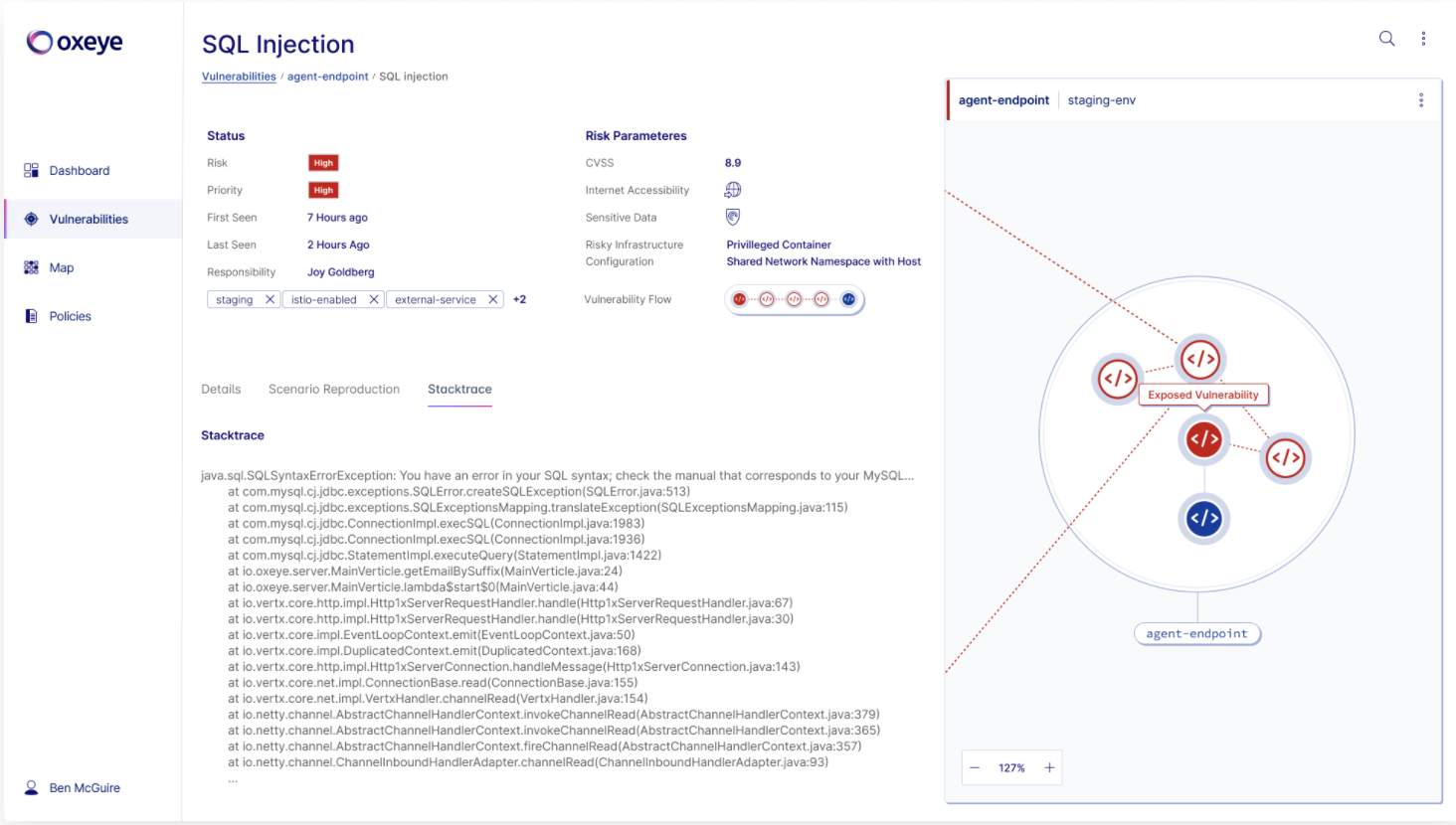
    Fresh from raising $5.3 million in seed funding, Oxeye emerged this week from stealth to launch a namesake application security testing platform that, in addition to pinpointing issues in code, also provides advice to best remediate the issues it found.

    The Oxeye platform requires developers to download an observer tool that scans code for vulnerabilities. Once pinpointed, the Oxeye platform guides developers through the remediation process without requiring them to inject agent software into every application.

    Oxeye CEO Dean Agron noted developers don’t typically have a lot of cybersecurity expertise. As application environments become more complex—thanks to the rise of microservices-based applications—it only becomes more likely that mistakes will be made. The only way to resolve security issues before applications are deployed in a production environment is to augment developers using a platform that finds vulnerabilities all the way down to specific lines of code, he said.

    In theory, responsibility for application security is being pushed further left toward developers as organizations embrace DevSecOps best practices. However, making developers more accountable for security without providing them the tools required to achieve that goal is not going to improve the overall state of application security.

    The challenge organizations face today is finding a way to empower developers to address security issues without slowing down the rate at which applications are built and deployed. The best way to achieve that goal is to give developers access to a security tool designed to both analyze code for vulnerabilities and explain how to avoid encountering that issue again, said Agron.

    Left unaddressed, the current software supply chain crises will only deepen, added Agron. According to International Data Corp. (IDC), more than 500 million digital applications and services will be developed and deployed using cloud-native platforms by 2023. That’s roughly equal to the total number of applications and services deployed over the last 40 years, according to IDC.

    It’s not clear to what degree the rise of digital applications might force the DevSecOps issue within more organizations. It’s is clear that a new generation of more complex applications based on microservices is being rolled out to drive a wide range of mission-critical applications. The more business value an application has the more attention it inevitably attracts from cybercriminals.

    Regardless of the type of application, it’s apparent that there is a pressing need for a way to better secure applications. The further left that process starts the less costly it becomes to achieve and maintain security. Cybersecurity teams have a vested interest in helping developers do the right security thing as early as possible if no other reason than to reduce the number of vulnerabilities they will inevitably discover later.

    Making developers more aware of security issues is, of course, only the first step. However, in the absence of any tools that can be easily incorporated within an application development workflow, the concerns being raised will amount to little more than yet another sermon that will be ignored as developers once again rush to meet yet another application delivery deadline.

  • NextArch Foundation Launched to Focus on Microservices

    NextArch Foundation Launched to Focus on Microservices

    The Linux Foundation this week launched the NextArch Foundation to define frameworks and specifications that promote interoperability between microservices that span multiple cloud computing environments.

    More than 40 organizations, including Tencent, Arm, Kong and Ampere, have committed to contributing to 10 technology projects in 2022 in addition to frameworks for three vertical industries.

    Mark Shan, chairman of Tencent Open Source Alliance, said within the next five years the NextArch Foundation expects to have defined a set of standards and best practices that will have been widely adopted.

    The NextArch Foundation’s mission is to provide a home for a set of emerging technologies that would otherwise not get the attention they deserve within the confines of an existing consortium, said Shan.

    NextArch Foundation’s areas of focus will include how continuous integration/continuous delivery (CI/CD) platforms are employed to build microservices and reducing latency between microservices residing in highly distributed computing environments, added Shan.

    It’s not clear where the efforts of NextArch will begin and end as compared to the Cloud Native Computing Foundation (CNCF), another arm of the Linux Foundation that focuses on platforms such as Kubernetes that are widely used to build and deploy microservices-based applications based on containers.

    In general, however, it’s already apparent that microservices are at the core of most digital business transformation initiatives that span everything from artificial intelligence (AI) projects to edge computing environments. The global digital transformation market size was valued at $336.14 billion in 2020 and is expected to grow at a compound annual growth rate (CAGR) of 23.6% from 2021 to 2028, according to market research firm Grand View Research.

    As organizations embrace microservices to build and deploy software, the need to establish a set of DevOps best practices to manage them given the level of dependency that exists between multiple microservices within any application.

    Challenges associated with managing microservices are not likely to deter organizations from adopting them, but they do slow down the transition. Most new applications are intended to run on mobile devices that access cloud services, and typically run more efficiently when constructed as a set of microservices that scale up and down based on usage. The levels of agility and resilience that microservices have are crucial to any digital business transformation initiative, so the general expectation is that the percentage of microservices-based applications that will be running in production environments will increase sharply.

    The challenge, of course, is that, over time, microservices-based applications are more challenging for developers to build and maintain than a traditional monolithic application, though they are easier to update. It’s not likely microservices-based applications will replace existing monolithic applications overnight, but many existing monolithic applications are being converted into a set of microservices that makes it easier for developers to reuse the core functionality of that application.

    Of course, it’s still early days as far as microservices in the enterprise are concerned, but as developers shift toward a new way to build software, the need for a wider range of de facto standards should become more apparent.

  • Apollo GraphQL to Provide More Control Over APIs

    Apollo GraphQL to Provide More Control Over APIs

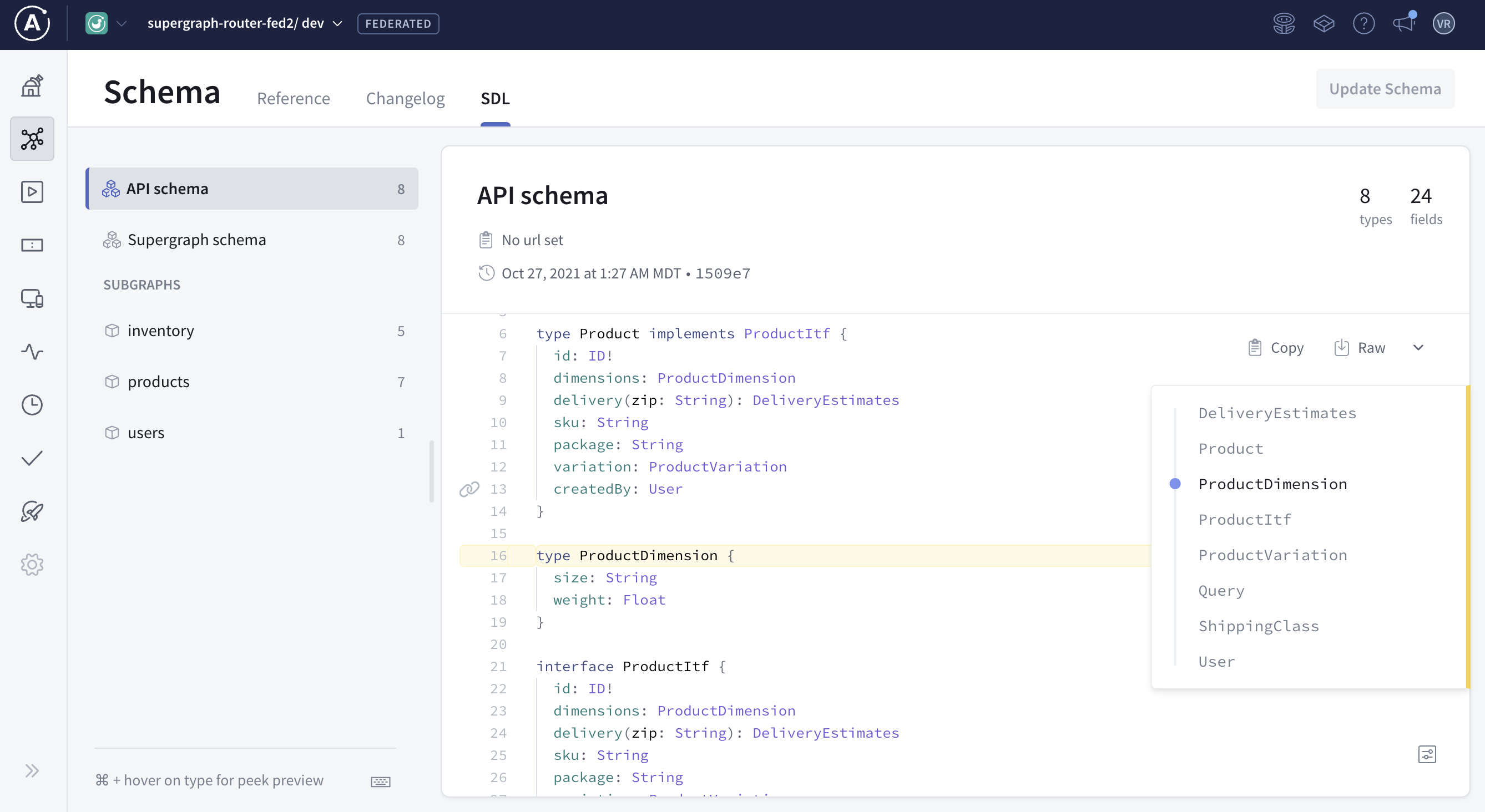
    Apollo GraphQL today previewed an update to its Federation platform for tracking and managing application programming interfaces (APIs) based on the GraphQL query language to give organizations more control over how APIs are reviewed and ultimately approved.

    Matt DeBergalis, founder and CTO, Apollo, said the alpha edition of the Federation 2 platform provides a unified view of distributed APIs based on GraphQL so they can be more easily governed.

    Federation is based on a unified graph created by Apollo GraphQL to initially provide more visibility into how APIs based on GraphQL are employed within an organization. That capability makes it simpler to increase collaboration among development teams that typically build APIs in isolation from one another, noted DeBergalis.

    The latest version of Federation also adds a shared ownership model that empowers teams to evolve unified graphs across smaller teams, he noted.

    In general, DeBergalis noted that Federation reduces the chances developers are going to create redundant APIs because they can more easily discover existing ones. They can then either employ those APIs as-is or modify them to suit their requirements as they increasingly compose an application using tools such as Apollo GraphQL Studio versus building every capability from the ground up themselves.

    GraphQL

    Overall, Apollo GraphQL claims that Federation is currently being downloaded more than one million times a week, with more than 30% of Fortune 500 companies such as Netflix, PayPal, Zillow, Walmart, Peloton and Priceline already using its tools.

    The company is also now making Federation and the rest of its tool portfolio available under the Elastic License 2.0 which provides the right to use, copy, distribute, make available and prepare derivative works of the software, but prevents organizations from offering a managed service, circumventing license key functionality or removing/obscuring features protected by license keys or remove or obscure any licensing, copyright or other notices.

    GraphQL, originally created by Facebook, is gaining traction as an alternative to REST APIs because it gives developers more control over how data is accessed via an API using a set of query capabilities. That capability is especially appealing when constructing digital business processes that require access by specific classes to large volumes of data. In fact, DeBergalis notes that, in many cases, it’s the existence of a rich set of APIs that enables organizations to construct digital processes that bridge the various isolated processes organizations previously had in place.

    Most IT teams will not be replacing REST APIs with GraphQL-based APIs overnight. However, there will soon be enough APIs based on GraphQL to have a significant impact on how applications are built and deployed. Many applications may wind up invoking external services via both REST and GraphQL-based APIs for many years to come.

    In the meantime, the rate at which applications are being built should substantially increase as tools such as Federation make development teams more productive. The challenge many DevOps teams will soon face is managing a large volume of deployments and associated application updates as more applications are deployed in production environments.

  • Oracle Adds AI Services to Cloud Portfolio

    Oracle Adds AI Services to Cloud Portfolio

    Oracle today unfurled Oracle Cloud Infrastructure (OCI) AI services, a collection of services that make it easier for developers to use application programming interfaces (APIs) to invoke a wide range of services based on algorithms trained by Oracle on their behalf.

    Elad Ziklik, vice president of product management for AI services and data science at Oracle, said the primary goal is to offload the data engineering tasks associated with machine learning operations (MLOps) from organizations that simply want their developers to include AI capabilities within their applications without having to necessarily hire and then retain a dedicated data science team.

    However, organizations also have the option of uploading their own data into OCI AI services to retrain the models provided by Oracle, he noted.

    Ultimate, the goal is to make OCI AI services a simple extension of DevOps workflows by making it simpler to employ AI models; these models become just another software artifact that can be stored and updated in a Git repository alongside all the other artifacts managed by a DevOps team, said Ziklik. In effect, Oracle wants to make AI ‘boring’ in the sense that these capabilities can now be readily invoked by any development team, he added.

    The OCA AI services include OCI Language, a text analysis capability that enables developers to add sentiment analysis, key-phrase extraction, text classification, named entity recognition and other similar capabilities to their applications, and OCI Speech, which converts file-based audio data containing human speech into text transcriptions.

    Oracle has also included OCI Vision for image recognition and document analysis tasks, OCI Anomaly Detection to create models that flag irregularities in processes, OCI Forecasting for tracking business metrics over time and OCI Data Labeling for creating datasets to train AI models.

    These services are designed to address the most critical AI requirements of the average enterprise rather than attempting to outperform on a set of AI benchmarks that don’t reflect the requirements of business development teams, said Ziklik.

    In addition, Ziklik noted Oracle has also made it easier to address AI compliance requirements that will eventually require organizations to document precisely how their AI models work.

    At some point soon, just about every application will be invoking AI capabilities to one degree or another. That shift creates a major workflow challenge for DevOps teams. AI models are typically created by data science teams that typically don’t successfully deploy an AI model in a production environment more than a handful of times a year. Those AI models, however, need to be integrated with applications that, in many cases, are being continuously updated via DevOps workflows.

    Oracle said that goal becomes easier to achieve using models it creates versus allowing data science teams to build out a set of custom MLOps workflows on platforms that then need to be maintained by IT professionals. Instead of having to set up, for example, a feature store to track and manage AI models, the models created using OCI AI can be stored in an existing Git repository.

    Naturally, each organization will need to determine the degree to which they will converge MLOps and DevOps best practices. Oracle, however, is betting that the simplest way to achieve that goal is via AI models surfaced via a cloud service that developers can readily invoke whenever required.