Author: Mike Vizard

  • Progress Reorganizes Chef Portfolio

    Progress Reorganizes Chef Portfolio

    Progress today announced updates to the portfolio of DevOps offerings it gained with the acquisition of Chef earlier this month.

    A Chef Infrastructure Management offering now combines Chef Infra and Chef Automate into a single offering, while Chef App Delivery combines Chef Habitat, Chef Infra and Chef Automate into a single offering that creates an artifact that can run anywhere.

    Sundar Subramanian, senior vice president and general manager for core products at Progress, said the goal is to organize the Chef portfolio around a set of distinct offerings for automating the management of infrastructure and continuous delivery (CD). Instead of simply offering a set of tools for power uses, Subramanian said Progress is moving toward creating a set of platforms.

    At the same time, Progress announced a dedicated content delivery service that provides access to a library of curated Chef Premium Content for compliance scanning and remediation that complies with the best practices defined by the Center for Internet Security (CIS).

    Finally, Chef has added a Learn Chef Skills Validation Program based on the online Learn Chef platform and the OpenBadges Standard, a specification designed to promote certifications that teach skills in a way that are both verifiable and portable.

    CD and infrastructure management are typically handled by different members of the same DevOps team. By segmenting its offering around federated responsibilities, the Chef software portfolio will become easier for DevOps teams to consume based on specific tasks, Subramanian said.

    Progress expects its offerings in the months ahead to have greater appeal among midmarket IT organizations that are accelerating multiple digital business transformation initiatives in the wake of the COVID-19 pandemic, he noted. The company has been focused on providing application development tools to these organizations for decades, and as their IT operations mature, many are beginning to embrace best DevOps practices as they seek to reduce the total cost of IT operations.

    The challenge those organizations face today is they depend heavily on ITIL-based frameworks for managing IT. Beyond acquiring DevOps tools and platforms, most of those organizations are at the beginning a what has been shown to be a transformation to DevOps processes that requires major changes to the culture of an IT organization. The cultural transition often involves years of effort as organizations try to balance different approaches to managing IT based on ITIL and DevOps processes.

    It’s too early to say what path to automation of IT those organizations will take. The Chef tools still require a level of programming expertise to employ that is often lacking among traditional IT operations staff. Not to mention the fact that Progress is not the only DevOps platform provider looking to expand its reach into the midmarket.

    Regardless of the path chosen, the number of organizations that embrace DevOps principles is about to expand significantly.

  • Survey Sees Surge in Demand for DevOps Skills

    Survey Sees Surge in Demand for DevOps Skills

    The Linux Foundation and edX, a provider of an online learning platform, jointly released an annual report today that for the first time finds organizations are looking for more IT personnel with open source DevOps skills (65%) than developers (59%).

    Clyde Seepersad, senior vice president and general manager for training and certification at The Linux Foundation, said the 2020 Open Source Jobs Report shows that as more workloads shift to the cloud in the wake of the COVID-19 pandemic, the number of organizations looking to embrace best DevOps practices is increasing substantially. The report finds 70% of respondents are more likely to hire an IT professional with cloud computing skills.

    Based on a survey of 175 hiring managers and 900 IT professionals with open source expertise, the report also finds that despite the economic downturn brought on by the pandemic, 37% of hiring managers say they will be looking to hire more skilled IT professionals in the next six months.

    The report also finds 93% of survey respondents report difficulty finding open source talent. An overwhelming 81% of hiring managers said recruiting open source talent is a priority for 2020, with 56% looking to recruit IT professionals with open source skills in the next six months. Nearly two-thirds (63%) said their organizations have begun to support open source projects with code or other resources for the explicit purpose of recruiting individuals with open source software skills.

    More than half of hiring managers (52%) said they are more likely to hire someone with a certification, while 80% of survey respondents reported providing online training courses for employees to learn open source software. Nearly three-quarters of organizations (74%) are now offering to pay for employee certifications, according to the survey results.

    An equal percentage of hiring managers also identified Linux as the most in-demand skill they seek in new hires, while 63% also said they are looking for IT architects who can build solutions based on open source software.

    Seepersad said given the difficulty attracting talent many organizations are focusing more on training their existing staff rather than trying to recruit talent in an open market where demand for open source expertise remains high.

    The talent pool is more global as more organizations become accustomed to working with staff who are now largely working from home, which, coupled with current economic realities, is limiting how much organizations are willing to pay for IT talent. More organizations are also keen to make sure there is a cultural fit with their organization when hiring, he added.

    In general, it’s clear more IT organizations will need to focus on growing their own farm teams with open source DevOps skills rather than hoping to lure away superstars from other organizations. Rather than simply trying to fill open positions, organizations need to think more in terms of acquiring and managing talent in the same way a general manager manages a sports franchise.

  • ServiceNow Partners With IBM on AIOps

    ServiceNow Partners With IBM on AIOps

    ServiceNow and IBM this week announced that the Watson artificial intelligence for IT operations (AIOps) platform from IBM will be integrated with the IT service management (ITSM) platform from ServiceNow.

    Pablo Stern, senior vice president for IT workflow products for ServiceNow, said once that capability becomes available later this year on the Now platform, IT teams will become on average 20% more productive. This is good timing, as most teams currently are struggling to adapt to the increased demand for IT support from employees working from home and in the office in the wake of COVID-19 pandemic.

    Mike Gilfix, vice president of cloud and integration and chief product officer for Cloud Paks at IBM, said IT teams will also be able to proactively identify anomalies in IT environments 60% faster.

    IT teams interact with IBM Watson AIOps via a chatbox interface such as Slack. The platform will surface recommendations based on ServiceNow data and enable IT teams to query IBM Watson AIOps to provide a faster mean time to resolution for IT incidents, said Gilfix. That capability is provided via a configuration management database from ServiceNow that tracks the operational state of all business services in real-time.


    IBM Watson AIOps, which can be deployed in the cloud or on-premises, also can surface additional context the next time similar issues arise, in addition to being able to record actions and insights for auditing purposes. IT teams can also feed data from other systems into IBM Watson AIOps to automate a wider range of processes.

    AIOps platforms won’t be replacing IT professionals anytime soon. However, IT teams that are not able to access AIOps platforms will find themselves working harder than their peers. As IT environments become more complex, the number of potential issues that can adversely impact end user experience are moving beyond the capabilities of an IT team’s ability to track manually.

    AIOps platforms, meanwhile, continue to advance in sophistication. Given the structured nature of IT environments, IBM Watson AIOps is now able to have a significant impact on productivity with 24 hours of being deployed, Gilfix said. As part of this launch, IBM is expanding its global ServiceNow services offering to include additional capabilities that provide advisory, implementation and managed services on the Now Platform. IBM also has formed an AIOps Elite Team that will help prepare organizations to transition to AIOps free of charge.

    IT may take a while still for IT teams to adjust culturally to AI, but there are many rote tasks that many IT professionals would like to see eliminated. Over time those tasks conspire to increase the level of drudgery IT professionals experience as they perform the same repetitive tasks. In theory, at least, AI should reduce overall IT staff fatigue in a way that could reduce turnover while at the same time freeing up resources to tackle more complex IT challenges.

    It may take some time for IT teams to trust the recommendations surfaced by an AIOps platform, but the more those platforms learn about the IT environment, the more accurate those suggestions become.

  • BizOps Coalition Publishes Manifesto

    BizOps Coalition Publishes Manifesto

    The BizOps Coalition, which advocates for fundamental change in the way IT teams and business users collaborate during software development, today published a BizOps Manifesto framework that identifies 12 principles that focus organizations on business outcomes versus merely attaining and maintaining service levels.

    The goal is to close the historic divide between IT and the rest of the business by encouraging IT teams to work more closely with business leaders, who need to make informed technology investment decisions based on real-time data analytics to drive business growth, improve customer experience and increase profitability.

    BizOps Manifesto authors include Dr. Mik Kersten, founder & CEO of Tasktop; Serge Lucio, vice president and general manager of the Enterprise Software Division of Broadcom; Patrick Tickle, chief product officer of Planview; Sally Elatta, CEO of AgilityHealth; Evan Leybourn, CEO of Business Agility Institute; Tom Davenport, distinguished author and professor; Dave West, CEO of Scrum.org; and Kevin Surace, chairman/CTO of Appvance.ai.

    Lucio said even after a decade of advancements in best DevOps practices, far too many IT teams behave as though they have no vested interest in the outcome of an IT project. In fact, there’s far too much focus on requirements at the beginning of a project because too many IT teams believe that as long as an application is available, their task is complete, he noted.

    The BizOps Manifesto encourages IT organizations to assume requirements can and should change frequently as business conditions evolve. IT teams that focus too much on requirements upfront are essentially applying a waterfall mentality to software development no matter how agile their software development processes are, Lucio said.

    In general, he noted, there’s a lot more focus these days on software development. The biggest immediate hurdle is the terminology being employed to address this issue. The IT vendor community is employing catchphrases such as “value stream management” and “software delivery management” to describe essentially the same issue, he said.

    More organizations than ever are finally coming to terms with these issues as they seek to accelerate the rate at which applications can be deployed in the wake of the economic downturn brought on by the COVID-19 pandemic, Lucio said, noting the BizOps Manifesto is intended to facilitate those conversations.

    It’s not clear to what degree a manifesto can change mindsets within IT teams. Too many IT professionals view themselves as being part of the IT industry rather than the industry its employer is in. As a result, there’s often not a deep appreciation for the unique business challenges an organization faces within the IT department. Arguably, that divide is not as wide as it was at the start of the last decade; nevertheless, the issue persists. A manifesto is as good a place as any to start a conversation that in many organizations is long overdue.

  • Netlify Extends JAMstack Reach to Edge Computing

    Netlify Extends JAMstack Reach to Edge Computing

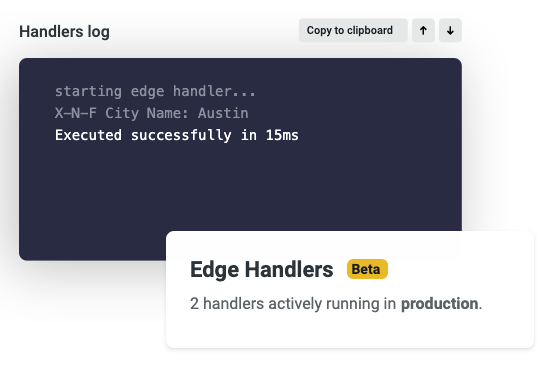
    Netlify, at its JAMSTACK CONF VIRTUAL event today, announced Netlify Edge Handlers, which make it possible to extend a Git-based workflow to edge computing applications.

    Company CEO Matt Biilmann said Netlify Edge Handlers, available in beta, puts the primitives in place for deploying serverless web applications based on a JAMstack software architecture that employs JavaScript, application programming interfaces (APIs) and markup languages, otherwise known as JAM, to isolate front- and back-end components of an application.

    A Git-based approach will also enable DevOps teams to extend workflows to edge computing applications that can be deployed on any number of platforms, he said. As an extension of a Netlify platform written in a modern Rust programming language, Netlify Edge Handlers makes it possible to build and launch web applications and websites based on a JAMstack architecture from within a continuous integration/continuous delivery (CI/CD) environment.

    Prior to the availability of Netlify Edge Handlers, building and deploying web applications on edge computing platforms required extensive coordination across teams, the creation of detailed edge logic with many dependencies and deviation from standard web development best practices, Biilmann said. Now, developers can write simple JavaScript that builds and deploys to the network edge in a way that enables simplified A/B testing, custom authentication and API aggregation, he noted.

    Developers also can build and manage edge logic from preview to production, including deploying those applications via the existing Netlify multi-cloud network.

    More application code is being pushed out to the edge because many organizations are now processing and analyzing data closer to where it is created and consumed, as part of their digital business transformation initiatives. Web applications that execute closest on a node to the user eliminate or reduce roundtrip request and response flows with the client.

    Biilmann also noted that because those applications are employing a platform developed using Rust, they are also inherently more secure.

    There may come a day when there are more application workloads collectively running at the edge than there are on cloud computing platforms. However, if that goal is ever to be achieved, it needs to become easier for developers to build those applications. Given the fact those applications are also likely to be targeted by cybercriminals, it’s critical to ensure those applications are as secure as possible.

    In the wake of the economic downturn brought on by the COVID-19 pandemic, many organizations have accelerated digital business transformation initiatives, many of which depend on edge computing platforms. The only way to achieve that goal, however, is to make it possible to build these applications using JavaScript tools that most developers of web applications have already mastered. Otherwise, organizations will need to invest in training developers to master another framework for deploying edge computing applications. That would require time they might not have.

    Regardless of the path forward, a massive wave of edge computing applications soon will stretch the boundaries and limitations of whatever DevOps processes organizations have in place today.

  • Oracle Launches Observability Platform

    Oracle Launches Observability Platform

    Oracle, at its online Oracle Live event today, unveiled the Oracle Cloud Observability and Management Platform, which combines newly added logging, log analytics, database management, application performance monitoring, operations insights and service connector hub services with existing Oracle monitoring, notifications, events, functions, streaming and operating system management capabilities.

    Dan Koloski, vice president of product management for Oracle, said the Oracle Cloud Observability and Management Platform provides IT organizations with access to a unified observability platform running on the Oracle Cloud Infrastructure (OCI) service that, in keeping with best DevOps practices, offers more context than traditional monitoring tools.

    In addition to being able to observe applications deployed on Oracle infrastructure, on-premises or in the cloud, the Oracle Cloud Observability and Management Platform interoperates with Slack, Grafana, Twilio, PagerDuty and other platforms to enable organizations to craft end-to-end DevOps workflows, Koloski added. Oracle is also working toward making it possible to import and export data to open source Prometheus monitoring platforms, noted Koloski.

    Oracle Cloud Observability and Management Platform employs machine learning algorithms to automatically detect anomalies and enable remediation in near-real-time. The company has also automated the instrumentation process to the point of one-click agent deployment, he added.

    Koloski said IT organizations are moving to rationalize a raft of tools to monitor silos of applications and infrastructure that historically were employed with mixed success. An observability platform provides more context by unifying all those tools in a way that makes it easier to troubleshoot the overall IT environment, he noted.

    As IT environments become more complex, thanks mainly to the rise of microservices and containers across hybrid cloud computing environments, Koloski said a new approach to managing IT is required. Advances in observability in the form of distributed traces are also creating a need to shift IT monitoring platforms to the cloud, as the amount of data that needs to be analyzed steadily increases, noted Koloski.

    With the launch of Oracle Cloud Observability and Management Platform, Oracle is also signaling that database management is being incorporated into DevOps processes, Koloski said.

    IT teams today still spend a fair amount of time in “war rooms” trying to ascertain the root cause of an application performance issue. Observability platforms promise to reduce the amount of time IT teams need to spend trying to determine the root cause of those issues. Most of the time it only takes a few minutes to fix an issue that an IT team may have spent weeks trying to uncover.

    Of course, embracing an observability platform doesn’t necessarily mean an IT organization has embraced best DevOps practices. However, because observability is a core tenet of DevOps, it does mean a lot more IT teams will be further down that path.

  • Cloudflare Expands Range of CDN Alternatives to the Public Cloud

    Cloudflare Expands Range of CDN Alternatives to the Public Cloud

    Cloudflare, a provider of a content delivery network (CDN) based on more than 200 data centers, this week announced it has made available a Durable Objects capability in beta that makes it possible to run stateful applications across a distributed serverless Cloudflare Workers service.

    Company CEO Matthew Prince said Durable Objects provide a truly unified approach to managing storage and state that ensures low application latency across the CDN service.

    Cloudflare this week also launched API Shield, which employs client certificate-based identity and strict schema-based validation using hosted public key infrastructure (PKI) that only allows application programming interfaces (APIs) with known behavior and identities to access the CDN service.

    The company also added a Cron Triggers tool that enables IT teams to schedule jobs on Worker nodes rather than always having to make HTTP requests.

    Finally, Cloudflare this week added a free Cloudflare Web Analytics tool and a free Cloudflare Radar tool that allows IT teams to view global traffic and security trends across the internet as they happen using data gathered from a network that touches more than 25 million internet properties in more than 100 countries.

    As applications become more distributed than ever thanks to the rise of edge computing, there is a growing need to deploy stateful applications that process data closer to where it is generated and consumed. Rather than IT teams having to manually deploy those edge computing platforms, Cloudflare has been making a case for a serverless computing platform that enables IT teams to leverage platforms it manages on their behalf.

    A Durable Object, in the case of Cloudflare, is an instance of a class that can be written in any programming language. Each object has a unique identifier and exists in only one location. Any Worker running anywhere in the world that knows the object’s ID can send messages to it. Durable Objects can have persistent state stored on disk. Each object can also maintain a consistent copy of the state in memory to eliminate latency. The in-memory object will be shut down when idle and can be re-created later on-demand.

    The Cron Trigger tools provide IT teams with more control over how they consume capacity on the Cloudflare CDN, added Prince.

    The Cloudflare CDN ultimately provides a lower-cost alternative to cloud services for deploying edge computing applications that gives IT teams more control over where and when application workloads run, Prince said.

    In the age of COVID-19, the days when IT organizations dispatched IT staff to physically install and update physical infrastructure may be coming to an end. There’s no real need to incur the cost or put IT staff at risk of contracting the virus. The issue now is determining whether to employ a cloud service provider or rely on any one of several CDN options that have historically been employed to optimize web applications.

    Regardless of the path chosen, the ability to remotely deploy any type of application on IT infrastructure resources has never been greater or easier.

  • Survey Surfaces High Reliance on DevOps to Build and Deploy APIs

    A survey of 13,586 IT professionals who work with application programming interfaces (APIs) published today by Postman, provider of an API development platform, finds best DevOps practices are now widely employed to both produce and consume APIs.

    The primary method through which teams working on APIs collaborate is by sharing URLs (42%). However, publishing API artifacts to GitLab, GitHub, Bitbucket or other repositories came in a close second at 40%, followed by publishing API documentation to an API portal (39%) and instant messaging (28%).

    When queried about change management practices specifically, Git repositories topped the list at 63%, followed by versioning APIs (59%), versioning server code (34.6%), versioning client code (27.8%) and semantic versioning (21%).

    Respondents said when it comes to deploying APIs, the most widely used option was continuous integration/continuous delivery (CI/CD) pipelines (53%).

    A total of 77% of respondents listed their functional area as engineering/development, followed by DevOps/API Ops at 34% and developer relations/evangelism (13%).

    Among DevOps practitioners that participated in the survey, Jenkins is the most widely employed platform (41%), followed by AWS DevOps (30.7%) and Azure DevOps (26.1%).

    Overall, the survey finds REST is still the dominant architectural style for APIs (93%), followed by webhooks (34%), SOAP (33%) and GraphQL (23%). JSON Schema is the dominant API specification (76%), followed by Swagger 2.0 (44%), OpenAPI 3.0 (28%) and GraphQL (23 %).

    When asked to rate the percentage of their organization’s development effort spent working with APIs, 41% said more than half of the effort is spent on APIs.

    Kin Lane, chief evangelist for Postman, said the survey also makes it clear that more organizations have adopted an API-first philosophy to application development. Over 60% of respondents rated themselves as 5 or better out of 10 in terms of embracing an API-first philosophy.

    Nearly half of respondents said investment of time and resources into APIs will increase over the next 12 months, while another third stated that investments into APIs will stay the same. Eighty-five percent said APIs are playing a significant role in their digital business transformation initiatives, while nearly a third (31%) also noted APIs played a role in their organization’s ability to respond to COVID-19 by, for example, enabling customer communications or remote work options.

    APIs appear to have become a lot more stable in recent years, with more than half of respondents reporting APIs do not break, stop working or materially change specification often enough to matter.

    When it comes to producing APIs, the No. 1 obstacle by a wide margin is lack of time, while the No. 1 obstacle cited for consuming API is lack of documentation.

    The four most important factors individuals consider before integration with an API are reliability (72%), security (71%), performance (71%) and documentation (70%).

    Looking to future technologies, respondents appear to be most interested in microservices (49%), Kubernetes (44%) and containers (42%). Given the cloud-native attributes of those technologies, it appears all but certain the number of APIs strewn across the extended enterprise is about to increase exponentially.

  • DevOps Deeper Dive: IPO Frenzy Heralds Consolidation

    DevOps Deeper Dive: IPO Frenzy Heralds Consolidation

    A spate of initial public offering (IPOs) has resulted in billions of investment dollars being poured into JFrog, Snowflake and Sumo Logic and is likely to fuel of wave of merger and acquisition activity in the months ahead.

    While each of these software companies addresses fundamentally different IT requirements, they are all tapping into a massive amount of liquidity now available, as investors dump the stocks of companies in other sectors that have been adversely impacted by the economic downturn brought on by the COVID-19 pandemic.

    In fact, the reason all these IPOs appear to be occurring all at once now is the plans to go public that many software companies had earlier this year were delayed by the onset of the pandemic. The backlog for potential IPOs is already staggering. Currently there are more than 400 private startup companies with valuations in excess of $1 billion, which according to the financial research firm CB Insights officially makes them “unicorns.” Familiar names of software companies on that list include GitLab, Docker Inc., HashiCorp, Snyk, Postman, OutSystems, Digital Ocean, Auth0, Redis Labs, Databricks, Collabra, Cohesity, Tanium, Rubrik, SentinelOne, Illumio, Netskope and Kaseya.

    The reasons IT organizations should pay attention to these IPOs are twofold. The first is that it signals the company now has ready access to a stream of investment dollars required to fund ongoing innovation, said Scott Bickley, principal research director at Info-Tech Research Group.

    The second, he noted, is that many enterprise IT organizations tend to limit their amount of reliance on a startup company. Venture capitalists that fund these companies often sell them to other companies to recoup their investment as an alternative to launching an IPO. Most enterprise IT organizations don’t want to wake up one morning to discover a key vendor has been acquired by a vendor they would prefer to not do business with, said Bickley.

    That issue can be especially problematic when cloud service providers such as Amazon, which has operations that reach well beyond IT, are involved, he added.

    In fact, one of the reasons many organizations prefer to rely on IT vendors that are public companies is they have a lot more visibility into the overall viability of the vendor, said Bickley.

    “Assessing risk is part of the due diligence process,” he said. “With public companies, there’s a lot more data available.”

    Of course, public companies do get acquired. The fact that they are public companies usually makes the effort a comparatively expensive proposition, depending on the stock price and the number of shares outstanding.

    However, one of the first things many companies do once they go public is to look to acquire other companies that enable them to expand their overall portfolio, said Mitch Ashley, CEO and managing analyst at Accelerated Strategies Group, a market research firm.

    The DevOps sector in particular has seen a wave of acquisitions of late that have been funded in part by IPOs, noted Ashley.

    “We’re in a bit of a roll-up period right now,” he said.

    Many enterprise IT organizations tend to welcome those acquisitions because it allows them to deal with fewer vendors, Ashley noted, adding support also tends to improve because the larger vendor typically has more resources.

    On the downside, he said, large vendors tend to raise prices after acquiring smaller vendors in part to help cover the cost of the acquisition.

    Like it or not, however, mergers and acquisitions are now a fact of IT life that organizations just need to accept, Ashley said.

    Based on the amount of capital available at the moment, IT leaders should also assume the pace of merger and acquisition activity is about to accelerate, even more as more fuel in the form of capital is added to the fire.

  • Catchpoint Acquires Webpagetest.org Service

    Catchpoint Acquires Webpagetest.org Service

    Catchpoint this week announced it has acquired Webpagetest.org as part of an effort to expand use of the open source web performance testing service.

    Led by Patrick Meenan, the Webpagetest service is already relied on by more than 1 million users per month to instantly run tests of websites and applications from various locations, which are surfaced via a detailed audit that can be shared with developers.

    Meenan has been personally supporting Webpagetest as a side project while working for a series of IT organizations and vendors starting with America Online (AOL). Now, with Catchpoint’s acquisition of Webpagetest.org, he will have a staff of contributors as a full-time employee.

    Catchpoint CEO Mehdi Daoudi said the company will also incorporate Webpagetest into the tools it provides for monitoring digital experiences. The most appealing aspect of the Webpagetest service is that, rather than focusing on individual backend platforms, it tracks the actual performance that users experience across multiple types of browsers.

    Daoudi said that as organizations accelerate the rate at which they are building and deploying digital business applications in the wake of the COVID-19 pandemic, there’s now more focus on web application performance than ever. The experience any user has when accessing these applications now impacts everything from their willingness to complete a transaction to their perception of the corporate brand, he noted.

    In fact, a recent survey of 200 CIOs and 200 work-from-home managers conducted in July by ReRez Research on behalf of Catchpoint finds application performance is at the top of the list of concerns (66%), followed by network reliability, work-from-home technologies and security, at 63% each. Application performance is at the top of that list because both online revenue and employee productivity are now increasingly directly impacted by the overall application experience, said Daoudi.

    There’s never been a shortage of tools for testing application performance. The issue is how those tools are often employed, he noted. Too many IT organizations are monitoring individual application components rather than the actual user experience.

    Organizations that focus on end user experience in the age of digital business will, in time, separate themselves from rivals that merely make applications available online. A zealous appreciation for application performance needs to be ingrained in the culture of the organization for it to ultimately succeed, Daoudi said, noting that every employee, not just the DevOps teams, needs to be aware of the impact application performance has on the business.

    That challenge is as IT environments become more complex and distributed, ensuring application performance becomes more challenging than ever. Cloud-native applications based on microservices may be easier to deploy and manage, but the dependencies between all those microservices can conspire in ways that degrade application performance over time. Determining the root cause of intermittent application performance issues can take weeks. The maddening thing is, many of the fixes required to address that issue once it’s discovered can be deployed in minutes.

    Performance tools that surface those issues sooner than later are invaluable in a digital age, where time now quite literally is money.