Author: Mike Vizard

  • Report Finds Most Cloud Security Issues Left Unaddressed

    Report Finds Most Cloud Security Issues Left Unaddressed

    Accurics, a provider of a platform for assessing the security of cloud computing environments, has published a report that finds that even once discovered, only 4% of issues reported in cloud production environments are addressed.

    Based on research conducted using its platform and other public sources of data, the report also finds 90% of organizations allow privileged users to make configuration changes directly to a cloud infrastructure after it is deployed.

    Issues such as open security groups, overly permissive identity access management (IAM) and exposed cloud storage services make up 67% of the most common cloud security issues being uncovered, according to the report.

    The Accurics report echoes similar findings published by Unit 42, the cybersecurity arm of Palo Alto Networks, which found more than 199,000 templates have medium-to-high vulnerabilities in use on public clouds.

    Accurics CEO Sachin Aggarwal said that as more organizations embrace infrastructure as code using tools such as Terraform, policy guardrails aren’t being put in place. More troubling still, security assessments seem to be few and far between. That’s especially problematic because cybercriminals now routinely probe every layer of the application stack looking vulnerabilities, he noted. In effect, cybercriminals are assessing cloud applications and infrastructure more frequently than IT teams.

    Aggarwal said beyond making sure the appropriate guardrails are in place in terms of overall security posture, organizations need to have confidence in the DevOps processes being adopted. That doesn’t mean cybersecurity teams should put rules in place that slow that application development process down. Rather, tools that surface cybersecurity issues and then provide a method to automate the remediation of any vulnerabilities discovered need to be put in in the hands of IT professionals, he said.

    The challenge organizations face is the processes that are employed to secure on-premises IT environments largely don’t translate well to highly dynamic cloud computing environments that assume a shared responsibility approach to IT. Public clouds are obviously popular with DevOps teams that can programmatically invoke resources on demand. However, those teams generally don’t have much cybersecurity expertise. Too often, DevOps teams assume cybersecurity tasks are being handled by a cloud service provider. Of course, the cloud service provider is only securing the services they provide. Any configuration issue is not their responsibility.

    The result is as more changes are made to the IT environment, the more likely that mistakes will be made. Catching all those issues without the aid of tools is an unreasonable expectation for any IT organization, much less a DevOps team that may be working beyond the purview of the rest of the IT organization.

    No one sets out to create a cybersecurity issue. But in the rush to deploy or update an application it’s easy to overlook a cybersecurity issue. The goal should be to eliminate as many of those mistakes as possible before they are ever made. However, as long as humans are involved, there will be errors. So the next most important thing is to be able to correct those mistakes as quickly as possible without having to disrupt the entire IT environment.


  • Survey Sees Increased Agile Adoption During COVID-19

    Survey Sees Increased Agile Adoption During COVID-19

    A report published by Digital.ai, the parent company of CollabNet VersionOne, finds 43% of organizations have increased their reliance on agile application development methodologies in the wake of the COVID-19 pandemic, with 15% saying it has increased significantly in the last 90 days.

    The report also notes 33% of respondents say they have increased or expanded Agile adoption in the last 90 days to help manage distributed teams, while 55% said their company plans to increase the use of agile in the next 12 to 14 months.

    Based on a pair of surveys conducted prior to and after the pandemic started, the 14th annual “State of Agile” report also finds 60% of respondents credit agile methodologies with having helped increase speed to market, while 58% say it has improved team productivity. Another 41% say they are also better able to manage distributed teams.

    Mike O’Rourke, chief research and development officer for Digital.ai, said there is a clear correlation between the ability to manage distributed application development teams and successfully navigating the pandemic now that most application development and deployment teams are working from home.

    Many of those teams are also seeing application development deadlines being moved up as organizations prioritize digital business transformation initiatives that now are core to any business continuity strategy.

    That shift is also accelerating a shift toward focusing more on business metrics for measuring success as defined by, for example, the Scaled Application Framework (SAFe), said O’Rourke, noting as a result, there’s also a lot more focus on value stream management across the enterprise as business and IT teams work closely together. The survey finds just over half of the respondents report their organization has either already implemented value stream management (VSM) or are planning to do so.

    The survey also finds more focus on risk and compliance, with the number of respondents identifying and measuring technical risk prior to deployment increasing 54%, while the importance of automated audit compliance and governance across control points increased 10% year over year.

    Perhaps most surprising, the survey finds reducing project cost is cited as an important reason for adopting agile by only 26% of the respondents, a 41% drop from the previous year. The number of organizations focused on release planning decreased by 11%; however, organizations focusing on product road mapping increased 9% over the previous year. The survey also finds slightly more respondents are using automated acceptance tools (3%). Another 12% said they plan to adopt agile project management tools in the future.

    It’s not clear whether increased focus on application development might result in bottlenecks when it’s time to deploy those applications. Organizations that have already embraced best DevOps practices alongside agile development methodologies will naturally be in a better position to deploy applications. At the same time, increased focus on digital business transformation is likely to accelerate the adoption of both agile development methodologies and best DevOps practices across the enterprise.

    In fact, it’s arguable that organizations that are not able to build and deploy applications adroitly may soon find they are unable to compete at a time when software development has become critical to their survival.

  • AppDynamics Survey Sees Rush to Digital Transformation

    AppDynamics Survey Sees Rush to Digital Transformation

    A survey of 1,000 IT professionals in organizations with annual revenue of at least $500 million conducted by AppDynamics, a unit of Cisco Systems, finds nearly three-quarters (74%) report digital transformation projects which typically would take more than a year to be approved are now being signed off on in a matter of weeks.

    The research also finds 95% of respondents changed their technology priorities during the pandemic, with 88% identifying digital customer experience as being a priority now.

    In addition, some 71% said some digital transformation projects have been implemented within weeks versus the months or years it would have taken to implement a similar initiative before the pandemic. At the same time, 66% of respondents noted the pandemic has exposed weaknesses in their digital strategies, creating an urgent need to accelerate initiatives.

    Not surprisingly, the survey also finds 81% of respondents said the pandemic has created the biggest technology pressure their organization has ever experienced, with 61% under more pressure at work than ever before. Almost two-thirds (64%) said they are now being asked to perform tasks and activities they have never done before.

    Despite the enormous pressure technologists are facing, 87% said this period of time is an opportunity for technology professionals to show their value to the business. In fact, 80% of survey respondents report that the response of their IT teams to the pandemic has positively changed the perception of IT within their organizations.

    The survey specifically identifies managing spikes in website traffic (81%), lack of unified visibility and insight into the performance of the technology stack and its impact on customers (80%) and managing mean time to resolution (MTTR) with a remote IT department (70%) as major challenges.

    IT teams during this time need clear goals and objectives (90%), real-time data at the point of need (89%), autonomy and accountability (88%) and the freedom to experiment and take risks (87%), the survey finds.

    Angie Mistretta, chief marketing officer at AppDynamics, said the survey mirrored an earlier AppDynamics report that tracked a rise in the use of search terms such as “digital experience monitoring” and “application performance management (APM).”

    In general, Mistretta said it’s also apparent the rate at which application workloads are moving into the cloud is accelerating as organizations look to deploy more resilient applications based on cloud-native technologies such as Kubernetes that are designed from the ground up to access remotely.

    It may take time for IT organizations to master cloud-native platforms to deploy microservices-based applications. As such, the number of monolithic applications being lifted and shifted into the cloud remains considerable. Once those applications are shifted, many IT teams will only then start to modernize those applications.

    Naturally, AppDynamics is betting many more organizations will require access to an APM platform to navigate this brave new world of legacy and emerging digital business applications in the cloud. The challenge for IT teams, however, is there have never been so many APM options available.

  • CircleCI Extends Core CI/CD Platform

    CircleCI Extends Core CI/CD Platform

    CircleCI today in partnership with Plandek launched an analytics plugin dubbed Buildtrakr for its namesake continuous integration and continuous delivery (CI/CD) platform. Buildtrakr integrates with CircleCI and Git to synthesize commit and build performance data, with critical metrics being surfaced via a dashboard.

    In addition, CircleCI has revamped its user interface and reconfigured a new fleet of Docker images, also known as CircleCI convenience images, to optimize them for a continuous integration environment.

    CircleCI CEO Jim Rose said Docker images made available by CircleCI are faster, easier to download and provide a more efficient way to build custom images. CircleCI also released a new category of convenience images available for languages such as Python, Ruby, Rust, Go and several others, that come with improved documentation, more stability and more efficient infrastructure. Those convenience images are individual open source projects and can be used in IT environments other than the CI/CD platform from CircleCI.

    Finally, the company also announced that its insights endpoints now offer start and end date parameters for workflows and jobs. These parameters restrict the range of executions returned based on their start times in addition to providing a new filter to use for testing analysis.

    Rose said the new user interface is significant because it makes it possible to view the status of entire pipelines more easily while making it easier for more advanced DevOps teams to leverage workflows.

    The redesigned interface also adds a filterable view with nested workflow and job information, making it easier to scan the status of recent builds. Pages were also overhauled to deliver more digestible job details, full-screen step outputs for easier debugging and a cleaner configuration-as-code view. There’s also been a 65% reduction in page load times, noted Rose.

    In general, Rose said activity on the CircleCI platforms in cloud environments is on the rise in the wake of the COVID-19 pandemic. Organizations that are working remotely due to stay-at-home directives and can’t access a local data center have come to realize that having a build box located under someone’s desk is no longer a viable option.

    Of course, it remains to be seen how much of that initial burst of activity will result in new applications being deployed. However, with more organizations starting to build and deploy digital business applications to engage customers, it may be only a question of when IT operations teams will be able to catch up to a building backlog of applications. In fact, many of those applications are now likely to be deployed on the same cloud where they were constructed.

    Whatever the path forward, there most certainly will be a greater reliance on metrics. Naturally, the hope is that analytics will be used to coach DevOps teams to become more efficient versus simply riding roughshod over developers. After all, the goal isn’t to write more code faster but to deliver better code at the right time.

  • Netlify Makes Build Plugins Available for Jamstack Platform

    Netlify Makes Build Plugins Available for Jamstack Platform

    Netlify, at a Jamstack Conf Virtual event, announced the general availability of open source Netlify Build Plugins that provide IT teams with a set of continuous integration/continuous delivery (CI/CD) workflows for building websites and web applications using JavaScript, application programming interfaces (APIs) and static HTML files without employing web servers, otherwise known as a Jamstack.

    Designed to be launched from within a Netlify platform to enable IT teams to build a website and launch it from a Git repository to a content delivery network (CDN), the Netlify Build Plugins are intended to make it easier to employ DevOps processes using, for example, a plugin to run an end-to-end Cypress test.

    Netlify CEO Mathias Biilmann said DevOps teams also can make use of a Netlify API to create their own plugins. Ultimately, the goal is to foster the development of a wide range of open source Netlify plugins that would be built and vetted by the Jamstack community, he said.

    Other Netlify Build Plugins provide a means to enable Ghost, an open source headless content management system based on Node.js that can be deployed on any framework; launch a Sentry tool to automatically discover, triage and prioritize bugs; or enable a Gatsby tool to create incremental builds on Netlify.

    A survey of more than 3,000 Jamstack developers published today by Netlify finds one-third have worked on sites serving millions of users over the last year. Nearly two-thirds of survey respondents (62%) work outside the tech industry, including advertising and marketing (21%), media and publishing (14%), education (14%), financial services (13%) and business support and logistics (13%). Well over a third (38%) work for a technology company. About a quarter (26%) have more than 10 years of experience.

    Top Jamstack benefits cited by all types of developers are performance, uptime, speed of development, security, compliance and avoiding vendor lock-in, the survey finds.

    Biilmann said Jamstack as a philosophy enables IT teams to separate the development of front- and backend websites and applications in a way that allows organizations to embrace best DevOps processes. That approach is agnostic as far as any specific JavaScript framework is concerned, but it does define a way to automate the build process for a web application or website.

    In the wake of the economic downturn brought on by the COVID-19 pandemic, more organizations are investing time and resources in modernizing their websites and applications. With more employees and end users depending on those websites to drive digital business processes, the quality of the application experience has become a much bigger concern. At the same time, end users have now come to expect those application experiences to be updated regularly, which in many cases will necessitate the adoption of best DevOps processes.

    In fact, it’s arguable that organizations that don’t embrace best DevOps practices to build and deliver web applications at scale will soon discover they have bitten off more than they can chew.

  • Eclipse Foundation Moving to Brussels

    Eclipse Foundation Moving to Brussels

    The Eclipse Foundation announced today it will begin to transition its headquarters from Ottawa to Brussels as part of an effort to advance international expansion.

    Mike Milinkovich, executive director of the Eclipse Foundation, said with so many open source organizations based in North America, there is a clear need for an open source organization to have a larger presence in Europe. As nearly half of the strategic members that provide funding to the Eclipse Foundation are based in Europe, it made sense for the Eclipse Foundation to take on that role.

    The Eclipse Foundation is now home to 375 open source projects resulting in more than 240 million lines of code. Some of the most widely employed Eclipse Foundation projects include the Eclipse integrated development environment (IDE) and Jakarta, which is a follow-on to Java Enterprise Edition platform, previously owned by Oracle. In total, the Eclipse Foundation’s projects represent more than 13 billion Euros of investment.

    In general, Milinkovich said contributions to open source projects have accelerated in the wake of the COVID-19 pandemic. Developers who are staying home to help combat the epidemic apparently have more time to contribute to projects. The expectation is by moving to Brussels, more European developers will contribute to projects involving technologies such as internet of things (IoT) initiatives that address industrial use cases, he added.

    The Eclipse Foundation plans to establish a new legal entity sometime in July, with personnel relocating or added to a Brussels office over time depending on the nature of the Eclipse project being supported, Milinkovich said.

    It’s not clear to what impact being headquartered in Europe will have on open source projects, which are by their very nature global. However, Milinkovich noted most of the recent live events hosted by the Eclipse Foundation have been held in Europe. It may be a while before anyone is attending an IT conference in person, but Milinkovich noted European developers already play a major role in the Eclipse Foundation projects.

    Between the Eclipse Foundation, the Linux Foundation and the OpenStack Foundation, there is no shortage of opportunities for developers to contribute to open source projects. Many of those projects count on contributions from developers who work for IT vendors that have a vested interest in a specific project. In fact, many open source projects provide a way for IT vendors to defer the cost of creating a core piece of technology that doesn’t provide differentiated value. Rather than reinvent the wheel, it makes more economic sense to share open source code with potential rivals.

    Of course, it’s then up to each IT team to decide whether to employ that open source code themselves versus relying on an IT vendor to provide a curated instance of it under a support contract. Regardless, the total cost of IT would be prohibitively higher right now if it were not for the proliferation of open source software. It’s also worth noting many IT vendors that build platforms on top of open source software would be considerably less profitable.

  • Survey Surfaces Root Causes of DevSecOps Tension

    Survey Surfaces Root Causes of DevSecOps Tension

    Results of a survey published by SaltStack, a provider of IT automation tools, suggests tensions between cybersecurity and IT professionals on the one side and DevOps teams on the other are running high. According to the survey of 130 cybersecurity and IT leaders, 70% of respondents said their organization is sacrificing data security for faster innovation, with most cybersecurity and IT managers making a case for prioritizing data protection over innovation, speed to market and cost.

    Alex Peay, senior vice president for product at SaltStack, said that while it’s unlikely cybersecurity and IT leaders will be able to slow down the pace of innovation within their organizations, the survey results make it clear IT organizations are struggling to keep pace.

    On the plus side, the results also show that cybersecurity and IT operations teams are working more closely together. More than half—54%—of cybersecurity leaders said they communicate effectively with IT professionals, while 45% of IT professionals concurred.

    Best DevSecOps processes are, of course, meant to bridge the divide between DevOps teams and the rest of the IT organization. The expectation is that by pushing more responsibility for cybersecurity to the left, the pressure on cybersecurity and IT teams would be reduced. However, DevSecOps adoption remains nascent at best—many DevOps teams still don’t have the tools required to implement security controls programmatically within their applications.

    Even when they do have the tools needed to add security controls, organizations need to set up workflows that will enable cybersecurity teams to verify that those controls have been properly implemented. Given the chronic shortage of cybersecurity expertise, the rate at which applications are being deployed and updated easily overwhelms the amount of time cybersecurity teams have available to analyze modules of code that are now often updated several times a week. Most cybersecurity teams are already struggling to keep pace with patches for existing applications, let alone any new application modules.

    Of course, there’s not a lot of love lost between developers and cybersecurity teams. DevOps teams generally blame cybersecurity teams for slowing down the rate at which applications are deployed. In fact, one of the primary reasons DevSecOps is gaining traction among developers is that it represents a way to remove cybersecurity professionals from the application development process.

    Cybersecurity professionals, conversely, often view application developers as the root cause of the cybersecurity problem. Too many developers are reusing modules of code without first making sure those modules have been updated to address a known vulnerability. To add insult to injury, whenever a new vulnerability is discovered days, weeks or even months may go by before developers address it. To be fair, however, cybersecurity professionals are not especially adept at prioritizing vulnerabilities; as far as developers are concerned, the list of vulnerabilities presented is just one in a series of bugs that need to be addressed. Unless otherwise directed, developers will focus on bugs that impact features and performance before a potential security issue that has yet to manifest itself as an issue impacting end users.

    In general, advances in DevSecOps are being made that should provide some much-needed relief to IT and cybersecurity professionals. It’s just slowing down the rate at which applications are deployed and updated might not be one of them.

  • Pulumi Tightens DevOps Platform Integration

    Pulumi Tightens DevOps Platform Integration

    Pulumi today released the 2.0 release of its open source platform for automating the provisioning of IT infrastructure in the cloud, providing tighter integration with a dozen different continuous integration/continuous delivery (CI/CD) platforms and source code management (SCM) systems. Via the latest update Pulumi also now includes CI/CD Apps, through which pull requests will trigger Pulumi previews and updates.

    In addition, Pulumi has added tools to preview changes, while making it easier to share architectural patterns, libraries and best practices.

    Finally, Pulumi 2.0 adds additional tools to enforce policies, simplify testing and manage secrets.

    Pulumi is designed to enable developers to provision cloud infrastructure using familiar programming tools such as Python, JavaScript, TypeScript, Go and .NET/C#. That approach eliminates the need to master YAML files or other proprietary languages and templates.

    Pulumi CEO Joe Duffy said the goal is to accelerate the rate at which management of IT is shifting left toward developers by providing them with the “superpowers” need to manage cloud infrastructure. Thus far, Pulumi claims to have more than 10,000 users of its tools.

    In the wake of the economic downturn brought on by the COVID-19 pandemic, it is expected the rate at which control over IT has been shifting left will accelerate. As part of an effort to either contain or eliminate headcount, many organizations will reduce their reliance on IT operations staff by giving developers more direct control over IT infrastructure.

    At the same time, however, Duffy noted that many IT operations personnel are finding it relatively simple to master Python, which they can then use to leverage Pulumi to automate the provisioning of large amounts of cloud infrastructure to become more efficient. Some organizations may prefer to retain IT operations staff that have learned how to program.

    It remains to be seen to what degree tighter integration with CI/CD platforms might encourage developers to take more control over IT infrastructure. Support for the CI/CD platforms supported by Pulumi—Jenkins, Spinnaker and GitHub—will make it easier for developers to achieve that goal. Less clear is the degree to which developers want to take control over infrastructure. Regardless, many of them may soon have little choice in the matter.

    Of course, Pulumi is not the only framework via which the provisioning of cloud infrastructure can be automated. It does, however, make it easier for developers to provision infrastructure without having to spend time learning the nuances of another set of programming tools. Even in organizations that do shrink the size of their IT staffs, there will still be pressure on developers to deliver more code faster. The amount of time developers may want to allocate to managing IT infrastructure is likely to be limited at best.

    Whatever the path forward, many organizations will soon discover they can’t afford to wait any longer for their internal IT cultures to embrace best automation and DevOps practices. Economic pressure to optimize constrained IT resources are likely to become intense. No one may know for certain how long the downturn may last, but it is already apparent many organizations will be trying to do a lot more with less in the days ahead.

  • CD Foundation Serves Up Tekton Pipelines Beta

    CD Foundation Serves Up Tekton Pipelines Beta

    The team overseeing the development of the open source Tekton Pipelines under the auspices of the Continuous Delivery (CD) Foundation announced today the project is now in beta.

    Christie Wilson, Tekton Project Lead and a software engineer at Google, said Tekton Pipelines are not necessarily a tool most DevOps teams will interact with directly. Rather they provide a foundation on which DevOps platforms can be built that will make it easier for DevOps teams to construct workflows spanning multiple continuous integration/continuous delivery (CI/CD) platforms.

    As such, Tekton Pipelines should play a critical role in not just fostering interoperability but also alleviating concerns about become locked into a specific CI/CD platform.

    The beta release of Tekton Pipelines is significant because it signals that the project is now stable enough to be incorporated in DevOps platforms and from here on will follow the same deprecation policies as Kubernetes in terms of supporting previous releases. However, Wilson noted that Tekton Triggers, Tekton Dashboard, Tekton Pipelines CLI and other components are still alpha and as such may evolve from release to release in a way that is not necessarily backward-compatible just yet.

    In the meantime, the Tekton Pipeline team is encouraging all Tekton projects and users to migrate their integrations to the latest version of Custom Resource Definition (CRD), which is the application programming interface (API) supplied. The Tekton Pipeline team is also making available a migration guide.

    The Tekton Pipelines project is one of several initiatives being advanced under the guidance of the CD Foundation, which is an arm of The Linux Foundation. Other projects include Jenkins and Jenkins X, a pair of open source CI/CD projects developed originally by CloudBees and Spinnaker, a CD platform originally created by Netflix. Tekton Pipelines are a framework that runs natively on Kubernetes that traces its lineage back to Google.

    Premier members for the CD Foundation include CloudBees, Google, Circle CI, JFrog, IBM, CapitalOne, Salesforce and Netflix. Other members of the CD Foundation include GitLab, Red Hat, Harness and Rancher Labs.

    Wilson said Jenkins X already supports Tekton Pipelines, while work involving Spinnaker is ongoing. It’s not expected that Jenkins, currently the most widely used CI/CD platform, will be able to employ Tekton Pipelines, said Wilson.

    It’s not clear when Tekton Pipelines might be pervasively employed across multiple CI/CD platforms. In theory, as more applications are built on top of Kubernetes, the use of CI/CD platforms that run natively on Kubernetes should increase. However, most organizations that have already adopted a CI/CD platform such as Jenkins are continuing to use the same platform to build and deploy both monolithic and microservices-based applications. At some point, however, it’s expected those organizations will eventually migrate to a CI/CD platform that runs natively on Kubernetes. In many cases, different teams within the same organization may opt to standardize on different CI/CD platforms while still be able to share workflows, said Wilson.

    Naturally, providers of DevOps platforms are already jockeying for position now that the race to support Tekton Pipelines as specified by the CD Foundation has formally started.

    — Mike Vizard

  • GigaSpaces to Provide Free Go-Live Services

    GigaSpaces to Provide Free Go-Live Services

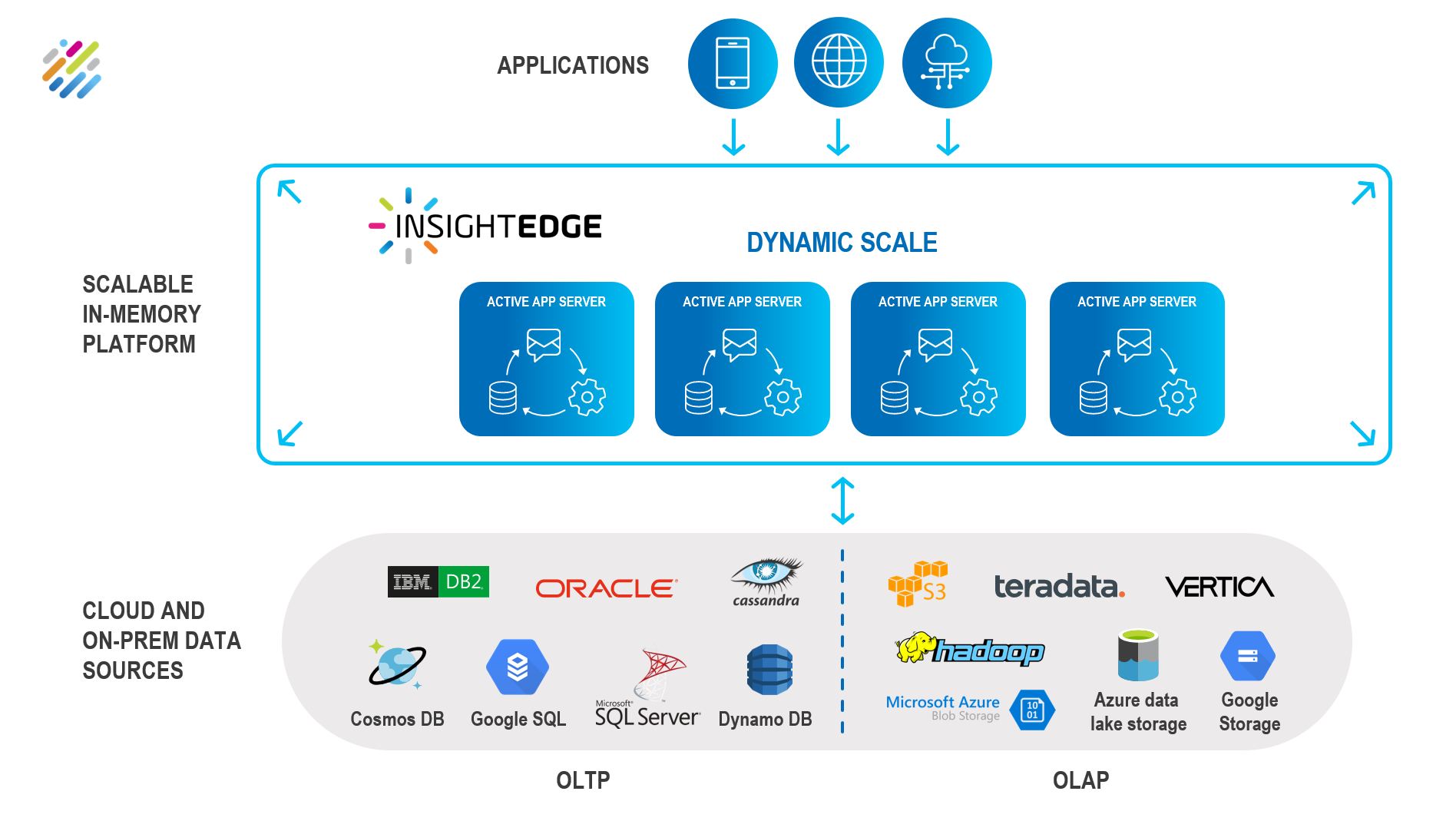
    GigaSpaces, a provider of a platform for processing analytics data in real-time, will be making available professional services for free during the duration of the COVID-19 pandemic as part of a Go Live initiative to reduce the total cost of acquiring and implementing its platform.

    Yoav Einav, vice president of product for GigaSpaces, said the economic impact of the COVID-19 pandemic shows it’s apparent organizations of all sizes will need to reduce their IT costs. At the same time, many organizations will need to keep IT projects moving forward as nascent digital business strategies now become business continuity strategies, he said. Most of those business continuity plans will be contingent on providing a better digital customer experience based on real-time analytics.

    GigaSpaces has been building up its professional services capability for the past several months and plans to tap into the expertise of third-party IT services providers to make sure there is enough available expertise in the right place to meet anticipated Go Live demand.

    GigaSpacesIt’s still unclear to what degree IT projects will be impacted by the COVID-19 pandemic. Undoubtedly, many IT projects are being paused or outright canceled, especially in vertical industry segments that have been among the hardest hit. Organizations that are moving IT projects forward, however, should expect to IT vendors to help reduce the total cost of implementing those projects by providing free additional services, as in the case of GigaSpaces, or at the very least much more flexible payment terms.

    There are, of course, some vertical industry segments where organizations are building new applications that are highly relevant. One GigaSpaces customer, for example, is racing to build an application that will make it easier to find critical healthcare supplies that are frequently out of stock when needed most, noted Einav. Other organizations are simply moving to reduce costs by offloading queries from traditional databases.

    In many cases, organizations will be evaluating which platforms to employ to build these applications not just on the raw performance attributes of the platform but also how quickly those platforms can be implemented. As such, the robustness of the IT services ecosystem, including its overall DevOps acumen, will become a more critical evaluation criterion.

    In the meantime, a major transition away from legacy batch-oriented applications toward applications that process data in near real-time that has been gaining momentum now for several years should continue. Most organizations are now going to require the sub-second performance of a financial services application. However, visibility into supply chains in near real-time is becoming a bigger requirement, especially when many of the organizations that make up the supply chain are potentially not as economically resilient as they once were.

    Less clear is the rate at which the transition to near real-time applications will now occur. However, at a time when competition between organizations is about to become more fierce than at any time in recent memory, many organizations are about to discover how big a difference modern applications can really make.

    — Mike Vizard