Author: Mike Vizard

  • Survey Sees Massive Adoption of Microservices

    Survey Sees Massive Adoption of Microservices

    Under increasing pressure to innovate faster, a majority (84%) of organizations taking part in a recent survey have already embraced microservices.

    The survey, conducted by Vanson Bourne on behalf of API management platform provider Kong, polled 200 senior IT leaders in organizations with more than 1,000 employees. Among the results, 89% of technology leaders agree that companies that are not able to effectively support microservices will be less able to compete in the future.

    The report also finds on average organizations are running 184 microservices, with 60% of respondents running 50 or more. The primary reasons cited for adopting microservices are improvements to security (56%), increased development speed (55%), increased speed of integrating new technologies (53%), improved infrastructure flexibility (53%) and improved collaboration across teams (46%).

    Kong CTO Marco Palladino said the report makes it clear that just about every organization is on a journey to making a transition to microservices as part of an effort to reduce reliance on inflexible monolithic applications. Initially, that transition involves lifting and shifting monolithic applications in the cloud before decoupling functions using microservices, he said.

    As part of that journey, Palladino noted, the survey also finds significant microservices challenges remain, including ensuring security (36%), integration with legacy applications (32%), the complexity of management (31%) and updating API documentation (31%).

    Despite these concerns, however, more than 80% of survey respondents who have adopted microservices report that their organization performs well against metrics for development efficiency, the ability to use new platforms, collaboration across teams and sharing of services across applications.

    Overall, a full 90% of respondents said securely connecting applications and ensuring performance at scale collectively represent one of the greatest technical challenges of the 21st century. Also, 71% said they believe that organizations would be out of business within six years if they fail to keep pace with innovation in their industry. For public companies, the urgency is even greater, with 39% reporting they believe organizations will be out of business in less than three years if they fail to keep pace with innovation. Overall, 57% of technology leaders feel organizations are concerned that they are at risk of competitive displacement.

    Pressure on IT leaders is high as a result. Nearly three-quarters of respondents (74%) agree that a failed digital transformation effort will result in a missed promotion, lost bonus or even termination. The report identifies the top three priorities for IT leaders as improving efficiency (47%), reducing cost (41%) and increasing security (40%).

    Technology leaders, however, continue to place the highest importance on the availability (75%), security (74%), performance (65%) and scalability (64%). At the same time, technology leaders are focused on faster development speeds (95%), increased collaboration (94%) and reduced deployment risks (93%) as key desired outcomes for adopting any new technologies.

    The challenges most cited in terms of achieving those agility goals are the complexity of using multiple technologies (35%), lack of automation (32%) and reliance on legacy technologies (29%).

    The survey also notes 83% of organizations are relying on open source software to become more agile. The most commonly used open source technologies are databases (64%), containers (48%), API gateways (41%), infrastructure automation (40%), container orchestration (37%) and continuous integration/continuous delivery (CI/CD) tools (36%).

    In terms of cloud adoption, Microsoft Azure (43%) narrowly beat Amazon Web Services (AWS) (42%), with Google Cloud Platform (GCP) coming in third at 27%.

    On the plus side, 78% of respondents said their organizations are increasing IT budgets in the coming year, with 27% of public companies expecting their budgets to grow 26% or more. Nearly 90% of companies will also be increasing headcount, with 56% hiring internally and 31% relying on more freelancers and/or outsourcing to meet hiring goals.

    Hopefully, with that increased funding more organizations will be able to strike that elusive balance between stability and innovation.


    — Mike Vizard

  • Raytheon Leans on Red Hat to Advance DevSecOps

    Raytheon Leans on Red Hat to Advance DevSecOps

    Raytheon Company is partnering with Red Hat to drive the adoption of DevSecOps workflows and processes it developed around the OpenShift application development and deployment platform.

    Jon Check, senior director for cyber protection solutions for Raytheon Intelligence, Information and Services, said Raytheon has developed a set of DevSecOps practices for organizations building applications deployed in highly secure environments, involving government contracts.

    Raytheon and these customers have been challenged by a chronic shortage of IT professionals with the appropriate level of clearance to work on these classified projects. To overcome that issue, Check said Raytheon developed what it describes as a “code low, deploy high” approach to DevSecOps. Developers who lack security clearances can still build applications; however, those applications can only be deployed by IT professionals having the appropriate security clearance.

    In addition, Check said Raytheon has developed integrations between its DevSecOps framework and various IT tools based on the ITIL framework, which so many IT operations teams depend on to foster collaboration across the application development and deployment process. For example, he said, whenever code gets checked into a repository, an alert can be sent to an IT service management application from ServiceNow.

    That approach enables organizations to build applications quickly without compromising the integrity of the deployment platform, Check noted. Now Raytheon is working with Red Hat to drive adoption of its approach to DevOps to organizations beyond the core vertical industry and government sectors it serves.

    Check said Raytheon chose to work with Red Hat because organizations are now building applications employing microservices based on containers that they want to be able to deploy on any cloud computing environment. Those environments include edge computing platforms to process data in near real-time closer to the point where data is collected.

    In addition, Check noted Red Hat OpenShift is built on Red Hat Enterprise Linux (RHEL), the first operating system to achieve Common Criteria certification with Linux Container Framework Support. Red Hat also assumes responsibility for curating the underlying open source operating system and application deployment platform.

    In general, Check noted that while there’s a lot of interest in deploying code faster these days, the deployment of insecure applications is counterproductive. Organizations too often find themselves rolling back application deployments to deal with one cybersecurity issue or another. By separating application development and deployment, Raytheon is making the case for a DevSecOps approach that enables more secure application code to be deployed faster, he said.

    Each organization will have to determine what rate of application deployment is fast enough for them. The more sensitive the application is, the more an organization is likely to want to be more deliberate when it comes time to deploy and update an application. However, the need to be deliberate doesn’t necessarily mean organizations should continue to rely on legacy approaches to application development and deployment based on waterfall methodologies.

    — Mike Vizard

  • WhiteSource Acquires Renovate to Automate Dependency Updates

    WhiteSource Acquires Renovate to Automate Dependency Updates

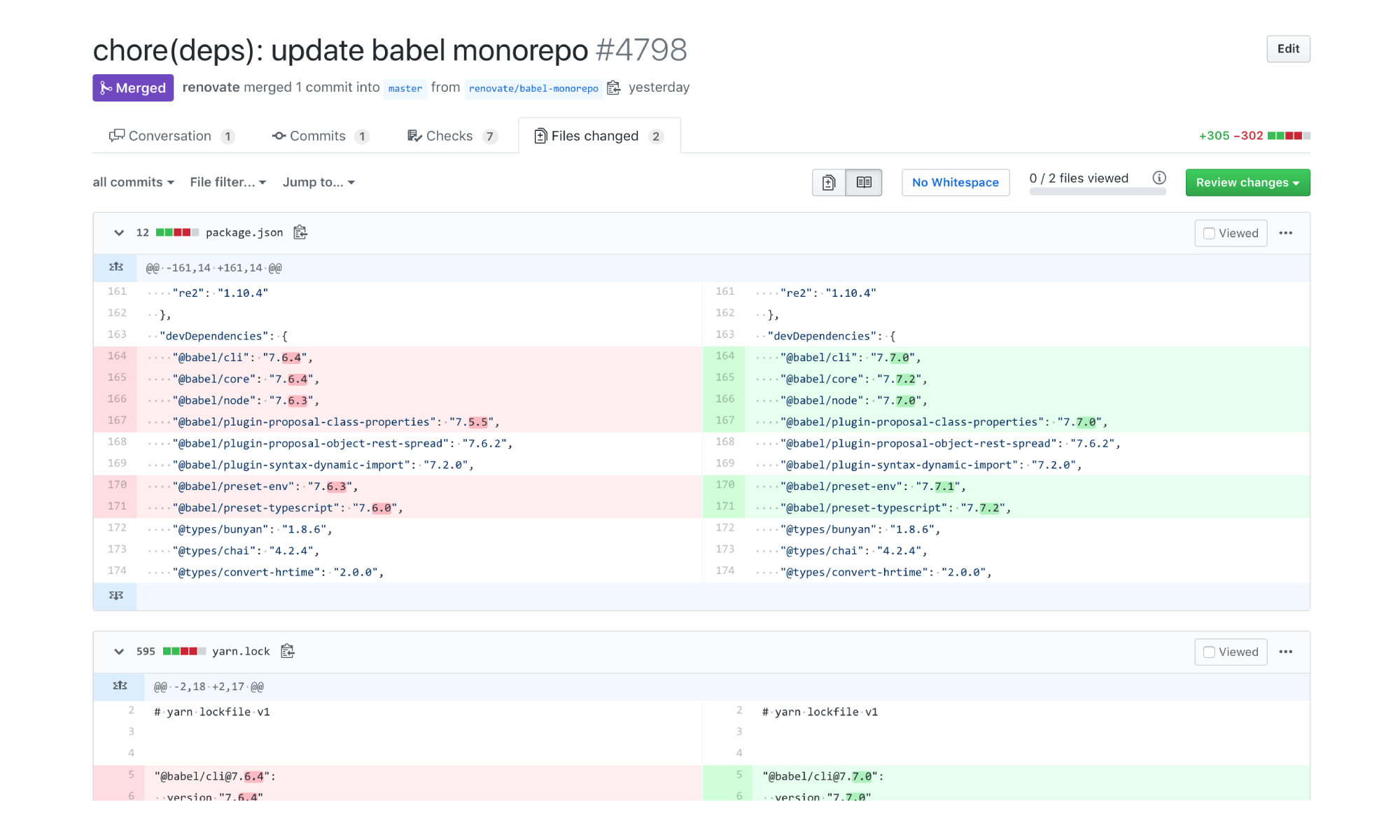
    WhiteSource has acquired Renovate, a provider of an open source automated dependency update platform that the company plans to make available for free.

    Rhys Arkins, co-founder of Renovate who is now director of product for WhiteSource, said that as software projects become more complicated, there’s an increased need for a mechanism to identify and track dependencies and automatically update them as changes and updates are made.

    That requirement is becoming especially acute with the rise of microservices-based applications, which substantially increase the number of dependencies that exist within and between applications, added Arkins. Microservices make it possible for DevOps teams to build and deploy applications faster, but the dependencies between the microservices often result in an application environment that becomes too complex to manage. Most recently, Renovate added support for Helm Charts used to package applications in Kubernetes environments, on which many microservices are now being deployed.

    In addition, WhiteSource plans to add support for Cocoapods, a dependency manager for Swift and Objective-C Cocoa projects.

    Prior to the acquisition, WhiteSource was reselling the Renovate platform, which has more than 150 contributors. Now that WhiteSource owns the Renovate platform, including a hosted GitHub application and self-hosted GitHub and GitLab applications, the company has decided to make it available for free under the WhiteSource Renovate brand name.

    In the future, The WhiteSource Renovate app will add support for Bitbucket Cloud and Azure DevOps, thereby expanding the sources of dependency data that can be employed to make updates less risky and time-consuming, said Arkins. In effect, WhiteSource wants its automated dependency platform to become a natural extension of any continuous integration/continuous delivery (CI/CD) platform, he added.

    Arkins said that when it comes to managing dependencies, the biggest challenge is getting developers to identify them. In the absence of a platform for managing that process, developers will either not declare dependencies at all or, more commonly, not provide the right version number for a specific release of software on which their application is dependent. The more automated that process becomes, the less likely it is DevOps teams will find applications breaking because of a dependency that they were unaware of or lost track of at some point during the project.

    With the rise of DevOps, many organizations are now employing a more structured approach to dependencies. However, Arkins noted, many organizations are unaware that an open source platform is available that automatically updates all dependencies.

    WhiteSource is best known for helping organizations discover vulnerabilities in open source code. With the acquisition of Renovate, the company is furthering its ambitions to become a provider of software composition analysis tools.

    It remains to be seen just how many organizations will incorporate an automated dependency update platform into their DevOps processes. While many organizations have embraced DevOps, the level of maturity in terms of DevOps sophistication is uneven. The more software projects an organization launches, however, the more likely it becomes apparent there is a need for a better way to manage software dependencies.

    — Mike Vizard

  • CNCF Advances Jaeger Distributed Tracing Project

    CNCF Advances Jaeger Distributed Tracing Project

    The open source Jaeger distributed tracing platform has officially graduated into the top tier of projects being stewarded by the Cloud Native Computing Foundation (CNCF).

    Designed to be employed within any DevOps environment, Jaeger is a tool for monitoring transactions across complex distributed computing environments. It consists of a backend for trace collection and analysis and multiple client libraries implementing the OpenTracing application programming interface (API) in various languages.

    Developed by Uber, Jaeger now integrates with tools such as OpenTracing, OpenTelemetry, Envoy and Prometheus to make it easier to discover the root cause of issues impacting transactions in complex IT environments. For example, DevOps teams can apply data mining techniques and machine learning algorithms to analyze data from a specific cluster.

    JaegerYuri Shkuro, a software engineer for Uber who works on the Jaeger project, said organizations may rely on tools such as Prometheus to monitor environments, but once an issue is identified, it typically takes a tool such as Jaeger to identify the root causes of an issue. The primary reason for that approach is the amount of data that distributed tracing tools would store if they were to run continuously, he said.
    Organizations that are already using Jaeger in production environments include GrafanaLabs, Northwestern Mutual, SeatGeek, Symantec, Ticketmaster, Uber, Weaveworks and Zenly.

    Jaeger is also starting to be bundled with other platforms, such as the Red Hat OpenShift Service Mesh. As that trend continues, more organizations are likely to become exposed to Jaeger as a tool for debugging a wide variety of issues.

    Although originally developed to address the inherent complexity associated with microservices, Jaeger also can be applied to monolithic applications, Shkuro said. While many of those monolithic applications eventually are likely to be deconstructed into a set of microservices, many of those applications are not going away anytime soon, he noted.

    Jaeger now has 15 active maintainers from four companies, with more than 1,200 contributors and 375 authors of commits and pull requests. It also has more than 9,000 GitHub stars and has been pulled from Docker Hub more than 10 million times.

    While distributed tracing as a concept has been around for a while, the rise of microservices is forcing IT teams to look for tools that make it possible to engage in deeper forensics. The dependencies between microservices coupled with the ephemeral nature of containers often make it challenging for IT organizations to discover the root cause of intermittent issues. Within IT environments that have adopted Kubernetes to run those containers, it’s also become easier to deploy Jaeger using tools as Kubernetes templates, Operator software and a Helm Chart.

    As developers are held more accountable for applications, interest in programmable forensics tools is rising. Performance issues that developers once viewed as a problem to be solved by faceless IT operations staffs are now being solved much faster by developers. As a result, application experiences have improved now that developers are seeking out tools such as Jaeger to identify issues that are preventing them from focusing their efforts on writing additional code. Given the long, difficult history of IT, there are more than a few IT leaders wondering what took them so long to figure that out.

    — Mike Vizard

  • Survey Surfaces Uneven Approaches to DevSecOps

    Survey Surfaces Uneven Approaches to DevSecOps

    A ZeroNorth survey shows implementing DevSecOps is rife with questions for many organizations, with no clear answers

    There’s general agreement that digital business transformation initiatives are driving an overall acceleration in the rate at which applications are developed. At the same time, however, given the critical nature of those applications, cybersecurity has never been more of an imperative for DevOps teams. The challenge they are encountering is not so much a lack of tools to address that requirement, but rather a lack of clarity in terms of what tool to use when.

    A survey of 57 cybersecurity professionals conducted by ZeroNorth, a provider of a platform for orchestrating vulnerability scanning tools, highlights the extent of the DevSecOps challenge. The survey finds 63% of respondents said their organization currently employs six or more scanning tools. The most widely employed are network scanning (53%) and vulnerability scanning (51%). However, a quarter (25%) don’t know if their organization is using interactive application security testing (IAST), while 19% don’t know if they are using software composition analysis (SCA) tools.

    As far as DevSecOps is concerned, there’s little to no clarity in terms of where to primarily focus scanning efforts. Build/CI environments (68%) receive the most focus, but 46% are focused on scanning within integrated development environments (IDEs). Container/artifact management (67%), source code repositories (58%) and deployment (56%) all fall somewhere in between, the survey finds.

    There’s also no clear consensus on the merits of open source versus commercial testing tools Open source software (OSS) tools were identified as a priority for less than half of respondents (47%). However, 27% of respondents said they expect to begin using open source tools in 2020. Of the respondents currently employing OSS tools, 14% said believe these tools are more effective than commercial test and scan tools. Well over a third (39%) said they believe they are more effective when combined or customized. Just under a third (32%) said OSS tools are equally as effective as commercial options, while only 9% said they are less effective.

    The survey also shows disparity when it comes to the various areas that make up a digital business transformation, with the most mature being cloud migration (80%), followed by DevOps (67%), continuous integration/continuous delivery (CI/CD) (62%) and microservices (62%). Overall, 79% of respondents said they have a digital business initiative underway.

    ZeroNorth CTO John Steven said it’s clear that in many cases, the need for faster iterations of application development is outpacing the operational capabilities of IT organizations, especially when it comes to DevSecOps. Given the chronic shortage of cybersecurity professionals, there may be an average of only one cybersecurity professional for every 100 developers. Having cybersecurity professionals participate in every scrum session isn’t feasible, so there needs to be a way for cybersecurity professionals to provide guidance to developers specifically when it comes to what scanning tool should be applied and when, said Steven.

    The survey finds network (53%) and vulnerability (51%) scanning are the most broadly employed. However, that also suggests that many IT teams involved in digital business transformation initiatives are not making use of scanning at all.

    The good news is that survey respondents said identifying bugs, flaws and vulnerabilities throughout the software development life cycle (SDLC) is either “extremely” (58%) or “very” (42%) important to all participants involved. A total of 47% said it was either “extremely important” or “very important (35%) to improve visibility around operations by integrating security earlier into the software development life cycle (SDLC). However, while the DevSecOps spirit may be willing, the ability to implement best DevSecOps practices is still clearly weak.

    — Mike Vizard

  • CircleCI Achieves SOC 2 Compliance for DevOps Platform

    CircleCI Achieves SOC 2 Compliance for DevOps Platform

    CircleCI has achieved a SOC 2 compliance rating for the DevOps platform it makes available via a software-as-a-service (SaaS) model.

    Tad Whitaker, security manager at CircleCI, said CircleCI is the first provider of a SaaS platform for DevOps that has invested the hundreds of thousands of dollars required to achieve SOC 2 compliance.

    SOC 2 compliance requires organizations to pass an annual audit based on the Trust Services principles and criteria defined by the American Institute of Certified Public Accountants (AICPA). That criteria evaluate IT environments on everything from the cybersecurity controls they have in place to the integrity of the data management processes employed. A SOC 2-level certification means DevOps teams can have confidence in the fact that their data is being kept completely confidential, said Whitaker.

    With interest in best DevSecOps processes on the rise, Whitaker noted more organizations are starting to ask questions about how data is managed and secured on the cloud services they rely on to build and deploy applications. Cybersecurity professionals who are now participating in those processes are starting to ask challenging questions. To address those concerns, Whitaker said CircleCI created a team within the company to first attain SOC 2 compliance and, now, maintain it.

    That may lead to additional processes and controls being put in place, but DevOps teams can be confident that everything possible is being done to secure their data from prying eyes, including employees of CircleCI.

    A lot of the data being employed to build new applications is among the most sensitive an organization is likely to possess. As organizations embrace DevOps practices to drive digital business transformation initiatives, there’s a much greater need to ensure the DevOps environment is secure end to end. However, most of the DevOps platforms delivered as a service today are not able to validate the level of security they claim to have put in place, said Whitaker.

    It’s unclear how many organizations are going to insist of SOC 2-level certifications before agreeing to develop applications on a specific DevOps platform. However, SOC 2-level certifications are routinely required for cloud service providers so it’s only a matter of time before the same audit requirements are applied to other cloud services. The challenge will come when DevOps teams have to adjust their existing DevOps processes to accommodate the security processes that SOC 2-compliant cloud service providers are required to make.

    In the meantime, the days when DevOps teams could employ cloud services to bypass cybersecurity policies are coming to an end. Cybersecurity teams are finally catching up in terms of figuring out how to enforce cybersecurity policies beyond an on-premises IT environment. Not every DevOps team may appreciate the impact those policies may have on productivity. However, if the alternative is to have sensitive data that DevOps teams are now being held accountable for exposed on the web because of careless processes than the time to come to terms with cybersecurity has finally come.

    — Mike Vizard

  • IBM Zones in on DevOps for AI

    IBM Zones in on DevOps for AI

    IBM this week revealed it has added a drift detection capability to the Watson OpenScale platform to govern artificial intelligence (AI) models that will become a foundational piece of IBM’s approach to defining best DevOps practices for building AI-infused applications.

    Rohan Vaidyanathan, program director for IBM Watson OpenScale, said one of the biggest AI issues organizations face today is determining when to update or replace an AI model. Announced at the IBM Data and AI Forum event, the drift detection software added to Watson OpenScale provides a continuous monitoring capability that detects how far an AI model has moved from its original parameters, Vaidyanathan said.

    Drift in AI models usually occurs over time, especially as use cases change in ways that are unexpected. Once that drift is detected, organizations eventually want to either retrain that AI model or replace it with a new one. The process challenge organizations face when building AI applications is first assembling the right data to train the model and then integrating that model within an application as part of a continuous integration pipeline.

    With each interaction with an AI model, the result returned to the application might be different as the machine learning algorithms embedded in the AI model continually learn about the process the application abstracts.

    As it turns out, Vaidyanathan said, only one in 20 of the AI models being built make it into production applications, largely because organizations have not bridged the divide between DevOps teams and data scientists effectively. The drift detection capability IBM has developed is a “missing link” that will enable those two teams to begin collaborating more closely, he said.

    IBM has already defined a set of best practices for building AI models as part of its Watson Anywhere initiative, which seeks to drive adoption of the various elements of the Watson platform on multiple clouds. Rather than forcing organizations to load data into an IBM Cloud to use Watson, IBM is working to bring the various engines and application programming interfaces (APIs) to wherever data resides.

    Naturally, IBM would prefer organizations employ the opinionated DevOps and DataOps processes it defines as best practices for building AI models using its tools. However, Vaidyanathan acknowledged there is likely to be plenty of instances in which organizations will prefer to define their own DevOps processes. The hope is those organizations will still access Watson services and metrics using the APIs that IBM has exposed.

    The challenge IBM is encountering in terms of driving AI adoption are manifold. In addition to trying to get data scientists to appreciate DevOps, IBM recognizes AI models are only as good as the data employed to train them. Unfortunately, many organizations have been lax when it comes to data management. As a result, many of them are now revisiting broken DataOps processes. IBM Watson OpenScale and IBM Cloud Paks for Data, a set of portable data virtualization and management tools deployed as microservices, are part of an effort to bring both explainability and order to the building of AI models.

    Obviously, it will take some time for organizations to extend best DevOps practices to incorporate AI models. But at this juncture, it’s more a matter of when rather than if that goal will be achieved.

    — Mike Vizard

  • Virtual Instruments Changes Name to Virtana to Drive AIOps

    Virtual Instruments Changes Name to Virtana to Drive AIOps

    With the formal launch of a software-as-a-service (SaaS) to monitor cloud platforms and optimize cloud, Virtual Instruments today renamed itself Virtana.

    The company’s CloudWisdom platform is based on technology Virtana gained via the acquisition of Metricly earlier this year. In addition to being integrated with existing on-premises offerings from Virtana, CloudWisdom has been expanded to include a self-service option. Downloadable trial versions are also available.

    Virtana CEO Philippe Vincent said the name change reflects a transformation from being simply a provider of storage I/O performance testing tools to becoming a provider of an IT operations management platform infused with artificial intelligence (AIOps). As part of that effort, the CloudWisdom offering represents the first time Virtana has extended the reach of its offerings beyond on-premises IT environments, he said.

    CloudWisdom will differentiate itself, Vincent said, because it combines cloud monitoring with built-in tools for optimizing cloud costs. Rival offerings require IT organizations to acquire two separate services, he noted. The CloudWisdom platform monitoring capabilities span databases, messaging platforms and containers, as well as cloud infrastructure services from Amazon Web Services (AWS) and Microsoft.

    In general, Vincent said IT organizations are moving away from a reactive approach to managing IT to a more proactive approach that will require increased reliance on automation. As IT environments become more complex, too many IT organizations are trying to compensate by overprovisioning IT infrastructure resources to make sure application performance doesn’t deteriorate or applications crash. That approach not only drives IT costs higher, he said, but it also makes those costs unpredictable.

    To address that issue, Virtana is combining CloudWisdom with an AIOps platform designed to be equally applicable in legacy IT service management (ITSM) and emerging DevOps environments. Organizations that have adopted DevOps will be at the forefront of the transition to AIOps because of the inherent fluidity and velocity of those environments, Vincent noted. Machine learning algorithms coupled with real-time monitoring, big data analytics, workflow engines and automation frameworks will enable IT teams to streamline ITSM and DevOps processes to become more efficient. The opportunity for Virtana is to disrupt a highly fractured monitoring category by leveraging AIOps to unify monitoring at an unprecedented level of scale and scope, he added.

    Virtana is not the only IT management platform provider that has identified the same opportunity; much larger incumbent providers of these platforms and a raft of startups are moving in the same AIOps direction. Vincent said Virtana will differentiate itself by pursuing a more application-centric approach to delivering on the promise of AIOps.

    It’s too early to say to what degree IT operations can be automated using AI. There’s general agreement that AI will play a significant role in automating IT, and the more standardized the IT environment is, the easier it is to accomplish. The challenge is, most IT environments today are still anything but standardized.

    — Mike Vizard

  • Survey Suggests DevOps Drives Digital Business Transformation

    Survey Suggests DevOps Drives Digital Business Transformation

    A survey published this week by New Relic, a provider of IT monitoring services, suggests there is a high correlation between organizations that have embarked on digital business transformation initiatives and adoption of best DevOps practices.

    Revealed at the Futurestack conference hosted by New Relic, the survey 750 global senior IT decision-makers of enterprises with 500 to 5,000-plus employees in Australia, France, Germany, UK and the U.S. conducted by the market research firm Vanson Bourne finds roughly 50% of organizations in the U.S. have completed or are close to completing their digital transformation journeys.

    The same survey finds nearly two-thirds of U.S. respondents in the region claim they’ve adopted DevOps practices.
    Buddy Brewer, group vice president and general manager for client side analytics at New Relic, said the challenge most organizations face in terms of DevOps is they lack access to real-time analytics. DevOps teams may have access a raft of metrics, but all the data they have only tells them how many times something occurs on average. Roughly half of end users may be having a satisfactory application experience, but the half that are not are the company’s most important customers, noted Brewer.

    Overall, the survey finds that that there’s nothing easy about modernizing IT environments to drive digital transformation initiatives. Nearly three-quarters (72%) expect the technology team to deliver more innovations and updates. However, more than 50% said they find their complex new software and infrastructure difficult to manage and monitor for performance issues.

    Nearly half the respondents (48%) also admitted end users or customers are likely to tell them about a problem before they know about it and 46% said they are told about these issues before they know how to fix them.

    At the same time, 79% said the rest of the business has higher expectations in how digital systems perform and 63% admitted that because of pressure to respond to business needs, they work longer hours to observe and manage software performance. Almost half (46%) said C-suite executives want daily updates about how software systems are performing and 40% said CEOs also want more answers when outages or performance problems happen.

    More than half (56%) of all respondents acknowledged that it is impossible to properly assess all the machine data being collected. Just as troubling, a third said they are challenged on business benefit metrics for their digital transformation projects.

    The survey identifies the top five digital transformation challenges:

    1. Separate parts of the organization are moving at different speeds to embrace digital transformation.
    2. Shortage of skilled employees.
    3. Restricted budgets.
    4. Understanding and measuring business benefits.
    5. Continued resistance to shutting down legacy systems.

    As always in the case of IT professionals, however, hope springs eternal. A full 89% said they believe artificial intelligence and machine learning algorithms will become important element for managing digital systems. That may indeed come about one day. However, until that day arrives, DevOps teams should count on the fact that every digital business transformation project that gets launched equates to a lot more hard work for them.

    — Mike Vizard

  • DevOps Deeper Dive: DevOps Accelerates Open Source Innovation Pace

    DevOps Deeper Dive: DevOps Accelerates Open Source Innovation Pace

    In the span of a few short years, open source software has evolved from being a means to create the free equivalent of an existing commercial platform to now becoming the primary means of driving innovation across the IT industry.

    That rate of innovation has increased dramatically in the last few years. However, much of that innovation would not have been possible if large swaths of the open source community hadn’t been able to employ best DevOps practices to collaborate, said CloudBees CEO Sacha Labourey.

    Early on, the adoption of open source software was driven by a desire to commoditize operating systems and databases by making available a free equivalent.

    “It was all about replacement software,” said Labourey.

    Open source adoption got a major boost in the enterprise during the last economic downturn. Many organizations implemented an “open source first” strategy to lower their IT acquisition costs. As part of that mandate, developers began making greater use of cloud infrastructure to build applications based on an open source stack of software using best DevOps practices.

    In some cases, that preference for open source software turned into religious fervor. In other cases, it simply became a means to bypass IT purchasing processes that developers considered obstacles to writing code. Of course, it was only a matter of time before the open source software used to build applications made its way into production environments managed by IT operations teams.

    Just as significantly, open source software was leveraged to build public clouds that today are transforming the way IT is consumed.

    None of this shift has been lost on IT vendors. As the demand for proprietary code slackened, many found it profitable to offer support services for open source software. The more there is to consume, the more the support services contracts grew. Now every vendor from IBM to small IT services providers such as Fairwinds has launched open source projects that help drive demand for IT services expertise.

    “There’s pain around integrating a lot of disparate open source projects,” said Robert Brennan, director of open source software for Fairwinds. “Organizations may be getting software for free, but there’s usually not a lot of help around.”

    Now almost every IT vendor in the world is making software engineers available to work on open source projects. All that talent focused on open source projects has led to the development of new platforms such as Jenkins, GitHub, Kubernetes and, more recently, a raft of smaller projects. With the rise of containers and cloud-native applications, open source software projects are entering another era that will see many of those same software engineers leveraging DevOps practices more broadly to drive even more innovative projects at increasingly faster rates.

    “All the innovation is now being driven by open source,” said Joe Fernandes, vice president, products for cloud platforms at Red Hat. “You no longer have to wait for a single vendor to move something forward.”

    The challenge many organizations now face is keeping pace with the rate of innovation. Most major open source projects, thanks to DevOps practices, are updated once a week. To shield themselves from having to work with raw bits of code, many IT organizations rely on curated distributions of open source code from vendors such as Canonical, SUSE and Red Hat.

    Today, the economics of software development have changed. Providers of proprietary software are at a distinct disadvantage when competing against open source projects that can marshal more developer resources. A vendor selling proprietary software needs to keep a smaller team of developers highly focused on adding compelling, innovative features faster than an open source project can replicate them. As many vendors continue to show, that goal isn’t impossible to achieve; however, it is a pace of innovation that is exceedingly difficult to maintain.

    It remains to be seen just how much of the software deployed in IT environments will be based on open source code going forward. But with each passing day, the balance on the scale continues to lean further away from proprietary code.

    — Mike Vizard