Author: Mike Vizard

  • Mendix Injects More AI to Accelerate Low-Code Development

    Mendix Injects More AI to Accelerate Low-Code Development

    The rate at which low-code applications are built and deployed will accelerate as developers begin to rely more on artificial intelligence (AI) to write code. The summer 2019 release of the Mendix low-code platform includes a revamped instance of Mendix Assist, which employs machine learning algorithms to make coding recommendations. Those algorithms have been trained using data drawn from 5 million application models employed across 15 industries over the last 10 years, and Mendix claims this version of Mendix Assist improves the accuracy rate of the recommendations being made to 95%.

    Sheryl Koenigsberg, director of product and solutions marketing for Mendix, said Mendix Assist will enable new developers to write better code faster, while experienced developers will be able to employ Mendix Assist to address routine issues that often get overlooked faster. Mendix Assist not only advises developers on what to do next but also generates recommended actions in previous logical steps based on whatever new code is introduced in the application.

    Mendix

    To make these capabilities more accessible, the summer release of Mendix adds Mendix Studio and Studio Pro, a set of integrated development environments designed to be accessible to both citizen and professional developers, to the low-code platform.

    In addition, Mendix is adding support for native mobile application development by adding support for React, a set of JavaScript libraries for building user interfaces for mobile applications, and including a native JavaScript editor. Those capabilities eliminate the need to rely on emulation software when building mobile computing applications, said Koenigsberg. Because the Mendix IDEs integrate low-code abstraction across iOS, Android, Java and Objective-C programming models, it also becomes easier for mobile developers to build reusable components. Mendix has also included more than 50 pre-built connectors to mobile device capabilities, such as camera, geolocation, biometric authentication and Bluetooth enablement, along with support for conversational chatbots and voice interfaces such as Alexa and Siri.

    Longer-term, Koenigsberg observed that it’s conceivable the AI capabilities being included in application development tools eventually will share insights with AI models being incorporated into continuous integration/continuous deployment (CI/CD) platforms. Proposed changes to an application could, for example, might be assessed from a performance perspective before any lines of code are written.

    In the meantime, the rate at which low-code applications will be moving through CI/CD platforms is about to increase substantially as developers augment their own skills by relying more on recommendations surfaced by AI engines. The quality of those applications should also improve as AI engines check, for example, to make sure all the appropriate compliance and cybersecurity controls are in place.

    It’s not likely AI engines will replace the need for developers anytime soon. However, it is apparent all the little things that routinely conspire to slow application development and delivery processes increasingly will be automated. That should make it easier for a larger number of organizations to embrace best DevOps processes. After all, the primary issue with DevOps adoption these days is not necessarily appreciating the value of the concept, but rather managing pipelines that still tend to get clogged every time an application fails to pass a gate because a developer forgot to do one thing or another.

    — Mike Vizard

  • GitLab Survey Surfaces Major DevSecOps Challenges Ahead

    GitLab Survey Surfaces Major DevSecOps Challenges Ahead

    A report based on a survey of 4,071 software professionals published this week by GitLab, a provider of a continuous integration and continuous deployment (CI/CD) platform, found that while appreciation of the potential value of DevSecOps best practices is high, the ability to implement those practices is uneven at best.

    According to the survey, half of the respondents reported that security vulnerabilities are discovered mostly by the security team rather than developers after code is merged and in a test environment. And, when cybersecurity professionals participate in a DevSecOps process, the survey found those organizations are three times more likely to discover bugs before code is merged. In addition, a full 90% of those organizations are more likely to have tested between 91% and 100% of their code early in the development process.

    Obviously, that’s better than discovering them after they’ve been deployed in a production environment. On the downside, however, nearly half of security professionals participating in the GitLab survey (49%) said they struggle to get developers to make remediation of vulnerabilities a priority. That challenge may reflect the overall maturity of the DevSecOps practices in place. For example, only 25% of developers participating in the survey rated their security practices as being good. That compares to only 20% of security professionals who rated their processes as good. Only 14% of respondents said they are relying on application security tools to test more than 91% of their code. A full 44% are using these types of tools to test less than a third of their code.

    Priyanka Sharma, director of technology evangelism for GitLab, said the survey makes it clear that DevSecOps is now officially a thing in the enterprise. However, only 44% of the survey respondents said that security vulnerabilities are a performance metric for developers in their organizations. As such, it’s clear there is still a long way to go before anything approaching DevSecOps nirvana is likely to be achieved. In fact, Sharma noted building and deploying more secure applications may require organizations to slow down the rate at which applications are being built, at least initially.

    The GitLab survey makes it clear most organizations are still struggling with mastering DevOps. Only 28% of developers said they feel good about their organization’s level of DevOps sophistication, while less than half (45%) said they have been able to implement continuous code deployment at least somewhere in their organization. That level of adoption suggests there still is plenty of opportunity to refine DevOps processes that are not fully ingrained. In fact, it appears most organizations are still trying to master agile development methodologies—more than half of the respondents said they employ Scrum (54%) as their application development methodology, followed by Kanban at 37% and DevOps at 36%.

    Ultimately, most organizations will have no choice when it comes to embracing DevSecOps. There simply are not enough cybersecurity professionals available to secure every application on their own. That means developers will need to assume more responsibility for cybersecurity, regardless of whether they like it. DevSecOps processes will be required to validate whether developers have implemented all the security patches and controls required. Anything less than that going forward will be deemed as nothing short of reckless—which, as any lawyer will gladly share, means much higher penalties for everyone involved.

    — Mike Vizard

  • Chef Brings DevOps to Windows Platform Migrations

    Chef Brings DevOps to Windows Platform Migrations

    Chef and Microsoft revealed today that they are working together to apply DevOps processes to accelerate the migration of Windows Server 2008 and SQL Server 2008 to more current versions.

    Announced at the Microsoft Inspire conference, the goal is to enable organizations to leverage Chef Enterprise Automation Stack (EAS), which includes an EAS Migration Accelerator for Windows that will scan existing .NET applications running on legacy Microsoft platforms to discover configuration and dependency details, then encapsulate that information as code in a way that enables the application to run on the latest version of a Microsoft virtual machine or as a container.

    Ewan Dalton, partner development manager for Microsoft, said there are roughly a half-million .NET applications running on platforms that are scheduled for end-of-life support beginning in January. In an ideal world, most of those applications would be modernized to be deployed on the Microsoft Azure cloud, said Dalton.

    Vikram Ghosh, vice president of business development at Chef, said rather than merely lifting and shifting legacy applications onto a new platform, Chef EAS will make it possible to employ DevOps processes to modernize how those applications are updated and maintained. Chef EAS makes it possible to, for example, scan, extract and package legacy applications and their dependencies, using source control repositories such as GitHub, and convert them into cloud platforms using pipelines such as Azure DevOps. Customers can deploy these application packages in Azure and run continuous security and compliance scans, added Ghosh.

    Chef EAS

    The biggest challenge many organizations face when trying to migrate applications is the developers who created the application haves long since left the company. As such, most organizations only have documentation, which is usually sparse. They then must determine whether it is worth modernizing the application or whether they should simply replace it. In cases where it is deemed that the business logic contained within that legacy application is still critical enough to continue running, they need to find a way to automate that process as much as possible.

    Longer-term, of course, most organizations will work to modernize legacy monolithic applications even further by slicing them up into a series of more manageable microservices. But many organizations are already running out of time when it comes to existing .NET applications. Once Microsoft ends support for the platforms they are running on, patches to address cybersecurity issues no longer will be provided as part of the standard licensing agreement. In effect, that means there is enough time between now and January to re-engineer an application. Chef EAS essentially throws organizations a lifeline to determine what they want to do next in terms of replacing a legacy application, said Ghosh.

    Of course, there will always be some subset of the IT community that will continue to run .NET applications on outdated Microsoft platforms. It’s also unlikely that any of those organizations will be embracing DevOps processes to maintain those platforms anytime soon.

    — Mike Vizard

  • Linus Torvalds Sees Lots of Hardware Headaches Ahead

    Linus Torvalds Sees Lots of Hardware Headaches Ahead

    Linux founder Linus Torvalds, today at the KubeCon + CloudNative + Open Source Summit China conference, warned attendees that managing software is about to become a lot more challenging, largely because of two hardware issues that are beyond the control of DevOps teams.

    The first, he said, is the steady stream of patches being generated as new cybersecurity issues related to the speculative execution model that Intel and other processor vendors rely on to accelerate performance. That model is the root cause of malware such as Spectre and Meltdown that have roiled the IT industry. Additional bugs in speculative execution with colorful names such as Fallout and ZombieLoad are showing up more frequently. Each of those bugs requires another patch to the Linux kernel that, depending on when they arrive, can require painful updates to the kernel, Torvalds told conference attendees.

    Short of disabling hyperthreading altogether to eliminate reliance on speculative execution, each patch requires organizations to update both the Linux kernel and the BIOS to ensure security. Turning off hyperthreading eliminates the patch management issue, but also reduces application performance by about 15 percent.

    The second major issue hardware issue looms a little further over the horizon, Torvalds said. Moore’s Law has guaranteed a doubling of hardware performance every 18 months for decades. But as processor vendors approach the limits of Moore’s Law, many developers will need to reoptimize their code to continue achieving increased performance. In many cases, that requirement will be a shock to many development teams that have counted on those performance improvements to make up for inefficient coding processes, he said.

    In the meantime, Torvalds noted updates to the Linux kernel are still coming at a rate of every three months, and the Linux team is basically working on a six-month planning cycle—there is no master five-year plan the Linux team is working from. Roughly 1,500 developers work on contributions to the Linux kernel, with 100 maintainers overseeing the implementation of those contributions.

    Naturally, cybersecurity patches at the kernel level have significant implications for all of DevOps. Changes to the kernel need to be absorbed by all the various distributions of Linux, which in turn impacts all the stacks of software that depend on Linux. Jim Zemlin, executive director for The Linux Foundation, said that in the wake of the rise of these hardware issues and previous cybersecurity issues involving open source software such as the Heartbleed vulnerability, cybersecurity is the top priority for The Linux Foundation. As part of that effort, The Linux Foundation is researching various DevSecOps approaches to better securing the global open source supply chain, he said.

    In the meantime, organizations large and small alike will need to up their DevSecOps game significantly if they want to continue to push application performance limits.

    — Mike Vizard

  • HPE Extends Hybrid Cloud Computing Strategy

    HPE Extends Hybrid Cloud Computing Strategy

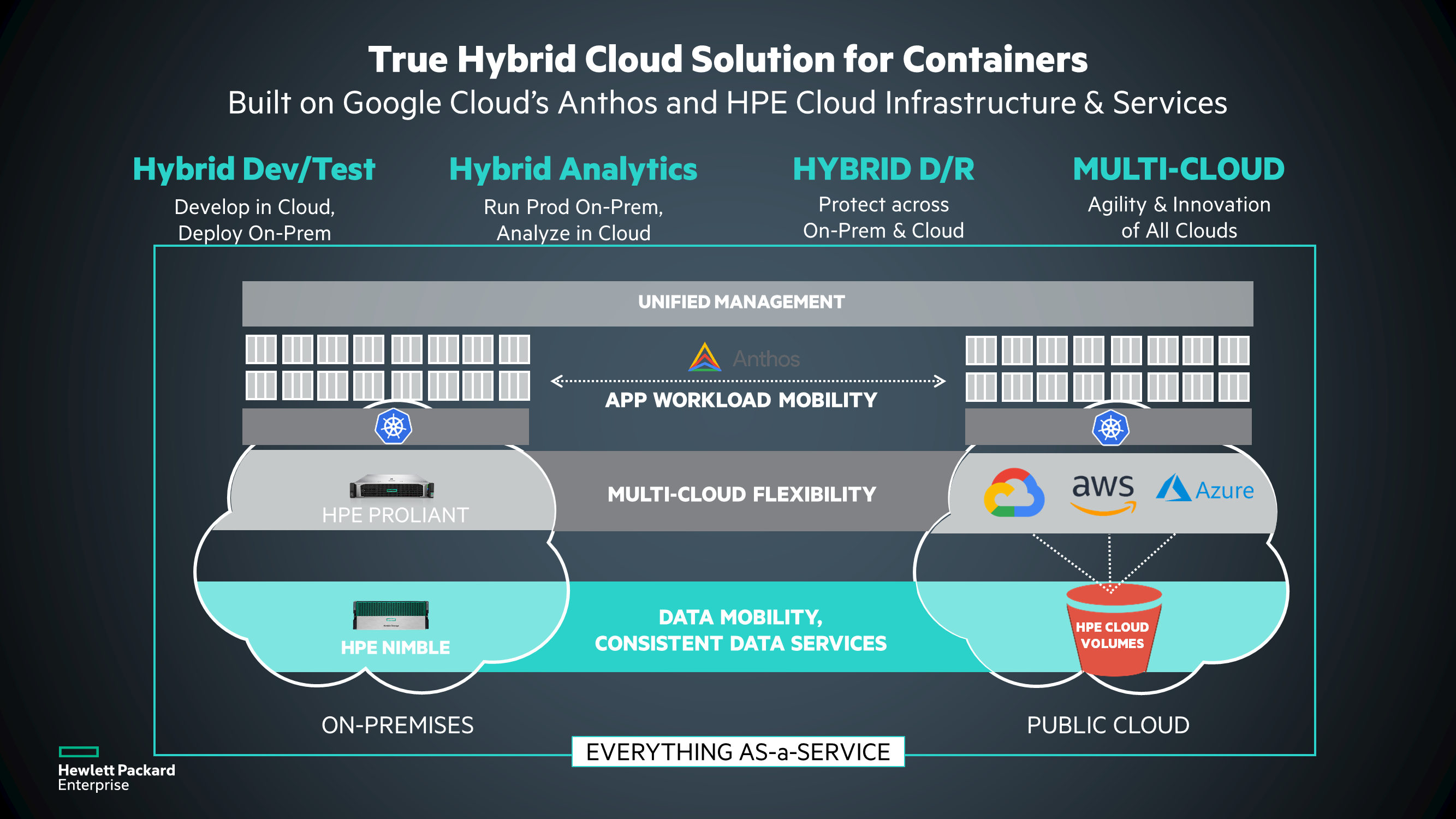
    Hewlett-Packard Enterprise (HPE) today advanced its hybrid cloud computing strategy by announcing at its HPE Discover 2019 conference an alliance with Google to embrace Kubernetes in hybrid cloud computing environments and then extending the reach of its software-defined infrastructure for building private clouds to legacy ProLiant servers.

    Lauren Whitehouse, director of marketing for the software-defined and cloud group at HPE, said the HPE Composable Cloud now extends beyond new ProLiant servers to include everything from legacy hardware to cloud computing platforms running virtual machines or as bare metal servers optimized for Kubernetes.

    To achieve that latter goal, HPE will make it possible to deploy Google Anthos, a previously announced framework for delivering cloud-native computing services across public clouds and on-premises IT environments, on HPE-managed platforms.

    HPE is giving customers the option of deploying configuring local servers with virtual machines with either a VMware vSAN storage software or the HPE SimpliVity hyperconverged infrastructure platform. Additionally, customers can choose to deploy Kubernetes on those platforms or run Kubernetes on a bare-metal server. On top of those stacks, HPE also embeds the HPE OneView IT infrastructure management and HPE Composable Fabric networking solution to create what the company calls a composable rack environment.

    Finally, HPE announced it will extend the reach of the HPE InfoSight artificial intelligence engine, which it gained for storage environments when it acquired Nimble Storage, to the rest of its data center portfolio.

    Whitehouse said that, by extending the reach of its composable computing strategy to include legacy servers, HPE seeks to make it easier to modernize on-premises IT environments within the context of a larger hybrid cloud computing strategy.

    One of the primary reasons so many workloads are being deployed in the cloud is because of the inherent flexibility of the IT environment. HPE is investing in higher levels of infrastructure abstractions to enable an equivalent amount of agility to be injected into on-premises IT environments. Those efforts will then make it easier for organizations to extend best DevOps practices across a hybrid cloud computing environment, said Whitehouse. The company is now removing the objection by organizations to have to implement a forklift upgrade across their entire on-premises IT environment to achieve that goal, she added.

    It’s not immediately clear who will manage what in this brave new world of hybrid cloud computing. Application developers have been exercising a lot more influence over platforms, while advances in automation appear to be heralding a consolidation of management functions within the local data center. As site reliability engineers, or so-called “super administrators” capable of managing compute, storage and networking infrastructure continue to emerge, the silos around job functions in the enterprise were built are breaking down. In fact, the more organizations embrace DevOps best practices, the faster consolidation of job functions is occurring.

    In the meantime, whoever provides the infrastructure that remains in an on-premises IT environment had better be able to enable local IT teams to be just as flexible as any cloud service provider an application developer is likely to encounter.

    — Mike Vizard

  • Pulumi Advances DevOps on AWS

    Pulumi Advances DevOps on AWS

    Pulumi announced the availability of Pulumi Crosswalk for Amazon Web Services (AWS), an open source framework for deploying applications on Amazon Web Services (AWS).

    Company CEO Joe Duffy said Pulumi Crosswalk for AWS provides a software-as-a-service (SaaS) application through which DevOps teams can automate the deployment of applications on AWS infrastructure using software development kits (SDKs) from Pulumi. The SDKs are based on programming tools such as JavaScript, Python, TypeScript and Go, which most developers already know how to use. That approach eliminates the need for DevOps teams to learn how to employ YAML files or to acquire tools such as CloudFormation or Terraform to deploy applications on AWS, he said.

    Pulumi Crosswalk for AWS also embeds the best DevOps processes recommended by AWS directly within its SaaS tools, including patterns for containers and serverless computing frameworks, Duffy noted.

    Pulumi Crosswalk for AWS is available on GitHub. It is designed to be integrated with existing Team and Enterprise Editions of Crosswalk that come with support and training provided by Pulumi.

    In addition to AWS, Pulumi Crosswalk supports other cloud platforms, including Microsoft Azure and Google Cloud Platform (GCP). The company also plans to provide support for private clouds and leverage Kubernetes clusters to automate deployments across hybrid cloud computing environments.

    Duffy noted that despite all the enthusiasm for DevOps, many IT operations teams have been left behind. While much time and effort has been put into unifying backend cloud services, the operational experience in the cloud still revolves around low-level application programming interfaces (APIs) or specialized tools that are challenging for IT operations teams to employ. That situation often creates a backlog of applications for IT operations to deploy. Crosswalk enables IT operations teams to leverage the skills developers have to deploy applications they approve on AWS, he said.

    As cloud computing evolves in the age of DevOps, the relationship between developers and the IT operations team is becoming more nuanced. IT operations teams still need to put guardrails in place, but they can’t afford to be perceived as a bottleneck slowing down the rate at which applications can be deployed in the cloud. The challenge IT operations teams must overcome is finding a way to enable developers to self-service their application deployment requirements as much as possible within a set of policy guidelines defined by the internal IT team. That approach will enable developers and IT operations teams to get out of each other’s way.

    It may be a while before IT operations and developers find the right DevOps balance that best suits their organizations. Individual teams within enterprises tend to define their own best practices based on the expertise available within the team. Ideally, those best practices are then shared and implemented as appropriate across the rest of the enterprise.

    In the meantime, it will be interesting to see how aggressively cloud service providers embrace tools such as those from Pulumi. Cloud service providers have a vested interest in getting as many workloads deployed in their clouds as quickly as possible. They tend to be a little less enthusiastic about anything that makes it easier to move those workloads anytime a DevOps team sees fit.

    — Mike Vizard

  • CircleCI Adds Integration With Atlassian Jira

    CircleCI Adds Integration With Atlassian Jira

    One of the trickier issues IT vendors in the age of DevOps are dealing with is that very few organizations have standardized on a platform from a single vendor. Not only do organizations mix and match tools as they see fit, but different departments within the same organization also embrace different tools to automate the same tasks. That DevOps reality requires collaboration between IT vendors that normally would prefer to not work together, whether they like it or not.

    Case in point is a move by CircleCI, a provider of a continuous integration/continuous delivery (CI/CD) platform, to provide integration with the Jira project management software developed by Atlassian. While Atlassian makes its own CI/CD platform, customers and business partners alike have made it clear they needed CircleCI to support Jira, says Tom Trahan, head of business development for CircleCI. In some cases, those organizations have adopted Jira without having Atlassian’s CI/CD platform in their environment, while in other cases, a department within one part of an organization has opted for CircleCI while others are employing a CI/CD platform from Atlassian.

    At the same time, Trahan notes that many DevOps projects now span multiple organizations that have standardized on different DevOps platforms. Jira provides a way for teams in differentorganizations to manage those projects collaboratively, he says.

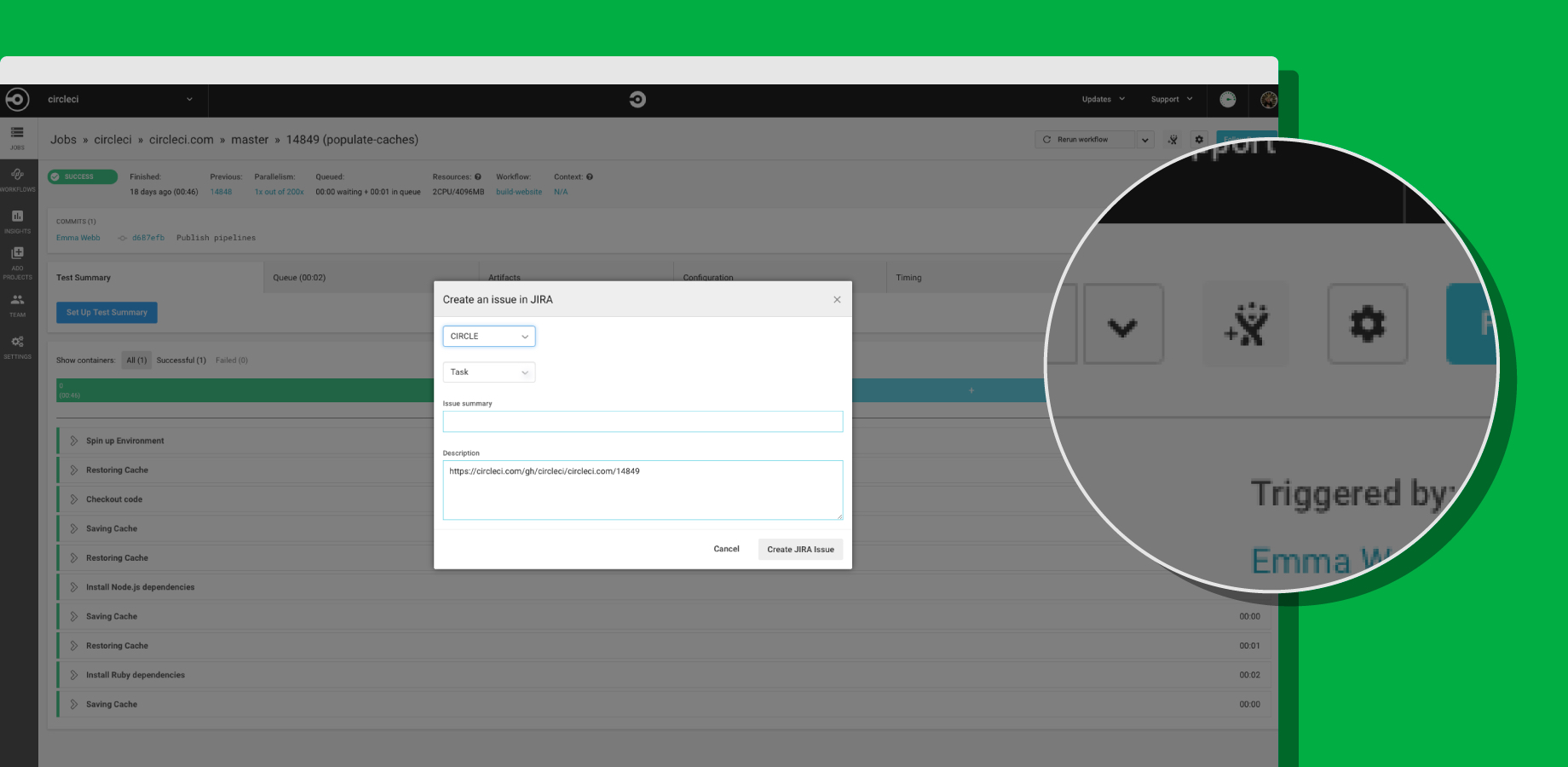
    To achieve integration with Jira, CircleCI now offers its CircleCI for Jira module, through which teams can assign new tasks and fixes based on job status with CircleCI orbs, a set of reusable configuration packages that allow CircleCI customers to integrate external tools into their workflow. That capability also makes it possible to launch new Jira issues directly from the job page within the CircleCI user interface.

    CircleCI Integrates with Jira

    Trahan says that in the polyglot world of DevOps, it is apparent vendors are being required to expose open application programming interfaces (APIs) that enable organizations to build and integrate various DevOps platforms anyway they want. Organizations won’t consider IT vendors that are too rigid in terms of what level of integration they enable, he says.

    As DevOps continues to evolve, it’s clear that a wave of merger and acquisition activity is makeing the IT vendor landscape somewhat volatile. Providers of DevOps tools that organizations have standardized on are being acquired at a rapid rate. IT organizations can’t be certain that any given tool or platform they are using won’t be scooped up by a vendor they might not want to engage. In that kind of environment, it’s critical for IT organizations to leverage open APIs that not only make it easier to collaborate, but also replace elements of their DevOps stack whenever they deem necessary.

    The challenge, of course, is that IT vendors are always trying to lock customers in as much as they can. Those efforts are not as heavy-handed as they once might have been. But almost inevitably, the extension being offered to access functionality will disappear if the underlying platform that enables it suddenly disappears. IT organizations, therefore, need to determine whether those extensions are worth any potential trouble they might cause somewhere down the DevOps road.

    — Mike Vizard

  • Chef Extends Automation Reach and Scope

    Chef Extends Automation Reach and Scope

    At its ChefConf 2019 conference today, Chef extended its core platform in ways that collectively serve to automate further the management of applications and the IT infrastructure they are deployed on.

    Extensions to the Chef Enterprise Automation (EAS) Stack include the addition of Application Operations Dashboards, Migration Accelerators for moving applications to the cloud and tighter integration between the Chef Infra and Chef InSpec modules within the Chef Habitat management framework.

    Brian Goldfarb, chief marketing officer for Chef, said these latest additions to Chef Enterprise Automation Stack are part of an ongoing Chef initiative to make it easier to seamlessly unify the management of infrastructure and applications in keeping with best DevOps practices, which Chef refers to as the “Coded Enterprise.”

    Chef DashboardAs part of that effort, Chef Application Operations Dashboards provide visibility into both applications and infrastructure to simplify troubleshooting and compliance, said Goldfarb. For example, IT teams will be able to see how individual security and compliance controls are performing across a heterogeneous computing environment that now includes Microsoft Azure and Google Cloud Platform (GCP) alongside Amazon Web Services (AWS), he said.
     

    At the same time, Chef is trying to make it easier to lift and shift applications to the cloud. EAS Migration Accelerators automate an application migration process that today requires most organizations to spend considerable time and effort to accomplish manually, said Goldfarb.

    An EAS Migration Accelerator for Windows, for example, will scan existing .NET applications running on IIS to discover configuration and dependency details and then package that information as code. That approach significantly reduces the time required to build application packages in Chef Habitat.

    Within Chef Habitat, the integration between Chef Infra, for automating infrastructure configuration, and Chef InSpec, a tool for automation compliance, is now more unified via pre-configured compliance profiles and cookbooks that make it easier to customize and modify which security and compliance controls are tested and enforced.

    Finally, Chef has also added support for high availability to the EAS platform to make sure the environment is always accessible.

    Goldfarb said the goal is to continue to make automation more accessible to IT generalists versus requiring them to hire and train dedicated specialists. One of the primary reasons that DevOps practices have been adopted so unevenly within IT organizations is the bar to master them has been set too high. By making it easier to automate the management of both infrastructure and applications, Chef is moving to lower that bar and make it easier to manage IT by unifying the management of applications and infrastructure, said Goldfarb.

    It’s too early to say to what degree IT automation will advance the adoption of DevOps. What is apparent is that IT environments are becoming too complex for mere mortal IT administrators to manage manually. IT organizations are also expected to be able to respond faster to any issues that arise, which requires IT teams to have a unified view of applications and the infrastructure o which they are deployed. In fact, as IT organizations continue down that IT automation path, many of them one day may discover they have embraced DevOps without even realizing it.

    — Mike Vizard

  • F5 Networks Acquires NGINX to Meld NetOps with DevOps

    F5 Networks Acquires NGINX to Meld NetOps with DevOps

    As part of an effort to better align DevOps and network operations (NetOps), F5 Networks plans to acquire NGINX, a provider of widely employed open source loading balancing software.

    The two companies revealed in a call with financial analysts that the primary goal of the $760 million deal is to meld the two companies’ combined expertise to develop application delivery controllers (ADCs) that are optimized for modern applications based on microservices.

    F5 Networks CEO François Locoh-Donou said F5 Network plans to continue operating NGINX as an independent brand in addition to maintaining support for the NGINX open source community. NGINX CEO Gus Robertson will become general manager of the NGINX business unit. NGINX founders Igor Sysoev and Maxim Konovalov also plan to stay on.

    Locoh-Donou also disclosed that while NGINX software is employed today at more than 375 million sites, the company only generated $26 million in revenue in 2018, mostly by providing commercial support to enterprise customers. F5 Networks will move to combine investments both companies have been making in containers to deliver a next-generation ADC optimized for microservices-based applications spanning multi-cloud computing environments, he said.

    As part of that strategy, however, both companies will need to come to terms with Envoy, an open source load balancing project led by the Cloud Native Computing Foundation (CNCF). Envoy is already providing the foundation for multiple service mesh projects that make load balancing a feature of a higher-level mechanism for managing services running on a Kubernetes cluster. Obviously, F5 Networks hopes to fulfill an opportunity to manage multiple instances of service meshes running on multiple Kubernetes clusters that.

    In fact, Locoh-Donou cited industry research that forecasts by 2022 there will be more than 198 million workloads running on some form of a microservices-based architecture. In contrast, 44 million workloads are expected to be running on legacy platforms.

    Locoh-Donou said F5 Networks also expects to leverage NGINX to expand its presence in application programming interface (API) management and associated web application services, which he noted collectively represent multibillion-dollar market opportunities.

    The decision to acquire NGINX reflects the inevitable melding of NetOps and DevOps, he added, noting that inconsistent approaches to managing application service across emerging microservices-based environments are a recipe for creating unstable IT environments.

    While it’s still a little too early to determine to what degree NetOps will be subsumed into DevOps processes, Locoh-Donou said F5 Networks plans to advance adoption of NGINX software by educating its core base of NetOps administrators on how microservices applications are deployed across extended networks and the rigors of the DevOps processes required to manage them.

    Both F5 Network and NGINX made a name for themselves by interconnecting IT environments made up largely of virtual machines. While virtual machines are not going away anytime soon, so-called cloud-native applications built using containers running on Kubernetes clusters require a different approach to delivering infrastructure services. The challenge facing the combined company is finding a way to deliver those services in a way DevOps teams want to consume.

    — Mike Vizard

  • The Linux Foundation Launches Continuous Delivery Foundation

    The Linux Foundation Launches Continuous Delivery Foundation

    The Linux Foundation announced it will provide the home base for a vendor-neutral Continuous Delivery Foundation (CDF) committed to making it easier to build and reuse DevOps pipelines across multiple continuous integration/continuous delivery (CI/CD) platforms.

    The first projects to be hosted under the auspices of CDF, which was launched at the Open Source Leadership Summit conference, includes Jenkins, the open source CI/CD system, and Jenkins X, an open source CI/CD solution on Kubernetes. Both were developed by CloudBees. Netflix and Google, meanwhile, are contributing Spinnaker, an open source multi-cloud CD solution, and Google is also adding Tekton, an open source project and specification for creating CI/CD components.

    Additional projects are expected to join CDF once a Technical Oversight Committee (TOC) is formally named.

    Founding members of the CDF include Alauda, Alibaba, Anchore, Armory, Autodesk, Capital One, CircleCI, CloudBees, DeployHub, GitLab, Google, Huawei, JFrog, Netflix, Puppet, Red Hat, SAP and Snyk.

    Chris Aniszczyk, vice president of developer relations for The Linux Foundation, said that while a lot of progress has been made over the years regarding adoption of CI, the challenges associated with mastering CD have proven more vexing. To address that issue, the CDF will evangelize CI/CD and DevOps methodologies, define and document best practices, provide guidelines and create training materials to better enable organizations to implement CI/CD best practices.

    Kim Lewandowski, a product manager for Google Cloud, said making it possible for organizations to reuse DevOps pipelines is a high priority. Building pipelines is a significant challenge for most DevOps teams; as such, they need to be able to reuse those pipelines across as many CI/CD platforms as possible.

    Kohsuke Kawaguchi, creator of Jenkins and CTO at CloudBees, noted the creation of interoperability standards between CI/CD platforms will go a long way toward achieving that goal.

    It’s not clear yet just how widely the CDF will be supported by the entire DevOps community. While CloudBees provides one of the most widely employed CI/CD platforms, other offerings have started gaining traction, especially among enterprise IT organizations that tend to not have a lot of internal DevOps expertise.

    On the plus side, the CDF should help spur adoption of DevOps best practices even further. Adoption of DevOps processes within most enterprise organizations tends to be uneven at best. One team may be employing DevOps extensively, while the rest of the organization continues to rely on less agile legacy processes.

    The CDF also should play a significant role in enabling organizations to embrace microservices-based applications built using containers. While Jenkins is the most widely relied-on CI/CD platform today, it is built on what is now considered in many quarters to be a legacy Java Virtual Machine (JVM) platform. In contrast, Jenkins X Background an open source CI/CD platform for building and deploying modern cloud-native applications on Kubernetes. The Linux Foundation also plays host the Cloud Native Computing Foundation (CNCF), which oversees the development of Kubernetes.

    It still may take years for IT organizations to fully make the transition to DevOps and cloud-native applications. But in the months ahead, it’s clear the CDF intends to function as a force multiplier in enabling organizations to achieve that goal.

    — Mike Vizard