Author: Mike Vizard

  • Report Identifies DevOps Skills in Highest Demand

    Report Identifies DevOps Skills in Highest Demand

    When it comes to DevOps there’s general agreement that a skills shortage is holding back broader adoption. The real issue, of course, is identifying what specific DevOps skills are required most.

    With that goal in mind, the DevOps Institute this week published a report that finds the DevOps skills most in demand fall into three broad categories: automation skills (57 percent), process skills (55 percent) and soft skills (53 percent).

    DevOps Institute CEO Jayne Groll said that, given the fact that DevOps is all about automating repeatable processes, the fact that automation skills are the most sought-after is not all that surprising. But when it comes to process skills, the top five areas where organizations need the most help are software development life cycle (47 percent), understanding of process flow and analysis (46 percent), agile development expertise (42 percent), experience with test-driven deployment concepts and methods (40 percent) and system thinking (39 percent).

    The survey also identifies areas where survey respondents need additional functional skills; most notably, IT operations knowledge (52 percent), security (47 percent), IT infrastructure (44 percent), application design and development (42 percent), quality assurance (34 percent) and testing (31 percent).

    While the survey makes it clear what skills are needed most, it’s less clear whether organizations want to train people with the right attitude toward DevOps skills or find individuals with proven skills. About 30 percent of the survey respondents said they look for soft skills first, with an eye toward training or educating new hires on the process and technical skills later. But 32 percent of respondents said they first look for technical skills.

    In that context, however, it’s also worth noting that 43 percent of the C-level executives and IT management executives that participated in the survey identified business skills—defined as communication, influencing, negotiation, strategic thinking and leadership skills—as being the most important attribute of a new hire.

    Other noteworthy attributes of the organizations participating in the DevOps Institute include:

    • Two-thirds (66 percent) have already adopted DevOps to some degree.
    • More than three-quarters (76 percent) employ agile development processes.
    • Nearly half (47 percent) have adopted the ITIL framework as a best practice for IT service management.
    • Only 10 percent rely on site reliability engineering (SRE) practices defined by Google.

    Groll said the survey makes it clear there is still much work to be done in terms of advancing best DevOps practices. One the biggest challenges are all the silos within IT organizations that have their own nomenclature and culture. Each of those silos creates technical and cultural inertia that must be overcome to integrate processes end to end, she said.

    On the plus side, Groll noted the next-generation of IT professionals are being taught best DevOps practices in academic settings, which means the pool of job candidates with familiarity with DevOps practices should increase steadily. The downside is that it might take a while before those individuals learn enough about the business of the company that hires them to effectively employ those DevOps practices.

    — Mike Vizard

  • FinOps Foundation to Help Rein in Cloud Costs

    FinOps Foundation to Help Rein in Cloud Costs

    A new consortium has been formed to promote best practices for controlling cloud computing costs.

    Announced at the Cloud Economic Summit, the non-profit FinOps Foundation counts among its founding members Atlassian, Autodesk, Cloudability, HERE Technologies, Just Eat and Nationwide.

    Cloudability co-founder J.R. Storment said the goal is to bring financial accountability to variable cloud spending that can easily spiral out of control if not monitored carefully. The adoption of best DevOps practices makes IT organizations more agile, but not every organization has the financial controls in place to ensure spending on cloud services is aligned with business outcomes, said Storment.

    These days engineers can use their corporate credit card to spin up virtual machines in the cloud. The FinOps Foundation is making a case for more accountability over the spending.

    Gartner estimates worldwide cloud spending will reach $360 billion by 2022, which is five times the compound annual growth rate for overall IT spending. The unfortunate truth, however, is that most finance organizations don’t have a lot of visibility into how those dollars are being allocated.

    To coincide with the launch of FinOps, 451 Research also published a survey of 300 IT and finance executives in the United States and the U.K. that finds more than half (57 percent) of large enterprises worry about cloud costs daily, with 80 percent admitting poor cloud financial management has had a negative impact on their business.

    In fact, the 451 Research report makes it clear most finance departments have little visibility into cloud spending. Almost three-quarters (72 percent) of finance executives acknowledged they have no formal reporting capacity between departments. More than half (51 percent) of respondents admitted to occasionally overspending and 68 percent said they are only alerted to overspend too late. A full 82 percent of finance respondents rely on cloud vendors, spreadsheets and manual processes to track cloud costs.

    Despite much of the variable cost hype surround cloud computing, 73 percent of the finance respondents in the United States and 81 percent in the U.K. still treat cloud as a fixed capital expense rather than an operating expense.

    To help finance teams better understand how cloud spending is being allocated, the FinOps Foundation will provide access cloud economic research and related articles, FinOps training and meetup groups. Early access to the forthcoming “Cloud Financial Management Strategies, Creating a Culture of FinOps” book published by O’Reilly Media will also be provided.

    As IT organizations increasingly employ multiple cloud platforms to run different classes of workloads, understanding the true cost of choosing to use one cloud over another will become more important. At the same time, IT organizations have a greater appreciation for the need to move workloads between platforms as costs rise. Just because an application workload was created in the cloud doesn’t mean that workload should be deployed there. Many long-running applications are less expensive to deploy in an on-premises IT environment. The challenge IT organizations arguably face going forward will be integrating streams of real-time financial data into DevOps processes to make more economically informed decisions about how to allocate their cloud resources.

    — Mike Vizard

  • New Relic Accelerates AIOps with SignifAI Acquisition

    New Relic Accelerates AIOps with SignifAI Acquisition

    New Relic, following its acquisition of SignifAI, is in the process of accelerating its investments in machine learning algorithms and other forms of artificial intelligence (AI) as part of an effort to make it easier to separate the signal from the noise created by all the alerts in an IT environment.

    Aaron Johnson, senior vice president of product management at New Relic, said SignifAI represents an opportunity for New Relic to create a superset platform that can apply advanced analytics to a much wider range of data sources. SignifAI has already created more than 60 integrations spanning open source and commercial monitoring tools that are widely used across DevOps toolchains, he noted, adding that as New Relic moves to add other data sources, there’s an opportunity for the company to distinguish itself beyond providing software-as-a-service (SaaS) tools for monitoring applications and infrastructure.

    It’s obviously still early days for AI in the realm of DevOps. But it’s also clear that with the rise of microservices and containers, soon it will be impracticable for IT organizations to manually manage their IT environments. Various forms of automation based on AIOps platforms infused with machine and deep learning algorithms will be required. As a provider of SaaS-based tools for monitoring applications and infrastructure, New Relic already has access to vast amounts of data required to train AI models on optimizing a specific IT environment.

    Of course, there’s lots of competition across the IT monitoring category, so it remains to be seen which vendors will have the resources required to drive continuing investments in AIOps.

    In the meantime, DevOps teams will need to adjust their processes to take advantage of AIOps. It’s unlikely AIOps platforms will eliminate the need for DevOps teams, but the number of applications and platforms any DevOps team must manage effectively will increase substantially. Rather than replacing humans, AIOps platforms will reduce the pressure to hire additional IT staff when professionals with DevOps skills are already in short supply. The AIOps platform, for all intents and purposes, acts like a co-pilot.

    The biggest issue IT organizations are likely to encounter along that journey is establishing trust with any AIOps platform they implement. It takes a while for most AI models to learn the IT environment before that platform makes any reliable recommendations. In most cases, DevOps teams will have to dedicate staff to train and update AI models continuously as the IT environment changes. It may take years, however, before DevOps teams are comfortable enough to move beyond trusting a recommendation and enable an AIOps platform to automate processes on its own. After all, the only thing worse about being wrong about any IT decision is being wrong about it at scale.

    AI at this point is all but inevitable in DevOps environments. But it doesn’t necessarily follow that just because something is based on AI it always will be smarter than experienced DevOps professionals.

    — Mike Vizard

  • IBM Adds Automated Testing Tool for Mainframe to DevOps Portfolio

    IBM Adds Automated Testing Tool for Mainframe to DevOps Portfolio

    IBM has added an automated testing tool to the portfolio of DevOps tools it has developed for mainframes.

    Sanjay Chandru, director of Z DevOps for IBM, said IBM Z Open Unit Test adds a continuous testing capability to the continuous integration/continuous development (CI/CD) platform based on an instance of an open source Git repository developed by Rocket Software that IBM launched last year. The automated unit testing tool automatically records and plays back test data for both batch-oriented applications written in COBOL or PL/I and CICS transaction processing applications.

    Chandru said IBM Z Open Unit Test is unique in that it eliminates the need to employ traditional debugging tools. Developers can generate test cases for COBOL CICS programs, as well as “stub out” CICS to achieving environment independence from CICS runtime during test case execution. A stub is an object that holds predetermined data, which is provided in response to calls made during tests. That approach eliminates the need to have objects that answer with real data. That means Z Open Unit Test operates without adding the overhead of a debugging tool, said Chandru.

    Any test case and the resulting program created then can be stored in any source code management (SCM) system.

    IBM is making a concerted effort to make mainframe a natural deployment target for any DevOps team, said Chandru. It increasingly has become apparent that millennials in particular aren’t biased toward one platform or another, as long as each platform is equally accessible, he noted, adding that as organizations embrace best DevOps practices to modernize their application portfolio, IBM wants to make sure the mainframe remains relevant.

    IBM launched the z14 mainframe in the fourth quarter of 2017. According to the company, 92 of the world’s 100 biggest banks use its mainframes, which handle most global credit card transactions alongside billions of ATM transactions and annual passenger flight bookings. While use of mainframes overall isn’t growing, the platform isn’t going away anytime soon.

    IBM has also enhanced the cryptographic capabilities of the z14 to make it one of the most secure platforms available and continues to invest in an instance of Linux for the mainframe. That latter capability makes the mainframe a more natural target for applications being developed and deployed using DevOps processes, said Chandru.

    Of course, the biggest challenge when it comes to DevOps and mainframes is not necessarily the technology. Most mainframe applications have been developed using waterfall processes for decades. Getting those teams to embrace DevOps processes represents a significant cultural hurdle for any IT organization.

    At the same time, however, DevOps teams who ignore mainframes are not taking advantage of an existing platform investment that has performance and security capabilities that are still unmatched after more than five decades. The real challenge is finding a way for old mainframe dogs to learn some new DevOps tricks while exposing proverbial whippersnappers to the capabilities of the most powerful mainstream platform ever built.

    — Mike Vizard

  • Survey Finds Wide Gap Between DevOps Adoption and Success

    Survey Finds Wide Gap Between DevOps Adoption and Success

    A recent HBR survey shows there is work to be done to advance DevOps in organizations

    A survey of 654 subscribers to the Harvard Business Review found that while 86 percent of respondents said it is important for their organizations to be able to build and deploy software quickly, only 10 percent said they are successful at it.

    Conducted by Harvard Business Review Analytic Services on behalf of Google, the survey found nearly half (48 percent) of respondents said their organization always relies on DevOps methodologies when deploying software, while another 21 percent rely on DevOps selectively. An additional 8 percent said their organization plans to adopt DevOps practices.

    Among those respondents employing DevOps practices, the top benefits cited were increased speed to market (70 percent), productivity (67 percent), customer relevance (67 percent), innovation (66 percent) and product/service quality (64 percent). Despite those benefits, however, most organizations still have a significant amount of work to do in terms of implementing best DevOps practices—the three biggest hurdles organizations face are organizational silos (50 percent), legacy technologies (49 percent) and resistance to change (46 percent).

    Melody Meckfessel, vice president of engineering for Google Cloud Platform (GCP), said these issues are precisely why Google is sharing how it operates in the form of site reliability engineering (SRE) principles, which are a prescriptive set of guidelines for implementing best DevOps practices. Not every organization needs to implement those principles to the same level, but just about every organization can benefit from adopting a set of well-defined engineering principles, said Meckfessel.

    The challenge many organizations face is the fact that most of the IT staff are not engineers by trade. Most IT staffs are made up of administrators who tend to have limited programming skills. But Meckfessel said even IT organizations that don’t necessarily have a lot of engineering expertise still can benefit from automating operations based on the SRE principles.

    Many of those organizations will need to slow down the rate at which they are building applications today to be able to speed up tomorrow. It takes time for organizations to master the cultural change required to implement DevOps practices. But once they begin to master DevOps, the benefits to the organization compound quickly. Meckfessel said two of the most important attributes of DevOps is adopting an immersive approach to training and establishing a no-blame culture within the IT organization when it comes time to conduct post-mortems. That latter goal is especially difficult to achieve sometimes, because most interactions between developers and IT operations teams historically have been less than positive.

    Meckfessel also noted it’s critical now for organizations to incorporate cybersecurity into its DevOps processes as well, which requires not only additional training for developers but also closer alignment with cybersecurity teams.

    It’s now only a matter of time before the complexity associated with emerging technologies such as microservices based on containers force many organizations to dive deeper in DevOps. The real challenge now is charting a path of least resistance that also generates the maximum level of benefit for all concerned.

    — Mike Vizard

  • Cisco Opens IoT Development Center

    Cisco Opens IoT Development Center

    Cisco Systems this week launched an IoT Dev Center as part of an effort to foster development of a new generation of applications that will be deployed at the network edge.

    Announced at the Cisco Live EMEA event, the IoT Dev Center provides access to sandboxes and tutorials for building highly distributed IoT applications that Cisco envisions will be deployed directly on top of Cisco routers and switches. To facilitate that effort, Cisco also launched a series of ruggedized switches and routers, which, in addition to usingCisco ASICs for processing network traffic, can be configured to include x86 processors that enable low-latency applications to be deployed at the edge.

    The Cisco IoT Dev Center also provides access to a DevNet Ecosystem Exchange, through which organizations will be able to discover IoT applications optimized for Cisco infrastructure.

    Susie Wee, senior vice president for the DevNet community at Cisco, said the IoT Dev Center is an extension of the company’s ongoing efforts to build a DevOps community around Cisco infrastructure. From Cisco’s perspective, IoT represents an instance of edge computing.

    Cisco is attempting to extend its current dominance over networking infrastructure to include both networking gear for IoT environments and two-node hyperconverged infrastructure (HCI) platforms intended to be deployed at the network edge. Each of those systems will be connected via the Cisco Application-Centric Infrastructure (ACI) software-defined network (SDN), which Cisco says enables intent-based networking when infused with advanced analytics.

    Cisco claims it already has 40,000 customers using some element of its portfolio to drive an IoT application. As that ecosystem continues to evolve, Wee said it’s apparent that both operational technology (OT) teams, which historically have been responsible for embedded systems, and enterprise IT teams will need to embrace best DevOps practices to deploy, manage and update IoT applications. While embedded systems deployed by OT teams were not frequently updated, IoT applications will take advantage of containers and other microservices-based technologies to add new functionality more frequently and, when required, update systems to remediate potential vulnerabilities. By the end of the decade, many of those applications will be connected via 5G wireless networks that will provide enough bandwidth to make continuously updating edge applications much more practical than it is today.

    Less clear going forward is the degree to which networking teams will become part of a larger DevOps teams. As more applications get deployed on switches and routers at the edge, it’s obvious networking teams will play a critical role. The issue is to what degree. In many cases, networking teams will attempt to provide developers with access to a defined set of resources they can access via a self-service portal. But there are also likely to be instances when developers will want programmatic control over network resources that can be invoked via application programming interfaces (APIs).

    Naturally, Cisco is not the only networking vendor with similar edge computing ambitions. But while most IoT initiatives remain relative nascent, the next major battle for control over the network edge is more likely be determined by the sophistication of the processes enabled as it is the core underlying infrastructure.

    — Mike Vizard

  • Feature Flagging Poised for Wider Adoption

    Feature Flagging Poised for Wider Adoption

    Feature flags, also known as feature toggles, provide a means for DevOps teams to test and add new capabilities to their applications without having to take the entire application offline. The downside is they generally result in more branches of applications that need to be carefully managed within the context of a DevOps process.

    A recent survey of 550 software developers and decision-makers conducted by the market research firm Vanson Bourne on behalf of Atlassian and Rollout.io, a provider of a platform for managing feature flags, suggests that IT organizations are getting more comfortable with managing feature flags.

    The survey finds 95 percent of survey respondents said their organizations have implemented, have begun implementing or plan to implement features flags. Those that have implemented feature flags said they add 30 new features on average to each application per year, compared to those that have only begun implementing (21) or plan to implement (18) them. A full 81 percent said use of feature flags will increase over the next 12 months, and 88 percent said modern software development should assume to include feature flagging.

    The primary driver for implementing feature flags are a need to reduce risk (46 percent), increase speed of development (46 percent) and increase speed of deployment (45 percent). Eighty-seven percent of respondents said enabling an on/off or “kill” switch for features also reduces the risk of application downtime for customers.

    A total of 97 percent of respondents said they are under pressure implement new application features faster, and yet 65 percent said it is difficult to accomplish that goal safely. More than 61 percent of respondents said their organization releases new versions or updates for applications once a week or more. However, 72 percent admitted they have lost customers or users due to application development errors.

    Rollout COO Ronit Belson said building out the functions required to manage feature flags doesn’t make much sense when platforms such as Rollout.io are now emerging. The survey finds nearly 90 percent of respondents who have implemented feature flags in-house would consider moving to a third-party supplier for feature flagging management software. A total of 37 percent of respondents said the cost of in-house development is higher and 32 percent said they encountered more complexity than anticipated.

    Belson added most organizations not only fail to appreciate the cost of implementing feature flagging on their own, but also the impact feature flagging has on the culture of the IT department.

    Thanks to the rise of microservices, feature flagging should become more prevalent as monolithic applications give way to a more granular approach to application development that makes it easier to isolate functionality. In fact, the ability to apply feature flagging might be considered one of the primary benefits of the agility inherent to any microservices architecture, especially it if relies on containers that can be easily ripped and replaced. The challenge organizations will face is implementing the DevOps processes required to embrace feature flagging at scale.

    — Mike Vizard

  • IBM Survey: Rise of Multi-Cloud Computing to Force DevOps Issue

    IBM Survey: Rise of Multi-Cloud Computing to Force DevOps Issue

    A survey of 1,106 business and technology executives published this week by the IBM Institute for Business Value finds 85 percent of companies are already operating in multi-cloud environments, with 98 percent forecasting they will be using multiple hybrid clouds within three years. But the survey finds that only 39 percent of the respondents have implemented some level of DevOps processes to help streamline the management of multiple cloud computing platforms.

    Blaine Dolph, vice president of Global Business Services for IBM, said it’s clear that DevOps will play a critical role in enabling IT organizations to centralize the management of multiple clouds. But the IBM survey suggests that the management of multiple clouds within organizations is not nearly as efficient as it should be.

    Only 41 percent of survey respondents said they currently have a multi-cloud management strategy in place, and just 38 percent have the procedures and tools in place to operate a multi-cloud environment. Only 30 percent of enterprises have a multi-cloud orchestrator or other multi-cloud management platform to choreograph workloads, while fewer than 40 percent of organizations have cloud configuration management tools that provide information about resource configuration and relationships between resources, the survey found.

    All told, the IBM survey is only able to identify 20 percent of respondents as “multi-cloud maestros” capable of employing multiple clouds to smoothly and routinely deliver one or more business functions. The survey found almost two-thirds of multi- cloud maestros report they employ cloud management platforms.

    The survey also found that multi-cloud maestros are advanced in terms of adoption of microservices and containers. A full 61 percent of multi-cloud maestros predicted that within three years at least 80 percent of new applications will be developed using containers. Currently, 50 percent of multi-cloud maestros are using Docker containers and 63 percent are using containers as a service (CaaS). By 2021, 65 percent expect to use container orchestration. More than half (56 percent) of the multi-cloud maestros are already microservices and 59 percent plan to use serverless cloud services in their cloud environments, according to the survey results.

    Dolph said IT organizations in general would be well-advised to focus on more than just “lifting and shifting” applications into the cloud. They may need to leverage Docker containers to move an application into the cloud. But once there, an effort should be made to modernize that application by turning large swaths of it into a set of microservices that ultimately are easier to maintain and consume by developers building complementary applications, he said.

    The IBM survey makes it apparent that multiple clouds are the new IT normal. Almost half of respondents said they are establishing a multi-cloud architecture to develop new and enhanced products and services. A total of 62 percent of respondents require multiple clouds to create innovative business models, while 52 percent said they need them to produce new revenue streams. Sixty-six percent need them to enhance margin and 46 percent said they need a multi-cloud environment to support agile business processes.

    From a DevOps perspective, more than half (51 percent) of respondents use multiple clouds to cultivate a flexible, modular infrastructure that quickly absorbs and leverages technological advances.

    Obviously, one of the great paradoxes of multi-cloud computing is that in the pursuit of becoming more agile, many organizations are making their IT environments more complex by employing multiple platforms. The challenge they will face next is maturing their DevOps processes to the point where some order is finally brought to that multi-cloud computing chaos.

    — Mike Vizard

  • WhiteHat Security Looks to AI to Advance DevSecOps

    WhiteHat Security Looks to AI to Advance DevSecOps

    WhiteHat Security is now embedding artificial intelligence (AI) into the application security review services it provides, as part of an effort to advance adoption of DevSecOps processes.

    Joseph Feiman, chief strategy officer for WhiteHat Security, said the biggest resistance factor to DevSecOps has been the amount of time it takes to test applications for vulnerabilities. By injecting machine learning into that process via a suite of WhiteHat Sentinel Dynamic tools, which are being made accessible as a software-as-a-service (SaaS) application, developers will be more inclined to conduct security reviews as part of an integrated DevSecOps process, he said.

    The AI engine identifies vulnerability patterns in a code-based data lake of 95 million identified vulnerabilities that WhiteHat Security has identified via its dynamic application testing service (DAST). WhiteHat Sentinel Dynamic identifies known vulnerabilities in seconds, Feiman said, and any anomalies indicative of potential unknown vulnerabilities are then reviewed by human WhiteHat Security cybersecurity experts.

    Feiman said DevSecOps is going through a period of disillusionment because security reviews of code are taking too long. AI technologies represent an opportunity to reignite interest in DevSecOps by giving developers more control over an application security review process that no longer slows down development.

    In addition, WhiteHat Sentinel Dynamic enables developers to learn about their potential mistakes without necessarily requiring them to disclose them to the entire DevOps team. Any humiliation a developer might experience is avoided when the developer conducts the security review prior to committing code. IT security teams are still in charge of creating the policies that need to be implemented, but processes associated with implementing those policies make a decidedly shift left to the developer, he said.

    Feiman noted that the rise of AI within DevSecOps processes may help alleviate some of the current chronic shortage of cybersecurity expertise. There will always be a need for human cybersecurity researchers to train AI models what to look for as new vulnerabilities are discovered. But algorithms never take a day off or decide to abruptly quit because they suddenly got a better offer.

    It may take a while for IT organizations to completely trust AI engines to scan code for vulnerabilities. But currently many applications are not being reviewed at all because any time set aside to conduct that reviews is being eaten up by an application development process that has fallen behind schedule. Too many developers would still prefer to take a chance on a breach than be reprimanded for delivering code late, especially when there’s a chance to address vulnerabilities that might get discovered in the next scheduled release of a patch. WhiteHat Security is making the case for eliminating much of that risk by making it feasible for developers to quietly address vulnerabilities long before an application is deployed in a production environment.

    There’s no doubt that AI soon will be employed to automate large swaths of cybersecurity. But it may turn out that the most effective place to apply AI from a cybersecurity perspective early in the DevOps process as possible.

    — Mike Vizard

  • Netifi Rises to Microservices Integration Challenge

    Netifi Rises to Microservices Integration Challenge

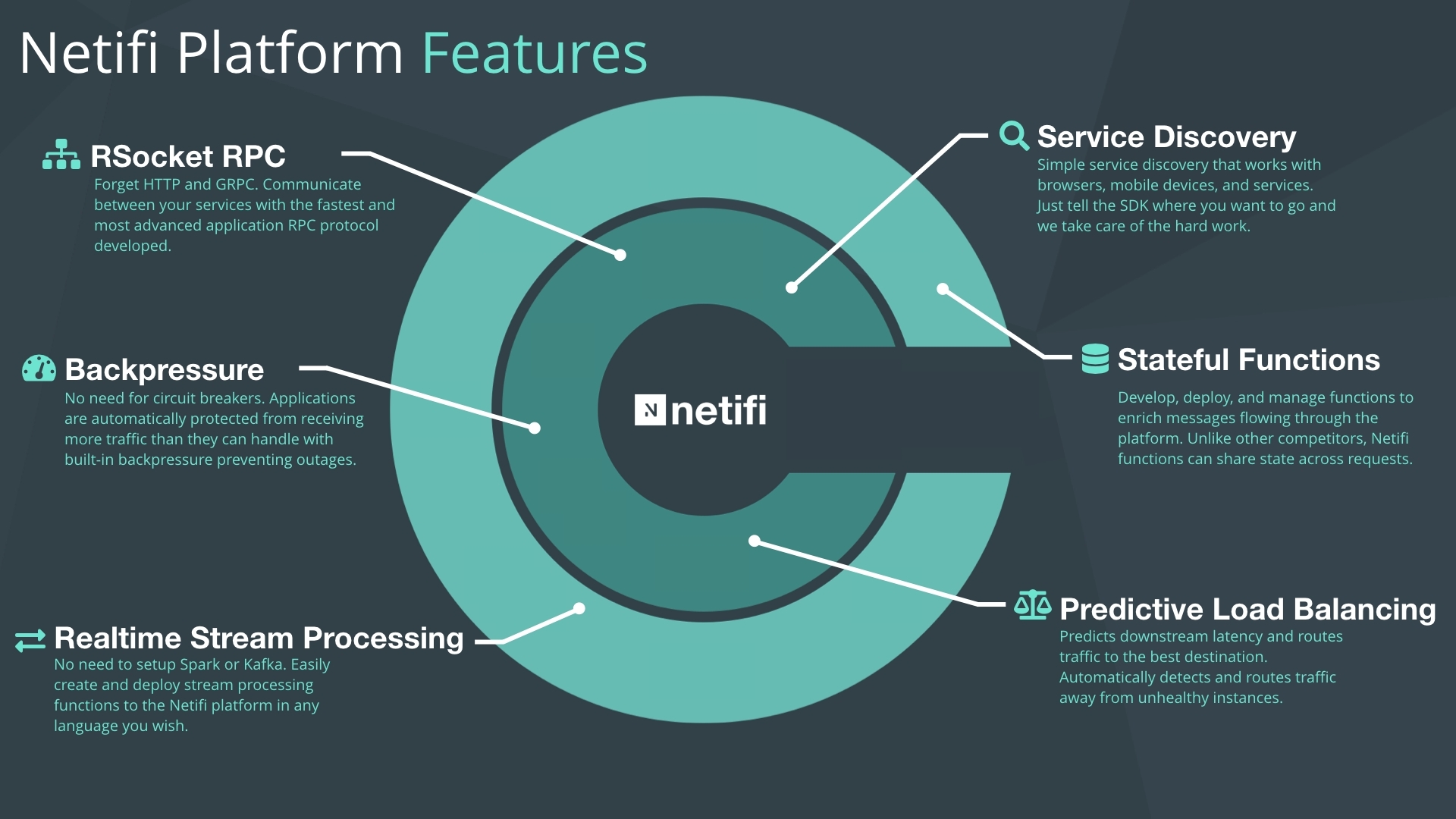
    Netifi this week launched an integration platform based on the open source RSocket communications protocol to replace HTTP ad REST application programming interfaces (APIs) as the mechanism for connecting microservices. RSocket was originally created by Netflix and is now being strengthened via contributions from Netifi, Facebook and Pivotal Software for use within enterprise IT organizations.

    Fresh off raising $2 million in seed funding, Netifi is also committing to support a community edition of RSocket later this year.

    Company CEO Robert Roeser said the Netifi platform is designed to make it easier to build microservices and interconnect them. Most of those microservices are being built using Docker containers, but Roeser said that, as part of a polyglot approach to integration, Netifi is leveraging RSocket to connect microservices built using a variety of runtimes as well as provide access to legacy monolithic applications. The Netifi platform can be deployed on-premises, in a public cloud or in a hybrid fashion.

    Roeser said RSocket was born of necessity at Netflix because the number of microservices that needed to be interconnected at scale was simply too complex a task using HTTP and REST APIs. Soon after, Facebook also started employing RSocket and now Netifi and Pivotal are making contributions designed to make Rocket more accessible for traditional enterprise developers. In the case of Netifi, that means providing mechanisms to both discover and advertise microservices and provide a layer of abstraction that shields developers from the underlying complexity of the network underlay, he said.

    As applications based on microservices become more widely distributed, enterprise organizations tend to become more intimidated by the challenges associated with managing them at scale. Traditional enterprise IT organizations don’t have access to a small army of software engineers to solve the problem. As a result, many of them retreat to building monolithic applications in which all the services that need to be accessed are baked into the application itself. They typically sacrifice scale and flexibility in favor of a construct that is both familiar and easier for them to navigate, Roeser said.

    The challenge Netifi and other supporters of RSocket will face is the considerable amount of inertia surrounding REST APIs and HTTP. Several generations of developers now consider REST APIs to be the default mechanism for connecting various applications together. The issue many of them will need to wrestle with is the extent to which the rise of microservices breaks that integration construct. A shift away from REST APIs also could have significant implications regarding how services are exposed externally, how pipelines are constructed within DevOps environments and other factors.

    It remains to be seen whether integration platforms based on RSocket or some other approach ultimately makes microservices more accessible to enterprise IT organizations. But significant resources now are being poured in to solve the problem, many of which leverage contributions of companies, such as Netflix and Facebook, that already rely on thousands of microservices to deliver a broad range of cloud-native applications.

    — Mike Vizard