Author: Mike Vizard

  • CircleCI Surfaces More DevOps Insights

    CircleCI Surfaces More DevOps Insights

    CircleCI today announced it is making it easier for DevOps teams to determine the amount of resources being consumed by its continuous integration/continuous delivery (CI/CD) platform to help make application development teams more efficient.

    Kunal Jain, senior product manager for CircleCI, said via the application programming interface (API) that CircleCI exposes DevOps teams can now determine, for example, which workflows are taking the longest to run or what tests might be creating bottlenecks into the CI/CD pipeline.
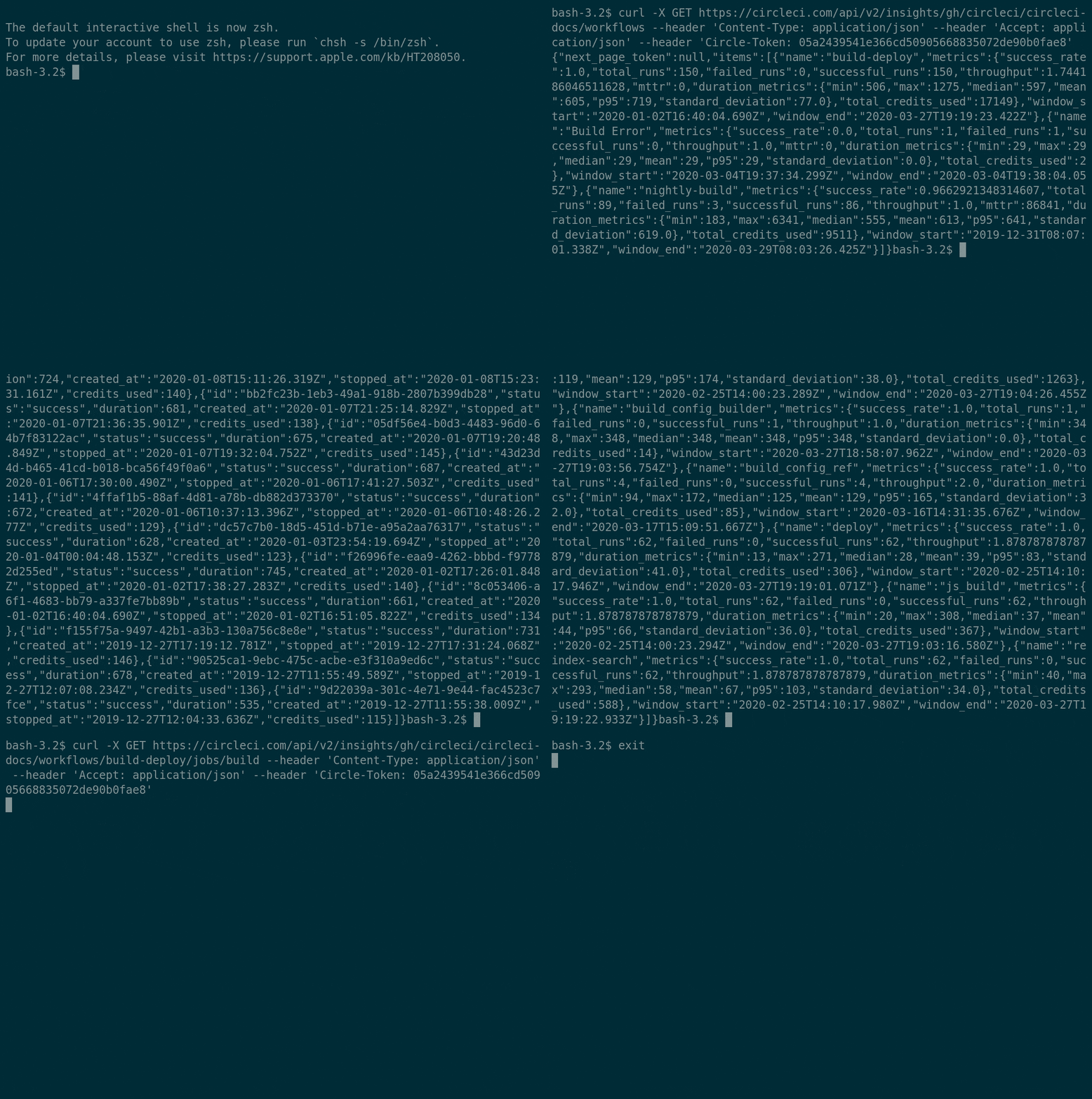
    Armed with that insight DevOps teams can also optimize how credits to employ the CircleCI platform are allocated across their DevOps teams, added Jain. That capability should make it easier for DevOps teams to predict how much they are spending per month to run their CI/CD platform, said Jain. Many more IT organizations may opt to access CI/CD platforms using a software-as-a-service (SaaS) approach that limits the need for them to invest in their own IT infrastructure or in some cases even manage the platform.

    DevOps teams have always been sensitive to efficiency but given the current economic climate, minimizing costs is becoming a higher priority for many organizations. As such, DevOps teams need more insights into, for example, how to best break up workflows to keep CI/CD platform costs to a minimum, said Jain. In fact, Jain says the total cost of operating a CI/CD platform is likely to now play a bigger role in selecting a platform as IT leaders demand more visibility into DevOps processes.

    Of course, some DevOps teams may find themselves competing for credits based on how efficient they are. Teams who are more efficient than others could also allow IT leaders to reallocate credits as they best see fit based on the progress being made. In a previous era where compute resources were largely considered to be a nominal cost, many DevOps teams may find access to IT infrastructure might no longer be taken for granted.

    CircleCI claims it runs more than 30 million independent jobs run every month. The company last year committed to exposing more API endpoints to help DevOps team better understand the languages, architectural patterns, code testing patterns, delivery success rates and team practices being employed. Like most providers of CI/CD platforms, CircleCI has made a commitment to making available a much broader range of actionable insights to DevOps teams via its API.

    At this point, it’s unclear what the impact the economic downturn brought on by the COVID-19 pandemic might have on DevOps adoption. Undoubtedly, many organizations will put a hold on some application development projects as they reassess their priorities. On the other hand, with more people working from home, digital business transformation initiatives that require new applications are likely to become a higher priority as organizations seek to reinvent how they engage their end customers. Those projects may even be accelerated as part of a larger business continuity strategy. Regardless of the number of application development projects being launched, the scrutiny of how IT resources are being allocated and consumed is about to increase substantially.

    — Mike Vizard

  • Quick Base Makes Free Low-Code Platform Available for First Responders

    Quick Base Makes Free Low-Code Platform Available for First Responders

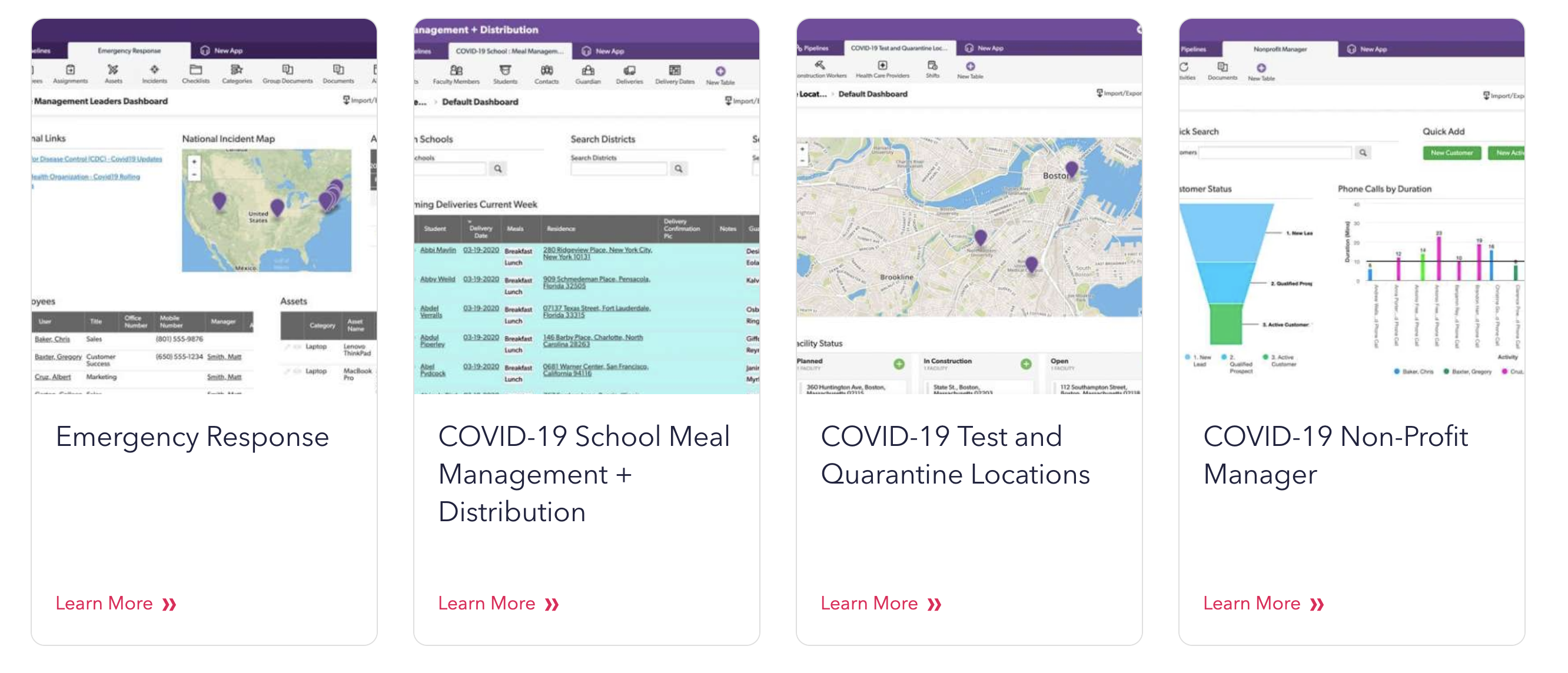
    Quick Base, a provider of a platform for building low-code applications, announced this week that it is making its platform available for free through Sept. 30 to first responder organizations that need to build applications quickly to address the COVID-19 pandemic.

    Jay Jamison, chief product and technology officer for Quick Base, said it’s apparent first responders soon will need applications to track things ranging from assets such as ventilators to heat maps that show the number of patients in a geographic area relative to the number of intensive care units (ICUs) available.

    Quick Base is also making available templates that can be employed to build the most common types of emergency response applications, such as ones already being employed by the City of New Orleans.

    Examples of other applications that will be needed include the ability to track businesses in real-time that may be flouting COVID-19 restrictions or landlords that are evicting tenants despite emergency decrees, noted Jamison.

    Most of these applications will need to be developed in days versus weeks or months. To that end, Quick Base is also making available to first responder organizations the expertise of its internal customer success staff as well as third-party consultants, he said.

    In addition, Quick Base plans to certify many of these applications for distribution via its online store, which will make it easier for a first responder organization in one locality to leverage an application that has already been developed by another first responder organization.

    In general, Jamison said first responder organizations will need to apply DevOps principles across their entire organization to adjust to highly fluid situations. Applications undoubtedly will need to be modified as processes evolve and new emergency decrees are declared, he noted.

    The biggest challenge from an IT perspective is many first responder organizations lack the process expertise needed to build an application on the fly. Volunteers with IT expertise will be needed to work alongside medical experts, who will need applications that most likely will be deployed in the cloud but made accessible via a range of mobile computing devices. The chances all those applications will work perfectly when first deployed is almost nil, so timely updates to applications will be critical.

    Of course, applications and IT processes are not always the first things that come to mind to combat a pandemic. However, the faster first responders can respond to changing conditions on the ground, the more lives that might potentially be saved. In some large cities, it’s probable first responders already have access to a range of applications that to vary degrees might scale to meet the current challenge. However, in smaller localities, the availability of such applications is nominal at best.

    Quick Base is not the only provider of low-code and no-code tools for building applications, so there are plenty of options for building applications quickly. Whichever the platform employed, time is going to be of the essence. Outbreaks in Italy, Spain and China have already shown how quickly events can spiral out of control. If any new application is going to be relevant in any other emerging CIVID-19 hot zone, the work to build that application needs to start immediately.

    — Mike Vizard

  • Coronavirus Response: Atlassian Expands Free Software

    Coronavirus Response: Atlassian Expands Free Software

    Atlassian announced today it will make cloud-based versions of Jira Software, Confluence, Jira Service Desk and Jira Core available for free as part of an effort to assist organizations whose employees are working remotely to help combat the COVID-19 coronavirus pandemic.

    Robert Chatwani, chief marketing officer for Atlassian, said given the current unprecedented situation the company has decided to increase the number of free versions of its software, including Jira project management software, which is widely employed by software development teams.

    The company already makes available free versions of its Trello, Bitbucket and Opsgenie software. Atlassian is hoping that once the current COVID-19 coronavirus crisis subsides, a much broader base of end users including ones from business units will have gained some firsthand experience employing its project management applications and collaboration tools, said Chatwani. Previously, Atlassian revealed it has a goal of having 100 million active users of its software.

    Chatwani said many organizations are finding that having employees working from home is the new normal for the foreseeable future. While regions in Asia appear to be recovering from the initial COVID-19 coronavirus outbreak, that does not appear to be the case in other regions anytime soon. Once organizations re-engineer their workflows, they may discover some knowledge workers are more productive working remotely, he noted.

    Less clear right now is whether having most or all employees working remotely is a temporary measure in the furtherance of a business continuity strategy or simply an inevitable future of work that, because of the current crisis, is arriving much earlier than expected.

    Of course, not every employee is psychologically tempered to work from home. Software developers, for example, may be more accustomed to working in isolation than project managers. Chatwani said it will be important for organizations to establish new routines to maintain organizational cohesion, including determining when development teams should launch sprints to build elements of an application. Managers also may want to designate “office hours” during which anyone can contact them online to make sure employees feel they are accessible, he added.

    Organizations should also get used to the idea that children may be both seen and heard while online meetings are occurring, given the fact that millions of children are now being schooled at home, Chatwani noted.

    Many organizations to one degree or another have been relying more on remote workers. There are even some companies that don’t have physical headquarters—all the employees already work remotely. Some of those organizations have even gone so far as to define a time zone around which the organization will standardize on regardless of where employees are physically located.

    Whatever the strategy employed, organizations that hope to succeed in this new climate need to go well beyond ensuring remote network connections are available and secure—they need to find a way to either maintain their existing processes and culture to make sure that whatever product or service they provide continues to be built or delivered in a way that allows the organization to survive and hopefully continue to thrive.

    — Mike Vizard

  • Zoho Offers Free SaaS Apps to Combat Coronavirus Spread

    Zoho Offers Free SaaS Apps to Combat Coronavirus Spread

    Zoho today announced it is making available for free a bundle of software-as-a-service (SaaS) applications dubbed Remotely through July 1.

    Raju Vegesna, chief evangelist for Zoho, said Remotely is a humanitarian gesture to help mitigate the impact of a global coronavirus epidemic. Remotely comprises a set of productivity and collaboration applications that users can access in as little as five minutes.

    Included in Remotely are productivity, collaboration and project management applications as well as tools that automate the migration of data into the Zoho cloud platform.

    Vergesna said Remotely also addresses cybersecurity concerns by enabling IT teams to apply security controls to the data that employees are allowed to access. Of course, IT organizations in many cases would still need to make sure the network connections being employed to access SaaS applications are secure.

    Now that many local governments are recommending that organizations allow employees to work from home to help limit the spread of the coronavirus outbreak, many IT administrators are scrambling to provide remote access to applications at scale. It’s one thing to provide access to a small number of employees who might travel intermittently, but it’s quite another to support an entire remote workforce for some unknown period of time.

    Vergesna, however, said that at this point the challenges associated with making that transition have a lot more to do with overcoming cultural issues than they do the technology. Much of the transition to Zoho SaaS applications has been automated, he said.

    It remains to be seen to what degree the coronavirus outbreak might accelerate the transition to cloud applications. Many IT administrators are still managing local instances of Windows servers to deliver applications because the time and effort to migrate to SaaS applications have been substantial. Making those on-premises applications available remotely at scale is not only challenging from a technical perspective, but it’s also expensive.

    Of course, Zoho is far from being the only provider of SaaS productivity and collaboration applications. However, it remains to be seen whether other providers will follow Zoho’s lead. The hope each of these vendors has is that once the coronavirus crisis passes many of the organizations that take advantage of their software to enable employees to work from home will start paying to use that software.

    In the meantime, the economic impact of the coronavirus is likely to be staggering. Conferences are being canceled and face-to-face business meetings are being shifted online. It’s hard to say how many of those meetings are likely to stay there for good. At the very least, many more end users are about out to discover just how rich SaaS application environments have become. In many cases, IT teams will stitch together workflows across a range of SaaS applications using application programming interfaces (APIs). The challenge they will face is acquiring the programming skills required to construct those workflows.

    — Mike Vizard

  • HashiCorp Updates Terraform Tool for Azure Cloud

    HashiCorp Updates Terraform Tool for Azure Cloud

    HashiCorp today announced it has updated the instance of Terraform it created to automate the configuration of virtual machines on the Microsoft Azure cloud to give IT teams more granular control.

    Version 2.0. of Terraform (TF) AzureRM Provider will allow IT teams to separately configure virtual machines by type for instance of both Windows and Linux.

    In addition, version 2.0 of TF AzureRM Provider will allow users to specify custom timeouts for resources. Previously, timeouts were set for one hour by default.

    Finally, TF AzureRM Provider 2.0 removes resources, data sources and fields that have been deprecated. TF AzureRM Provider currently provides access to 374 resources and 119 data sources.

    Amith Nair, vice president of product marketing for HashiCorp, said the goal is to provide IT teams with a set of tools for automating the configuration of virtual machines on Azure that is more accessible than the tools currently provided by Microsoft.

    Nair said HashiCorp is seeing increased adoption of Microsoft Azure, which in turn creates demand for tools that make it easier to deploy virtual machines at scale. In fact, Nair notes that as more workloads move into the public cloud the less resistance there is to IT automation as administrators look for ways to manage IT at what is now unprecedented scale. Of course, many organizations gain their first experience with tools such as Terraform when they first embrace a set of best DevOps practices.

    Less clear is how many virtual machines are being configured on top of instances of Windows versus Linux. There is no doubt Microsoft has emerged as the strongest challenger to the dominance of Amazon Web Services (AWS) in the public cloud. Much of that success, however, comes from the fact that Microsoft supports distributions of Linux alongside Windows Server on the Azure cloud. There are, of course, many organizations, such as Walmart, that prefer to standardize on Azure simply because they view Amazon to be a competitor. At the same time, however, there are many companies that employ both AWS and Azure.

    Nair said most organizations that have adopted more than one cloud tend to manage them in isolation from one another. However, it is expected that one day more organizations will seek to unify the management of multiple clouds within the context of a truly hybrid cloud computing environment as the total cost of cloud computing continues to rise with each additional workload deployed. Naturally, many of those organizations eventually will gravitate toward tools that can be employed across multiple clouds.

    In the meantime, whether it’s IT administrators or developers themselves configuring virtual machines in the cloud, it’s thanks to tools such as Terraform that the amount of time and effort required to set up virtual machines in the cloud is now as negligible as it is. The challenge now is not so much finding tools to automate IT as much as it is navigating all the cultural changes that naturally ensue.

    — Mike Vizard

  • Survey Sees Open Source Adoption, Quality Gains

    Survey Sees Open Source Adoption, Quality Gains

    A survey of 959 IT leaders published this week by Red Hat finds increased reliance on and adoption of open source software is now being driven by perceived higher quality as much as it is cost concerns.

    The survey finds higher quality of software (33%) was the top reason they chose open source, followed by lower total costs of ownership (30%) and better security (29%).

    Gordon Haff, a technology evangelist for Red Hat, said the survey makes it clear that open source adoption is now being driven from the top-down as well as the bottom-up in most organizations. What’s changed is that open source software is now being used more broadly as more organizations appreciate how open source approaches to building software not only lower costs but also improve overall quality.

    The survey identifies the top three use cases for employing open source software to be IT infrastructure modernization (60%), application development (53%) and DevOps (52%).

    As part of that shift, 56% of respondents said they plan to increase usage of containers over the next 12 months. In fact, on average respondents said cloud-native applications already make up 25% of their portfolio, compared to an average of 36% for cloud-enabled applications and 39% for legacy applications. The combination of cloud-native and cloud-enabled applications (61%) already outnumber legacy applications (39%).

    Over the next two years, 47% of respondents plan to either modernize (17%), rearchitect as cloud-enabled (16%) or rearchitect as cloud-native (14%) their legacy applications. Another 16% said they would sunset or decommission those applications.

    Overall, the survey finds there has been a marked shift away from proprietary software. Only 42% said that more than half of the software they use today is proprietary, down from 55% a year ago. Two years from now only 32% said they expect proprietary software to account for more than half their portfolio. On average, respondents said 36% of their organization’s software is open source, which in two years is expected to increase to 44% in two years. A total of 77% said they would increase usage of open source software over the next 12 months.

    However, barriers to adoption of open source software remain. Security of the code (38%), level of support (37%), compatibility (34%) and lack of internal skills (33%) were all cited as ongoing issues.

    The top three areas in terms of infrastructure where enterprise open source solutions are being used today are security (52%), cloud management tools (51%), database (49%) and big data analytics (47%). A total of 83% said open source has been instrumental in their organization’s ability to take advantage of cloud architectures. Almost two-thirds (63%) said they have a hybrid cloud infrastructure environment today. Among the 37% that don’t, more than half (54%) plan to have a hybrid cloud infrastructure environment within the next 24 months.

    It’s apparent that open source software is now everywhere. The real challenge now is finding a way to manage it all.

    — Mike Vizard

  • Report Pins Cloud Security Woes on Flawed DevOps Processes

    Report Pins Cloud Security Woes on Flawed DevOps Processes

    By now it’s become apparent that the bulk of security incidents involving cloud platforms revolve around some type of configuration issue. An analysis of those cloud configurations published today by the Unit 42 research arm of Palo Alto Networks suggests that the root cause of the issue is most likely the templates many developers and DevOps teams rely on to configure cloud infrastructure. In fact, according to Unit 42’s analysis, more than 199,000 templates have medium-to-high vulnerabilities in use on public clouds.

    Matt Chiodi, chief security officer for public cloud for Palo Alto Networks, said the issue stems from the rate at which organizations now want to be able to deploy applications on public cloud. Templates greatly accelerate the process but very few of those templates have been vetted by a cybersecurity team.

    According to the report, the most commonly used templates are created using YAML files on instances of Kubernetes (39%), Terraform and CloudFormation (24%). The most vulnerabilities were discovered in templates created using CloudFormation (42%), Terraform (22%) and YAML for Kubernetes (9%).

    Chiodi noted most templates are created through a simple three-step DevOps process: design, code and deploy. Unfortunately, in the rush to deploy most DevOps teams forget to scan for vulnerability issues. As a result, Chiodi said cybercriminals have become very adept at siphoning off cloud resources to mine cryptocurrencies at low-enough consumption rates to go unnoticed by many IT organizations.

    Other significant cloud security issues surfaced in the report include the fact that 43% of cloud databases are not encrypted and that 60% of cloud storage systems have logging disabled, which Chiodi noted makes it impossible to know whether those systems have been compromised. In addition, the report finds 76% of cloud workloads expose SSH (port 22), while 69% of organizations expose RDP (port 3389) and 27% are using outdated versions of Transport Layer Security.

    Overall, the goal now needs to be to make it as simple as possible for DevOps teams to do the right cybersecurity thing going forward, said Chioti.

    Unit 42 researchers employed a publicly available GitHub Searching application programming interface (API) to find AWS CloudFormation files, Kubernetes YAML files and HashiCorp Terraform files. Hundreds of thousands of templates were then downloaded and analyzed by the Prisma Cloud infrastructure-as-code (IaC) Scanner to identify the insecure configurations. Each IaC file was also sent to an IaC resource checker to analyze the cloud resources being used in the template. Researchers also used Palo Alto Network’s proprietary AutoFocus and Wildfire tools to identify and investigate cybercrime groups through their usage of custom toolsets (malware samples). Those samples were dynamically and statically analyzed to ensure indicators of compromise.

    The Unit 42 research makes it clear there’s a lot of room for improvement when it comes to employing best DevSecOps processes in the age of the cloud. The challenge, however, may have little to do with the tools available. Rather, it’s the absence of a structured set of processes through which DevOps teams and cybersecurity professionals can collaborate that appears to be inflicting the most damage.

    — Mike Vizard

  • Latest Chef Habitat Release Embraces On-Premises IT

    Latest Chef Habitat Release Embraces On-Premises IT

    Chef today announced that the Chef Habitat automation framework for building and deploying applications can now be used in on-premises IT environments.

    Mike Krasnow, a senior product manager for Chef, said version 1.5 of Habitat makes it possible to now store applications packages and their dependencies locally in addition to the cloud. In addition, pre-built application packages and dependencies from the Builder service can be deployed across multiple on-premises instances.

    An Applications tab in Chef Automate now shows the service groups and instances that are deployed to make it easier to understand what’s deployed where and the health of each service. Both the Habitat Builder installer and the application dashboard are integrated with Chef Automate, which uses the same installer as Chef Habitat.

    Finally, the Habitat Supervisor module is now more stable, easier to configure and manage, and provides improved support for Windows applications.

    Krasnow said Chef has seen a 300% increase in the use of the software-as-a-service (SaaS) instance of Chef Habitat in the last year. Organizations that have embraced Chef Habitat include Alaska Airlines, Rakuten, and Walmart. That rate of adoption should increase now that an on-premises edition is available, he said, including among IT organizations in highly regulated industries that are not allowed to employ cloud services. In fact, at least 70% of all application workloads are still deployed in on-premises IT environments.

    Chef Habitat appeals most to organizations that have embraced best DevOps practices to programmatically deploy applications, said Krasnow. There are rival automation platforms that make use of declarative approaches to automation that appeal more to IT generalists. However, he noted, organizations that want to empower DevOps teams tend to prefer a more programmatic approach.

    For more than a decade now Chef has been driving adoption of IT automation. However, it’s only relatively recently that organizations have been employing IT automation at scale as part of their efforts to embrace best DevOps practices. As interest in IT automation frameworks has risen, so too has the number of options. Some organizations are even employing multiple IT automation frameworks within different business units. They may one day standardize on a single IT automation framework, but many DevOps teams will simply opt to employ the IT automation framework the members of their team already know. If the members of that team in charge of IT operations don’t have a lot of programming expertise, chances are high they will opt for a more declarative approach. DevOps teams that have developers who deploy applications on their own are likely to prefer a more programmatic approach.

    Regardless of the platform chosen, it’s clear the days of manually deploying applications using custom scripts are coming to an end. IT organizations now require an industrial approach to managing IT as a factory. The biggest challenge achieving that goal is no longer the technology but rather the culture of the IT organization.

    — Mike Vizard

  • Red Hat Extends Runtimes Middleware Portfolio

    Red Hat Extends Runtimes Middleware Portfolio

    Red Hat has made available the latest instance of Red Hat Runtimes, a suite of lightweight open source components and frameworks that makes it easier to discover the middleware most appropriate for building a specific type of application.

    James Falkner, product marketing director for Runtimes at Red Hat, said as organizations embrace cloud-native application architectures based on microservices it’s become increasingly challenging to determine what middleware to deploy optimally and where. Red Hat Runtimes not only makes it easier to navigate all those options, Falkner said, but all the components and frameworks are certified to be pre-integrated.

    The latest version of Red Hat Runtimes adds support for Open Liberty, a lightweight runtime for building Java applications developed by IBM. Red Hat was acquired last year by IBM.

    The latest installment of Red Hat Runtimes also provides access to what has become a standard distribution of Node.js based on Red Hat Software Collections that will be implemented across all Red Hat offerings.

    Finally, Red Hat has also added support for Red Hat Single Sign-On, an access control framework based on the Keycloak project.

    Falkner said Red Hat Runtimes also serves to reduce the total cost by providing a single subscription through which organizations can access everything from container runtimes to the 3Scale application programming interface (API) management middleware, which Red Hat acquired in 2016.

    Very few IT organizations these days are standardized on a single class of middleware, especially as they embrace microservices-based applications built using containers. Most IT teams for the foreseeable future will need a flexible way to access multiple runtimes in support of everything from monolithic applications based on Java to applications built using Node.js code deployed using Docker containers.

    Rather than a piecemeal approach to the middleware infrastructure required to build, deploy and integrate all those applications, Falkner said Red Hat Runtimes provides a more holistic approach.

    It’s not clear how much or even whether IT organizations are centrally managing middleware in the age of DevOps and the cloud. Historically, many IT organizations preferred to standardize on a single application server platform to deploy various classes of middleware. However, many developers today are deciding what middleware to include within their application stacks without much input from a central IT function.

    Via Red Hat Runtimes, Red Hat is trying to make a case for providing developers with the flexibility they cherish in the form of a subscription service that provides IT teams with a modicum of control over what middleware gets employed.

    Tensions between DevOps teams and central IT organizations have arguably never been higher. In fact, many DevOps teams are operating within lines of business that are outside the direct control of centralized IT. As such, the level of standardization that can be imposed by central IT organizations has become more constrained. Many centralized IT organizations are now trying to influence middleware platform decisions rather than outright make decrees that might get ignored anyway.

    Regardless of the middleware platform choice that ultimately gets made, however, the one thing that most centralized IT teams will have to come to terms with is finding a way to support it.

    — Mike Vizard

  • GitLab Open Sources Monitoring Tools

    GitLab Open Sources Monitoring Tools

    GitLab has decided to make its monitoring and observability tools available as part of its core open source platform to help reduce the total cost of DevOps. Previously, the tools were available as part of the commercial tools in GitLab’s DevOps platform.

    Kenny Johnston, director of product/Ops products for GitLab, said that as responsibility for observability shifts left, it is clear developers are now exercising more influence over which monitoring tools are employed. As developers begin to employ monitoring tools early in the application development process, most of them prefer open source tools because it’s unclear whether the application being developed will ever make it into a production environment, he said.

    However, if the application does make it into a production environment, it can be challenging for developers to make a case for standardizing on whatever monitoring tools they’re using in place of an existing commercial offering employed by an IT operations team. In addition to reducing costs, the GitLab approach could serve to eliminate any potential friction in the DevOps environment, as applications move from development into production environments.

    GitLab’s move to make its monitoring tools available as open source software comes at a time when more telemetry applications being employed to collect data are also based on open source software. In addition, developers of modern cloud-native applications based on containers are taking advantage of open source Prometheus monitoring software developed under the auspices of the Cloud Native Computing Foundation (CNCF) to monitor their applications. GitLab already provides integration with Prometheus.

    GitLab is also making it clear it expects its monitoring tools to benefit from the contributions of a larger pool of developers. Specifically, GitLab is calling for help in the areas of ongoing integrations with Prometheus along with improved logging, tracing and alerting capabilities.

    It’s not at all clear just yet to what degree DevOps teams will prefer to rely on open source versus commercial monitoring tools. While open source tools have some obvious advantages in terms of cost, many organizations have already standardized on commercial monitoring tools for a wide variety of existing applications. Open source tools often are more difficult to deploy and don’t tend to provide as much observability depth for IT operations teams. In addition, most of the providers of commercial monitoring tools are integrating their offerings with both open source telemetry software and Prometheus to bridge any divide that might occur between when an application is developed and deployed in a production environment.

    The one thing that is clear is a lot more individuals within the IT environments will be accessing these tools now that developers increasingly are being held accountable for the performance of their applications in production environments. In addition, modern applications require monitoring tools to make sense of all the dependencies that existing between microservices. Previously, IT operations teams tended to limit usage of monitoring tools based on commercial software to their most critical applications because of the costs involved. With the rise of open source monitoring tools, the opportunity to apply monitoring more broadly becomes more economically feasible.

    Regardless of the path forward chosen, the more visibility into IT environments provided, the easier it becomes to embrace best DevOps practices.

    — Mike Vizard