Author: Mike Vizard

  • CircleCI Looks to Advance DevOps Best Practices Adoption

    CircleCI Looks to Advance DevOps Best Practices Adoption

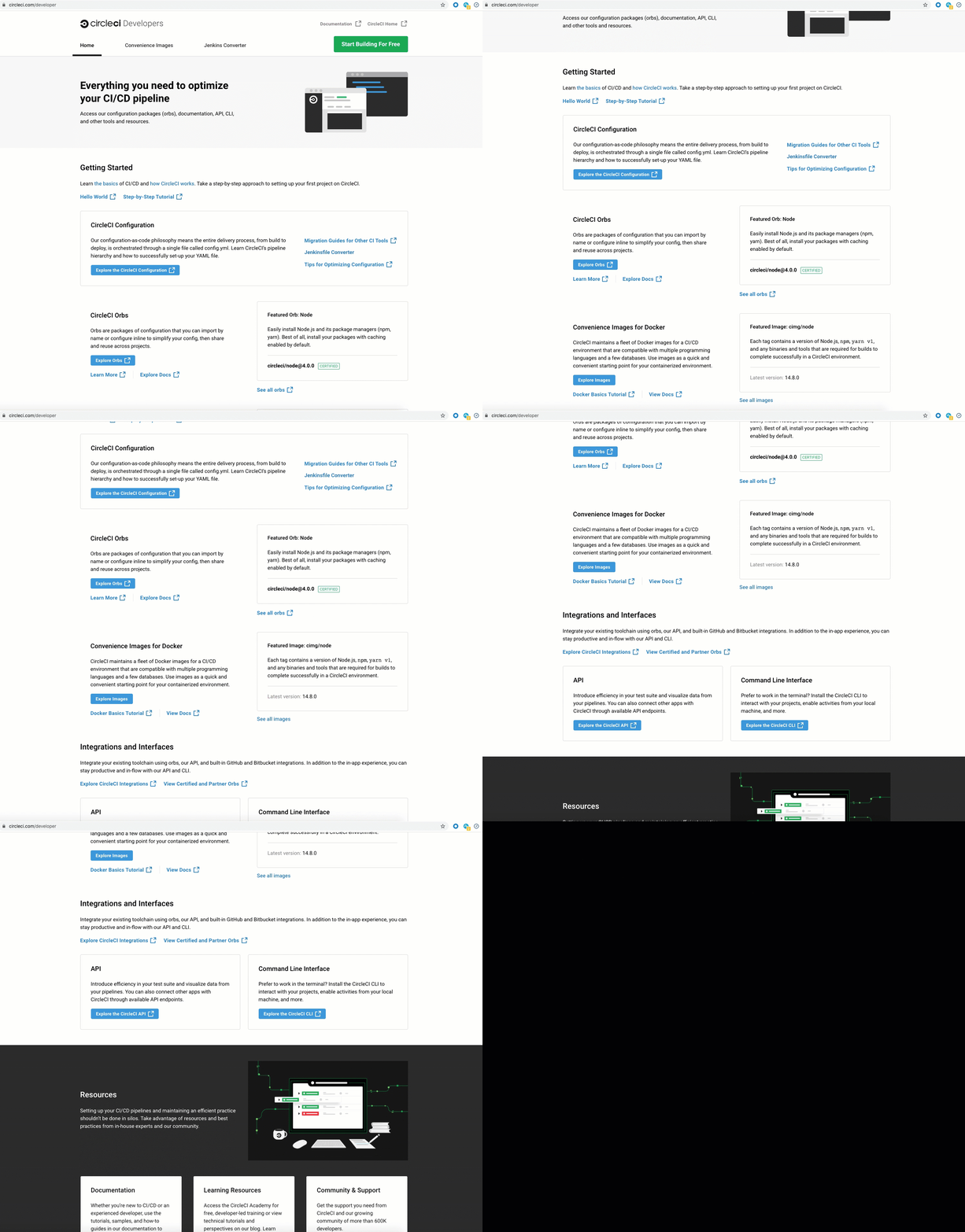
    CircleCI today launched a developer hub as part of an effort to further advance adoption of DevOps best practices.

    Company CEO Jim Rose said CircleCI developer hub provides access to a set of resources for optimizing continuous integration/continuous delivery (CI/CD) pipelines. In many cases prior to the onslaught of the COVID-19 pandemic, organizations had only partially implemented best DevOps practices, noted Rose. The CircleCI developer hub will make it easier for those DevOps teams to extend the scope of those processes while serving to educate IT teams that have had limited exposure to DevOps workflows, he said.

    The CircleCI developer hub provides access to, among other things, CI/CD configuration optimizations and pre-built packages, migration guides and documentation. There are also reusable snippets of CircleCI configuration code, customized open source Docker images that can be used on any platform, and command-line interfaces (CLIs) and application programming interfaces (APIs).

    Later phases of the developer hub will include an orb development kit to help users quickly create new orbs using CircleCI CLI commands. An orb is a software development kit (SDK) that simplifies integrating the CircleCI CI/CD platform with third-party tools and platforms. CircleCI also plans to provide a much more streamlined search engine experience for CircleCI documentation.
    The CircleCI developer hub was built in part using $100 million in additional funding the company raised earlier this year. Overall, CircleCI claims it processes nearly 2 million jobs across 100,000 projects per day.

    In general, Rose said DevOps is becoming more challenging as organizations attempt to orchestrate the building and deployment of monolithic and microservices-based applications constructed using container and serverless computing frameworks. There are plenty of instances in which deploying a monolithic application is still more appropriate, so IT organizations need to be able to create DevOps workflows capable of spanning multiple classes of frameworks and platforms, he noted.

    Making matters more complex is the testing of microservices now needs to be integrated within production environments, added Rose. It’s not really possible to completely test a microservices until IT organizations see what impact it might have on other microservices that have already been deployed in a production environment, said Rose.

    It’s not clear what impact COVID-19 has had on the productivity of DevOps teams. It might be easier for developers to generate more code working from home than in the office. However, generating quality code at the right time during a project requires a lot more orchestration when members of the application development team are highly distributed. More than a few organizations either already have or soon will be tuning DevOps workflows to align with the so-called new normal.

    Of course, there are plenty of places to find tips and advice when it comes to building and extending DevOps workflows. The challenge is creating workflows that are not only flexible and resilient but also simple to implement and maintain.

  • Survey: Cloud Security, DevOps Emerging as Enterprise Priorities

    Survey: Cloud Security, DevOps Emerging as Enterprise Priorities

    A survey published today by 2nd Watch, a provider of IT services, finds that in the wake of the COVID-19 pandemic, cloud security and DevOps have emerged as the top two priorities for large enterprise IT organizations.

    The survey queried more than 100 IT directors working at companies with at least $500 million in annual sales and IT budgets of at least $50 million per year, Three-quarters of respondents (75%) said they are prioritizing cloud security, followed by cloud-native culture change, also known as DevOps, (60%) and conferencing/collaboration (51%).

    Chris Garvey, executive vice president of product for 2nd Watch, said the report shows that not only are more large enterprises accelerating cloud adoption, but the projects being launched are also more strategic to the business.

    The survey finds 60% of respondents said they are prioritizing projects with potentially large payoffs over cost-conscious projects. Nearly half (47%) said now is the time to position their company for the long haul, while 39% said they are accelerating the use of the cloud to deliver digital products. As part of those efforts, more than a third (34%) said they are accelerating the migration of applications to the cloud.

    A total of 93% of respondents use at least two cloud platforms, with Microsoft Azure being the most widely employed.

    Cloud computing platforms, however, are not without their challenges. Most respondents (82%) said they’ve experienced cloud-related challenges, with 77% reporting those issues have caused them to alter their cloud strategies. Nearly half (46%) said experiencing cloud security-related challenges, while 48% said cloud computing turned out to be more expensive than initially anticipated.

    The top challenges identified are providing remote workers access to corporate systems (63%), providing remote worker support (57%) and conferencing/collaboration systems that haven’t worked as expected (47%). Half said they are accelerating the use of the cloud to support remote employees, with 58% expecting at least half of their company’s employees will become full-time remote workers in 2021.

    Overall, nearly two-thirds (64%) said their IT related budgets have stayed the same or grown since COVID-19 began, and 59% said their cloud budgets would increase over the next 12 months. A total of 80%, however, acknowledged they are concerned COVID-19 will continue to impact their IT strategy and only half (50%) said they were confident in their organization’s ability to adjust.

    Primary areas of focus over the next 12 months include databases (42%), internet of things (39%), data warehousing (35%), artificial intelligence/machine learning (34%) and data lakes (26%).

    Garvey said large enterprises are clearly looking to take advantage of their deeper pockets to accelerate digital transformation initiatives at a time when smaller rivals may not be able to invest. However, because the pandemic has impacted some verticals more adversely than others, the level of digital business transformation occurring across different vertical sectors is uneven, he noted.

    It may be a while before the winners and losers are identified in the wake of the pandemic. However, it’s clear large organizations are betting on IT now more than ever to differentiate themselves. As large organizations assess the damage from the pandemic, it’s likely that the future of many of these companies will depend on the degree to which they can adopt a wide array of not just emerging technology platforms, but also the processes required to master them.

  • Barracuda Networks Partners With Microsoft on SD-WAN Service

    Barracuda Networks Partners With Microsoft on SD-WAN Service

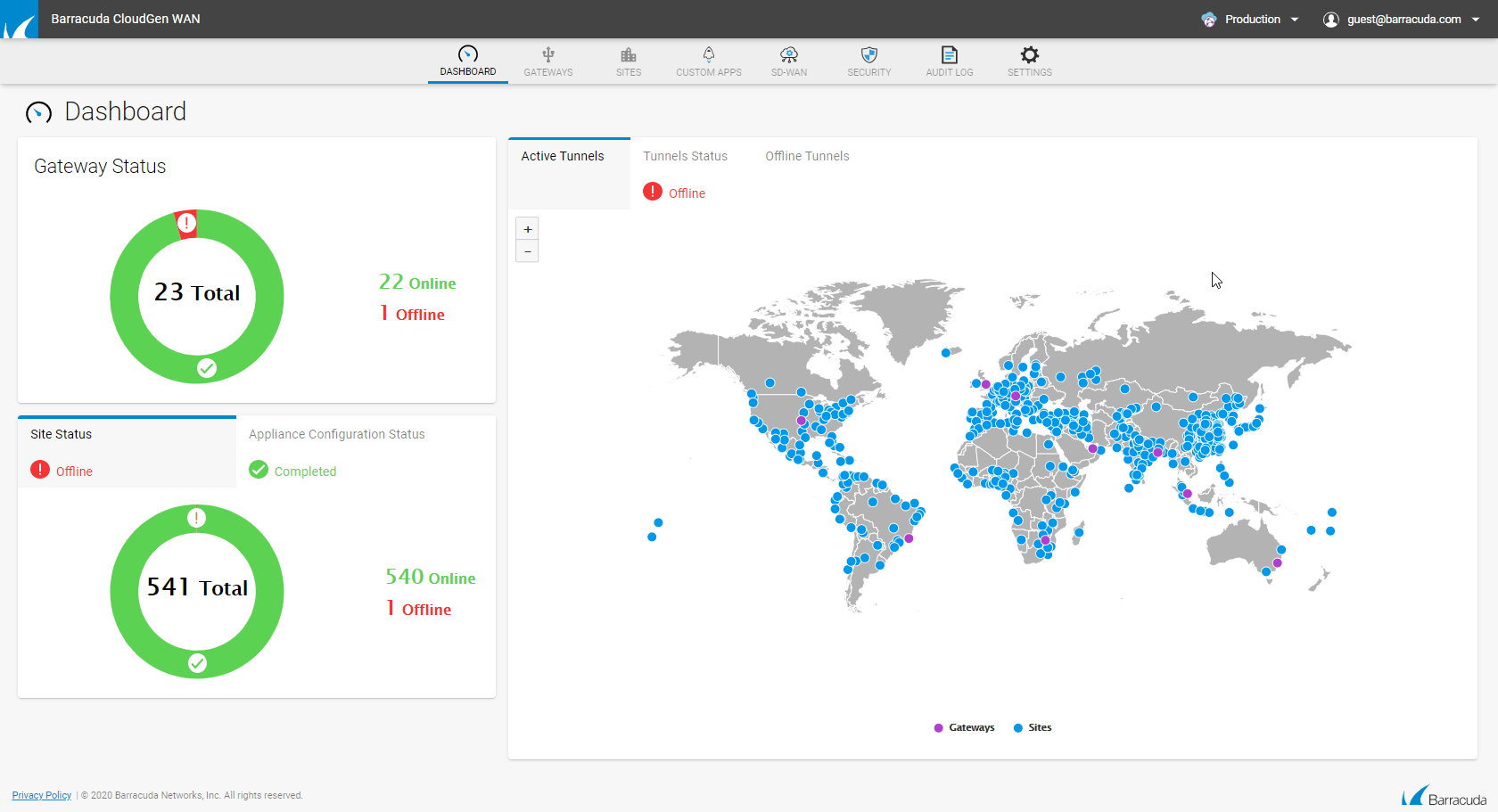
    Barracuda Networks today launched a software-defined wide area network (SD-WAN) service that runs natively on the Microsoft Azure cloud.

    Klaus Gheri, vice president of network security for Barracuda Networks, said Microsoft has made it possible to launch an SD-WAN service using Azure Virtual WAN Hubs, a networking service based on a hub-and-spoke architecture that unifies networking services such as security and routing under a common interface. Those services span branch connectivity, multiple types of virtual private networks, cloud interconnects, firewalls and encryption services.

    Gheri said rather than having to replicate all those networking services, Barracuda Networks is layering a Barracuda CloudGen WAN service on top of the Azure Virtual WAN Hubs to provide a service that, like any other cloud service, can be consumed per billable hour.

    Developed in collaboration with Microsoft, the Barracuda CloudGen WAN service provides the management framework needed to convert Azure Virtual WAN Hubs into an SD-WAN service that IT teams can employ to securely connect remote offices to cloud applications or on-premises IT environments, he said.

    SD-WAN services today come in four basic forms. IT teams can deploy and manage their own SD-WAN appliances. Alternatively, telecommunications carriers make SD-WAN services available on their networks or a managed service provider (MSP) can create its own SD-WAN service by deploying the appliance on points of presence (PoP) on a global network it manages. More recently, cloud service providers have been making SD-WAN services available via the networks they built to connect all their data centers.

    Gheri said Microsoft is now taking that SD-WAN capability a step further by adding a management portal created by Barracuda Networks.

    A recent survey of 750 business and IT professionals conducted by Vanson Bourne on behalf of Barracuda Networks finds more than half (52%) are looking to employ SD-WAN services delivered via the cloud. In comparison, the survey finds 16% prefer to get SD-WAN from an independent vendor, 15% would opt for a telecommunications partner and 12% would rely on a value-added reseller.

    With more application workloads moving into the cloud, the way networks are deployed and managed is evolving rapidly. Instead of connecting branch offices to local data centers to access cloud applications, more organizations are employing SD-WANs to provide direct access to cloud applications without having to backhaul network traffic through a local data center. That approach significantly improves overall application latency and, in many cases, reduces the need to rely on leased MPLS lines from a telecommunications carrier.

    Rather than build those SD-WANs themselves, many IT organizations want to be able to access and manage them via a portal through which they can allocate bandwidth to applications as they best see fit. It’s not clear to what degree IT organizations will continue to prefer to deploy appliances versus consuming SD-WAN as a service. However, given the complexity of managing SD-WANs, there’s a high probability that SD-WAN services delivered via existing cloud networking infrastructure will soon become a widely employed alternative.

  • DevOps Deeper Dive: Google Roils Open Source Community

    DevOps Deeper Dive: Google Roils Open Source Community

    Google this week agitated the bulk of the open source community by launching the Open Usage Commons consortium to protect the trademarks of open source projects, starting with the Istio, Angular and Gerrit projects it launched.

    Launched in collaboration with SADA Systems and some independent contributors, the stated goal of the Open Usage Commons is to help open source projects assert and manage their project identity through programs specific to trademark management and conformance testing.

    Istio is a service mesh that runs on top of Kubernetes, while Angular is a web application framework. Gerrit is a code collaboration tool.

    Unlike previous open source projects that Google played a major role in developing such as Kubernetes, Google has yet to contribute these three projects to an open source consortium. That decision has members of the open source community now questioning Google’s commitment to open source software.

    In fact, IBM, which launched the Istio project in collaboration with Google, this week said the Open Usage Commons does not meet the level of open source governance IBM expects. Originally, IBM said the expectation was that Istio would be contributed to the CNCF once it achieved a level of maturity. That contribution would include Istio intellectual property and the trademark. Now IBM is encouraging Google to reconsider its Open Usage Commons approach.

    If Google continues to hold on to the intellectual property rights for open source projects such as Istio, those projects will become little more than a community project that Google exercises control over, said Priyanka Sharma, general manager of the Cloud Native Computing Foundation (CNCF), which oversees the ongoing development of Kubernetes, among other open source projects.

    “It’s not in the spirit of open source,” said Sharma. “I don’t think you can even call it open source.”

    Other open source initiatives will be hesitant to build on top of projects such as Istio if the intellectual property belongs to a single vendor, added Chip Childers, executive director of the Cloud Foundry Foundation (CFF). The trademark is never the main issue, he said.

    “The trademark is only part of the consideration,” said Childers.

    In the case of Istio, the decision to launch Open Usage Commons might also draw more attention to a Service Mesh Interface (SMI) project being advanced under the auspices of the CNCF. That interface promises to make it easier to rip and replace one service mesh for another.

    In the meantime, Google may be trying to maximize its investments in open source projects that until now have tended to benefit rivals more. In terms of consumption of cloud services based on Kubernetes, Google is a distant third at best to Amazon Web Services and Microsoft.

    In general, there are more open source projects than ever. However, some of the entities that launch those projects have complained that cloud service providers simply turn those projects into cloud services in a way that consumes most of the revenue opportunities any open source project might generate.

    Google now appears to be exacerbating those tensions further by trying to retain control over the open source project it leads, while selling services based on other open source software projects. It’s not clear to what degree this rift might drive a wedge between multiple open source factions. Google with this move may just drive more members of the open source community into the arms of AWS and Microsoft. However, for the moment at least, none of the projects covered by the Open Usage Commons trademarks are so critical that they could not be replaced by any one of several alternative projects that are truly open source.

  • Survey Finds IT Teams Rising to COVID-19 Challenge

    Survey Finds IT Teams Rising to COVID-19 Challenge

    In many ways, the COVID-19 pandemic has been the ultimate test for IT teams. The bulk of many workforces overnight became remote workers. Many of those end users are now starting to return to the office, but no one knows for sure if they will be sent back home again because of another flare-up.

    A survey of 519 IT professionals conducted by ManageEngine, a provider of IT service management (ITSM) software, suggest most IT teams have risen to the COVID-19 challenge. According to the survey results, 85% of respondents said they were equipped with the right remote-support equipment or were able to procure it quickly to enable a productive remote work environment. In addition, 83% of respondents said they believe IT will be better appreciated in terms of budgets, salaries and recognition in the wake of the COVID-19 crisis.

    Overall, nearly three-quarters (72%) said the ITSM tools continue to be effective despite remote work conditions. For example, 40% cited knowledge management as their greatest challenge, while just over 50% noted that prior to the pandemic Bring Your Own Device (BYOD) policies were non-existent in their organizations.

    In terms of mobile computing devices, only 32% said they were already providing them. Nearly half (47%) are now planning to provide them.

    Self-service support options aren’t being used by 28% of the organizations, and of those who do use them only 40% found they truly helped. Among the respondents who use chatbots for their self-service, 50% found them beneficial for remote support. Only 7% of respondents felt that the service desk wasn’t up to meeting the remote IT support challenges that the pandemic presented.

    In addition, only 40% said they are equipped to tackle the increase in security and privacy concerns that result from more employees working outside the office.

    Cloud services were also critical, with more than half of respondents (53%) saying such services helped their organization’s business continuity. However, 20% of respondents said they did not have a business continuity or disaster recovery plan in place for emergency situations. Among those who had them, 50% were happy with those plans. Almost a third (29%) of respondents admitted they did not do enough prior testing of their action plan.

    A fifth of respondents also noted shadow IT is impacting services and applications, while nearly a third said they were unsure.

    Pradyut Roy, a product manager for ManageEngine, said it’s apparent many IT organizations will need to update IT policies and processes in the wake of the pandemic. It’s also probable the IT environment will become more heterogeneous in the wake of the pandemic as, for example, more desktops move into the cloud, said Roy.

    In general, IT teams will need to adjust to a much more fluid IT environment. Many more end users will be rotating in and out of the office to enable organizations to comply with social distancing mandates. Regardless of what the new normal becomes, however, it should be apparent to all by now that IT will play a more central role in most business decisions from here on out.

  • SaltStack Looks to Automate DevSecOps Processes

    SaltStack Looks to Automate DevSecOps Processes

    SaltStack announced today it has integrated its automation framework with a variety of third-party security platforms to further the adoption of best DevSecOps processes.

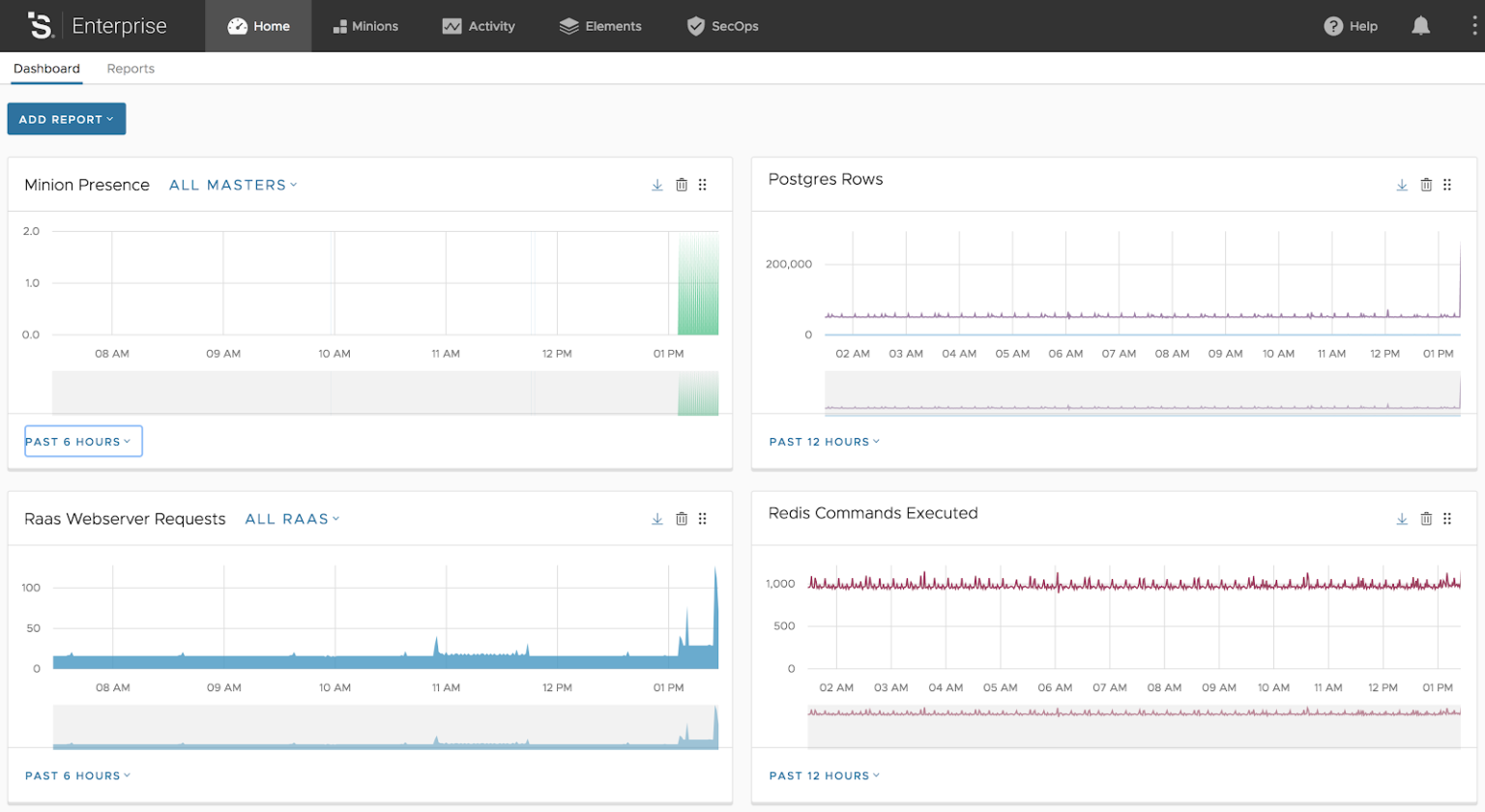
    Mehul Revankar, director of product management for SaltStack, said version 6.3 of SaltStack Enterprise provides integration with offerings from Splunk, Tenable, Qualys, Rapid7 and Kenna Security. Data generated from vulnerability scans conducted using tools from Tenable, Qualys and Rapid7 can be directly imported into SaltStack Enterprise to inform automated DevSecOps processes, while integration with Kenna Security makes it easier to automate and prioritize vulnerability remediation based on the level of risk.

    Revankar said that latter capability is crucial because remediation efforts should not be prioritized based on the severity of a vulnerability alone. For example, a vulnerability may be discovered in an application that sits behind a firewall, but if that application doesn’t provide access to the web an organization may decide to not patch that vulnerability immediately regardless of its severity because the risk of a breach is still relatively low, he said.

    These capabilities will enable SaltStack Enterprise to serve as a foundation for providing security orchestration, automation and response (SOAR) capabilities within the context of a DevSecOps process by making it easier to incorporate cybersecurity within the context of a larger playbook for automating the management of IT, he added.

    Most of those playbooks will be developed by DevOps teams in collaboration with cybersecurity professionals, noted Revankar.

    In addition to improving DevSecOps processes, SaltStack hopes to make it easier for external applications such as Splunk and Datadog to consume data generated by its framework by providing compatibility with Prometheus, an open source IT monitoring tool developed under the auspices of the Cloud Native Computing Foundation (CNCF). A SaltStack Enterprise Splunk add-on tool has been added to the Splunkbase repository.

    SaltStack is also making available a performance and health dashboard to enable DevOps teams to track 25 SaltStack Enterprise metrics that are surfaced using the Prometheus data format.

    The open source Salt framework on which SaltStack Enterprise is based has emerged as a popular option for automating IT processes. Because it is based on Python, the barrier to adoption for Salt in terms of programming expertise is comparatively low to other programming languages. As such, more IT operations teams have been inclined to learn Python to leverage Salt to automate processes.

    Like most vendors that have adopted open source business model, SaltStack extends the capabilities of Salt via an enterprise edition that it both extends and provides commercial support.

    Interest in IT automation is on the rise as organizations of all sizes look to maximize what limited cybersecurity resources they have and cut costs. IT automation in the form of SOAR presents an opportunity to consistently apply cybersecurity policies more broadly without having to increase the size of the IT organization.

    The challenge, of course, is having the expertise required to build a playbook. In the case of open source frameworks, many of those playbooks are shared among the members of a community such as Salt. Regardless of how those playbooks are acquired, it’s clear that as IT becomes increasingly more complex most IT organizations are not going to be to do without them.

  • Cloud Foundry Foundation Updates CLI to Extend DevOps Processes

    Cloud Foundry Foundation Updates CLI to Extend DevOps Processes

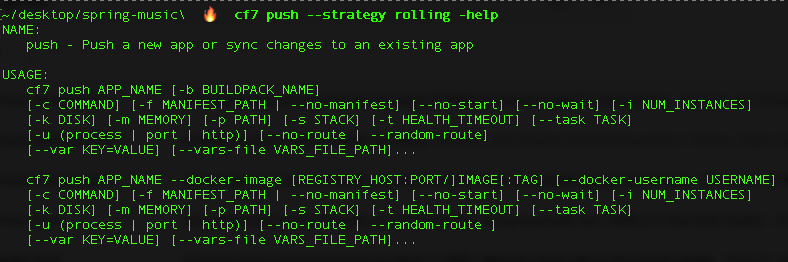
    The Cloud Foundry Foundation (CFF) today released an update to its command-line interface (CLI) that will enable DevOps teams to build more granular and complex workflows spanning multiple processes across the open source platform-as-a-service (PaaS) environment.

    Announced at the Cloud Foundry North American Summit, version 7 of the Cloud Foundry CLI employs updates to the application programming interfaces (APIs) exposed via the Cloud Foundry PaaS to invoke package, droplet, build and process control resources while adding resources such as sidecars, manifests and deployments.

    The updates to the CLI and associated APIs will make it possible to enable rolling application deployments, run multiple processes within the same container and add metadata to objects.

    Chip Childers, executive director of the CFF, said most of the organizations that have adopted the Cloud Foundry PaaS are already fairly advanced when it comes to implementing best DevOps practices. The latest version of the CLI will make it possible to tighten DevOps feedback loops within the PaaS environment.

    In general, CFF is positioning the Cloud Foundry PaaS environment as a common framework for building and deploying applications on traditional virtual machines and Kubernetes clusters. The CFF has launched an incubation project, dubbed KubeCF, that enables a virtual instance of the Cloud Foundry runtime to be deployed on Kubernetes. At the same time, the CFF has made available Project Eirini, another incubation project that enables the Cloud Foundry scheduler to be replaced by Kubernetes, and Project Quarks, which allows the CF Application Runtime to be packaged using containers.

    The CFF has also launched Cloud Foundry for Kubernetes (cf-for-k8s), a more ambitious effort to replace the underpinnings of the PaaS environment with a Kubernetes foundation. That initiative should result in Cloud Foundry requiring much less IT infrastructure to be deployed. The CFF has also committed to embracing other cloud-native technologies such as the Istio service mesh.

    As part of that effort, the Bosh framework that the CFF created to automate the deployment of its PaaS will also eventually be replaced by a framework optimized for Kubernetes environments.

    Childers said it’s now clear Kubernetes will mature to the level required to support an enterprise-class application development environment. The opportunity now is for IT vendors such as VMware, SUSE and others to deliver an application development environment that makes developers more efficient than any other on cloud-native infrastructure, said Childers.

    For example, VMware today is making available a public beta of the VMware Tanzu application service for Kubernetes based on the cf-for-k8s project.

    Contributors to the CFF project are clearly trying to make up for lost time. Rival PaaS environments such as Red Hat OpenShift have long been integrated with Kubernetes. The CFF community, however, is betting more enterprise IT organizations will embrace Kubernetes once they discover various distributions of a PaaS environment they already rely on is available on that platform.

    Whatever the path chosen, the one thing that is clear is the Cloud Foundry PaaS is about to become a lot more accessible to organizations that, no matter how great the developer experience, previously balked at its overall size.

  • Report: SD-WAN Shift to the Cloud Accelerates

    Report: SD-WAN Shift to the Cloud Accelerates

    The rate at which software-defined wide area networks (SD-WANs) are being consumed as a cloud service appears to be accelerating in the wake of the COVID-19 pandemic.

    A global survey of 750 IT professionals conducted by the market research firm Vanson Bourne on behalf of Barracuda Networks finds over half of respondents (52%) are looking to acquire an SD-WAN solution via a cloud provider, with Microsoft Azure being cited as the most preferred option.

    Only 16% said they prefer an SD-WAN from an independent vendor, while 15% would opt for a telecommunications provider. Another 12% said they would rely on a reseller.

    Klaus Gheri, vice president of network security for Barracuda Networks, said the survey suggests that as application workloads move into the cloud, more IT organizations want to centralize acquisition of networking services alongside compute and storage. As such, he said, providers of SD-WAN appliances such as Barracuda Networks will need to evolve to extend the basic SD-WAN capabilities provided by cloud service providers.

    At the same time, Gheri noted that way applications are being accessed is also evolving as more employees are working from home. Rather than directly accessing applications running in a local data center or office, many organizations are routing access requests to those applications through their cloud service provider. That approach reduces costs by using a public internet connection to access to cloud service, which then routes that request over a virtual private network (VPN) to a local data center.

    Given the egress charges a cloud service provider requires, that approach may not reduce costs in the case of every workload. However, it may reduce costs by reducing the amount of network traffic moving across a leased MPLS line, he noted.

    Gheri said the rise of the cloud as a networking conduit illustrates how varied SD-WAN implementations have become. Organizations increasingly need some capability at the client level to automatically determine which network path makes the most sense for any request based on cost and latency requirements.

    In the meantime, frustrations with VPN clients continue to mount. Most VPN implementations were designed to support a small percentage of employees for occasional access. With more employees working from home more frequently, many organizations are reconsidering their SD-WAN strategies. In addition to being able to scale services more easily, Gheri noted SD-WANs also afford organizations the opportunity to implement zero-trust networking services to better isolate application environments in the event of a security breach.

    Over the last few years, SD-WANs have been one of the fastest-growing categories in IT. The Barracuda survey found 23% of respondents have already deployed SD-WAN, with another 51% either in the process of deploying or expecting to deploy one within the next 12 months.

    Clearly, competition between cloud service providers, telecommunication carriers and independent providers of SD-WAN services will intensify in the months ahead. The challenge facing IT teams now is determining to what degree they want to be directly involved in managing SD-WAN networks versus simply consuming SD-WAN services on an as-needed basis.

  • Cisco Moves ACI Strategy Forward

    Cisco Moves ACI Strategy Forward

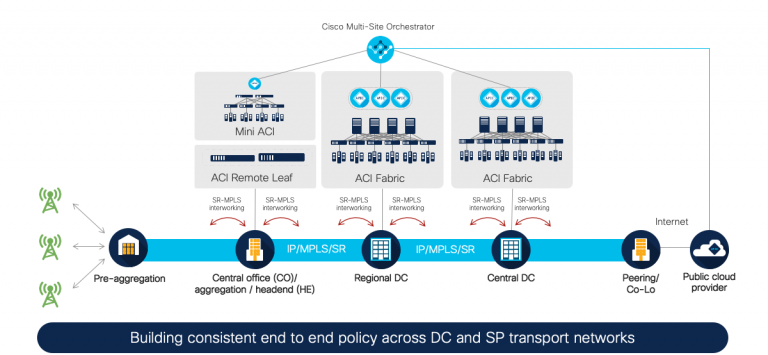
    Cisco is advancing its hybrid cloud computing strategy with release of version 5.0 of Cisco Application Centric Infrastructure (ACI), a software-defined networking (SDN) that can be deployed on cloud platforms or networking equipment deployed in an on-premises IT environment.

    The latest version of Cisco ACI adds support for a transit gateway between virtual private cloud (VPC) instances on the Amazon Web Services (AWS) cloud to provide a more efficient means of routing traffic across east-west and north-south cloud computing environments.

    Cisco is also extending the networking services it provides for the Microsoft Azure cloud to include VNET peering within the Azure Virtual Network, shared service deployments, additional service automation functions.

    Via ACI 5.0, IT teams are now provided a centralized view of cloud resource inventory within AWS and Microsoft Azure along with status indicators and a set of wizards to simplify configurations.

    Cisco also has deepened the level of integration between Cisco ACI and Kubernetes as well, to increase the level of scale that can be achieved in IT environments based on platforms such as VMware vSphere.

    Finally, Cisco has added support for role-based access control (RBAC) in multi-tenancy environments along with two-factor authentication (TFA) capabilities enabled by the Cisco DUO platform. Cisco also added a more flexible policy construct, dubbed Endpoint Security Group (ESG), that can be employed to group endpoints based on L3 attributes and apply contracts between ESGs.

    Srinivas Kotamraju, senior director for product management for Cisco ACI, said the latest update to the SDN platform provides IT teams with the equivalent of many of the same networking services that Cisco historically has provided in an on-premises IT environment.

    Cisco has been making the case for a hybrid cloud computing approach to delivering network services that enables IT teams to manage those services via a central console. Rather than having to manage networking services provided by each cloud service provider, Cisco ACI makes it possible to deploy the same SDN across multiple clouds and on-premises IT environments. Cisco contends that approach ultimately serves to reduce the total cost of delivering networking services by both centralizing management and making it easier to automate the management of networking services across multiple IT environments.

    There are two primary ways Cisco exposes those networking services. DevOps teams can take advantage of application programming interfaces (APIs) to programmatically invoke ACI services. Alternatively, Cisco provides network managers access to a graphical user interface (GUI) through which they can access a command-line interface (CLI) to configure a specific router or switch.

    Kotamraju said with the rise of DevOps the number of organizations giving developer programmatic control over networking services continues to rise. It’s too early to say to what degree NetOps and DevOps teams might ultimately converge; however, Kotamraju said finding ways to meld those two groups is being discussed more frequently within many IT organizations as applications become more distributed.

    Of course, the biggest challenge when it comes to achieving that goal will be more cultural than technical. However, as networking services become more accessible via APIs, it’s now more a question of when and how than if.

  • Report: Debugging Efforts Cost Companies $61B Annually

    Report: Debugging Efforts Cost Companies $61B Annually

    Undo, a provider of a software failure replay platform, this week published a report in collaboration with a Cambridge Judge Business School MBA project that estimates 620 million developer hours a year are wasted on debugging software failures, at a cost of roughly $61 billion.

    The report also notes software engineers spend on average of 13 hours to fix a single software failure.

    According to the report, 41% said identified reproducing a bug as the biggest barrier to finding and fixing bugs faster, followed by wiring tests (23%) and actually fixing the bug (23%). Well over half (56%) said they could release software one to two days faster if reproducing failures were not an issue. Just over a quarter of developer time (26%) is spent reproducing and fixing failing tests.

    On the plus side, 88% of respondents said their organizations have adopted continuous integration (CI) practices, with more than 50% of businesses reporting they can deploy new code changes and updates at least daily. Over a third (35%) said they can make hourly deployments.

    Undo CEO Barry Morris said the report makes it clear organizations need to be able to record software to reduce the amount of time it takes to find bugs. Unfortunately, even then finding a bug is still a labor-intensive process that can involve analyzing millions of lines of code. In the future, software replay systems will be infused with machine learning algorithms to accelerate the bug discovery process, he noted. As software becomes more instrumented, the observability data and metrics that machine learning algorithms require to detect patterns is becoming more accessible.

    In the meantime, while CI has been embraced, the continuous delivery (CD) side of the DevOps equation remains a challenge. Each platform software is deployed on is unique, so most organizations find automating software delivery problematic.

    Regardless of DevOps approach, it’s clear there’s still lots of room for improvement when it comes to developing software. Even the most advanced practitioners of DevOps are limited by the rate at which software bugs, including security flaws, can be discovered and remediated. Of course, there may come a day when machine learning algorithms automate much of that process, including determining which types of tests to run. For now, however, many organizations could streamline the software debugging process by recording instances of applications when they are built and when they are deployed. After all, each platform that software is deployed on has attributes that inevitably impact how software on the platform runs.

    As software continues to become more complex in the years ahead, challenges associated with debugging applications will only continue to grow. In the age of microservices, the issue that software engineers are trying to troubleshoot might not have anything to do with the code they wrote; rather, the issue emanates from a service they invoked via an application programming interface (API). Whatever the source of the problem, it’s apparent to all a lot of time and money is being wasted on debugging software that could be put to far better use.