Category: DevOps Toolbox

  • Know What You Want and Need

    Know What You Want and Need

    Over the years, what we purchase from vendors has changed significantly. It used to be that IT would define a need, go out and find a bit of software to solve it, install and configure the software and, in most cases, spend the majority of time on the project getting it to work correctly in their environment. Those days are largely gone. First, we started buying appliances for some functionality, then we started using MSPs for some or all functionality, then some vendors wanted to deliver in a VM where they could make configuration much easier by controlling the environment. That was the first step to virtualizing purchases. Then we started looking at infrastructure-as-a-service (IaaS), then SaaS, then some vendors offered PaaS … Currently, all of the cool vendors are offering containers—which are an improvement over VMs, and offer a virtual appliance that is quick to get running and tested to do what it was purchased for. Or at least tested to do what it was sold for. We’ve all got stories about what we did with these purchases that were “off label”—things that a product really wasn’t designed for. Along the way, we also introduced open source vendors; a bit of an oxymoron that really described service orgs that base their product on an open source project. Some far more successfully than others.

    And all of that, dear reader, is why we are here. Before purchasing, there is a lot more to find out than there used to be. What, actually, is the product this software vendor is selling? In the end, IT is looking to solve a problem. Most of the time, whether that problem is solved by SaaS, local install or cloud instance is less important than how well the problem is solved. But implementation—and licensing—are important to an organization if not immediately, then over the long term.

    When purchasing an open source “product”, you’re … actually not. You are getting the product and purchasing support. Since open source can be hacked to run just about anywhere given enough time, more than one OSS vendor has pretended that makes them superior to commercial products targeted at a specific platform. That is blatantly untrue—unless the OSS vendor is supporting the product anywhere and everywhere which, of course, they are not. I can port the OSS project MyFunApp to any platform I want without paying for support that won’t do a thing for me when I get it up and running on OS/2 (as an extreme non-existent example).

    SaaS has more issues when it comes to TCO. While pay-as-you-grow is cool and all, locking in a monthly payment forever is a big step and should be considered. And at an enterprise, “forever” needs to be considered realistically. Implement a particular SaaS CRM and you are unlikely to move to another, even if you claim that you will in a heartbeat. It’s work. A lot of work. It is definitely possible, but for most organizations, unlikely. So know what you are getting into. And while you are evaluating, don’t forget to consider variable charges, which most SaaS products have. Make certain you understand what the actual monthly costs are likely to be. IaaS suffers this same variability problem, as many of us have learned.

    Containers are a very sweet solution to appliance-like functionality—drop a container into your Kubernetes flavor of choice and move along. The problem here is a combination of proliferation—how many are required? One per pod can get expensive over time, for example. Those resources aren’t free, no matter the platform. The other issue is updates. Automatic updates are the norm for container instance-delivered products. From a security perspective, you should have questions. Updating things in your network should probably require your approval.

    I’m not suggesting that one delivery method is better than others here; I’m simply suggesting that we all need to be more deliberate about those choices than we’ve needed to be in the past. Knowing not just SLAs but the cost and support implications of every choice is important both today and down the road.

    Keep kicking it, and keep picking the solutions that best solve the organization’s problems. Just be aware that sometimes, the issues a delivery method introduces undermine the effectiveness of the solution.

  • InfluxData Delivers Revamped Database for Real-Time Processing

    InfluxData Delivers Revamped Database for Real-Time Processing

    InfluxData has made good on a promise to deliver a next-generation time-series database that enables observability and monitoring tools used by DevOps teams to ingest high volumes of data more cost-efficiently.

    In addition, for the first time, the latest iteration of the InfluxDB database supports the de facto standard SQL query language. Developers can run unlimited time-series workloads and contextualize data by any dimension without restrictions using SQL or existing tools such as the InfluxDB application programming interface (API), Flux scripting language or the InfluxQL query language

    Brian Gilmore, director of internet-of-things (IoT) and emerging technologies for InfluxData, said InfluxDB is now based on a columnar engine, dubbed IOx, that leverages the open source Apache Arrow memory format and the Rust programming language accessed via a multi-tenant InfluxDB Cloud service that company manages on behalf of application developers. Use cases that require processing large volumes of data such as metrics, events, traces and other high cardinality data can now be queried in milliseconds, he noted.

    The goal is to make this latest incarnation of InfluxDB available via a managed cloud service before providing IT teams with a version they can install themselves.

    The arrival of a revamped InfluxDB architecture comes as the amount of data being generated across application environments continues to rapidly expand. Many DevOps teams are especially struggling with ways to process and store all the data being generated by cloud-native applications made up of microservices generating a steady stream of logs, metrics and traces.

    InfluxData, of course, has ambitions for its database that go beyond application development and deployment environments. Edge computing platforms, for example, will increasingly process and analyze data in real-time at the point where it is generated and consumed. Similarly, applications infused with machine and deep learning algorithms will require databases that can process data at scale. Regardless of the use case, however, it’s apparent more IT teams will be embracing DataOps best practices alongside DevOps to manage data as applications are deployed and continuously updated.

    It remains to be seen how many observability and monitoring tools might embrace this latest iteration of the InfluxDB database, but it’s clear DevOps teams should expect to see major advances as the underlying databases upon which these platforms depend continue to evolve. The goal is to ultimately eliminate the tradeoff that now often occurs between how much data is collected and analyzed versus the cost of processing and storing it.

    In the meantime, DevOps teams will need to decide whether they want to manage databases themselves as more managed services become easier to invoke in the age of the cloud. Most database selections these days are made by development teams that aren’t especially eager to take on the tasks normally performed by a database administrator. A managed service essentially outsources responsibility for managing a database to a services provider instead of requiring IT teams to hire a DBA themselves.

    One way or another, however, the speed at which data can now be processed in real-time should sharply reduce the need to rely on existing and cumbersome batch-oriented approaches to processing data.

  • Nobl9 Simplifies SLO Identification

    Nobl9 Simplifies SLO Identification

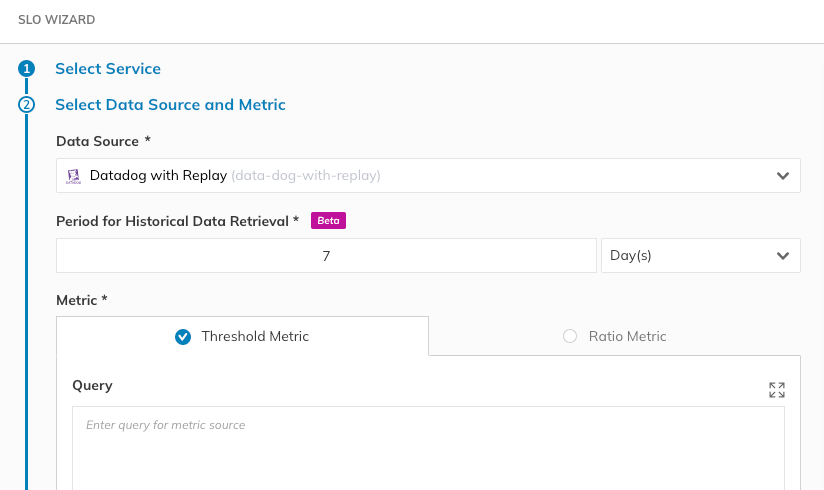
    Nobl9 today added a Replay capability to its service level objectives (SLO) management platform that makes it simpler to collect the historical data a DevOps team needs to get started.

    Nobl9 COO Kit Merker said Nobl9 Replay makes service level indicator (SLI) data instantly available in minutes using 30 days of historical data collected from observability and application performance monitoring (APM) platforms. Previously, DevOps teams would have had to wait as long as a month before the Nobl9 platform could collect enough spreadsheet data to create a graph that identified the relationship between various services.

    Nobl9 now enables historical data to be merged with data collected in real-time to allow DevOps teams to view SLO charts and generate reports shortly after creating an SLO within a Git-based workflow.

    Nobl9 is trying to spur greater adoption of SLOs by making available an open source SLO specification that defines a common interface for constructing them that has garnered support from Dynatrace, Sumo Logic and others. SLOs, of course, are not a new idea; they have been used as a metric to track the performance of IT services for decades. However, as more microservices-based applications are built and deployed, it’s becoming more challenging to maintain SLOs across applications that have many more dependencies than legacy monolithic applications.

    The Nobl9 platform is designed to enable DevOps teams to employ an SLO-as-code approach that makes it simpler to gather the metrics that confirm whether SLOs are being achieved.

    It’s not clear whether reliance on SLOs has waned over the years or if application environments simply became too complex to track meaningful metrics. A recent survey conducted by Dimensional Research on behalf of Nobl9, however, found a full 94% of respondents that have or plan to implement SLOs intend to map them directly to business operations, with 91% reporting they expect that effort to improve decision-making. More than 80% also said their organizations are planning to increase the use of SLOs, with 87% indicating SLOs should improve overall microservices performance.

    The issue is that most organizations have limited visibility into their IT environments. The survey found less than half of respondents (46%) had visibility into all their IT environments. Only 45% and 35% claim to have visibility into containers and microservices, respectively. More than three-quarters (78%) said hybrid clouds make observability more difficult, even though 45% said they already employed 11 or more observability and monitoring tools. Trying to track SLOs using tools such as Grafana dashboards that DevOps teams need to set up and maintain is simply too difficult, noted Merker.

    As applications are increasingly constructed using services that drive digital business transformation initiatives, it’s now only a matter of time before SLOs are more widely tracked. That will enable DevOps teams to not only ascertain their current level of performance but also more easily work toward achieving their actual performance goals, he added.

    The challenge is that defining an SLO in a highly dynamic application environment where services are added and replaced with much greater frequency is often a lot easier than maintaining it.

  • The Dog Ate My DevOps Dozen

    The Dog Ate My DevOps Dozen

    As the new Techstrong Group team member, I wasn’t familiar with the DevOps Dozen awards. The basics: It’s a cool program that recognizes excellence across a number of categories in the DevOps world. The winners will be announced during our Predict 23 conference on January 12. I have to tell you that the submission process was interesting. 

    It’s not surprising that many of the submissions came in on the last day. Some within the last hour of the last day. But what was surprising were some of the excuses we got when companies inevitably asked for extensions.

    No one actually used the “dog ate our submission” excuse—mostly because, well, it’s an online submission process so, unless the dog swallowed a computer, that’s not really a thing anymore. It seemed that honesty prevailed this year. We got a bunch of folks that said they were working on a major launch; others said they’d been consumed with getting ready for KubeCon and asked for a little more time.

    We were somewhat sympathetic since we also were getting ready for KubeCon and totally understand the all-hands-on-deck push required to get ready for a major event. We also encountered some issues with our payment processor which prevented the completion of some submissions. We’ve fixed the issue and we’ve learned from that experience, so it won’t be a problem next year.

    In terms of the categories, unsurprisingly the top three that attracted the most submissions were “Best DevSecOps Solution,” “Best End-to-End DevOps Tool and Service” and “Best New DevOps Tool/Service Provider”. Given the move to integrate security into the DevOps environment and the move to integrate the variety of DevOps tools onto a platform, the popularity of those two categories was expected. 

    The next wave of categories included “Best Observability Solution,” “Best Cloud-Native Security Solution/Service” and “Best CI/CD Tool” to round out the top six. Again, less strategic and more tactical in this second group.

    If you are looking to go where the crowds aren’t, the least-crowded three categories in terms of submissions were “Best DevOps-Related Video Series (Video),” “Best DevOps Transformation (non-vendor)” and “Best DevOps Presentation of the Year.” Maybe those aren’t the sexiest, most buzzworthy categories, but the competition is minimal.

    So what did we learn from this year’s submission process? Try not to wait until the last minute and that the most competitive categories are those that deal with hot issues. Keep an eye out for the beginning of public voting, and we’ll see you at the awards ceremony during Predict 23!

  • Meta Income Down by Half | Will Apple Make it Worse? | Linux Secure Boot Fix

    Meta Income Down by Half | Will Apple Make it Worse? | Linux Secure Boot Fix

    Welcome to The Long View—where we peruse the news of the week and strip it to the essentials. Let’s work out what really matters.

    This week: Meta’s latest results are very bad, Apple wants its cut of Facebook ads, and Lennart Poettering proposes a new Secure Boot for Linux. (more…)

  • Fermyon Adds Managed PaaS for Building Wasm Applications

    Fermyon Adds Managed PaaS for Building Wasm Applications

    Fermyon Technologies this week launched a hosted platform-as-a-service (PaaS) environment, dubbed Fermyon Cloud, that promises to make it simpler to build WebAssembly (Wasm) applications.

    Announced during the Cloud Native Wasm Day event during the KubeCon + CloudNativeCon North America conference, Fermyon Cloud is now available in open beta.

    Fresh from raising $20 million in funding, Fermyon CEO Matt Butcher said IT teams can quickly build and deploy Wasm applications using a Fermyon Spin development tool and a Fermyon Platform the company launched earlier this year.

    Fermyon Cloud adds an opinionated PaaS environment managed by Fermyon that can start up Spin applications in less than a millisecond. It uses a serverless application programming interface (API) that makes it possible to cache and optimize applications as they are loaded, noted Butcher.

    Originally developed more than five years ago by the World Wide Web Consortium (W3C) to create a common format for browsers executing JavaScript code, Wasm is now used to rapidly build lighter-weight applications that can be deployed on any server platform. In effect, the promise of being able to write an application once and deploy it anywhere is finally being realized some 25 years after the initial introduction of the Java programming language.

    Wasm isn’t necessarily going to replace existing approaches for building applications, at least not any time soon, but it does provide an alternative to serverless computing frameworks for developing lighter-weight applications that run faster.

    In addition, at a time when organizations are becoming more concerned about application security, the appeal of Wasm is clear. Existing approaches to building applications rely on the aggregation of software components that tend to lack distinct boundaries between them. As a result, it becomes relatively simple for malware to infect all the components of an application. In contrast, Wasm code runs in a sandboxed environment that isolates execution environments to eliminate the ability of malware to laterally move across an application environment.

    Wasm is especially well-suited for building lightweight applications that previously might have been deployed on a serverless computing framework, noted Butcher. The issue developers are encountering when using a serverless computing framework is that those frameworks are based on containers that have comparatively slow startup times, he added.

    It remains to be seen how much traction Wasm gains in the months ahead, but Butcher said he expects most backend services, such as databases, will continue to be built using containers. Fermyon is betting, however, that many future cloud-native applications built by the average developer will be constructed using Wasm. In the longer term, Wasm will also soon be used to build applications infused with machine learning algorithms, said Butcher.

    In the meantime, DevOps teams should get ready for more Wasm code to move through continuous integration/continuous delivery (CI/CD) pipelines. The challenge, of course, is that code will need to be managed alongside all the other software artifacts moving through those pipelines, as well.

  • JFrog Gives Pyrsia to CD Foundation to Secure Software Supply Chains

    JFrog Gives Pyrsia to CD Foundation to Secure Software Supply Chains

    At the KubeCon + CloudNativeCon North America conference this week, JFrog announced it contributed the Pyrsia project, which uses blockchain technologies to secure software packages, to the Continuous Delivery (CD) Foundation.

    Stephen Chin, vice president of developer relations at JFrog and governing board member for the CD Foundation, said the goal is to increase the number of contributors to the project. Current contributors to the Pyrsia project include Docker, Inc., DeployHub, Futurewei and Oracle.

    As part of those efforts, the CD Foundation will bring a centralized governance model through which a roadmap for the project will be defined.

    Pyrsia provides IT teams with a decentralized blockchain network to access an immutable software package repository that is designed to seamlessly integrate with the package management systems developers already employ. It creates a digitally signed, immutable chain of evidence for code that can be incorporated into a software bill of materials.

    Securing software supply chains became a more urgent issue following the discovery last year of the zero-day Log4Shell vulnerability that impacted Java applications. Many developers routinely reuse open source software, but many of those projects are maintained by a small number of programmers that voluntarily contribute their time and effort to build components that others are free to use. Like any other developer, the amount of security expertise those individuals have is limited; the onus for making sure that software is secure falls on the organizations that decide to deploy it.

    The trouble is, many organizations that rely on open source software assume it is more secure than it really is. Initiatives like Project Pyrsia are part of a larger effort to make it simpler for maintainers to secure open source software.

    It’s not clear to what degree security concerns are prompting organizations to review the amount of open source software they consume. Most organizations are more dependent on open source software than they realize, as most packaged applications include a large amount of open source code that is downloaded from any number of repositories. Whenever a zero-day vulnerability is discovered, organizations can easily spend months looking for all the instances of an open source component that might be vulnerable.

    In theory, blockchain platforms and DevSecOps best practices should make it easier to secure software packages by reducing the number of vulnerabilities in production environments. The challenge organizations face today is the amount of technical security debt that exists due to vulnerabilities in legacy applications. It might be close to a decade before applications based on more secure code replace existing solutions.

    In the meantime, multiple approaches to securing software supply chains are advancing, including the use of some type of immutable platform. It may be a while before those platforms are widely incorporated into software supply chains, but it’s apparent that it’s now more a question of how long it will take rather than if those technologies will be applied to securing software development environments.

  • Introduction to Cloud Custodian

    Introduction to Cloud Custodian

    Organizations continue to increase their footprint in the cloud. Yet, applying governance and enforcing policies across multiple cloud environments at scale is a challenging endeavor. Organizations typically have governance policies written in English, but translating them into enforceable code has historically required some custom workarounds. In the same vein as infrastructure-as-code (IaC), DevOps engineers now seek a similar GitOps approach to implement shared policies across cloud-based workloads.

    Cloud Custodian is one such toolset that can manage and enforce cloud policies in a standardized format. Using Cloud Custodian, a Cloud Center of Excellence has the building blocks to create policies for security governance, development guardrails and cloud cost optimizations. The free, open source project, which has been steadily evolving for years, recently gained its incubation status with the Cloud Native Computing Foundation (CNCF) and to date boasts over 350 contributors on GitHub.

    I met with Kapil Thangavelu, Cloud Custodian creator and maintainer and CTO at Stacklet, to learn more about Cloud Custodian and what features we should anticipate from the project in the near future. Below, we’ll provide a comprehensive introduction to Cloud Custodian, exploring its history, how to use it and its core benefits. We’ll also analyze a few sample policies to showcase how Cloud Custodian functions in practice.

    What is Cloud Custodian?

    Cloud Custodian got its start as an internal tool developed within Capitol One toward the end of 2015, explains Thangavelu. At the time, engineers were grappling with the newfound realities of managing the cloud at scale and realized that having one-off ad-hoc policies across teams was causing friction. “It’s really hard to manage and enforce policies at scale,” says Thangavelu. So, engineers toyed with creating a more GitOps approach to policies around governance and security that could be run as an internal SaaS solution.

    Thus, Cloud Custodian was born. The YAML DSL tool allows you to easily define rules to manage cloud infrastructure. It can offer real-time enforcement and produce event-based responses. For example, you can create policies that require tags on resources or one that turns off instances during off-hours. Or, a policy could prevent a developer without the proper privileges from accidentally making an open load balancer. Cloud Custodian supports AWS, Azure, and GCP and policies are specified to a resource type, whether it’s EC2, ASG, Redshift, CosmosDB or a PubSub Topic.

    Thangavelu describes Cloud Custodian as a bunch of Lego bricks that developers can pick up to build guardrails in arbitrary ways. Instead of shipping with canned rulesets, “Cloud Custodian makes customization itself a first-class citizen,” he says. Capital One open sourced the project and contributed Cloud Custodian to CNCF in August 2020.

    Example Policies

    Cloud Custodian comes with a library of actions and filters. Let’s take a look at a few example policies across the three main cloud providers. But first, to install Cloud Custodian from PyPI, you can initiate the following command:

    $ python3 -m venv custodian
    $ source custodian/bin/activate
    (custodian) $ pip install c7n
    

    Let’s consider an example policy that would improve security hygiene on AWS. Below is one such policy that creates a CloudWatch Event to be triggered anytime a user logs in from an invalid IP address. This could be used to ping a security administrator to investigate. With this rule, it’s also possible to turn on an auto-remediation function.

    policies:
    
      - name: invalid-ip-address-login-detected
        resource: account
        description: |
          Notifies on invalid external IP console logins
        mode:
           type: cloudtrail
           events:
              - ConsoleLogin
        filters:
          - not:
              - type: event
                key: 'detail.sourceIPAddress'
                value: |
                   '^((158\.103\.|142\.179\.|187\.39\.)([01]?[0-9]?[0-9]|2[0-4][0-9]|25[0-5])
                   \.([01]?[0-9]?[0-9]|2[0-4][0-9]|25[0-5]))|(12\.([01]?[0-9]?[0-9]|2[0-4][0-9]|25[0-5])
                   \.([01]?[0-9]?[0-9]|2[0-4][0-9]|25[0-5])\.([01]?[0-9]?[0-9]|2[0-4][0-9]|25[0-5]))$'
                op: regex
        actions:
          - type: notify
            template: default.html
            priority_header: 1
            subject: "Login From Invalid IP Detected - [custodian {{ account }} - {{ region }}]"
            violation_desc: "A User Has Logged In Externally From A Invalid IP Address Outside The Company's Range:"
            action_desc: |
                "Please investigate and revoke the invalid session along
                with any other restrictive actions if appropriate"
            to:
              - CloudAdmins@Company.com
              - SecurityTeam@Company.com
            transport:
              type: sqs
              queue: https://sqs.us-east-1.amazonaws.com/12345678900/cloud-custodian-mailer
              region: us-east-1
    

    Next, let’s consider a policy that would add some degree of governance for developers working on Azure. One simple yet popular policy involves tagging the ownership details to individual resources. This policy, therefore, will tag all resource groups with the creator’s email address:

    policies:
      - name: azure-auto-tag-creator-resource-groups
        resource: azure.resourcegroup
        description: |
          Tag all existing resource groups with the 'CreatorEmail' tag; looking up to 10 days prior.
        actions:
         - type: auto-tag-user
           tag: CreatorEmail
           days: 10
    

    Finally, let’s consider a policy that could aid in cost optimization on GCP. Below is a sample policy to enforce minimal CPU utilization for autoscalers on GCP. Implementing such a policy could help avoid underutilization to combat rising cloud costs.

    vars:
      min-utilization-target: &min-utilization-target 0.8
    policies:
      - name: gcp-autoscalers-enforced
        resource: gcp.autoscaler
        mode:
          type: gcp-audit
          methods:
            - v1.compute.autoscalers.insert
        filters:
          - type: value
            key: autoscalingPolicy.cpuUtilization.utilizationTarget
            op: less-than
            value: *min-utilization-target
        actions:
          - type: set
            cpuUtilization:
              utilizationTarget: 0.8
    

    Benefits of Cloud Custodian

    By automating a lot of the tedious policy management away, Cloud Custodian could reduce risk and accidents through more streamlined cloud governance. “It solves the natural problems when infrastructure is in everyone’s head,” says Thangavelu. By aggregating ad-hoc scripts and unifying policies across an organization, you could immediately instigate new rules without manually reminding all members of an organization, which could take years.

    For those familiar with Open Policy Agent (OPA), you may notice some overlap in the objectives, as both are engines for enacting cloud-native policies. Compared to OPA, Cloud Custodian has some developer experience perks. For one, you don’t have to use Rego, as the policies are written in YAML, which is a familiar configuration language for DevOps engineers. Cloud Custodian uses abstractions on event runtimes for each cloud provider. Furthermore, compared to OPA, you don’t need to bind the engine for a particular problem domain, says Thangavelu, as Cloud Custodian is specifically bounded to cloud governance and management.

    Cloud Custodian is also battle-tested. Many big names are using it in production, including Capital One, HBO Max, Intuit Inc, JP Morgan Chase & Co, Siemens and Zapier. Across its adoption, the tool tends to either be utilized by a Center of Cloud Excellence, security teams to conduct reporting or reveal real-time incidents or the CFO to direct cost optimizations.

    Future of Cloud Custodian

    Cloud Custodian maintainers describe the project as a consistent firehouse. Since the project tracks changes in all cloud provider resources in real-time, it’s quite a dynamic toolset. In addition to monthly updates, users can expect many additional updates on the horizon, including support for Tencent Cloud as well as additional Kubernetes support. Additional work is being done around shift-left capabilities to meet the developer where they are, says Thangavelu.

    For more information, check out the Quickstart Guide to Cloud Custodian, or view the project roadmap here.

  • Why You Should Consolidate Your IAM

    Why You Should Consolidate Your IAM

    It’s not often you can get a win that makes your IT processes easier while simultaneously improving your cybersecurity. In fact, oftentimes making improvements in one area (for example, improving IT processes) comes at the cost of the other (cybersecurity). But there’s one area, in particular, where these improvements aren’t mutually exclusive: Identity and access management (IAM). In fact, consolidating the identity and access management technology used in your organization is one of the few ways to simplify and secure against threats at the same time. Let’s see why this is the case by focusing on each of those items individually and then look at the big picture.

    Let’s start with security. Properly managing identity and access is naturally a critical component of a good cybersecurity stance. If you aren’t properly managing access or don’t know who is leveraging your access tools, the rest of your cybersecurity stack won’t be of much help in keeping you out of the headlines. While that’s pretty obvious, the piece that’s easy to overlook is the consolidation of those tools. As organizations grow, they often find that rather than scaling solutions with teams, they pick up additional solutions for new teams, new locations, new vendors and so on. Suddenly, the original corporate VPN is now three, there are five different vendor access methods (all tied to different authentication methods or shared accounts), some users are in Active Directory, some only in GSuite and there are too many local accounts on applications to count. At the end of the day, each path to an application should be tied to a proper access tool with authentication and a known individual identity, but that becomes difficult or impossible to verify. At that point, it takes just a few questions to realize the security risks of disparate access solutions:

    • When something goes wrong, how do you verify who may have had access to that system? How many access solutions could have gotten a user there?
    • When John leaves the organization, how certain are you that all of his access will be revoked?
    • How do you know that all of these solutions are up-to-date with the required patches to remain secure?
    • Is there a comprehensive list of access methods the organization uses, or are you going to find some long-forgotten VPN in the future?

    So, the security implications quickly become obvious. Consolidating on a minimum number of required solutions means you can address those security gaps with simplification. It’s not often that you get the chance to do that in a world where security usually means adding another tool to the stack. The result of consolidating means your users, whether non-technical end users or IT admins, all see improved workflows. Fewer credentials for end users to manage and less chance they’ll need different access tools depending on the system they need to reach. From the IT side, it means your staff can quickly provision or deprovision access. It also means that when something does go wrong, a clear picture of all access to an affected system can be drawn up in minutes, rather than hours or days. When consolidating identity and access management tools, the following should be clear goals:

    • User authentication should enforce multifactor authentication (MFA)
    • Authentication should also include employment verification when third parties are involved
    • Access management should embrace a least-privilege access model, narrowing access to specific applications and even timeframes where applicable
    • An access solution should take into account the various needs of all user profiles at the protocol level. Some users may need a few web services, while others might need the right protocols to manage servers or custom applications
    • IT admins should be able to quickly identify all the access a user has and all the users with access to a given endpoint
    • History and audit is a given

    Keeping these items in mind when consolidating technologies should not only make it easy to find which tools are right for your organization, but which tools are in place today that should be the first to go. 

    In the end, all organizations have to face identity and access management challenges. Sometimes that’s a problem that can be tackled with a centralized solution from day one, but oftentimes it becomes a mess of tangled wires. Whether you’re starting from square one and building your technology set or you’re pulling those wires apart, the end goal of consolidated solutions is the best way to present a simple solution that makes your users happy while maintaining the security that your organization will depend on for years to come.

  • Fire at Data Center Causes Chaos | 20% Costlier Cloud

    Fire at Data Center Causes Chaos | 20% Costlier Cloud

    Welcome to The Long View—where we peruse the news of the week and strip it to the essentials. Let’s work out what really matters.

    This week: A South Korean conflagration leads to a ridiculously long outage, and the price of public cloud is skyrocketing. (more…)