Category: DevOps Toolbox

  • IBM/Red Hat Sparks Anger at GPL ‘breach’ as RHEL Source Locked Up

    IBM/Red Hat Sparks Anger at GPL ‘breach’ as RHEL Source Locked Up

    Welcome to The Long View—where we peruse the news of the week and strip it to the essentials. Let’s work out what really matters.

    This week: Red Hat Enterprise Linux (RHEL) goes closed source. Well—no, not really; but IBM’s lawyers are accused of skating so close to the edge of legality that they risk violating the GNU Public License. (more…)

  • Harnessing AI in Continuous Delivery and Deployment

    Harnessing AI in Continuous Delivery and Deployment

    In my recent article Revolutionizing the Nine Pillars of DevOps with AI-Engineered Tools, I explained that the continuous delivery pillar is an approach where code changes are automatically built, tested and prepared for release to production; this may be followed by continuous deployment where an approved release is automatically deployed to the production environment. The practices of the CD pillar aim to make releases and deployments less disruptive and more frequent, increasing speed and efficiency.

    In this article I explain how AI can help continuous delivery and deployment processes.

    Continuous Delivery Use Cases

    Orchestration of Test Environments: Teams need a reliable way to prepare and manage various test environments. This includes setting up and tearing down environments, managing versioning and configuration and handling data and resources. AI tools that can help include Harness, and IBM’s UrbanCode, which can automatically spin up and down environments for testing purposes and handle configuration as code.

    Execution of Various Tests: This includes system acceptance tests, regression tests, performance tests, user acceptance tests and security tests. The AI tool that could help here is Parasoft’s SOAtest. Its AI can generate test scenarios, ensure full coverage and automatically adapt to changes in the code base.

    Performance Monitoring of Release-Candidate-Artifact: Tools need to assess the performance of release candidates, identify bottlenecks and compare performance against previous versions. Dynatrace is an AI-powered tool that provides automatic and dynamic baselining of application performance, helping teams to recognize when performance is lagging.

    Automation of Policies for Artifact Acceptance: Rules and policies need to be defined and enforced regarding when an artifact is ready for release. Tools like Harness use machine learning to analyze past deployments and test results to predict the success of future deployments and automate the approval process.

    Continuous Deployment Use Cases

    Orchestration of Deployment Environments: Teams need to manage deployment environments, including setup, versioning, configuration and data management. Spinnaker is an open source tool that uses AI to manage multi-cloud deployment strategies.

    Execution of Deployment Strategies: This includes executing strategies such as Blue-Green, Canary and Feature Flag gradual rollouts. A tool like LaunchDarkly can utilize AI to manage feature flags, analyze usage data and roll out features gradually.

    Testing in Production: Testing the new release in the live production environment is crucial. A tool like Sentry can use AI to monitor application use in real-time and identify and alert teams to issues faster.

    Restoring Production to a Prior Version: When a problem is detected with a new release, teams may need to revert to a previous stable version quickly. StackStorm is an event-driven automation platform that uses AI to define workflows, allowing you to quickly roll back to a previous version in case of failure.

    Updating Documentation and Configuration Management Databases: It’s crucial to keep records up-to-date. A tool like Guru uses AI to automatically update and keep track of documentation, ensuring that it’s always accurate and up-to-date.

    Challenges When Transforming CD to use AI

    Here are some challenges organizations might face when transitioning their existing CI/CD pipelines to incorporate continuous delivery, continuous deployment and AI tools, along with possible solutions:

    Lack of understanding of AI capabilities and uses: One of the first challenges that organizations might face is the lack of understanding of what AI can and cannot do. Some team members may have unrealistic expectations or fear that AI will replace their jobs. Regular training and workshops can help teams understand how AI can enhance their roles rather than replace them. Clear communication about the goals and benefits of incorporating AI can also help allay fears.

    Data privacy and security concerns: Using AI tools often involves handling a large amount of data, some of which may be sensitive or private. There are also concerns about the security of AI tools themselves. Establish a robust data governance policy that includes procedures for handling sensitive data. Also, when selecting AI tools, prioritize those that are known for their robust security measures.

    Complexity in integrating AI tools with existing systems: Not all AI tools will seamlessly integrate with existing systems and infrastructure. This could lead to technical debt and instability in the pipeline. Prioritize AI tools that have wide integration capabilities. Engage the tool’s support team or hire consultants if needed to ensure the integration is smooth and stable.

    Resistance to change: The transition to a new way of working can be met with resistance, especially if team members are comfortable with the existing systems and processes. Change management strategies can help ease the transition. This can involve regular communication about the benefits of the change, training and providing support during the transition.

    Cost of AI tools and training: AI tools can be expensive, and there’s also the cost of training team members to use these tools. Start with a cost-benefit analysis to understand if the transition is worth the investment. Look for AI tools that offer a good balance between cost and features. Consider phased implementation to spread the costs over time.

    Dependence on vendor support: Given the complexity of AI, there may be a high dependence on the AI tool vendor for support. This could become a problem if the vendor is unresponsive or ceases to support the tool. Choose vendors who have a good track record of providing strong customer support. Also, consider tools that have a strong community around them, which can provide additional sources of help and support.

    Summary

    Navigating the landscape of continuous integration, continuous delivery and continuous deployment (CI/CD) pipelines can be complex, but it’s a vital process that’s being revolutionized by the introduction of AI tools. From orchestrating test and deployment environments, managing testing and deployment strategies, to automating delivery tasks and quality checks, AI is playing an increasingly critical role in streamlining and enhancing these processes.

    However, as with any significant change, transitioning to AI-enhanced CI/CD pipelines is not without its challenges. This includes understanding AI’s capabilities, data privacy and security concerns, technical integration difficulties, resistance to change, cost considerations and vendor support dependencies. By identifying and addressing these challenges head-on, organizations can effectively leverage AI’s capabilities, bringing increased efficiency, reliability and value to their software delivery pipelines.

    With proper planning, continuous learning and strategic use of AI tools, organizations can not only overcome these challenges but also thrive, gaining competitive advantages in their software delivery processes. The future of CI/CD is undeniably entwined with AI, and embracing this evolution is an exciting journey that holds the promise of transformative benefits.

  • HashiCorp Acquires BluBracket to Extend Secrets Management Reach

    HashiCorp Acquires BluBracket to Extend Secrets Management Reach

    HashiCorp this week revealed it has acquired BluBracket to add a set of scanning tools for discovering static secrets to its portfolio.

    James Bayer, senior vice president of research and development for the Secure product line at HashiCorp, said the existing Vault platform for managing secrets is designed to enable developers to manage them as they build applications. BluBracket has developed a secrets management tool that makes it possible to discover secrets in applications that have already been deployed in production environments, he said.

    The amount of secrets management-related technical debt many organizations have can be enormous, especially if they’ve been deploying applications for decades. IT teams need a tool that discovers secrets in applications that, in many cases, were deployed by application developers that are no longer with the company, Bayer added.

    The BluBracket tools make it possible to discover those unmanaged secrets even before efforts are put in place to improve application security, he noted.

    HashiCorp will initially integrate BluBracket’s functionality into HashiCorp Vault to expand HashiCorp’s zero-trust capabilities, and add detection and remediation workflows via additional capabilities expected later this year. That’s critical, because for decades, developers have been storing secrets in applications and forgetting to remove them before an application is deployed.

    In general, HashiCorp is moving to transform its Vault platform into an orchestration engine for managing secrets regardless of where those secrets might be stored, said Bayer. That approach will enable developers to build applications and store their secrets on, for example, the Amazon Web Services (AWS) cloud in a way that can be centrally managed via the Vault platform, he added.

    Most organizations today are at varying stages of embracing DevSecOps best practices to improve software supply chain security. It’s not clear how readily secrets management is being embraced as part of those modernization efforts, but as cybercriminals routinely scan for application secrets stored in clear text, the need to encrypt secrets becomes a higher priority.

    The core DevSecOps issue most organizations are wrestling with is how involved cybersecurity teams should be in application development. There’s clearly a concerted effort to push more responsibility for application security further left toward developers. The challenge is, even when those tools are provided, it’s not clear that developers can distinguish between the severity of one vulnerability versus another.

    Conversely, most cybersecurity teams don’t really understand how modern applications are developed. That doesn’t necessary mean cybersecurity professionals need to dive deep into application development workflows, but it does mean they should, at the very least, understand how applications are constructed to make sure the appropriate security guardrails have been put in place.

    Regardless of approach, it’s clear there is a need for some type of centralized security function to better ensure application security. Unfortunately, the cultural divide between application developers and cybersecurity teams remains fairly wide. The DevSecOps journey ahead will be long, as each organization determines how best to bridge that gap when the supply of available cybersecurity expertise remains constrained.

  • Design for DevOps: Using AI in App Design and Enhanced CI/CD Pipelines

    Design for DevOps: Using AI in App Design and Enhanced CI/CD Pipelines

    In my recent article Revolutionizing the Nine Pillars of DevOps with AI-Engineered Tools, I explained that design-for-DevOps practices, a DevOps pillar, involves designing software in a way that supports the DevOps model and CI/CD pipelines. This can include aspects like microservices architecture, modular design and considering operability and deployability from the earliest stages of design.

    In this article, I explain how AI can be used in the software design phase to enhance the performance of DevOps and CI/CD pipelines.

    AI-Assisted Code Review and Quality Assurance: AI-engineered tools such as DeepCode and Kite can detect bugs and security vulnerabilities in the codebase and suggest improvements.

    Infrastructure-as-Code (IaC): IaC tools such as Terraform, Ansible or Chef enable automation and standardization of the IT infrastructure and enhance the efficiency of DevOps pipelines by supporting rapid, consistent and repeatable deployments and rollbacks.

    Serverless Architectures: Developers can build and run applications without thinking about servers. This means less time spent on managing infrastructure, updating servers and debugging system issues. AWS Lambda, Google Cloud Functions and Azure Functions are all examples of serverless computing platforms.

    Containerization and Orchestration: Tools like Docker provide an easy way to package and distribute applications across various environments using containers. Kubernetes, on the other hand, can help manage these containerized applications at scale. Containerization and orchestration help maintain consistency across environments, simplify scaling and speed up the CI/CD process.

    Microservices Architecture: Small, independently deployable services can significantly improve the speed of development and deployment cycles as well as the reliability of applications.

    A/B Testing and Feature Flagging: Aided by AI-engineered tools, A/B testing and feature flagging can help to test new features in production with a small subset of users, making the release process less risky and more controllable.

    AI-Powered Performance Optimization: Tools like Akamas use machine learning to autonomously optimize the configuration of software applications, dramatically improving the performance and efficiency of CI/CD pipelines.

    AI-Driven Test Automation: AI-engineered tools can help automate the testing process. They can predict which tests are likely to fail and need to be executed first, optimize test suites and automatically generate tests.

    Adopt Observability: Use AI-powered tools for monitoring, logging and tracing to gain a comprehensive overview of the system. This data-driven approach can provide insights that can lead to performance improvements.

    Predictive Analytics: Tools that use AI can predict possible failures in the development process or in the software itself, which saves resources and helps developers anticipate and mitigate problems before they occur.

    Challenges and Solutions

    Challenges faced when implementing each of these strategies, and recommended solutions for overcoming them are described below.

    AI-Assisted Code Review and Quality Assurance: Developers may resist due to fear of relying too heavily on automation and skepticism about the accuracy of the tools. Begin with smaller, non-mission-critical projects and gradually scale up. Continuous training and iterative feedback improve the accuracy of the tools.

    Infrastructure-as-Code (IaC): The learning curve can be steep and managing IaC can require new skills. Invest in training your team or consider hiring experts. Start with simpler projects and scale up.

    Serverless Architectures: Debugging can be difficult and there can be concerns about vendor lock-in. Use application performance monitoring tools specifically designed for serverless environments. To address vendor lock-in concerns, use abstraction and containerization methods.

    Containerization and Orchestration: Containers require a different mindset and skillset compared to traditional virtualization. The initial setup and learning curve of Kubernetes can be steep. Training or hiring specialists is key. Starting with smaller projects can help in getting familiar with this new way of managing applications.

    Microservices Architecture: Implementing microservices can add complexity, especially around inter-service communication, data consistency and managing multiple databases. Use tools and practices designed for microservices such as service meshes and API gateways. Also, ensure each service is as decoupled and cohesive as possible.

    A/B Testing and Feature Flagging: This requires a mature deployment pipeline, and managing feature flags can be complex. Tools that manage feature flags can simplify this process. It is also essential to ensure a strong culture of testing and to have good monitoring and rollback capabilities in place.

    AI-Powered Performance Optimization: The accuracy and effectiveness of these tools depend heavily on the quality and comprehensiveness of the data they receive. Ensuring good data hygiene practices and comprehensive observability measures is crucial.

    AI-Driven Test Automation: AI testing tools can be seen as a black box, and their effectiveness is heavily dependent on the quality of the data they are trained on. As above, good data practices and thorough understanding of how these tools work is necessary.

    Adopt Observability: Implementing observability can require significant changes to application design and development practices. Start small with key applications or services and gradually increase scope. Training or hiring for the necessary skills is also important.

    Predictive Analytics: Building effective predictive models requires high-quality, comprehensive data and skilled data scientists. Invest in data management and data science capabilities. Using pre-built models and tools can help to get started.

    Roadmap to AI-Assisted DevOps Culture

    Implementing these strategies can be complex and vary significantly depending on the specific context and needs of an organization. The following is a generalized roadmap that can serve as a starting point.

    Step One: Assessment and Planning

    Conduct a thorough assessment of your current state, including the technologies in use, the skills of your team and the specific needs and goals of your business. Prioritize the strategies that are most likely to deliver value for your organization, taking into consideration the investment required and the readiness of your team. Create a detailed plan for implementing each strategy, including milestones and metrics for success.

    Step Two: Build Skills and Infrastructure

    Based on your plan, invest in the necessary training for your team. This could involve in-house training, hiring new team members with specific skills or contracting with external consultants or service providers. At the same time, start building the necessary infrastructure. This could involve setting up new servers, purchasing software or services or configuring existing resources.

    Step Three: Pilot Implementation

    Begin by implementing the chosen strategies on a small scale, ideally in a non-critical project or environment. Monitor the progress closely, gathering data on the impact of the changes and any problems that arise.

    Step Four: Review and Iterate

    After the pilot implementation, conduct a thorough review of the outcomes. Based on this review, iterate on your strategies and plan.

    Step Five: Scale Up

    Once you are confident in the effectiveness of your strategies, begin scaling up.

    Step Six: Continuous Improvement

    Regularly review your progress, keep an eye on new developments in the field and be prepared to adjust your strategies as needed.

    Benefits

    Implementing the roadmap as described will bring several benefits to the organization:

    • Improved Efficiency: Automation and streamlined processes, reduces manual effort and leads to increased productivity and more efficient use of resources.
    • Enhanced Quality: By using AI-assisted tools for code review, testing and performance optimization, the quality of the software can be significantly improved.
    • Increased Agility: Strategies like IaC, serverless architectures and microservices make it easier to adapt to changing requirements and market conditions.
    • Greater Reliability: By implementing robust testing, monitoring and rollback capabilities, the reliability of the software is enhanced.
    • Better Decision Making: By adopting data-driven strategies like observability and predictive analytics, the organization gains deeper insights into its processes and outcomes.
    • Risk Reduction: Through A/B testing, feature flagging and predictive analytics, potential issues can be identified and addressed before they cause problems.
    • Skills Development: Investing in an organization’s people has many lasting benefits.
    • Competitive Advantage: Adopting leading-edge practices and technologies will create competitive advantages.

    Summary

    This article provided guidance on crucial strategies for optimizing application design and development processes to enhance DevOps CI/CD pipelines. AI-enhanced strategies included AI-assisted code review, IaC, serverless architectures, containerization, microservices, A/B testing, AI-powered performance optimization, AI-driven test automation, observability and predictive analytics. Each of these strategies, while powerful, poses unique challenges such as resistance to adoption, complex learning curves and data dependency. Solutions to address these challenges focused on the importance of training, initiating less complex projects, maintaining good data hygiene practices and potentially hiring specialists.

    To practically implement these strategies, an example roadmap starts with an initial assessment and planning phase to understand the existing status and prioritize strategies. This is followed by skill development, a pilot implementation phase, a review and iteration phase, finally scaling up successful strategies. A successfully executed roadmap promises benefits such as improved efficiency, enhanced quality, increased agility, greater reliability, better decision-making, risk reduction, skills development and a competitive edge. The implementation of this roadmap necessitates careful planning, continuous learning and iterative improvement but holds the potential for a transformative impact on the organization, truly embodying the principle of ‘Design for DevOps.’


  • Integral Makes Generative AI Code Review Tool Open Source

    Integral Makes Generative AI Code Review Tool Open Source

    Integral this week launched an open source Robin AI project that leverages OpenAI’s generative pre-trained transformer (GPT) platform to review code changes and provide constructive feedback.

    Integral is a data analytics platform used by health care providers. The company originally developed Robin AI using a set of Bash scripts to create a generative artificial intelligence (AI) tool to assist its internal development team.

    Integral CTO John Kuhn said Robin AI is essentially a bot that functions like a coach for developers. It first reviews code and then surfaces optimization suggestions that developers can instantly apply, said Kuhn. It’s up to each developer to decide whether to accept those suggestions, but Integral is already using it to, for example, make sure all the code being written is human readable, he added.

    Robin AI currently works best on JavaScript code repositories, but can be applied to any codebase residing in a Git repository. Integral has also already developed a GitHub Actions script.

    In addition, as an open source project, Robin AI can be integrated with any number of generative AI platforms that might be built using more domain-specific large language models (LLMs), noted Kuhn.

    Most developers are already using AI tools such as GitHub Copilot to write better code. Robin AI is now extending generative AI capabilities to the code review process as part of an effort to improve the quality of the code being written. In effect, it provides a means to surface common mistakes developers make and enables them to fix those before they are discovered by a colleague.

    It’s not clear how much application development will be driven by AI, but Kuhn said he believes it’s only a matter time before the entire software engineering process is automated. As those advances are made, the cost of building applications will effectively drop to zero, he added.

    Of course, not everyone in the application development community agrees with that assessment. But one thing that is clear is that generative AI capabilities will soon be pervasive. In fact, the next frontier will arguably involve integrating generative AI platforms with frameworks that make it possible to automatically apply suggestions and recommendations made by generative AI platforms across an entire enterprise IT environment.

    In the meantime, DevOps teams should be evaluating generative AI technologies in terms of the capabilities they can provide today and their future potential. Many of the manual tasks that conspire to make application development and deployment tedious will become increasingly automated. DevOps teams committed to ruthlessly automating as many processes as possible will naturally be at the forefront of adoption. The challenge and the opportunity lies in determining whether AI platforms can be trusted or if a human must always be in the loop to ensure there are no unexpected outcomes.

    After all, while AI can be applied to automate deployments, it’s not quite as clear whether they can be rolled back if a mistake is made.

  • Hasura Unfurls Data Delivery Network Based on GraphQL

    Hasura Unfurls Data Delivery Network Based on GraphQL

    At its HasuraCon 2023 conference today, Hasura launched a Data Delivery Network (DDN) based on a set of GraphQL application programming interfaces (APIs) that makes it simpler to integrate distributed sources of data.

    In addition, Hasura is adding Hasura Schema Registry to streamline API governance using graph technology, a MongoDB connector, a Native Data Collector (NDC) for REST APIs and support for the Open Domain Data Specification (OpenDDS), an open framework for modeling APIs originally developed for the travel industry.

    Finally, Hasura is adding support for Native Queries and Logical Models capabilities that convert SQL requests into API calls.

    The Hasura DDN leverages the GraphQL API to enable sub-second integrations across a network that, in concept, is similar to how a content delivery network (CDN) is constructed.

    Hasura CEO Tanmai Gopal said the goal is to enable sub-second integration of data at a global scale across a network with more than 100 regions. Developers can integrate their APIs in less than a second regardless of the number of data models connected. Metadata changes can also be used to create builds that can be independently tested and applied to projects to enable API version control and collaboration among development teams.

    The Hasura DDN is accessed via Hasura Cloud, an instance of a data integration platform that can be deployed on multiple clouds, including Microsoft Azure, and will soon be made available for private clouds managed by internal IT teams.

    GraphQL is gaining traction as an alternative to REST APIs for integrating data, but it’s more complex to implement and manage. The Hasura DDN extends the reach of a Hasura Cloud platform that provides a simpler method for adding GraphQL capabilities to an IT environment in a way the also conserves network bandwidth, noted Gopal.

    GraphQL is a query language for APIs and a runtime for fulfilling queries that provides a complete and digestible description of the data in an API. It can also be used to pull data from multiple sources because it uses a schema that defines the different types of data available. REST APIs, in contrast, can only fetch data from a single source. As such, many organizations that are trying to drive adoption of reusable digital services are relying on GraphQL.

    It’s not always clear who within an organization is assuming responsibility for managing the APIs that developers create, but as the number of APIs increases, DevOps teams, in many cases, are moving to centralize API management. In fact, the more data an organization creates, the greater the corresponding use of APIs to programmatically access that data becomes.

    Hasura is betting that as organizations reach a critical mass of API integration requirements, it will make more economic sense to rely on a purpose-built data integration platform accessed as a cloud service versus relying on a set of tools and platforms they need to configure and manage. Regardless of approach, the one thing that is certain is the number and types of APIs that need to be managed are rapidly exceeding the ability of IT teams to keep pace.

  • System Initiative Employs Modeling to Reinvent DevOps

    System Initiative Employs Modeling to Reinvent DevOps

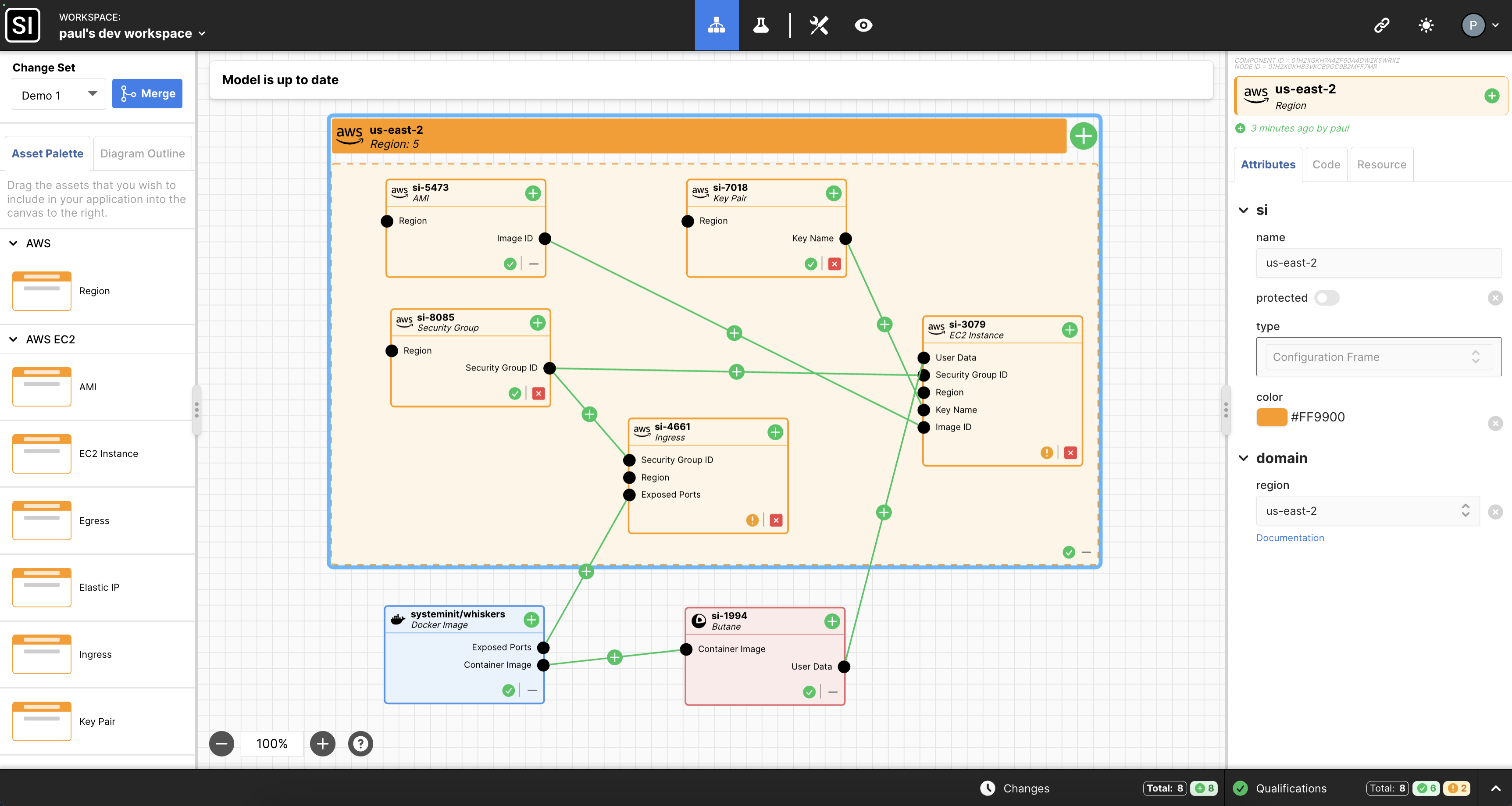
    System Initiative (SI) today made available in private beta a platform that creates simulations of IT environments. The platform leverages a built-in framework to generate the code needed to update an application environment.

    Fresh from raising $18 million in funding, SI CEO Adam Jacob said the ultimate goal is to provide a level of abstraction for DevOps environment that eliminates much of the complexity that creates bottlenecks in DevOps workflows.

    For all intents and purposes, DevOps is fundamentally broken; there are too many manual processes that need to be performed, he added. The SI platform represents an ambitious effort to reimagine how DevOps processes are constructed and maintained, said Jacob.

    At the core of that effort are models of IT environments created by the SI platform that are accessed via visual interface. The automation framework built into the platform then uses the relationships between models to infer configuration dynamically and then automatically generate TypeScript code that a DevOps team can apply to automate a task.

    Feedback loops are also provided in real time to provide insight into the viability of a configuration and eliminate the need for no state files to track and no ‘plan’ versus ‘apply’ stages.

    As more organizations realize how dependent they are on software to drive digital processes, many of them are looking to improve the productivity of developers and the DevOps teams that support them. After a wave of initial progress, many DevOps teams find themselves supporting DevOps workflows using custom code that varies widely in quality. SI is making a case for a digital twin platform that generates a set of code that can be applied more consistently, rather than relying on a DevOps engineer to write code.

    Ultimately, the goal is to launch a new DevOps era to eliminate most of the silos that slow down application development and deployment, noted Jacob. In fact, one of the reasons few organizations today fully automated DevOps across the application development and deployment process is that it’s simply too difficult to achieve using legacy tools and DevOps platforms, he added.

    A recent survey conducted by the Continuous Delivery Foundation (CDF), for example, found only 22% of respondents are using CI and CD approaches to automate all building, testing and deployment of code in a production environment. Instead, many organizations are using a combination of DevOps and waterfall processes to manage application development and deployment.

    It’s not clear how many organizations are willing to fundamentally change the way they have implemented DevOps. But at a time when more organizations are moving to centralize the management of DevOps, many of them are evaluating their options, at the very least. The issue, of course, is that multiple DevOps teams within the same organization have committed to disparate platforms. Enticing them to centralize on a common platform will require not just a compelling technical advantage but also a significant amount of political capital.

  • Quali Adds Governance and Cloud Cost Control Tools to Automation Platform

    Quali Adds Governance and Cloud Cost Control Tools to Automation Platform

    Quali today revealed it added governance and cloud cost management tools to its Torque platform for automating IT infrastructure management.

    David Williams, senior vice president for market strategy at Quali, said the added governance tools will make it possible to enforce security, compliance and consumption policies as IT environments are launched using the automation blueprints that Torque enables IT teams to create.

    At the same time, IT teams can now also define consumption policies based on cloud runtime or regions employed within a cloud computing environment. In addition to taking advantage of dashboards to visualize consumption of cloud resources, IT teams can also use Torque to identify cloud waste including detached, inactive and overprovisioned instances. They can pause, right-size or tear down environments to reduce costs and eliminate the possibility of a billing surprise at the end of the month, noted Williams.

    Torque also enables IT teams to detect drift and then update live cloud environments to remediate any that fall out of scope, he added.

    Quali has been making a case for an environment-as-a-service approach to managing IT. That approach is based on a set of triggers for controlling infrastructure via a software-as-a-service (SaaS) platform that can be invoked either via an application programming interface (API) or a graphical user interface (GUI).

    In addition to providing a set of infrastructure provisioning guardrails that prevent mistakes from being made, Torque makes it possible to automatically deploy complete application environments on top of infrastructure provisioned as code using blueprints rather than relying on low-level Terraform scripts. The goal is to increase developer productivity by enabling IT teams to create self-service portals that developers can use to spin up environments.

    That approach is becoming more appealing as many organizations begin to adopt platform engineering as a method to centralize the management of DevOps workflows, noted Williams. In fact, as part of that effort, many organizations are starting to unify the management of cloud and on-premises IT environments, he added.

    While many developers routinely provision IT infrastructure using tools such as Terraform, many of them lack the cybersecurity expertise required to ensure cloud computing environments are configured properly. Developers also tend not to remember to de-provision cloud resources when no longer needed; over time, those factors contribute to unnecessarily increased cloud costs.

    Ultimately, the goal is to find ways to centrally manage IT environments to reduce costs and improve cybersecurity without inhibiting the pace at which developers are building innovative applications, said Williams.

    At the same time, as application environments become more complex, it is becoming even more challenging to provision and manage IT environments at a time when many organizations are reluctant to hire additional IT staff, he noted.

    One way or another, IT environments will become more automated. The issue is determining how best to organize the IT teams managing those environments as tasks that once required a lot of manual effort are increasingly automated.

  • Revolutionizing DevOps Culture Transformations With AI-Engineered Tools

    Revolutionizing DevOps Culture Transformations With AI-Engineered Tools

    In my recent article Revolutionizing the Nine Pillars of DevOps with AI-Engineered Tools, I explained that DevOps thrives in a culture of openness, transparency and shared responsibility. It’s about breaking down the silos that can exist between different teams (like development, operations, security and QA) and promoting effective communication and collaboration. AI-powered tools can improve collaboration through smart recommendations, fostering more effective communication and knowledge sharing.

    Collaboration and Communication: AI-powered chatbots can facilitate quick and easy communication across teams, enabling faster decision-making and problem-solving. AI-powered project management tools can improve visibility into tasks and dependencies, promoting better coordination among team members.

    Continuous Learning and Improvement: AI-based monitoring tools can help teams learn about system performance in real-time, identifying trends and patterns that can inform better decision-making. AI can also help in creating personalized learning experiences, identifying skills gaps and suggesting relevant training resources, promoting a culture of continuous learning.

    Shared Responsibility and Ownership: AI can improve visibility into the system’s state, helping all team members understand how their work contributes to overall system performance. This can promote a sense of shared ownership and responsibility. AI can also assist in automating the allocation of tasks based on an individual’s skills and availability, promoting a more equitable distribution of responsibilities.

    Automation and Efficiency: AI is pivotal in automating routine tasks, such as testing, deployment and monitoring. This can significantly improve efficiency and allow teams to focus on strategic, high-value tasks. AI can also help automate the detection and resolution of common issues, reducing downtime and improving system reliability.

    Feedback and Adaptability: AI-powered analytics tools can provide real-time feedback on system performance, enabling teams to quickly adapt their approach as needed. AI can also help in analyzing customer feedback and identifying key themes and sentiments that can inform product development.

    Risk-Taking and Innovation: AI can help simulate the potential impacts of different decisions, allowing teams to take calculated risks. AI can also drive innovation by helping teams identify new opportunities, predict trends and develop more creative solutions.

    Roadmap to AI-Assisted DevOps Culture

    A practical roadmap for transforming an organization’s DevOps culture using AI-engineered tools may look something like this:

    1. Define Goals and Evaluate the Current State: Identify what you want to achieve by integrating AI into your DevOps practices. This could be improving deployment times, reducing errors, increasing productivity and more. Evaluate your current DevOps practices and tools to understand where AI could bring the most value.

    2. Identify AI Opportunities and Select Tools: Look for areas where AI can enhance collaboration and communication. This could involve AI-powered chatbots for team communication or project management tools with AI capabilities. Identify opportunities for AI to support continuous learning and improvement. AI-powered analytics and monitoring tools can provide valuable insights for this. Determine where AI can help promote shared responsibility and ownership. AI-enabled visibility tools can assist here, too.

    Choose areas for AI-powered automation. This could include tasks like testing, deployment and issue resolution. Find avenues where AI can support feedback and adaptability. Tools that analyze system performance or customer feedback could be helpful here. Pinpoint where AI can assist in risk-taking and innovation. AI-powered simulation or predictive analytics tools could be useful.

    3. Implement AI Tools Gradually: Start by integrating AI tools into one or two areas of your DevOps process. Monitor the impact to ensure you’re driving the desired improvements. Gradually expand the use of AI tools to other areas of your DevOps practices.

    4. Train Teams on AI Tools: Provide adequate training to your teams so they can use these new AI tools effectively. Encourage a culture of learning and experimentation to help teams become comfortable with AI.

    5. Monitor and Adapt: Regularly monitor the impact of these AI tools on your DevOps practices. Are they improving speed, reducing errors, enhancing collaboration, etc.? Be prepared to adapt your approach based on the feedback and results you’re seeing. The integration of AI is a journey, not a one-time event.

    6. Continuously Improve: Continually look for new ways that AI can enhance your DevOps practices. AI is a rapidly evolving field, and new opportunities are emerging all the time. Remember that this roadmap is iterative and adaptive. AI integration should be seen as a part of the broader DevOps goal of continuous improvement.

    Benefits for Organizations, Teams and Individuals

    With the integration of AI-engineered tools into DevOps processes, organizations can expect significant improvements in efficiency, speed and quality. AI automation can drastically reduce manual, repetitive tasks, thereby lowering the chance of errors and freeing up resources for more strategic endeavors. This can lead to cost savings and a better allocation of resources. Additionally, AI can enable faster decision-making and problem-solving, accelerating the software development life cycle and making the organization more competitive. AI can also enhance product quality by providing valuable insights and analytics, enabling continual improvement.

    For Teams: AI can facilitate improved collaboration and communication, making workflows more seamless and efficient. AI-powered project management tools can provide better visibility into tasks, dependencies and progress, enabling smoother coordination. AI can also automate routine tasks, freeing up team members to focus on more challenging, high-value work. Additionally, AI can provide real-time feedback and insights, enabling teams to continuously learn and improve their processes. These improvements can lead to higher job satisfaction and productivity.

    For Individuals: Individuals stand to gain from AI integration in several ways. AI-powered tools can support skill development by helping individuals learn new technologies and best practices. Real-time feedback and insights can also foster personal improvement. Automation of routine tasks allows individuals to focus more on creative and strategic aspects of their work, leading to a more engaging and satisfying job experience. Furthermore, being part of an AI-driven DevOps environment can open opportunities for individuals to work on cutting-edge technologies and innovative projects, enhancing their career prospects.

    Measuring Success

    Choosing the right metrics is crucial for measuring the progress of your DevOps culture transformation with AI-engineered tools. Here are some important metrics to consider:

    Deployment frequency: This is a measure of how often new features, bug fixes or updates are deployed. An increase in deployment frequency can be a sign that AI tools are improving efficiency.
    Lead time for changes: This metric refers to the amount of time it takes from code being committed to it being deployed. AI tools can help to reduce this time by automating testing and deployment processes.
    Change failure rate: This is the percentage of changes that result in a failure or that require a rollback or hotfix. AI can help reduce this rate by improving testing accuracy and identifying potential issues earlier in the development process.
    Mean-time-to-recovery (MTTR): This is the average time it takes to recover from a failure. AI tools can help to reduce MTTR by quickly identifying the cause of failures and automating the recovery process.
    Customer satisfaction: AI can help improve the quality and reliability of the product, leading to increased customer satisfaction. Customer satisfaction can be measured using surveys or net promoter score (NPS).
    Efficiency metrics: Look at how much manual, repetitive work has been reduced by automation. This could be measured in terms of man-hours saved.
    Learning and development: Monitor the upskilling of your teams to using AI tools and technologies. This could be tracked through training completion rates, skill assessments, etc.
    Innovation rate: AI can free up teams to focus on innovation. Measure the number of new ideas or features being developed over time.

    Summary

    To transform DevOps culture with AI tools, organizations must set clear goals, identify AI opportunities, gradually implement those tools and monitor their impact. Training teams to use AI tools effectively and fostering a culture of continuous learning and improvement will enable this transformation and help DevOps teams thrive. This integration can significantly enhance efficiency, decision-making speed and product quality at an organizational level.

    On a team level, AI can streamline collaboration, automate routine tasks and provide real-time insights for continuous process improvement. For individuals, this transformation provides opportunities for skill development, personal growth and more satisfying job experiences. Monitoring progress with metrics like deployment frequency, lead time for changes, change failure rate, mean-time-to-recovery (MTTR), customer satisfaction, efficiency, learning and development and innovation rate ensures the transformation is delivering the expected benefits and contributing to continuous improvement.

  • Unleashing the Power of AI-Engineered DevSecOps

    Unleashing the Power of AI-Engineered DevSecOps

    In my recent article Revolutionizing the Nine Pillars of DevOps with AI-Engineered Tools, I explained that AI-engineered tools can help implement the portion of continuous security practices known as DevSecOps.

    DevSecOps involves integrating security practices into the DevOps workflow. AI can be used in anomaly detection to identify potential security threats and to automate security policy enforcement. AI-engineered tools have the potential to significantly enhance security across all phases of the software value stream in DevSecOps.

    Planning: The planning stage involves dealing with complexities related to risk analysis and threat modeling. AI can help automate risk analysis and threat modeling based on data from past projects and known security issues. This can help identify potential security threats early in the planning phase and develop appropriate mitigation strategies.

    Design and Development (prior to integration): Developers often face difficulties in writing secure code, identifying potential security vulnerabilities, and adhering to best security practices while coding. AI-powered static application security testing (SAST) tools can automatically scan the source code for known vulnerabilities and coding errors, providing immediate feedback to developers. In addition, AI could be used to generate recommendations for secure coding practices and strategies for mitigating identified vulnerabilities.

    Continuous Integration (CI): Continuously integrating new code can introduce new security vulnerabilities and regression bugs that are hard to catch and fix in a timely manner. AI can be utilized in dynamic and interactive application security testing tools (DAST and IAST) during the integration stage. They can intelligently automate tests and identify complex security issues by analyzing data flows and the behavior of code in an integrated environment.

    Continuous Delivery (CD): Ensuring that the code is not only functional but also secure before it is delivered is a major challenge. AI-powered tools can help manage security configurations, monitor changes and alert to any deviations from security policies during the delivery stage. AI can also be used to automate security testing in pre-production environments to ensure that security standards are met before delivery.

    Continuous Deployment (to production): Monitoring, detecting and responding to security threats in real-time in production environments is a critical and challenging aspect. AI can enhance security information and event management (SIEM) tools by providing intelligent real-time analysis of security alerts generated by applications and network hardware. AI-based runtime application self-protection (RASP) tools can also detect and block attacks in real-time, providing robust protection for applications in production.

    Roadmap to AI-Engineered DevSecOps

    It’s crucial to implement AI-engineered DevSecOps solutions in a structured and well-planned manner. Here is a logical roadmap for implementing such a solution:

    1. Assessment and Planning: Begin by assessing your organization’s current DevSecOps maturity. Evaluate the existing tools and practices for their efficiency and effectiveness. Identify areas that lack automation or present security concerns. Align the AI-engineered DevSecOps initiative with your business objectives. This includes defining key performance indicators (KPIs) to measure the success of the initiative. Outline the required resources and budget for the implementation. This includes potential AI-engineered tools, the team’s skills upgrading needs and additional infrastructural changes.

    2. Selection of AI-Engineered Tools: Based on your assessment, select the AI-engineered tools that best fit your organization’s needs. This selection should cover the entire software development life cycle: Planning, design and development, continuous integration, continuous delivery and continuous deployment. The tools should ideally be scalable, easy to integrate with your existing systems and capable of providing real-time, actionable insights to your team.

    3. Training and Upskilling: Train your team on the selected AI-engineered DevSecOps tools. This may require technical training on how to use the tools effectively and how to interpret the insights generated by the AI. Upskill your team to enable them to work effectively within the new AI-engineered DevSecOps environment. This could involve training in AI and machine learning, security best practices and new DevSecOps methodologies.

    4. Gradual Implementation and Integration: Start with pilot projects to validate and tweak your approach. The lessons learned from these initial projects will be valuable for the broader roll-out. Gradually implement and integrate the selected AI-engineered tools into your existing DevSecOps pipeline. This should be a phased approach that allows your team to adapt to the new tools and practices.

    5. Review and Refinement: Regularly review the effectiveness of your AI-engineered DevSecOps implementation against the defined KPIs. Continuously refine your approach based on these reviews. This could involve adjusting your security policies, refining how you use your AI tools or providing further training to your team.

    6. Continuous Improvement: Keep yourself updated with the latest developments in AI and DevSecOps to ensure your approach remains effective and up-to-date. Continually improve and evolve your AI-engineered DevSecOps solution based on emerging technologies, shifting business objectives and feedback from your team.

    Avoiding Pitfalls While Implementing AI-Engineered DevSecOps

    Implementing an AI-engineered DevSecOps solution comes with several potential pitfalls that can derail the process if not appropriately managed. Here are a few of them, along with suggestions for how to avoid them:

    1. Inadequate Planning and Alignment with Business Goals: Ignoring the strategic alignment between implementing AI-engineered DevSecOps and overall business goals can lead to undesirable outcomes. Clearly define the business objectives and how AI-engineered DevSecOps supports them. Outline expected outcomes and key performance indicators (KPIs) that align with business goals to guide the initiative.

    2. Neglecting Training and Upskilling: AI tools can be complex, and without proper understanding and training, their deployment may not yield desired results. Invest in training your teams on AI-engineered DevSecOps tools and techniques. Ensure they understand the functionalities of these tools and how to effectively use them. Upskilling your team will be crucial for leveraging AI capabilities.

    3. Ignoring Change Management: Introducing AI into DevSecOps is a significant change that can disrupt workflows and resistance from the team members. Adopt a systematic approach to change management. Engage stakeholders from the beginning, communicate the benefits of the transformation clearly, and encourage feedback. Also, plan for a gradual rollout to help teams adapt.

    4. Overdependence on AI: Relying too heavily on AI can be a risk if the tools are seen as a complete replacement for human judgment. Recognize that AI is a tool designed to assist human decision-making, not replace it. It’s important to maintain human oversight of AI outputs, as AI models might not fully account for all contextual and situational factors.

    5. Neglecting Data Privacy and Ethical Considerations: Using AI requires handling a lot of data, which can lead to privacy breaches and ethical dilemmas if not handled correctly. Develop a clear policy for data management, ensuring compliance with all relevant data privacy laws and regulations. Make ethical considerations a priority when implementing AI, ensuring transparency and fairness in the AI systems.

    6. Lack of Continual Improvement and Adaptability: AI-engineered DevSecOps requires a culture of continuous learning and adaptation. Failure to embrace this can lead to stagnation and ineffectiveness over time. Establish a framework for continual improvement. Regularly evaluate the effectiveness of the AI tools and be ready to adapt your processes based on new technological advancements, feedback, and changes in business needs.

    Summary

    Implementing an AI-engineered DevSecOps solution necessitates a thorough and strategic approach. This begins with an in-depth assessment of your organization’s current DevSecOps maturity and an understanding of how AI can enhance each phase of the software value stream. Essential steps in the roadmap include tool selection, team training, gradual implementation, regular review and continuous refinement and learning. While AI can significantly bolster security and efficiency, it’s important to avoid pitfalls like inadequate planning, neglecting training, resisting change, overdependence on AI, neglecting data privacy and ethical issues and lack of continuous improvement. By focusing on these areas, aligning the DevSecOps initiative with business objectives, investing in team upskilling, managing change effectively, maintaining human oversight, adhering to data privacy regulations and fostering a culture of continuous learning, organizations can successfully implement and maximize the benefits of AI-engineered DevSecOps.

    Remember, this transformation won’t happen overnight. It is a continuous journey that requires regular review and improvement. With the right strategy, the benefits of implementing an AI-engineered DevSecOps solution can far outweigh the challenges.