Welcome to The Long View—where we peruse the news of the week and strip it to the essentials. Let’s work out what really matters.
This week: GitHub touts unbelievable AI stats, and Intel’s beautiful open source typeface. (more…)

Welcome to The Long View—where we peruse the news of the week and strip it to the essentials. Let’s work out what really matters.
This week: GitHub touts unbelievable AI stats, and Intel’s beautiful open source typeface. (more…)

BMC today revealed it is embedding generative artificial intelligence (AI) capabilities across its BMC Helix service and operations management platforms.
BMC CTO Ram Chakravarti said the company is incorporating the open source GPT-J large language models (LLMS) to build generative AI models. Those models are optimized for specific domains using data collected by BMC and imported from other data sources, like the Jira project management software from Atlassian. That persistent layer of storage is designed to aggregate multiple types of data within what amounts to a Helix data lake.
The generative AI capabilities added to BMC’s portfolio include natural language summaries of issues and events captured by BMC Helix Operations Management, along with an ability to create a historical analysis of a user’s specific environment to identify recurring issues more easily.
BMC Service Management, meanwhile, can now correlate incidents and provide resolution summaries that can be stored. It’s also now possible to run clustering analysis on chat archives to find new or improved utterances that help virtual agents answer queries better and execute workflows.
BMC initially opted to build its own LLMs because general-purpose LLMs—such as the one created by OpenAI—are subject to “hallucinations.” Hallucinations are created when incorrect data is included in a model. BMC is training its LLMs on a narrow range of trusted data to ensure the recommendations and subsequent automations it creates are valid.
Over time, BMC will add additional LLMs; the company hasn’t yet decided if there are use cases where it makes sense to rely on an existing general-purpose LLM to add additional capabilities, noted Chakravarti.
Organizations can also opt to use a containerized version of the BMC LLM if they prefer, but BMC will encourage most organizations to invoke generative AI via its Helix SaaS platform, he added.
BMC Helix is an IT services management (ITSM) platform that integrates with a range of DevOps platforms. Helix is part of a larger existing BMC Connected Digital Ops initiative that seeks to unify ServiceOps and DevOps with AIOps, DataOps and AutonomousOps. Generative AI will automate a range of tasks from within Helix that can then be extended to DevOps platforms such as Jenkins.
It’s still early days as far as applying generative AI to processes, so organizations should focus on use cases where it will add some immediate value, said Chakravarti. Once they develop a level of trust in the automation created and executed, they can then pragmatically expand the number of generative AI use cases where they make sense, he added.
One way or another, generative AI is going to be applied to the management of IT. Many routine tasks that conspire to limit the productivity of IT teams today will be eliminated, but there will always be a need for a human to remain in the loop to ensure the right outcomes are achieved. However, it will also soon become possible for existing teams to manage IT at levels of scale that were previously unattainable.
Image source: Photo_Credite_Indira-Tjokorda via Unsplash

At a HashiDays event this week, HashiCorp launched updates to its Terraform implementation and a software-as-a-service offering, dubbed HCP Vault Secrets, that promise to simplify infrastructure security and ensure that secrets are not leaked.
In addition, HashiCorp has added a self-hosted edition of its remote access security tool, Boundary, that can now also record SSH sessions. The company is also announcing general availability of Vault Secrets Operator, which provides a high level of abstraction for managing secrets in a Kubernetes environment and which synchronizes with the secrets management interfaces defined by the Kubernetes Technical Oversight Committee.
Finally, HashiCorp is making available in beta a 1.16 update to the Consul service mesh for containers and virtual machines that adds a Sameness Groups capability to improve the resiliency of microservices by redirecting requests to an identical service. HashiCorp has also added a transparent proxy mode to enable failover between services along with a permissive mutual TLS (mTLS) that enables a service to be configured to accept both mTLS traffic from mesh-enabled services and non-Consul mTLS traffic from external downstream applications.
Chris Van Wesep, senior director of product marketing for HashiCorp, said Version 1.5 of HashiCorp Terraform adds config-driven import workflow and check blocks capabilities that make it possible to declaratively use code to add existing resources into a Terraform state. Previously, the only way to update a Terraform state was to use an import command that could only be applied to one resource at a time. Terraform 1.5 also adds automatic code-generation capabilities for imported resources.
In addition, version 1.5 of Terraform also includes a tool to validate that provisioned infrastructure is behaving as intended. That latter capability makes it possible to reduce the number of misconfigurations created by developers that might one day be exploited by cybercriminals to breach an IT environment.
HCP Vault Secrets, meanwhile, provides a beta release of a SaaS edition of the existing Vault offering specifically designed to enable organizations to better manage application secrets that might inadvertently be exposed to cybercriminals in a production environment, said Van Wesep.
HashiCorp is moving toward providing a portfolio of tools that enable DevOps teams to securely provision and manage hybrid cloud computing environments using a common workflow, he noted. A Forrester Consulting survey found nearly three-quarters (73%) of respondents are reporting this strategy is helping them reach their business goals, with another 19% adding they expected this strategy to help them achieve their business goals in the next year.
It’s not clear whether organizations are fully embracing multi-cloud computing, but each additional cloud added to an enterprise IT environment increases the total cost of IT. The only way to mitigate those costs is to define a set of best practices for building and deploying applications that can be applied to any cloud computing environment.
Unfortunately, many organizations will discover that, as they attempt to define those best practices, they have inadvertently become dependent on a set of proprietary application programming interfaces (APIs) that thwart those efforts.

At its GrafanaCON 2023 event today, Grafana Labs updated its core platform for visualizing data which makes it simpler to set up dashboards in minutes. The updates are part of a celebration of the 10th anniversary of a tool that is now widely used by DevOps teams.
Ryan McKinley, a distinguished engineer for Grafana Labs, said Grafana 10 should help make DevOps more accessible to a wider range of practitioners with limited experience working with observability tools. The latest release also makes it simpler to share knowledge with external stakeholders via public dashboards, he added.
In addition, Grafana 10 adds expanded role-based access control (RBAC) capabilities and streamlined implementation of the secure access markup language (SAML) to ensure authentication.
Grafana Cloud has also been updated to provide a secure way to connect to data residing in an on-premises IT environment or in a cloud with the observability platform the company provides via a software-as-a-service (SaaS) platform.
Finally, Grafana Labs is also making the engine it created to visualize data more accessible to third-party developers that are embedding visualizations based on Grafana within their applications, noted McKinley.
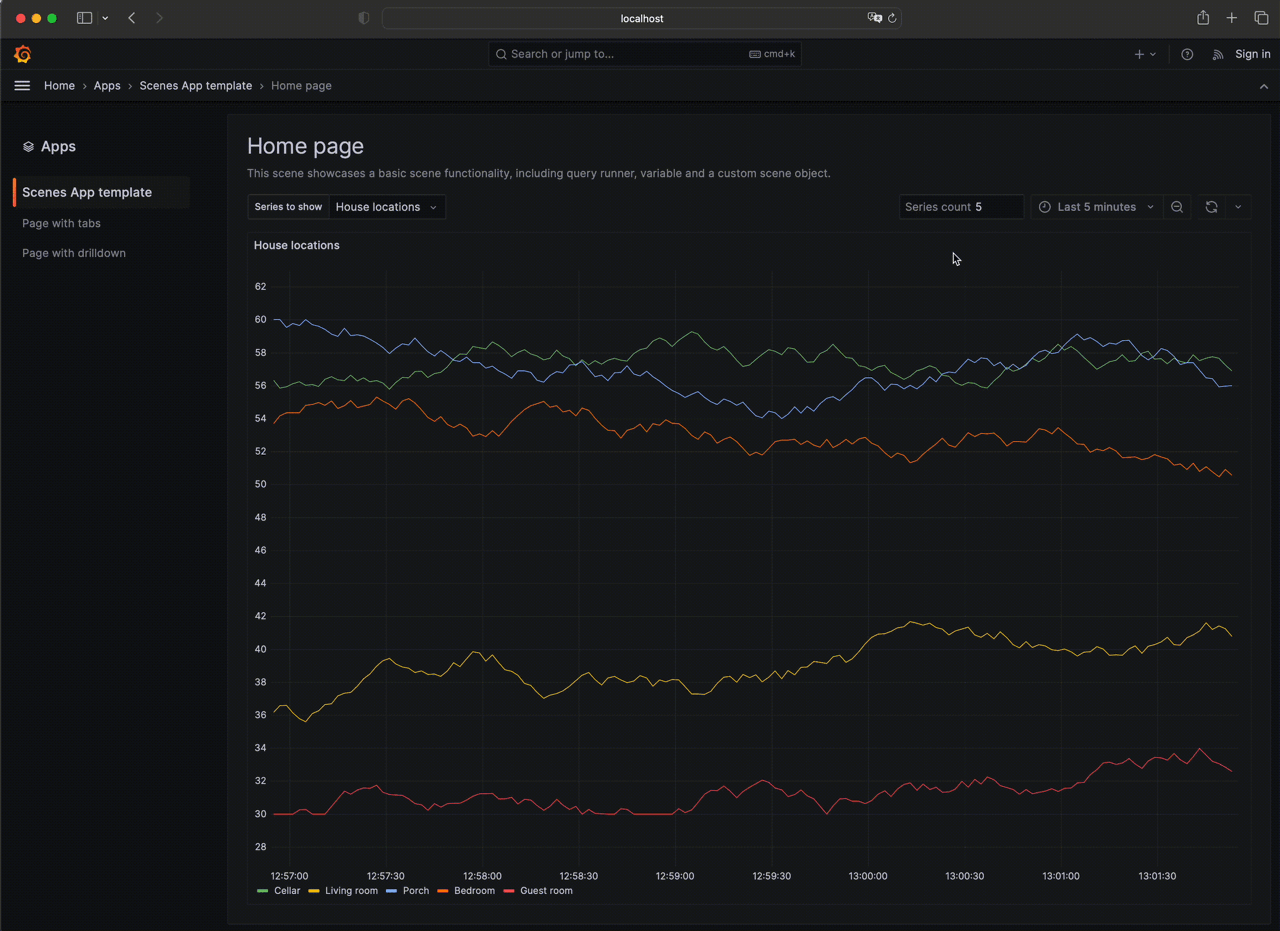
There are now more than 150 plugins for various data sources that have been made available to more than 20 million users of the Grafana visualization framework. Not all those users are working in DevOps environments, but Grafana is widely used to enable observability across increasingly complex IT environments. The Grafana Cloud seeks to capitalize on that popularity by adding a service that uses an instance of open source Grafana Mimir software to store data collected in a format originally defined for the open source Prometheus monitoring tool.
It’s still early days as far as adoption of observability is concerned, but it’s apparent that as application environments become more complex, the plethora of monitoring tools that DevOps teams rely on will need to be streamlined. Observability platforms promise to unify logs, metrics and traces to simplify launching queries to identify the root cause of an issue.
The rate at which DevOps teams will embrace observability will naturally vary, but the biggest obstacle might not be the platforms themselves. Instead, the issue is understanding what queries can help DevOps teams better understand the root cause of an IT issue before there is a major disruption. In the long term, it’s expected that machine learning algorithms will leverage the data collected by observability platforms to automatically identify issues that might lead to a disruption long before it actually occurs.
Of course, the result of any query that gets launched needs to be visualized in a way that is easily understood. Grafana Labs is now making a case for a more integrated approach that, at its core, employs its visualization tools to make it simpler to discern what’s occurring in IT environments. After all, no matter how talented any DevOps team may be, it’s still not possible to manage what was never seen in the first place.

Welcome to The Long View—where we peruse the news of the week and strip it to the essentials. Let’s work out what really matters.
This week: Redmond SaaS keeps failing, RISC-V is RISEing, and Meta is enforcing hybrid work. (more…)

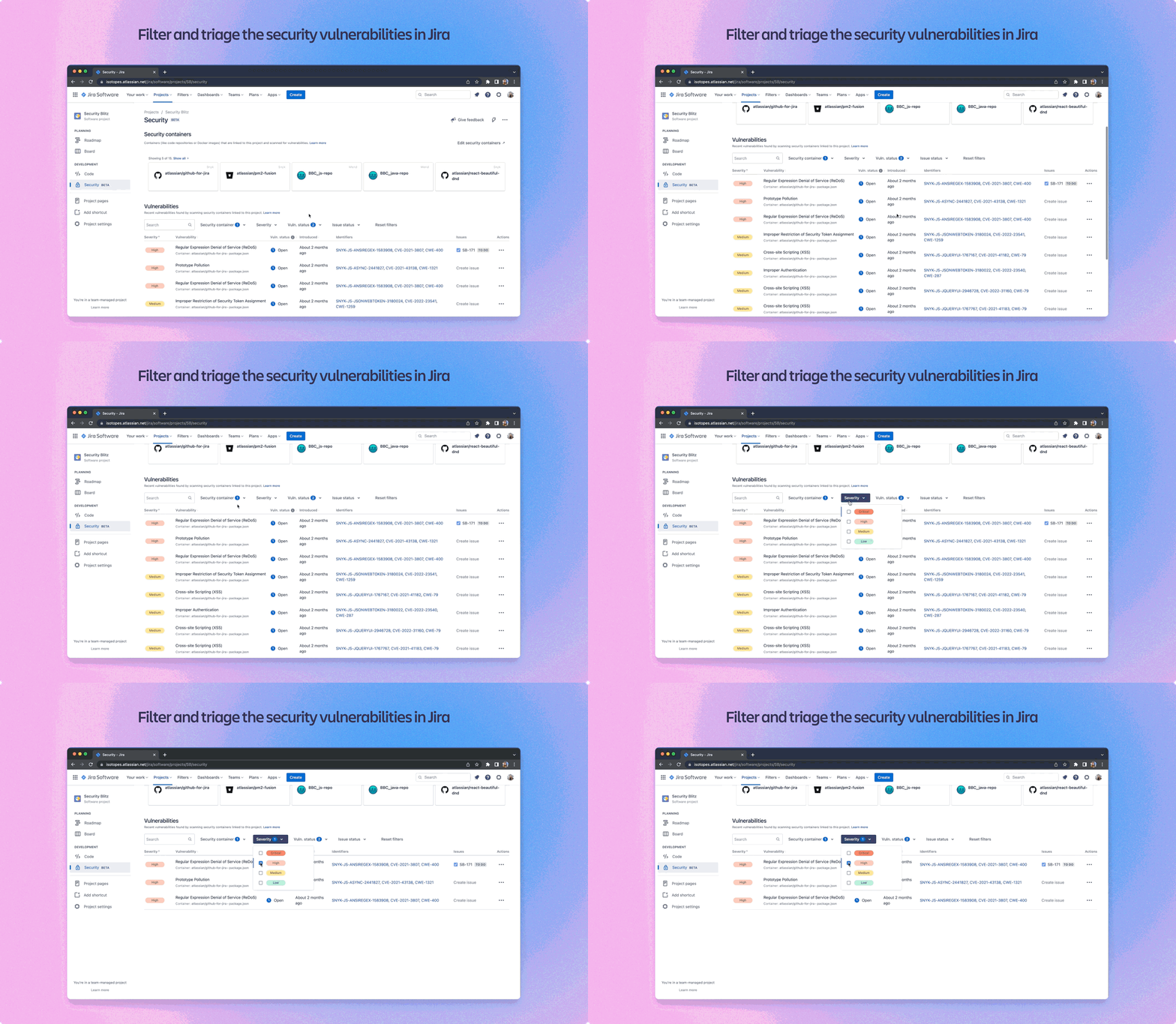
Atlassian announced today it has allied with Snyk, Mend, Lacework, Stackhawk and JFrog to make it simpler to aggregate vulnerability data within the Jira project management software that many organizations rely on to manage application development and deployment efforts.
Andrew Pankevicius, a senior product manager for Atlassian, said the collaborations will make it easier to prioritize a list of vulnerabilities that need to be addressed and for DevOps teams to automatically assign that work to a continuous integration/continuous delivery (CI/CD) pipeline. Atlassian provides those third-party integrations via an Open DevOps initiative.
These capabilities, accessible via the Security Tab in Jira, will make it simpler for DevOps teams to manage output from the multiple application security tools that have become part of a larger DevSecOps workflow, noted Pankevicius.
These additions to the Atlassian portfolio are arriving at a time when there is a lot more focus on securing software supply chains in the wake of a series of high-profile breaches. Those breaches have led to a wave of legislative proposals in the U.S. and Europe that will soon require organizations to embrace DevOps best practices to address increased potential liability that might stem from an application breach.
For example, a proposed Cyber Resilience Act being negotiated by the member states of the European Union seeks to require organizations that sell internet-connected hardware platforms to ensure that their devices—and the software that runs on them—comply with cybersecurity best practices.
In the U.S., meanwhile, a National Cybersecurity Strategy proposal put forward by the Biden administration seeks to hold organizations that collect data or build software more accountable for breaches.
While both proposals are a long way from becoming the law of the land anytime soon, they are indicative of changing attitudes. Governments around the world are concluding the only way to ensure better cybersecurity is to require it. Previous suggestions made by government agencies are going to soon give way to actual mandates. As such, DevOps teams would be well-advised to get ahead of this sea change by implementing the tools and processes that inevitably will be required. As a result, many organizations are now embracing DevSecOps best practices that shift more responsibility for application security further left toward developers.
The challenge is finding the right set of cybersecurity tools that surface vulnerabilities as code is being developed to make sure context isn’t lost, said Pankevicius. Historically, cybersecurity teams have discovered vulnerabilities long after an application has been deployed in a production environment. By then, however, most developers have moved on to other projects, so remembering how a specific piece of code was developed and by whom can be a significant challenge, he noted.
There’s no doubt that when it comes to application security, a lot of progress has been made, but there is still much work to be done. The issue now is finding the best way to organize those efforts at a time when more applications are being simultaneously developed within organizations than ever.

PagerDuty has signaled its intention to add generative artificial intelligence (AI) capabilities to its cloud platform for managing IT operations via integrations with large language model (LLM) providers that it will disclose at a future date.
These capabilities will make it possible to invoke natural language via PagerDuty Operations Cloud to automatically generate status updates, create drafts of incident postmortem reports and even co-author workflows in any programming language to automate remediation of an issue.
Damon Edwards, senior director of product for PagerDuty, said as AI continues to evolve, the goal will be to minimize the need for human involvement as much as possible. That doesn’t mean there won’t be a need for humans to be involved, but it does mean that many rote tasks associated with managing an IT incident can be automated, he added.
For example, the reports that are run to determine the root cause every time there is an incident can be automated, noted Edwards. In addition, summarizations of status reports or postmortems after incidents were resolved can be made readily available to any member of an IT team on demand, he added.
Those capabilities will also make it easier to onboard new members to an incident management team as required, said Edwards. Today, it’s difficult to add new members to a team after an incident has unfolded because it takes time to bring them up to speed, he noted.
In addition, generative AI also makes it easier to capture a lot of the tribal knowledge within an IT organization that would otherwise disappear when staff either leave the company or shift roles, said Edwards.

The generative AI additions to the PagerDuty platform extend an artificial intelligence for IT operations (AIOps) capability that PagerDuty made available this spring. The PagerDuty AIOps platform leverages the data model embedded in its incident management software to reduce the amount of time required for an AI platform to learn how an IT environment operates and begin surfacing valid recommendations to optimize workflows.
It’s not clear at what pace AI will be adopted within enterprise IT organizations, but it is rapidly becoming pervasive. Each DevOps team will need to decide the degree to which they can rely on AI to manage IT processes, but as IT processes become more complex, there is a clear need for AI to navigate all the dependencies that exist in an IT environment. As more routine tasks are automated, however, there will also inevitably be a realignment of roles and responsibilities within an IT organization. The overall goal is not so much to eliminate IT staff as much as it is to enable them to manage IT environments at a much higher level of scale.
In the meantime, DevOps teams need to plan for not only what is possible using generative AI today but also tomorrow. After all, there’s not a lot of point in training someone to take on a new task if that task is automated a few months from now.

OpenAI’s ChatGPT took the world by storm, amassing 100 million users in the first two months after its public launch. The continued interest in the tool has created a buzz among developers, especially those in the open source community. But this begs the question: How will ChatGPT impact open source software?
Amid the excitement and promise that ChatGPT holds, many wonder whether the open source community, just like any other organization, should fear or embrace the technology. Certain concerns for open source contributors and developers are sparking debate as questions surrounding the origin of generated source code surface, and the possible ethical and legal implications are discussed. While valid, developers should not fear or stray away from using ChatGPT but rather shift their focus to understanding how to embrace it for positive outcomes.
Collaboration between contributors is the cornerstone of open source projects, which some fear will be disrupted with the increased use of AI-based tools. However, the level of synergy within the community cannot be easily taken away or replaced by tools. Instead, ChatGPT or other AI-based tools, including GitHub Copilot, allow developers to produce code more quickly and more efficiently.
As developers increasingly use AI tooling to assist with new or enhanced code, project collaboration and oversight will help improve the AI-generated code.
Debunking and navigating the top concerns will be imperative to take full advantage of the technology’s promise and potential.
Validity. While the creation of code by ChatGPT has generated excitement among developers, critics argue that—without context—the validity of code can be questioned. Some open source developers worry that teams will begin to rely entirely on ChatGPT to generate code, but this concern fails to consider the humans involved in the process—today and far into the future.
Developers don’t take ChatGPT’s output as the final word; rather, they use it as a baseline and jumping-off point to streamline their code. In fact, code is rarely created from scratch anymore. Developers rely on others’ source code. For example, code from Stack Overflow, GitHub and thousands of open source libraries that are available on public registries like npm, Maven, Nuget and PyPI. Bringing ChatGPT into the fold will not significantly change how developers source their code, but will improve development velocity, saving valuable time and associated cost.
Training Data. Machine learning (ML) and deep learning (DL) model training must be fair, robust and explainable to avoid biases. If the data is wrong, the results will be as well. Garbage in, garbage out. Coming from ML/DL models, the code ChatGPT returns in response to prompts could raise concerns surrounding its accuracy. Like any other source (Stack Overflow, GitHub, etc.), ChatGPT’s code outputs are not guaranteed to be perfect, and developers must be mindful of this.
However, there are more benefits of ChatGPT-trained models concerning code outputs. ChatGPT can also explain new or existing code, it can also effectively provide unit tests for code, which will help with writing better software faster.
Ownership. Questions of ownership have surfaced regarding the use and distribution of the code that the AI tool generates. While the code that ChatGPT generates is the result of ML/DL inference from many sources, it’s the developer’s responsibility to use that code ethically and safely. It should be treated as any other public data or open source software, as not a final product and must be used in the context of your requirements. It’s also important to carefully review any code generated by ChatGPT and ensure that it doesn’t introduce vulnerabilities.
Similar to GitHub Copilot, ChatGPT is trained by millions of lines of open source software. Code posted in prompts is likely to make it to models, too. Unlike copyrighted pieces of art and writing, the code that ChatGPT outputs should not be considered in a final state and should not be used in a way that is subject to licensing restrictions or legal implications that have dominated the conversations around its use.
Ownership closely relates to the ethical dilemma of using AI-generated text, code and more. To address that, there are new tools that help detect whether AI generated the content and how much, which will be useful for educators concerned with students overusing the tool. This emerging area of checks and balances exemplifies the constantly evolving and improving technologies that allow humans, and in the case of open source, contributing developers to improve their craft and produce better open source software.
Discussions about whether ChatGPT will require new skills for existing positions or new jobs with specialized experts are ongoing. While new and exciting, ChatGPT won’t immediately create new or different jobs. Like any new tool introduced to developers, it takes time for developers to become familiar with the technology and understand how to use it best. ChatGPT is no different. For example, consider the previous push to use low-code/no-code technology. While this great technology is used to speed up the creation of apps and improve the usability for non-developers, it has taken time for organizations to properly use low-code/no-code technology. A similar perspective and trajectory will extend to the use of ChatGPT for all software development, including open source projects.
In the coming weeks and months, it will be essential to encourage the open source community to embrace ChatGPT and explore its possibilities. Technology has already proven to be an effective educational tool. Consider asking ChatGPT for book recommendations about programming languages and coding; it delivers short descriptions for each book. Or, prompt it for the top takeaways from one specific book. By doing this, individuals can make learning so much easier. By learning from other developers and sharing resources, including results from ChatGPT, the community roots of open source will keep thriving.
The public’s reaction to ChatGPT may be novel, but the idea behind the tool’s relationship to open source is not. Analyzing how ChatGPT works within the open source community reveals that it will be useful because it enhances the capabilities of developers, it doesn’t replace them.
Whether it’s reviewing code, pair programming or learning from fellow developers, humans will not be replaced by generative AI, only enhanced. Leveraging the tool will decrease the time and effort needed to complete tasks, increasing developer quality and efficiency. The use of ChatGPT does not create new positions or overhaul current skill sets; it makes them better and empowers developers to expand their opportunities and enhance their abilities.
Soon, ChatGPT and other AI tools will be standard practice within the open source community—or until a new technology is created and shakes up software development once again.

VMware this week updated its Cloud Foundation platform and rolled up recent updates to the company’s virtualization portfolio all at once.
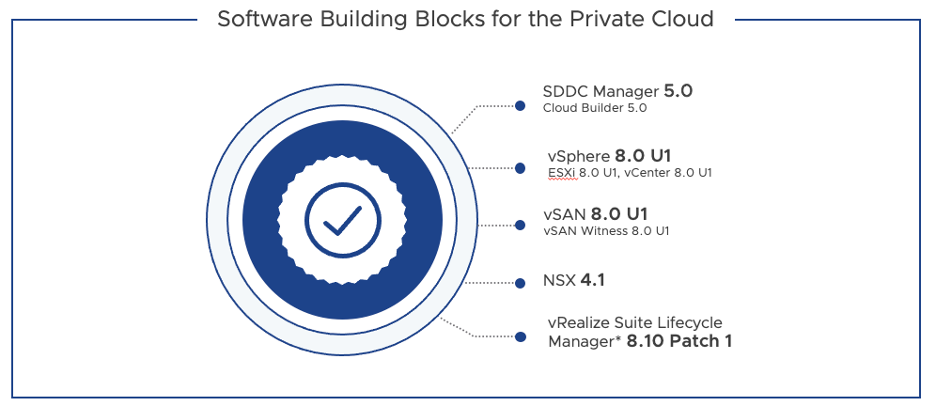
Version 5.0 of VMware Cloud Foundation (VCF) encompasses the latest versions of VMware vSphere 8.0u1 for workload management, VMware vSAN 8.0u1 for scale-out storage, VMware NSX 4.1 for networking and VMware vRealize LifeCycle Manager 8.10 (Aria) for cloud management.
In addition, VMware has added a single sign-on (SSO) capability, dubbed Isolated SSO Workload Domains, that enables administrators to configure new workload domains using SSO instances from different providers or platforms via NSX.
Rick Walsworth, director of product marketing for the Cloud Infrastructure Business Group at VMware, said that as the management of IT continues to evolve in VMware environments, more organizations are opting to update their entire VMware software stack simultaneously rather than attempting to update components individually.
The primary reason for that shift is that the company ensures that all the latest VCF component releases have been thoroughly stress-tested from an integration perspective, he noted.
During uncertain economic times, VMware is seeing an increased focus on simplifying IT environments as IT teams are asked to do more with less, said Walsworth. As such, more organizations are looking to standardize on a stack of infrastructure software that can be managed more consistently, he added.
More organizations are also looking to reduce the total cost of IT by employing the same stack of infrastructure software across hybrid cloud computing environments where workloads are deployed both in on-premises IT environments and public cloud, said Walsworth.
The company is also seeing increased adoption of DevOps best practices to programmatically manage IT environments that need to respond to rapidly changing requirements, he noted. IT teams are looking to work more collaboratively rather than relying solely on specialists to manage specific functions, said Walsworth.
Some of that shift is also being driven by Tanzu, a distribution of Kubernetes that the company makes available as part of VCF, he noted. Most application developers don’t have a preference for a specific Kubernetes distribution, so many organizations view Tanzu as an opportunity to extend their existing management framework to a de facto standard for building the next generation of cloud-native applications, said Walsworth.
VMware is in the midst of being acquired by Broadcom. Nevertheless, VMware this week reported revenues for the first quarter 2023 of $3.28 billion, a 6% year-over-year increase. Subscription and software-as-a-service (SaaS) revenue for the first quarter was $1.22 billion, an increase of 35% year-over-year. That increase in revenue suggests any concerns about the future direction of the company are not impacting the willingness of IT organizations to continue to rely on VMware.
It may be a while before all the dust settles around Broadcom’s acquisition of VMware. In the meantime, however, it’s clear that the way IT is managed in the cloud era is continuing to rapidly evolve regardless of who owns VMware.

The Continuous Delivery Foundation (CDF) has added the open source Emporous repository for software artifacts to an Ortelius platform for managing the software artifacts that make up a microservice.
Ortelius was originally created by DeployHub and subsequently contributed to the CDF, which also oversees the development of the open source Jenkins continuous integration/continuous delivery (CI/CD) platform.
Emporous is based on a Universal Object Reference (UOR) conceptual model that enables dynamic schema registration and decentralized content-addressable reference of a wide spectrum of software artifacts. Originally developed by Red Hat, Emporous will now be managed as a sub-project within the larger Ortelius incubation-level project by the CDF.
DeployHub CTO Steve Taylor said this integration would make it simpler to store, organize and search metadata related to software artifacts, along with the artifacts themselves, within the context of the Ortelius platform for managing microservices.
Ortelius provides insights into the relationships and dependencies between different software components and applications. It does this by collecting and aggregating pipeline data from multiple sources within a software supply chain. Emporous will be incorporated within Ortelius to enhance metadata search capabilities and provide a single repository to store any type of artifact, from containers to jar files. It will now also be able to store metadata and also the artifacts themselves within the same Emporous catalog.
Those capabilities will significantly improve security and compliance reporting across a software supply chain, added Taylor. DevOps and cybersecurity teams will be able to automatically apply and enforce supply chain policies and procedures, he said.
DevOps teams need a way to aggregate all the data from the various tools they use and the data must be easily searchable. Armed with those insights, it should become simpler to surface insights into, for example, which components of an application contain known vulnerabilities.
In the longer term, IT organizations will be able to apply machine learning algorithms and other forms of artificial intelligence (AI) to automatically surface insights that will enable DevOps teams to automate workflows, said Taylor.
Microservices-based applications are considerably harder to build and manage than monolithic applications, but they are also easier to maintain because individual microservices can be ripped and replaced.
Most microservices today are built using containers, but there are also microservices that are written in Java, for example. In some cases, developers view monolithic applications as being a large, less flexible microservice that they invoke via an application programming interface (API).
There’s no doubt that the rise of microservices made application environments a lot more complex. The tools needed to simplify the management of the next generation of applications are finally starting to become more widely accessible. In theory, the number of organizations that can successfully build and deploy these types of applications should steadily increase in the months and years ahead.
In the meantime, there’s clearly still plenty of work that needs to be done to improve the overall state of software delivery. A recent CDF survey found only 22% of respondents were using continuous integration and continuous delivery (CD) to automate the building, testing and deployment of code in a production environment. As CD becomes more distinct from CI, however, the number of organizations that can achieve that goal when deploying microservices-based applications should steadily increase.