Category: DevOps Toolbox

  • Dynatrace Embeds DX Monitoring in Observability Platform

    Dynatrace Embeds DX Monitoring in Observability Platform

    Dynatrace has enhanced its analytics capabilities to enable digital experience monitoring, including session replays, based on the logs, metrics and traces it collects via its observability platform.

    Steve Tack, senior vice president of product management at Dynatrace, said this update makes it simpler for DevOps teams to track user journeys across the multiple components and microservices that make up a modern application environment. Rather than trying to, for example, determine the impact of an issue by parsing through log data without any context, Tack said Dynatrace’s analytics capabilities will automatically fire up a session replay to enable DevOps teams to view the exact nature of the application issue being experienced.

    Previously, DevOps teams would have needed to deploy the Dynatrace session replay offering separately. The overall goal is to remove much of the friction DevOps teams encounter when trying to fix an application issue by providing context in a way that is more accessible, he added.

    In general, as observability continues to advance, it’s now become much less about the amount and types of data that can be collected, said Tack. The data is table stakes for achieving observability, he added. The focus now needs to be on the richness of the actionable analytics being surfaced once that data is collected, he said.

    In fact, as more organizations start to build and deploy applications based on highly interdependent microservices, the richness of the analytics is now more critical than ever, noted Tack. While microservices-based applications are more resilient than monolithic applications, troubleshooting them is more challenging whenever application performance degrades, he added.

    It’s not clear at what rate DevOps teams are embracing observability. The concept has always been a core DevOps principle, but, for the most part, more mature DevOps teams have only been able to achieve what amounts to continuous monitoring of pre-defined metrics. Observability platforms promise to surface anomalies indicative of IT issues before they escalate; DevOps teams can then launch queries to better determine their root cause and potential severity.

    Dynatrace is making a case for an observability platform, accessed as a cloud service, that employs the company’s Davis AI engine and machine learning algorithms to surface the root cause of application issues.

    As observability platforms continue to evolve, the days when IT teams determined the root cause of an IT issue by process of elimination are finally coming to an end. DevOps teams will be gaining more visibility into their application environments in ways that surface more meaningful actionable intelligence. That intelligence is especially critical for externally-facing applications driving digital business transformation initiatives.

    There is, of course, no shortage of options when it comes to observability platforms. In some cases, IT organizations are opting to rely on cloud services while others are extending DevOps platforms they built themselves and continue to maintain. Regardless of the approach, the issue will no longer be how to collect data as much as what to do with it once it’s collected.

  • 3 Ways API Analytics Can Help Application Owners

    3 Ways API Analytics Can Help Application Owners

    Software development is fraught with risk that can run projects aground like a ship against a rocky beach. Whether it is misunderstood requirements, rapidly evolving marketplaces or old-fashioned bugs and schedule slippage, all can derail otherwise well-resourced and managed software development projects.

    Even when software development teams eventually ship their product and collect payment from their customers, there is no guarantee that the product will be used. A 2022 study found that among those paying for SaaS software, 29% of their software is either underutilized or wasted. This study also noted that only 33% of IT professionals track SaaS software usage. The takeaway here is stark: As an industry, most of our labor is not going to productive ends. 

    This is not a new trend in software; an entire ecosystem of tooling exists to help software development companies collect user engagement metrics to drive development decisions. In fact, out of the top 10 million websites in the world, nearly two-thirds have an analytics solution in place. By contrast, however, API applications lag far behind in adoption of this practice. It is difficult to get market penetration data for API analytics, but a report from API management vendor Apigee revealed that even among its customers (that is, those who were already paying for a service that included API analytics), only 26% made use of the analytics functionality. This gives credence to the belief that most features go unused.

    API application owners who are not integrating real-world analytics usage data into their decision-making process are leaving time and money on the table. Despite not having immediate access to user behavior, API analytics can be quite valuable in helping API application owners make better decisions about application development and maintenance. 

    API application owners should look to the following three ways to make better product development decisions.

    Prioritize Feature Development in the Most Actively Used Areas of the Application

    One of the best lessons I learned from working at a bike shop is “stock what sells.” In other words, there’s no point in filling your shelves with products that your customers aren’t buying. The same goes for stocking your API product catalog with endpoints that your customer isn’t using. 

    API analytics allow API product owners to measure the use of features and evaluate their effectiveness. Product owners can use this valuable information to prioritize extending popular features or developing new features, with a clear yardstick for measuring usage. Further, this data enables development teams to “maximize the amount of work not done,” by shipping preliminary feature sets and evaluating usage metrics before a full implementation. Likewise, if the real-world feedback is not encouraging, it allows you to pivot to another opportunity within the product.

    Deprecate or Sunset Unused Application Features

    Unused code and features are a liability to an API product organization and can carry bugs, create performance problems and introduce security risks. I’ve seen situations as a software developer where these older features were written by developers who have long since left the organization. These unused sections often harbor serious security flaws and vulnerabilities (such as software dependencies that go unpatched for years) and dubious authorization logic that no one at the company fully understands.

    Unused, extraneous features also contribute to a bloated product that can distract end users from the core value of your API. It can be difficult to advocate for the removal of “working product features,” but API analytics data can help make a strong case that certain features are nothing but an expensive distraction. Removing old, unused parts of your application also frees developers to focus on the parts that users love. 

    Prioritize Performance Improvements

    Performance is often a fine balance between implementation time/costs and product requirements.

    It’s a well-understood maxim in software development that premature optimization is the root of all evil. Yet in the absence of real-world performance data, determining what represents premature optimization versus totally-necessary-and-prudent optimization often comes down to a subjective argument among engineers or worse, a risk-averse software development culture that contributes to slow time-to-market.

    Having an objective measure of performance impact, like the number of instances in which clients are impacted by suboptimal performance, can help application owners decide how to allocate their budget to improving performance versus developing new features or fixing bugs. Moreover, having this feedback loop in place can empower development teams to take a nimble “go fast, release often and evaluate” approach to development. Rather than optimizing performance up front out of fear that invisible problems will lead to bad performance and dissatisfied users, performance can be tracked and reviewed over time. 

    Selecting API Analytics Solutions

    API product owners operating a single application have a variety of choices when it comes to deciding which analytics tool to use for their product. Many specialized solutions exist for individual API development languages and frameworks. However, security teams have a unique problem: They need all the data, across all applications and across all the tech platforms within the organization. In that case, I recommend an API protection vendor with strong API analytics capabilities that not only protects against threats but also gives you the visibility you need to prioritize efforts. 

    API analytics should be a tool that powers innovation. Don’t leave it unused in your toolbox. 

  • Oracle’s Free Managed Service Integrates With Microsoft Azure

    Oracle’s Free Managed Service Integrates With Microsoft Azure

    Oracle today extended its alliance with Microsoft to include a managed service that makes it simpler for IT organizations to embrace hybrid cloud computing. Oracle Database Service for Microsoft Azure integrates Windows applications with Oracle databases running on Oracle Cloud Infrastructure.

    Leo Leung, vice president of products and strategy for Oracle, said the managed service is an extension of an existing capability that was rolled out in 2019. However, many IT organizations found it too difficult to provision hybrid cloud computing environments themselves. The managed service makes it easier to access Oracle databases across a high-speed network spanning 11 global regions, Leung said.

    There is no charge for the Oracle Database Service for Microsoft Azure, the Oracle Interconnect for Microsoft Azure, data egress or ingress when moving data between OCI and Azure, said Leung. Organizations will pay only for the other Azure or Oracle services they consume.

    DevOps teams have often spent significant amounts of time trying to integrate diverse cloud computing environments. Now, with just a few clicks, Oracle is making it possible to connect Azure subscriptions to OCI. The service automatically configures OCI and Azure environments, federates Azure Active Directory identities and enables monitoring with Azure Application Insights.

    Oracle and Microsoft, of course, are locked in a fierce database contest as Microsoft looks to drive adoption of SQL Server as an alternative to the Oracle relational database. However, there are many organizations that today run Oracle databases on Windows servers in on-premises IT environments. Oracle is looking to make it easier to migrate those environments to the cloud with minimal disruption, noted Leung.

    Theoretically, organizations are embracing multi-cloud computing to ensure they don’t find themselves locked into a single provider. The challenge is that each cloud computing environment has its own set of management tools that need to be mastered. As organizations add additional clouds, the actual total cost of IT rises as more specialists are brought on board to manage those environments. Oracle’s approach addresses that issue by enabling IT teams to manage Oracle databases via a single pane of glass that resides on the Azure cloud, said Leung.

    Oracle has been trying to gain market share in the cloud by reducing the total cost of cloud services. A free managed service for integrating Azure cloud with OCI also reduces the incentive any existing Oracle customer might have to replace Oracle databases as they migrate to the cloud.

    It’s not clear how far the Oracle service will advance hybrid and multi-cloud computing, but it does set a new benchmark for what IT organizations should expect. The days when cloud service providers largely ignored each other are coming to an end. In this day and age, IT teams should not have to devote resources to integrating low-level APIs simply because cloud service providers don’t want to acknowledge the fact that application workloads are routinely deployed on multiple clouds.

  • 3 New WFH and Hybrid Work Trends That YOU Need to Grok

    3 New WFH and Hybrid Work Trends That YOU Need to Grok

    Welcome to The Long View—where we peruse the news of the week and strip it to the essentials. Let’s work out what really matters.

    This week, a remote/hybrid work special: Bribes to relocate you, Fridays are forgotten, and big tech firms stop building offices. (more…)

  • Red Hat CEO: Out | Blind Users: Revolt | ARM: Google Joins Party

    Red Hat CEO: Out | Blind Users: Revolt | ARM: Google Joins Party

    Welcome to The Long View—where we peruse the news of the week and strip it to the essentials. Let’s work out what really matters.

    This week: Matt Hicks is the new Red Hat CEO, visual accessibility is in focus, and Google Cloud rolls out ARM instances. (more…)

  • Security Compass Makes Visualizing AppSec Threats Simpler

    Security Compass Makes Visualizing AppSec Threats Simpler

    Security Compass this week updated its threat modeling platform for developers to make it easier to surface application security issues.

    The latest version of SD Elements 2022 adds support for developer-centric threat modeling diagrams, reusable components, more advanced reporting capabilities and 114 more just-in-time training (JITT) modules. In addition, Security Compass has now integrated its platform with the Black Duck software composition analysis (SCA) tool.

    Drew Koelemay, director of product management for Security Compass, said the goal is to make it easier for application development and cybersecurity teams to collaborate using a platform that visualizes cybersecurity threats within a DevOps workflow.

    That approach to application security is critical because it becomes easier for developers to understand how changes to applications improve the overall cybersecurity posture of complex app environments where there are lots of dependencies, he said.

    Once that visualization is achieved it then becomes possible to create reports highlighting the most prevalent threats and weaknesses across that portfolio, Koelemay noted.

    In the wake of a series of high-profile application breaches, organizations of all sizes are looking to better secure their software supply chains by implementing DevSecOps best practices. The issue that immediately arises is the cultural divide between application development teams and cybersecurity professionals. The Security Compass platform surfaces developer-centric visualizations of security issues to help bridge the historic divide that exists between those teams, said Koelemay.

    For the most part, cybersecurity professionals view development teams’ lack of cybersecurity expertise to be the root cause of many of the issues they encounter. It’s not that a developer deliberately sets out to build and deploy vulnerable applications. By the time the application is reviewed—often just a few days before it’s supposed to be deployed—it’s often too late to do much about most of the vulnerabilities that are discovered. Cybersecurity professionals and application development teams need to meaningfully engage each other much earlier in the application development life cycle.

    The simple truth is developers are not likely to reach out first simply because they don’t know what cybersecurity issues to look for in an application environment. Most of the time they are rushing to meet an application delivery deadline, which makes them perceive cybersecurity as a hurdle to overcome rather than an automated process integrated within their workflow. Cybersecurity professionals, therefore, need to find a way to more constructively engage developers. The onus is on cybersecurity teams to insert themselves at the front end of the application development process rather than waiting at the backend for an inevitable issue to arise.

    One way or another, application security is going to improve. The only thing yet to be determined is how painful the process will be. Tools that enable DevOps teams to see for themselves what issues are being encountered should go a long way toward reducing both the level of pain being experienced and the amount of time required to resolve the cybersecurity issue at hand.

  • A Full Pipeline: CI/CD for Network Automation and Orchestration

    A Full Pipeline: CI/CD for Network Automation and Orchestration

    The intersection of CI/CD and network automation has grown substantially over the past few years. Network teams have seemingly reached the point in their automation and orchestration journey where it has become critical to implement a strategy to manage the testing, version control and deployment of both network changes and automation assets. 

    While CI/CD has grown in popularity, there are—at least on the surface—many differences in the types of pipeline implementations to which network teams want to apply the technology: Different tooling, different scenarios and different problems being solved. Despite the seeming disparities, there are some key themes that are consistent throughout most pipeline implementations. For instance:

    Network teams either want to develop pipelines to better manage specific changes to the network or they want to use pipelines to better manage the testing and deployment of automation and orchestration assets like workflows or scripts. Where initially those teams may have turned to network infrastructure-as-code (IaC), a significant (and growing) number are investing in automation asset pipelines. 

    The trust and resources being dedicated to these pipelines is just one of a growing number of indicators that automation and orchestration solutions are maturing and moving beyond initial implementations to large-scale, business-as-usual technologies.

    How Pipelines and Network Automation Complement Each Other

    A close examination of recent pipeline developments provided more clarity about the respective strengths of CI/CD tooling and network automation tools for network change management and life cycle—GitLab, GitHub, Jenkins and CircleCI to name just a few. Most network teams would prefer to stick with a “right tool for the right job” philosophy, wherein the best tool for any given task can easily be integrated into an overall solution. 

    In this context, the “right tool” philosophy looks at pipelines and at network automation/orchestration tools to identify what they do best. Then, a strategy is developed that maximizes the benefit of both technologies. Using this approach, teams can avoid the pitfalls of trying to solve everything with one or the other, leading to a suboptimal process.

    Some good current rules of thumb are based on two simple points:

    • Pipelines focus on creating consistency and repeatability by managing activities related to code versioning, testing coordination, code merging, code validation and approval. The primary benefit of pipelines is the ability to automate the change process.
    • Network automation focuses on generating the network payload and applying that payload to the network elements. This may also include automation of engineering and business logic steps that typically must be performed in a specific order. The best uses of network automation within the change process require attention to business logic, order of operations and network engineering rules.

    By integrating both technologies into a common pipeline, network teams can get the best of both toolsets. 

    The example below illustrates an integrated model where network automation tools provide the engineering logic for the generation, testing and deployment of configuration changes, while the CI/CD tools (represented by the orange arrows) carry the activities through a repeated, automated process, ensuring that the changes go through a consistent path with proper version management, approvals and testing. Multiple teams have successfully implemented this model and they are beginning to iterate their solution to incorporate their unique experiences and improvements.

    The widespread expectation from the industry is that, in addition to the integration of CI/CD and automation into a common pipeline, we will begin to see other indicators of maturation of orchestration and automation. Some of these are areas that are already taking shape, such as the shift in skillsets and competencies outside of traditional CLI-centric engineering toward DevOps and CI/CD skills, or the growing importance of quantifying the business impact of automation and orchestration. 

  • CodeLogic Toolkit Increases Visibility Into App Dependencies

    CodeLogic Toolkit Increases Visibility Into App Dependencies

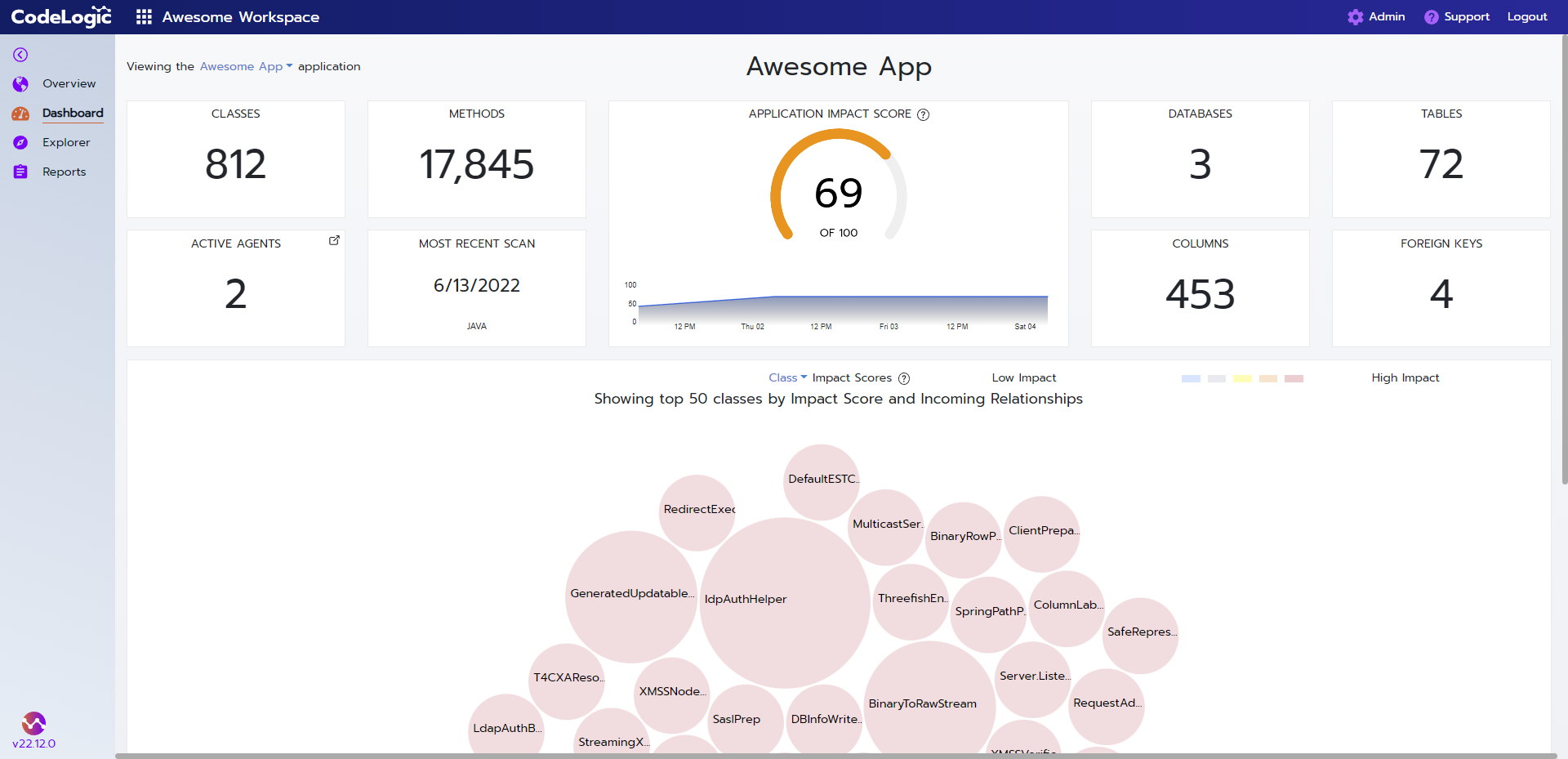
    CodeLogic launched today a toolkit that enables developers to scan binaries, runtime application behavior and database connections and then leverage graph technology to identify connections and dependencies in real-time.

    Brian Pierce, CodeLogic CEO, said the goal is to make it simpler for developers to identify the relationship between application elements to increase overall productivity and simplify the addition of new members to an application development project.

    In general, most developers add code to applications without really having much visibility into how that code might impact other components. The toolkit created by CodeLogic is an extension of the company’s existing continuous software intelligence (CSI) platform that employs server software to store and process data collected via its agent software. The goal is to make it easier for developers to directly consume those insights via a toolkit they can access directly from within, for example, an integrated development environment (IDE), said Pierce.

    As applications become more complex in the age of microservices, it becomes more challenging to understand all the dependencies between application components. Developers require greater visibility into applications to better manage the break/fix process that inevitably occurs when new code is added to any environment. The CodeLogic CSI platform provides an automated impact score for methods, classes and the overall health of an application as code is developed to provide that visibility.

    That information also plays a critical role in enabling IT teams to understand the implications any newly discovered vulnerability might have on the application environment, added Pierce.

    Overall, the level of technical debt that organizations accumulate over time saps developer productivity, he noted. The more difficult it becomes to add code to an application environment the less likely it is that developers will enthusiastically make the effort, said Pierce. Before too long, the number of updates made to an application environment starts to decline, he noted.

    Developer productivity has become a major issue simply because the number of applications that organizations now want to build and deploy is exceeding the financial resources they have available to hire or contract developers. The more time developers spend studying how an application has been constructed the less time there is to write code and drive innovation. In fact, the more frustrating it becomes to add code the more likely it becomes developers will move on to a company with much less friction involved in building and deploying applications, said Pierce.

    There are many senior IT leaders that also need visibility into application environments before approving projects. Many IT teams discover that there are multiple projects or other teams writing duplicate code or replicating existing functions. Regardless of the reason, more developers are voting with their feet when they feel their time and effort is not fully appreciated.

  • Rezilion Launches Vulnerability Prioritization Platform

    Rezilion Launches Vulnerability Prioritization Platform

    Rezilion today announced general availability of a platform that enables DevOps teams to better prioritize remediation efforts by identifying which vulnerabilities both run in memory and actually impact a class or function that can be executed.

    Liran Tancman, Rezilion CEO, said the biggest DevSecOps challenge organizations face today is that the bulk of vulnerabilities that developers are tasked with remediating don’t constitute a significant cybersecurity threat.

    Rezilion has created a searchable proprietary next-generation vulnerability database (NGVDB) that identifies which issues impact specific classes and functions. That capability enables DevOps teams to de-prioritize close to 95% of software vulnerabilities, said Tancman.

    In addition, the Rezilion platform will surface remediation suggestions that lower the amount of disruption and/or cost, he said. A fully-automated remediation capability, for example, will automatically upgrade and test vulnerable software components and packages within a continuous integration (CI) pipeline that were found to be exploitable. In the longer term, Rezilion is also working toward surfacing remediation suggestions that might be addressed using an alternative to patching, said Tancman.

    The Rezlion platform is also integrated with IT service management platforms such as ServiceNow and project management tools such as Jira to make it easier to address vulnerabilities as part of existing workflows, he added.

    Most developers today are simply overwhelmed by the number of vulnerabilities that cybersecurity teams routinely ask them to patch, noted Tancman. The goal should be to enable developers to focus their limited time and effort on remediating the vulnerabilities that truly matter to ensure application security, he said.

    In addition, developers need to have more confidence in the fact that the patch they are being asked to make won’t break their existing applications, added Tancman.

    Vulnerability prioritization is, of course, at the heart of the long-standing divide that exists between DevOps and cybersecurity professionals. Spreadsheets filled with long lists of vulnerabilities are regularly created, but there is usually no context provided in terms of how severe a threat any given vulnerability poses. As a result, developers would allocate a small portion of their time to applying patches that are prioritized based on intuition and level of complexity rather than severity.

    Naturally, developers are going to allocate most of their time to creating new applications and features. For any DevSecOps initiative to succeed, it’s critical to ensure optimal use of the time allocated to remediation. Cybersecurity teams will continue to compile lists of vulnerabilities, but that list can now be triaged in a way that causes the least amount of friction.

    In the wake of a series of high-profile security breaches, there is now more focus than ever on securing software supply chains. The challenge is to find a way to better secure applications both before and after they are deployed in a production environment. There will always be vulnerabilities that are discovered after an application has been deployed. However, just because a vulnerability exists, that doesn’t mean it’s exploitable. The trouble with application security today is that, all too often, remediation efforts turn out to be a waste of time.

  • GitGuardian Tightens Integration With GitHub to Secure Secrets

    GitGuardian Tightens Integration With GitHub to Secure Secrets

    GitGuardian has expanded its ability to secure code repositories by providing deeper integration with GitHub.

    Ziad Ghalleb, product marketing manager for GitGuardian, said the results of security scans are now provided in the context of pull requests alongside suggestions for remediating issues.

    The company also expanded developer onboarding options by adding an application programming interface (API) key provisioning mechanism integrated with its command line interface (CLI) in addition to making it easier to configure that CLI.

    Finally, GitGuardian extended support for role-based access controls (RBAC) to its platform so that team members can be assigned different permissions levels for incidents based on their role.

    GitGuardian makes it possible to scan source code to detect API keys, passwords, certificates, encryption keys and other sensitive data in a code repository in real-time. Developers building an application often make secrets easily accessible as plain text for the sake of convenience. However, when those applications are deployed in a production environment, developers often forget to delete these secrets. Cybercriminals know to scan for these secrets to make compromising an application environment easier.

    A recent GitGuardian report found a typical company with 400 developers would discover 1,050 unique hardcoded secrets when scanning its entire codebase. Each secret had 13 different occurrences, which meant the effort required to remediate those associated vulnerabilities would be considerable, the report noted.

    Secrets management is, of course, getting more attention as more organizations review their software supply chain processes in the wake of a series of high-profile security breaches. GitGuardian makes it simpler to achieve that goal within the context of a set of DevSecOps best practices by integrating with GitHub with a single click, said Ghalleb.

    It’s still early days as far as adoption of DevSecOps best practices is concerned, but it’s clear more responsibility for application security is being shifted left toward developers. The challenge is many developers still lack the tools required to make sure applications are secure before they are deployed in production environments.

    Naturally, the earlier an application security issue is resolved the less costly it is to fix. The problem with secrets management is cybersecurity teams are usually a lot more focused on discovering vulnerabilities than looking for instances of poorly secured credentials. Once an application is deployed in a production environment, it may be months before anyone discovers there is an issue—if it’s discovered at all. In fact, the number of existing applications running in production environments that have secrets management issues could be staggering.

    One way or another, it’s only a matter of time before more of those issues are surfaced. In the meantime, DevOps teams can reduce the number of applications that might have this issue by making it easier to discover secrets within applications before they are deployed in production environments. After all, the only thing worse than a secret being discovered by a cybersecurity team is having one uncovered by cybercriminals that use it to wreak havoc.