Category: DevOps Toolbox

  • Planview Outlines VSM Strategy After Acquiring Tasktop

    Planview Outlines VSM Strategy After Acquiring Tasktop

    Planview this week announced it completed its acquisition of Tasktop, a provider of a value stream management (VSM) platform that enables DevOps teams to align their efforts more closely with strategic business goals.

    Louise Allen, chief product officer for Planview, said the goal is to tighten integration between the Tasktop VSM platform and the project management applications that Planview already provides to software development teams and business executives.

    It’s still early days as far as adoption of VSM within DevOps workflows is concerned, but as more organizations realize how dependent they are on software, they need to better align application development projects with their strategic business goals, said Allen. VSM platforms make it possible to analyze data collected from various DevOps tools and enable business and IT leaders to, for example, visualize how a delay to one project might impact revenue goals for an upcoming quarter.

    Given the current weakness in the overall economy, organizations are looking to more precisely understand the impact software development decisions will have on the business, she added. As part of an effort to address that requirement, Planview will also make it easier for its applications to consume data that was originally created in Tasktop, she explained.

    VSM enables more organizations to function like a software company—aligning application updates with revenue goals. As the number of digital business transformation initiatives being launched increases, organizations are finding they need to operate more like a software company that either manufactures something or provides a service.

    The concept of value stream management traces its lineage back to lean manufacturing methods, which called for each step of a manufacturing process to be continuously measured. As software development has evolved from being a craft to an automated process using DevOps best practices, there is growing appreciation for the value of monitoring things such as the impact of missed software development deadlines on the business.

    At its core, a VSM platform will automatically convert metrics collected from a DevOps workflow to track a set of key performance indicators (KPIs) defined by the business. Once those metrics are gathered and KPIs established, organizations are then able to apply advanced analytics to align the resources needed to achieve a strategic goal by, for example, devoting more developers to a specific project. The data collected via a VSM platform can also then be shared with business intelligence (BI) applications that business leaders typically use to manage the business.

    It’s not clear just how hard business leaders are looking for deeper insights into how software development initiatives are progressing, but at the very least, DevOps leaders need a simpler way to understand all the dependencies that exist between initiatives. Otherwise, they risk missing deadlines simply because no one realized a delay that occurred in one project had a cascading impact across multiple other initiatives. Regardless of who consumes the data generated by a VSM platform, the need to increase visibility across the software development life cycle had never been greater.

  • Dev Job Phisher Steals $540M | Patch OpenSSL NOW | Systemd Dev Joins Microsoft

    Dev Job Phisher Steals $540M | Patch OpenSSL NOW | Systemd Dev Joins Microsoft

    Welcome to The Long View—where we peruse the news of the week and strip it to the essentials. Let’s work out what really matters.

    This week: Spear-phishing causes $540 million loss, a high severity bug in OpenSSL might be “worse than Heartbleed,” and Lennart Poettering is now working for Microsoft. (more…)

  • More Than Half of DevOps Pros Have Backdoor Access to IT Infrastructure

    More Than Half of DevOps Pros Have Backdoor Access to IT Infrastructure

    A survey of 600 DevOps professionals conducted by strongDM, a platform for managing access to IT infrastructure, found nearly two-thirds (64%) had productivity impacted on a daily or weekly basis because of access issues.

    It’s not surprising that, as a result, DevOps teams created a number of workarounds to gain access, even though those methods don’t comply with cybersecurity best practices, according to the survey. More than half of respondents (55%) maintained backdoor access to systems, and 42% have embraced shadow IT to get access to tools and systems they needed for their roles, the survey found.

    Worse yet, the survey found that 53% of respondents admitted they are sharing credentials across teams.

    Well over half (57%) of respondents said it could take days or weeks for access requests to be approved, with 40% reporting it takes days to add tools to existing access solutions. Nearly three-quarters (73%) of respondents also noted it requires 15 minutes or more to gain access to infrastructure.

    More than half of respondents (52%) said they have missed deadlines due to issues with accessing infrastructure, with 53% of those respondents being held accountable for the missed deadline even if it was caused by their lack of access to infrastructure.

    Justin McCarthy, CTO for strongDM, said despite all the hype surrounding identity management and zero-trust IT, it’s clear many organizations are still struggling with the basics of access control. That issue has been further exacerbated by the need to enable more DevOps professionals to work from home since the start of the COVID-19 pandemic more than two years ago, he added.

    Many of those organizations are still relying on virtual private networks (VPNs) even though it’s been shown that stealing the credentials to access those VPNs is relatively trivial, McCarthy added.

    In place of those approaches to access IT infrastructure, strongDM is making a case for a dedicated infrastructure access platform that manages and audits access to databases, servers, clusters and web apps. It is based on local client software, a gateway intermediary and configuration tools that track roles and permissions.

    The benefits of that approach span everything from lower IT support costs to faster onboarding of new IT staff, noted McCarthy.

    Managing infrastructure access for DevOps teams is, of course, always going to be a challenge. DevOps teams are made up of engineers—among the most challenging types of end users to support. Many of them will use their own expertise to circumvent any process they deem to be inefficient. The trouble is, many of those end-runs would not pass muster with cybersecurity teams responsible for access management. The challenge each of those cybersecurity teams needs to come to terms with is the amount of time they want to spend time looking for these cybersecurity policy workarounds versus making it easier to securely access IT infrastructure.

    The sad truth is both DevOps and cybersecurity professionals are wasting a lot of time and effort trying to outwit each other when that time could be put to better use.

  • Salesforce Adds RPA Bots to MuleSoft Integration Platform

    Salesforce Adds RPA Bots to MuleSoft Integration Platform

    Salesforce today announced that it is now using robotic process automation (RPA) to connect disparate data via a no-code tool developed by its MuleSoft unit.

    Shaun Clowes, chief product officer for MuleSoft, said bots created using an RPA-infused integration platform can now automate much of the effort previously required to integrate data residing in different systems. Salesforce acquired MuleSoft in 2018 and, since then, has been working to make the platform for integrating application programming interfaces (APIs) a core element of its business process workflow tools.

    The news was announced at the MuleSoft CONNECT 2022 conference. The overall goal is to employ RPA and no-code tools to accelerate digital business transformation initiatives without writing code, noted Clowes. Overall, Salesforce claimed its customers are running 4.8 billion MuleSoft transactions daily, resulting in a 74% decrease in operational costs and a reduction of more than 100 billion hours of work every month, using Salesforce Flow tools that are integrated with the MuleSoft integration platform.

    In theory, no-code tools that integrate disparate data sources can be used by professional and so-called citizen developers alike. That capability should reduce the time and effort required to create those integrations. A recent survey conducted by Salesforce found nearly 96% of respondents said that modifying and rebuilding automation is a challenge as systems and business requirements change. In addition, four out of five respondents noted that restructuring existing application and data landscapes to support automation would likely compound their organization’s technical debt.

    More than half of respondents (53%) said they are using integration and API management capabilities to some extent, with 44% employing those capabilities to drive business process automation initiatives. A full 80% said they are working toward putting hyperautomation on their technology roadmap within the next 24 months.

    Of course, the MuleSoft platform can be employed beyond the portfolio of software-as-a-service (SaaS) applications provided by Salesforce. However, it’s also become apparent that more organizations are building and deploying custom applications on top of a range of SaaS applications in addition to building and deploying applications written in procedural code that might be running in the cloud or in an on-premises IT environment.

    It will be up to each IT organization to determine how much they need no-code integrations as part of a larger DevOps workflow, but as it becomes easier to create integrations using RPA tools their numbers should increase. The impact all those integrations will have on DevOps pipelines remains to be seen, as well. Many organizations will need to revisit their DevOps workflows as the number of application development projects being simultaneously launched continues to increase.

    In the meantime, it’s clear that no-code/low-code tools infused with RPA capabilities will empower more end users. That shift will have a profound impact on DevOps teams, as the sheer volume of code and associated integrations increases. The challenge, of course, will be finding a way to make sure that the integrations created are secure and that they can actually scale as more data sources are added.

  • ServiceNow Adds Lightstep Notebooks to Visualize Observability Data

    ServiceNow Adds Lightstep Notebooks to Visualize Observability Data

    ServiceNow today added a visualization tool to its Lightstep observability platform that will make it simpler for DevOps teams to correlate metrics, logs and traces.

    Ben Sigelman, general manager for Lightstep at ServiceNow, said Lightstep Notebooks will make it easier for DevOps teams to make sense of the massive amounts of data collected by the observability platform.

    Lightstep Notebooks is an extension of the Change Intelligence analysis engine that ServiceNow already makes available within an observability platform it acquired in 2021.

    Included with Lightstep Notebooks are a set of ad hoc charts that include access to heat maps and time-series data with trace exemplars using the database at the core of the Lightstep observability platform.

    An instantly generated investigative path also makes it simpler to identify the root cause of any issue, and each instance of Lightstep Notebooks can be shared with other members of the IT organization via an embedded link. Finally, 100% of trace data can be retained for up to three days.

    Sigelman said the ability to share Notebooks via embedded links will also help bridge the divide between DevOps and IT service management (ITSM) teams that often need to collaborate to resolve an IT issue.

    Naturally, the level of collaboration between those teams tends to vary widely by organization. However, as DevOps best practices are more widely embraced, the number of organizations that are trying to achieve that goal continues to steadily increase. Earlier this year, ServiceNow added an incident response offering to orchestrate on-call escalation, group alerts and provide analytics in further pursuit of that goal.

    Observability platforms aggregate the collection of logs, metrics and traces in a way that makes it possible for DevOps teams to query that data. The goal is to make it easier for DevOps teams to both identify the root cause of an IT issue and pinpoint any anomalies that might disrupt an application environment. The goal is to eliminate the need to convene a “war room” meeting that requires IT teams to suffer through the painstaking process of elimination to identify the root cause of an issue.

    Of course, before an IT environment can be observed, it needs to be instrumented. Thanks to advances in the form of open source agent software being advanced via the OpenTelemetry project managed under the auspices of the Cloud Native Computing Foundation (CNCF), it’s becoming less costly to instrument IT environments. That’s especially critical at a time when more DevOps teams are deploying microservices-based applications that are more complex to manage than legacy monolithic applications. While generally more resilient, the dependencies that exist between the microservices that make up an application can be difficult to identify without the aid of an observability platform.

    As a core DevOps tenet, the need for observability and instrumentation has always been apparent. The challenge has been finding the best way to achieve that at an acceptable cost, Fortunately, there is now no shortage of observability platforms. The only remaining issue is to determine which one best fits within the construct of the organization’s defined DevOps workflow.

  • Supergraph: One GraphQL Schema to Rule Them All

    Supergraph: One GraphQL Schema to Rule Them All

    GraphQL has been garnering much interest as a way to seamlessly interact with backend services. The query language is a boon for frontend developers, too, as it conveniently allows you to fetch the specific fields you require, thus eliminating the potential overfetching or underfetching concerns of REST APIs. And as GraphQL adoption matures within organizations, there is increasing interest (and investment) in how enterprises can use GraphQL to securely unify their growing catalog of disparate microservices and APIs.

    Using GraphQL as a meta layer could help unite many disparate systems under a single unified schema. This would enable the age-old promise of composability, in which software building blocks are seamlessly pulled together to assemble applications and unique experiences for different client types. However, managing GraphQL at scale can become tricky. And when a schema gets really large, it then may require a schema of its own! This is where the concept of the supergraph comes in.

    I recently met with Geoff Schmidt, Apollo GraphQL CEO, to discover what a supergraph is and how it may help platforms aggregate their backend microservices. According to Schmidt, “Developers want this composition layer for one abstract view of all their services.” Below, we’ll explore the concept of the supergraph and look at some new open source components that may help you enable GraphQL-based composability in your organization.

    Microservices Enable Composability

    First off, what do we mean by composability? Well, composable architecture is intrinsically linked with microservices. You can think of each microservice as a single lego piece that makes up one aspect of an application. For example, Uber uses 4,000 microservices to power its backend. These services span from maps, currency conversions, driver reviews, payments and other components. When combined, they ultimately create the convenience and the sleek user experience that is Uber.

    Historically, software developers were overseeing larger monolithic applications in which a single client was interconnected to a web server, Schmidt explained. On the other hand, microservices tend to be more domain-specific and used in tandem with other microservices. They’re also typically easier to iterate on and faster to ship when compared to monolithic codebases.

    The Need for Aggregation

    As a result of the microservices age, applications typically pull in far more data from various sources. For example, a banking application might loop in a mortgage service, investment service and other data sources to display a combined net worth on a screen. This explosion in microservices has created a “polygon environment” spanning databases and APIs, increasing service complexity, said Schmidt.

    Nowadays, many third-party components must be combined to render an experience. However, supporting this composability can be challenging for developers and backend API teams—not to mention that handwriting a backend-for-frontend could be burdensome. “App developers are slowed down by the need to integrate or compose these backend services,” said Schmidt. “Developers need a way to put all those pieces back together.”

    What is Supergraph?

    Supergraph can be thought of as a graph of graphs. The vision is to have one GraphQL schema and one ingress port to oversee many services. Creating a supergraph is becoming more accessible, too, as more open source projects emerge to enable this paradigm. For example, Apollo recently open sourced some components that can help to build and operate a supergraph. These include Federation, which helps to create a data graph across multiple services, and the Apollo Router, a tool written in Rust that decides how to route queries. Apollo has also open sourced a supergraph demo along with other resources.

    A supergraph architecture is already powering Expedia, Walmart, Netflix, Paypal, the New York Times and other large environments, said Schmidt. For example, Expedia has used a supergraph to combine flights, rental cars and other microservices to create integrated experiences. Hivee, an upstart modern supermarket chain, also uses a supergraph to unite its investment into APIs.

    According to Schmidt, the fundamental benefit is that less time is spent writing integration code which means faster development speed and the ability to quickly pivot your business. “It allows you to change business quickly to meet the needs of your customers.” A supergraph could also enable greater visibility into your API estate, making auditing easier.

    A key benefit of the above components is that they already have a proven track record running at a commercial scale. But outside of the Apollo projects, other groups are attempting to codify a similar GraphQL schema aggregation concept, as well. For example, WunderGraph utilizes GraphQL within a “virtual graph” that acts as a common language to call various underlying APIs.

    Repercussions of ‘One Graph to Rule Them All’

    Schmidt said the hope is that, at the end of the day, this abstraction can contribute to “making the world a little more human-centric.” This is because GraphQL can enable less rigid apps that conform to unique user tastes. But a robust composition layer will be necessary to allow such reconfigurations.

    Of course, as I’ve covered previously, there are significant security hurdles to address when supplying so much power to a single entryway. Increased GraphQL reliance will require forethought into new potential security risks, such as schema introspection and object-level authorization control.

    According to Schmidt, a GraphQL composition layer presents an opportunity to enforce security controls. He defines these as contracts that create access rules for a particular set of users. By declaratively managing GraphQL security, a development team, in essence, could expose a subgraph of the supergraph for a partner to consume. The graph could even be segmented for internal teams.

    A central point of ingress will require authorization rules to protect user privacy and avoid breaking the rule of least privilege. Schmidt also advocates for backend schemas to be built for app developers who understand their needs, instead of precisely mapping logic to business models.

    Supergraph: A Graph of Graphs

    Software is becoming more modular, which has resulted in an explosion of unique microservices and APIs. And we’re now at another tipping point in how software architecture is divided and combined, said Schmidt. He now sees GraphQL as a prime opportunity to create software architectures that call multiple backend services with a single GraphQL query.

    “GraphQL is the composition layer you need to build modern applications,” said Schmidt. “We’re super excited about this. Users have shown that GraphQL is the future. Supergraph is such a powerful technology, and we’re excited to bring this to everybody.”

  • Open Source Coder Tool Helps Devs Build Cloud Spaces

    Open Source Coder Tool Helps Devs Build Cloud Spaces

    Coder today launched an open source project that gives developers and data scientists a way to create cloud workspaces in a matter of minutes to make it easier to build applications and models faster.

    Currently, Coder provides a cloud application development platform that enables developers to build applications using any editor or integrated development environment (IDE) as an alternative to their local desktop. That capability is made possible by using the open source Terraform infrastructure provisioning tool to spin up a developer workspace. That approach provides developers with access to cloud resources that scale up and down as required versus, for example, being limited to the memory and storage resources that they can access on a laptop or desktop system.

    Ketan Gangatirkar, vice president of engineering for Coder, said that while individual cloud service providers offer ways of achieving that goal, those offerings lock organizations into a specific cloud service. The Coder approach allows developers to use their preferred tool across multiple cloud services, he added.

    Most developers are already building applications that run on multiple cloud platforms. As such, they require access to a set of tools that eliminate the overhead created when developers need to deploy and master a diverse range of tools to build those applications, said Gangatirkar.

    In contrast, with the Coder tool, developers can open a web browser, choose a workspace template and then start coding, he noted. That capability eliminates all the manual, error-prone processes typically required to get a developer workspace set up, said Gangatirkar.

    That approach also provides organizations with a more secure means of building applications compared to the time and effort that would otherwise be required to secure every local system used by a development team, he added.

    In general, there’s a lot more focus on developer productivity as organizations increase the number of applications they are simultaneously building and deploying. Hiring and retaining developers remains a major challenge as competition for talent intensifies in the race to accelerate digital transformation efforts. All things considered, many developers will prefer to work for organizations that allow them to use the tools they already know and prefer. That approach also makes it easier to onboard developers to a development project, noted Gangatirkar.

    It’s not clear how many application development initiatives are never begun simply because it takes too much time and effort to spin up a development environment whenever inspiration strikes. However, it’s clear that developers are wasting a lot of time maintaining multiple local development environments. Much of that time could be better spent writing actual application code.

    One way or another, open source tools—such as the one provided by Coder—should remove a lot of the friction that exists in application development today. The only issue that remains is whether those tools will be adopted by developers themselves versus the DevOps teams dedicated to serving them.

  • One Year Out: What Biden’s EO Means for Software Devs

    One Year Out: What Biden’s EO Means for Software Devs

    It has been just over a year since president Biden issued executive order 14028 (EO) to improve the nation’s cybersecurity posture. Despite the Log4j vulnerability and a worldwide increase in ransomware attacks, this EO signaled a major step in improving software security at federal agencies and establishing cybersecurity as a priority for the U.S. government. While the agencies tasked under this EO have made significant gains, it is important for industry to understand just how much progress has been made since its inception and what that progress means to the average producer of software.

    To understand the effects of the EO, it is important to remember that president Biden does not have the authority to order any government agency to purchase specific software, nor does the president have the authority to require any governmental agency to procure specific software. Instead, the EO instructs heads of agencies to perform specific tasks that will ultimately define more stringent cybersecurity requirements to protect government offices. This doesn’t mean the EO solely applies to U.S. government contractors; if your company is anywhere in the software supply chain leading to a U.S. government purchase, then you need to pay attention to the EO and plan accordingly.

    One of the first of those tasks was for the National Institute of Standards and Technology (NIST) to solicit input from the public and private industry surrounding the structure and management of software supply chains. That work resulted in an NIST publication on EO Critical Software in July 2021. That publication helped outline security measures for software use, including applying practices of least privilege, network segmentation and proper configuration. It also helped NIST to frame the Secure Software Development Framework (NIST sp800-218v1.1) (SSDF) published in February, which provides a set of fundamental secure software development practices.

    This guidance, along with the definition of a software bill of materials (SBOM) by NTIA in November and the updated Cyber Security Guidance for Supply Chain Risk Management (NIST sp800-161r1) released in early May now form part of the risk-based framework that OMB instructed agencies to follow.

    What it Means To Be “EO Compliant”

    Before beginning any discussion about EO compliance, it’s important to recognize that until there are contract clauses defined—and those contract clauses are incorporated into contracts—there isn’t anything to comply with. That process is part of the Federal Acquisition Regulation (FAR) and Defense Federal Acquisition Regulation (DFAR) effort, and the proposed clauses haven’t been published yet. Despite this, we do know enough to start preparing for future compliance and creating processes that will allow for EO compliance.

    The first step is to recognize whether your organization is a supplier within a supply chain of a U.S. government agency. In the context of the EO, that would mean any organization who creates, procures or embeds software into a component or assembly that is ultimately bought by a U.S. government agency. This includes open source software, low-code/no-code frameworks and DevSecOps tooling, to name just a few of the scenarios where U.S. government use might not be immediately apparent. 

    With that in mind, any provider of software within a supply chain should be prepared to answer questions about EO compliance if their software can be used in the U.S. government setting. For some, this could mean updating a few processes; for others, it may prompt a much larger set of changes in the development cycle. Those willing to change may be more likely to retain relationships or gain favor with government suppliers.

    How Software Providers Can Be Proactive

    There are three critical steps that can be performed today as part of preparing an organization for future EO compliance requirements. The first thing providers can do is generate a complete SBOM for their software in an NTIA compliance format and be prepared to attest to its accuracy. While it is not yet clear how the U.S. government will expect to receive an SBOM or what attestation format will be required, generating compliant SBOMs is one of the easiest tasks software producers will face as part of a post-EO world.

    Next, providers should baseline existing software development practices with the objective of aligning with the SSDF (NIST sp800-218v1.1). The SSDF defines a set of tasks that NIST views as a minimum requirement to securely create software and manage the software creation process. If the government procurement requirements include an attestation of compliance to the SSDF, then software producers who already know how well-aligned they are to the SSDF will be that much closer to compliance. 

    Lastly, providers must implement controls related to open source governance. While an SBOM helps identify open source use and the SSDF includes tasks related to its use, neither specifically defines how any software producer is expected to govern their use of open source software. Open source software is fundamentally different from commercial software in many ways; the most important differentiator is that it is freely downloadable from the internet. This free access means that creators likely do not know who their consumers are and thus cannot proactively provide updates or security information. Open source governance processes can help to fill that gap.

    Why It is Time to Embrace the EO

    These first steps can help software providers address the initial requirements that have come out of Biden’s EO and those who get a jump on implementation will have a leg up against their competition. Starting now can save providers a major headache in the long run, as federal agencies seek an understanding of how much risk they bear when operating the software you produce. 

    The rapidly changing cybersecurity landscape was a key driver behind Biden’s EO. Threat actors are evolving their tactics to keep pace with improving cybersecurity postures and it is in everyone’s best interest—from the federal government to the private sector—to put an emphasis on security. An important place to start—regardless of where you are in any software supply chain—is by taking the steps necessary to demonstrate that you understand the risks inherent in operating software and are actively working to reduce those risks for your customers.

  • Codenotary Adds SLSA Framework Support to Advance App Security

    Codenotary Adds SLSA Framework Support to Advance App Security

    Codenotary this week announced it has integrated support for the Supply-Chain Levels for Software Artifacts (SLSA) framework in its free notarization and verification service for ensuring the integrity of code.

    Moshe Bar, Code Notary CEO, said as the first application security platform to attain SLSA compliance, the company is making it easier for organizations to secure their software supply chains.

    SLSA is a framework defined by Google that it uses to attach binary authorization to code. In its current form, SLSA is a set of guidelines that identify how to attain four different levels of application security. The long-term goal is to create a framework that will automatically generate auditable metadata that can be fed into policy engines to create a SLSA certification.

    Codenotary provides tools for cataloging and verifying the authenticity of components used with a software development life cycle. At the core of that platform is an immutable open source immudb database that cryptographically attaches an identity to each software artifact. That capability can also be used to dynamically generate a software bill of materials (SBOM).

    The Codenotary Attestation Service can also be integrated with the continuous integration/continuous delivery (CI/CD) platform that DevOps teams use to build and deploy applications using those artifacts. Ideally, DevOps teams should construct a security pipeline that runs alongside their existing DevOps pipelines, noted Bar.

    In the wake of recent high-profile software supply chain breaches, the level of scrutiny being applied to how software is constructed has increased significantly. In theory, at least, developers have assumed more responsibility for application security as part of an overall shift left that provided them with more programmatic control over IT environments. Cybercriminals, however, are now becoming more adept at compromising developers’ credentials and insert malware as an app is developed.

    DevSecOps best practices are, of course, being adopted to teach developers how to better secure their application environments. The issue is that not enough developers are learning how to secure applications fast enough. The volume of attacks against the software supply chain continues to grow at a rate that is now much faster than organizations can thwart simply by educating developers.

    There is a now clear need to embed more cybersecurity guardrails within DevOps workflows, noted Bar. Rather than attempting to achieve that goal in a piecemeal fashion, Bar said Codenotary is making a case for an integrated platform that can be invoked as a natural extension of a DevOps workflow.

    In general, Bar said there’s now a greater sense of urgency when it comes to software supply chain security. Many of the reviews of those processes are, arguably, long overdue. One way or another, there will be a lot more questions asked about how software is actually developed. The organizations that consume this software are starting to appreciate how vulnerable they are as the overall dependency on software continues to increase. The only real question now, unfortunately, is how many more breaches there might be before those software security issues are thoroughly addressed.

  • Armory Aims to Turn Continuous Delivery Into a Service

    Armory Aims to Turn Continuous Delivery Into a Service

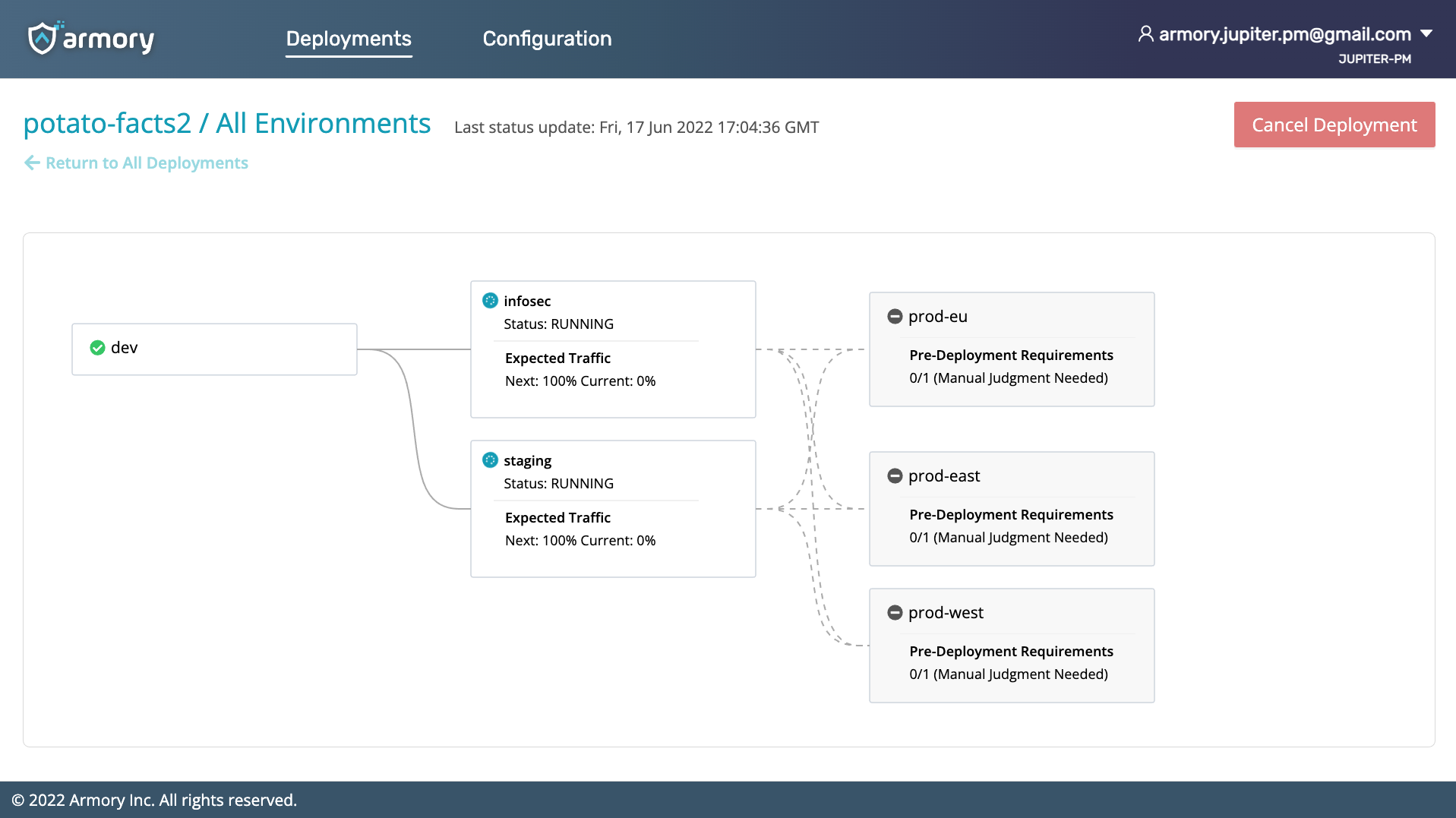
    Armory this week made generally available a continuous delivery-as-a-service (CDaaS) offering that promises to make it simpler for a much wider range of organizations to programmatically deploy applications.

    The Armory Continuous Deployment-as-a-Service platform has been available in beta since March. It differs from Armory’s existing open source Spinnaker continuous delivery (CD) platform in that it is based on a proprietary declarative platform that is designed to integrate with third-party continuous integration platforms.

    Armory CEO Jim Douglas said the goal is to meet organizations that have invested in CI where they are versus requiring them to rip and replace their entire DevOps platform. The company is still committed to providing a curated instance of Spinnaker, but it’s become apparent there are many organizations that want to experience the benefits of a more opinionated CD platform that is more accessible via a cloud service, he added.

    The Armory Continuous Deployment-as-a-Service offering applies many of the best practices that have emerged for the Spinnaker CD platform without requiring organizations to have a dedicated team in place to just manage the CD platform, noted Douglas. IT teams can start using the service to deploy applications in less than 30 minutes, he noted.

    The first edition of Armory Continuous Deployment-as-a-Service is optimized for deploying microservices-based applications on Kubernetes clusters, but Armory will soon extend the reach of the service to platforms running monolithic applications, said Douglas. The company also plans to make available an on-premises edition, he added.

    In either scenario, IT teams will be able to engage in everything from canary testing of deployments to automatic rollbacks in the event an application fails, said Douglas.

    The number of organizations that routinely make use of a CD platform is still relatively small. Historically, each platform used to run applications has been unique, so automating delivery has been problematic. CI platforms, in some cases, have been extended using custom scripts to automate application delivery, but those efforts don’t typically scale across an extended enterprise.

    Douglas said that as more IT teams start to build and deploy microservices-based applications, it’s only a matter of time before CD becomes a more distinct IT discipline. The challenge is enabling IT organizations to achieve that goal without necessarily having to hire a small army of site reliability engineers (SREs). There will still be plenty of DevOps teams that will prefer to deploy Spinnaker, but Douglas said there will also be plenty of instances where a less complex approach to CD will suffice.

    It’s hard to say whether there might soon be varying levels of DevOps platform services that organizations might invoke depending on the complexity of the project and their own internal cultural preferences. However, as the pace of application development continues to accelerate, the need to automate CD will become a more pressing issue. There may be many ways to achieve that goal, but if history is any indication, the path of least resistance is likely to be via the cloud.