Category: DevOps Toolbox

  • Log4j Puts Effective IT Operations at Center Stage

    Log4j Puts Effective IT Operations at Center Stage

    News of the Apache Log4j vulnerability exploit is striking fear into the hearts of both software makers and users. Log4j is the most popular Java logging service used today, with over 400,000 GitHub downloads and has been embedded in most internet services and products from companies all over the world, including Apple, Amazon, Cloudflare, Steam, Tesla, Twitter and Baidu, just to name a few.

    Exploiting this vulnerability is simple and allows threat actors to control Java-based web servers and launch remote code execution (RCE) attacks. New variations of the original exploit are being introduced rapidly—over 60 in less than 24 hours. The attack surface grows by the minute. Good credential management and advanced authentication will not help as this exploit is pre-authentication, which means an attacker doesn’t need to authenticate to your web applications to attack. Your web server is vulnerable.

    The good news is your organization likely has a team of seasoned IT operations pros that can help protect against the worst of Log4j’s devastation.

    How IT Operations Can Protect Against Log4j Vulnerabilities

    Step One: Find Log4j Wherever it Exists

    You need to investigate every internet-facing application, website and system that you own or use. This includes self-hosted installations of vendor products and cloud-based services. Focus on systems that are internet-facing that contain sensitive data. Once you’ve completed assessing your hosted apps and vendor systems, move on to endpoint applications. Java-based apps like WebEx, Minecraft, Citrix and many more.

    Step Two: Patch, Patch, Patch

    Patch in the same order as above: Internet-facing applications, websites and systems. If no patch is yet available for your apps and systems, uninstall.

    The pandemic has forced many endpoints into workers’ home environments, which creates extra challenges for patching those endpoints and keeping them compliant. Operations teams can’t rely on work-from-home folks to patch their own systems, even if they’re given clear instructions. Many of them will just ignore those directions, so you need to adopt systems that enforce continuous compliance.

    Step Three: IT Operations is Essential

    Communicate with your senior leaders. They should be in the know about this one! Senior leadership needs to position their IT operations teams among their most vital employees. Don’t think this is going to go away any time soon—we’re just starting to get a glimpse of what is being tried out there in the wild. Buckle up. 


  • U.S. Govt. CX EO | Mozilla Revenue | Log4j Latest

    U.S. Govt. CX EO | Mozilla Revenue | Log4j Latest

    Welcome to The Long View—where we peruse the news of the week and strip it to the essentials. Let’s work out what really matters.

    This week: Improving U.S. government CX, how much money Mozilla makes, and the latest on the Log4j/Log4Shell débâcle.

    EO: “Transforming Federal Customer Experience”

    First up this week: The Biden–Harris administration makes an executive order directing its Federal agencies to make 36 specific customer experience (CX) improvement commitments. Much of this involves using technology to improve what DevOps teams would call UX—but government doesn’t like the language of “users.”

    Analysis: Customer-centricity FTW

    Remarkably, a lot of interaction with government still involves paper forms. But this EO shouldn’t merely be about putting existing processes online. Work also needs to be done to solve the underlying complexity and fragmentation of services: Focusing on CX is a helpful frame.

    Brett Samuels: Biden to sign order to streamline government services

    [The] executive order [is] intended to cut back on the bureaucracy around government services for the public such as renewing passports, applying for loans or changing names. [It] affects 36 “customer experience improvement commitments” across 17 federal agencies, [targeting] travel, retirement, business, health and updating personal information.
    …
    For example … to renew their passports online rather than dealing with print forms. [It] will create a single portal for … student loan debt, and small-business owners will have a more streamlined process for … loans, grants and certifications.
    …
    Survivors of natural disasters will also no longer be required to complete forms with several agencies when applying for assistance … and they will be able to file smartphone photos and use virtual inspections when filing claims. [That] could be critical as natural disasters become increasingly devastating, as evidenced by the tornadoes that ravaged Kentucky over the weekend, killing dozens of people and destroying communities.


    Is this a technology problem? Yes, in part—but it’s also a government problem, argues Jennifer Pahlka:

    Surely laws like the 21st Century IDEA Act … which required agencies to … “eliminate or consolidate websites or web pages that are duplicative or overlapping … and ensure that each website or digital service is designed around user needs,” made life easier for the customers of those agencies? What’s that you say? You’re not sure you’ve noticed that? Turns out you’re not alone.
    …
    An EO is one of the many mechanisms our government has at its disposal for what I like to call “magic words.” [But there’s a] gap between magic words and the changes they are supposed to compel. [Failures] happen at such a staggering scale they have become entirely expected.
    …
    We tend to assign the blame … to government technology [but] at some point, you can only improve the customer experience by addressing [underlying] complexity. … Most of the Kafka-esque nightmares people get stuck in happen because each service sees only the burden they impose, and not [what] the customer experiences.


    If, like me, you’re inherently cynical about government efficiency, you’d expect this effort to be a huge failure. But let’s not be too cynical: Warning of “the hazards of selection bias,” here’s ShanghaiBill:

    In the olden days, I took half a day off work to go to DMV and renew my DL. Now I can do it online in 5 minutes. … I pay my property tax online. I renew my business licenses online. I incorporated online.


    $500 Million per Year—But for How Long?

    The Mozilla Foundation has unveiled its revenue forecasts for this year. As in previous years, Mozilla makes the lion’s share of its cash from Google—by making it the default search engine. But there are new revenue sources.

    Analysis: And not a moment too soon

    The future of the browser market should be a strategic focus for DevOps teams. Mozilla’s Googley cash cow might not last. It’s often assumed the maker of Chrome keeps Mozilla alive so it can point to Firefox as “competition.” But with Microsoft’s browser Edging up the usage charts, that might no longer be true.

    Frederic Lardinois: Mozilla expects to generate more than $500M in revenue

    For 2021, the organization forecasts revenue of more than $500 million. What’s maybe most important, though, is that Mozilla’s new products like its Mozilla VPN service, Firefox Relay Premium, Pocket and other commercial initiatives are slowly but surely starting to pay off.
    …
    But for all intents and purposes, Mozilla remains fully dependent on Google for the time being. Diversifying its revenue sources is really the only way for Mozilla to decrease its reliance on a search deal with a company that is both a competitor, thanks to its dominant Chrome browser, and is increasingly out of alignment with Mozilla’s overall philosophy.
    …
    There is a window here for a non-Chrome browser, with users increasingly skeptical about Google’s motivations and Microsoft’s Edge team making a few missteps in recent months. Yet at the same time, Mozilla’s efforts to bring sponsored suggestions and ads to Firefox haven’t necessarily endeared the organization to its own users either.


    Why is Google funding its competitor? u/SerAaron:

    Google is Mozilla’s biggest donor. … It’s basically to avoid any monopoly allegations—so they can point to Firefox and say “look, we have competition”.

    Mozilla takes their money, sure, but … they don’t sell data, and they aren’t beholden to Google.


    But don’t count on that cash continuing to flow, says Maelwryth:

    That money is probably under threat now with Edge going for the market. Why give Mozilla hundreds of millions to show competition when you have actual competition from Microsoft?


    Log4j/Log4Shell Seems Worse Every Time We Look

    The list of popular DevOps tools vulnerable to Log4Shell grows by the hour. Merely finding your exploitable services can be an impossible task—let alone patching them.

    Analysis: Defense in depth is key

    Searching for and patching your vulnerable code is not enough. You’re also going to need to shore up your network defenses, by auditing internet-visible services and by tightening your application firewall rules. And—ironically—keep a close eye on your logs for signs of attempted exploits and IoCs.

    Steven J. Vaughan-Nichols: We Are in So Much Trouble

    Log4j is used a lot. And, when I say a lot, I mean it’s used in hundreds of applications [including] Druid, Dubbo, Flink, Flume, Hadoop, Kafka, Solr, Spark, Struts, Apple iCloud, … LogStash, GrayLog2, … Steam, Twitter, and … VMware.
    …
    Log4Shell is both easy to exploit and can be used to grab complete control of vulnerable servers. … Even as you’re reading this, odds are decent you’re being attacked. [But] even if you patch it in your systems, it’s all too likely to be hiding in other applications.
    …
    Log4Shell may be the worst security problem in a generation. … This is going to be a long, hard ride.


    Hyperbole? Even December 25 isn’t close enough for government work. Catalin Cimpanu:

    The US Cybersecurity and Infrastructure Security Agency has told federal civilian agencies to patch systems affected by the Log4Shell vulnerability by Christmas Eve. … Federal agencies have ten days … to test which of their internal apps and servers utilize the Log4j Java library, check if systems are vulnerable to the Log4Shell exploit, and patch affected servers.
    …
    Despite being a recent vulnerability, it is already considered one of the worst security flaws ever discovered, primarily due to its near-ubiquitous use among enterprise software makers, its simple and easy-to-use exploit, and the ability to hijack systems remotely. … Days after being disclosed, the vulnerability has been massively abused. … The first attacks were seen on December 1.


    There’s always another shoe. Here’s Teri Robinson:

    Maybe Log4j vulnerabilities are like rats—for every one that’s visible, multiple others scurry beneath the surface. … Apache said the fix addressing “CVE-2021-44228 in Apache Log4j 2.15.0 was incomplete in certain non-default configurations,” according to … CVE 2021-45046.


    The Moral of the Story: In the end, the love you take is equal to the love you make.


    You have been reading The Long View by Richi Jennings. You can contact him at @RiCHi or tlv@richi.uk.

    Image: Bernd Dittrich (via Unsplash)

  • NetApp Survey Shows Hybrid Cloud is Maturing

    NetApp Survey Shows Hybrid Cloud is Maturing

    A small survey of 79 midsized to large enterprises conducted by NetApp suggests enterprise IT organizations might finally be embracing hybrid cloud computing beyond use cases involving backup and recovery.

    The survey finds 20% of respondents are currently employing both on-premises and cloud resources to support the same workload in a production environment, with another 17% planning to do so within 24 months.

    Darnell Fatigati, senior product marketing manager for hybrid cloud at NetApp, noted that a hybrid approach to cloud computing will dominate with more than three-quarters of respondents reporting their organization plans to operate a hybrid cloud environment for the foreseeable future. Only 17% expect their organization to eventually migrate all their IT environments to the cloud.

    A major factor in the decision to not migrate all workloads to the cloud is the amount of data gravity that legacy applications running in on-premises IT environments exert, noted Fatigati. The amount of effort required to successfully migrate terabytes and even petabytes of data into the cloud is simply too great, he added.

    The primary benefits of hybrid cloud computing cited by survey respondents are faster innovation (26%), increased responsiveness (25%) and increased collaboration (22%). Survey respondents also noted they are looking to improve infrastructure flexibility and scale (27%), optimize costs (21%) and improve data accessibility (13%). Data protection involving disaster recovery, backup and archiving remains the most widely employed use case for hybrid cloud, with 29% either employing it today or planning to do so in the next 24 months.

    Most hybrid cloud computing environments today consist of multiple clouds and on-premises IT environments that are managed in isolation from one another. The fact that more organizations are now starting to deploy the same workload across both a cloud service and an on-premises IT environment has significant implications for DevOps teams that will be required to manage those workloads. Most DevOps workflows today do not span multiple platforms. However, as more organizations become impacted by the occasional cloud outage, the level of resiliency enabled by hybrid cloud computing is becoming a higher priority.

    In many cases, the shift to hybrid cloud computing was accelerated by the COVID-19 pandemic that drove many organizations to increase the number of workloads deployed in the cloud. Now, heading into 2022, those same organizations are looking to reduce IT costs by centralizing IT management as much as possible, noted Fatigati. Each time an IT organization adds a new platform, the tooling and personnel required to manage that platform increase the total cost of IT for any organization. Much of the shift to hybrid cloud is being driven by C-level executives looking to reduce those costs.

    It may be a while before most enterprise IT organizations are able to deploy workloads across multiple platforms. However, as both cloud and on-premises IT environments continue to evolve and as more platforms deployed in local data centers are increasingly managed using a cloud operating model, the way those platforms are accessed on demand will continue to converge. In fact, there may come a day when the term cloud computing itself disappears from the IT lexicon as every IT platform, by default, leverages one type of cloud or another.

  • Stacklet Embeds Collaboration in Compliance-as-Code Platform

    Stacklet Embeds Collaboration in Compliance-as-Code Platform

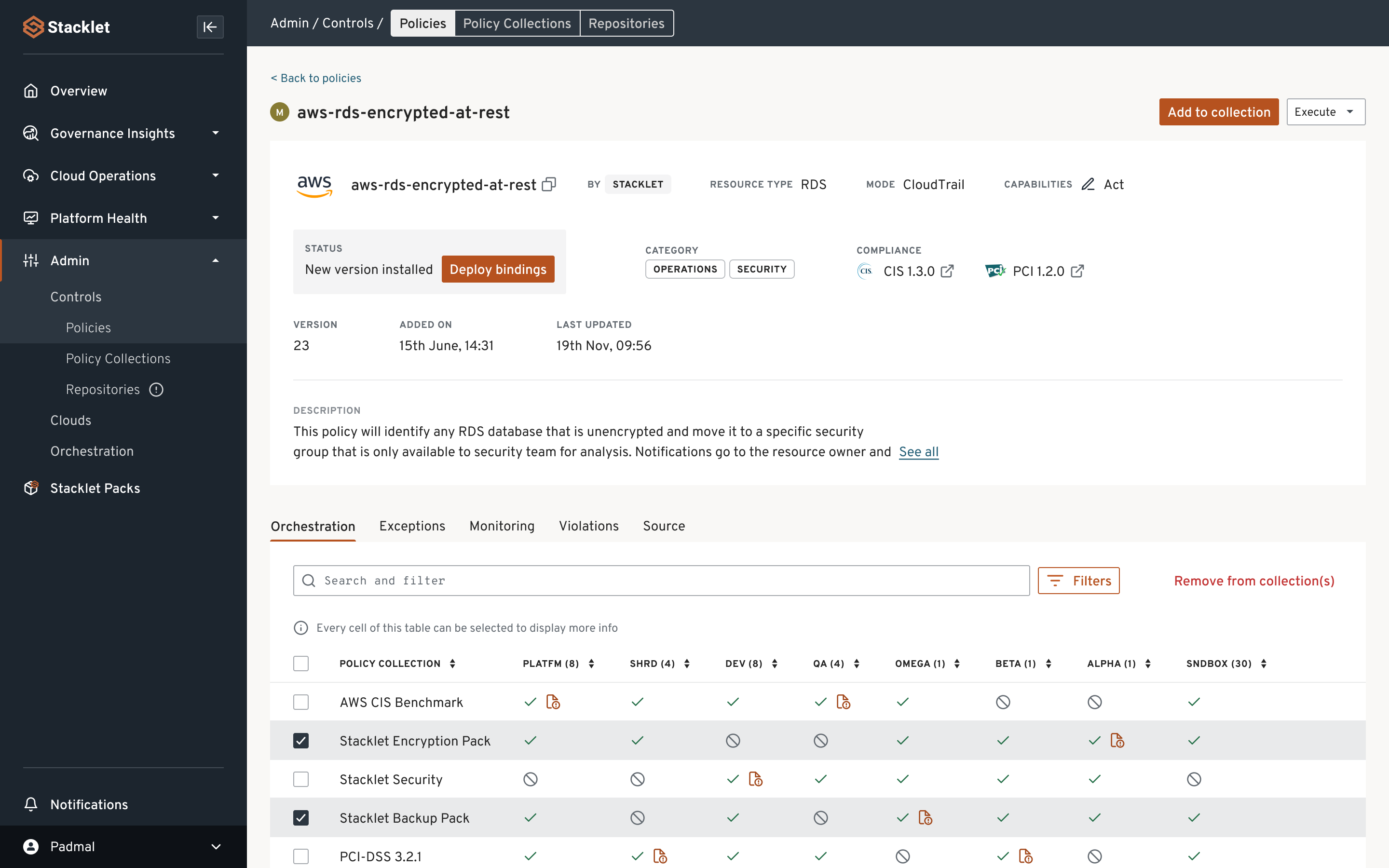
    Stacklet has added collaboration capabilities to its security and compliance platform that automatically groups related notifications, routes them to the right stakeholders and integrates with existing workflows and collaboration tools.

    The Stacklet platform is based on Cloud Custodian, an open source project that provides access to a domain-specific language that enables an IT team to employ YAML files to manage compliance-as-code.

    Stacklet CEO Travis Stanfield said that approach makes it simpler for organizations that have embraced DevSecOps best practices to comply with a wide range of mandates by shifting responsibility for achieving compliance further left toward DevOps teams.

    The latest version of the Stacklet Platform adds communications capabilities that leverage cloud resource configuration and policy metadata to automatically route notifications and escalations. Customizable notification templates add context for teams to collaborate either via email or integrations with Slack, Microsoft Teams and Symphony instant messaging. The Stacklet Platform can also trigger external workflows in tools such as Jira and ServiceNow to track issue resolution and generate reports.

    Ultimately, the goal is to make it simpler for IT teams to prioritize their compliance remediation efforts by keeping everyone involved continuously updated, said Stanfield.

    The number of compliance and security issues that organizations are experiencing in cloud computing environments is especially problematic. Developers often employ infrastructure-as-code (IaC) tools to provision cloud infrastructure. Unfortunately, they typically lack security and compliance expertise, which then results in large numbers of misconfigurations.

    The Stacklet platform is designed to give DevOps teams a way to prevent compliance and security issues using a compliance-as-code framework that spans multiple cloud platforms rather than requiring DevOps teams to employ a different set of compliance tools for each cloud platform on which applications are deployed.

    It’s not clear yet how far left responsibility for compliance will shift. In theory, organizations could avoid penalties if compliance issues are addressed before an application is deployed in a production environment. However, the teams that manage compliance in larger enterprises today are even further removed from DevOps teams than their cybersecurity counterparts. It may be several years before the cultural divide between these teams is bridged. In the meantime, many DevOps teams are taking it upon themselves to manage compliance as code to prevent unexpected issues from arising at the last minute before deployment.

    Overall, the goal is to enable DevOps teams to enforce compliance policies without slowing down the rate at which applications are built and deployed. The hope is that the adoption of compliance-as-code and DevSecOps best practices will address that issue. In fact, as the pace at which applications are deployed continues to accelerate to support digital business transformation initiatives, the number of potential compliance issues steadily increases. More troubling still, the greater the number of compliance issues there are, the more likely it becomes that cybercriminals will find a vulnerability to exploit.

  • Sentry Acquires Specto to Add Analytics Tool for Observability

    Sentry Acquires Specto to Add Analytics Tool for Observability

    Sentry this week announced it has acquired Specto, a provider of a set of tools for analyzing the performance of mobile applications.

    As the number of mobile applications being deployed continues to expand, developers are being asked to manage them as part of a general shift left that requires them to take on more accountability for how well their applications run in a production environment.

    Sentry CEO Milin Desai said today the Specto tools are focused on making it easier for developers to determine how mobile applications are running, but that the plan is to expand that analytics capability to a wider range of applications.

    As the responsibility for applications continues to shift left toward developers, the need for observability and monitoring tools that developers can easily use is becoming more acute. Sentry already provides a JavaScript software development kit that enables developers to insert a small amount of code in their application to track, for example, how many times an application failed. The Specto tools will take those observability capabilities to a deeper level by enabling developers to analyze a wider range of metrics collected, said Desai.

    Of course, DevOps teams are already collecting metrics, as well. Sentry has worked with partners such as GitLab and GitHub to provide a plug-in that makes it possible for DevOps teams to see the same metrics that developers are now using to manage applications. The goal is to make it easier for developers and IT operations teams to collaborate around a common set of metrics, said Desai.

    The rate at which responsibility for the management of applications is being shifted left, of course, varies widely. Some organizations continue to prefer to have developers mainly focus on writing code. However, Desai said Sentry is encountering more instances where site reliability engineers (SREs) are providing Sentry tools to developers as part of an effort to provide them with more insight into how their applications are running in a production environment.

    Historically, IT operations teams have relied on application performance management (APM) platforms to manage IT operations. Those platforms are now evolving into observability platforms that promise to provide more context by correlating events as they occur across both applications and IT infrastructure platforms. That approach, however, typically requires developers to insert agent software into their applications. Once inserted, that agent software needs to be maintained and updated within the context of a larger DevOps workflow.

    The Sentry approach provides developers with a tool for collecting data from an application that, after being embedded in the application, consumes just tens of kilobytes of memory. That approach eliminates the need to rely on much larger agent software to achieve observability.

    Regardless of how developers go about instrumenting their applications, the overall state of observability clearly needs to improve as application environments become more complex. The issue now is determining how best to achieve that goal in a way that benefits both developers and DevOps teams alike.

  • Securing the Software Supply Chain with Behavioral Analysis

    Securing the Software Supply Chain with Behavioral Analysis

    Lately, software supply chains find themselves in a very interesting and uncomfortable position—the industry spotlight—and not in a good way. While significant and costly breaches such as  SolarWinds or Kaseya make front-page news, supply chain attack tactics (e.g. typosquatting or dependency confusion) that target package managers such as npm, PyPI or WinGet can poison downstream applications or compromise developer credentials.  

    The software engineering community has been steadily increasing its use of third-party and open source solutions to help create new offerings. In fact, over the last five years, there has been a 259% increase in the use of open source.

    One reason for this is the simple fact that creating new applications takes time and can strain budgets that are already tight. With open source code, software engineers gain fast access to pre-existing code that’s already demonstrated a proven ability to address the very unique challenge they are looking to solve. By removing the need to reinvent the wheel, the development timeframe is accelerated, the costs are lowered and teams are freed to focus on the creation of new and unique features that the customers demand.

    At this point, turning to third-party code may seem like a no-brainer. However, it can also open the door to potential risks. This is especially true with engineers who, rather than checking software to ensure it is secure and compliant, take the providers’ assurances as gospel. 

    They are not alone. Other groups will try to conduct their initial due diligence at the onset if that’s possible. Soon after they then ease into a “set it and forget it” approach, where they fail to update the code over time. As a result, while the code may appear secure initially, vulnerabilities can emerge over time, and if the software is not continually updated, bad actors can leverage an unprotected window of opportunity. In fact, according to Enterprise Security Group’s “Modern Application Development Security” eBook, 48% of organizations regularly push vulnerable code. The same research also found that 60 percent of organizations have had production application vulnerabilities exploited.

    Organizations conduct static application security testing (SAST) and dynamic application security testing (DAST) to assess pre-production code vulnerabilities. They will also scan with AV before releasing software, examine signing certificates, and code quality. Yet, despite these efforts, they remain challenged by gaps in security processes and the ability to sufficiently inspect large, complex and multi-layered software packages. What’s missing is the ability to conduct in-depth analysis to pinpoint behavioral differences between compiled software versions.  

    Malicious tampering can often involve changing how the software interacts with the system on which it is deployed.  Differential behavior analysis highlighted below makes it easier to detect those unusual changes. For example, having an application suddenly add a pre-install script that downloads files via certutil is highly unusual. If the addition was planned, reasons for the change would be well documented and it would be associated with a significant new feature. For this type of change to happen in any other scenario is suspicious and deserves further investigation before the software is released. In this case, such action would have caught ua-parser-js developer’s account compromise.

    supply chain

    With the software supply chain at risk and with shared code the new normal, what’s needed is software assurance. 

    Software assurance allows teams to inspect every application layer within an installation package for the presence of software tampering, malware and other indicators of software supply chain attacks.   

    Begin the software assurance process with the deep inspection step through recursive package decomposition. The resulting software bill of materials (SBOM) becomes so much more than a build manifest (a list of components that should be in the final build). It becomes the means to determine exactly which components have unacceptable build quality or those that contain unwanted software behaviors. This enables developers to verify the code they are working with and take appropriate action to protect their customers and partners from the majority of software risks. These assessments include:

    • Software grading: The software package and every included component can be graded based on the types and severity of security issues found. Using a grading system makes it easy for software buyers to gauge the level of risk posed by a software package and determine whether additional deployment measures can be taken to mitigate those risks. For developers, component grading makes it easier to prioritize their remediation efforts and aids in the selection of higher-quality third-party components.  
    • Application hardening: Activating specific build or compiler options can mitigate vulnerabilities and protect applications against attack—but only if they are implemented correctly. Assessing whether these mitigations are correctly implemented ensures that these protection mechanisms will work as expected. 
    • Binary behavior analysis: This allows teams to fully understand how each software component interacts with the system on which it will run. The ability to understand third-party component behaviors, even when developers have no access to the source code, delivers a more comprehensive understanding of supply chain risks. Checking for unusual software behaviors or unexpected behavioral changes between one version and the next is often the only way to identify software tampering by a malicious actor. The ability to have this final check before distribution enables software developers to validate that the software being released is trustworthy.

    For companies that are using software to create business value or producing software that is mission-critical for their customers, turning a blind eye or making software assurance assumptions can no longer be tolerated. In today’s climate where increasingly sophisticated threats loom, inspecting software and monitoring updates for signs of tampering, malicious or unwanted additions is essential and must become a part of standard software development practice. 

  • Why Do You Need GitHub Backup?

    Why Do You Need GitHub Backup?

    You’ve probably heard the joke that there are two types of people in IT: Those who do backups and those who will start. Though it’s still valid, this joke has become less relevant to businesses and professionals. The IT industry has been increasing expenditures on security for years, and backup is a critical area. However, despite the growing awareness of the need for backups and the wide availability of modern backup solutions, the problem still exists. The number of security breaches is growing, and the topic of data security looks like an endless arms race. So what can organizations do?

    First, let’s analyze some data and trends. Year over year, the number of cyberattacks, especially ransomware, is increasing. The year 2020 saw attacks intensifying due to the pandemic and the sudden shift to remote work, for which, unfortunately, not everyone was prepared. Once organizations got better at enabling effective work-from-home models, the hope was that everything could settle into a new normal. Unfortunately, the new norm became these increased attacks.

    It’s a bit like the metaphysical yin and yang—two opposing but complementary forces. One drives the other. Suffice it to say that the estimated cost of the global damage caused by ransomware in 2021 is as high as $20B! And a ransomware attack occurs, on average, every 11 seconds around the world.

    According to an Identity Theft Resource Center (ITRC) report, by the end of September 2021, there were more incidents of this type than during all of 2020. The authors of the report emphasized that they found 26 cases where cloud databases were unsecured. As a result, hackers were able to access confidential data belonging to 99 million people.

    Git Threats: Are my Bitbucket/GitLab/GitHub Repositories Secure? 

    Back in May 2019, ransomware attacks impacted hundreds of repositories on GitHub, GitLab and Bitbucket. The attack wiped away all the data and left only one piece of information: The amount of ransom demanded and a method of payment. Eventually, most of the data was recovered but the cost and the amount of time spent recovering from the attack was enormous.

    According to the Cisco Benchmark Study, approximately 40% of companies experienced downtime longer than eight hours due to a major failure. And 39% reported that at least half of their systems had been affected by a serious breach. According to IBM, the total average cost of a data protection breach on a global basis is as much as $3.86M, and the highest ransom demanded by cybercriminals in 2020 was $15 million. These numbers are scary. On the other hand, in most cases of successful ransomware attacks, the ransom is ultimately not paid; even if organizations do not pay the ransom, the mere fact that they fell victim and experienced failure or downtime can be very expensive.

    GitHub as Backup Tool

    GitHub provides many useful security tools. However, we must be aware of two things: What does GitHub backup really mean and what are its features? And what responsibility do cloud services providers have versus users’ responsibility for security? Let’s start with the latter.

    Most cloud service providers (including Amazon, Microsoft, Google, IBM, Salesforce, GitHub or Atlassian) operate on the basis of the so-called shared responsibility model. Users of cloud services most often assume that providers are fully responsible for their protection. However, providers are primarily responsible only for ensuring the security and availability of infrastructure, software and access, period. Users are responsible for the security of the business data stored as part of these services. So users themselves have to take care of backup and disaster recovery plans and solutions. In short: Providers are responsible for the security of the cloud itself and users are responsible for data security in the cloud. And at this point, it is worth pointing out that, according to data from the UK’s CybSafe, in 2019, 90% of data breaches were caused by user error.

    It can happen to any of us—a ransomware attack, phishing, loss of access to a GitHub account or an entire computer or simply overwriting another developer’s work in a repository. It affects both individual users and large corporations. In July of 2019, Ubuntu Security reported that the credentials for a company-owned GitHub account were compromised. Hackers used these compromised credentials to create repositories, issues, pull requests, etc. The attack did not cause a major crash, but repairing the damage took some work and restoring some repositories or issue trackers to the previous state was difficult.

    There are some common features any good backup should have:

    • Automation (i.e. daily backups)
    • AES encryption with its own encryption key
    • Versioning
    • Long-term data retention
    • Disaster recovery process
    • Easy monitoring (audit logs, email notifications)
    • Central management
    • Multi-tenancy (to manage admins, privileges and roles)
    • Scalability

    Based on these criteria, GitHub (and other similar hosting services) cannot be considered a proper backup tool. GitHub is a great open source project, but its purpose is completely different.

    How to Back Up Manually

    Since the cloud service itself is not enough, how can you take care of GitHub backup? Well, you could do it on your own. And often, especially in small businesses, this is the preferred method. It may seem like a good idea at first. Knowing Git well, we can create appropriate scripts that create backups for us that give us full control over what is happening without having to pay anyone for it. But this is very risk and not profitable in the long run. Disk space costs money; our employees’ time to create scripts and perform the backup is another cost. And the most important thing, in this case, is that these scripts must be maintained and updated all the time, so they constantly generate additional costs. Any change in such a script may cause an error and, as a result, deprive an organization of a working backup. Of course you could also create an appropriate mechanism to test it, but that’s an additional cost. Manual GitHub backups do not end with writing a single script.

    I’ve experienced this myself. In one project, backups were generated using such a script and then kept on our own servers. It was cheaper this way. But we did not have any validation of the created backup. One day, while updating the backup scripts, we did a manual test and it turned out that we had a serious problem—the backup was created correctly but its name did not change, so we kept overwriting the same archive constantly! The effect? It turned out that we didn’t have any copies older than one month! Luckily for us, they weren’t needed because the systems and databases were working properly at that time and there weren’t any incidents, but it makes me cringe just thinking about “What if …?”

    All in all, manually writing backup scripts is not a very good idea for many reasons. The low cost of this solution is only theoretical; with time, the cost of maintaining this mechanism increases and, in practice, often only one or two people are responsible for it, which creates additional risk. Okay, you might have more control, but overall you are wasting time and money. The backup itself is also not enough, because you need a proper restoration solution for systems or data in the event of an incident. There’s also the question of how to create a backup of the script that creates the backup? Are you sure you cannot make better use of your employees’ working time?

    How Much Does it Cost?

    It is difficult to accurately measure this; it all depends on the level of complexity of systems, the number of repositories, the skills of your team, etc. However, you can estimate how much the lack of access to services or programmers’ downtime will cost. You can also calculate the development and maintenance costs of writing, testing, maintaining and updating your own backup scripts. The history of GitHub attacks and crashes shows that the data is usually recoverable, which is good news. On the other hand, the time when services are unavailable or when teams are unable to work can be very costly.

    Third-Party GitHub Backup Tools

    Another solution—and, in my opinion, a better one—is to use third-party backup software.

    In fact, in the GitHub documentation, it is recommended:

     “Backing up a repository: You can use the API or a third-party tool to back up your repository.”

    If you can use the GitHub API, why do you need a third-party GitHub backup tool? Well, first of all, such applications are created by experts in a given field who have knowledge, experience and stay up-to-date on the current security trends. Second, these solutions are ready and available right away; you don’t have to spend time and money reinventing the wheel. Yes, there is a cost, but in the long run (taking into account the factors described earlier) the cost usually turns out to be much lower than a bespoke solution. Outsourcing backup management responsibilities may be incredibly beneficial and will allow us to focus on developing our business instead of managing GitHub repository backup all over again.

    When it comes to backup, be smart. If external third-party tools allow us to develop our products faster and more efficiently, then we should not hesitate to use them. And never forget to implement proper backups and disaster recovery plans. Taking care of it today will help ensure a more secure future.


  • GraphQL as a Meta Layer

    GraphQL as a Meta Layer

    There’s a lot of interest in GraphQL lately. The query language is excellent for data retrieval, and it could act as a more usable mechanism to evolve the traditional REST API integration approach. But as adoption grows steadily, architects are now considering the implications of managing GraphQL at scale.

    Certain issues may hinder GraphQL in practice. To review, security concerns require a nuanced approach to authorization. This is because it wraps multiple data retrieval points into a single request. Without native caching, performance could also suffer. Changeability is also required to continually update the graph, which may ruffle feathers with those seasoned in the world of REST where a guiding tenet is to build for longevity using web-compliant methods.

    According to Jens Neuse, CTO, WunderGraph, there is a simple way to mitigate most of these issues and harmoniously work with various API styles. To Neuse, the core problem is that GraphQL is not meant to be exposed over the internet. Instead, he advocates for interacting through a gateway. Such an intermediary would enable more implicit calls and proper authentication and authorization for specific underlying functions and resources. Using GraphQL as an internal integration layer could also help combine disparate APIs into a similar language, exposing GraphQL-like usability for frontend developers while allowing them to hit any API style on the backend.

    Below, we’ll consider the drawbacks of exposing GraphQL directly and see how an intermediary layer could benefit development. We’ll also uncover what open source software is on the horizon that could power this setup.

    Why GraphQL Shouldn’t be Exposed Publicly

    Facebook, the creator of GraphQL, uses an internal GraphQL API to power all of its apps across Android, iOS and web browsers. (This is not to be confused with their public Graph API). Interestingly, if we look at Facebook’s use of GraphQL, we see these endpoints are not exposed to the public web at all.

    It’s true. Open up Developer Tools in Chrome, and you’ll see there is not a single mention of a root HTTP endpoint like https://api.graphql/. Functions name GraphQL, sure, but they call it more implicitly. Other companies, like Twitter and Airbnb, use a similar abstracted approach to interact with a private GraphQL.

    In fact, most GraphQL APIs are not public. APIs.guru only charts 35 public GraphQL APIs—notable services include GitHub’s GraphQL API, Shopify Storefront and GitLab. This number is minuscule compared to the total number of public APIs, at over 24,000 according to ProgrammableWeb.

    A Layer In Between

    If we treat it as Facebook intended (and how they use it in production today), it could reverse the issues above, said Neuse. “These problems come down to our core belief that GraphQL is not supposed to be exposed over the internet,” he said.

    But if clients do not access a GraphQL endpoint, what are they interacting with? According to Neuse, the ideal architecture involves a layer between the client and the server. Such a layer would validate queries and represent verbose calls with simple functions. The process would involve a handshake as follows:

    1. Take query, store it on a server.
    2. Validate it; make sure it’s not malicious.
    3. Send back a handle to the client.
    4. Then, execute the query.

    Such a process could also enact universal policies on a per-function basis, thus solving potential authorization issues when fetching data from multiple backend services with a single query.

    “The issue is that using the query language comes with a cost,” Neuse said. “Not exposing GraphQL directly but ‘compiling’ it to a JSON-RPC API when deploying solves these problems.”

    Thus, the scalability issue isn’t so much an issue of size but of access. “GraphQL can be very valuable, even in small environments,” said Neuse.

    The Next Evolution of a Virtual Graph

    Another potential benefit of using GraphQL as an intermediary is combining APIs; a “virtual graph,” as Neuse calls it. This virtual graph offers a common integration language to interact with various API styles, whether REST, GraphQL, gRPC or webhook, in a GraphQL-like manner.

    Consider the ease with which package managers like npm enable developers to instantly install dependencies. For example, installing a package like React.js is as simple as initiating the command npm install react within Terminal.

    On the other hand, the API integration is very cumbersome. Users must read through documentation, create an account on a third-party site and download an SDK to call the service in their preferred language. So, why isn’t looping in dependencies like APIs and cloud services as simple as other common dependencies?

    According to Neuse, one reason is that the REST paradigm is obsessed with the resource constraint—aside from HATEOAS, it lacks a concept of relationships between data and fields. A virtual graph could enable a straightforward process similar to package managers, said Neuse. Interestingly, the WunderGraph team plans to open source a project that allows just that ability.

    GraphQL as a Meta Layer

    Many folks assume that GraphQL and REST are mutually exclusive. However, as we’ve seen, there are ways to use them in combination. Plus, with an abstraction layer, the REST versus GraphQL comparison becomes just an underlying technical nuance.

    “If you compare GraphQL to other specifications, like OpenAPI spec, you see GraphQL has the fastest-growing community,” said Neuse. As of 2021, JSON Schema is the most popular, used by 75% of developers, followed by Swagger 2.0 (54%), OpenAPI 3.0 (40%) and GraphQL (31%) according to the Postman State of API Report. While this number may be small now, 35% of respondents also said they plan to use GraphQL in the coming year.

    “It’s a very, very interesting movement,” said Neuse. What began at Facebook as a framework for data fetching for React apps has now expanded into something much bigger. Within this second new movement, largely driven by companies like Apollo and Hasura, GraphQL becomes the new data layer, he said.

    “Still, everybody is looking at GraphQL thinking they must migrate from REST—this is the wrong direction,” said Neuse. Instead of migrating all existing REST APIs to GraphQL, he predicts the industry will coalesce on using GraphQL as the integration language for querying REST APIs. A meta layer, if you will.

    Of course, meta has been a bit co-opted lately with Facebook’s rebranding …

  • ServiceNow Acquires DotWalk to Gain AI for App Testing

    ServiceNow Acquires DotWalk to Gain AI for App Testing

    ServiceNow today revealed it has acquired DotWalk to gain an artificial intelligence (AI)-infused application testing capability that runs natively on its software-as-a-service (SaaS) platform.

    Joe Davis, senior vice president for platform engineering at ServiceNow, said that testing capability will be made available free of charge to all organizations that build custom applications on the company’s platform.

    The number of custom applications being built on the ServiceNow platform has risen sharply since the start of the pandemic. Many organizations have taken advantage of the low-code tools provided by ServiceNow to build a range of applications that use the company’s SaaS applications as a foundation. That approach enables them to more quickly build applications that drive a wide range of digital business transformation initiatives.

    Davis said ServiceNow is committed to enabling organizations to improve the quality of those applications using a DotWalk testing capability that eliminates the need for developers to build and run tests themselves or for organizations to hire dedicated application testing teams.

    ServiceNow

    ServiceNow decided to acquire DotWalk because the company built a testing platform using machine learning algorithms specifically for the ServiceNow platform, noted Davis. The DotWalk tools also analyze logs in the background to identify and validate error sources that can arise during any application upgrade process.

    While there are a large number of professional developers that build applications on the ServiceNow platform, the company is also trying to encourage more so-called citizen developers to build applications. The challenge is many of the end users building applications lack an appreciation for design, security and what it takes to make sure an application scales as more users employ it. Testing tools infused with AI should make it easier for developers, regardless of experience, to build enterprise-class applications.

    Of course, professional developers will also benefit from AI-infused testing tools. Many developers have a tendency to cut short the application development process as they rush to meet application delivery deadlines. The end result, however, is that an application must be updated almost immediately after it has been deployed in a production environment. Testing tools that make use of AI will enable professional developers to more easily run tests they don’t have to build and then maintain, said Davis.

    One way or another, the number of custom applications built on SaaS platforms will increase as organizations digitize more processes. In the last year, more organizations have become adept at extending these platforms using a wide range of low-code tools that automate many aspects of application development. A significant percentage of those organizations are now also adopting DevOps best practices to better manage the pace at which those applications are developed and deployed.

    In the meantime, it’s too early to say precisely how AI will transform application testing. However, one thing that is certain is that even as the number of custom apps grows, applications will be more thoroughly tested before being deployed in a production environment.

  • Netlify Acquires OneGraph to Integrate GraphQL APIs

    Netlify Acquires OneGraph to Integrate GraphQL APIs

    Netlify this week announced it has acquired OneGraph, a provider of a platform that simplifies the integration and management of application programming interfaces (APIs) based on the GraphQL query language.

    At the same time, the company is committing $1 million to sponsor open source projects and setting aside $10 million for a Netlify Jamstack Innovation Fund that will help drive the development of emerging technologies. Those technologies will be consumed via the platform the company created based on Javascript, APIs and a markup language (referred to as Jamstack) to accelerate web application and website development. Rather than becoming investors in those companies, Netlify intends to make those funds available to advance the development of technologies that benefit the overall community.

    Fresh from raising an additional $105 million in funding, Netlify CEO Matt Biilmann said Netlify is committed to an ecosystem through which developers will be able to consume a wider range of services via both REST and GraphQL-based APIs. OneGraph will provide the core foundation for adding support for GraphQL to the Netlify platform, he noted.

    Overall, Netlify is trying to reduce the friction that developers encounter building web applications and the sites they run on, added Biilmann. That’s becoming especially critical as developers increasingly build microservices-based applications that invoke APIs to consume backend services that are made available via the Netlify platform, he added.

    Earlier this year, the company made available Netlify Build Plugins that provide DevOps teams with a set of continuous integration/continuous delivery (CI/CD) workflows for building websites and web applications. Designed to be launched from within a Netlify platform, those plugin makes it possible to build a web application or website that can be launched directly from within a Git repository.

    The overall Jamstack philosophy enables DevOps teams to separate the development of frontends and backends of websites and applications. That approach is agnostic as far as any specific JavaScript framework is concerned, but it does define a way to automate the build process for a web application or website.

    A recent survey of more than 3,000 Jamstack developers published by Netlify finds one-third of survey respondents have worked on sites serving millions of users over the last year. Nearly two-thirds of survey respondents (62%) work outside the tech industry, including in advertising and marketing (21%), media and publishing (14%), education (14%), financial services (13%) and business support and logistics (13%). Well over a third (38%) work for a technology company. About a quarter (26%) have more than 10 years of experience. Top Jamstack benefits cited by all types of developers are performance, uptime, speed of development, security, compliance and avoiding vendor lock-in, the survey found.

    Jamstack is, of course, not the only framework for building web applications and the sites they run on. DevOps teams are increasingly being tasked with building a much wider range of external applications to drive digital transformation initiatives that are typically built using some type of JavaScript framework. The next big DevOps challenge, of course, is that as the number of applications being built continues to increase, so does the number of applications that need to be maintained and continuously updated.