Category: DevOps Toolbox

  • Kyndryl Aligns with Microsoft in the Cloud

    Kyndryl Aligns with Microsoft in the Cloud

    Following its spinout from IBM, Kyndryl has allied with Microsoft to increase the scope of IT services it provides on the Azure public cloud.

    Stephen Leonard, leader of global alliances and partnerships for Kyndryl, said that as part of this initiative, Kyndryl will be expanding the scope of the services it provides to both organizations building and deploying applications as well as those looking to migrate existing applications to the Microsoft Azure cloud.

    Over time, Kyndryl will expand its cloud services to include additional public clouds as part of a larger effort to enable organizations to embrace a hybrid cloud approach to enterprise IT that spans multiple on-premises and cloud computing environments.

    In the meantime, as part of the first partnership established by Kyndryl, the two companies are committing to providing services to address data modernization and governance, security and application workloads infused with artificial intelligence (AI) capabilities. The two companies also plan to establish a co-innovation lab. Microsoft is also committing to establishing a Kyndryl University for Microsoft.

    Leonard said given the overall shortage of IT expertise, more organizations than ever are relying on external IT services to, for example, accelerate application development. Kyndryl plans to work with those organizations to best evaluate where specific classes of application workloads might best be deployed, he noted.

    It’s become increasingly clear that more organizations are attempting to integrate third-party IT services within DevOps workflows. In some cases, that means standardizing on an opinionated DevOps workflow defined by the IT services provider. In other cases, the IT services provider is focused on a specific task such as securely provisioning infrastructure on behalf of developers.

    Regardless of the approach, however, DevOps workflows are evolving into a team sport made up of both internal and external IT professionals that are trying to bridge the cultural divide that always exists between different organizations. Which IT services provider organizations ultimately select often has as much to do with how flexible they are from a cultural perspective as much as it does their technical expertise.

    For its part, Microsoft is counting on IT services providers such as Kyndryl to increase the total number of workloads running on its cloud. Now that Kyndryl is independent of IBM, it is free to establish partnerships that previously would have been more complex to navigate.

    Of course, it’s up to each organization to determine the degree to which they prefer to work with a larger IT services provider versus a smaller rival that may specialize in one specific area or that is simply a better fit for a smaller company. The one thing that is certain is that as IT continues to become more complex, it’s not feasible for organizations to hire all the IT talent they require on a full-time basis. Organizations will need to carefully evaluate when it makes more sense to consume certain IT services as a function provided by someone else versus attempting to hire and retain talent to maintain that service themselves.

  • Nvidia/ARM Wavering | Google Outage Outrage | Backblaze IPO on Fire

    Nvidia/ARM Wavering | Google Outage Outrage | Backblaze IPO on Fire

    Welcome to The Long View—where we peruse the news of the week and strip it to the essentials. Let’s work out what really matters.

    Nvidia Can’t be Allowed to Buy Arm

    First up this week: Nvidia’s faltering attempt to buy Arm: Regulators around the world are alarmed by the idea. And now the UK—the legal home of the company—has taken the next step, which could nix the deal.

    Analysis: RISCy home for ARM

    This matters because ownership of the ARM ISA and the core designs would be a huge strategic stick to beat Nvidia’s competition with. Arm doesn’t make chips—it licenses technology to Nvidia and many of its competitors—AMD, Apple, Broadcom, Samsung and Qualcomm, to name but five. So this deal really shouldn’t go through, regardless of Nvidia’s fluffy PR reassurances.

    ARM chips aren’t just found in 99% of smartphones, but are an increasing fixture in the datacenter—especially where “performance per Watt” is important. They’re even found in exascale iron, including the Riken Fugaku, the world’s fastest supercomputer.

    Helen Thomas: Nvidia faces tough Arm wrestle

    It is one thing for a regulator to give your deal a thorough going-over. It is another for it to imply publicly that your assurances [aren’t] credible. … Nvidia got both from the UK’s Competition and Markets Authority. … The CMA’s full phase 1 report doesn’t make for easy reading.
    …
    The transaction, which was announced in September 2020, is bogged down in regulatory reviews around the world: … Arm’s “neutral” business model has always made it a difficult acquisition. … Arm licenses its designs to other chipmakers, providing scope to restrict rivals’ access.
    …
    Arm was a political talking point in 2016, when its sale to SoftBank … was waved through with embarrassing ease. There is now a much more muscular political take on UK national security concerns with a particular focus on tech.


    But if it’s owned by a Japanese company, why is the UK getting involved? Glad you asked—Aighearach answers:

    What did they buy? Shares of a UK company. … Then it is a UK company! … Buying shares is buying ownership, but it doesn’t move the company to another jurisdiction.
    …
    This blathering about “sold to a Japanese firm” is getting old.


    Nvidia claims, “The transaction will … boost competition and innovation.” Falmari finds that hilarious:

    Did Nvidia’s spokesperson previously work as a stand-up comedian? Because as jokes go, “boost competition” is a whopper. [Do you think] that’s what a company like Nvidia wants—to boost the competition?


    Google Cloud Outage has Ripple Effect

    Google’s load balancers all went offline for two hours on Tuesday. Aside from the knock-on Google Cloud failures, DevOps tools such as BigCommerce, Datadog, Deno, Discord, Egnyte, Evernote, Linear, Netlify and Toggl were reported to be affected. But perhaps the worst impact was felt by the poor, unfortunate users of Pokémon GO.

    Analysis: Paralysis

    In theory, putting all your eggs in one basket is okay—so long as that basket can reliably stop your eggs smashing on the pavement. But this isn’t the first time we’ve seen Google Cloud issues such as this; I can’t imagine it’s the last.

    Steven J. Vaughan-Nichols: Google glitch triggers major internet outage

    The result? Many of us have seen 404 errors when trying to get to some of our favorite web pages. … There appears to be more major sites having problems than not.
    …
    The specific problem seems to be with the GCP load balancers. These, working with Google’s Cloud Delivery Network (CDN) [are] designed to stop website failures and Distributed Denial of Service (DDoS) attacks by putting your website behind a single anycast IP.


    Are you feeling a touch of déjà vu? jeffbee, too:

    This is a sort of repetitive outage for Google. They’ve wiped out the GSLB configs before.

    A year ago there was also that big outage where they blanked out the whole Gmail delivery config and started rejecting all mail. … Config safety is not their strong suit.


    The #3 IaaS provider won’t get to #2 if it keeps this up. Here’s u/totopapa:

    I’m trying to convince my company to switch from AWS to GCP but an outage like this one is definitely a showstopper.


    Backblaze IPO Burns Brightly

    Backblaze is now NAS:BLZE. In its first week, the stock jumped 60%.

    Backblaze is well known for its tiny-margin consumer backup product and its open-source “storage pod” hardware—but is less well known for its DevOps-focused “B2” cloud storage service.

    Analysis: Can it Avoid Death-by-Packrats?

    Backblaze is trying to grow this newer DevOps business, without losing its classic consumer chops. But many of its former competitors have essentially dumped their “unlimited” offerings—it’s the old tragedy-of-the-commons problem.

    Jordan Novet: Backblaze [goes] public on small valuation and minimal funding

    In an era of blockbuster market debuts preceded by astronomical private financing rounds, Backblaze … a cloud service for backing up data … is a throwback to a time when sub-billion-dollar companies routinely went public to raise capital and build their profile … to win the trust of customers.
    …
    Backblaze shares climbed 24% in their debut on Thursday and another 12% on Friday, lifting the price to $22.31 and giving the company a market cap of around $650 million. … By the standards of its peers, Backblaze is a micro-cap.
    …
    One of Backblaze’s competitors is Amazon, the world’s fourth most valuable U.S. company. … Backblaze currently stores two exabytes of data — that’s 2 million terabytes — and has a half-million paying customers.


    Donovan Jones: Backblaze Targets $100 Million IPO

    The firm provides cloud-based storage services to small businesses and individuals worldwide. BLZE has grown revenue and gross profit impressively through the 2020 pandemic period and the IPO appears fairly valued, so is worth a close look.
    …
    The firm’s financials show strong revenue and gross profit growth. … The firm’s dollar-based net revenue retention rate for 2020 was 114%—a solid result. … The market opportunity for providing cloud-based storage services to small businesses and individuals is large and expected to grow at a material rate. … As for valuation, compared to partial competitor Dropbox, management is seeking the same Enterprise Value/Revenue multiple. [However] the combined revenue growth rate and EBITDA percentage rate … was 3% as of June 30, 2021, so the firm needs improvement in this regard.


    But there’s a long way to go, opines John Kozubik (aka rsync):

    Of the ~500,000 customers, 70,000 are B2 customers and 430,000 are “backup” customers—which are flat-rate “unlimited” users. … Roughly 85% of the user-base are paying $7/mo for “unlimited backup.”
    …
    These flat-rate users are very fickle and price-sensitive. … Roughly 85% of the user-base are paying $7/mo for “unlimited backup.” … It’s a fools errand to pursue this market and I assume the pivot to B2 was to build something more sustainable with a much higher price and usage ceiling.


    The Moral of the Story: Success is a journey, not a destination


    You have been reading The Long View by Richi Jennings. You can contact him at @RiCHi or tlv@richi.uk.

    Image: Kristin Wilson (via Unsplash)

  • Managing GraphQL at Scale

    Managing GraphQL at Scale

    GraphQL, the query language invented by Facebook, has attracted a lot of interest as a means to conveniently access data programmatically. GraphQL structures internal services with a unified schema for data, empowering product engineers to easily grab what they want from many microservices to populate the user interfaces (UIs) they’re creating. By unifying company data into a single graph, GraphQL combines the benefits of SQL with the ubiquity of API access.

    However, GraphQL does introduce some challenges when you’re trying to scale it across a large enterprise and partner ecosystem. For example, since GraphQL channels all requests through a single endpoint, security must carefully segment access to all the underlying infrastructure to avoid data overexposure. Matt DeBergalis, Apollo’s co-founder and CTO, also identified potential issues around changeability and performance when adopting a graph at scale.

    As the use of GraphQL within large organizations grows, development teams will have to overcome these obstacles—especially if companies intend to productize public APIs and reuse the same single graph company-wide. I recently met with DeBergalis for an update on managing GraphQL at scale. According to DeBergalis, we’re still in the early days of the graph revolution. And, future GraphQL maturity will require more rules-based declarative architecture, efficiency improvements and the adaptability to enact agile iteration of graph schemas.

    State of GraphQL Adoption

    So, what is driving the rise of GraphQL? Well, DeBergalis noted three key contributing factors:

    1. Many many microservices. In recent years, there has been an explosion of microservices. These modular services can be challenging to wrangle and are often exposed inconsistently throughout a software ecosystem.
    2. The rise of omnichannel platforms. Product engineers must now port the same data across disparate devices, whether streaming in a browser or on a Peloton screen.
    3. Users expect a hefty, data-rich experience. Expectations are at an all-time high. It’s now expected that an e-commerce shop, for example, will include product recommendations, auto-fill keyword search, pricing by geography and many more advanced features.

    Juggling all these factors creates a “complexity bottleneck,” DeBergalis explained.

    GraphQL responds to such complexity, helping unify the backend to enable product developers to fetch precisely what their client applications require. And, GraphQL adoption took off pretty quickly, particularly among product engineering teams, DeBergalis added. GaphQL plays nicely with familiar languages and frameworks like JavaScript, React and Relay. It’s also a bit different than previous trends, with demand being driven more by the database folks; “query people are really leading the charge,” he said.

    With the right technology stack, developers can add a graph layer between the underlying core APIs and the UI they are building, creating a universal API with a self-documenting schema. “For the developer, the amazing thing about GraphQL is throwing away all this boiler code,” DeBargalis said. GraphQL acts as “a foundation for tomorrow” to help deliver future business requirements, he said.

    With regard to architectural styles for APIs, 94% still use REST and 31% use GraphQL, according to the 2021 State of API Report from Postman. Though this percentage may seem small now, GraphQL adoption is steadily growing among large companies, such as PayPal, Netflix, Shopify, GitHub and Airbnb.

    Three Issues When Scaling GraphQL

    Using GraphQL is like using a mobile phone. You wouldn’t want to use a different phone every time you called a different number, would you? You would rather have all your contacts accessible from the same device. Similarly, GraphQL excels the more functionality is added.

    “Due to the network effect, a graph becomes more interesting as we publish more into it,” said DeBergalis. “What we have found is that GraphQL is most interesting and valuable at scale.” So, what are some inevitable consequences of GraphQL at scale? DeBergalis outlines three main architectural issues.

    Performance

    Performance downsides are one disadvantage that developers often cite when considering GraphQL. GraphQL has no built-in caching features, and the payload query could introduce additional latencies. Mitigating lower-level issues around throughput and reliability will likely require additional tooling from the community, DeBargalis said. This is partially why the Apollo team has begun to embrace Rust in new attempts to make infrastructure for GraphQL routing hyperefficient.

    Changeability

    A second problem enterprises may encounter when scaling GraphQL is embracing agility for such an all-encompassing fabric. “The companies that do GraphQL really well change it all the time—they treat it like a product,” said DeBergalis. This agility is at odds with the traditional REST API approach of building for longevity, which makes that approach extremely averse to breaking change.

    The reality is that when a company embraces a single graph, it may be pushing hundreds of schema changes every day. Different internal teams may maintain their own slice of the graph, defining it differently. Plus, maintenance roles may shift from team to team over time, noted DeBergalis. “If you try to waterfall what your inventory model should look like, you won’t get anywhere,” he said.

    Balancing change and stability will likely require a two-pronged approach to GraphQL. You want to continually iterate the graph with experimental features but also depend on certain functionality to preserve backward compatibility for client integrations. Satisfying both sides will likely require a change management strategy for iterating quickly, as well as enterprise-grade service level agreements (SLAs) to retain a firm bedrock on which to build more permanent data models.

    DeBergalis also described how observability is important for obtaining a clear picture of graph environments. This is one area where GraphQL shines—since clients request precisely what they need, you are never left wondering which methods are fetched but not implemented in production, as could happen with REST API management. According to DeBargalis, tracking fine-grained GraphQL usage with KPIs can help direct how the data model should evolve over time.

    Authorization

    Finally, perhaps the most significant concern surrounding GraphQL at scale is apportioning the appropriate access to users and devices. As a single unified endpoint can connect to a vast array of data behind the scenes, large GraphQL implementations will require a strategy for how that one unified graph can be implemented in parts.

    Without the proper access control, GraphQL could improperly expose personally identifiable information (PII). For example, a FinTech company may have a rule that requires a customer service representative to only have visibility into a customer’s transaction history if the customer has filed a support ticket in the last few days. Or consider data custody—a business working in the EU must comply with regulations on where data can and can’t live.

    Safeguarding GraphQL will require a declarative setting that integrates authorization control and context into GraphQL queries. To implement this, DeBergalis advocated for a command-and-control style. First, you build the schema around the data and problem statement. Next, you integrate rules field-by-field, marking sensitive touchpoints as PII.

    With rules baked into the query, you can have a more solid understanding of the surrounding context. “Authorization is actually a lot better at graph level,” said DeBergalis. “It’s the layer that has semantic understanding.”

    Future of GraphQL Scalability

    “Once you have a graph, you want to use it for everything,” said DeBergalis. The heritage of GraphQL is JavaScript, the language of the product world. And, the graph approach delivers an excellent experience for product engineers. The sheer usability and productivity benefits of GraphQL indicate incredible potential for projected use in the years to come.

    As we’ve discussed, scaling GraphQL across an enterprise will likely require performance improvements, a path for schema adaptability, policies to handle authorization for queries and greater accountability for business metrics. While GraphQL certainly has existing momentum among a subgroup of engineers, there are plenty of opportunities to introduce more training and educational curriculum to spread greater awareness.

    Furthermore, for those coming from a traditional REST API mindset, GraphQL is a bit of a new paradigm that will require some massaging to expose graph endpoints as a productized API. Doing so will likely involve marking select parts of the larger graph to expose to partners. “Starting with an internal GraphQL use case works really well, but productization around GraphQL is coming,” said DeBergalis.

    The value of a unified graph is so strong, and the bottom-up hunger for a graph environment is so intense that increased GraphQL adoption feels like a given. “At this stage, the focus is on expansion,” said DeBergalis. “How do we roll this out to more teams?”

    “We know there’s going to be a graph in every company—not a lot of little ones,” said DeBergalis. “Every company’s going to need a graph.” When that day comes, the architectural challenge will be breaking apart the graph into pieces. “That’s the next big frontier.”

  • Google Makes Fuzz Testing Integration Tool Available

    Google Makes Fuzz Testing Integration Tool Available

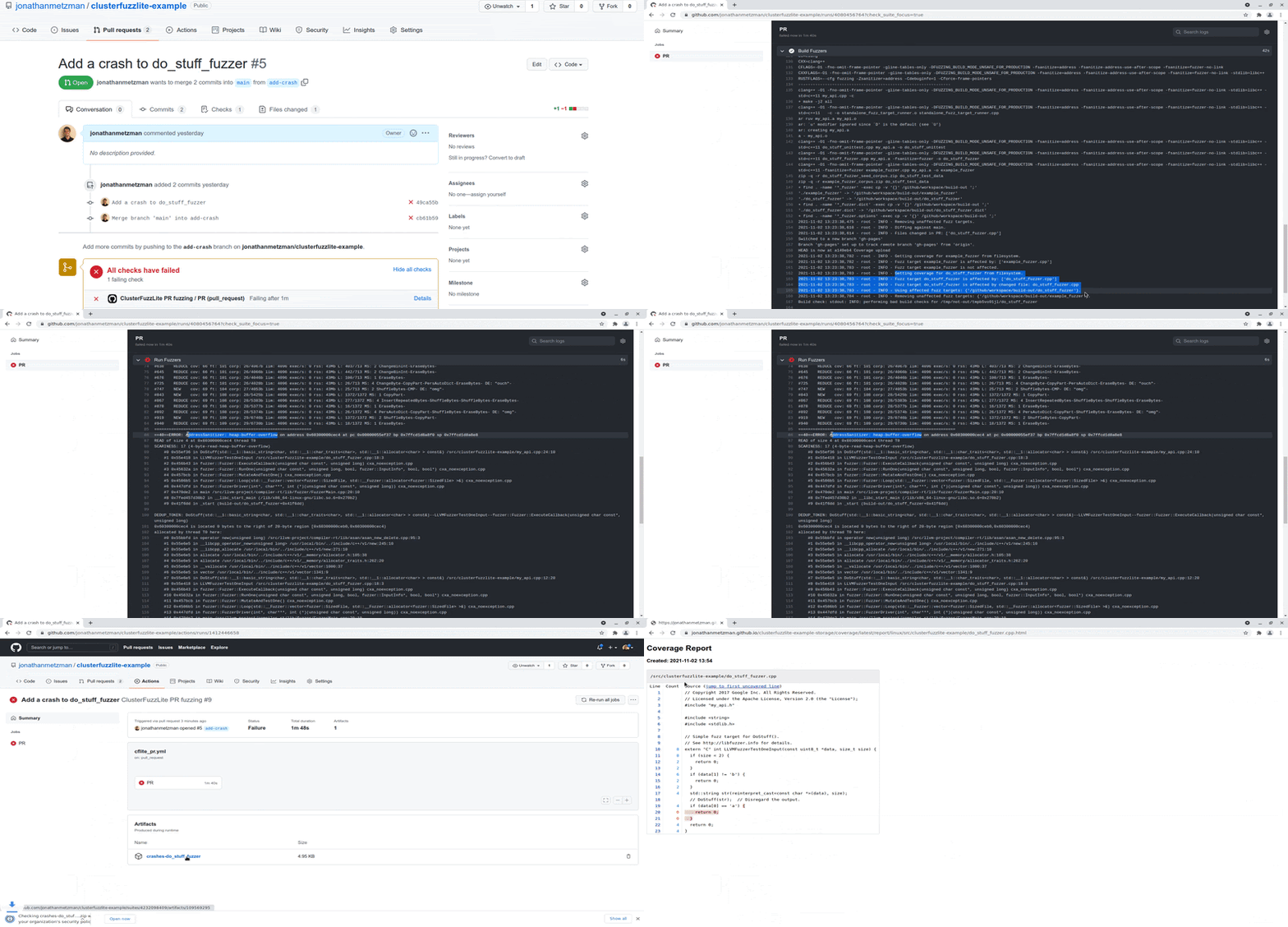
    Google today made available a ClusterFuzzLite tool that makes it simpler to incorporate fuzz testing into a DevOps workflow.

    Fuzz testing refers to an automated software testing technique that involves providing invalid, unexpected or random data as inputs to an application to discover issues such as potential memory leaks.

    Jonathan Metzman, a senior software engineer for Google, said ClusterFuzzLite is a lighter-weight version of a tool that Google makes available to its internal development teams. It is not a fuzz testing tool itself, but rather a tool that makes it easier to surface the results of a fuzz test within a DevOps workflow. Once those results are surfaced, it then becomes easier for developers to address issues before an application is deployed in a production environment.

    Core capabilities enabled by ClusterFuzzLite include continuous fuzzing, sanitizer support, corpus management and report generation tools. The goal is to make fuzz testing more accessible to a broader range of developers as part of an overall effort to embrace DevSecOps best practices, noted Metzman.

    ClusterFuzzLite currently supports GitHub Actions and Google Cloud Build, but Metzman said it is easily extensible to other DevOps platforms. It is designed to run as part of a DevOps workflow by adding a few lines of code to a continuous integration/continuous delivery (CI/CD) workflow.

    Google has already made ClusterFuzzLite available to open source projects, but is now providing additional access for commercial developers. Since its release in 2016, over 500 critical open source projects have integrated into the Google fuzz testing program for open source software, resulting in over 6,500 vulnerabilities and 21,000 functional bugs being fixed.

    In the wake of recent guidelines issued by the U.S. National Institute of Standards and Technology (NIST) that were themselves in response to an executive order issued by president Biden, the number of organizations using fuzz testing is expected to increase now that NIST has determined that fuzz testing is a minimum standard requirement for code verification.

    For several years, Google has been making a concerted effort to improve the security of open source software. The challenge for all developers is finding a way to build more secure applications without slowing down the rate at which they are deployed. Fuzz testing makes it possible to identify issues much earlier in the application development life cycle versus just before an application is deployed.

    Less clear, of course, is whether developers are starting to use these tools on their own or if the increased adoption is because of a concerted effort by their organization to embrace DevSecOps best practices. Regardless of the motivation, however, the overall state of application security should continue to improve as it becomes simpler for developers to invoke more advanced testing tools.

    In the meantime, organizations of all sizes are reviewing how they construct software in the wake of a series of high-profile security breaches. In theory, at least, increased focus on software supply chains should prevent issues from arising after deployment when they become much more costly to remediate.

  • Neo4j Will Use Funds to Expand Managed Cloud Database

    Neo4j Will Use Funds to Expand Managed Cloud Database

    In July 2021, Neo4j announced a large round of fundraising—its largest to date. Philip Rathle talked with Alan Shimel about how the capital will be used to further Neo4j’s go-to-market strategy and what that means for DevOps professionals. The video of the conversation is below, followed by a transcript.


    Announcer: This is Digital Anarchist.

    Alan Shimel: Hey, everyone, welcome to another Tech Strong TV segment. My guest right now is Philip Rathle. Philip is with Neo4j, VP Product. Hey, Philip, welcome to Tech Strong TV.

    Philip Rathle: Thanks, Alan. Pleasure to be here.

    Alan Shimel: Absolutely. Philip, we’ve interviewed folks from Neo4j before, but I don’t know if everyone in our audience is familiar with the company. So, why don’t we start there? Why don’t you give us a little company background, maybe a little bit of your own background as well?

    Philip Rathle: Sure. Let me start with the second and tie it in. The thing that really attracted me to this company when I joined a bit over nine years ago was the idea that the most valuable thing in data, in my opinion, has always been the model and what’s built into the model. It’s how things are related, and what this company was doing was leaning into that some more at a time where the data space—and you look at everything that happened in NoSQL was about really simplifying the data model so that you could do this very, very high level volume and scale, but very simple data problems, store and retrieve. And in order to do that, you can lighten up on certain of the more technically complex requirements like, you don’t need acid if you’re not doing complex relationships and store and retrieve of shopping cart data at a massive scale.

    And so, what Neo4j’s been doing for more than a decade now is solving the problem of how to understand context and causality in your data through looking at how things are related. So, if you look at my relationship with—I don’t know, let’s look at an insurance scenario—with my car, other people who drive my car, other vehicles I might own, other things that I might own like a house and then line on that, and a business and lines on that and then bringing that together, suddenly, you’re into these complex kinds of enterprise data scenarios that have always been a challenge, persistently. And I lived through a lot of those as a consultant trying to fix those, kind of on a one-off basis.

    And so, what Neo4j did was something that, in the database space at the time was a bit crazy is build an engine ground up that assumed that you could do random I/O really well. Because if I’m going to understand relationships, a query can go any which way through the data, potentially very, very deep if I’m in a 20-level deep supply chain, for instance, following an item or a big payment network and looking for fraud detection, the fraud patterns or money launderings so that I can catch those. Those are all about patterns in the data, so Neo4j is a company that’s built a database from the ground up, looking to help users understand the relationships and the data so that they could understand context, causality, second order, third order, fourth order effects more deeply.

    Alan Shimel: Got it, got it. What about a little of your own background?

    Philip Rathle: I did consulting for the first half or third of my career, and a lot of that culminated in ending up as the person between the business and the IT problem. I really liked understanding what problems were being solved and then using new technology and seeing what we could bring to bear to solve the business problems.

    And I ended up working a lot with data and databases and a lot of large systems. I started at Accenture back when it was Anderson Consulting, then went into kind of a boutique company that worked on high end, large database deployments called Tanning Technology. And there, I realized I was doing—I later realized this was a step towards product management or I guess today you would call it product management. And ultimately, co-founded a startup, tried that for a few years around master data management, customer data integration; wrong market, wrong time—that’s maybe a story for another day. And then got into Embarcadero Technologies, which makes database tools.

    Alan Shimel: Mm-hmm.

    Philip Rathle: So, I worked there for about seven years, ended up heading up the database product portfolio, about a dozen tools for managing databases as well as a database interface database. Then learned about Neo4j, so, all of the cool stuff that was happening in data about 10 years ago, and thought, “I wanna be a part of this, kind of ground up, creating new ways of managing data.” And yeah, the rest is history. I’ve been heading up Product Management since then. I was employee number 30, and we’re at 550 growing way past 600 this year.

    Alan Shimel: Excellent. Very cool. So, I think we’ve laid a lot of the ground work, here. Phil, recently Neo4j announced a rather large raise. Why don’t you give us—a capital raise—why don’t you give us some information on that?

    Philip Rathle: Yeah, we did. So, as a company, you know, those of you who, probably every listener knows how it works with startups, right? You raise money, you put that money into primarily R&D, improving the product, and other areas of the business, and then you grow and, you know, at some point, there’s some kind of exit for us. We’re looking to be a big, independent company, and for that, databases are highly capital intensive, very complex technologies. It’s not enough to have just the database, you need tooling around it, especially when it’s a new kind of model.

    So, we just made a massive fundraise. We had already raised over $100,000,000.00 over the course of the years. This single fundraising event is $325,000,000.00, it’s the biggest fundraise ever for any database company in history. So, we’re pretty excited about it.

    Alan Shimel: For good reason—congratulations. You know, I’ve been involved in companies that have raised money, significant money over the years—that’s a lot of money, man. [Laughter] That’s a really big raise.

    Now, of course, you know, our audience says, “Whew, another big number.” We’re hearing a lot of big numbers lately. What does it mean for them? What does it mean for them, what does it mean for Neo4j to have that kinda capital? What’s the payoff, here?

    Philip Rathle: Yeah, I mean, it’s pretty much product, product, product with a little bit of a dash of regional expansion. So, on the product side, Neo4j recently launched—so, late 2019, we launched a self-serve version of the database as a service. So, it starts at $65.00 a month, credit card swipe. You can get a fully managed Neo4j database in the cloud and turn it on, it runs. You don’t need to worry about managing the database. And we launched an enterprise tier last year. Right now, it runs on, you can choose between GCP, AWS, of course, Azure and others are coming, and Work in Progress. 

    So, one area is to really keep improving the cloud product since the preferred way of consuming databases these days has flipped to cloud very, very fast over—you know, whereas just in the last couple years. Another one is graph data science. So, last—a bit over a year ago, we entered the, we expanded what Neo4j can do, which typically has been a developer oriented database with database drivers and more for transactional operational applications. 

    What we’ve been seeing over the last few years is that a lot of the kind of next step in machine learning and data science and AI is getting information about the connections in the data and in the network into your machine learning algorithm. And that whole art and science is graph data science, and we have a graph data science for a Neo4j offering, which is a graph data science library, together with a database, together with Bloom, which is a visualization and exploration tool. And that offering has really taken off in the last year, both in terms of demand, customers, and also, it’s become really mature in a short time. But there’s still a long way to go; it’s a brand-new space. 

    So, those are the two primary areas, and then I’ll add the third is just continuing to mature the database, continuing to make it scale, handling larger and larger amounts of data. By the way, as part of our announcement at our annual conference, we also a trillion-relationship graph.

    Alan Shimel: Wow.

    Philip Rathle: Just showing how, across 1,000 machines like—actually, trying to spin up this many machines on AWS, Amazon couldn’t provision the machines fast enough. [Laughter] We’ve never seen this kind of error.

    Alan Shimel: Right.

    Philip Rathle: But there’s no end to performance, scalability, security, more features, more richness, et cetera. So, those are the main areas, and like I said, a dash of regional expansion, really growing beyond—our primary markets have been U.S. and Europe with some customers in other parts of the world, but this will help us expand more in other parts of the world.

    Alan Shimel: Excellent. You know, I think one lesson that I learned during my career, and I think it’d be wise to share with the audience is—you know, there’s a latency time between the time you raise money and the time that money finds its way into products that are released, right?

    Philip Rathle: Yeah, that’s very true.

    Alan Shimel: Because, okay, now we’ve raised money, we gotta go hire people. We have the idea of what we wanna do, right? But, you know, we gotta flesh out those plans, we gotta get the people power, the technology process in place.

    When do you think we’ll see some of these great things that you’re talking about that, you know, this money raise has enabled actually come out to market?

    Philip Rathle: That’s a great question. So, prior to the fundraise, we were close to maxed out in hiring. And when I say close to maxed out, there’s a certain rate at which you can efficiently hire, and then beyond that, you kind of need to have people on their own off in the background, but that can’t contribute to the code base, because it’s not even structured to be able to have more than a certain number of people contribute. So, we’re—and that’s less true with new areas that we’re growing out. So, we’ve seen this one coming now for a few months, and so, we—that, plus just early in COVID, like, last April, we actually froze hiring for a bit and said we don’t know where things are going and we don’t wanna be in a position where we have to lay people off, that would just be horrible. Let’s just pause hiring.

    And then our business kept, you know, fortunately, doing well. And so, we started to wrap up, but I’d say—so, two answers, maybe. One answer is, you’re already starting to see the results of a really aggressive ramp in product and engineering. My team is doubling this year, and it’s close to doubled already. The engineering team is growing by about 50 percent. But what this also means is, we can keep hiring and we can keep—and whenever we have new products, new areas, we can form entirely new teams there. 

    So, I’d say the answer is now, but it also means that, on a steady state, continued basis, you’re gonna continue to see some really significant product releases from quarter to quarter, year to year.

    Alan Shimel: I would imagine. I would imagine—and beyond, with raising that kinda money, beyond. Anyway, Philip, we’re running out of time. You know what, did we mention the website?

    Philip Rathle: The website is Neo4j.com.

    Alan Shimel: That’s N-E-O—

    Philip Rathle: The number 4 and the letter J.

    Alan Shimel: Letter J—dot com.

    Philip Rathle: And you’ve got all kinds of info, resources for getting started. We’re huge on open source, we’re huge on education. And I should mention that our vocation has been not just making our own company successful—first of all, it’s about making users successful and making an impact in the world. But then not just making an impact in the world by making our product succeed, but making the category succeed. Because this is something that our founder penciled out on a napkin once upon a time. 

    So, we see ourselves in some ways as helping to grow the graph database space and just, you know, we celebrate when other companies go launch graph databases, because that means it’s good for the world. We’ve done a lot of work in the standards area and so on to make it more mature and better. So, you’ll see an open source version, there’s a free sandbox you can get started with, there’s a free version of our cloud product. Or, both on the developer side, on the data science side, lots of docs, good community out there, a Discord group, questions, QA on ________, you name it, it’s all out there. We’d welcome any and all of you listeners to check it out.

    Alan Shimel: Cool. Alright, we’re out. Philip Rathle, Neo4j—thanks for joining us on Tech Strong TV here today. Congratulations to you and the whole team on an outstanding raise, and now, let’s see you put it to work.

    Philip Rathle: Thank you.

    Alan Shimel: Alrighty. Be well. This is Alan. We’re gonna take a break here on Tech Strong TV. We’ll be right back with our next guest.

    [End of Audio]

  • Driving Software Delivery Automation With AI/ML

    Driving Software Delivery Automation With AI/ML

    What if we could use an artificial intelligence (AI) engine to predict the next lines of software code to build? What if machine learning (ML) could trigger the creation of automated test cases to validate our solutions?

    Automation has been a focus for the information and communications technology (ICT) industry for years, and there are some lessons that could apply to the software developer community, too, as well as other verticals. Today, more streamlined execution of operational and software delivery processes, such as continuous integration, continuous delivery and continuous deployment (CI/CD) in app development, continue to drive new levels of cost reductions, allowing products to get to market and update faster. 

    However, with the increased amount of data comes more complex ecosystems and the need for the next level of automation. Hyperautomation, or the use of AI/ML to further streamline processes, could build on these CI/CD processes, revolutionize the way multiple industries deliver software and optimize operational processes.

    Today’s Network Complexities and Challenges

    In the telecommunications industry, disruptions from hyperscalers and other innovative players, as well as increasing levels of investment in 5G technology, are forcing the hand of communications service providers (CSPs). This is causing them to turn to automation to improve their levels of operational efficiency and innovation to keep up with the need to push frequent updates. 

    However, challenges remain in the form of:

    • Total cost of ownership and operating costs: With more frequent needs for upgrading existing networks, additional levels of automation including AI/ML and hyperautomation are required to manage and maintain today’s complex networks. 
    • Time to market: In an increasingly competitive market, the CSP’s ability to react to market needs and/or new marketing ideas and to rapidly launch those needs and ideas to their end users and enterprise customers is a key competitive differentiator. 
    • Customer experience: Digitalizing business processes, providing an increased level of self-service and seeking ways to optimize customers’ overall journey remains an important need.
    • Employee productivity: In an effort to increase revenue, more efficiently drive their networks and improve end user customer experience, CSPs also need to increase employee productivity. They can do this by engaging their employees to solve bigger problems. As a result, the simplest and most repetitive low-level tasks can be automated.

    The Power of AI and ML

    The automation journey started with breaking down complex processes into smaller parts and automating discrete parts using scripts, runbook automation (RBA) and/or robotic process automation (RPA). 

    With the introduction of AI emulating human intelligence through mechanical and computational processes and ML using algorithms that learn from data to make predictions and decisions, CSPs can now bring automation and hyperautomation to the next level. 

    The potential use cases for the delivery and maintenance of telco software solutions are unlimited, and many of these lessons can be applied to other sectors. Some examples include:

    Autonomous Fault and Anomaly Detection for Cloud-Native Solutions

    Today’s network solutions are deployed on containers and microservices. The identification of issues and assurance of service quality becomes increasingly challenging with thousands of workloads running in parallel. Container failure can cause severe service disruptions. In fact, a single service failure or abnormal behavior could have a butterfly effect on the overall system and negatively affect customer satisfaction. 

    A proactive, AI-based monitoring solution can continuously search for anomalous behavior in the environment. Different container metrics and logs can automatically analyze and detect problems proactively and help find the right corrective actions for the application workflows. This is based on identifying anomalies in the container orchestration metrics related to pods, workloads and namespace. These techniques enable a more reliable and predictable application runtime environment with higher service quality and faster identification and resolution of system faults and, ultimately, a better overall customer experience

    Machine Learning-Triggered Closed-Loop Automation

    Large clusters of compute, storage and networking resources are managed throughout a data center to enable the deployment of custom workloads. Due to the inherent nature of applications running on the virtualized and cloud infrastructure, there are usage highs and lows which need constant infrastructure component deployment or reconfiguration of the cluster to ensure cost-efficient service availability. 

    A machine learning-based solution can detect anomalies in the infrastructure. Specifically, with closed-loop automation, enterprises can bring in a layer of intelligence over the current setup to monitor application performance and infrastructure metrics and identify anomalies that require immediate system attention. If those are found, they can trigger the automated addition of capacity to the infrastructure. When anomalies have subsided and once the utilization is capable of being handled by the original capacity, the solution can consistently monitor metrics to roll back the virtual or cloud-native functions. This allows for an efficient and fully automated use of network capacity, minimizing human oversight.

    Smart Code Recommendations

    One of the most clear-cut ways tools can reduce the effort of software development for programmers is through code completion. AI-powered code completion is a convenient way to access descriptions of functions and their parameter lists. These solutions also speed up software development by reducing keyboard input and the necessity of name memorization. They also allow users to refer less frequently to external documentation, as interactive documentation appears dynamically in the form of tooltips. AI-powered code completion can also use an automatically generated in-memory database of classes, variable names and other constructs or references based on machine learning to open code repositories.

    AI-Driven Test Recommendation

    Significant time is spent understanding solution requirements and identifying critical scenarios for testing. This is usually followed by a manual test plan creation and execution. To solve this, AI/ML techniques can be applied to identify what tests will need to be done during each cycle of the software development stage, including automating the analysis of required documentation. This can be used to increase overall test-cycle time and improve productivity. 

    AI-Enabled Test Automation

    API testing is critical for validating application logic and needs to go beyond the GUI layer to validate the core of an application. This implies complexity because the protocols are usually difficult to understand, the API inventory is usually large and sequencing of the API calls is critical to a successful test specification and execution. With AI/ML and natural language processing techniques, the analysis of the solution test plan can be automated to obtain recommendations on what test frameworks to utilize, identify and suggest the parameters for each test case, identify the API call sequence and automate the development of test cases based on reusable functions. This can increase overall quality of service, simplify change management, improve the productivity of the testing team and offer more reliable test cases.

    Test Failure Analytics

    During execution of automated test cases, multiple failures can be observed in various logs. Manually analyzing the logs and correlating them with the application issues can be time-consuming. Also, the identification of unreliable tests impacting system stability is complex. 

    AI/ML techniques such as vectorization, K-means clustering or topic modeling can be applied to automate the collection of test logs across applications and label failures including the type of cluster failed tests. The test subject matter expert (SME) is provided with a failure analysis report summarizing issues and problems automatically from many logs across applications, simplifying the identification of issues in test automation areas or scripts. These techniques can significantly increase test productivity and overall troubleshooting time.

    Accelerated Root Cause Identification and Analysis (RCI&A)

    When a problem occurs in a telco network, it tends to cause a ripple effect, affecting other integrated services and creating an alert storm. In such scenarios, root cause identification can become complex and cumbersome. Event aggregation and synchronization are needed to reduce environment complexity and variance. 

    Machine learning weighted analysis techniques can be used to determine the influence individual IT metrics have in affecting the overall health and performance of hosted applications and services so that pinpointing the root cause of any service impact in real-time can become easier for the team operating the network. Efficient AI/ML techniques for accelerated RCI&A can lead to significant timeline reductions. 

    AI/ML Driving Operational Innovation and Market Agility

    In telco, there is great potential for AI/ML-driven use cases to further improve the cloud-native journey and enable an IT-like software life cycle management process for the solutions of the future.

    More broadly, highly automated and self-healing networks will drive higher levels of efficiency and customer satisfaction. This includes faster testing with less resources; more efficient utilization of network resources and cloud infrastructure; faster time-to-market with more software releases per year with similar capacity as well as an increased quality for faster and more agile monetization of the CSPs capabilities.

  • The Power and Potential of Stored Procedures

    The Power and Potential of Stored Procedures

    One way of saving time when writing code is with stored procedures; prepared SQL code that you can save so the code can be reused over and over again. Stored procedures are a powerful vehicle for speeding up your code and giving you gains in performance. 

    Stored procedures have many benefits—they can be easily modified, are reusable and they possess the ability to automate a task that requires multiple SQL statements. Another advantage of stored procedures is the ability to access or modify data in a database.

    Before incorporating stored procedures, it’s important to know exactly what a stored procedure is, how it differentiates itself, how to create a stored procedure and how to use them in embedded analytics.

    Performing Tasks With Stored Procedures

    A stored procedure is defined as a set of SQL statements and other PL/SQL constructs that are stored in a relational database management system as a group that you can save and reuse. A stored procedure can be comprised of multiple SQL statements like SELECT, INSERT, UPDATE or DELETE. These statements run as a unit and are used to solve a specific problem or perform a set of related tasks.

    Stored procedures are among the most frequently used and most popular database subjects. Using stored procedures can help simplify and speed up the execution of SQL queries.

    Stored procedures can reduce network traffic between servers and clients, for example. This is a result of the commands being executed as a single batch of code rather than multiple. Rather than every single line of code being sent for execution individually, only the call to execute the stored procedure is sent to the server.

    The other benefits of using stored procedures include maintainability, performance and efficiency and complex business logic. And maintaining one stored procedure is easier on the server than maintaining copies on multiple machines. Procedure scripts are stored in one location and they can be freely used in other applications, too. In the event of a definition change, only the stored procedure will be affected—not the application that calls it.

    Advantages of Stored Procedures

    Once you compile a stored procedure, it can then be used many times. This can save a lot of time writing, especially if you are doing ad-hoc queries. This also gives you a slight performance edge on the first execution of a stored procedure over the first execution of an ad-hoc query.

    A stored procedure is ultimately a function call on a database. You may include IF statements, LOOPS, security checks and more to ensure the correct data is being sent back to the call of the stored procedure.

    Another advantage of stored procedures is that they are easily modified. Simply change one or more statements in a stored procedure with the ALTER PROCEDURE command and it quickly updates the results sent back to the calling app. Unlike a middle-tier component which includes business logic that would need a potentially costly re-deployment, a quick change to a stored procedure takes seconds.

    Another benefit of using stored procedures is the security it provides to its data source. The security of an application can be enhanced when using stored procedures by restricting unauthorized access. You may grant someone access to a procedure that updates the database table without allowing access to the table itself. You may also use stored procedures to “hide” the underlying table names from the end user of the stored procedure. Since the caller of the stored procedure has the name of the stored procedure and not the name of the tables used in the stored procedure, they cannot directly access the tables with your data.

    Best Practices For Creating a Stored Procedure

    Creating a new stored procedure is fairly straightforward. Here are the three basic steps:

    1. Within the SQL Server Object Explorer, right-click on the Stored Procedures node under Programmability.

    2. Within the New Stored Procedure Template, modify the CREATE PROCEDURE statement to include the tables, parameters and query options to return the desired data from the stored procedure.

    3. Within the Toolbar, click the Execute button to compile and save your stored procedure.

    There are multiple tools you can use to create stored procedures. Using the interactive SQL Server Management Studio is the easiest, as it gives you an easy way to start connecting to many different types of database servers, including Azure and SQL Server Analysis Services.

    Behind the Scenes in Embedded Analytics

    More organizations are using data to predict future outcomes and stay competitive, offering their customers what they want when and where they want.

    Embedded analytics business intelligence software holds the key to unlocking the power of data. Stored procedures can be incorporated into embedded predictive models and continuous computational language code for data streaming scenarios.

    To create a new visualization on a database that supports stored procedures, first review the list of stored procedures that are available. You will treat the stored procedure you select just like any other data source. The only difference is a parameterized stored procedure, which you can use in a Filter by passing variables to the stored procedure.

    Some embedded analytics platforms, for example, offer complete programmatic control over stored procedures and parameters via code. To pass a stored procedure name, as well as any required parameters, use the ChangeVisualizationDataSourceItemAsync function. This is an example of passing a stored procedure named CustOrderHist and passing the CustomerID parameter in the Reveal platform.

    The Power of Stored Procedures

    Stored procedures are a powerful tool to query a database and return results to a calling app. They are secure, offer performance advantages and are easy to maintain and modify. Stored procedures can be a good avenue for simplifying the way you present data and deal with parameters in your application code versus using error-prone and lengthy ad-hoc queries. As you develop applications, you may want to consider incorporating useful stored procedures in your next project or visualization database.

  • Oracle Adds AI Services to Cloud Portfolio

    Oracle Adds AI Services to Cloud Portfolio

    Oracle today unfurled Oracle Cloud Infrastructure (OCI) AI services, a collection of services that make it easier for developers to use application programming interfaces (APIs) to invoke a wide range of services based on algorithms trained by Oracle on their behalf.

    Elad Ziklik, vice president of product management for AI services and data science at Oracle, said the primary goal is to offload the data engineering tasks associated with machine learning operations (MLOps) from organizations that simply want their developers to include AI capabilities within their applications without having to necessarily hire and then retain a dedicated data science team.

    However, organizations also have the option of uploading their own data into OCI AI services to retrain the models provided by Oracle, he noted.

    Ultimate, the goal is to make OCI AI services a simple extension of DevOps workflows by making it simpler to employ AI models; these models become just another software artifact that can be stored and updated in a Git repository alongside all the other artifacts managed by a DevOps team, said Ziklik. In effect, Oracle wants to make AI ‘boring’ in the sense that these capabilities can now be readily invoked by any development team, he added.

    The OCA AI services include OCI Language, a text analysis capability that enables developers to add sentiment analysis, key-phrase extraction, text classification, named entity recognition and other similar capabilities to their applications, and OCI Speech, which converts file-based audio data containing human speech into text transcriptions.

    Oracle has also included OCI Vision for image recognition and document analysis tasks, OCI Anomaly Detection to create models that flag irregularities in processes, OCI Forecasting for tracking business metrics over time and OCI Data Labeling for creating datasets to train AI models.

    These services are designed to address the most critical AI requirements of the average enterprise rather than attempting to outperform on a set of AI benchmarks that don’t reflect the requirements of business development teams, said Ziklik.

    In addition, Ziklik noted Oracle has also made it easier to address AI compliance requirements that will eventually require organizations to document precisely how their AI models work.

    At some point soon, just about every application will be invoking AI capabilities to one degree or another. That shift creates a major workflow challenge for DevOps teams. AI models are typically created by data science teams that typically don’t successfully deploy an AI model in a production environment more than a handful of times a year. Those AI models, however, need to be integrated with applications that, in many cases, are being continuously updated via DevOps workflows.

    Oracle said that goal becomes easier to achieve using models it creates versus allowing data science teams to build out a set of custom MLOps workflows on platforms that then need to be maintained by IT professionals. Instead of having to set up, for example, a feature store to track and manage AI models, the models created using OCI AI can be stored in an existing Git repository.

    Naturally, each organization will need to determine the degree to which they will converge MLOps and DevOps best practices. Oracle, however, is betting that the simplest way to achieve that goal is via AI models surfaced via a cloud service that developers can readily invoke whenever required.

  • FinOps 101: Demystifying Cloud Financial Operations for DevOps

    FinOps 101: Demystifying Cloud Financial Operations for DevOps

    In an ideal world, all organizations would have a dedicated FinOps team—or at least a single specialist who could work to ensure that the cloud was operating in a financially savvy way. Of course, in reality, most organizations are strapped for skills and are operating lean teams where responsibilities are spread thickly across employees. In that case, DevOps professionals are likely to get left holding the FinOps bag and tasked with implementing FinOps best practices into their everyday cloud operations. If that sounds familiar—here’s your guide to getting started.

    The Cultural Shift of Considering FinOps

    In many ways, it’s not that great a leap for DevOps to start thinking about FinOps. After all, the underlying goals of both strategies are to optimize, improve and streamline operations. The difference is that DevOps is focused on software development and technical skills, while FinOps looks at the financial costs of operating on the cloud.

    The biggest challenge is that sometimes these goals may be at odds with each other. If DevOps teams are tasked with getting new software releases and fixes out of the gate as quickly as possible, that can often come at the expense of the most cost-effective solution. Think, for example, about AWS on-demand instances in the cloud. It’s arguably more FinOps-friendly to look for reserved instances, savings plans and committed use discounts and to put into place right-sizing opportunities where possible. However, with the pressure on DevOps teams to keep up an agile release cycle and offer quick fixes, anything that stands in the way of their flexibility and freedom can feel worth the price tag.

    As a result, it can be a true paradigm shift for engineers and DevOps teams to start thinking about FinOps first, especially if they already feel that their plate is full. Here are some best practices that can help to smooth over any bumps in the road.

    Make Engineers Accountable

    Don’t simply add new stakeholders who are responsible for cost management and FinOps, as they will quickly become adversaries of your engineers. Instead, ensure that your technical teams and developers realize that they are responsible for their cloud costs. They need to know what they are using and they need to codify and document how they are looking to use their budget more effectively.

    Of course, the business has a role in this too, showing engineers best practices for FinOps, such as shutting down idle resources, right-sizing instances or making smart architecture decisions. 

    Explain That FinOps Isn’t a Cost-Cutting Initiative

    If DevOps teams have been given the equivalent of a blank check thus far, it can be a tough sell to start tightening the purse strings. Explain to DevOps teams that you aren’t looking to cut their budget. In fact, you might even be increasing it!

    FinOps is all about smarter financial operations, so if engineers can show that they can save money in one direction, they can channel that to new features, technologies and tools that make them happy. Giving DevOps teams control over FinOps decisions offers more autonomy and control—and that’s a great thing.

    Ease the Mental Load With Low-Hanging Fruit

    Once DevOps teams get much-needed visibility over their cloud usage and realize that they are gaining responsibility and autonomy over their behavior, you want to guide them to recognize where they can make changes. Challenge all your DevOps stakeholders with the same KPIs, and see who can come up with innovative ways to incorporate cost savings into business-as-usual. Some KPIs that could be a great start include:

    • Coverage: Use of reserved instances, savings plans, spot instances or committed use discounts.
    • Right-sizing: The opportunity value of downsizing or terminating instances that are idle or underutilized.
    • Orphan/idle status: Tracking the percentage of orphaned EBS volumes or snapshots; you can drill down into a specific time period, such as over one month.
    • Forecast metrics: Consider using the variance between a forecasted bill and the actual costs and aim to reduce this as much as possible.
    • Incorrect assignation: This would highlight oversized or incorrect instance types, S3 or EBS storage on the wrong tier, unattached elastic IPs or poorly tagged/ untagged resources.
    • Peak hours: What percentage of development resources are running during peak hours or running when they could be shut down; for example, on weekends?

    Automation Incorporates FinOps Best Practices in a Hands-Off Way

    If this all sounds like a full-time job in and of itself—you’re not wrong. You’d be forgiven for wondering when DevOps teams are meant to actually develop and build! To keep engineers and technical teams productive, make sure that you’re offering the right tools and technology to lighten the load where possible, especially where automation and AI can do a better job than a room full of DevOps or FinOps experts.

    One example is automating the purchasing and selling of reserved instances in real-time, so that you’re never left buying on demand. Another is automating the removal or rightsizing of idle or underutilized resources, respectively. When your DevOps teams see that you’re offering the technology to make FinOps simple, they are much more likely to do their part elsewhere.

    DevOps and FinOps

    In recent years, security teams have championed the idea of DevOps ‘shifting left’ on security best practices to get security included in the process of agile software development during the build stages.

    Well, you heard it here first: It’s time for a similar shift for finance and cost optimization.

    Just as engineers can no longer get away with ignoring security in the way that they work, financial optimization needs to be front and center of DevOps teams’ day jobs. For this to work and for DevOps to incorporate FinOps goals seamlessly, businesses need to champion visibility for cloud usage, a culture of cost-optimization and a strong foundation of automation that bakes best practices into everyday work.

  • Couchbase Revamps DBaaS Based on Document Database

    Couchbase Revamps DBaaS Based on Document Database

    Couchbase Inc. has unfurled a revamped database-as-a-service (DBaaS) platform dubbed Couchbase Capella hosted on the Amazon Web Services (AWS) cloud.

    Scott Anderson, senior vice president for product management for Couchbase, said that as application development continues to evolve, it’s becoming apparent more organizations prefer to have providers of databases manage those platforms on their behalf. That approach frees up database administrators (DBAs) to spend more of their time building and deploying applications, he noted.

    Couchbase Capella is based on Couchbase Server 7, which added multi-statement SQL transactions capabilities to the document database, based on a JavaScript Object Notation (JSON) format, to make it possible to also run in microseconds transaction processing applications that previously would have required a relational database to process SQL ACID transactions.

    That release of Couchbase Server 7 also added schema and table-like organizing structures, called “scopes and collections,” within the schemaless database to make it possible to add a table while transactions are running.

    As a document database Couchbase has gained traction mainly thanks to developers who have opted to employ a database they could download and deploy themselves to build applications instead of requiring a DBA to set up a relational database. However, as the number of instances of a document database proliferates, a need to manage them across fleets of servers and cloud services has emerged.

    The challenge then becomes determining whether to hire a dedicated administer or employ a DBaaS managed by a vendor. Many organizations are opting for the DBaaS approach because it eliminates the need to hire a full-time administrator. Once an organization opts for the DBaaS approach, however, it next needs to integrate that service within its DevOps workflow to build those applications.

    There is, of course, no shortage of options when it comes to DBaaS platforms. The global cloud database and DBaaS market size is expected to reach $26 billion by 2025, according to a report from Adroit Market Research. Overall, the as-a-service market reached a record $13.4 billion in the third quarter, up 55% from prior year, according to a report published by Information Services Group (ISG).

    It’s not clear to what degree organizations will ultimately wind up relying on as-a-service platforms, but since the start of the COVID-19 pandemic, the shift to this approach to consuming IT resources has increased significantly. As a result, the way internal IT teams are organized is shifting as lower-level tasks are either automated or handled by an external IT team that works for a vendor.

    Regardless of approach, the amount of data being created and analyzed within organizations is only going to grow. Organizations will need to determine to what degree it makes sense for them to manage that data versus relying on an external services provider. The challenge, of course, when relying on an external service provider isn’t just technical; it introduces a new cultural dynamic that takes some time for many IT teams to appreciate fully.